#Markets

BlackRock & Fidelity Taking Over Bitcoin ETF Market

When U.S. spot bitcoin exchange-traded funds launched in January 2024, the thinking was pretty straightforward: a dozen or so competing products, a level playing field, and investors picking winners over time. Eighteen months in, that vision has not quite held up. What has emerged instead looks a lot more like a two-firm market, and it is getting more concentrated by the month.
BlackRock's iShares Bitcoin Trust (IBIT) and Fidelity's Wise Origin Bitcoin Fund (FBTC) are now pulling in the overwhelming majority of new institutional capital flowing into the space. The data tells the story plainly. On January 14 of this year, total bitcoin ETF inflows hit $840.6 million, according to Farside Investors. IBIT alone captured $648.4 million of that. FBTC added another $125.4 million. Between them, the two funds accounted for more than 90 cents of every dollar that entered the market that day.
That was not a fluke. On April 17, when total inflows reached $663.9 million, IBIT and FBTC again represented roughly two-thirds of the total. By May 1, the same pattern repeated: combined flows from the pair neared $500 million out of a $629.8 million total. Day after day, the numbers point in the same direction.
Scale Is the Whole Game
The dominance comes down to a few structural advantages that are basically impossible for smaller players to replicate in the short term. BlackRock manages over $10 trillion in assets globally. It has deep, pre-existing relationships with thousands of wealth management platforms, financial advisors, family offices, and institutional allocators. Fidelity brings similar firepower through its massive retail brokerage network and deep roots in retirement savings. Both funds also benefit from the kind of liquidity and trading depth that large institutions need when moving big positions without significant slippage.
IBIT currently commands roughly $54 to $67 billion in assets under management depending on the reporting date, representing close to half of the entire U.S. spot bitcoin ETF market by AUM. FBTC sits in a distant second at around $17 to $18 billion. Together, the pair controls the vast majority of the institutional bitcoin allocation pie, leaving Grayscale's GBTC, Ark's ARKB, Bitwise's BITB, and others fighting over what's left.
For professional allocators, the decision often comes down to factors that have nothing to do with bitcoin itself. Liquidity, bid-ask spreads, trading volume, and issuer reputation weigh heavily. On those metrics, IBIT and FBTC clear the bar for most institutional risk frameworks. Many of the other funds, frankly, do not even come close.
Smaller Funds Are Getting Squeezed Out
The casualty list is getting longer. Funds from Franklin Templeton, VanEck, WisdomTree, and Valkyrie are now regularly posting daily flows measured in single-digit millions, or occasionally not appearing in the inflow tallies at all. Their presence in the market is becoming more of a footnote than a force. Earlier this year, Trump Media and Technology Group scrapped plans for its own spot bitcoin ETF entirely, an early sign that new entrants have correctly sized up what they would be walking into.
This consolidation has been particularly visible during the more turbulent stretches of 2026. Bitcoin is down roughly 29% year-to-date, and the broader ETF complex has lived through several waves of heavy redemptions, including a rough patch between mid-May and early June. During those selloffs, outflows have hit all the major funds, but IBIT has consistently absorbed smaller losses relative to its peers, and in some cases remained net positive on days when rivals saw significant withdrawals.
The Grayscale Factor and What It Tells Us
Worth remembering: when Grayscale converted its GBTC from a closed-end trust to a spot ETF in January 2024, the fund bled roughly $17.5 billion in cumulative outflows as investors rotated away from its 1.5% fee toward cheaper alternatives. The primary beneficiaries of that rotation were IBIT and FBTC, both at 0.25%. That rotation was arguably the founding event that cemented today's hierarchy, and it has proven remarkably sticky.
Both products hold physical bitcoin. Both carry similar expense ratios. Both have comparable tracking records. The difference is distribution, pure and simple. BlackRock and Fidelity had the pipes already built when spot approval came through. Everyone else was starting from scratch.
A Winner-Take-Most Market Takes Shape
What is unfolding in the bitcoin ETF market looks less like a competitive landscape and more like the dynamics you see in index fund or money market businesses, where scale and distribution create a self-reinforcing advantage. The bigger IBIT gets, the more liquid it becomes. The more liquid it becomes, the more institutions gravitate toward it. And the more institutions hold it, the harder it becomes for smaller products to pull capital away.
The implications for smaller issuers are not great. They are not going to disappear overnight, but their ability to influence market direction or attract meaningful institutional allocations looks increasingly limited. Barring a significant product innovation or fee shock, the bitcoin ETF market appears to be settling into a structure where BlackRock and Fidelity call the shots, and everyone else fills out the margins.
For the wide market, that concentration cuts both ways. It means greater stability and predictability from two well-capitalized, highly visible issuers. It also means that sentiment at BlackRock and Fidelity, more than anywhere else, will determine the direction of institutional bitcoin flows for the near future.

HYPE Hits All-Time High as ETF Inflows Hit $53M

Hyperliquid's native token HYPE surged past $62 to reach a new all-time high on Wednesday, posting gains of more than 20% in a single session as a wall of institutional money continued pouring into freshly launched U.S. spot ETFs. The move left most of the crypto market behind, with Bitcoin, Ethereum, Solana, and XRP all sitting deep in negative territory for the year while HYPE climbed more than 100% year-to-date.
The immediate catalyst seemed to be record ETF flow data. U.S. spot Hyperliquid ETFs hauled in $25.5 million in net inflows on Wednesday alone, pushing cumulative flows to $53.5 million within just seven trading days of launch. The figures dwarfed anything the funds had seen in their opening sessions, with Monday drawing only $4.4 million and Tuesday logging $11 million before Wednesday's breakout.
21Shares and Bitwise Lead the Charge
The 21Shares Hyperliquid ETF, trading under the ticker THYP, led Wednesday's haul with $16.7 million in single-day inflows, up sharply from $5.3 million the day before. Bitwise's BHYP fund, which began trading on May 15, added another $8.8 million. Bloomberg senior ETF analyst Eric Balchunas described THYP's volume trajectory as growing "8x over day one," calling it a "really good sign of organic interest."
Analysts noted that on a market-cap-adjusted basis, institutions are absorbing HYPE at a faster clip than they did early bitcoin ETFs, something that would have seemed far-fetched a year ago.
Bitwise made its conviction known in another way, too. The firm said it plans to use 10% of management fees earned from BHYP to purchase and stake HYPE tokens directly on its own balance sheet. That is a very aggressive endorsement from a major asset manager, and Bitwise CIO Matt Hougan has gone even further, publicly labeling HYPE one of crypto's most mispriced assets even after its 77% run this year. Hougan's thesis centers on Hyperliquid's ambition to serve as a "super app" targeting the $600 trillion global asset market rather than just the $3 trillion crypto sector.
Grayscale Accumulates, Goldman Shifts Exposure
The ETF frenzy has drawn in some of the bigger names on Wall Street. Blockchain analytics platforms have flagged wallets linked to Grayscale as having accumulated more than 682,000 HYPE tokens, worth approximately $41.6 million, over the past week. Grayscale is also pursuing regulatory approval for its own Hyperliquid ETF, suggesting the accumulation may serve as pre-positioning ahead of a potential product launch.
Goldman Sachs, meanwhile, disclosed in a recent 13F filing that it had exited its positions in Solana and XRP ETFs and rotated into HYPE treasury via Hyperliquid Strategies. The disclosure added fresh fuel to the narrative that institutional capital is starting to concentrate specifically inside the Hyperliquid ecosystem, a trend that is showing up in relative price performance across the large-cap crypto space.
The Revenue Model That Really Stands Out
Part of what is drawing this level of attention is Hyperliquid's fee structure. The decentralized trading platform funnels 99% of all fees it generates into token buybacks. Annualized, that comes to roughly $618 million in buyback support, according to DefiLlama data. At the token's current market cap of around $13 to $14 billion, that puts the implied buyback yield at a multiple that some analysts think is still too cheap given the platform's growth rate.
Hougan drew a comparison to traditional financial exchanges, noting that Robinhood trades at roughly 37 times earnings and CME at 24 times, neither of which is expanding anywhere near as quickly as Hyperliquid. The argument has gained traction partly because the platform has been quietly broadening its reach. Last week, Coinbase and Circle announced an agreement making Coinbase the official USDC treasury deployer on Hyperliquid, with around 90% of stablecoin reserve yield flowing back to the protocol.
Price Discovery Time?
HYPE's prior all-time high sits at $59.37, set in September 2025. The token pushed passed that today, but settled slightly lower around $57.35, we should see another push at the price soon and the question after is whether the ETF-driven momentum is enough to push it through into fresh record territory or whether a wave of profit-taking will cap the move. The token had fallen to near $20 as recently as January 2026, making this a recovery of more than 150% from those lows in just a few months.
Retail sentiment has also picked up. Chatter on Stocktwits around Hyperliquid moved into what the platform classifies as "extremely bullish" and "extremely high" volume territory, a dynamic that tends to amplify both upside and downside swings. Veteran crypto trader Arthur Hayes this week reiterated a long-term price target of $150 for HYPE, a call that would require roughly a 2.5x move from current levels.
For now, Wall Street seems to be running the show. ETF issuers collectively purchased 2.5 times more HYPE than Hyperliquid's own Assistance Fund acquired and burned over the same period, tightening circulating supply while adding consistent bid-side pressure to markets. We'll see what happens during the next couple of days and if all of this bullish sentiment will push HYPE higher or traders will take profit and wait for another move later.

SpaceX Files for the Largest IPO in Stock Market History

SpaceX filed its long-awaited IPO registration with the Securities and Exchange Commission on Wednesday, officially kicking off what many are already calling the most consequential stock market debut in decades. Elon Musk's rocket and satellite giant is targeting a valuation north of $1.75 trillion and plans to raise up to $75 billion, figures that would shatter every previous IPO record by a massive margin.
To add some perspective, Saudi Aramco held the prior record when it raised roughly $29 billion in 2019. SpaceX is aiming for more than double that. The company plans to list on the Nasdaq under the ticker symbol SPCX, with shares expected to price on June 11 and trading set to begin June 12.
A Company That's Changed Dramatically
The SpaceX going public today is not the same company investors were tracking two years ago. In February 2026, SpaceX completed an all-stock merger with xAI, the artificial intelligence firm Musk founded in 2023. That deal valued SpaceX at $1 trillion and xAI at $250 billion, creating a combined entity worth $1.25 trillion at closing. The jump to a $1.75 trillion IPO target reflects market expectations around continued Starlink revenue growth and the AI premium investors are attaching to the xAI component.
The company also recently announced a collaboration with Tesla on an advanced chip manufacturing facility, signaling that the boundaries between Musk's various ventures are blurring in ways that make traditional valuation frameworks feel inadequate. Wedbush analyst Dan Ives went as far as suggesting that a SpaceX and Tesla merger could follow after the IPO completes, pointing to Tesla's $2 billion xAI investment that converted to SpaceX shares after the acquisition.
Starlink Is the Engine. AI Is the Story.
Starlink, the satellite internet service that now counts more than 9 million users globally, accounted for the majority of SpaceX's $18.67 billion in revenue last year and remains the core commercial engine of the business. The IPO filing identifies connectivity through Starlink as a $1.6 trillion addressable market opportunity. But that figure is almost a footnote compared to the AI ambitions outlined in the prospectus.
The company's total addressable market is pegged at $28.5 trillion across all its business lines. A striking $26.5 trillion of that is tied to AI, including $22.7 trillion in enterprise AI applications and $2.4 trillion in AI infrastructure. Whether those numbers are realistic or optimistic is a debate that will play out over the coming decades, but for IPO purposes, they give underwriters a lot of room to work with.
There is a catch buried in the otherwise impressive revenue story. Despite generating $18.67 billion in revenue last year, SpaceX reported a loss of roughly $4.9 billion as capital expenditures nearly doubled to $20.7 billion in 2025. That compares to a profit of around $791 million in 2024. The xAI unit continues to lose money as well, and the filing is pretty blunt about the execution risks that come with building space-based AI data centers and pushing Starship toward operational status.
As a retail access angle, Musk has reportedly expressed a desire to reserve up to 30% of IPO shares for individual investors, a move that would be unusual at this scale but would fit his populist branding. The company has also conducted a 5-for-1 stock split, bringing the per-share price down to roughly $105 from over $526, making the listing more accessible to everyday buyers on platforms like Robinhood and Fidelity.
What Comes Next
Goldman Sachs is leading the underwriting, with Morgan Stanley, Bank of America, Citi, and JPMorgan among the other major banks involved. The roadshow kicks off June 4, and if everything goes to plan, SpaceX will begin trading the following week. The IPO is internally known as Project Apex, managed by a syndicate of at least 21 banks.
For the wider market, the SpaceX debut is expected to be the first of a potential trio of landmark tech IPOs, with OpenAI and Anthropic also eyeing public listings. For crypto and digital asset markets, this IPO is worth watching too. A company of this scale going public at a $1.75 trillion valuation, with explicit AI ambitions and a Musk-controlled governance structure, is the kind of macro event that tends to shift risk sentiment across asset classes. We'll see if SPCX delivers on the hype or falters under the weight of its own valuation...but it will be interesting to watch, either way.

Nasdaq and Kraken Are Building the Bridge Between Wall Street and DeFi

Wall Street and crypto have been circling each other for years. On Monday, they shook hands.
Nasdaq and Kraken's parent company Payward announced a partnership to develop what they're calling an equities transformation gateway, a piece of infrastructure designed to let tokenized versions of publicly listed stocks move between the traditional, regulated financial system and the open, permissionless world of decentralized finance. The deal is one of the most significant convergences between a legacy exchange operator and a major crypto platform the industry has seen, and it arrives at a moment when several of the world's biggest exchanges appear to be racing to plant flags in the tokenized securities space.
Nasdaq President Tal Cohen said the exchange believes tokenization "has the potential to unlock the benefits of an always-on financial ecosystem" and to improve how investors access markets and how issuers engage with shareholders. The equity token design, which Nasdaq expects to become operational in the first half of 2027, is designed to preserve issuer control, existing regulatory frameworks, and the underlying rights associated with company shares.
What's Actually Being Built
Nasdaq's equity token design is not just about putting a blockchain wrapper around a stock. The initiative is structured so that blockchain records are integrated directly into the issuer's official share register, meaning a transfer of the token represents an actual transfer of the underlying security itself. Full legal and regulatory equivalence is the goal, not a synthetic approximation of it.
Kraken's xStocks framework powers the permissionless side of that equation. Since launching less than a year ago, xStocks has processed more than $25 billion in total transaction volume, with over $4 billion of that settled directly on-chain. More than 85,000 unique holders across supported networks have used the product, which currently covers more than 70 tokenized equities and ETFs, each backed 1:1 by the underlying asset. Fractional shares are available from $1. Trading runs around the clock on-chain, and dividends flow back automatically as additional tokens.
Under the partnership, the equities transformation gateway will allow clients in eligible jurisdictions to swap tokenized equities between the regulated, permissioned Nasdaq environment and the permissionless DeFi ecosystem. Payward Services will handle KYC and AML onboarding for participants accessing the gateway. Kraken will serve as the primary settlement layer for Nasdaq equity token transactions for an initial period, in the markets where xStocks are available.
It's worth being precise about geography. xStocks are not registered under the U.S. Securities Act and are not available to U.S. persons or in the United Kingdom. The initial rollout targets Europe and other international markets where Payward holds the relevant registrations and licenses.
The Regulatory Foundation Is Already Laid
None of this is happening in a vacuum. Nasdaq filed a proposal with the SEC in September 2025 that sought to allow tokenized versions of its listed stocks and ETFs to trade alongside traditional shares and settle through the Depository Trust and Clearing Corporation. That proposal argued for working within existing rules rather than around them, a notable contrast to tokenization projects that have tried to carve out space outside traditional regulatory structures.
The regulatory environment has also shifted meaningfully. The SEC's 2026 Staff Statement on Tokenized Securities classifies tokenized equities the same as regular equity securities under federal law, giving the Nasdaq initiative a cleaner legal runway than it might have had even a year ago. SEC Chairman Paul Atkins has been publicly supportive of American leadership in digital financial technology, and the commission has asked staff to work with firms on tokenized securities distribution.
Nasdaq's equity token design is set up as an issuer-sponsored, voluntary program. Public companies listed on Nasdaq would be able to opt in as the framework develops. The exchange plans to engage issuers, transfer agents, regulators, and market infrastructure providers as the project evolves.
Kraken's Vertical Integration Play
For Kraken, the Nasdaq partnership is the latest move in what looks increasingly like a deliberate strategy to own the entire tokenized equity stack. In December 2025 the company acquired Backed Finance, the Swiss issuer that sits behind the xStocks product, deepening its vertical integration along the tokenization value chain. In February of this year it expanded xStocks to the 360X platform operated by Deutsche Boerse Group. And in late 2025 Kraken launched what it described as the world's first regulated tokenized equity perpetual futures, offering up to 20x leverage for non-U.S. clients across more than 110 countries.
Kraken also became the first crypto company to secure approval for a Federal Reserve master account, a regulatory win that drew criticism from several U.S. banking groups but also marked a genuine shift in how regulators are thinking about the boundary between crypto platforms and the traditional banking system. The company is separately targeting a public listing in 2026.
Arjun Sethi, Kraken's Co-CEO, framed the Nasdaq deal in terms of capital efficiency as much as access. His argument is that equities today sit largely frozen inside brokerage systems where their utility is limited to directional exposure and, in some cases, venue-specific margin. Tokenized equities on programmable infrastructure, he suggested, can function as collateral across a much broader set of trading, lending, and hedging environments simultaneously, without the capital fragmentation that comes when each venue requires isolated collateral deposits.
"When collateral can move programmatically between systems," Sethi said, "settlement friction decreases and capital can move more dynamically between strategies and markets."
The Race Is On
The Nasdaq-Kraken announcement does not exist in isolation. It arrived in a week that saw the Intercontinental Exchange, the parent company of the New York Stock Exchange, make a strategic investment in OKX at a reported $25 billion valuation, signing a deal to bring tokenized NYSE-listed stocks and crypto futures to OKX's platform. ICE separately announced development of a new digital trading platform combining the NYSE's Pillar matching engine with blockchain-based post-trade systems. That platform would support 24/7 trading of U.S.-listed equities and ETFs, instant settlement via tokenized capital, and stablecoin-based funding. ICE said it would seek regulatory approvals for the venue, with NYSE-linked tokenized shares targeting availability in the second quarter of 2026.
Nasdaq also separately announced a partnership with Seturion, the tokenized settlement platform operated by Boerse Stuttgart Group, to connect its European trading venues to infrastructure supporting trading and settlement of tokenized securities.
What's emerging is something that looked improbable even two years ago: a genuine competition among the world's largest exchange operators over who gets to own the infrastructure layer for tokenized securities. The race is less about whether tokenized equities will happen and more about which institutions get to control the plumbing.
If the Nasdaq-Kraken infrastructure reaches full operation, the implications for how capital markets function could be substantial. Tokenized equities with 24/7 on-chain settlement would, in theory, compress the settlement cycle that still takes two business days in conventional U.S. equity markets. Shareholders would retain full governance rights, including proxy voting and dividend entitlements, automated through smart contract logic rather than managed through layers of intermediaries.
For international retail investors in markets where traditional brokerage distribution is limited or expensive, access to tokenized U.S. equities through a crypto exchange represents a potentially meaningful expansion of the investable universe. Fractional share availability starting at $1 removes one of the practical barriers that has kept some investors out of high-priced stocks.
The more speculative scenario, and the one Sethi seems most interested in, is what happens when tokenized equities can be used as collateral across DeFi lending protocols, perpetual futures markets, and other on-chain financial applications. The argument is that programmable collateral is more efficient than static collateral, and that the firms which build the infrastructure to move it across venues will capture a meaningful slice of the value created.
There's obviously a long way to go. The Nasdaq equity token design isn't expected to be operational until mid-2027. Regulatory approvals still need to be worked through. Issuer adoption is voluntary and therefore uncertain. The U.S. market itself remains off-limits for xStocks. And building genuine liquidity in tokenized equity markets, as Sethi himself acknowledged, requires more than technology alone.
Still, the direction of travel is increasingly clear. The question is no longer whether traditional exchange operators will engage with blockchain-based infrastructure. It's who gets there first, and whose plumbing ends up underneath everyone else's trades.
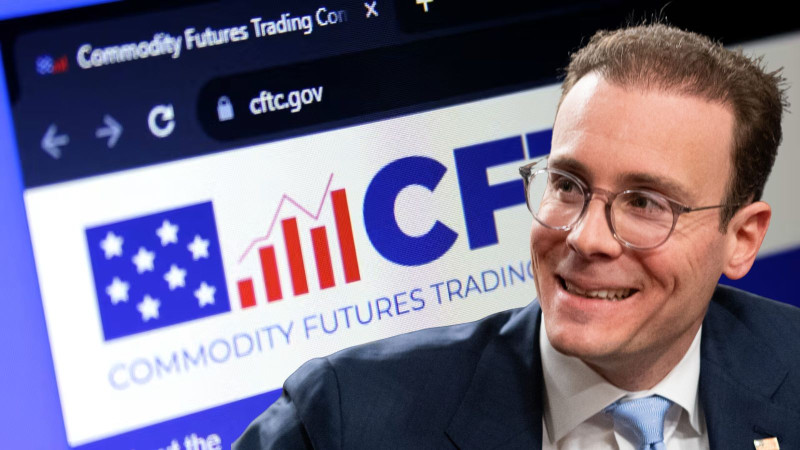
CFTC Launches Future-Proof Initiative, Signaling Shift in U.S. Crypto Regulation

When Michael Selig stepped into the role of CFTC chair late last year, the crypto industry was already expecting a change in tone. This week, it got confirmation.
On January 20, Selig announced the launch of the CFTC’s new “Future-Proof” initiative, a program designed to rethink how U.S. markets regulate crypto, digital assets, and other fast-moving financial technologies. The message was clear. The old approach is no longer enough.
Rather than relying on enforcement actions and retroactive interpretations of decades-old rules, the CFTC wants to build regulatory frameworks that actually reflect how these markets function today.
For an industry that has spent years navigating uncertainty, that alone is a notable shift.
A Chair With Deep Crypto Roots
Selig is not new to crypto regulation. Before taking the top job at the CFTC, he worked closely with digital asset policy at the SEC and spent time in private practice advising both traditional financial firms and crypto companies. He also previously clerked at the CFTC, giving him an unusually well-rounded view of how regulators and markets interact.
That background shows up in his public comments. Since taking office, Selig has repeatedly emphasized predictability, clarity, and rules that market participants can actually follow without guessing how an agency might interpret them years later.
The Future-Proof initiative is the clearest expression of that philosophy so far.
What “Future-Proof” Really Means
At its core, Future-Proof is about moving away from improvisation. The CFTC wants to stop forcing novel digital products into regulatory boxes built for traditional derivatives and commodities.
Instead, the agency plans to pursue purpose-built rules through formal notice-and-comment processes. That means more upfront guidance and fewer surprises delivered through enforcement actions.
Selig has described the goal as applying the minimum effective level of regulation. Enough oversight to protect markets and participants, but not so much that innovation is choked off before it has a chance to mature.
For crypto firms, that approach could offer something they have long asked for but rarely received, which is regulatory certainty.
Why the Industry Is Paying Attention
The timing matters. Crypto markets are more institutional than they were even a few years ago. Large asset managers, trading firms, and infrastructure providers want clearer rules before committing serious capital. Uncertainty around jurisdiction and compliance has been one of the biggest obstacles.
If the CFTC follows through, Future-Proof could help define how derivatives, spot markets, and emerging products like prediction markets are treated under U.S. law. That would make it easier for firms to build, invest, and operate without constantly second-guessing regulators.
At the same time, clarity cuts both ways. More defined rules could also raise the bar for compliance, especially for smaller startups and decentralized platforms that have operated in legal gray zones.

Tennessee Attempts to Block Prediction Markets
A Broader Political Shift
Selig’s initiative does not exist in isolation. It comes as lawmakers in Washington continue debating how to split crypto oversight between the CFTC and the SEC. Several proposed bills aim to draw clearer lines around digital commodities and spot market regulation, potentially expanding the CFTC’s role.
Future-Proof appears designed to fit neatly into that broader push. If Congress hands the agency more authority, the CFTC wants to be ready with frameworks that can scale.
Still, challenges remain. The commission currently lacks a full slate of confirmed commissioners, raising questions about how durable these policy shifts will be. Coordination with the SEC is another open issue, especially where token classifications blur the line between securities and commodities.
What Does The Future Hold?
For now, Future-Proof is more direction than destination. The real test will be how quickly the CFTC turns principles into actual rules, and whether those rules survive political change and legal scrutiny.
But the tone alone represents a meaningful break from the past. After years of regulation by enforcement and ambiguity, the agency is signaling that crypto markets are not a temporary problem to be contained, but a permanent part of the financial system that deserves thoughtful governance.
Whether that vision becomes reality will shape the next phase of U.S. crypto regulation, and potentially determine whether innovation stays onshore or continues looking elsewhere.


How Should Crypto Protocols Really Create Value for Token Holders?

Crypto has never been great at answering a simple question: what do token holders actually get?
For a long time, the answer was basically “number go up.” You bought a token because you believed the protocol would matter someday, and if that happened, the token would be worth more. Sometimes much more. And you could sell those tokens to someone else who believed that same as you, just a bit later in the timeline. That was enough in a market driven by growth, hype, and reflexivity.
But, now the industry is older, and presumably more mature. DeFi protocols generate real revenue. Some of them generate a lot of it. And once real money starts flowing through systems, people start asking uncomfortable but reasonable questions. Who benefits from this? Where does the value go? And why should I hold the token instead of just trading it to the next guy?
There are answers that show up again and again: burns, buybacks, and dividend-style payouts.
Each one says something different about how a protocol thinks about ownership.
The Good Old Token Burn: Familiar, Clean, and a Little Hollow
Burning tokens is crypto’s comfort food. It is simple, emotionally satisfying, and easy to explain on social media. Fewer tokens, more scarcity, higher price. Well, in theory.
And to be fair, burns can work, especially in strong markets. They create a sense of discipline. They tell holders that supply is being managed, that inflation is not running wild.
But burns do not actually give anyone anything. No cash, no yield, no participation in revenue. You are still relying on the market to do the rest of the work.
That can be fine if demand is strong. It is much less convincing when demand is uncertain. Scarcity alone does not create value, it only amplifies it if something else is already there.
Burns feel like an answer from an earlier era of crypto, when optics mattered more than fundamentals.
Token Buybacks: More Serious, Still Indirect
Buybacks feel like crypto growing up and borrowing language from public markets.
Instead of destroying tokens automatically, protocols use revenue or treasury funds to buy their own tokens on the open market. The signal is clear: the protocol believes the token is undervalued and is willing to spend real money to prove it.
That matters. Buybacks introduce actual demand. They are less abstract than burns. They also force protocols to think more carefully about treasury management and sustainability.
But at the end of the day, buybacks still work through price. If the market reacts, holders benefit. If it does not, they do not. There is no guarantee, no direct transfer of value, no moment where a holder can say, “I received this because the protocol performed well.”
In traditional finance, buybacks are often paired with dividends. In crypto, they are usually positioned as the whole story. That gap is something worth paying attention to.
Dividends and Revenue Sharing: The Awkward but Honest Option
Dividend-style payouts in crypto tend to make people uncomfortable. They feel a bit too close to traditional finance. And the instinctive reaction is usually something like, aren’t we supposed to be reinventing all of this?
In some ways, yes. There are definitely parts of the financial system that deserve to be challenged or rebuilt entirely. But that does not automatically mean everything old is useless. Some mechanisms stuck around because they solved real problems. Dividends are one of those.
At its core, the idea is pretty simple. If a protocol makes money, some of that money goes back to the people holding the token. Maybe you have to stake. Maybe you have to lock tokens for a while. Maybe the payout changes over time. The specifics can vary, but the relationship is clear enough. When the protocol does well, holders benefit.
That alone changes the dynamic. You are no longer just holding a token and hoping it becomes more desirable later. You are actually participating in the economics of the thing you own.
It also forces a kind of honesty. If revenue drops, payouts drop. If the protocol grows, holders feel it directly. There is not much room to hide behind supply tweaks or clever treasury narratives.
The objections are predictable. Regulation. Complexity. Governance risk. And to be fair, those are not imaginary concerns. Once you start sharing revenue, it starts to look a lot like ownership, and ownership comes with responsibilities that crypto has historically tried to sidestep.
But pretending that reality does not exist does not really help. And once protocols manage capital and distribute value, they are already doing financial work, whether they want to admit it or not.
Dividends do not invent that reality. They just stop dancing around it.
This Is Really About Maturity
Burns, buybacks, and dividends are not just technical choices. They are statements about what a protocol wants to be.
Burns prioritize simplicity and narrative. Buybacks prioritize signaling and market mechanics. Dividends prioritize alignment and accountability.
None of them are universally right or wrong. Early-stage protocols probably should not be paying out revenue. Infrastructure layers may prefer reinvestment. Some tokens are governance tools first and economic assets second.
But as DeFi matures, it is becoming harder to justify tokens that never touch the value they help create.
At some point, holders stop asking how clever the tokenomics are and start asking a simpler question: what do I get if this works?
Crypto does not need to become traditional finance. But it probably does need to answer that question more directly. Whether that leads to dividends, something like them, or an entirely new model is still open.
But what is beginning to feel increasingly outdated is pretending that question does not matter.
Stay Connected
You can stay up to date on all News, Events, and Marketing of Rare Network, including Rare Evo: America’s Premier Blockchain Conference, happening July 28th-31st, 2026 at The ARIA Resort & Casino, by following our socials on X, LinkedIn, and YouTube.

Coinbase Is Suing Three States, and the Future of Prediction Markets Is on Trial

Coinbase has sued Connecticut, Michigan, and Illinois today, but it does not look like a typical regulatory skirmish. On the surface, it was about a few cease-and-desist orders targeting prediction market contracts. In practice, it put a much bigger question on the table. What exactly are prediction markets supposed to be?
Are they casinos in disguise, digital poker rooms with better UX, or a new kind of financial market that belongs under federal oversight?
The answer matters, because the wrong classification could freeze a fast-growing corner of finance in legal limbo.
Why Coinbase Is Taking States to Court
The states argue that Coinbase’s prediction markets amount to illegal gambling. Users put money down on outcomes. Some win, some lose. No state gambling license, no approval.
Coinbase sees it very differently. These contracts, the company argues, are event-based derivatives. They look like futures, trade like futures, and are already subject to federal commodities law. The Chief Legal Officer for Coinbase, Paul Grewal, stated in an X post on Friday that the company filed the lawsuits to "confirm what is clear" and that prediction market should fall under the jurisdiction of the U.S. Commodity Futures Trading Commission.
If states are allowed to regulate these markets anyway, the logic goes, national liquidity disappears. A market that works in one state but not another stops being a market at all. But, there are comparisons to existing gambling laws and we broke those down for you.
The Casino Comparison Only Goes So Far
State regulators tend to reach for the casino analogy first, and it is easy to see why. There is money at risk. Outcomes are uncertain. The optics are not subtle.
But structurally, prediction markets do not behave like casinos. Casinos set the odds. The house always wins over time. The product is entertainment.
Prediction markets do not work that way. Prices are set by participants. New information moves markets. There is no built-in house edge. The value comes from aggregating beliefs into a number that says something useful about the future.
Calling that gambling because it involves money is a shortcut, and not a very precise one.
Poker Explains the Skill Argument, and Its Limits
Poker is the comparison that usually comes next. Courts have spent years debating whether poker is mostly luck or mostly skill. Many have concluded that skill dominates over time, even if chance plays a role in the short run.
Yet poker is still regulated as gambling in most places. Not because it lacks skill, but because the law never quite figured out where else to put it.
That history matters. It shows how activities that clearly reward information and decision-making can still end up trapped in gaming frameworks that were built for something else entirely.
Prediction markets risk repeating that mistake. Like poker, they reward skill. Unlike poker, they are not games. They are continuous markets with prices, liquidity, and arbitrage. Treating them like a card room because money changes hands misses the point.
Why Prediction Markets Look Like Futures Markets
If you strip away the cultural baggage, prediction markets start to look familiar. They are standardized contracts tied to future outcomes. Prices reflect probability. Traders respond to data.
That is the same basic logic behind futures contracts tied to interest rates, inflation, or commodities. Those markets involve speculation, risk, and uncertainty too. They are regulated, but they are not treated as gambling.
This is where Coinbase’s argument lands. Congress already created a regulator for markets like this. The CFTC exists to oversee contracts that trade future outcomes, including event-based ones. The fact that an outcome is an election or a policy decision does not change the structure of the market.
What Changes If Coinbase Wins
If Coinbase wins, the impact goes well beyond these three states.
First, jurisdiction becomes clearer. States would no longer be able to regulate federally governed prediction markets simply by labeling them gambling. That alone would remove one of the biggest sources of uncertainty hanging over the industry.
Second, the casino argument loses legal weight. Courts would be acknowledging that uncertainty plus money does not automatically equal gambling, especially when prices are discovered through open trading rather than set by an operator.
Third, prediction markets would finally escape the poker problem. They would not sit in a gray zone where skill is recognized but regulation never quite fits. Instead, they would fall under a framework designed for markets, not games.
With that clarity, these markets could scale. Liquidity would deepen. Institutional participants could step in. Contracts tied to economic data, climate outcomes, and corporate milestones could expand without the constant risk of state-level shutdowns.
Over time, prediction markets could start to look less like a regulatory headache and more like infrastructure. Another tool, alongside surveys and models, for figuring out what the world might do next.
A Bigger Signal About Regulation
This case is not really about Coinbase. It is about whether U.S. regulation can adapt when finance starts to blur into something new, a question that has stifled digital asset growth for years.
Casinos deal in chance. Poker deals in skill inside a gaming framework. Futures markets deal in information. Prediction markets belong in the third category, even if they make people uncomfortable.
If courts agree, it would send a signal that regulation can still be about function rather than analogy. That is not a radical idea. It is how most financial markets came to exist in the first place. Prediction markets are here to stay. We've seen huge partnerships with major media news outlets and exchanges. The regulatory details need to be clearly defined for this emerging industry.
And if that happens, prediction markets may finally stop being debated as gambling, and start being treated as what they have been trying to become all along. Markets that trade in probabilities, under rules built for markets, not casinos.
Stay Connected
You can stay up to date on all News, Events, and Marketing of Rare Network, including Rare Evo: America’s Premier Blockchain Conference, happening July 28th-31st, 2026 at The ARIA Resort & Casino, by following our socials on X, LinkedIn, and YouTube.

Is the End of Quantitative Tightening Setting Up Crypto’s Next Big Rebound?
The End of Quantitative Tightening Might Be Exactly What Crypto Needed
If you’ve been watching the crypto market lately, it has not felt great. Bitcoin dipping into the low 90s usually sparks panic, threads full of doom and plenty of “it’s over” takes. But this time, the headlines do not tell the full story. Something different is happening underneath the surface. Something that actually looks pretty promising.
A few major shifts are lining up at once, and together they point in one direction.
We might be closing out the long, grinding downtrend that has weighed on crypto for nearly two years.
The Federal Reserve formally ended quantitative tightening on Dec. 1, coinciding with the New York Fed conducting approximately $25 billion in morning repo operations and another $13.5 billion overnight, the largest injections that we've seen since 2020.
A Quiet Turning Point: Institutions Are Opening the Doors
For years, crypto’s biggest obstacle has not been technology or innovation. It has been access. Most big financial institutions treated crypto like a guest they did not want at the party.
That wall is finally cracking.
The clearest sign is Vanguard, managing roughly $9 trillion to $10 trillion in assets, opened its brokerage platform to third-party crypto ETFs and mutual funds tied to BTC, ETH, XRP, and SOL for the first time, creating immediate demand pressure.
This is a firm that has historically avoided anything remotely risky. They did not just ignore crypto; they actively rejected it. And now they are letting clients buy regulated crypto ETFs through the same accounts they use for retirement and index funds.
That is not a small change. When a company managing trillions finally decides that crypto belongs on the menu, it means something fundamental has shifted.
Even if only a small percentage of Vanguard’s clients add exposure, it creates a slow, steady flow of long term capital. That type of investor does not FOMO in or panic out. They allocate, rebalance and hold. That is the kind of capital that helps stabilize a market.
Crypto Moves on Liquidity, Not Hype
You can talk narratives all day, and crypto certainly loves its narratives. But the thing that consistently moves this market more than anything else is global liquidity.
And for the first time in a long while, liquidity is starting to return. The era of aggressive tightening looks like it is ending. If central banks start easing, capital gets cheaper, markets loosen up and investors take on more risk. Crypto usually reacts quickly.
The money supply had been shrinking for months. Now those indicators are stabilizing and, in some cases, ticking upward.
Look back at previous bull runs. They did not start because of tweets or new coins. They all aligned with periods of easier monetary policy.
We are entering one of those periods again.
ETFs Are Changing How Money Enters the Market
One of the underrated shifts happening right now is how investors access crypto.
Before ETFs, getting into Bitcoin or Ethereum meant dealing with exchanges, wallets, seed phrases and a bunch of complexity that ordinary investors simply did not want.
Now it is as simple as buying an index fund. ETFs are often part of automated portfolios. When crypto drops, the system buys more to rebalance. When it rises too fast, it trims. That smooths out volatility.
Investors trust the platforms they already use. If crypto is right there next to S&P 500 funds, the hesitation disappears. Those regulated products bring in the kind of capital that sticks around. Not tourists. Not gamblers. Long term investors.
This shift alone could reshape how crypto behaves during both rallies and corrections.
Why the End of Quantitative Tightening Is the Real Catalyst
The last couple of years have been rough for risk assets across the board. Higher rates, reduced liquidity and tighter financial conditions made it hard for anything speculative to breathe. Crypto got hit hardest.
Now that cycle is ending.
When quantitative tightening slows, liquidity flows back into the system. Banks lend more. Investors take more risk. Capital moves faster. Crypto is one of the first beneficiaries because it lives so far out on the risk curve.
Put simply, crypto does not need a hype cycle to turn around. It needs liquidity.
And liquidity is finally returning.
This Market Might Be Underestimating What Comes Next
People are tired. They are skeptical. And that is usually when markets quietly shift direction.
Think about the setup right now:
-
Institutions are entering.
-
ETFs are creating new pipelines.
-
Liquidity is stabilizing.
-
Rate cuts look increasingly likely.
-
Crypto is oversold and structurally stronger than it was in past cycles.
This is the kind of macro environment where bottoms form, often long before sentiment catches up.
The Foundation for the Next Run Is Taking Shape
Downtrends do not end on good news. They end when conditions change behind the scenes while everyone is too focused on the price chart.
That is what seems to be happening now.
The end of quantitative tightening is not just another headline. It is the kind of shift that has historically marked the beginning of major reversals in risk assets. And with crypto gaining easier access, stronger infrastructure and broader institutional acceptance, this could be the setup for something bigger than most people expect.
Crypto might not just recover.
It may be preparing for a stronger, more mature cycle than anything we have seen before.
Vanguard Finally Opens the Door to Crypto ETFs
Vanguard Finally Opens the Door to Crypto ETFs
For years, Vanguard was the holdout. While BlackRock, Fidelity and nearly every major brokerage warmed up to Bitcoin and other digital assets, Vanguard kept the door shut. The message was always the same. Crypto is too volatile, too speculative and not aligned with the firm’s long term investment philosophy.
But that chapter is officially over.
Vanguard has reversed course and will now allow its clients to buy regulated crypto exchange traded funds. Considering the firm manages nearly 11 trillion dollars for about 50 million people, this is not a small policy change. This is one of the biggest signals yet that crypto has crossed into the financial mainstream.
And honestly, it is about time.
Why This Decision Matters So Much And What It Means For The Market
Let’s make this simple. When a financial giant the size of Vanguard changes its mind, everyone else pays attention. Before this shift, millions of Vanguard clients who wanted crypto exposure had to open accounts elsewhere. Now they can invest in Bitcoin, Ethereum, XRP, Solana and other major assets directly through the platform they already use for retirement accounts, tax advantaged portfolios and long term investing.
That convenience alone is enough to drive new inflows.
For years, Vanguard executives wrote off crypto as noise. They did not want to offer products that they viewed as speculative. Investors disagreed. Crypto ETFs brought regulatory clarity, and retail demand never really disappeared. Eventually, the disconnect became too large to ignore.
The firm is not rushing into anything, but it is acknowledging reality. Crypto is not going away.
Andrew Kadjeski, head of brokerage and investments at Vanguard, reportedly said:
“Cryptocurrency ETFs and mutual funds have been tested through periods of market volatility, performing as designed while maintaining liquidity. The administrative processes to service these types of funds have matured, and investor preferences continue to evolve.”
Once the most conservative player in the room changes its tune, excuses start to disappear. If Vanguard believes regulated crypto ETFs are fit for millions of retirement portfolios, it becomes harder for other institutions to argue otherwise.
This could spark a wave of copycat decisions across the finance industry.What makes Vanguard’s move important is not how fast new money will flow in, but how stable that money tends to be. Vanguard’s capital is not like hedge fund cash that races in and out of positions. It is not like retail trading either, where sentiment can change overnight. Vanguard clients invest steadily, hold for years and rarely chase price swings. That kind of capital is long term and sticky.
Take a simple example. If an investor uses a “60, 40, 1” portfolio split across stocks, bonds and crypto, the system automatically keeps those weights balanced. If Bitcoin or Solana drops, the portfolio buys more to restore the target 1 percent allocation. If crypto rises too quickly, it trims the position back down. Even that small allocation, repeated across millions of accounts, can have real impact. When a firm with trillions under management opens a new asset class to its clients, it is not a niche development. It creates a steady, predictable pipeline of investment.
And whether the crypto community likes it or not, mainstream validation matters. For many everyday investors, seeing Bitcoin and Ethereum ETFs listed next to S&P 500 index funds or bond ETFs instantly reframes how they think about digital assets. Buying crypto through a familiar brokerage account removes friction. It removes fear. It lets people treat crypto like any other part of their long term portfolio. For many, a regulated ETF inside a retirement account is the safest and simplest way to get exposure. Vanguard recognizing this is a meaningful signal.
What Vanguard Is Actually Allowing
It is worth being clear. Vanguard is not becoming a crypto company overnight.
-
It will not launch its own crypto funds.
-
It will only list approved, regulated ETFs from other issuers.
-
It will not support speculative or meme based assets.
This is a cautious step, but it is still a big one. The firm has gone from “crypto is not welcome here” to “crypto is allowed if it is regulated, structured and aligned with long term investing.”
What Could Hold Things Back
Crypto still carries real risk. Prices remain volatile. Regulations are evolving. Not every Vanguard customer will jump into digital assets, and that is perfectly fine. This move is about access, not pressure.
There is also the chance that Vanguard may expand slowly. It will likely start with a small list of ETFs and add more only after seeing how clients respond.
But the important part is that the door is open. Even a cautious opening is still an opening.
This Is a Turning Point
The truth is simple. Vanguard was one of the last major hurdles between crypto and true mainstream adoption. Now that barrier is gone.
This does not guarantee a bull market. It does not promise returns. But it does mark a new stage. Crypto now sits alongside traditional assets inside one of the most respected financial institutions in the world.
People who would never consider setting up a crypto exchange account can now invest in digital assets the same way they invest in index funds or bonds.
That is how real adoption grows. That is how new capital enters. And that is how crypto becomes part of normal investing instead of something people talk about from the sidelines.
Vanguard did not just allow crypto ETFs.
It helped legitimize the entire space.
Stay Connected
You can stay up to date on all News, Events, and Marketing of Rare Network, including Rare Evo: America’s Premier Blockchain Conference, happening July 28th-31st, 2026 at The ARIA Resort & Casino, by following our socials on X, LinkedIn, and YouTube.

Kalshi and Polymarket Hit Record 10 Billion Dollar Volume
Kalshi and Polymarket Post Record Volume as Prediction Markets Hit Nearly $10 Billion in November
Prediction markets are entering their strongest era to date. In November 2025, Kalshi and Polymarket collectively recorded nearly 10 billion dollars in trading volume, marking the most active month in the history of the sector. This surge shows that prediction markets are no longer niche experiments. They are becoming influential financial instruments used by millions of traders, analysts and institutions.
The industry’s rapid expansion reflects growing interest in real world event trading, increased liquidity and a shift in how investors view information markets.
How Kalshi and Polymarket Reached New Heights
Institutional Investment and Regulatory Clarity
Kalshi has positioned itself as the regulated prediction exchange in the United States. With a green light from federal derivatives regulators, the platform attracted significant institutional investment. Its most recent funding round valued the company at approximately 11 billion dollars.
Polymarket, on the other hand, grew from the crypto native community. Its decentralized architecture and global accessibility attracted users drawn to event based markets that operate without borders. As Polymarket expanded, its volume accelerated sharply, particularly in 2024 and 2025.
Together, the two platforms now represent the core of the prediction market ecosystem. One operates with traditional oversight, and the other leverages blockchain transparency. Both models have succeeded by meeting rising demand for trading around news, sports, politics and global uncertainty.
Surge in Demand From Sports, Politics and Macroeconomics
The November boom appears to have been driven by significant events across sports and entertainment, along with heightened activity in political and macroeconomic markets. Major sporting events, international political developments and volatility in global markets created a perfect environment for event driven speculation.
Polymarket in particular saw sharp month over month growth, with more than 3 billion dollars traded in October followed by an even stronger November contribution. Kalshi also reported record numbers across political, sports and economic categories.
What This Means for the Future of Prediction Markets
Prediction Markets Are Becoming a Serious Asset Class
A combined 10 billion dollars in monthly trading volume places prediction markets in the realm of legitimate financial instruments. This surge demonstrates that traders are increasingly comfortable speculating on real world outcomes using structured markets rather than informal sentiment or traditional betting platforms.
Liquidity and Market Depth Are Strengthening
As more capital enters the ecosystem, liquidity improves and spreads tighten. Higher liquidity reduces volatility and improves price accuracy, allowing events to reflect true market expectations. This makes prediction markets more reliable indicators of sentiment around elections, economic reports, policy shifts and high profile entertainment events.
Traditional Finance Meets Crypto Native Innovation
Kalshi and Polymarket represent two very different models. Kalshi is regulated, compliant and geared toward traditional market participants. Polymarket is decentralized, global and capable of listing a wide variety of markets. The success of both platforms shows that prediction markets can appeal to different audiences and regulatory frameworks while still growing in parallel.
New Hedging and Speculation Tools
Prediction markets enable traders to hedge against real world uncertainty. Instead of relying solely on equities, commodities or forex markets, users can now hedge or speculate directly on election outcomes, interest rate decisions, policy changes or cultural events. This is a fundamental expansion of what financial markets can price.
Challenges That Still Remain
Prediction markets face headwinds even as they achieve record volume.
-
Regulatory uncertainty. Some jurisdictions classify certain event markets as gambling, while others treat them as derivatives.
-
Concentration of liquidity. Large events dominate attention, leaving smaller markets with limited participation.
-
Volatility around major events. Binary markets can swing sharply as news breaks, creating risk for traders and market makers.
-
Infrastructure demands. Platforms must scale securely to handle institutional interest and larger volumes.
How Kalshi, Polymarket and future competitors handle these challenges will help determine whether prediction markets can sustain long term growth.
Final Thoughts
The combined 10 billion dollar surge in November volume from Kalshi and Polymarket signals a major shift in the financial landscape. Prediction markets are becoming mainstream. They are attracting serious capital, gaining institutional legitimacy and proving that people want tools that let them trade on real world information.
Whether it is politics, macroeconomics, sports or cultural events, prediction markets offer a new expression of financial participation. If growth continues, they may soon become a standard part of global finance, sitting alongside equities, futures, options and digital assets.
This moment marks the transition from niche concept to powerful market infrastructure. The prediction market revolution is now fully underway.
Stay Connected
You can stay up to date on all News, Events, and Marketing of Rare Network, including Rare Evo: America’s Premier Blockchain Conference, happening July 28th-31st, 2026 at The ARIA Resort & Casino, by following our socials on X, LinkedIn, and YouTube.

Tom Lee Makes Major Ethereum Bet as BitMine Buys 97,000 ETH
Why Tom Lee Is Betting Big on Ethereum, and Why He Thinks the Best Is Still Ahead
When Tom Lee makes a bold call, people pay attention. He has built a reputation for spotting major market trends early, and now he is putting that conviction behind Ethereum in a very real way. His firm, BitMine Immersion Technologies, just picked up another 97,000 ETH, increasing its total holdings to 3.73 million tokens, worth about $10.5 Billion at latest prices. That is not a casual trade. It is a signal that Lee believes Ethereum is on the edge of something much bigger.
Instead of waiting for a hype cycle or chasing a rally, Lee is buying during a quieter period in the market. And based on his recent comments, there is a clear reason why. He sees a combination of catalysts lined up at the same time, and he believes they give Ethereum one of the strongest setups of any major asset heading into 2026.
BitMine’s ETH Strategy Is Not a Short Term Play
Lee has been gradually stacking ETH throughout the year, and the latest acquisition is simply the biggest chapter in that story. Multiple large purchases over several months paint a clear picture. This is not a speculative gamble or a quick swing trade. BitMine is positioning Ethereum as a long term strategic asset on its balance sheet.
It is the kind of move you normally see from companies preparing for a shift in market conditions, or from firms that believe a key technology is about to break out. In this case, Lee seems to believe both are true.
What Is Driving Tom Lee’s Confidence
Ethereum Looks More Like Financial Infrastructure Than a Crypto Coin
One point Lee keeps returning to is the idea that Ethereum is becoming the backbone of digital finance. Between stablecoins, DeFi platforms, real world asset tokenization and on chain identity systems, Ethereum has become much more than a place to speculate.
Lee’s view is simple. If financial markets continue moving toward tokenization, Ethereum stands to benefit more than almost any other chain. It has the developers, the users and the network effects that make growth not just possible, but likely.
The Macro Environment Could Create Fuel
Another major part of his thesis is tied to the Federal Reserve. Lee thinks the Fed may start cutting interest rates in the coming year. If that happens, liquidity usually returns to risk assets, and crypto tends to be one of the biggest beneficiaries.
In past easing cycles, assets with high growth potential often outperformed. Lee sees ETH in that category today, especially with everything happening on chain.
The Fusaka Upgrade Could Kick Off a New Phase
Ethereum’s next upgrade, called Fusaka, is coming soon. Lee views it as a serious quality of life improvement for the entire network. Cheaper data availability, more efficient rollups and improved scalability have the potential to bring even more activity into the ecosystem.
If applications become cheaper and faster to run, it opens the door for new waves of DeFi tools, enterprise systems and consumer apps. That kind of expansion is exactly the type of catalyst Lee likes to position around before the crowd catches on.
Why This Institutional Move Matters
Institutional buying during sideways markets has a different energy than buying during bull runs. It comes from research, planning and long horizon thinking, not excitement or fear of missing out.
Lee is not buying ETH on a whim. He is building what looks like a strategic treasury position, much like companies that accumulate energy reserves, metals or other foundational commodities. When firms treat ETH as infrastructure instead of speculation, it sends a message. It suggests they believe Ethereum is becoming a permanent part of the financial landscape.
And when a well known market voice makes a move like this, it often encourages others to re-evaluate their assumptions.
Of Course, There Are Still Risks
Lee is bullish, but he is not blind. He has acknowledged several things that could slow Ethereum down.
-
The economy could stay tight if inflation refuses to cool
-
Technical delays could undermine upgrades
-
Regulation could shift unexpectedly
-
Competing blockchains are not standing still
None of these risks are trivial. But Lee’s argument is that Ethereum has enough traction, developers and real world use cases to keep moving forward regardless.
Final Thoughts
Tom Lee’s purchase of 97,000 ETH is more than a headline. It is a statement. He believes Ethereum is undervalued, underappreciated and on the verge of a major turning point. Between the Fusaka upgrade, the potential for a friendlier macro environment and Ethereum’s expanding role in tokenized finance, his case is not hard to understand.
You do not accumulate this much ETH unless you think the future is brighter than the present. And Lee clearly does.
If he is right, Ethereum could be gearing up for one of its strongest chapters ever.
Stay Connected
You can stay up to date on all News, Events, and Marketing of Rare Network, including Rare Evo: America’s Premier Blockchain Conference, happening July 28th-31st, 2026 at The ARIA Resort & Casino, by following our socials on X, LinkedIn, and YouTube.
BlackRock Confirms Bitcoin ETFs Are Now Its Top Revenue Source
BlackRock Says Bitcoin ETFs Are Now Its Top Revenue Source, Marking a Major Shift in Institutional Finance
BlackRock, the largest asset manager in the world, has confirmed that its Bitcoin exchange traded funds have become its single most profitable product line. The company’s U.S. spot Bitcoin ETF, the iShares Bitcoin Trust (IBIT), along with related crypto investment offerings, now generate more annual revenue than any other BlackRock ETF category. This development signals a powerful shift in how traditional finance views crypto assets. Bitcoin is no longer at the fringe of the investment landscape. It is becoming a core part of institutional portfolios.
The Rapid Rise of IBIT
BlackRock launched IBIT in early 2024. In less than two years the fund surged to tens of billions of dollars in assets under management. IBIT’s fee revenue now rivals, and in many cases exceeds, long established equity and index funds that were once the backbone of BlackRock’s ETF business.
The growth was faster than almost any ETF in history. Internal reports also show that BlackRock’s own multi asset portfolios have increased their IBIT exposure over the past year, signaling strong conviction from the firm’s internal investment teams.
The message is clear. Bitcoin is not only an asset class investors want. It is an asset class that produces serious fee revenue for traditional institutions.
Why This Matters for Global Finance
1. Bitcoin Has Moved From Speculation to Foundation
The overwhelming demand for Bitcoin exposure through regulated ETFs shows that the asset has crossed a threshold. For years it was considered too volatile or too risky for institutions. Now the largest asset manager on the planet is stating publicly that Bitcoin has become its most profitable ETF category. That represents a structural change.
This shift encourages pension funds, endowments and corporate treasuries to consider Bitcoin exposure through safe, regulated channels. It legitimizes the asset in ways no amount of marketing or evangelism could ever achieve.
2. Fee Revenue Validates Long Term Sustainability
For institutions, large inflows are only part of the story. Sustainable, recurring fee revenue is the real prize. Bitcoin ETFs are proving they can deliver consistent income to managers, something that reinforces long term commitment to the product line. This encourages competitors to join the market and expands access for investors.
3. Liquidity and Market Maturity Improve
When institutional inflows grow, liquidity becomes deeper and more stable. Bitcoin has historically suffered from sharp market swings amplified by retail activity. With more participation from institutional ETFs, price discovery becomes smoother and more efficient. This maturation attracts even more institutional participants.
4. Crypto Native Firms Face Pressure to Evolve
As traditional finance embraces Bitcoin through regulated ETFs, crypto native platforms that previously benefited from being the main entry point into the ecosystem now face increased competition. Investors may favor regulated products, compelling exchanges and custodians to improve compliance, transparency and user protections.
Risks and Challenges Still Linger
Despite the momentum, several risks remain.
-
ETF inflows are sensitive to macroeconomic conditions. Periods of volatility can trigger outflows even for successful funds.
-
Regulatory changes remain a constant factor. Any shift in U.S. or international policy could affect accessibility and demand.
-
Concentration risk is increasing. If too much institutional capital is routed through a handful of ETFs, any operational issue could create market wide instability.
-
The infrastructure powering these funds, from custody to auditing, is still relatively new compared to traditional financial systems.
The crypto markets may be maturing, but they are not yet fully stable.
What Comes Next
Given the trajectory, several outcomes appear increasingly likely:
-
More asset managers will expand their crypto ETF offerings to capture demand.
-
Bitcoin ETFs may find their way into pension fund models, sovereign wealth funds, and insurance allocation strategies.
-
New hybrid funds could emerge, combining Bitcoin with equities, commodities and fixed income into a diversified multi asset product.
-
As custodial technology matures, institutions will grow even more comfortable allocating large amounts of capital.
-
Regulatory clarity in major markets will continue to strengthen, reducing uncertainty and encouraging broader adoption.
In other words, Bitcoin is rapidly becoming intertwined with mainstream finance rather than existing apart from it.
Final Thoughts
BlackRock’s confirmation that Bitcoin ETFs are now its top revenue source represents a profound moment in financial history. For the first time a major global asset manager is not only offering Bitcoin exposure but generating more revenue from it than from any other ETF product. This is a powerful endorsement of Bitcoin’s staying power, its commercial viability and its growing role in global markets.
Skeptics who once dismissed Bitcoin as a passing trend may now find themselves reassessing their position. Institutions thrive on scale, predictability and revenue. Bitcoin ETFs are now providing all three.
This milestone signals that the era of institutional Bitcoin is not approaching. It is already here.