#Governance
AAVE Launches DeFi United to Fight $292M Hack Fallout

The Aave DAO is being asked to commit 25,000 ETH from its treasury to help close a massive funding gap left behind by the April 18 exploit of Kelp DAO's rsETH bridge, a vulnerability that drained roughly $292 million from one of DeFi's most widely-used liquid restaking products. The proposal, put forward Thursday by Aave service provider TokenLogic, would make Aave the single largest contributor to a broader coalition effort dubbed "DeFi United", a coordinated response involving some of the sector's biggest names.
The attack exploited a configuration flaw in Kelp's LayerZero bridge adapter, which was running a single-verifier setup. That weakness let the attacker mint 152,577 rsETH tokens that had no actual ETH backing, which were then used as collateral on Aave to borrow approximately $190 million in legitimate assets. The fallout was severe. More than $10 billion in net withdrawals hit Aave in the days following the breach, and the protocol's affected V3 deployments on Ethereum, Arbitrum, and Mantle were left sitting on bad debt that, by various estimates, lands somewhere between $123 million and $230 million, depending on how recoveries play out.
The Funding Gap and How It Gets Closed
At the prevailing rsETH-to-ETH ratio of 1.0696, the original shortfall came out to roughly 163,183 ETH. Since then, a series of coordinated actions have chipped away at the hole. Kelp recovered and froze tokens representing approximately 43,168 ETH in value. The Arbitrum Security Council stepped in to freeze 30,766 ETH that the attacker was still holding on that network, following input from law enforcement. Liquidating the hacker's remaining positions across Aave and Compound is expected to recover a further 14,168 ETH. That gets you to a shortfall of around 75,081 ETH, still a very large number.
To plug what remains, the DeFi United coalition has assembled a funding stack that combines direct donations, a credit facility, and the requested Aave treasury contribution. Public contributors including EtherFi, Lido, Ethena, Ink Foundation, BGD Labs, and several individual ecosystem participants have pledged a combined 14,570 ETH so far, with more conversations reportedly in progress. Mantle has proposed a credit facility of up to 30,000 ETH, structured with interest at Lido's rate plus 1% and a repayment term of up to 36 months. Bybit co-founder Ben Zhou said the exchange, as Mantle's largest stakeholder, would vote yes on the facility, drawing a parallel to industry support Bybit received after its own security incident. Together, those streams narrow the residual gap to approximately 30,000 ETH. The Aave treasury request covers most of that.

A Complex Recovery With Real Execution Risk
What makes this more complicated than a straightforward treasury disbursement is the mechanics of actually executing the recovery. The coalition needs to place the full 120,015 ETH into the LayerZero lockbox to restore rsETH's backing. But a significant chunk of the expected recoveries, roughly 44,787 ETH worth, are not yet liquid. They depend on the Arbitrum Security Council releasing frozen funds, and on successfully liquidating the attacker's positions on Aave and Compound. Those processes could stretch out over weeks.
To bridge that timing gap, the coalition is arranging a separate tranche of short-duration loans from additional ecosystem partners. The proposal also includes a notable authorization: Aave Labs would be permitted to pledge DAO assets and future protocol revenue as collateral to secure these funding arrangements. That is a significant move, and the TokenLogic proposal is candid about the risks involved, noting the recovery depends on actions outside the coalition's control, including Kelp reopening withdrawals, LayerZero reopening its bridge, and the Security Council completing its process. "This is a call to arms," the proposal states. "The path there is not risk-free."
What the Industry Is Saying
Aave founder Stani Kulechov has already put skin in the game, pledging 5,000 ETH personally stating that "Aave is my life's work and we're working nonstop to find the best possible outcome for users.". The response has drawn both measured optimism and pointed skepticism from across the ecosystem. Matthew Pinnock, COO at Altura DeFi, told Decrypt the effort signals that DeFi is "moving beyond isolated protocols to a more coordinated financial system," while also emphasizing that "socialised recovery methods" need to be paired with clear accountability frameworks. Georgii Verbitskii, founder of yield platform TYMIO, was more cautious, telling the publication that without concrete details on the initiative's structure, "it's difficult to expect any meaningful structural shift in DeFi." He also predicted the incident would push users and protocols toward more conservative, base-layer configurations, likely reducing appetite for wrapped products and liquid staking derivatives.

On the constructive side, Sergey Kravtsov, CEO of Papaya Finance, described the coordinated effort as "an emergent immune response of a financial system that is actually decentralized", competing protocols stepping in because letting bad debt cascade, as he put it, "would have hurt everyone."
Governance Process Still Underway
The proposal is currently in the community feedback phase on Aave's governance forum. If it reaches consensus, it moves to a Snapshot vote before heading to an on-chain AIP. Timing matters here. The DeFi United coalition has flagged that ETH price appreciation could make the dollar-denominated bad debt worse by the hour if governance moves slowly. A separate proposal to pause AAVE buybacks has also been floated, suggesting the DAO is bracing for a period of concentrated capital deployment.
For Aave, this is partly precedent-following. After the 2022 CRV short-squeeze incident left the DAO with roughly $1.9 million in bad debt, it chose to cover the shortfall rather than socialize losses among suppliers. The current situation is orders of magnitude larger, but the underlying posture is the same: the Aave DAO balance sheet is being positioned as a backstop for systemic DeFi events, at least when the protocol itself is directly exposed. Personally, it is amazing to see the DeFi community rally behind this endeavor in wake of such a monumental exploit.
Uniswap’s $85.8M Treasury Extends Runway to 2027

The Uniswap Foundation has released its unaudited full-year 2025 financial summary, showing the organization holds roughly $85.8 million in total assets and has enough capital to keep the lights on through January 2027 without tapping external financing. The numbers arrive at a pivotal moment for the broader Uniswap ecosystem, which spent 2025 shipping major protocol upgrades, welcoming BlackRock to its trading infrastructure, and finally putting a stubborn class-action lawsuit to rest.
A Treasury Built on Three Pillars
As of December 31, 2025, the Foundation's balance sheet breaks down into $49.9 million in cash and stablecoins, 15.1 million UNI tokens, and 240 ETH. At year-end market rates, the token holdings alone bring the combined figure to $85.8 million.
The biggest driver of 2025 inflows was the Uniswap Unleashed governance proposal, which authorized a transfer of 20.3 million UNI from the Uniswap protocol treasury to the Foundation. At year-end valuations that was worth approximately $114 million, and it formed the backbone of both the Foundation's grantmaking ambitions and its operational runway through next year.
On the spending side, the Foundation kept a tight leash on overhead. Operating expenses for the full year, excluding employee token awards, came to $9.7 million, covering salaries, benefits and professional fees. This is a huge signal to governance participants that the organization is not burning capital faster than it deploys it into the ecosystem.
$26 Million in Grants, $106 Million Earmarked Overall
Over the course of 2025, the Foundation committed $26 million in new grants and actually disbursed $11 million to ecosystem builders, with $5.8 million of those new commitments authorized in Q4 alone and $2.1 million distributed in that quarter. The total allocation for grants and incentives now stands at $115.1 million, $99.8 million designated for commitments running through 2025 and 2026, and another $15.3 million reserved for previously committed grants awaiting disbursement.
A chunk of the multi-year grant book runs through 2029, reflecting a long-term bet on Uniswap v4 and the Unichain layer-2 network as foundational infrastructure. Some of those grants, particularly those given to Unichain launch partners, come with performance-linked repayment provisions, a mechanism that gives the Foundation downside protection while still offering meaningful upside to builders who hit growth targets.
Unichain Momentum and Product Shipping
The financial report lands against a backdrop of genuine product momentum. Uniswap v4, launched in January 2025, introduced the Hooks system, allowing developers to build custom liquidity pools with compliance features baked directly into the contract logic. By various accounts, about 75% of Uniswap v4 activity has since migrated to Unichain, the Foundation's own layer-2 network, which cuts transaction costs by around 95% compared to Ethereum mainnet. The ecosystem has grown to 1,500 or more active builders.
The Foundation also noted the launch of what Uniswap developers are calling chained actions, a feature that enables multi-chain swaps in a single flow, for instance moving USDC on Ethereum to cbETH on Base without manually bridging. That kind of cross-chain composability has been a stated priority for the team for a while, and shipping it reinforces Unichain's positioning as something more than a cost-savings vehicle.
BlackRock's BUIDL Arrives on UniswapX
Perhaps the single biggest headline surrounding the Uniswap ecosystem in recent months came in February, when BlackRock announced it would list its tokenized U.S. Treasury fund, BUIDL, on Uniswap via the UniswapX trading system. The world's largest asset manager also disclosed a direct purchase of UNI tokens, an undisclosed strategic investment that sent the governance token up roughly 25% on the day of the announcement.
Trading BUIDL through UniswapX allows pre-qualified, whitelisted investors to swap the tokenized Treasury fund around the clock using stablecoins, with Securitize handling KYC and compliance and Wintermute among the market makers providing liquidity. Access is currently limited to qualified purchasers with at least $5 million in assets, so the immediate volume impact is modest. The strategic signal, though, is loud: a $14 trillion asset manager chose decentralized exchange infrastructure for its first DeFi integration.
Robert Mitchnick, BlackRock's global head of digital assets, framed it as a step toward connecting tokenized assets with DeFi rails. Hayden Adams, Uniswap's founder, has suggested the same infrastructure will eventually serve retail-accessible products. The on-ramps are still being built, but the highway is open.
.
What's Next For Uniswap?
With an $85.8 million treasury and a clearly defined runway, the Foundation is not in crisis mode. The more pressing question for token holders and protocol watchers is whether the UNIfication governance proposal, approved on December 26, 2025 with 99.9% of the vote and over 125 million UNI cast in favor, will translate into meaningful fee revenue. The proposal activated protocol fees on v2 and v3 pools and directed a portion of trading revenue toward buying back and burning UNI, effectively turning the governance token into something with cash-flow characteristics for the first time.
Early projections put annual buyback-and-burn revenue at around $22 million, a figure that grows as more pools and L2 deployments activate fees. If those projections hold, the Foundation's runway math looks even more comfortable than the headline treasury figure suggests. A lot can change in the next nine months of crypto markets, but heading into mid-2026, Uniswap is operating from a position of relative financial strength, institutional validation, and hard-won legal clarity.
Tally Shuts Down DAO Platform, Cites Sustainability Issues

Tally, a decentralized autonomous organization (DAO) governance platform built on Ethereum, is shutting down after five years of operation in the crypto industry.
The decision, according to co-founder and CEO Dennison Bertram, was driven by a lack of sustainability in the decentralized governance tooling industry. Despite its success as a DAO governance platform, Bertram said Tally had not yet realized its original vision.
“We have spent years championing the DAO vision. But at some point, you have to accept the world as it is, not as you hoped it would be. The reality is that we can no longer build a viable business around this,” he said.
Bertram also said Tally will not move forward with its ICO plans, adding that the team was not confident it could fulfill any promises it would make to token holders if it sold them tokens.
Prior to the announcement, Tally had built a notable presence in the crypto space, including:
- Serving over one million users, with tens of millions of tokenholder addresses participating in governance through its platform.
- Processing more than $1 billion in crypto payments and, at one point, helping secure over $80 billion through systems it supported.
- Supporting hundreds of organizations on its governance platform, including Uniswap DAO, Arbitrum, zkSync, Wormhole, and EigenLayer.
Reflecting on these successes, as well as Tally’s ability to avoid major security incidents and navigate regulatory uncertainty under the previous SEC chair, Tally CEO Dennison Bertram said he was “incredibly proud” of what the team had accomplished.
Although the team will wind down operations by the end of the month, it is working with major partners to ensure its enterprise clients continue to be served and will keep its interface live until the transition is complete.
The Crypto Community Reacted
The announcement of Tally’s shutdown was met with disappointment across the crypto community, with some describing it as the “end of an era” and others recounting their experiences using the platform during the early days of Arbitrum and Uniswap governance.
“I still remember writing governance proposals for Uniswap on Tally back in 2021. Those were fun times. It’s disappointing that DAOs didn’t meet expectations. While stablecoins have achieved the strongest product-market fit in crypto, I still believe DAOs will ultimately get there, though perhaps not for another three to 10 years,” said Getty Hill, CEO of DeFi trading platform Oku Trade.
“Human labor coordination is one of the hardest problems. DAOs will need to evolve, and their applications must improve. The 2020–2021 era of DAO governance was a lot of fun,” he added.
Aave “Will Win” Plan Sends Revenue to DAO
Aave Labs has put forward one of the most consequential governance proposals in the protocol’s history. The plan, titled “Aave Will Win,” would redirect 100 percent of revenue generated by Aave-branded products to the Aave DAO, reshaping how value flows across one of DeFi’s largest lending ecosystems.
The proposal arrives at a sensitive moment. Aave remains a dominant force in decentralized finance, but internal debates over revenue allocation, brand ownership, and governance control have intensified over the past year. At the center of it all is a fundamental question: who should capture the economic upside of the Aave brand, the development company building products, or the decentralized autonomous organization that governs the protocol?
A Structural Reset for Revenue
Under the proposed framework, all gross revenue from Aave-branded products would be sent directly to the DAO treasury. That includes income generated through the aave.com front end, the Aave mobile app and card products, institutional and enterprise offerings, real world asset initiatives, as well as interface level swap fees and other third party integrations.
Revenue would be defined as gross product revenue minus any shares owed to external partners. In practical terms, Aave Labs would no longer retain earnings from these business lines. Instead, the DAO would collect and manage those funds, centralizing economic control under token holder governance.
For token holders, this represents a clearer path to value accrual. Historically, the DAO controlled protocol fees generated directly by lending markets, while product level revenues tied to branded interfaces and integrations flowed through Labs. That dual structure created friction and, at times, mistrust. The new proposal attempts to eliminate that ambiguity and reset expectations around who benefits from ecosystem growth.
Aave DAO has seen a sharp rise in revenue over the past year as DeFi volumes rebounded and lending demand strengthened. With tens of millions flowing through the ecosystem, questions around value capture became harder to ignore.
Tensions escalated after community members scrutinized how certain front end integration fees were routed, particularly when some income streams were directed to wallets associated with Labs rather than to the DAO. Delegates argued that product level income tied to the Aave brand should belong to token holders by default.
The debate expanded quickly. What began as a discussion about swap fees evolved into broader conversations about intellectual property, trademark ownership, and the long term governance structure of the ecosystem. Some community members floated proposals to transfer brand ownership to a DAO controlled entity, while others pushed for more aggressive structural changes to redefine the relationship between Labs and the DAO.
“Aave Will Win” appears to be an effort to consolidate those discussions into a single framework. Rather than renegotiating revenue stream by stream, the proposal places all branded product revenue under DAO oversight in one move.
Stani Kulechov, Founder of Aave Labs stated that “The framework formalizes Aave Labs’ role as a long-term contributor to the Aave DAO under a token-centric model, with 100% of product revenue directed to the DAO,” he added that, “As onchain finance enters a decisive new phase, with fintechs and institutions entering DeFi, this framework positions Aave to capture major growth markets and win over the next decade."
The Governance Trade Off
Supporters argue that the change would align incentives more cleanly. If all branded product revenue flows to the DAO, token holders directly benefit from ecosystem expansion, whether that growth comes from retail users interacting through the front end or institutions deploying capital through enterprise channels. That clarity could strengthen valuation narratives and reduce uncertainty for larger investors evaluating the protocol’s sustainability.
It also reinforces the idea that Aave is not a company with a token attached, but a token governed protocol that contracts service providers to execute development.
Critics, however, raise practical concerns. Fully decentralizing revenue control may slow execution. DAOs, by design, move more deliberately than centralized teams. Budget approvals, development funding, and strategic pivots require governance cycles that can stretch for weeks. There is also the question of incentives. If Aave Labs no longer retains product revenue, its compensation model would need to rely on DAO approved budgets or grants. That shift increases transparency, but it also introduces a new layer of dependency on governance votes.
In short, the proposal strengthens decentralization while introducing new operational constraints. Whether that trade off proves beneficial will depend on how efficiently the DAO can allocate capital.
Aave V4 and Expansion Ambitions
The revenue overhaul is intertwined with broader strategic goals, including formal ratification of Aave V4. The next iteration of the protocol is expected to emphasize modular architecture, cross chain liquidity coordination, and expansion into new asset categories. In exchange for this new proposal, Aave Labs is asking for $25 million in stablecoins, 75,000 AAVE tokens (worth roughly $8.3 million), and a mandate to build Aave V4. This has raised some questions among the Aave community.
Real world assets remain a central focus. Institutional interest in tokenized treasuries and structured credit products has accelerated, and Aave has positioned itself as infrastructure for that emerging market. By routing all product revenue to the DAO, the protocol would strengthen its treasury and, at least in theory, expand its capacity to fund long term initiatives in both crypto native and traditional finance adjacent markets.
The framing of the proposal suggests confidence rather than retreat. It presents consolidation under the DAO as a competitive advantage, not merely a governance concession.
Recent movements in AAVE’s token price have reflected sensitivity to governance headlines. Signals that token holders could receive a more direct claim on ecosystem revenue are often interpreted as constructive. That said, price volatility does not resolve deeper governance questions. The more significant issue is whether the DAO can responsibly manage an expanded treasury while continuing to fund innovation at a pace that keeps Aave competitive.
The Bottom Line
The proposal will move through Aave’s standard governance pipeline, beginning with community discussion and formal requests for comment before progressing to an on chain vote. Approval would mark a structural turning point, formalizing Aave’s evolution into a more explicitly DAO centric economic system. Rejection or substantial amendment would signal that the community remains divided on how far decentralization should extend.
Either outcome carries implications beyond Aave. As mature DeFi protocols generate meaningful revenue and develop recognizable brands, informal arrangements between core contributors and token holders become harder to sustain.
Aave is confronting that tension directly. The result may help define how the next generation of decentralized protocols balance decentralization, execution speed, and economic alignment in a sector that is no longer experimental, but increasingly institutional.
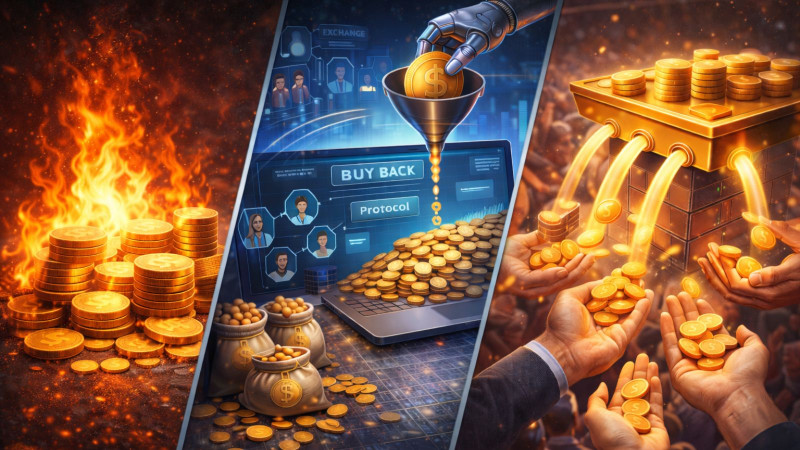
How Should Crypto Protocols Really Create Value for Token Holders?
Crypto has never been great at answering a simple question: what do token holders actually get?
For a long time, the answer was basically “number go up.” You bought a token because you believed the protocol would matter someday, and if that happened, the token would be worth more. Sometimes much more. And you could sell those tokens to someone else who believed that same as you, just a bit later in the timeline. That was enough in a market driven by growth, hype, and reflexivity.
But, now the industry is older, and presumably more mature. DeFi protocols generate real revenue. Some of them generate a lot of it. And once real money starts flowing through systems, people start asking uncomfortable but reasonable questions. Who benefits from this? Where does the value go? And why should I hold the token instead of just trading it to the next guy?
There are answers that show up again and again: burns, buybacks, and dividend-style payouts.
Each one says something different about how a protocol thinks about ownership.
The Good Old Token Burn: Familiar, Clean, and a Little Hollow
Burning tokens is crypto’s comfort food. It is simple, emotionally satisfying, and easy to explain on social media. Fewer tokens, more scarcity, higher price. Well, in theory.
And to be fair, burns can work, especially in strong markets. They create a sense of discipline. They tell holders that supply is being managed, that inflation is not running wild.
But burns do not actually give anyone anything. No cash, no yield, no participation in revenue. You are still relying on the market to do the rest of the work.
That can be fine if demand is strong. It is much less convincing when demand is uncertain. Scarcity alone does not create value, it only amplifies it if something else is already there.
Burns feel like an answer from an earlier era of crypto, when optics mattered more than fundamentals.
Token Buybacks: More Serious, Still Indirect
Buybacks feel like crypto growing up and borrowing language from public markets.
Instead of destroying tokens automatically, protocols use revenue or treasury funds to buy their own tokens on the open market. The signal is clear: the protocol believes the token is undervalued and is willing to spend real money to prove it.
That matters. Buybacks introduce actual demand. They are less abstract than burns. They also force protocols to think more carefully about treasury management and sustainability.
But at the end of the day, buybacks still work through price. If the market reacts, holders benefit. If it does not, they do not. There is no guarantee, no direct transfer of value, no moment where a holder can say, “I received this because the protocol performed well.”
In traditional finance, buybacks are often paired with dividends. In crypto, they are usually positioned as the whole story. That gap is something worth paying attention to.
Dividends and Revenue Sharing: The Awkward but Honest Option
Dividend-style payouts in crypto tend to make people uncomfortable. They feel a bit too close to traditional finance. And the instinctive reaction is usually something like, aren’t we supposed to be reinventing all of this?
In some ways, yes. There are definitely parts of the financial system that deserve to be challenged or rebuilt entirely. But that does not automatically mean everything old is useless. Some mechanisms stuck around because they solved real problems. Dividends are one of those.
At its core, the idea is pretty simple. If a protocol makes money, some of that money goes back to the people holding the token. Maybe you have to stake. Maybe you have to lock tokens for a while. Maybe the payout changes over time. The specifics can vary, but the relationship is clear enough. When the protocol does well, holders benefit.
That alone changes the dynamic. You are no longer just holding a token and hoping it becomes more desirable later. You are actually participating in the economics of the thing you own.
It also forces a kind of honesty. If revenue drops, payouts drop. If the protocol grows, holders feel it directly. There is not much room to hide behind supply tweaks or clever treasury narratives.
The objections are predictable. Regulation. Complexity. Governance risk. And to be fair, those are not imaginary concerns. Once you start sharing revenue, it starts to look a lot like ownership, and ownership comes with responsibilities that crypto has historically tried to sidestep.
But pretending that reality does not exist does not really help. And once protocols manage capital and distribute value, they are already doing financial work, whether they want to admit it or not.
Dividends do not invent that reality. They just stop dancing around it.
This Is Really About Maturity
Burns, buybacks, and dividends are not just technical choices. They are statements about what a protocol wants to be.
Burns prioritize simplicity and narrative. Buybacks prioritize signaling and market mechanics. Dividends prioritize alignment and accountability.
None of them are universally right or wrong. Early-stage protocols probably should not be paying out revenue. Infrastructure layers may prefer reinvestment. Some tokens are governance tools first and economic assets second.
But as DeFi matures, it is becoming harder to justify tokens that never touch the value they help create.
At some point, holders stop asking how clever the tokenomics are and start asking a simpler question: what do I get if this works?
Crypto does not need to become traditional finance. But it probably does need to answer that question more directly. Whether that leads to dividends, something like them, or an entirely new model is still open.
But what is beginning to feel increasingly outdated is pretending that question does not matter.
Stay Connected
You can stay up to date on all News, Events, and Marketing of Rare Network, including Rare Evo: America’s Premier Blockchain Conference, happening July 28th-31st, 2026 at The ARIA Resort & Casino, by following our socials on X, LinkedIn, and YouTube.
Optimism Proposes OP Buybacks Using Superchain Revenue
Optimism Weighs OP Token Buybacks Using Half of Superchain Revenue
Optimism is considering a significant shift in how value flows back to its native token holders.
A new governance proposal would allocate 50 percent of all Superchain revenue toward regular buybacks of the OP token, marking one of the clearest attempts yet by a major Layer 2 ecosystem to directly link token economics with real network revenue.
If approved, the buybacks would begin as early as February and would be funded through sequencer fees generated across the Superchain, Optimism’s growing network of OP Stack based chains. The remaining revenue would continue to support protocol development, public goods funding, and ecosystem operations.
The proposal reflects a broader debate playing out across crypto: how networks should balance reinvestment with returning value to token holders.
Tying OP Closer to Network Activity
Optimism’s Superchain model pools revenue from multiple Layer 2 networks that use the OP Stack. These chains contribute a portion of their sequencer fees into a shared system, creating a steady revenue stream tied directly to transaction activity.
Under the new plan, half of that revenue would be used to purchase OP tokens on the open market. Those tokens would then be held by the Optimism treasury, where governance could later decide whether to burn them, redistribute them, or use them for future incentives.
Supporters of the proposal argue that buybacks would strengthen the relationship between Superchain usage and demand for OP. As more chains join the ecosystem and activity grows, buyback volumes could rise alongside revenue.
It is a notable shift for a project that has historically emphasized governance participation and public goods funding over direct token value capture.
A Strategic Pivot for the Superchain
Optimism has spent the past year expanding the Superchain, with more networks adopting the OP Stack and contributing fees back to the collective. That growth has made revenue allocation a more pressing question. Optimism shared that it has collected 5,868 ETH in revenue from the Superchain, all of which has flowed into a token-governed treasury.
Rather than committing all proceeds to grants or long term development, the Foundation appears to be signaling that token holders should benefit more directly from the ecosystem’s success.
At the same time, the proposal stops short of mandating token burns or fixed distributions. By returning bought tokens to the treasury, Optimism preserves flexibility while still introducing a market facing mechanism tied to revenue.
Governance Decision Ahead
Under the proposal, which is expected to go to a governance vote on January 22, Optimism would begin monthly OP token buybacks as early as February. The purchases would be funded by sequencer fee revenue generated across OP Stack based networks, including Coinbase’s Base, Uniswap’s Unichain, World’s World Chain, Sony’s Soneium, and other Superchain members.
Approval would make Optimism one of the more prominent Ethereum scaling projects to formalize buybacks as part of its economic model.
Whether the plan passes or not, the discussion highlights a shift in tone across crypto infrastructure projects. As networks mature and generate meaningful revenue, questions around sustainability, incentives, and value capture are becoming harder to avoid.
For Optimism, the vote could shape how the Superchain evolves from a technical scaling solution into a fully self sustaining economic system.
Stay Connected
You can stay up to date on all News, Events, and Marketing of Rare Network, including Rare Evo: America’s Premier Blockchain Conference, happening July 28th-31st, 2026 at The ARIA Resort & Casino, by following our socials on X, LinkedIn, and YouTube.
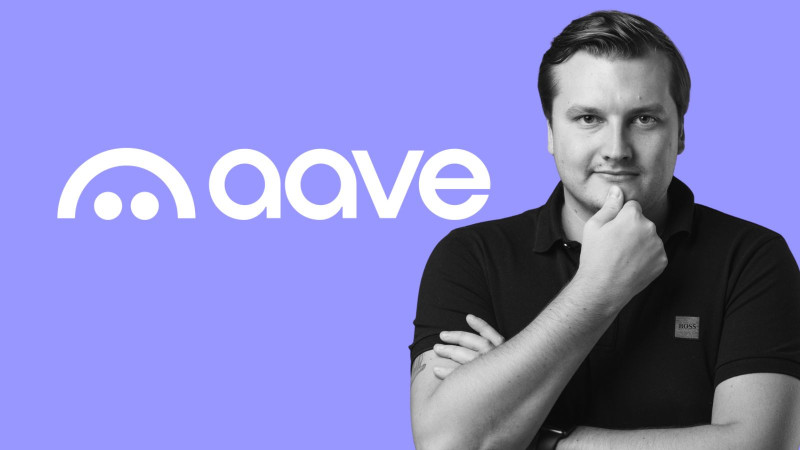
Aave Moves to Ease DAO Tensions Over Revenue Sharing and Control
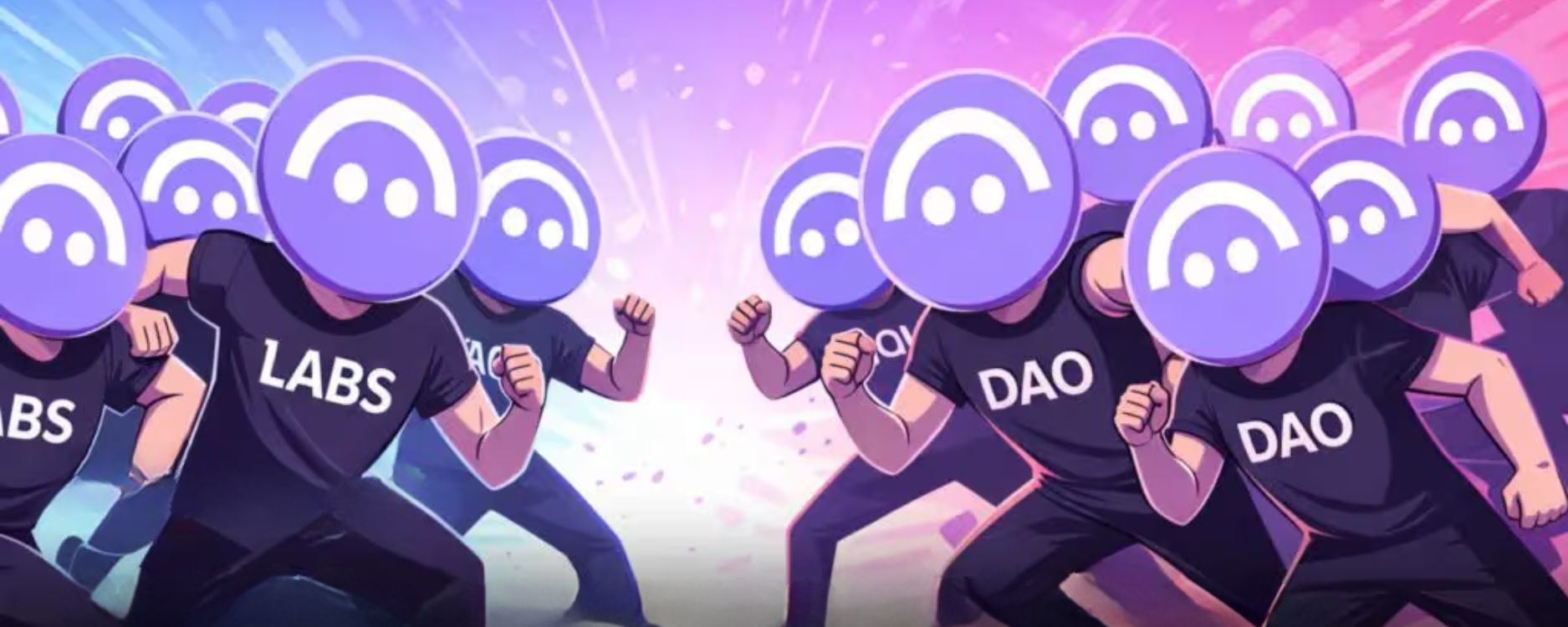
Aave is once again at the center of a familiar DeFi question. Who really controls the protocol, the DAO or the company that builds and maintains it?
This week, Aave Labs moved to ease growing tensions with the Aave DAO after backlash over how non-protocol revenue is handled. The dispute has exposed deeper cracks in the relationship between token holders and the development team, and raised uncomfortable questions about decentralization, ownership, and incentives in one of crypto’s largest lending platforms. In a governance post on Friday, Aave founder Stani Kulechov wrote that,
"Given the recent conversations in the community, at Aave Labs we are committed to sharing revenue generated outside the protocol with token holders, alignment is important for us and for AAVE holders, and we’ll follow up soon with a formal proposal that will include specific structures for how this works.”
At issue is revenue generated outside Aave’s core smart contracts. Specifically, fees tied to the protocol’s frontend and swap integrations. While these fees are not produced directly by the lending protocol itself, many DAO members argue they should still benefit token holders, especially when the interface is tightly associated with the Aave brand.
The disagreement came into focus after Aave Labs switched its frontend swap provider, a move that redirected fees away from the DAO treasury. Some delegates estimate the change could divert millions of dollars annually that previously flowed to token holders. That sparked immediate criticism, with governance participants accusing Aave Labs of unilaterally monetizing the ecosystem without sufficient community approval.
Aave Labs has pushed back on that framing. The team says the frontend is a separate product that requires ongoing development, maintenance, and legal responsibility. From its perspective, monetizing the interface is a reasonable way to fund operations, and not a violation of DAO governance. The protocol itself, they argue, remains fully controlled by token holders.
Still, the explanation did little to calm concerns. For many in the DAO, the issue is less about the money and more about precedent. If revenue connected to the Aave user experience can be captured outside governance, it raises questions about how much power token holders actually have.
The situation escalated when a proposal surfaced that would move control of Aave’s brand assets into a DAO-controlled legal structure. The vote was rushed to Snapshot, drawing criticism over process and transparency. Some contributors said the proposal appeared without proper consultation, further eroding trust at an already sensitive moment.
Market reaction was swift. AAVE’s price slid as traders weighed the uncertainty, adding financial pressure to an already tense governance environment. Longtime delegates warned that unresolved conflicts between Labs and the DAO could weaken Aave’s standing as a leading DeFi protocol.
In response, Aave Labs has now signaled a willingness to compromise. The team proposed sharing portions of non-protocol revenue with the DAO, framing it as a goodwill gesture rather than an obligation. The move is intended to reset the conversation and bring governance discussions back to alignment rather than escalation.
Whether that will be enough remains unclear. Some DAO members see the offer as a step in the right direction. Others worry it avoids the core issue, which is defining where the DAO’s authority begins and ends.
The broader implications stretch well beyond Aave. As DeFi matures, protocols are increasingly forced to reconcile decentralization ideals with the realities of product development, regulation, and sustainable funding. Aave’s governance clash is becoming a case study in what happens when those lines are left blurry.
For now, both sides appear to be stepping back from the brink. But the debate has made one thing clear. In crypto, decentralization is not a destination, it’s an ongoing negotiation.
Uniswap Proposes UNIfication With UNI Burn, Protocol Fee Activation, and Governance Overhaul
Uniswap (UNIfication) Plan: UNI Burn, Fee Overhaul and Ecosystem Reset
A New Chapter for Uniswap and UNI
The protocol behind the leading decentralized exchange, Uniswap Labs, has introduced a sweeping governance proposal named “UNIfication”. The plan would activate protocol fees, burn large volumes of its native governance token UNI, and consolidate the protocol’s leadership and development teams.
At its heart the proposal is designed to align incentives, sharpen focus on growth and position Uniswap as the default exchange for tokenized assets. It marks a significant evolution for a protocol that has been dominant in DeFi but long-standing questions have remained about its tokenomics and monetization model.
Key Elements of the Proposal
UNI Token Burn
A major feature of the proposal is the retroactive burn of 100 million UNI tokens from the treasury. The team has stated that this amount represents what might have been burned had protocol fees been active since launch.
Additionally a portion of future trading fees—including fees from Uniswap’s new layer-2 network, Unichain—would be redirected into the burn process. This creates deflationary pressure on the token supply and promises enhanced value capture for long-term holders.
Protocol Fee Activation and Discount Auctions
Under the proposal trading fees on the protocol would be switched on. A new mechanism called Protocol Fee Discount Auctions (PFDA) would allow traders to bid for fee discounts while also internalizing MEV (maximal extractable value) capture. The revenue generated through these mechanisms would further fuel the UNI token burn.
Team and Governance Restructuring
Uniswap Labs and the separate entity Uniswap Foundation would merge their ecosystem and product teams under a unified leadership structure. A five-member board, including founders like Hayden Adams and others, would oversee growth strategy. Product offerings such as the Uniswap interface, wallet and API would pivot from independent monetization to zero-fee access so that future monetization aligns directly with holders of the UNI token.
Expansion of Uniswap v4 and Aggregator Model
Uniswap v4 is envisioned to function as an on-chain aggregator that hooks into external liquidity sources via new “hooks” architecture. The proposal emphasizes that Uniswap will capture trading fees from external protocols, not just its own AMM pools. This broadened revenue base underpins the fee and burn mechanics.
Why This Matters for UNI Holders and DeFi
For UNI token holders this proposal offers a clearer path to value capture. The token had long been perceived primarily as a governance token with limited economic upside. By activating fees and burning tokens, Uniswap is offering a mechanism for UNI holders to benefit from protocol performance.
From a market perspective the plan signals that the protocol is moving beyond being a pure AMM to becoming comprehensive infrastructure for tokenized assets, multi-chain liquidity and on-chain aggregators. In an ecosystem where protocol revenue and tokenomics matter more than ever, the timing appears aligned with broader DeFi maturation.
What to Watch Next
-
The Snapshot-vote timeline in the Uniswap DAO for the UNIfication proposal.
-
Detailed specifications of fee activation, discount auction parameters and burn schedule.
-
Metrics on swap volume, fees generated and UNI token burn rate once changes are enacted.
-
How Uniswap v4 and Unichain adoption evolve across chains and whether liquidity aggregation materializes.
-
Price action of the UNI token as markets digests the economic redesign and tokenomics shift.
Final Thoughts
The UNIfication proposal from Uniswap marks a pivotal moment for the protocol and its governance token. By activating fees, deploying a structured burn mechanism and consolidating leadership, Uniswap is offering UNI holders a more direct link between protocol growth and value capture.
If successful, the changes could redefine how decentralized exchanges monetize and distribute value in the DeFi era. UNI could shift from a governance play to a value-bearing asset aligned with ecosystem growth. For DeFi at large it suggests that leading protocols are evolving from infrastructure into autonomous economic engines.
That said, execution is key. Merging teams, introducing fees and reorganizing tokenomics demand precision. Unlocking the full potential of UNIfication will require discipline, community support and sustained trading activity. If Uniswap pulls it off, UNI’s role and value proposition could be significantly elevated.
Stay Connected
You can stay up to date on all News, Events, and Marketing of Rare Network, including Rare Evo: America’s Premier Blockchain Conference, happening July 28th-31st, 2026 at The ARIA Resort & Casino, by following our socials on X, LinkedIn, and YouTube.
World Liberty Financial to Airdrop $1.4M in WLFI Tokens
Trump-Backed World Liberty Financial to Distribute Tokens in USD1 Stablecoin Initiative
World Liberty Financial (WLFI), the crypto venture affiliated with U.S. President Donald Trump, has announced plans to distribute 8.4 million WLFI tokens, valued at roughly 1.2 million dollars, to early participants in its USD1 stablecoin loyalty program.
This airdrop is tied to the USD1 Points Program, which launched approximately two months ago to promote adoption of the company’s U.S.-dollar backed stablecoin, USD1. Participants earn points by trading USD1 pairs across partner exchanges and maintaining qualifying balances.
According to WLFI, distribution criteria will vary by exchange: “The criteria and eligibility for earning points and rewards and distribution details may vary based on each exchange’s rules,” the company said in a post on X.
The token distribution is scheduled to take place on six platforms, including Gate.io, KuCoin, LBank, HTX Global, Flipster and MEXC, with each exchange determining eligibility and award amounts under the terms agreed with WLFI.
Strategic Context
The initiative serves several purposes. First, it acts as both a reward for early ecosystem supporters and a mechanism to stimulate USD1-stablecoin usage. Second, it tests the underlying infrastructure for token and stablecoin distribution in a real-world environment. Recognizing the scale, the governance vote preceding the proposal registered overwhelming support from holders.
For WLFI the move is also a visibility play. In a stablecoin market dominated by other major issuers, offering a loyalty-driven token distribution tied to a dollar-backed coin helps position USD1 as more than just another entry. It underscores WLFI’s ambition of building a full Web3 payments ecosystem around USD1, with WLFI governance tokens acting as connective tissue.
The company said the loyalty campaign has driven over $500 million in trading activity since its introduction two months ago, positioning USD1 as the sixth-largest stablecoin by market value, according to CoinGecko data.
Operational and Market Considerations
From a technical standpoint the execution is noteworthy. Eligible wallets do not need to claim their drop; the tokens are sent automatically once eligibility is confirmed. That reduces friction and enhances user experience, which is crucial for adoption at scale.
However several factors warrant attention. While the WLFI airdrop rewards early adopters, the eventual utility of the WLFI token remains tied to governance rights and ecosystem participation. Trading status for the token is still subject to internal decision-making and regulatory alignment. Market watchers also note the importance of transparency around USD1 reserves—its backing by U.S. dollar deposits, Treasury securities and equivalents is central to trust.
Regulatory scrutiny is a further dimension. Given WLFI’s connection to high-profile political figures, the project sits at the intersection of innovation and public interest. Lawmakers and watchdogs have flagged potential conflicts of interest in cases where stablecoins are linked to politically exposed persons. That context raises the importance of governance and disclosure for WLFI and USD1 alike.
What to Watch Next
Key metrics and upcoming milestones will influence perception and adoption of the program:
-
Ecosystem Integration: Monitoring how USD1 becomes usable in real payments, treasury functions or DeFi contexts will matter.
-
Token Tradability: The transition of WLFI tokens from governance-only to tradable status could unlock liquidity and broader market participation.
-
Reserve Audits and Transparency: Regular reports confirming USD1 backing, asset custody and redemption mechanisms will build confidence.
-
Regulatory Progress: U.S. stablecoin legislation and oversight developments will affect how projects like WLFI position themselves globally.
-
Exchange Listings and Adoption: The number and quality of partner exchanges supporting USD1 and WLFI will drive network effects and utility.
Conclusion
The forthcoming airdrop by World Liberty Financial signals a strategic push: leveraging token rewards tied to a stablecoin launch to drive engagement and adoption. It reflects an evolving model in crypto where loyalty programs and token economics interplay with payments infrastructure.
If executed well, this program could strengthen USD1’s role in the stablecoin landscape and reinforce WLFI’s ecosystem narrative. If not, trust issues around reserves, governance or politicised affiliations may overshadow potential gains. For now, the project stands as a significant experiment at the nexus of finance, blockchain and public-figure influence.
Stay Connected
You can stay up to date on all News, Events, and Marketing of Rare Network, including Rare Evo: America’s Premier Blockchain Conference, happening July 28th-31st, 2026 at The ARIA Resort & Casino, by following our socials on X, LinkedIn, and YouTube.
Cardano Stablecoin DeFi Liquidity Proposal Clears 67% — A Watershed Moment for DeFi on Cardano
In a major moment for Cardano governance, the Stablecoin DeFi Liquidity Proposal has cleared the critical 67% approval threshold, signaling that the community is ready to back a bold step: using treasury resources to seed deep liquidity for native stablecoins and DeFi infrastructure. This isn’t just a good sign — it could be the catalyst that pushes Cardano’s DeFi ecosystem into its next chapter of growth.
Below, we break down what this means, why it's so positive, and what to watch as things roll out.
What Passed & Why It Matters
The Proposal & the 67% Threshold
The proposal called for allocating 50 million ADA from the treasury toward liquidity pools supporting stablecoins and DeFi activity. Reaching 67% is not a trivial feat — it reflects broad consensus among stake delegates and governance participants.
With that level of community backing, the proposal gains legitimacy. It means that those voting believe deeply in the idea that liquidity is the bottleneck holding back growth on Cardano.
Liquidity Is the Missing Link
One frequent critique of DeFi on Cardano has been that stablecoin and trading liquidity is relatively shallow, leading to high slippage, poor UX, and that large trades simply don’t make sense on-chain yet. By seeding liquidity, the proposal aims to reduce slippage, improve price stability, and attract larger capital flows into the ecosystem.
Think of it like providing highways instead of dirt roads: you need good roads before heavy traffic can arrive.
The Bright Horizon: Positive Impacts for Cardano DeFi & Ecosystem
1. Deepened Liquidity, Better UX
More ADA backing in stablecoin pools means that users swapping, lending, or borrowing stablecoins will enjoy smoother prices, lower slippage, and more trust in the on-chain experience. That’s a major upgrade to user confidence.
2. Stronger TVL & Capital Attraction
As liquidity grows, Total Value Locked (TVL) can scale more aggressively. This supports interest from institutional capital, cross-chain bridges, and larger-scale DeFi players who typically avoid chains with shallow markets.
3. Stablecoin Ecosystem Boost
Native stablecoins (like USDA, USDM, DJED) stand to gain immensely. As liquidity improves, they become more credible, more usable, and more integrated. That helps reduce reliance on external stablecoins and strengthens Cardano’s self-sovereign financial stack.
4. Positive Feedback Loop for Projects
DeFi protocols will be more willing to build — knowing liquidity support exists. This leads to new primitives, tools, yield strategies, lending/borrowing markets, and richer composability. Projects that were waiting on infrastructure may now accelerate deployment.
5. Treasury Utility & Sustainability
If structured well, the liquidity deployment can generate returns (via trading fees, yield, protocol incentives) that feed back into the treasury or ecosystem funds. In that sense, it’s not just a subsidy — it’s an investment in the network’s future.
6. Signaling & Confidence
Clearing such a threshold sends a strong message to outside markets: Cardano is serious about competing in DeFi. It may attract developer attention, new capital, and partnerships that might’ve sidelined Cardano in the past due to lack of liquidity confidence.
Final Thoughts
With the Stablecoin DeFi Liquidity Proposal passing at 67%, Cardano has cleared a psychological and technical hurdle. This is a moment of lean forward, not cautious hesitation. The stage is set for improved liquidity, deeper markets, more vibrant DeFi activity, and fresh confidence from developers, users, and capital.
If implemented well, this move could prove one of the defining turning points in Cardano’s journey toward being a powerhouse in DeFi. The positive effects may ripple beyond just Cardano — it becomes a signal to the rest of crypto that thoughtful, community-backed infrastructure investment matters.