#Financial Regulation

Coinbase Launches Derivatives for UK Professional Investors

Coinbase has announced the launch of a new suite of derivatives that will be available exclusively to eligible traders in the United Kingdom.

Announcing the rollout, Coinbase said the launch of these derivatives aligns with its goal of building a unified, borderless, and fully transparent derivatives ecosystem that gives professional traders the tools they need to navigate any market.
“The launch continues our effort to launch the ‘Everything Exchange’ in the UK. Our vision is to make Coinbase a single place where everyone from first-time crypto investors to the most sophisticated traders can access and manage all of their assets.”
As part of its rollout plans, Coinbase revealed that eligible professional traders will gain access to these derivatives in the coming months, including perpetuals, dated futures, and crypto options.
According to the exchange, eligible traders will have 24/7 access to more than 170 supported assets across crypto, commodities, equities, and foreign exchange, with leverage of up to 50x for perpetuals and up to 20x for dated futures.
The rollout of these derivatives comes shortly after Coinbase secured a Markets in Financial Instruments Directive (MiFID) investment services authorisation from the UK Financial Conduct Authority (FCA). The authorisation provides Coinbase with the regulatory permissions needed to offer derivatives to eligible UK clients.
As Coinbase continues to pursue its goal of becoming an “Everything Exchange” that serves users globally, the company has also received regulatory approval to expand its operations in Australia and Abu Dhabi.
It has also expanded access to more than 4,000 tokenised US stocks and exchange-traded funds (ETFs) for non-US residents.
Revolut Receives French Banking License

Revolut Bank S.A., an entity of global fintech company Revolut, has received a full banking license from the European Central Bank (ECB), following an assessment conducted jointly by the ECB and the French Prudential Supervision and Resolution Authority (ACPR).

Announcing the receipt of the license in a press release on Monday, Revolut said the approval creates a foundation for the company to better serve its clients in Western Europe while maintaining the highest regulatory and operational standards. The company added that the license supports its goal of becoming one of Europe’s largest and most trusted banks.
Commenting on the license, Nik Storonsky, Revolut’s founder and CEO, said, “This licence gives us the foundation to build the next generation of banking for more than 30 million customers across Western Europe.”
“France has become a leading financial hub, supported by a dynamic financial ecosystem and a robust regulatory framework. It is the ideal platform to accelerate Revolut's next phase of growth, bringing us one step closer to our ambition of becoming one of Europe's largest and most trusted banks.”
With the approval, Revolut, through its French entity Revolut Bank S.A., can now operate as a fully authorized local bank in France and provide a full range of banking services.
Revolut currently serves more than 75 million customers across more than 40 countries globally, with Western Europe representing one of its largest and fastest growing markets.
The company plans to reach 100 million customers across 100 countries by mid 2027. According to the company, Revolut Bank S.A. will progressively expand its operations across Europe, starting with France.

U.S.-UK Transatlantic Taskforce Releases Policy Report Promoting Digital Asset Innovation

Image credit: open access government
The United States Department of the Treasury and the United Kingdom's HM Treasury have jointly released a framework outlining recommendations to strengthen economic cooperation between the two countries.
Although the report is not solely about cryptocurrencies, the framework focuses on the broader digitalization of the financial sector, including stablecoins, tokenized financial assets, and digital market infrastructure.
According to a press release from the U.S. Department of the Treasury, the recommendations, which build on the longstanding relationship between the U.S. and U.K. financial markets, aim to reduce unnecessary friction hindering economic ties between the two countries while identifying opportunities to enhance cross-border capital raising, strengthen supervisory cooperation, and provide greater clarity for tokenized financial activity.
Regarding the goal of the Transatlantic Taskforce, U.S. Treasury Secretary Scott Bessent said, "The Transatlantic Taskforce for Markets of the Future reflects the strength and depth of U.S. and UK markets and our shared commitment to fostering economic growth and advancing global standards that reward innovation and competition."
Following the Taskforce's recommendations, the United States and the United Kingdom released a joint statement on stablecoins. The statement reaffirmed both countries' shared commitment to well-regulated stablecoins as a tool for financial innovation.
The two countries also emphasized the need for stablecoins to be fully backed on a one-to-one basis by high-quality liquid assets, with strong safeguards for reserves, consumer protection, timely redemption, and financial stability.
The Transatlantic Taskforce's release of the policy report comes shortly after the U.K. government published its first tokenized finance roadmap. The report, developed alongside task forces from 54 major financial institutions, including BlackRock, JPMorgan, and Goldman Sachs, focuses on scaling tokenization through initiatives such as the issuance of tokenized government bonds, tokenized repo and collateral markets, and stablecoin-enabled settlement.
The report projects that tokenizing wholesale financial markets could add up to £33 billion in annual GDP and £14 billion in tax revenue by 2035.
About the U.S.-UK Transatlantic Taskforce
The U.S. UK Transatlantic Taskforce for Markets of the Future was established by HM Treasury and the U.S. Department of the Treasury, led by U.S. Treasury Secretary Scott Bessent and UK Chancellor of the Exchequer Rachel Reeves, in September 2025.
The task force was established to strengthen bilateral cooperation between the two countries, enabling them to explore collaboration in capital markets and digital assets, including stablecoins and tokenization.
In addition to HM Treasury and the U.S. Department of the Treasury, the task force works with regulators from both countries, including the Financial Conduct Authority, the U.S. Securities and Exchange Commission, the Commodity Futures Trading Commission, the Federal Reserve, the Federal Deposit Insurance Corporation, and the Office of the Comptroller of the Currency.
FDIC Moves to Regulate Stablecoin Issuers Under GENIUS Act

The Federal Deposit Insurance Corporation (FDIC), the primary insurance body for bank deposits in the United States, has recently moved to regulate FDIC supervised stablecoin issuers in accordance with the Guiding and Establishing National Innovation for US Stablecoins (GENIUS) Act.
The agency, in a recent press release, announced that its board of directors had approved a Notice of Proposed Rulemaking to implement key provisions under the GENIUS Act.
According to the FDIC, this proposal would provide a prudential framework for permitted payment stablecoin issuers under its supervision, setting standards with regard to stablecoin reserve assets, redemption, capital, liquidity, and risk management that will be uniformly adhered to by all FDIC supervised stablecoin issuers.
The proposal will also establish requirements for FDIC supervised permitted payment stablecoin issuers and insured depository institutions that provide certain payment stablecoin related custodial and safekeeping services.
All entities under FDIC supervision, including permitted payment stablecoin issuers, which are entities legally approved to issue stablecoins in the United States, and insured depository institutions, which include banks and other federally insured financial institutions, must comply with this new FDIC stablecoin prudential rule if they are engaged in issuing stablecoins or providing related services.
Although the FDIC insures deposits at more than 4,000 financial institutions in the United States and supervises more than 2,700 banks, there are currently no approved permitted payment stablecoin issuers or insured depository institutions operating under this specific framework. Approval would only follow once the proposal becomes a final rule, after which entities may begin applying for supervision under the FDIC.
For the proposal to become a rule, it must be released for public comment, which has already occurred, with a 60-day window provided for feedback. After the 60-day window elapses, the FDIC will review the comments and feedback and make any necessary adjustments based on the public response.
The Office of the Comptroller of the Currency, the Federal Reserve, and, in some cases, the Treasury Department may be invited to review the final proposal to ensure it does not conflict with existing banking and financial laws. After this review, the FDIC board may approve it as a final rule, after which it is published in the Federal Register.
What happens after the proposal becomes law?
Upon the proposal becoming law, banks and other eligible financial institutions can then apply for designation as a Permitted Payment Stablecoin Issuer (PPSI) under FDIC supervision. The application is reviewed and either approved or denied by the FDIC within a period of 120 days.
The FDIC will also regularly review the capital, reserves, risk controls, and compliance systems of these approved entities to ensure they are safe to operate.
UK Bans Crypto Donations in Politics After Security Review

The UK government has imposed a moratorium, or temporary ban, on cryptocurrency donations in politics following findings from an independent review.
Commissioned by UK Secretary of State Steve Reed in December 2025, the Rycroft review, led by former Permanent Secretary Philip Rycroft, investigated “foreign financial influence and interference in UK politics.”
The findings of the review, published on Wednesday, highlighted how active hostile states are attempting to influence UK democracy and identified political crypto donations as a vulnerability. Since such donations are difficult to trace, the review recommended a temporary ban or moratorium on political crypto contributions.
Following a recommendation from the Rycroft Review for a ban on political crypto donations, the UK government has announced a moratorium on political cryptocurrency contributions. The ban, which takes immediate effect, was confirmed by Prime Minister Keir Starmer.
"I can tell the House we will act decisively to protect our democracy. That will include a moratorium on all political donations made through cryptocurrencies," Starmer said during Prime Minister’s Questions on Wednesday.

Prime Minister’s Questions. Image credit: Youtube
In a statement on its official website, the UK government said British citizens living abroad will face an annual cap of £100,000 on donations and on regulated transactions, including loans. The government said the measure aims to "protect the country's democracy from the scourge of foreign actors and financial influence."
Next Stage: Bill Moves Toward Law
Although the ban is already in effect as a temporary measure, the Representation of the People Act will need to be amended for it to become permanent law. The Representation of the People Act is a UK law that governs how elections are conducted, who can vote, and how political parties operate, including rules on donations and campaign financing.
Once the amended bill passes both the House of Commons and the House of Lords, it will be sent to King Charles III for royal assent. On becoming a law, political entities will have a 30 day deadline to return any political crypto donations received during the moratorium period.
"Once the legislation comes into force, political parties and regulated entities, such as candidates and MPs, will have 30 days to return any unlawful donations received in the interim, after which enforcement action may be taken, the UK government wrote on its website."
This moratorium comes amid calls from top politicians in the country who have long sought a ban on political crypto donations, notable among whom are Parliament member Rushanara Ali, Matt Western, Labour MP and committee chair, among others.

Coinbase Is Suing Three States, and the Future of Prediction Markets Is on Trial
Coinbase has sued Connecticut, Michigan, and Illinois today, but it does not look like a typical regulatory skirmish. On the surface, it was about a few cease-and-desist orders targeting prediction market contracts. In practice, it put a much bigger question on the table. What exactly are prediction markets supposed to be?
Are they casinos in disguise, digital poker rooms with better UX, or a new kind of financial market that belongs under federal oversight?
The answer matters, because the wrong classification could freeze a fast-growing corner of finance in legal limbo.
Why Coinbase Is Taking States to Court
The states argue that Coinbase’s prediction markets amount to illegal gambling. Users put money down on outcomes. Some win, some lose. No state gambling license, no approval.
Coinbase sees it very differently. These contracts, the company argues, are event-based derivatives. They look like futures, trade like futures, and are already subject to federal commodities law. The Chief Legal Officer for Coinbase, Paul Grewal, stated in an X post on Friday that the company filed the lawsuits to "confirm what is clear" and that prediction market should fall under the jurisdiction of the U.S. Commodity Futures Trading Commission.
If states are allowed to regulate these markets anyway, the logic goes, national liquidity disappears. A market that works in one state but not another stops being a market at all. But, there are comparisons to existing gambling laws and we broke those down for you.
The Casino Comparison Only Goes So Far
State regulators tend to reach for the casino analogy first, and it is easy to see why. There is money at risk. Outcomes are uncertain. The optics are not subtle.
But structurally, prediction markets do not behave like casinos. Casinos set the odds. The house always wins over time. The product is entertainment.
Prediction markets do not work that way. Prices are set by participants. New information moves markets. There is no built-in house edge. The value comes from aggregating beliefs into a number that says something useful about the future.
Calling that gambling because it involves money is a shortcut, and not a very precise one.
Poker Explains the Skill Argument, and Its Limits
Poker is the comparison that usually comes next. Courts have spent years debating whether poker is mostly luck or mostly skill. Many have concluded that skill dominates over time, even if chance plays a role in the short run.
Yet poker is still regulated as gambling in most places. Not because it lacks skill, but because the law never quite figured out where else to put it.
That history matters. It shows how activities that clearly reward information and decision-making can still end up trapped in gaming frameworks that were built for something else entirely.
Prediction markets risk repeating that mistake. Like poker, they reward skill. Unlike poker, they are not games. They are continuous markets with prices, liquidity, and arbitrage. Treating them like a card room because money changes hands misses the point.
Why Prediction Markets Look Like Futures Markets
If you strip away the cultural baggage, prediction markets start to look familiar. They are standardized contracts tied to future outcomes. Prices reflect probability. Traders respond to data.
That is the same basic logic behind futures contracts tied to interest rates, inflation, or commodities. Those markets involve speculation, risk, and uncertainty too. They are regulated, but they are not treated as gambling.
This is where Coinbase’s argument lands. Congress already created a regulator for markets like this. The CFTC exists to oversee contracts that trade future outcomes, including event-based ones. The fact that an outcome is an election or a policy decision does not change the structure of the market.
What Changes If Coinbase Wins
If Coinbase wins, the impact goes well beyond these three states.
First, jurisdiction becomes clearer. States would no longer be able to regulate federally governed prediction markets simply by labeling them gambling. That alone would remove one of the biggest sources of uncertainty hanging over the industry.
Second, the casino argument loses legal weight. Courts would be acknowledging that uncertainty plus money does not automatically equal gambling, especially when prices are discovered through open trading rather than set by an operator.
Third, prediction markets would finally escape the poker problem. They would not sit in a gray zone where skill is recognized but regulation never quite fits. Instead, they would fall under a framework designed for markets, not games.
With that clarity, these markets could scale. Liquidity would deepen. Institutional participants could step in. Contracts tied to economic data, climate outcomes, and corporate milestones could expand without the constant risk of state-level shutdowns.
Over time, prediction markets could start to look less like a regulatory headache and more like infrastructure. Another tool, alongside surveys and models, for figuring out what the world might do next.
A Bigger Signal About Regulation
This case is not really about Coinbase. It is about whether U.S. regulation can adapt when finance starts to blur into something new, a question that has stifled digital asset growth for years.
Casinos deal in chance. Poker deals in skill inside a gaming framework. Futures markets deal in information. Prediction markets belong in the third category, even if they make people uncomfortable.
If courts agree, it would send a signal that regulation can still be about function rather than analogy. That is not a radical idea. It is how most financial markets came to exist in the first place. Prediction markets are here to stay. We've seen huge partnerships with major media news outlets and exchanges. The regulatory details need to be clearly defined for this emerging industry.
And if that happens, prediction markets may finally stop being debated as gambling, and start being treated as what they have been trying to become all along. Markets that trade in probabilities, under rules built for markets, not casinos.
Stay Connected
You can stay up to date on all News, Events, and Marketing of Rare Network, including Rare Evo: America’s Premier Blockchain Conference, happening July 28th-31st, 2026 at The ARIA Resort & Casino, by following our socials on X, LinkedIn, and YouTube.

Crypto CEOs Join CFTC Innovation Council as Market Shift Begins
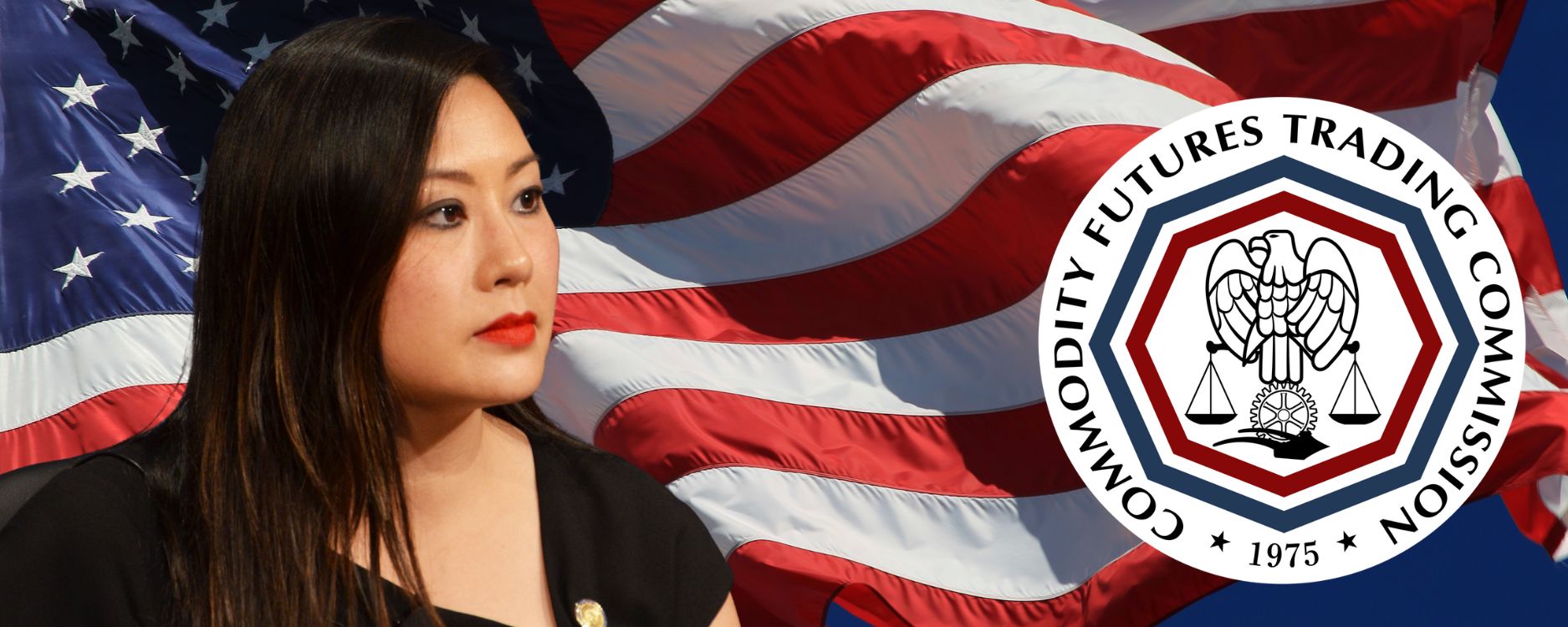
Caroline Pham is heading into her final stretch as acting chair of the CFTC, but she is not easing her way out. Instead, she has pulled together a new CEO Innovation Council, bringing in a mix of crypto founders and leaders from major financial institutions. The timing feels intentional. Markets are shifting fast, the technology is shifting even faster, and she clearly wanted this group in place before she hands off the job.
The council itself is an unusual gathering. On one side are Tyler Winklevoss from Gemini, Arjun Sethi from Kraken and Shayne Coplan from Polymarket. On the other, executives from CME Group, Nasdaq, ICE and Cboe. It is not often you see these people sitting on the same advisory panel, let alone one created this quickly. According to the commission, the entire list came together in about two weeks, which says a lot about how much urgency Pham applied.
She thanked the group for agreeing to join so quickly, noting that the commission needs their experience as it tries to prepare for what comes next. The council will focus on the areas where the rulebook is changing as fast as the products themselves. Tokenization. Prediction markets. Perpetual contracts. Crypto collateral. Around the clock trading. Blockchain market plumbing. Basically all the things that traditional derivatives systems were never built to handle.
Here is the full list of names:
Shayne Coplan, Polymarket
Craig Donohue, Cboe
Terry Duffy, CME Group
Tom Farley, Bullish
Adena Friedman, Nasdaq
Luke Hoersten, Bitnomial
Tarek Mansour, Kalshi
Kris Marszalek, Crypto.com
David Schwimmer, LSEG
Arjun Sethi, Kraken
Jeff Sprecher, Intercontinental Exchange
Tyler Winklevoss, Gemini
All of this is happening as the agency prepares for new leadership. President Trump’s nominee, Mike Selig, is expected to be confirmed soon. When he steps in, he will inherit an agency already deep into crypto policy work that accelerated under Pham. Just this week, the CFTC launched a pilot for using crypto collateral inside derivatives markets. A few days before that, Bitnomial began offering leverage spot crypto trading with her support.
Pham has only been in the acting role for a short time, but she treated crypto as a top priority, pushing several initiatives that line up with the administration’s goal of positioning the United States as a leading hub for digital assets. Over at the SEC, Chairman Paul Atkins has been doing something similar through Project Crypto, which has been absorbing much of the agency’s energy.
What comes next will land in Selig’s lap. But with this council now in place, he will walk into a job where the industry and the regulators are already in the middle of a much bigger conversation about what the future of market structure should look like.