#ETH

Hsiao Wei Wang Leaves Ethereum Foundation Leadership

Hsiao Wei Wang, co-executive director and board member of the Ethereum Foundation (EF), has announced her departure from the foundation, shortly after co-executive director Tomasz Stańczak left in February this year.
“After my sabbatical, I have decided to step down as co-executive director and board member of the Ethereum Foundation, effective today,” Wang wrote in an X post.
“Serving as EF co-executive director let me see the bigger picture of how the Ethereum community collaborates. I’m proud of what we’ve accomplished, not only at the EF, but across the builders, researchers, educators, validators, users, and many other contributors who have helped build, maintain, secure, and use the infrastructure and applications on top of it.”
Wang joined the EF research team in 2017, where she worked on protocol design, consensus mechanisms, sharding proofs-of-concept, and distributed systems. In March 2025, she was appointed co-executive director and board member alongside Tomasz Stańczak. During her time at the EF, Wang contributed to a range of projects, including sharding research, data availability sampling, EIP 4844, ETHTaipei, and the Taipei Seminar.
Reacting to her departure, Ethereum co-founder Vitalik Buterin commended Wang for her contributions to the foundation. “I still remember her early days in the Ethereum research community, first outside the Foundation and then inside it, and the thought and care she put into making Ethereum research and consensus work more organized and legible,” Buterin wrote in an X post.
“Last year, she, along with Stańczak, voluntarily took on the burden of what is perhaps the most challenging position in the Ethereum Foundation, at one of the most challenging times for Ethereum and, realistically, a challenging time for all of humanity. She handled the task skillfully and gracefully, and has constantly strived to find and insist on outcomes that are right both for the Ethereum protocol and for the human beings who build and maintain it.”
Wang’s departure from the Ethereum Foundation comes as several notable researchers have left the organization, including Tomasz Stańczak and Josh Stark, who departed in April. So far, at least eight senior researchers have left the Ethereum Foundation this year.

Charles Schwab Launches Schwab Crypto Spot Trading Platform

Charles Schwab, the United States based brokerage and banking firm, has launched Schwab Crypto, a spot crypto trading platform that provides direct access to Bitcoin (BTC) and Ether (ETH) trading, along with educational content and support from experienced professionals for users.

“We know our clients want to conduct more of their financial lives at Schwab. With Schwab Crypto, clients who want direct access to the asset class can trade it alongside their other investments, while benefiting from the service, education, and research they expect from us,” said Jonathan Craig, Head of Retail Investing at Charles Schwab.
The spot trading platform will provide direct trading in BTC and ETH, with more cryptocurrencies to be added in the future as the platform expands. Traders will also be able to view and trade both crypto and non crypto products across all of Schwab’s platforms, including its website, Schwab Mobile, its mobile app, and thinkorswim, its advanced trading platform, with 24/7 professional support available to traders.
Through Schwab Coaching, its educational program, Charles Schwab will provide in depth digital assets education and resources, including insights and commentary from the Schwab Center for Financial Research and crypto focused content, all aimed at helping investors understand the digital assets market and how digital assets fit into a broader investing strategy.
How Schwab Crypto Works
Through Charles Schwab Premier Bank (CSPB), Schwab clients will be given a separate crypto account for the purpose of trading on Schwab Crypto, the retail trading platform. However, this account will remain linked to the clients main brokerage accounts, with CSPB serving as the primary custodian of all client digital assets.
Paxos, a leading blockchain infrastructure company regulated by the Office of the Comptroller of the Currency, will be responsible for handling all trade execution and subcustody services.
Regarding Paxos’s role, Joe Vietri, Managing Director and Head of Digital Assets at Charles Schwab, said, “Paxos is a strong partner for blockchain infrastructure. Their regulatory standing and digital asset expertise will help us deliver the seamless, integrated experience our clients expect from Schwab.”
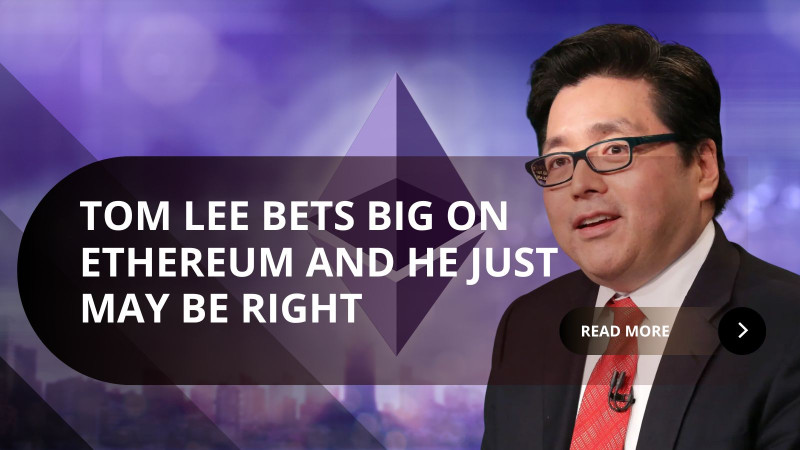
Tom Lee Makes Major Ethereum Bet as BitMine Buys 97,000 ETH
Why Tom Lee Is Betting Big on Ethereum, and Why He Thinks the Best Is Still Ahead
When Tom Lee makes a bold call, people pay attention. He has built a reputation for spotting major market trends early, and now he is putting that conviction behind Ethereum in a very real way. His firm, BitMine Immersion Technologies, just picked up another 97,000 ETH, increasing its total holdings to 3.73 million tokens, worth about $10.5 Billion at latest prices. That is not a casual trade. It is a signal that Lee believes Ethereum is on the edge of something much bigger.
Instead of waiting for a hype cycle or chasing a rally, Lee is buying during a quieter period in the market. And based on his recent comments, there is a clear reason why. He sees a combination of catalysts lined up at the same time, and he believes they give Ethereum one of the strongest setups of any major asset heading into 2026.
BitMine’s ETH Strategy Is Not a Short Term Play
Lee has been gradually stacking ETH throughout the year, and the latest acquisition is simply the biggest chapter in that story. Multiple large purchases over several months paint a clear picture. This is not a speculative gamble or a quick swing trade. BitMine is positioning Ethereum as a long term strategic asset on its balance sheet.
It is the kind of move you normally see from companies preparing for a shift in market conditions, or from firms that believe a key technology is about to break out. In this case, Lee seems to believe both are true.
What Is Driving Tom Lee’s Confidence
Ethereum Looks More Like Financial Infrastructure Than a Crypto Coin
One point Lee keeps returning to is the idea that Ethereum is becoming the backbone of digital finance. Between stablecoins, DeFi platforms, real world asset tokenization and on chain identity systems, Ethereum has become much more than a place to speculate.
Lee’s view is simple. If financial markets continue moving toward tokenization, Ethereum stands to benefit more than almost any other chain. It has the developers, the users and the network effects that make growth not just possible, but likely.
The Macro Environment Could Create Fuel
Another major part of his thesis is tied to the Federal Reserve. Lee thinks the Fed may start cutting interest rates in the coming year. If that happens, liquidity usually returns to risk assets, and crypto tends to be one of the biggest beneficiaries.
In past easing cycles, assets with high growth potential often outperformed. Lee sees ETH in that category today, especially with everything happening on chain.
The Fusaka Upgrade Could Kick Off a New Phase
Ethereum’s next upgrade, called Fusaka, is coming soon. Lee views it as a serious quality of life improvement for the entire network. Cheaper data availability, more efficient rollups and improved scalability have the potential to bring even more activity into the ecosystem.
If applications become cheaper and faster to run, it opens the door for new waves of DeFi tools, enterprise systems and consumer apps. That kind of expansion is exactly the type of catalyst Lee likes to position around before the crowd catches on.
Why This Institutional Move Matters
Institutional buying during sideways markets has a different energy than buying during bull runs. It comes from research, planning and long horizon thinking, not excitement or fear of missing out.
Lee is not buying ETH on a whim. He is building what looks like a strategic treasury position, much like companies that accumulate energy reserves, metals or other foundational commodities. When firms treat ETH as infrastructure instead of speculation, it sends a message. It suggests they believe Ethereum is becoming a permanent part of the financial landscape.
And when a well known market voice makes a move like this, it often encourages others to re-evaluate their assumptions.
Of Course, There Are Still Risks
Lee is bullish, but he is not blind. He has acknowledged several things that could slow Ethereum down.
-
The economy could stay tight if inflation refuses to cool
-
Technical delays could undermine upgrades
-
Regulation could shift unexpectedly
-
Competing blockchains are not standing still
None of these risks are trivial. But Lee’s argument is that Ethereum has enough traction, developers and real world use cases to keep moving forward regardless.
Final Thoughts
Tom Lee’s purchase of 97,000 ETH is more than a headline. It is a statement. He believes Ethereum is undervalued, underappreciated and on the verge of a major turning point. Between the Fusaka upgrade, the potential for a friendlier macro environment and Ethereum’s expanding role in tokenized finance, his case is not hard to understand.
You do not accumulate this much ETH unless you think the future is brighter than the present. And Lee clearly does.
If he is right, Ethereum could be gearing up for one of its strongest chapters ever.
Stay Connected
You can stay up to date on all News, Events, and Marketing of Rare Network, including Rare Evo: America’s Premier Blockchain Conference, happening July 28th-31st, 2026 at The ARIA Resort & Casino, by following our socials on X, LinkedIn, and YouTube.
Ethereum Fusaka Upgrade Set for December 3, Bringing Major Scalability Improvements
Ethereum’s Fusaka Upgrade: A Critical Step Toward True Scalability
Ethereum is preparing for one of its most important upgrades in years. The Fusaka hard fork, officially scheduled for December 3, 2025, is designed to improve scalability, lower transaction costs, and strengthen support for layer 2 rollups. In a year defined by record network usage, rising global adoption, and increasing competition among blockchains, Fusaka represents a meaningful step toward Ethereum’s long-term vision as a scalable, decentralized world computer.
This upgrade is not a small patch. It integrates improvements across data availability, block capacity, gas economics, and validator efficiency. With Fusaka coming only months after a significant earlier update, Ethereum developers are clearly pushing hard to meet growing demand and prepare the network for its next phase of growth.
What Fusaka Introduces
Fusaka delivers a bundle of Ethereum Improvement Proposals focused on two primary goals: lowering the cost of data availability for layer 2 rollups and improving network throughput. At the center of the upgrade is a major new feature called PeerDAS, or Peer Data Availability Sampling.
PeerDAS: Foundational to Ethereum’s Scaling Vision
PeerDAS allows validators to verify data blobs by sampling only parts of the data instead of downloading the entire blob. This dramatically reduces bandwidth requirements and storage costs for validators. As a result, layer 2 networks can publish more data to Ethereum at a lower cost, which ultimately means cheaper and faster transactions for users.
PeerDAS is a core component of Ethereum’s long-term scaling strategy. Instead of increasing block size in ways that may centralize the network, Ethereum is increasing throughput through smarter and more efficient data verification.
Higher Block Gas Limit
Ahead of Fusaka, the block gas limit has been increased to 60 million. This allows more computational work per block, which helps handle higher transaction volumes. It also prepares the network for the increased activity expected from growing layer 2 ecosystems.
Blob Parameter Only Forks
Fusaka introduces a new mechanism that allows Ethereum to gradually increase blob capacity without requiring massive, coordinated hard forks. This flexibility gives developers the ability to scale blob data availability as demand from rollups increases. It is a more responsive and modern approach to protocol upgrades.
Gas Cost and Opcode Optimization
The upgrade also includes refinements to gas costs and opcode behavior. These changes improve smart contract efficiency, reduce unnecessary overhead, and create a more predictable environment for developers building large-scale applications.
Why Fusaka Matters
More Sustainable Layer 2 Growth
Layer 2 networks are already driving the majority of Ethereum’s user activity. However, their economics depend heavily on blob costs and data publishing efficiency. Fusaka directly supports this growth by lowering data availability costs and improving the performance of rollups.
For users, this could translate to lower fees and smoother experiences across DeFi, gaming, on-chain social networks, and other decentralized applications.
Reduced Congestion and Lower Fees
Ethereum has sometimes struggled with network congestion during peak periods, resulting in high gas fees. The combination of higher block gas limits, improved data handling, and optimized computation can help reduce these spikes. Fusaka does not eliminate gas fees entirely, but it makes the network more efficient and resilient under stress.
Future-Proofing Ethereum
Fusaka is designed as part of Ethereum’s larger “Surge” roadmap, which aims to scale the network to thousands of transactions per second without sacrificing decentralization. By improving both layer 1 and layer 2 performance, Fusaka builds the foundation for the next decade of Ethereum growth.
Improved Developer and Validator Experience
Optimizations in Fusaka reduce the burden on validators, make node operations more efficient, and help smart contract developers build more scalable applications. By lowering technical barriers and improving performance, the upgrade strengthens Ethereum’s long-term decentralization.
Community and Developer Readiness
Ethereum developers have tested Fusaka across multiple testnets, and client teams have signaled readiness for activation. The increase in block gas limits and smooth rollout of test configurations suggest strong coordination between developers, infrastructure teams, and validators.
Early analytics show rising activity on layer 2 networks, growing demand for blob space, and expanding multi-chain connectivity. These trends indicate that Fusaka is arriving at a crucial moment.
Risks and Considerations
Fusaka brings meaningful benefits, but there are challenges to consider.
-
Large upgrades carry technical and synchronization risks for nodes and validators.
-
Adoption by layer 2 networks may require additional time after Fusaka activates.
-
High demand may still outpace capacity upgrades until additional improvements go live.
-
Competing chains with aggressive scaling strategies may continue to pressure Ethereum.
Careful coordination among the ecosystem’s stakeholders will be essential to ensure a smooth transition.
What Fusaka Means for Ethereum’s Future
For users, Fusaka promises lower costs, improved performance, and a better on-chain experience. For developers, it offers stronger infrastructure and greater room to innovate without hitting scalability bottlenecks. For investors, it represents a tangible step toward long-term network maturity.
Ethereum’s evolution has always focused on gradual, sustainable progress rather than risky shortcuts. Fusaka embodies that philosophy. It improves the network in practical, meaningful ways, without compromising decentralization or security.
If successful, Fusaka may be remembered as the upgrade that unlocked Ethereum’s next growth cycle and cemented its position as the dominant platform for decentralized applications.
Stay Connected
You can stay up to date on all News, Events, and Marketing of Rare Network, including Rare Evo: America’s Premier Blockchain Conference, happening July 28th-31st, 2026 at The ARIA Resort & Casino, by following our socials on X, LinkedIn, and YouTube.

Ethereum Breakout Moment May Be Near As Blackrock Files For Staked Ethereum ETF
Ethereum’s Breakout Moment Is Here and BlackRock’s ETF Filing Proves It
While headlines fixate on short-term price swings, Ethereum may be at the cusp of its next major wave. At the center of this shift is BlackRock’s amended filing for its iShares Ethereum Trust (ETHA), which proposes to bring institutional-grade staking and regulated access to ETH. This is not just a finance story—it’s a structural paradigm change for how Ethereum is invested and valued.
If approved, BlackRock’s ETF could act as a catalyst—unlocking massive new inflows, embedding ETH in mainstream portfolios, and turning institutional interest into tangible upside.
What BlackRock Filed and Why it’s Huge
BlackRock has submitted an amendment to the ETHA ETF that would allow the trust to stake ETH and treat the rewards as income, effectively transforming the product from simply price exposure to yield-bearing crypto exposure. This amendment includes:
-
A proposal to delete a prior clause preventing the trust’s ETH holdings from participating in validation.
-
A mechanism to stake “all or a portion” of ETHA’s holdings via trusted providers, with rewards flowing back to shareholders.
-
A shift to align with new regulatory frameworks that streamline approval of commodity-based ETFs and staking products.
Regulators have already acknowledged the filing and opened the standard review period, triggering a countdown to what many analysts believe could be an approval by late 2025. When you combine this regulatory momentum with BlackRock’s track record—an almost flawless ETF approval history—the odds for ETH explode upward.
Why This Launch Could Define Ethereum’s Next Cycle
1. Institutional Capital Deployment
With ETH ETFs now live and staking potentially baked in, large capital allocators—pension funds, endowments, sovereign wealth—can meaningfully access Ethereum in regulated wrappers. That changes the demand dynamic forever.
2. Yield Gains as Unique Edge
Ethereum already offers staking yield, unlike many alternative blockchains. By giving ETF-holders access to that yield through BlackRock’s product, ETH becomes not just a growth asset but an income asset—making it far more palatable to traditional allocators.
3. Structural Asset Upgrade
Ethereum is moving beyond speculative narratives into real infrastructure status. It is the settlement layer for DeFi, tokenization, Web3 apps and smart contracts. With staking built into ETF exposure, ETH’s role becomes even more core.
4. Timing with Market Positioning
Recent price consolidation and quiet sentiment have created the ideal setup for a catalyst. With few eyes on ETH right now and fundamental forces aligning behind the scenes, this could be the calm before the breakout.
Technical & Market Indicators Align
-
ETH trading near long‐term support zones with major moving averages acting as floors.
-
ETF flow data showing institutional interest remains strong even while retail sentiment fades.
-
On-chain metrics such as declining exchange reserves and increasing staking participation pointing toward supply tightening.
-
The ETF filing and staking mechanism represent a potential inflection point that could drive a re-rating.
Why ETH Has Unique Advantages Going Forward
-
Largest ecosystem of smart contracts, developers and real-world use cases among Layer-1 blockchains.
-
Staking income combined with price appreciation offers a differentiated proposition.
-
Institutional access improving rapidly thanks to regulated ETFs, bridging DeFi and traditional finance.
-
Upgrade roadmap remains robust with scalability, rollups and data availability enhancements creating optionality.
-
BlackRock’s move validates ETH’s role not just as a crypto asset but a mainstream digital asset infrastructure.
Bullish Outlook & Price Implications
Given all these factors, Ethereum is positioned for a meaningful re-rating, not just a rebound from cyclical lows. When catalysts align we could see ETH back into the multiple thousands of dollars range. Analysts looking at yield, ecosystem growth and institutional flows place year-end targets above $5,000, with upside into $6,000 plus if staking gets approved and inflows accelerate.
This is less about short-term trading and more about stepping into a new phase of digital asset infrastructure. Ethereum isn’t just recovering, it is transforming.
Final Thoughts
BlackRock’s staking-enabled Ethereum ETF filing may be the single most important development for ETH in 2025. It turns regulatory signals into capital access, theoretical yield into actual income and “crypto asset” into “institutional allocation.”
For long-term believers, Ethereum offers one of the most compelling asymmetric opportunities in all of crypto. It combines infrastructure dominance, yield potential, deep liquidity and a clear growth trajectory. The market may appear quiet now, but the pieces are aligning for something much bigger.
If history and fundamentals hold true, ETH’s next chapter could be far greater than its last. The moment may be quiet, but the setup is anything but.
Stay Connected
You can stay up to date on all News, Events, and Marketing of Rare Network, including Rare Evo: America’s Premier Blockchain Conference, happening July 28th-31st, 2026 at The ARIA Resort & Casino, by following our socials on X, LinkedIn, and YouTube.
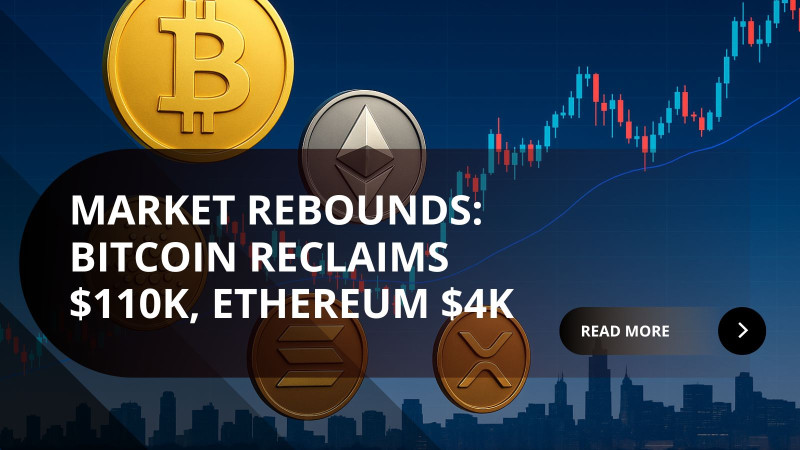
The Snapback: Crypto Market Rebounds With BTC Re-Claiming $110K
After one of the year’s ugliest flushes, crypto flipped the script fast. Bitcoin reclaimed the $110k handle while Ether pushed back above $4k, classic signs that dip buyers (and not just tourists) stepped in with conviction. The sharp selloff was followed by an even sharper recovery, reflecting a market that has matured and grown deeper in liquidity.
What Changed? Three Forces Behind the Bounce
1. Structural demand via ETFs kept soaking supply
Spot ETF flows did not vanish during the downdraft; they re-accelerated as prices stabilized. U.S. spot bitcoin ETFs notched another billion-dollar net inflow day in early October, confirming persistent institutional demand. That steady bid is a big reason BTC recaptured the $110k area quickly.
2. Leverage was flushed, then reset
The crash featured a historic derivatives wipeout, followed by some of the lowest (even negative) funding prints since the 2022 bear. Translation: weak hands and over-levered longs were forced out, making room for a healthier advance. Post-flush markets tend to rally on lighter, stickier positioning, and that is exactly what we saw.
3. On-chain accumulation showed real buyers stepping in
On-chain analyses pointed to renewed net accumulation among small and mid-sized BTC holders (1–1,000 BTC) through early and mid-October, even as price swooned, while whale distribution slowed. That pattern historically accompanies durable bottoms and resilient advances.
Price Action Context: The Levels That Mattered
Technically, the market defended the $107k–$110k zone that traders flagged as the must-hold area. From there, a fast squeeze carried BTC back toward mid-range levels, with resistance now defined into the $116k–$123k band. A decisive reclaim opens a run at prior highs. Losing $107k on a closing basis would muddy the picture. For ETH, reclaiming and holding above $4k re-establishes a constructive structure for Q4.
Macro and Flows: Why Dips Are Getting Bought Faster
-
Institutional access is broadening with firms like BlackRock pushing to expand bitcoin-linked products for global investors. More pipes mean more sticky capital.
-
Despite headline shocks, prices stabilized near $110k for BTC and about $4k for ETH as geopolitical jitters faded and ETF demand reappeared. The quick stabilization after tariff-driven volatility is exactly what you expect in a maturing, institutionally supported market.
Why This Looks Like the “Right Kind” of Bullish
-
Positioning is cleaner. Funding and open interest washed out; rallies off cleansed positioning tend to travel farther.
-
Breadth improved. BTC and ETH reclaimed psychologically important levels together, a healthier look than a one-asset squeeze.
-
Flows remain a tailwind. Billion-dollar ETF inflows this late in the cycle imply incremental buyers still exist, and they churn less than retail exchange flow.
The (Few) Ways This Can Still Go Wrong
-
Macro surprise: A hawkish Fed or renewed trade escalation could sap risk appetite quickly.
-
Key supports fail: A clean break back below $107k for BTC would turn this from “buyable dip” into “range breakdown.”
What Happens If the Trend Continues?
If momentum builds from here, several scenarios open up:
-
Bitcoin could retest all-time highs sooner than expected. With institutional inflows consistent and leverage reset, a sustained push through $123k could open the door to a swift run toward $130k to $140k.
-
Ethereum’s $4k reclaim could spark rotation. ETH often lags BTC, but if it can maintain $4k as a base, the next leg toward $5k comes into focus. That strength could spill into the broader smart contract sector.
-
Altcoins may accelerate. With SOL, ADA, and XRP already showing stronger percentage rebounds from the lows, a risk-on environment could see these outperform BTC in percentage terms.
-
Longer-term capital could flood in. Each sharp recovery strengthens the narrative that crypto is no longer a purely speculative playground but a maturing asset class. That perception could drive pension funds, sovereign wealth entities, and conservative allocators to gradually step in.
Bottom Line
This rebound was not just hope and hopium. It had structure (ETF inflows), positioning (deleveraging), and participation (on-chain accumulation), the trifecta you want for a durable leg higher. While external shocks remain a risk, the market’s ability to recover swiftly from a record liquidation event suggests the path of least resistance remains up into year-end.
If this trend holds, the story of Q4 might not be the crash, but how quickly crypto turned it into fuel for the next rally.
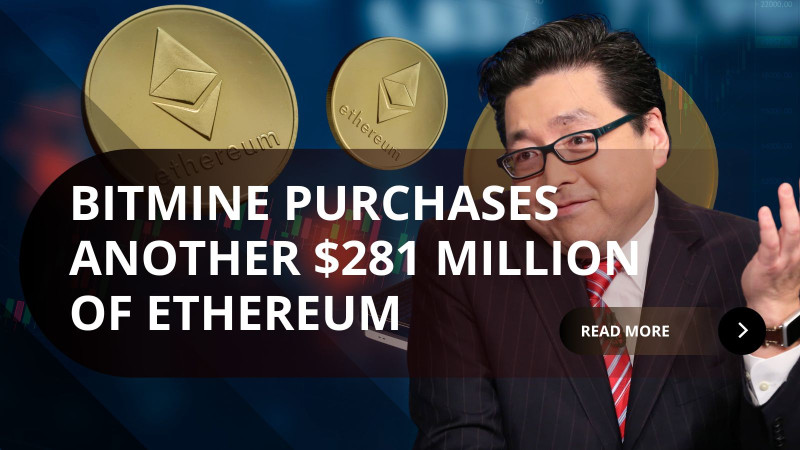
Bitmine Gives New Meaning to Buying the Dip, Purchasing Another $281M of ETH
BitMine has quietly become one of the most prominent corporate players in the Ethereum (ETH) space. A number of outlets report that the firm recently acquired 202,037 ETH (worth roughly $827 million to $839 million) during a recent market dip. This brings its total ETH holdings to just over 3 million tokens, which now represents about 2.5% of Ethereum’s circulating supply.
To put it in context, the company has publicly stated a goal of eventually owning about 5% of all ETH in circulation, so this puts them more than halfway toward that target.
Why the Move Now? Snapshot of the Strategy
-
The accumulation came during a sharp market sell-off, when ETH prices fell significantly. BitMine’s chairman, Thomas Lee, noted that “the crypto liquidation over the past few days created a price decline in ETH, which BitMine took advantage of.”
-
By buying during a time of forced liquidations and rising volatility, BitMine is embracing the idea that such dislocations provide a “discount to the future,” allowing them to pick up ETH at more favourable levels.
-
BitMine’s overall treasury (crypto + cash + “moonshot” investments) is now valued at around $12.8 billion to $13.4 billion, according to various reports. Their ETH holding alone is a major component of that.
What This Means for Ethereum & the Market
1. Reduced Available Supply
By accumulating a large chunk of ETH, BitMine effectively takes tokens off the market for other buyers. That could reduce “free float” temporarily, which can support price stability or upward pressure.
2. Institutional Validation for ETH
The move highlights that Ethereum is becoming a more legitimate treasury asset for corporate balance sheets, not just Bitcoin. If more firms follow, that could bring deeper institutional flows into ETH.
3. A Potential Price Tailwind (But Not Guaranteed)
With high conviction shown by a public company, market sentiment may tilt more bullish for ETH. However, large holdings also raise questions. If the company ever decided to sell or lock in profits, that could generate headwinds.
4. Signal of Strategic Shift
This kind of accumulation at scale suggests a paradigm where ETH is being viewed not just as a trading asset but as a strategic long-term holding, tied to big-picture bets around DeFi, smart contracts, staking, and institutional adoption.
What Could Go Wrong
-
If ETH becomes highly concentrated in the treasuries of a few entities, that can increase systemic risk. If one large holder decides to sell, it could ripple through the market.
-
Macro shocks or regulatory surprises (especially around staking or protocol changes) could still derail sentiment even with large accumulators in place.
-
Buying during dips is one thing, holding through extended bear markets or structural shifts is another. The strategy’s success depends on long-term conviction and market fundamentals.
Bottom Line
BitMine’s aggressive accumulation of ETH, over 3 million tokens (about 2.5% of all supply), is a bold signal that the era of institutional Ethereum treasuries is here. The firm is positioning itself for the long game, treating ETH as a foundational asset rather than a speculative one. For the broader market, this is a bullish indicator, but not a guarantee of easy gains. Ultimately, the impact will depend on how ETH’s ecosystem evolves and how other institutional players respond.