#Investments

Polymarket Eyes $400M Raise at $15B Valuation

Prediction market platform Polymarket is reportedly in talks with investors to raise 400 million dollars. If successful, this would place the prediction market company at a valuation of 15 billion dollars, up from its current $9 billion.
While there is still no official confirmation from Polymarket regarding this news, the fundraising is expected to drive Polymarket’s growing influence in the expanding prediction market sector, giving it a competitive advantage over its competitors, particularly Kalshi.
This move comes a few weeks after Intercontinental Exchange (ICE), the parent company of the New York Stock Exchange (NYSE), invested 600 million dollars into Polymarket. This followed an earlier investment of 1 billion dollars into the prediction market company a few months prior.
So far, Polymarket has raised over $2 billion across several fundraising rounds from venture capital firms and investors, including Intercontinental Exchange, Blockchain Capital, Polychain Capital, Dragonfly Capital, Coinbase Ventures, 1789 Capital, Ethereum co founder Vitalik Buterin, Aave founder Stani Kulechov, among several other investors.
Prediction Market Firms Grapple With Regulatory Uncertainty
Despite how remarkable the global prediction market sector has grown in recent times, prediction market companies still face several regulatory challenges, ranging from state level lawsuits to nationwide bans.
Several U.S. states, including New Jersey, Maryland, Massachusetts, and Arizona, have taken strict regulatory action against prediction market companies, with many state regulators alleging that these companies offer illegal sports event contracts. At least 12 states in the U.S. have filed civil lawsuits against prediction market companies.
Outside the U.S., prediction market companies have also faced strict regulatory scrutiny. Just this year alone, about four countries in Europe, Portugal, the Netherlands, Bulgaria, and Hungary, have imposed nationwide bans on Polymarket’s activities.
However, despite this harsh regulatory landscape, the global prediction market continues to grow. In the most recent quarter, global trading volume across prediction market companies exceeded $ 26 billion, a 90 percent increase from the previous quarter. This volume, according to the global equity research firm Bernstein, is expected to reach $1 trillion by 2030.

Cardano Foundation Confirms U.S. ADA ETF Development as Institutional Interest Grows
Cardano Foundation Confirms ADA ETF Effort as Institutional Momentum Builds
Cardano is no longer in the “ETF someday” category. At Cardano Summit 2025 in Berlin, Cardano Foundation CEO Frederik Gregaard publicly stated that the organization is actively working on a United States based ADA exchange traded fund. He described the initiative as a strategic priority aimed at expanding regulated access to Cardano’s multibillion dollar ecosystem and accelerating institutional participation.
This shift marks one of the clearest signals yet that a Cardano ETF is moving from speculation into an organized, deliberate effort.
Cardano Foundation confirms it is developing an ADA ETF
At the summit, Gregaard explained that the Foundation is pursuing a United States listed ETF that would give investors direct regulated exposure to ADA. He emphasized that the initiative aligns with the Foundation’s long term strategy of expanding adoption, strengthening Cardano’s financial infrastructure, and positioning ADA as a legitimate allocation within traditional markets.
Additional background from the Foundation in recent months shows:
-
The Cardano Foundation has scaled substantially, growing from roughly 30 staff to more than 100 in the past few years, and maturing its operational structure and compliance efforts.
-
The organization has been coordinating with exchanges, specialized ETF issuers, and service providers in preparation for eventual product listings.
-
Technical upgrades focused on scalability, security, and interoperability are being prioritized to meet the expectations of regulated financial products.
Gregaard described the ETF as something that supports multiple strategic objectives at once. It expands institutional access, introduces a familiar investment wrapper for traditional market participants, and reinforces Cardano’s positioning as a public blockchain infrastructure network rather than a purely speculative asset.
How this aligns with the current ETF landscape for Cardano
Although the Foundation’s involvement is new, Cardano’s ETF journey has already been building for over a year and the environment around it has shifted dramatically.
1. A spot Cardano ETF filing is already in the system
Earlier this year, a major United States asset manager filed for a spot Cardano ETF. The proposed product would hold ADA directly in cold storage, offering regulated exposure through brokerage accounts without requiring users to interact with exchanges or self custody wallets.
2. The decision window was delayed, not rejected
Regulators extended the review period for the ADA ETF filing and pushed the decision deadline further into 2025. These delays are normal in the ETF approval process. They do not imply rejection, but they confirm that the application remains active.
3. Cardano already has regulated ETPs outside the U.S.
European markets have listed Cardano based exchange traded products for years. Some are pure ADA trackers and others are diversified digital asset baskets that include ADA. These products demonstrate that ADA has already been packaged successfully into regulated investment structures in major jurisdictions.
4. The United States ETF environment is far more open in 2025
Several developments have made altcoin ETFs significantly more achievable:
-
Exchanges now have generic listing standards for commodity style crypto ETFs. This streamlines the process for non Bitcoin products.
-
Multiple spot ETFs for Solana, Litecoin, Hedera, and other altcoins have already launched successfully.
-
A digital large cap ETF that includes Cardano has been approved, confirming that ADA exposure already meets regulatory comfort levels in multi asset funds.
Many market analysts now place the probability of an ADA ETF approval in the high double digits. They cite Cardano’s long lifespan, consistent top ten market cap, and increasing classification as a “mature blockchain ecosystem.”
Why a Cardano ETF would matter
Mainstream portfolio access
A spot Cardano ETF would allow investors to buy ADA exposure from conventional brokerage platforms, retirement accounts, and institutional mandates that require regulated instruments.
This would create several important effects:
-
Lower barriers for financial advisors and institutions that want crypto exposure but cannot interact with direct tokens.
-
Clearer regulatory boundaries, since ETF issuers must comply with formal custody, disclosure, and compliance frameworks.
-
New liquidity sources from large capital pools that are currently sidelined.
For Cardano, this would represent a major reputational milestone. It would place ADA alongside Bitcoin and Ethereum in the category of assets viewed by institutions as suitable for a broad investment audience.
Reinforcing Cardano’s identity as infrastructure
The ETF effort complements the Foundation’s broader goal of defining Cardano as public infrastructure.
The network has emphasized scientific peer review, predictable upgrades, staking sustainability, and structured governance. Cardano also promotes real world adoption through enterprise pilot programs, digital identity initiatives, and global development partnerships. These traits align well with the risk frameworks used by institutional allocators.
An ETF would act as long term validation of Cardano’s technical and governance roadmap.
What an ADA ETF might look like
Based on existing filings and European products, there are several likely structures.
Pure spot ADA ETF
A simple product that holds ADA directly, with pricing tied to spot markets. This is the most likely first approval.
Index based ETF
A multi asset fund where ADA represents a percentage of the portfolio. These are already live in Europe and are gaining traction in the United States.
Staking aware ETF
A future category could attempt to reflect staking yield through derivatives or structural adjustments. This would require more regulatory clarity.
The Cardano Foundation would not issue the ETF itself, but it would provide technical support, network documentation, and ecosystem coordination while a professional asset manager handles regulatory filings.
Remaining uncertainties
Even with strong momentum, several factors can influence the final outcome:
-
Regulators can still deny or indefinitely delay a spot ADA ETF.
-
Political changes or shifts in regulatory priorities may slow down altcoin product approvals.
-
Market reactions are not guaranteed. ETF launches do not always lead to immediate price appreciation, especially during wider market downturns.
Investors must remember that ETF exposure carries ADA’s market volatility and ecosystem risks, even when held through a brokerage account.
Final thoughts
The confirmation from Cardano Foundation CEO Frederik Gregaard that a United States ADA ETF is actively being developed is a major milestone for the ecosystem. Combined with existing ETF filings, the evolving regulatory landscape, and multiple successful altcoin ETF approvals, the pathway to a Cardano ETF is clearer than ever.
For the first time, an ADA ETF is not merely a wish from the community. It is an active strategic initiative with real institutional traction behind it. If approved, it will open the door to a wider class of investors, strengthen Cardano’s position in the regulated financial world, and reinforce its role as a durable blockchain infrastructure platform.
Stay Connected
You can stay up to date on all News, Events, and Marketing of Rare Network, including Rare Evo: America’s Premier Blockchain Conference, happening July 28th-31st, 2026 at The ARIA Resort & Casino, by following our socials on X, LinkedIn, and YouTube.
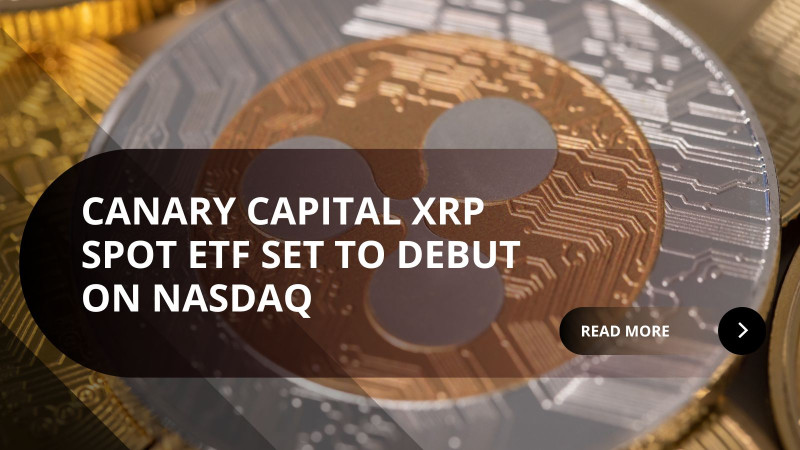
Canary Capital XRP Spot ETF Set to Begin Trading November 13
Canary Capital XRP Spot ETF Set for Trading on November 13th
Canary Capital is poised to launch what could become the first major U.S. spot ETF tied to XRP on November 13, 2025. The firm updated its S-1 registration to remove a delaying amendment that previously gave the U.S. Securities and Exchange Commission (SEC) indefinite discretion over timing. With that procedural hurdle cleared, the launch date now stands as scheduled, assuming final exchange filings are completed without new regulatory objections.
What changed in the filing
-
The updated S-1 submission eliminates the “delaying amendment” that prevented automatic effectiveness under Section 8(a) of the Securities Act of 1933.
-
Without that clause, the filing can become auto-effective after a 20-day waiting period unless the SEC raises substantial comments.
-
With this obstacle removed, the fund is tracking toward a November 13 launch, contingent on approval of its Form 8-A listing with the Nasdaq Stock Market and final clearance from the exchange.
-
The timing follows the same process used by other altcoin spot ETFs launched by Canary Capital, including products for Solana, Litecoin and Hedera. These also relied on the auto-effective mechanism.
Why it matters for XRP and the crypto market
-
A spot ETF for XRP dramatically expands investor access by enabling exposure through standard brokerage accounts. Investors will not need self-custody or direct interaction with crypto exchanges.
-
Institutional demand is expected to be significant. XRP has one of the largest global user bases in the digital asset sector. Many analysts believe the ETF could attract substantial inflows during its first months of trading.
-
The launch arrives during a broader shift in U.S. regulatory policy. Regulators have recently approved generic listing standards for spot crypto ETFs, creating a path for assets other than Bitcoin and Ethereum.
-
If the listing proceeds as planned, November 13 could become a landmark moment for altcoin investment products and a sign that regulated crypto ETFs are entering mainstream financial markets.
Launch mechanics and product details
-
The ETF will trade on Nasdaq or another major U.S. exchange under a ticker that Canary Capital has not yet confirmed. Several filings suggest the ticker may be “XRPC.”
-
The fund is structured as a Delaware statutory trust and will hold direct spot XRP. No futures or synthetic exposure will be used.
-
Custodial providers and market makers are reportedly in place to support liquidity and orderly trading on the first day.
-
The removal of the delaying amendment gives the fund a direct legal path to launch. Unless the SEC issues new comments, the product will go live automatically on the expected date.
Risks and remaining conditions
-
Although the date is targeted and procedurally aligned, the launch still depends on final exchange filings such as Form 8-A and the absence of additional SEC review. Any new staff comments could delay effectiveness.
-
The auto-effective pathway speeds up the process, but it does not guarantee that the SEC will not exercise its authority to halt or modify the filing.
-
As with all crypto-related ETFs, the product carries risks such as volatility, liquidity fluctuations, custody risk and potential tracking differences between the ETF and spot XRP.
-
High expectations may pose additional pressure. If initial trading performance does not meet market enthusiasm, sentiment could shift quickly.
What to watch next
-
Official confirmation of the ETF ticker and the listing exchange.
-
Announcements from authorized participants and liquidity providers, which will shape the ETF’s trading quality.
-
Secondary market trading volume and creation-unit activity once the fund opens.
-
XRP price action as markets react to the upcoming launch and investors position ahead of the date.
-
Additional regulatory updates that may impact this ETF or future altcoin ETFs.
Final thoughts
Canary Capital’s spot XRP ETF represents one of the most significant steps yet toward expanding regulated crypto products beyond Bitcoin and Ethereum. If the ETF goes live on November 13, 2025, it will open the door for broader institutional involvement in XRP and potentially set the stage for additional altcoin ETFs.
For XRP holders, the launch could bring new sources of liquidity, price discovery and market legitimacy. For the industry at large, it signals a shift toward regulated access points for digital assets. Success, however, will depend on smooth execution, clear communication from regulators and strong market participation once trading begins.
All indicators suggest that the launch is on track. Unless regulators introduce unexpected changes, November 13 could become a historic date for crypto investment products.
Stay Connected
You can stay up to date on all News, Events, and Marketing of Rare Network, including Rare Evo: America’s Premier Blockchain Conference, happening July 28th-31st, 2026 at The ARIA Resort & Casino, by following our socials on X, LinkedIn, and YouTube.