#ADA
Can Cardano Get the Marketing Machine It Deserves?

Rare Network and SCRIB3 are teaming up to launch Amplify Cardano, a $2 million community-driven marketing and events program that could fundamentally shift how the world's most technically rigorous blockchain tells its story.
If you've spent any real time in the Cardano ecosystem, you already know the frustration. The technology is genuinely impressive. The community is deep, global, and unusually committed. The governance transition Cardano pulled off last year was historic. And yet, ask someone outside of crypto to name a breakout project built on Cardano and you'll mostly get silence.
That's the gap Amplify Cardano is trying to close, and the two organizations behind it have the credentials to actually do it.

Two Prongs, One Clear Goal
The proposal, expected to be formally put on chain in the coming days, is currently seeking $2 million in treasury funding and built around a two-part structure. The first prong is a Community Accelerator Fund of $1 million, designed to give 3-5 high-potential ecosystem projects the full-stack marketing support they need to compete with the Jupiters and Jitos of the Solana world. We're talking brand development, paid media, PR, website builds, social media management, the whole thing. And not at inflated agency rates, either. Projects accepted into the program will receive services at 30-50% below standard market pricing, which is a genuinely meaningful discount in an industry where a monthly social media retainer alone can run $25,000.
SCRIB3, the crypto-native creative and communications agency co-leading this effort, isn't a newcomer to this space. Founded in late 2022, the firm has quietly built one of the more impressive rosters in web3 marketing, working across DeFi protocols, Layer 1s, and infrastructure projects. Its team includes a former aerospace engineer turned crypto growth strategist who has worked with over 40 protocols, alongside partners with backgrounds in strategy at Uber and private equity. SCRIB3 has also been embedded in Cardano governance for some time now, including sending team members to the Constitutional Convention in Buenos Aires in late 2024 and serving on the Growth and Marketing Committee. They know the community. They know the gaps.

Grassroots at Scale: Rare Network's Events Machine
The second prong is where things get especially interesting for the long-suffering Cardano community member who has watched the ecosystem struggle to show up, across the globe... where it absolutely should have a presence. Rare Network will manage a $1 million Community-Led Events and Marketing Fund, built to support 100-plus projects and individual contributors over 18 months with grants ranging from $500 to $15,000 per request.
That might sound modest at the individual level, but the aggregate effect is the point. The vision is coverage and frequency. Cardano should have something happening somewhere, all the time. A local meetup in Lagos. A DeFi workshop in Buenos Aires. Comprehensive content creation. A hackathon at local universities. A networking social at Consensus. Social Media Campaigns. All of it coordinated, funded, and reported back to the community through Rare Network's management layer.
Rare Network's track record here is hard to argue with. The company has been running Rare Evo, a premier blockchain conferece, every year for five years now. Initially spinning out of a pure Cardano Community event, Rare Evo has become a destination for multiple chains, spanning the entire industry. From TradFi to DeFi, Institutions and Policy-makers, and NFTs and Gaming. The Las Vegas event covers every aspect of the indsutry and draws thousands of attendees, pulls over a million related video views across its productions, and has featured Charles Hoskinson, Frederik Gregaard, and Nikhil Joshi from Cardano's founding leadership on stage. Beyond that annual flagship, the team has produced more than 60 side events and meetups at major industry gatherings including Consensus, TOKEN2049, ETHDenver, Paris Blockchain Week, and the Cardano Summit. Their Rare Social events average over 2,000 registered attendees each.
Perhaps most tellingly, Rare Network was named a formal event partner in Cardano's Unified Global Events Marketing Strategy alongside the Cardano Foundation and EMURGO, a governance proposal that passed with nearly 80% DRep support.

Fixing What Grants Programs Get Wrong
The proposal is also refreshingly honest about why previous approaches have fallen short. Most Layer 1 ecosystems try to solve the marketing problem through grants programs, but those programs fail at a high rate. They hand projects money and then leave them to figure out the rest, which means navigating agency RFPs, building marketing plans from scratch, and hoping things click, usually on a deadline. Most teams, especially lean early-stage ones, simply aren't equipped to execute that way.
The Amplify Cardano model is different. Instead of funding and stepping back, SCRIB3 does the work directly for the Accelerator projects alongside the Accelerator projects, with KPIs and statements of work approved by Cardano's Growth and Marketing Committee and Product Committee. The program isn't just writing checks; it's delivering results against a defined standard with oversight built in from the start.
On the community side, Rare Network has already piloted the model. The Amplify Cardano program launched in early 2026 through Project Catalyst Fund 14 and funded five events and two marketing campaigns before the Catalyst program was paused. That pause, actually, underscores exactly why a dedicated fund managed by experienced operators makes sense. Community organizers shouldn't be held hostage to governance cycles when they want to throw an event next month.
The Numbers Make Sense
At $2 million total, the ask represents less than 0.02% of ADA's market cap, and is meaningfully below what comparable ecosystems invest in equivalent programming. The Cardano community's own Q4 2025 GMC survey ranked marketing support for builders second and community events third among their top priorities for treasury spending. This proposal answers both in a single package, with experienced operators who have already demonstrated they can deliver.
Cardano has spent a decade building something genuinely worth talking about. Now it has a real plan for making sure the rest of the world hears about it.

Cardano's $80M Orion Fund Signals Major Growth Shift

Cardano is done waiting around. With a formal governance vote now cleared, the network’s community has approved the first phase of the Orion Fund, an $80 million venture-style initiative that marks one of the most ambitious bets the Cardano ecosystem has made to date. And it is refreshing.
The approval, which passed required thresholds from both delegated representatives (DReps) and the Constitutional Committee, kicks off a $15 million first deployment. That initial tranche draws from 50 million ADA out of the network’s treasury and will be managed by Draper Dragon, the blockchain-focused arm of Tim Draper’s venture network, with Draper University serving as an acceleration partner from its Silicon Valley campus.
But this isn’t a grant program. That’s the key difference worth paying attention to. Unlike Cardano’s Project Catalyst, the Orion Fund takes equity and token positions in ecosystem startups. In short, the protocol is acting more like a venture capital fund than a charitable grant foundation.
Structure Designed to Give Back
One of the more structurally clever elements of the Orion Fund is how it routes value back to the protocol. A special-purpose vehicle called Arouet Holdings, described as an ownerless entity, sits at the center of this. Returns generated through the fund flow back to limited partners, including the Cardano treasury, sll of this happens even before Draper Dragon takes profits. That feedback loop is deliberate: successful investments are designed to replenish and grow the treasury over time, not just benefit the fund’s managers.
The Cardano Foundation serves as constitutional administrator and provides technical support, but crucially, holds no management authority or investment decision-making power. That separation between governance and capital allocation is by design, and it preserves independence while keeping the Foundation accountable to the broader community.
Draper Dragon brings an extensive track record to the table. The broader Draper network has backed more than 400 companies over the years, including early investments in Coinbase, Tesla, Skype, and Baidu. Draper Dragon’s own crypto-native portfolio includes Ledger, Gemini, EtherFi, Centrifuge, and Coinflow. That's a mix that suggests Draper's comfort navigating both infrastructure and consumer-facing Web3 products.
Phases, Accountability, and the Longer View
The fund is designed to deploy capital in stages over six years. Each subsequent phase requires a separate community governance vote, meaning no single decision locks in the full $80 million commitment. Of the total target, roughly $75 million is expected to come from the Cardano treasury, with external limited partners contributing the remaining approximately $5 million.
For accountability, the fund plans to publish a real-time public dashboard tracking key performance indicators, alongside quarterly community roundtables. Those mechanisms matter. One criticism frequently leveled at blockchain treasury programs is that capital disappears without clear reporting structures. Orion’s design at least acknowledges that concern.
The on-chain governance vote for the first 50 million ADA tranche closes April 15, 2026, and progress can be tracked publicly on Cardanoscan.
A Very Positive Shift
The Orion Fund approval marks a turning point for Cardano. With Draper Dragon’s involvement, the ecosystem is no longer just building infrastructure, just focusing on research... it is actively deploying capital, attracting global partners, and positioning itself for scalable growth. This move signals a real maturity, aligning decentralized governance with real venture execution, and reinforces a much stronger, more forward-looking approach.
Cardano is finally evolving from infrastructure-heavy development, and just building stuff for nerds, into a full-stack ecosystem with capital deployment, institutional alignment, and real-world use case expansion driving the next phase of growth for the global user.
Other Layer 1 networks and their communities will likely be watching closely. If Cardano can demonstrate that a decentralized treasury can function effectively as a venture capital engine, it would set a meaningful precedent across the broader crypto industry.

Cardano Is No Longer an Island: Why The LayerZero Integration Matters

If you’ve been following Cardano for more than five minutes, you know the running joke. Great tech, very principled, peer-reviewed everything... but also kind of just sitting by itself at lunch while Ethereum and Solana were out making friends. For years, ADA holders had to explain why their chain was “building” while everyone else was “doing.” That conversation is getting a lot easier now.
On February of 2026, Charles Hoskinson announced that LayerZero is being integrated into the Cardano ecosystem, sharing the groundbreaking partnership for the first time.
So what does this actually mean? Let’s break it down without putting you to sleep.
Cardano runs on something called the eUTXO model. Think of it like Bitcoin’s architecture but with smart contracts bolted on. It’s secure, it’s predictable... but it does not play nicely with account-based chains like Ethereum. Interoperability has always been kind of a mess, and Cardano has largely sat on the sidelines of the cross-chain party.
LayerZero approaches this challenge differently. It uses a messaging layer to send verified messages between chains, rather than relying on complex token-wrapping structures that are often targeted by hackers. That’s a big deal. No more sketchy wrapped tokens, no more liquidity scattered across isolated pools, and no more depending on some centralized bridge that could get exploited at 3am on a Tuesday.
That design reportedly opens access to around $80 billion in omnichain assets already connected through LayerZero standards. Eighty. Billion. Dollars. Let that number sink in. Got the gravity of it? Let's move on.
LayerZero’s Omnichain Fungible Token standard sits at the core of the integration. The framework lets assets exist natively across several blockchains. It removes that need for wrapped tokens and avoids splitting liquidity across separate pools, a problem that I mentioned earlier But it's important enough to state twice. That structure gives more than 700 existing tokens a path onto Cardano and Cardano on to them.
Cardano can now communicate with Ethereum, Solana, and over 160 other networks. For developers, that’s a completely different building environment than what existed just a few months ago.
This LayerZero integration didn’t just come out of nowhere, it’s part of a coordinated push by what’s being called the Pentad. The Pentad includes the Input Output Group (IOG), Cardano Foundation, EMURGO, Intersect, and the Midnight Foundation. Five organizations, one shared mandate: to finally stop arguing about roadmaps and start shipping. A move that was seen by many in the ecosystem as a breath of fresh air. Well, everyone except the trolls on X that seem to relish in FUD in hopes that Elon may send them a big enough check to move out of their mom's basement. I won't mention the names, but I am sure you know who they are.
And the Pentad has shipped, despite the current market trend. Oracle integration via Pyth Network improves price data reliability, analytics availability through Dune Analytics increases transparency and data access, and cross-chain messaging via LayerZero lays groundwork for interoperability. That’s not a wishlist anymore, those are done.
Then there’s USDCx. It addresses a separate infrastructure need by bringing a tier-one stablecoin rail tied to Circle, giving Cardano a recognizable settlement asset for payments, DeFi activity, and real-world asset flows. Hoskinson described it as better than regular USDC because it adds privacy and is immutable and irreversible, you can move straight from a wallet to Coinbase or Binance with instant convertibility. He said Cardano went from signing a deal with Circle to having USDCx live on the network in 84 days, calling it the number one stablecoin on Cardano already. 84 days. That’s actually fast for anyone, let alone a blockchain project.
Is this all enough? Honestly. It depends who you ask. Hoskinson argued the effort has moved Cardano from being “an island” to being connected to the broader crypto market, but added that the ecosystem still needs strategic capital deployment to help applications survive and compete. Infrastructure is the foundation, not the house. Developers still need to build, users still need to show up, and liquidity still needs to actually flow... not just theoretically exist.
But for a chain that’s spent years being told it’s “all potential, no product,” this is a meaningful shift. A very welcome moment for those here who believe in Cardano's potential. The rails are finally there. What gets built on them is the next chapter. And that next chapter could get very interesting.
Cardano Unveils LayerZero Partnership, Midnight Launch

Consensus Hong Kong delivered no shortage of headlines this year, but few were as consequential for the Cardano ecosystem as Charles Hoskinson’s back-to-back announcements on privacy and interoperability.
In a keynote that felt both technical and strategic, the Cardano founder confirmed two major developments: the long-awaited debut of the privacy-focused Midnight blockchain in late March, and a formal deal to integrate LayerZero’s omnichain messaging protocol with Cardano.
Taken together, the moves signal something bigger than incremental upgrades. Cardano is positioning itself for a new phase, one centered on compliant privacy and seamless cross-chain liquidity.
LayerZero Brings Cardano Into the Multichain Era
Hoskinson confirmed that Cardano will integrate LayerZero, one of the most widely adopted interoperability protocols in crypto.
LayerZero enables cross-chain messaging and asset transfers without relying on centralized custodians. In simple terms, it allows blockchains to talk to each other more directly and more securely.
For Cardano, which has often been criticized for operating in relative isolation from Ethereum-centric DeFi liquidity, this is a structural shift. The integration is expected to connect Cardano to more than 150 other chains supported by LayerZero’s infrastructure. That includes major ecosystems where most decentralized finance activity currently resides.
The practical implications are clear. Assets native to Cardano could move across chains more fluidly. Omnichain fungible tokens can be deployed in ways that maintain unified liquidity rather than fragmenting it across bridges. Stablecoins and wrapped assets can circulate with fewer technical barriers.
The rollout will happen in phases, starting with the deployment of LayerZero endpoint contracts on Cardano. From there, developers will be able to build omnichain applications that treat Cardano as one node in a much larger interconnected system.
This move into high-speed cross-chain infrastructure feels like an acknowledgment of where the broader market has gone. Liquidity is multichain. Users are multichain. Capital flows are multichain. I'm glad that the ecosystem seems to have finally realized that it needs to not be an island.
Midnight Is Finally Almost Here
After years of discussion and gradual buildout, Midnight now has a timeline. Hoskinson told attendees that the privacy-focused partner chain is set to launch its mainnet in late March 2026.
Midnight is designed to bring programmable privacy to decentralized applications without turning the network into a regulatory red flag. The core idea is selective disclosure. Transactions and smart contract interactions can remain confidential by default, but information can be revealed to authorized parties when required.
That distinction matters. Pure privacy coins have long faced scrutiny from regulators and exchanges. Midnight’s pitch is different. Instead of marketing itself as a tool for the already privacy-obsessed, it aims to embed privacy as a standard feature for everyday users and enterprise applications.
Hoskinson described the approach as pragmatic rather than ideological. In practical terms, Midnight relies heavily on zero knowledge cryptography to allow confidential smart contracts and private state transitions. Developers can build applications where sensitive business logic or user data is shielded on chain, while still maintaining the ability to meet compliance demands.
To support the launch, the team also unveiled a privacy simulation platform. The goal is to model how Midnight behaves under different scenarios before full production rollout. For institutions and enterprise developers watching from the sidelines, that kind of testing framework is meant to reduce uncertainty.
A Broader Institutional Pitch
Midnight’s compliance-friendly privacy model and LayerZero’s connectivity are huge news for an ecosystem that has struggled to find its place in the broader market. Together, they sketch a vision of Cardano as infrastructure for regulated DeFi, tokenized assets, and enterprise use cases that require both confidentiality and interoperability.
Still, markets do not always move in lockstep with roadmaps. ADA’s price action around the conference was measured rather than euphoric, a reminder that traders often demand shipped products and sustained traction before repricing a network’s long term thesis.
What Cardano delivered in Hong Kong was concrete timelines and signed deals. If these sort of announcements continue to be made with measurable results, the price action could follow.
The Bottom Line
Stepping back, the announcements mark a subtle but important transition. Cardano is evolving slowly from a self-contained network into something more layered and more interconnected.
Midnight adds a privacy execution environment tailored for compliant applications. LayerZero plugs Cardano into the liquidity highways that already define modern crypto.
If the next few months go according to plan, late March will bring the Midnight mainnet, and the months that follow will bring the first wave of omnichain deployments.
For Cardano, Consensus Hong Kong may be remembered less as a moment of spectacle and more as the start of a structural shift. Privacy and interoperability are no longer side conversations. They are now central pillars of the roadmap.
Cardano Outlook Turns Bullish as ETF Exposure and DeFi Infrastructure Strengthen
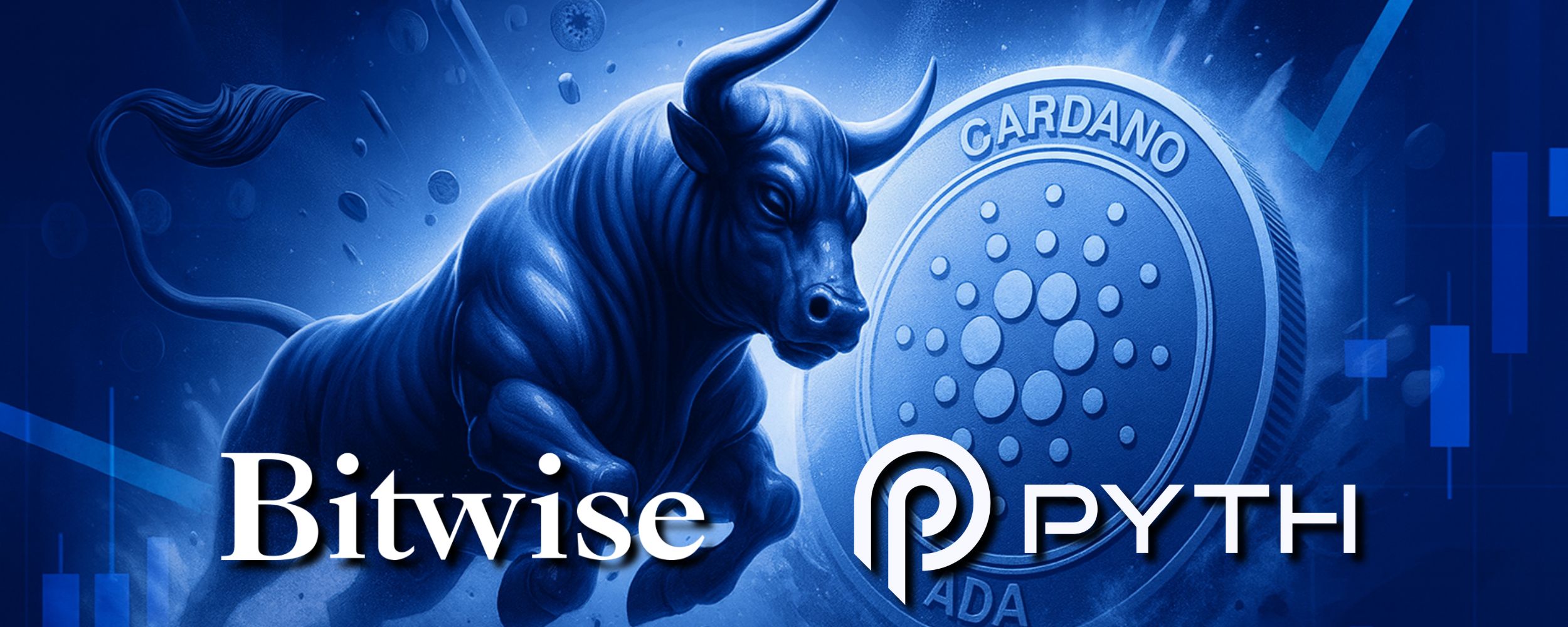
Cardano rarely gets the same loud attention as some other chains, and honestly, that might be part of the point. While much of the market jumps from trend to trend, Cardano keeps moving in a slower, more deliberate direction. Lately, that approach is starting to pay off in ways that actually matter.
Two recent developments stand out. One is institutional exposure through a major crypto ETF. The other is a meaningful upgrade to Cardano’s DeFi infrastructure through better oracle data. Neither is flashy, but both are important, especially if you care about where this ecosystem is headed over the next few years, not the next few days.
ETF Inclusion Is Not About Hype, It’s About Legitimacy
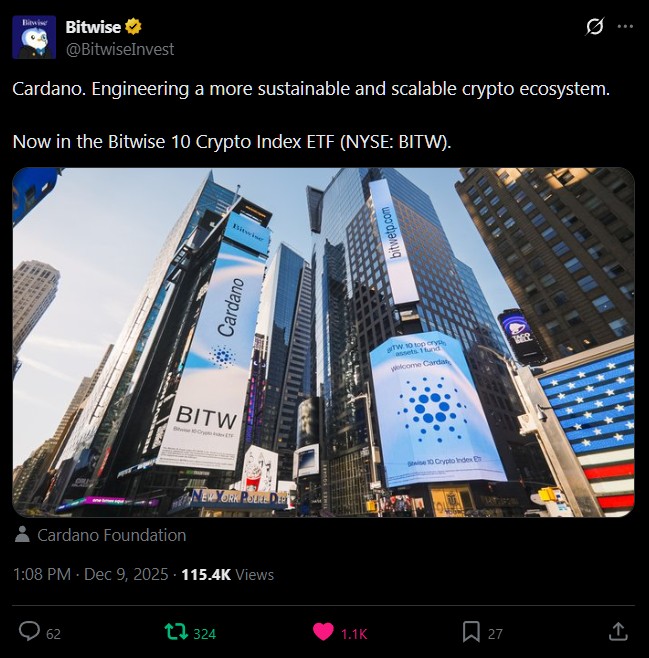
Cardano being included in the Bitwise 10 Crypto Index ETF is easy to brush off if you are only watching price charts. It is not a spot ETF for ADA, and it is not going to send the token flying overnight. But that misses the bigger picture.
This ETF trades on a major U.S. exchange and gives traditional investors exposure to a basket of top crypto assets. Cardano is in that basket. That alone says something. It means ADA is viewed as part of the core crypto market, not a fringe experiment or a temporary narrative.
For a lot of capital out there, this kind of access is the only acceptable way in. Pension funds, advisors, retirement accounts, and conservative investors are not setting up wallets or using decentralized exchanges. They buy ETFs. And now, whether people realize it or not, some of that capital has exposure to Cardano.
It does not flip a switch overnight, but it changes the conversation. Cardano moves from being “one of many altcoins” to being a recognized piece of the broader digital asset landscape.
Better Oracles Are the Kind of Upgrade That Actually Matters
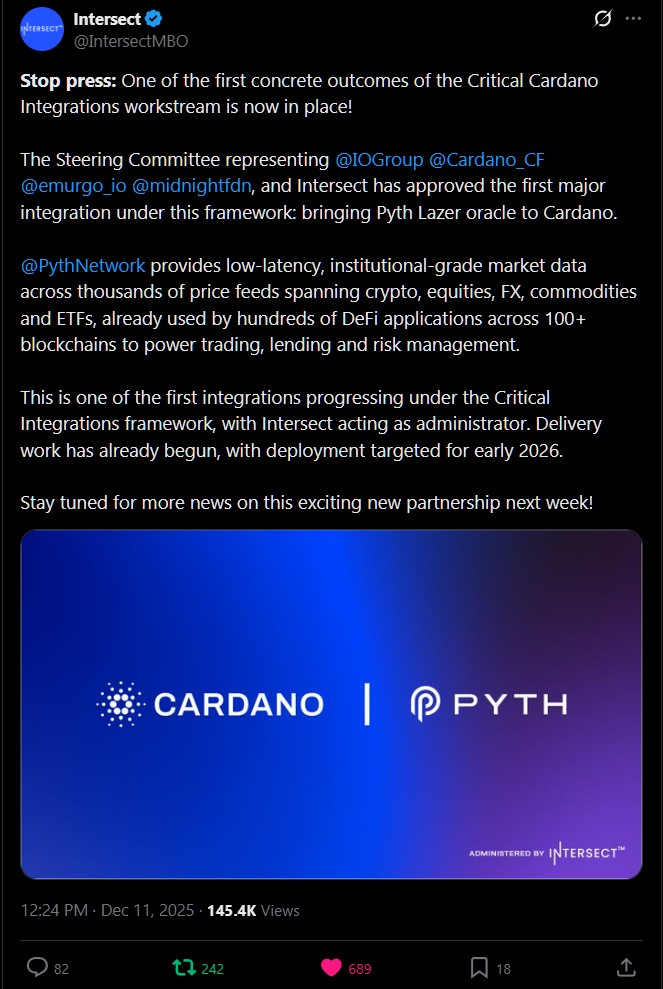
The Pyth Network integration might not get mainstream headlines, but from a technical and ecosystem perspective, this is a big deal.
DeFi lives or dies on data. If price feeds are slow, inaccurate, or unreliable, everything built on top of them suffers. Pyth is designed to solve that problem by delivering real time market data directly from professional trading firms. That is the kind of infrastructure serious financial applications need.
By approving this integration, Cardano is making it easier for developers to build more advanced DeFi products without worrying about shaky inputs. That lowers risk, improves execution, and makes the chain more attractive to teams who want to build things that actually work at scale.
This is the kind of progress that does not pump a token overnight, but it quietly raises the ceiling for what the network can support.
Cardano’s Strategy Is Methodical, and That’s the Point
Cardano has always frustrated people who want instant results. Development takes longer. Decisions move through governance. Features roll out carefully. That pace can feel painful in a market driven by speed and speculation.
But there is another way to look at it. Cardano is building like it expects to still be around years from now.
Institutional access through ETFs and stronger DeFi infrastructure through better oracles are not short term plays. They are foundational moves. They make the ecosystem more resilient, more credible, and more usable.
That does not mean ADA price will go straight up. Nothing in crypto works that way. But it does mean Cardano is improving its position while others chase the next narrative.
Stay Connected
You can stay up to date on all News, Events, and Marketing of Rare Network, including Rare Evo: America’s Premier Blockchain Conference, happening July 28th-31st, 2026 at The ARIA Resort & Casino, by following our socials on X, LinkedIn, and YouTube.
Cardano Foundation Confirms U.S. ADA ETF Development as Institutional Interest Grows
Cardano Foundation Confirms ADA ETF Effort as Institutional Momentum Builds
Cardano is no longer in the “ETF someday” category. At Cardano Summit 2025 in Berlin, Cardano Foundation CEO Frederik Gregaard publicly stated that the organization is actively working on a United States based ADA exchange traded fund. He described the initiative as a strategic priority aimed at expanding regulated access to Cardano’s multibillion dollar ecosystem and accelerating institutional participation.
This shift marks one of the clearest signals yet that a Cardano ETF is moving from speculation into an organized, deliberate effort.
Cardano Foundation confirms it is developing an ADA ETF
At the summit, Gregaard explained that the Foundation is pursuing a United States listed ETF that would give investors direct regulated exposure to ADA. He emphasized that the initiative aligns with the Foundation’s long term strategy of expanding adoption, strengthening Cardano’s financial infrastructure, and positioning ADA as a legitimate allocation within traditional markets.
Additional background from the Foundation in recent months shows:
-
The Cardano Foundation has scaled substantially, growing from roughly 30 staff to more than 100 in the past few years, and maturing its operational structure and compliance efforts.
-
The organization has been coordinating with exchanges, specialized ETF issuers, and service providers in preparation for eventual product listings.
-
Technical upgrades focused on scalability, security, and interoperability are being prioritized to meet the expectations of regulated financial products.
Gregaard described the ETF as something that supports multiple strategic objectives at once. It expands institutional access, introduces a familiar investment wrapper for traditional market participants, and reinforces Cardano’s positioning as a public blockchain infrastructure network rather than a purely speculative asset.
How this aligns with the current ETF landscape for Cardano
Although the Foundation’s involvement is new, Cardano’s ETF journey has already been building for over a year and the environment around it has shifted dramatically.
1. A spot Cardano ETF filing is already in the system
Earlier this year, a major United States asset manager filed for a spot Cardano ETF. The proposed product would hold ADA directly in cold storage, offering regulated exposure through brokerage accounts without requiring users to interact with exchanges or self custody wallets.
2. The decision window was delayed, not rejected
Regulators extended the review period for the ADA ETF filing and pushed the decision deadline further into 2025. These delays are normal in the ETF approval process. They do not imply rejection, but they confirm that the application remains active.
3. Cardano already has regulated ETPs outside the U.S.
European markets have listed Cardano based exchange traded products for years. Some are pure ADA trackers and others are diversified digital asset baskets that include ADA. These products demonstrate that ADA has already been packaged successfully into regulated investment structures in major jurisdictions.
4. The United States ETF environment is far more open in 2025
Several developments have made altcoin ETFs significantly more achievable:
-
Exchanges now have generic listing standards for commodity style crypto ETFs. This streamlines the process for non Bitcoin products.
-
Multiple spot ETFs for Solana, Litecoin, Hedera, and other altcoins have already launched successfully.
-
A digital large cap ETF that includes Cardano has been approved, confirming that ADA exposure already meets regulatory comfort levels in multi asset funds.
Many market analysts now place the probability of an ADA ETF approval in the high double digits. They cite Cardano’s long lifespan, consistent top ten market cap, and increasing classification as a “mature blockchain ecosystem.”
Why a Cardano ETF would matter
Mainstream portfolio access
A spot Cardano ETF would allow investors to buy ADA exposure from conventional brokerage platforms, retirement accounts, and institutional mandates that require regulated instruments.
This would create several important effects:
-
Lower barriers for financial advisors and institutions that want crypto exposure but cannot interact with direct tokens.
-
Clearer regulatory boundaries, since ETF issuers must comply with formal custody, disclosure, and compliance frameworks.
-
New liquidity sources from large capital pools that are currently sidelined.
For Cardano, this would represent a major reputational milestone. It would place ADA alongside Bitcoin and Ethereum in the category of assets viewed by institutions as suitable for a broad investment audience.
Reinforcing Cardano’s identity as infrastructure
The ETF effort complements the Foundation’s broader goal of defining Cardano as public infrastructure.
The network has emphasized scientific peer review, predictable upgrades, staking sustainability, and structured governance. Cardano also promotes real world adoption through enterprise pilot programs, digital identity initiatives, and global development partnerships. These traits align well with the risk frameworks used by institutional allocators.
An ETF would act as long term validation of Cardano’s technical and governance roadmap.
What an ADA ETF might look like
Based on existing filings and European products, there are several likely structures.
Pure spot ADA ETF
A simple product that holds ADA directly, with pricing tied to spot markets. This is the most likely first approval.
Index based ETF
A multi asset fund where ADA represents a percentage of the portfolio. These are already live in Europe and are gaining traction in the United States.
Staking aware ETF
A future category could attempt to reflect staking yield through derivatives or structural adjustments. This would require more regulatory clarity.
The Cardano Foundation would not issue the ETF itself, but it would provide technical support, network documentation, and ecosystem coordination while a professional asset manager handles regulatory filings.
Remaining uncertainties
Even with strong momentum, several factors can influence the final outcome:
-
Regulators can still deny or indefinitely delay a spot ADA ETF.
-
Political changes or shifts in regulatory priorities may slow down altcoin product approvals.
-
Market reactions are not guaranteed. ETF launches do not always lead to immediate price appreciation, especially during wider market downturns.
Investors must remember that ETF exposure carries ADA’s market volatility and ecosystem risks, even when held through a brokerage account.
Final thoughts
The confirmation from Cardano Foundation CEO Frederik Gregaard that a United States ADA ETF is actively being developed is a major milestone for the ecosystem. Combined with existing ETF filings, the evolving regulatory landscape, and multiple successful altcoin ETF approvals, the pathway to a Cardano ETF is clearer than ever.
For the first time, an ADA ETF is not merely a wish from the community. It is an active strategic initiative with real institutional traction behind it. If approved, it will open the door to a wider class of investors, strengthen Cardano’s position in the regulated financial world, and reinforce its role as a durable blockchain infrastructure platform.
Stay Connected
You can stay up to date on all News, Events, and Marketing of Rare Network, including Rare Evo: America’s Premier Blockchain Conference, happening July 28th-31st, 2026 at The ARIA Resort & Casino, by following our socials on X, LinkedIn, and YouTube.

Cardano SDK for Unreal Engine 5 Is Now Live and Free to Use
Cardano SDK for Unreal Engine 5 Is Now Live and Free to Use
Flux Point Studios has officially released the Cardano SDK for Unreal Engine 5, giving developers the tools to merge blockchain technology with high-end gaming. The new software development kit brings native support for ADA payments, NFTs, wallet connections, and on-chain interactions directly into Unreal Engine 5. Even better, it is completely free to use.
This release marks a major milestone for both Cardano and the broader Web3 gaming ecosystem, offering a fast, secure, and accessible way for developers to build games that integrate real ownership and digital economies.
A New Era of Game Development on Cardano
The SDK allows Unreal Engine developers to easily plug blockchain functionality into their games without the need for complex code or external infrastructure. Teams can connect Cardano wallets, process ADA payments, mint and transfer NFTs, and build full in-game economies with just a few simple integrations.
Flux Point Studios designed the SDK to be fully compatible with Unreal Engine 5’s most powerful features. Developers can now build visually stunning, AAA-quality experiences with built-in Web3 functionality. It bridges the gap between next-generation visuals and real blockchain ownership.
Key Features for Developers
ADA and Wallet Integration
The SDK lets players use their ADA wallets directly inside the game, allowing for seamless payments, asset transfers, and wallet logins.
NFT Creation and Ownership
Developers can mint and manage Cardano NFTs that represent in-game assets such as skins, weapons, or collectibles. Players gain true ownership of their digital items, which they can trade or sell freely.
Easy Setup and Full Documentation
The SDK includes complete Unreal Engine integration and user-friendly documentation. Developers can start testing blockchain features in minutes, using either Cardano’s test network or mainnet.
Community Alignment
Flux Point Studios is introducing a community-driven approach that ensures the SDK’s success benefits Cardano’s growth. The goal is to give more power to developers while strengthening Cardano’s presence in the gaming space.
Why This Release Matters
This launch is more than a technical update. It represents a real step forward for Web3 gaming adoption and a proof of concept for Cardano’s potential in mainstream game development. Until now, integrating blockchain into major game engines often required complex backend work. The new SDK removes those barriers, allowing creators to focus on gameplay, design, and storytelling while still taking advantage of blockchain utility.
The integration of Cardano with Unreal Engine 5 also strengthens the network’s reputation as a developer-friendly, energy-efficient, and scalable platform. It places Cardano among the top blockchain ecosystems pushing gaming innovation forward.
The Future of Gaming on Cardano
With the SDK now live, attention will shift toward early adopters and studios that start using it to build interactive worlds. These projects will define what blockchain gaming can become when advanced technology meets creativity.
This launch signals the beginning of a new era in gaming, one where players own their assets, creators earn directly from their communities, and games evolve into living economies rather than closed systems.
The combination of Unreal Engine 5’s power and Cardano’s efficiency opens the door for immersive worlds with real-world value and cross-platform interoperability.
Final Thoughts
Flux Point Studios’ release of the free Cardano SDK for Unreal Engine 5 is a landmark moment for developers everywhere. It levels the playing field, gives creators direct access to powerful blockchain tools, and reinforces Cardano’s position as a developer-first ecosystem.
For studios, this is an opportunity to join the next generation of gaming where blockchain meets cinematic-quality experiences. For players, it is a glimpse into the future of true digital ownership and innovation.
The boundary between traditional and blockchain gaming just disappeared, and Cardano is now leading the charge. You can download the SDK at https://fluxpointstudios.com/cardano-ue-sdk.
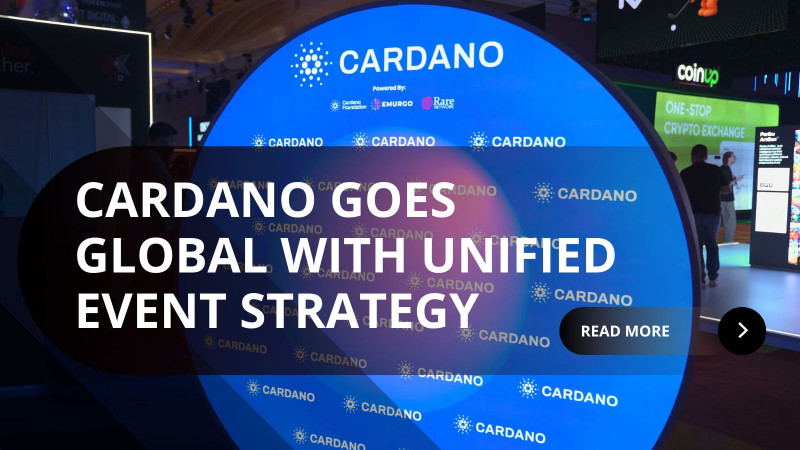
Cardano Goes Global: Unified Events Strategy Ushers in a New Era
Cardano is entering a new chapter. The ecosystem is no longer fragmented or hidden in the background of major blockchain events, but united and amplified on the world stage. The Unified Global Events Strategy, powered by EMURGO, Cardano Foundation, and Rare Network...and supported by the innovative and passionate community, is more than just marketing. It is a declaration: Cardano is here, and it is stronger than ever...together.
A Bold Global Presence
For years, Cardano has been known for its science-first, methodical approach to building. But when it came to visibility at global events, Cardano’s presence was often scattered. Individual projects showed up, but without a unified front. That is now changing.
With this new strategy, Cardano will showcase a cohesive, powerful presence at the world’s biggest Web3 gatherings: TOKEN2049, Consensus, Paris Blockchain Week, North American Blockchain Summit, WebX, and more. Instead of competing for attention, projects will now stand shoulder to shoulder under the Cardano banner, signaling strength, unity, and maturity.
The Benefits of Unity
This strategy is not just about banners and booths. It is about impact:
-
Global Recognition: Cardano will command attention alongside the most aggressive marketing blockchains, elevating its profile worldwide.
-
Enterprise Partnerships: A strong, unified front will attract enterprises looking for reliable blockchain infrastructure.
-
Developer Magnet: With a visible, global presence, more developers will choose to build on Cardano.
-
Project Recognition: Holders, builders, and contributors will see their projects and dApps represented on the world stage, not as fragmented voices but as one powerful movement. Empowering them to showcase the innovation, globally, allowing fresh eyes to finally recognize the innovation highlighted on Cardano.
KPIs like enterprise leads, developer onboarding, and brand visibility have been set to ensure measurable progress. This is not just hype. It is strategy with accountability.
Cardano Stronger Together
The passage of this proposal with enormous community support shows something bigger than marketing. It shows a community aligned in vision. Cardano is proving that decentralization and unity are not opposites. By coordinating across organizations and projects, the ecosystem is demonstrating resilience and purpose.
In a competitive Web3 landscape where Solana, Ethereum, and others push hard on branding, Cardano is now stepping up. But unlike many competitors, it does so with the strength of its global community and the backing of an inclusive governance process.
The Big Picture
The time has come to rewrite the narrative. Cardano is no longer the “quiet builder” in the background. This strategy signals that Cardano is not just a blockchain. It is and always has been a global brand, a united ecosystem, and a movement. It is stepping into the spotlight, louder, prouder, and stronger than ever.
The future of Cardano is not just technical excellence. It is recognition, adoption, and influence on a worldwide scale. And with the Unified Events Strategy, the ecosystem is marching there together.
Cardano is here. Cardano is global. Cardano is stronger together.
Cardano Stablecoin DeFi Liquidity Proposal Clears 67% — A Watershed Moment for DeFi on Cardano
In a major moment for Cardano governance, the Stablecoin DeFi Liquidity Proposal has cleared the critical 67% approval threshold, signaling that the community is ready to back a bold step: using treasury resources to seed deep liquidity for native stablecoins and DeFi infrastructure. This isn’t just a good sign — it could be the catalyst that pushes Cardano’s DeFi ecosystem into its next chapter of growth.
Below, we break down what this means, why it's so positive, and what to watch as things roll out.
What Passed & Why It Matters
The Proposal & the 67% Threshold
The proposal called for allocating 50 million ADA from the treasury toward liquidity pools supporting stablecoins and DeFi activity. Reaching 67% is not a trivial feat — it reflects broad consensus among stake delegates and governance participants.
With that level of community backing, the proposal gains legitimacy. It means that those voting believe deeply in the idea that liquidity is the bottleneck holding back growth on Cardano.
Liquidity Is the Missing Link
One frequent critique of DeFi on Cardano has been that stablecoin and trading liquidity is relatively shallow, leading to high slippage, poor UX, and that large trades simply don’t make sense on-chain yet. By seeding liquidity, the proposal aims to reduce slippage, improve price stability, and attract larger capital flows into the ecosystem.
Think of it like providing highways instead of dirt roads: you need good roads before heavy traffic can arrive.
The Bright Horizon: Positive Impacts for Cardano DeFi & Ecosystem
1. Deepened Liquidity, Better UX
More ADA backing in stablecoin pools means that users swapping, lending, or borrowing stablecoins will enjoy smoother prices, lower slippage, and more trust in the on-chain experience. That’s a major upgrade to user confidence.
2. Stronger TVL & Capital Attraction
As liquidity grows, Total Value Locked (TVL) can scale more aggressively. This supports interest from institutional capital, cross-chain bridges, and larger-scale DeFi players who typically avoid chains with shallow markets.
3. Stablecoin Ecosystem Boost
Native stablecoins (like USDA, USDM, DJED) stand to gain immensely. As liquidity improves, they become more credible, more usable, and more integrated. That helps reduce reliance on external stablecoins and strengthens Cardano’s self-sovereign financial stack.
4. Positive Feedback Loop for Projects
DeFi protocols will be more willing to build — knowing liquidity support exists. This leads to new primitives, tools, yield strategies, lending/borrowing markets, and richer composability. Projects that were waiting on infrastructure may now accelerate deployment.
5. Treasury Utility & Sustainability
If structured well, the liquidity deployment can generate returns (via trading fees, yield, protocol incentives) that feed back into the treasury or ecosystem funds. In that sense, it’s not just a subsidy — it’s an investment in the network’s future.
6. Signaling & Confidence
Clearing such a threshold sends a strong message to outside markets: Cardano is serious about competing in DeFi. It may attract developer attention, new capital, and partnerships that might’ve sidelined Cardano in the past due to lack of liquidity confidence.
Final Thoughts
With the Stablecoin DeFi Liquidity Proposal passing at 67%, Cardano has cleared a psychological and technical hurdle. This is a moment of lean forward, not cautious hesitation. The stage is set for improved liquidity, deeper markets, more vibrant DeFi activity, and fresh confidence from developers, users, and capital.
If implemented well, this move could prove one of the defining turning points in Cardano’s journey toward being a powerhouse in DeFi. The positive effects may ripple beyond just Cardano — it becomes a signal to the rest of crypto that thoughtful, community-backed infrastructure investment matters.