#USDC
Binance Invests $100M in Circle, Signs 5-Year USDC Deal

Binance, the world’s largest cryptocurrency exchange by trading volume, has today announced a $100 million equity investment in Circle Internet Group, the global financial technology company behind the USDC stablecoin.

The investment, which is a renewal of an ongoing partnership that started in 2024, involved Binance purchasing Circle’s newly issued Class A common shares through a private placement at a 5% discount to the market price.

Under this agreement, Binance will accelerate the promotion, awareness, and integration of USDC across its global platform, especially in emerging markets, with Circle providing the infrastructure services that support the holding and use of USDC.
"Circle has earned its place as one of the most credible issuers in the world, spanning USDC, Arc, and the infrastructure reshaping how value moves across borders. Our $100 million investment and five-year commitment represent long-duration conviction," said Richard Teng, co CEO of Binance.
"We are helping to build a more inclusive, transparent, and compliant digital economy. A stable, trusted digital dollar should not be a privilege. It should be available to anyone with a phone. That's the future this partnership is designed to deliver."
Building on an Existing Partnership
The current partnership between both crypto giants is a continuation of a commercial agreement made in late 2024 at Abu Dhabi Finance Week, where Binance entered a strategic agreement to expand USDC availability across its product offerings.
The partnership also comes shortly after Circle launched Arc, its Layer 1 blockchain purpose-built for stablecoin finance. Since its launch a few days ago, Arc has reached a TVL of over $300 million. Transactions also crossed 7 million, dropping to 1.27 million thereafter.

Term Labs Loses $8.5 Million in Governance Exploit

Blockchain protocol Term Labs has lost an estimated $8.5 million after suffering a governance exploit that allowed hackers to gain control of the protocol’s vaults and drain funds.
According to blockchain security firm PeckShieldAlert, the attackers first built up enough voting power to take full control of four of the five USDC vaults and approximately 91% of the protocol’s Ethereum Meta vaults.

With this much voting power, the attackers were able to pass proposals, eventually enabling them to drain approximately 2,843 ETH, worth $6.87 million, and an additional $1.68 million in funds.
In response to the exploit, Term Labs acknowledged the incident. Although the team said it would share more details as the incident is being investigated, it advised all of its customers, as a safety precaution, to revoke all approval contracts associated with the protocol.
Governance exploits, which often involve attackers gaining enough voting power to execute malicious proposals, have become increasingly prevalent in recent times.
Prior to the Term Labs exploit, BonkDAO, a decentralized autonomous organization, also lost an estimated $20 million to $21 million from its treasury after attackers spent roughly $4.4 million buying enough BONK tokens to gain control of the votes and pass malicious proposals.
Circle Secures New York Trust Charter

Circle Internet Group, the global financial technology company and issuer of the USDC stablecoin, has secured a limited purpose trust charter from the New York Department of Financial Services (NYDFS).

Image credit: x.com
With this approval, Circle Internet Trust Company LLC, Circle's trust subsidiary, can now operate as a regulated New York trust company, providing fiduciary, custody, and asset management services.
However, because the charter is limited in purpose, Circle will not be able to accept traditional customer deposits or make loans like a full service commercial bank.
"Earning a New York trust charter has been a longstanding objective for Circle given the regulatory clarity that comes with it," said Jeremy Allaire, Circle's co-founder and CEO.
"NYDFS is an international standard setter for digital asset regulation, and New York is Circle's global headquarters. This charter reflects more than a decade of regulatory commitment and positions USDC within a strong, respected framework as digital dollars become central to the global financial system."
Circle's New York trust charter comes shortly after it received approval for a national trust bank charter from the U.S. Office of the Comptroller of the Currency (OCC) last month. The OCC charter allows Circle to establish and operate a national trust bank focused on fiduciary digital asset custody services under federal oversight.
Commenting on the national trust bank charter, Allaire said the move was pivotal to bringing blockchain technology and digital assets into the core of the U.S. financial system.
"Federal oversight of our trust bank sets a new standard for transparency, governance, and scale for Circle's infrastructure and unlocks a new phase of adoption, where leading financial institutions can build on public blockchains with clarity and confidence," he said.
Summer Finance Hit by $6 Million Exploit

Summer Finance, a DeFi yield optimization protocol, was hit by an exploit that affected the protocol's USDC vaults, resulting in an estimated loss of roughly $6 million.
The exploit was confirmed by several blockchain security firms, including Blockaid, Cyvers, and CertiK. According to Cyvers, the attack appears to have been caused by the exploitation of a shared accounting vulnerability. The stolen funds were eventually swapped for the DAI stablecoin and transferred to the attacker's wallet.
Although all vaults across the Lazy Summer Protocol were immediately paused after the exploit was confirmed, the team later released a post-mortem report detailing how the attack occurred, its scope and impact, the response actions taken, and ongoing fund recovery efforts.

Image credit: x.com
According to the post-mortem report, the exploit targeted two Lazy Summer Protocol USDC vaults on the Ethereum mainnet. The attack, which is believed to have been planned over a period of about 3 months, was executed using a $65 million flash loan. Of that amount, approximately $64.8 million was deposited into Summer's vaults.
The attacker then deposited Varlamore USDC (vgUSDC) Growth tokens, which were essentially worthless, into the vulnerable Silo Ark vault, which had been partially shut down. Because the vault's accounting logic incorrectly treated the fake vgUSDC tokens as legitimate assets with real value, the attacker was able to withdraw genuine funds from the protocol.
In response, the Summer Finance team took several measures to contain the impact, including pausing vaults across the Ethereum, Base, Arbitrum, and Sonic networks. The team has also launched an investigation and begun tracing the stolen funds.
The Summer Finance exploit occurred around the same time that the BonkDAO treasury was drained of approximately $20 million. In that incident, the attacker reportedly purchased $4.4 million worth of BONK tokens, allowing them to meet the DAO's low quorum threshold. The attacker then passed a malicious governance proposal, BIP 76, which automatically transferred approximately $20 million from the treasury.
BNY Partners With Circle to Expand USDC Institutional Capabilities

The Bank of New York Mellon (BNY) has partnered with Circle Internet Group, the issuer of USD Coin (USDC), to expand the institutional capabilities of Circle’s USDC stablecoin.

Image credit: X.com
The partnership, announced in a BNY press release, will support the full lifecycle of Circle’s USDC institutional capabilities. Through the partnership, BNY institutional clients will be able to hold their USDC stablecoins in BNY digital asset custody wallets, while also minting U.S. dollars into USDC and redeeming or converting USDC into U.S. dollars.
“As digital assets become increasingly integrated into financial markets, institutions need infrastructure that seamlessly works across traditional and blockchain-based systems,” said Carolyn Weinberg, Chief Product & Innovation Officer at BNY. “With the addition of our enhanced stablecoin enablement capabilities, we’re expanding the ways clients can move value with the operational scale, trust, and resiliency they expect from BNY.”
According to BNY, USDC will be the first stablecoin integrated into its Digital Asset Custody platform, with the bank stating that plans are underway to support additional stablecoins. Circle’s USDC is now the third cryptocurrency supported by BNY’s digital asset custody platform, following Bitcoin and Ether.
About BNY
Headquartered in New York, BNY is a leading global financial services and asset servicing company that specializes in investment services, securities servicing, wealth management, and issuer services for institutional clients, including governments, banks, and corporations.
Beyond being one of the world’s largest traditional finance companies, managing assets worth more than $59 trillion, BNY has been actively adopting and integrating blockchain technology into its financial infrastructure, helping bridge the gap between traditional finance and blockchain-based financial systems.
In 2022, BNY launched its Digital Asset Custody platform, which provides regulated custody services for digital assets. The platform later enabled BNY to become Circle's primary custodian for its USDC reserves. To further strengthen its role in the digital asset ecosystem, BNY has partnered with major blockchain companies, including Circle, Fireblocks, and Canton Network.
Mastercard Expands Stablecoin Settlements Across Network

Mastercard is expanding its stablecoin settlement capabilities to support intraday, weekend, and holiday settlements using both fiat currencies and on-chain card settlements.

According to Mastercard, the expansion is aimed at providing users across the company's global payments network with greater flexibility, allowing them to better manage liquidity and gain greater control over how their money moves. The expansion is also expected to facilitate transactions that depend on timing and transparency, including cross-border payments, treasury operations, and payouts.
"The next phase of stablecoin adoption is about real-world utility, especially in settlement, where timing and liquidity matter most," said Raj Dhamodharan, executive vice president of Blockchain & Digital Assets at Mastercard.
"By introducing intraday and weekend settlement options across our global network, we're expanding how partners manage liquidity and operate in an always-on digital economy while maintaining the trust, resilience, and safeguards they expect from Mastercard."
With this expansion, Mastercard will support additional stablecoins, including Paxos's PYUSD, USDG, and USDP; Ripple's RLUSD; and SoFi's SoFiUSD, in addition to Circle's USDC, which it already supports. These stablecoins will be supported across multiple blockchain networks, including Arbitrum, Base, Canton, Ethereum, Polygon, Solana, Tempo, and XRPL.
ARQ (formerly known as DolarApp), CBW Bank, Cross River, Lead Bank, and Nuvei will be among the first companies in the United States and Latin America to support Mastercard's stablecoin settlement options, with further expansion expected throughout the year.
Mastercard's addition of more settlement options comes shortly after the payments giant acquired BVNK, a leading stablecoin infrastructure company, in March. The acquisition is part of Mastercard's broader strategy to connect on-chain payment rails with traditional fiat rails.
Mastercard is currently one of the world's largest payment processing networks, with more than 150 million merchant locations across 210 countries and territories. The company processed approximately $10.6 trillion in gross dollar volume (GDV) and reported net revenue of about $8.4 billion in the first quarter of this year.
Cash App Goes Live With USDC For 60M Users

Block's Cash App has officially begun rolling out USDC stablecoin payments to its nearly 60 million monthly users. The feature went live today for roughly 25% of the platform's user base, with full availability expected by the end of the week.
The rollout covers four blockchain networks: Solana, Ethereum, Polygon, and Arbitrum. Users can now send USDC from their Cash App wallet to external wallets on any of the supported chains, and incoming USDC is automatically converted into a dollar balance within the app. No separate transfer fee applies, at least for now.
A Reluctant Pivot, Years in the Making
The launch carries some ideological weight. Jack Dorsey, Block's CEO and longtime Bitcoin maximalist, spent years positioning Cash App as a Bitcoin-first platform. He built out Bitcoin trading, backed mining hardware development, and integrated Lightning Network support for Square merchants globally. Stablecoins were not part of that vision.
That changed, grudgingly. In March, Dorsey publicly acknowledged the shift. "I don't like that we're going to support stablecoins but our customers want to use them," he said. "I don't think it's wise to go from one gatekeeper to another." The comment was candid in a way that's rare for major fintech announcements, and it framed the product addition less as strategic enthusiasm and more as a concession to market demand.
Block first hinted at the feature on the Cash App website late last year, describing stablecoins strictly as a payments mechanism rather than an investment tool. But that early hint has carried through to the live product.
Why Solana (and Why Not Just Solana)
Solana started as the sole chain involved with Cash App. Back in November 2025, Solana confirmed its involvement after sharing a demo by Circle's Jeremy Allaire showcasing a USDC transfer on the network. The choice made sense: Solana transactions typically cost under a cent and settle in under a second, conditions well-suited for the kind of peer-to-peer and remittance use cases Cash App serves.
But Block's Miles Suter framed the company's stance as "chain- and coin-agnostic" from the beginning. Solana was a starting point, not a commitment. The live rollout now includes Ethereum, Polygon, and Arbitrum alongside Solana, giving users flexibility across networks with different cost and speed profiles. Ethereum's gas fees can still spike during congestion, which is precisely why Layer 2 options like Arbitrum and Polygon matter.
The multi-chain approach also future-proofs the integration somewhat. If one network faces congestion or reliability issues at scale, users and the platform aren't locked in.
The Guardrails Are Real
Cash App is not positioning this as a DeFi on-ramp. The feature comes with meaningful restrictions. Sending is capped at $2,000 per day and $5,000 per week; receiving tops out at $10,000 weekly. The service is currently unavailable in New York and on sponsored accounts. Identity verification is required.
Perhaps most importantly, the app warns users that blockchain transactions are irreversible. Funds sent to a wrong address or unsupported network are gone permanently. That's a steep hill to climb for a consumer platform serving tens of millions of people who may be encountering on-chain transfers for the first time.
Stablecoins Are Here To Stay...and Thrive
Cash App's move lands against a backdrop of surging stablecoin adoption. As of this week, the total market value of stablecoins has hit a record $322 billion, exceeding the foreign exchange reserves of 95 nations, including the UK and Canada. USDC, issued by Circle, is the second-largest stablecoin and already sees over $14 billion in liquidity on Solana alone.
Western Union launched Solana-based remittances in the first half of 2026. Stripe has added USDC support across multiple chains. Visa has integrated Solana for stablecoin settlements. The regulatory picture has also clarified somewhat, with the GENIUS Act signed in July 2025 establishing a clearer federal framework for stablecoin issuance.
Taken together, this feels less like a novelty launch and more like a platform making its peace with where consumer payments are heading. Dorsey may not love it, but the product is live, the networks are there, and 60 million people now have a relatively frictionless path to on-chain dollar transfers whether they know what a blockchain is or not.
Flipcash and Coinbase Launch USDF Stablecoin

Flipcash, a digital payment app founded by Ted Livingston, the founder of messaging app Kik, has partnered with Coinbase to launch USDF, a stablecoin pegged to the U.S. dollar.

According to Coinbase, the launch aims to make stablecoin issuance more accessible. Through the partnership, Flipcash can leverage Coinbase’s custom stablecoin platform to create its own stablecoin asset without having to handle much of the underlying technical complexity itself. As a result, Flipcash does not need to build an entire stablecoin infrastructure from scratch.
The USDF stablecoin will be issued on the Solana blockchain and will be 1:1 backed by USDC. It will also serve as Flipcash’s native currency. Since Flipcash allows users to create their own digital currencies, USDF will be the asset in which those currencies are priced and settled. It will serve as the settlement asset for trading digital currencies within the Flipcash app.
Coinbase’s Custom Stablecoin Platform
Coinbase custom stablecoin, or stablecoin as a service, is a platform launched by Coinbase in 2025 that allows businesses to easily create and issue their own branded stablecoins backed by the United States dollar.
As the stablecoin market continues to grow and gain institutional adoption, Coinbase launched its stablecoin platform to make it easier for businesses to enter the stablecoin market, reducing the technical and compliance work associated with issuing stablecoins.
Stablecoins launched on Coinbase’s custom stablecoin platform, including USDF, which is the first stablecoin created on the platform, will maintain a 1-to-1 backing with USDC and will be supported across multiple chains, including Base and Solana.
About Flipcash
Flipcash is a Solana-based non-custodial mobile wallet and digital payment app created by Canadian entrepreneur Ted Livingston in 2021.
It was created to digitize cash and make peer-to-peer payments as frictionless as possible. Through its “Currency Creator” feature, which officially went live last month, Flipcash allows anyone to create a fixed supply of digital currencies.
Circle Raises $222M in Arc Token Presale

Stablecoin issuer Circle has raised $222 million in a private presale of its Arc token, the native token of its institutional stablecoin-focused Layer 1 blockchain.
The presale was led by venture capital firm Andreessen Horowitz, which invested $75 million. Investors, including BlackRock, Apollo Global Management, Intercontinental Exchange, SBI Group, Janus Henderson Investors, Standard Chartered, General Catalyst, Marshall Wace, ARK Invest, IDG Capital, Haun Ventures, and crypto exchange Bullish, also participated in the funding round.
Speaking in an exclusive interview with CNBC, Circle CEO Jeremy Allaire said the company was building an operating system with multiple stakeholders and major companies that would run the infrastructure supporting the network and contribute to its governance.
Allaire also likened the Arc blockchain to a mobile operating system or cloud platform, saying the network was designed to allow major companies to build and operate infrastructure on the chain while participating in governance.
The Arc token has an initial total supply of 10 billion tokens. Circle has allocated 60% of the token supply to participants building, using, and contributing to the Arc blockchain. Circle itself will hold a 25% stake, enabling it to act as a validator for the network, while the remaining 15% has been allocated to a long-term reserve. The fundraising gives Arc a fully diluted network valuation of $3 billion.
The launch of the Arc blockchain is aimed at expanding Circle’s business beyond USDC issuance, allowing the company to generate additional revenue from its stablecoin operations while owning and controlling the settlement and distribution infrastructure on which the USDC stablecoin operates. This would reduce Circle’s reliance on blockchains such as Ethereum and Solana, as well as its dependence on Coinbase.
Circle Publishes Its First-Quarter Stablecoin Report
Alongside the announcement of its successful presale round, Circle also released its first quarter report for this year, which highlighted strong momentum and adoption of its stablecoin.
According to the report, total revenue and reserve income for its USDC stablecoin reached $694 million, marking a 20% year over year increase. USDC on-chain transaction volume also surged to $21.5 trillion in the last quarter, representing a 263% year over year increase.

Although net income from continuing operations fell 15%, USDC in circulation grew 28% year over year to $77.0 billion by the end of the quarter. The report also highlighted the introduction of Agent Stack, a platform designed by Circle that allows AI agents to conduct autonomous financial transactions using USDC.
Polygon Launches Private Stablecoin Payments With Hinkal

Polygon, the leading Ethereum Layer 2 scaling solution, has partnered with Hinkal, a blockchain privacy protocol, to launch private stablecoin payments within its crypto wallet.
The partnership, according to Polygon, is aimed at bridging the gap between on chain rails and the needs of institutional finance, while facilitating private stablecoin payments among institutional clients that often process large volumes of transactions.

Talking about institutional clients, Polygon wrote on its blog, “They won't move operational flows onto a ledger that broadcasts every counterparty and every amount to every observer on the network. We've now enabled what institutions expect in the Polygon wallet”.
To maintain transparency, most public blockchains are designed to publicly record key transaction details, including information about the sender, the recipient, and the amount sent. While this level of transparency is unmatched, it has, however, prevented large institutions that uphold high standards of privacy from coming on chain.
To ensure institutional clients do not continue making this trade off, Polygon, in collaboration with Hinkal, created this stablecoin payment privacy feature that allows both retail and institutional users to make stablecoin payments within the Polygon wallet, while shielding sensitive details about the transaction, including information about the sender, the recipient, and the amount transacted.
To provide the best on-chain experience, this privacy feature leverages Polygon’s speed and low-cost transactions and Hinkal’s zero-knowledge proofs, which allow the shielding and routing of stablecoin payments. Since Hinkal is a non-custodial protocol, funds will always remain in the custody of users.
Polygon Accelerates Blockchain Expansion Efforts
The rollout of these private stablecoin payments comes a few days after social media giant Meta partnered with Polygon to enable payments to creators in the USDC stablecoin, an initiative that is expected to reach more than 160 countries before the end of the year.
As part of its expansion efforts and its big bet on stablecoins, Polygon acquired Coinme, a U.S.-based cryptocurrency cash exchange, in January of this year for $250 million. It has also integrated with and partnered with major traditional finance platforms, including Visa and Mastercard.
Meta Tests USDC Stablecoin Payouts for Creators

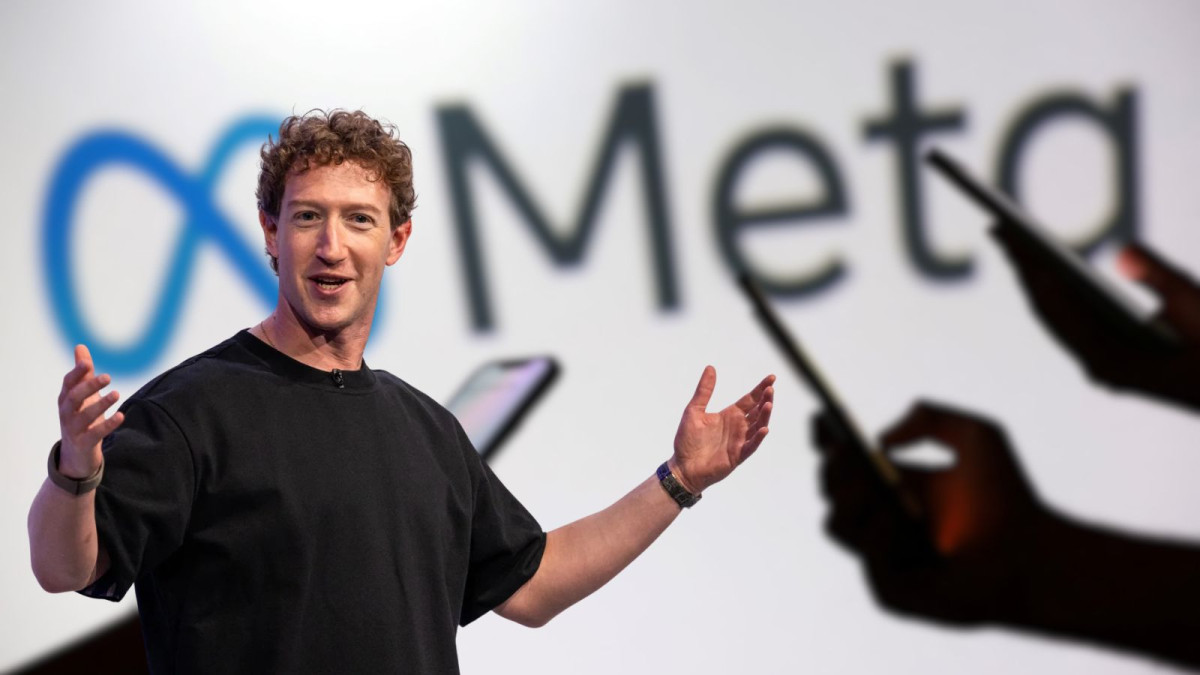
Social media giant Meta is currently running a pilot program that tests issuing creators’ payouts in stablecoins. “Meta now offers USDC stablecoin payouts via supported crypto wallets on the Solana and Polygon blockchain networks,” the team wrote on its Business Help Center page
Since this is still a pilot program, only creators in Colombia and the Philippines are currently eligible for the service, with the program expected to expand to more than 160 countries before the end of the year, according to an X post by Polygon Labs.

While the announcement was well received by many in the crypto community, a spokesperson for Meta clarified the goal of the initiative, stating that Meta was not issuing its own stablecoin but was instead tapping into Circle’s $77 billion USDC stablecoin, with plans to integrate the stablecoin into its payment infrastructure.
The Meta USDC creator payout program is currently supported by several popular crypto wallets, including MetaMask, Phantom, and Binance, with global payments platform Stripe handling the technical infrastructure and serving as the payments provider. Solana and Polygon are the only blockchain networks currently supported for this program.
Meta Pushes Again Into Crypto After Setbacks
Meta’s recent move into crypto follows several setbacks it has had to deal with in the past. In 2019, it launched Libra, a cryptocurrency which it said could be used across its different social media platforms, including Facebook, Instagram, and WhatsApp.
However, things did not go as planned, as some stakeholders, such as PayPal, Mastercard, and Visa, which were involved in the project, started pulling out due to scrutiny and backlash from U.S. regulators and from some members of the U.S. Congress.
Although Meta made several efforts to save the project, including rebranding it from Libra to Diem, a stablecoin backed by the U.S. dollar in an effort to appease federal regulators, nothing worked, as federal regulators stated that the project could not move forward.
Other projects associated with Libra and Diem, such as the Novi wallet, a cryptocurrency wallet built by Meta that allowed users to hold and transfer Libra, also failed, and the entire project was eventually wound down. According to Stuart Levey, then CEO of the Diem Association, “it became clear from our dialogue with federal regulators that the project could not move ahead.”
Volo Protocol Hack Drains $3.5M From Sui-Based DeFi Vaults

Volo Protocol, a decentralized finance protocol built on the Sui blockchain, has suffered a security breach that led to the loss of approximately $3.5 million in digital assets.
In an effort to maintain transparency, the team in an X post on Wednesday publicly announced the security breach. According to the team, the attack only affected assets in selected vaults, including Wrapped Bitcoin (WBTC), Matrixdock Gold XAUm, and USDC (USDC).

On detecting the breach, the team said it acted quickly to contain it and minimize further damage. It stated, “We detected the attack, immediately notified the Sui Foundation and ecosystem partners to contain the damage, and froze the vaults to prevent any further exposure.”
As of the time of its first reporting on the incident, the Volo team said that the $28 million in total value locked across other vaults was safe, adding that all vaults on the protocol were temporarily frozen pending a full postmortem and remediation. The team also said it was in damage control mode and was actively working with on chain investigators and ecosystem partners to recover the stolen funds.
The team released updates on the hack
Since the hack happened, the Volo team has, in three separate updates, transparently informed the community about the efforts being made to recover the stolen funds.
In the first two updates, the team said it was already working with ecosystem partners and had successfully frozen approximately $500 million of the stolen funds, while also intercepting and blocking the hacker’s attempt to bridge 19.6 WBTC. According to the Volo team, these funds were no longer under the hacker’s control.
In a third update, the team said it had already frozen $2 million of the stolen funds, and that together with ecosystem partners and security teams, it had flagged the hacker’s EVM addresses across the majority of centralized exchanges, swappers, and KYC tools.
The Volo protocol hack came shortly after the KelpDAO exploit and the Drift Protocol exploit, which led to a combined loss of over $570 million, and are currently the largest DeFi hacks that have occurred this year. So far, over $770 million has been lost to DeFi hacks this year.