#BlackRock
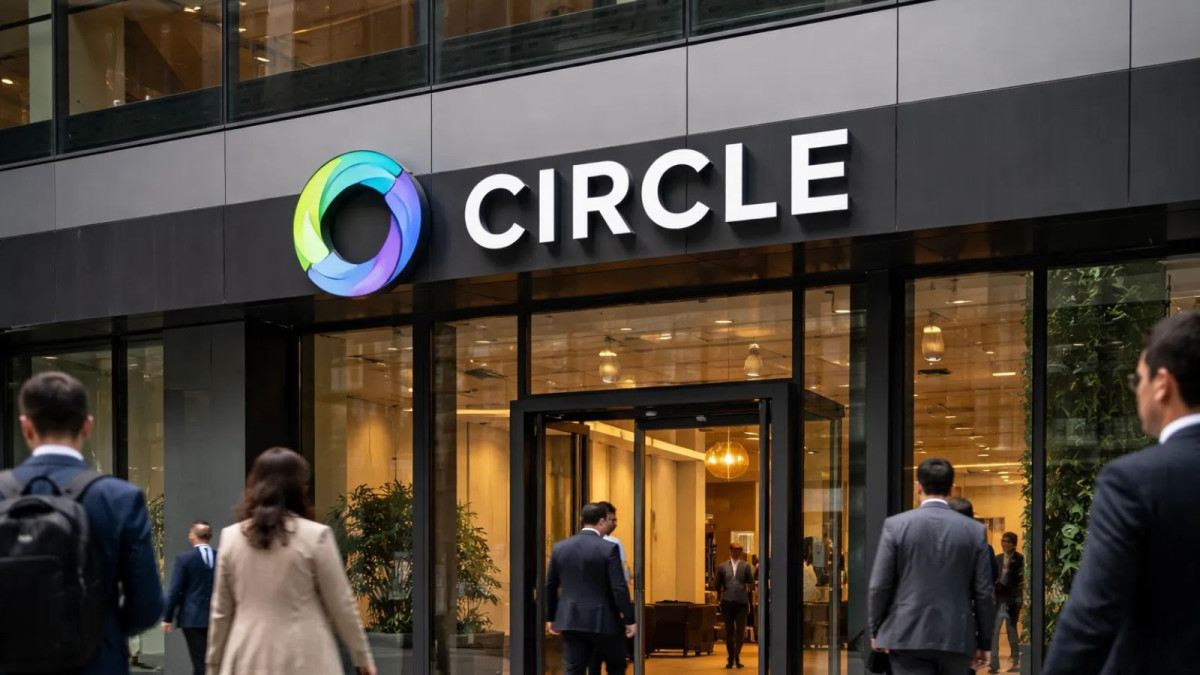
Circle Launches Arc Mainnet With BlackRock, Visa as Validators

Circle Internet Group has launched the mainnet of Arc, its Layer 1 blockchain purpose built for money and financial markets, with BlackRock and Visa among the chain’s founding validators.
Announcing the launch in a press release this Wednesday, Circle said Arc was launched with native integration into Circle’s full stack platform, with more than 100 applications already built atop it and more than 100 institutional and ecosystem builders, including global banks, asset managers, payment networks, exchanges, DeFi protocols, crypto wallets, and AI platforms.
Among the validators for the Arc chain are BlackRock, The Depository Trust & Clearing Corporation (DTCC), Galaxy, ICE, Mastercard, MoneyGram, SBI Group, Standard Chartered, Sumitomo Corporation, Visa, and Worldpay.

Describing Arc’s launch as Circle’s most significant launch since the launch of the USDC stablecoin, Circle Co Founder and CEO Jeremy Allaire said the Arc chain is the embodiment of what the Circle team has operated on for 13 years.
“Today we are switching on something the world has never had before: an open, neutral, always-on economic operating system for the internet, secured by some of the most important financial institutions on Earth, and built for a world where both people and machines transact.”
According to Circle, there are six features that set Arc apart from other chains: a chain gas fee denominated in dollars, which allows gas fees to be paid in USDC; sub-second finality, which ensures fast and instant settlement; opt in privacy, which ensures confidentiality of transactions; interoperability; agentic economic activity; and institutional security.
Alongside the Arc mainnet launch, Circle also released Arc Studio and Arc App Kits, which enable builders to create stablecoin native applications from scratch.
Arc Studio is an on-chain coding agent that turns ideas into implementations, enabling builders to create applications with market ready blockchain features faster, while Arc App Kits is a unified SDK that enables builders to add payments, swaps, on ramp, and other on-chain funding features to applications with just a few lines of code.

BlackRock & Fidelity Taking Over Bitcoin ETF Market

When U.S. spot bitcoin exchange-traded funds launched in January 2024, the thinking was pretty straightforward: a dozen or so competing products, a level playing field, and investors picking winners over time. Eighteen months in, that vision has not quite held up. What has emerged instead looks a lot more like a two-firm market, and it is getting more concentrated by the month.
BlackRock's iShares Bitcoin Trust (IBIT) and Fidelity's Wise Origin Bitcoin Fund (FBTC) are now pulling in the overwhelming majority of new institutional capital flowing into the space. The data tells the story plainly. On January 14 of this year, total bitcoin ETF inflows hit $840.6 million, according to Farside Investors. IBIT alone captured $648.4 million of that. FBTC added another $125.4 million. Between them, the two funds accounted for more than 90 cents of every dollar that entered the market that day.
That was not a fluke. On April 17, when total inflows reached $663.9 million, IBIT and FBTC again represented roughly two-thirds of the total. By May 1, the same pattern repeated: combined flows from the pair neared $500 million out of a $629.8 million total. Day after day, the numbers point in the same direction.
Scale Is the Whole Game
The dominance comes down to a few structural advantages that are basically impossible for smaller players to replicate in the short term. BlackRock manages over $10 trillion in assets globally. It has deep, pre-existing relationships with thousands of wealth management platforms, financial advisors, family offices, and institutional allocators. Fidelity brings similar firepower through its massive retail brokerage network and deep roots in retirement savings. Both funds also benefit from the kind of liquidity and trading depth that large institutions need when moving big positions without significant slippage.
IBIT currently commands roughly $54 to $67 billion in assets under management depending on the reporting date, representing close to half of the entire U.S. spot bitcoin ETF market by AUM. FBTC sits in a distant second at around $17 to $18 billion. Together, the pair controls the vast majority of the institutional bitcoin allocation pie, leaving Grayscale's GBTC, Ark's ARKB, Bitwise's BITB, and others fighting over what's left.
For professional allocators, the decision often comes down to factors that have nothing to do with bitcoin itself. Liquidity, bid-ask spreads, trading volume, and issuer reputation weigh heavily. On those metrics, IBIT and FBTC clear the bar for most institutional risk frameworks. Many of the other funds, frankly, do not even come close.
Smaller Funds Are Getting Squeezed Out
The casualty list is getting longer. Funds from Franklin Templeton, VanEck, WisdomTree, and Valkyrie are now regularly posting daily flows measured in single-digit millions, or occasionally not appearing in the inflow tallies at all. Their presence in the market is becoming more of a footnote than a force. Earlier this year, Trump Media and Technology Group scrapped plans for its own spot bitcoin ETF entirely, an early sign that new entrants have correctly sized up what they would be walking into.
This consolidation has been particularly visible during the more turbulent stretches of 2026. Bitcoin is down roughly 29% year-to-date, and the broader ETF complex has lived through several waves of heavy redemptions, including a rough patch between mid-May and early June. During those selloffs, outflows have hit all the major funds, but IBIT has consistently absorbed smaller losses relative to its peers, and in some cases remained net positive on days when rivals saw significant withdrawals.
The Grayscale Factor and What It Tells Us
Worth remembering: when Grayscale converted its GBTC from a closed-end trust to a spot ETF in January 2024, the fund bled roughly $17.5 billion in cumulative outflows as investors rotated away from its 1.5% fee toward cheaper alternatives. The primary beneficiaries of that rotation were IBIT and FBTC, both at 0.25%. That rotation was arguably the founding event that cemented today's hierarchy, and it has proven remarkably sticky.
Both products hold physical bitcoin. Both carry similar expense ratios. Both have comparable tracking records. The difference is distribution, pure and simple. BlackRock and Fidelity had the pipes already built when spot approval came through. Everyone else was starting from scratch.
A Winner-Take-Most Market Takes Shape
What is unfolding in the bitcoin ETF market looks less like a competitive landscape and more like the dynamics you see in index fund or money market businesses, where scale and distribution create a self-reinforcing advantage. The bigger IBIT gets, the more liquid it becomes. The more liquid it becomes, the more institutions gravitate toward it. And the more institutions hold it, the harder it becomes for smaller products to pull capital away.
The implications for smaller issuers are not great. They are not going to disappear overnight, but their ability to influence market direction or attract meaningful institutional allocations looks increasingly limited. Barring a significant product innovation or fee shock, the bitcoin ETF market appears to be settling into a structure where BlackRock and Fidelity call the shots, and everyone else fills out the margins.
For the wide market, that concentration cuts both ways. It means greater stability and predictability from two well-capitalized, highly visible issuers. It also means that sentiment at BlackRock and Fidelity, more than anywhere else, will determine the direction of institutional bitcoin flows for the near future.

Wall Street Is Going To Tokenize Everything

There was a version of this story...told many moons ago that gets told as a prediction. Some future moment when the old guard of finance finally meets crypto on equal footing, when the suits and the degens find common ground, when a BlackRock executive and a DeFi protocol share the same balance sheet. Well that story is now pretty outdated...it's no longer some vision of an oracle peering into a crystal ball. We are already living in it. The future is here.
What we are seeing happen in global finance with tokenization is not some pilot program or a hedge. It is a structural transformation, and it is accelerating faster than most people outside of these two worlds seem to understand. Wall Street is no longer on the outside looking in, just dipping their toes in, to test the water. They have taken the plunge.
The Old System Was Always Broken
Here is something traditional finance never really wanted to say out loud: the infrastructure holding it together is ancient, slow, and held up largely by institutional inertia. Settlements that take days. Liquidity locked to six-and-a-half-hour trading windows. Layers of intermediaries, each one clipping a fee, each one adding time. For the largest players, those inefficiencies were baked into the cost of doing business. For everyone else, especially retail investors in markets outside the U.S., they were just walls.
Blockchain does not fix all of this overnight. But it offers something that legacy systems fundamentally cannot: a shared, programmable, real-time record of ownership that does not require three middlemen to reconcile. The World Economic Forum, in its 2025 report on asset tokenization, described the transition as potentially the next major phase in the development of financial market architecture, drawing a comparison to the shift away from paper certificates in the 1960s. That is not a crypto inside touting to his followers on X. That is the WEF stating how tokenization could transform finance.
When even the most establishment-facing institutions are framing this as a generational infrastructure shift, it's probably worth paying attention to.
The Institutions Are Not Coming. They Are Here.
BlackRock has a tokenized fund on Ethereum. JPMorgan launched a second tokenized money market product backed by U.S. Treasuries. Fidelity brought its own Digital Interest Token on-chain. Franklin Templeton has been quietly building its tokenized money market fund, BENJI, across multiple blockchains for years. These are live products managing real capital.
The total market for tokenized real-world assets crossed $75 billion in 2025. Projections from market analysts put the long-term ceiling at $18.9 trillion by 2033, and some estimates, citing the total addressable market of traditional finance, go much higher. Larry Fink has publicly stated, more than once, that he believes every financial asset can eventually be tokenized. When the CEO of the world's largest asset manager says that with conviction, the rest of the industry listens.The total crypto market sits at just shy of $2.6 trillion right now, to add some perspective to the type of volume tokenization can bring to the space.
And the whole idea behind this is not ideological. It is practical. Blockchain cuts settlement time, removes redundant intermediaries, enables fractional ownership, and allows assets to be composable across different financial products. For institutions moving hundreds of billions, those efficiency gains compound into something very significant, very quickly.
xStocks and the Part Where It Gets Really Interesting
Tokenized treasuries and money market funds are the institutional on-ramp. But the development that best captures where all of this is truly heading is xStocks, and it is worth understanding why it matters as much as it does.
Launched in June 2025 by Backed Finance, a Swiss RWA issuer, xStocks put more than 60 fully collateralized U.S. equities on Solana as SPL tokens. Apple. Tesla. Nvidia. Amazon. Each one backed 1:1 by real shares held under regulated custody. Not synthetic. Not a derivative. The actual stock, on-chain. Available the same day on Kraken and Bybit to users in over 185 countries, and within hours, live across Solana's DeFi ecosystem on Raydium, Jupiter, and Kamino.
The numbers since launch have been hard to argue with. Over $25 billion in total transaction volume. More than 80,000 unique on-chain holders. The platform has since expanded to 100 fully backed listings, and xStocks recently launched xChange, a unified execution layer for tokenized equities running 24/5 across Ethereum and Solana with atomic settlement built in. And we'll go back to the numbers. xStocks is amazing. It's done over $25 billion in volume. But daily stock market volume just in the U.S. is roughly $500-700 billion. Daily. Just in the U.S. Starting to get the big picture here? The much, much bigger picture?
What makes this genuinely different from everything that came before it is composability. With a brokerage account, you own a stock and that is more or less the end of the story. With xStocks inside Solana's DeFi ecosystem, you can use Nvidia as collateral in a lending protocol, provide liquidity with Apple against a stablecoin, or swap Tesla for SOL without touching a broker, a clearinghouse, or a trading window. That kind of programmable financial infrastructure does not exist in traditional markets. It simply never has.
Who This Actually Opens the Door For
For investors in the U.S., this is interesting. For investors everywhere else, it is potentially transformative. Access to U.S. equity markets has historically required meeting regulatory hurdles, working through licensed brokers, and navigating banking infrastructure that many parts of the world simply do not have. xStocks changes that math entirely. Trading starts at one euro. Dividends reinvest automatically. No broker required. No minimum account size. Just a wallet and a connection.
Franklin Templeton's partnership with Kraken, announced in early 2026, is another data point worth noting here. The two are exploring on-chain versions of Franklin's financial products, including tokenized stocks, yield instruments, and compliant custody solutions. A legacy asset manager and a crypto exchange building joint infrastructure is the kind of thing that a few years ago would have sounded like a very optimistic projection. Now it is a press release.
The Narrative Has Shifted. Permanently.
Crypto spent a long time fighting to be taken seriously by traditional finance. That fight is over, and crypto won it on the merits. What is replacing it is something more interesting: a negotiation over what the merged system actually looks like, who controls it, and how fast it scales.
The regulatory environment is improving. Interoperability between chains is being worked out. Liquidity in tokenized asset markets is growing month over month. The WEF framed the barriers as real but solvable, pointing to legacy infrastructure integration, inconsistent global standards, and cross-chain friction as the remaining friction points. None of those are permanent problems. They are engineering and coordination challenges, and the talent and capital now focused on solving them is enormous.
The General Manager of xStocks said it about as cleanly as it can be said: the question is no longer whether equities belong on-chain, but how fast they can be scaled. With 100 listings and $25 billion in volume already behind the platform, the model is proven. The next stage is expansion to every major U.S. equity and, eventually, global equities across international markets.
That is not a roadmap for some distant future version of crypto. That is the roadmap for the next few years. And if the last twelve months are any indication, it will probably move faster than anyone is currently projecting, including myself. As bullish as I am on all of this, I have a feeling that the transition to tokenize the world will be bigger than anything I could ever imagine.

JPMorgan Files Tokenized Treasury Fund on Ethereum

JPMorgan Chase filed paperwork Tuesday with the U.S. Securities and Exchange Commission to launch a new tokenized money market fund on Ethereum, marking the bank's second push into blockchain-based investment products and the latest signal that Wall Street is serious about putting traditional finance on-chain.
The proposed fund, called the JPMorgan OnChain Liquidity-Token Money Market Fund and carrying ticker JLTXX, would issue digital tokens on the Ethereum blockchain representing shares backed by short-term U.S. Treasuries, cash, and overnight repurchase agreements. The fund's underlying blockchain infrastructure would be operated by Kinexys Digital Assets, the bank's blockchain unit that was formerly known as Onyx.
Built for the GENIUS Act
What makes this filing a bit different from typical money-market launches is who it's designed for. JPMorgan has structured JLTXX specifically to satisfy reserve asset requirements under the GENIUS Act, the U.S. legislation aimed at bringing stablecoin issuers under a regulatory framework. In short, the fund is positioned as a yield-bearing reserve vehicle for stablecoin firms looking for compliant, on-chain Treasury exposure.
That's a strategically significant market. Stablecoin supply has surged past $303 billion as of May 2026, with a large chunk of that liquidity sitting idle in exchange wallets generating nothing. When a bank the size of JPMorgan launches a regulated, on-chain money market product, this changes the game for institutional stablecoin issuers.
BlackRock Moved First, Then JPMorgan Followed Days Later
Just days before JPMorgan's Tuesday filing, BlackRock, the world's largest asset manager overseeing roughly $14 trillion, submitted its own pair of SEC filings tied to tokenized Treasury products. One of those filings outlined the BlackRock Daily Reinvestment Stablecoin Reserve Vehicle, designed to hold cash and short-term Treasuries and issue what the firm is calling OnChain Shares. Another filing proposed adding an Ethereum-based tokenized share class to its existing $7 billion Select Treasury-Based Liquidity Fund, with BNY Mellon maintaining official ownership records on-chain using ERC-20 token standards.
BlackRock CEO Larry Fink has been vocal about this for a while. He's argued publicly that blockchain-based settlement can compress transaction cycles, enable round-the-clock trading, and add transparency to capital markets. The firm is now acting on this, and at scale. BlackRock's existing BUIDL fund already manages more than $2.5 billion across eight blockchain networks including Ethereum, Solana, and Avalanche, and is increasingly being used as collateral across crypto markets.
A Market That Has Tripled in a Year
The broader tokenized real-world asset sector has crossed $30 billion in total value, more than tripling over the past twelve months. Tokenized U.S. Treasuries alone represent $14 billion of that, with Ethereum holding over $8 billion of the total. These aren't little numbers anymore.
Goldman Sachs and BNY Mellon have also announced tokenization initiatives in recent months. Just last week, JPMorgan's Kinexys platform joined Mastercard, Ripple, and Ondo Finance in completing the first cross-border, cross-bank redemption of a tokenized U.S. Treasury fund, settling the transaction on the XRP Ledger in under five seconds. This is another huge step... it's one thing to file an SEC registration, quite another to actually run a live settlement across borders in the time it takes to read this sentence.
The Race Is On
For context on how quickly this space is evolving, a Boston Consulting Group and Ripple joint projection estimates the tokenized asset market could reach $18.9 trillion by 2033. Whether or not that number proves accurate, the direction is pretty clear. Major banks are not waiting for the market to come to them.
JPMorgan seeded its first tokenized fund, the OnChain Net Yield Fund (MONY), with $100 million of its own capital after launching it through its $4 trillion asset management unit. JLTXX represents the bank's next step, this time aimed squarely at the emerging stablecoin compliance market rather than traditional qualified investors.
The filings from JPMorgan and BlackRock within days of each other are not a coincidence. Regulatory clarity, combined with the sheer scale of idle stablecoin liquidity looking for a compliant home, has created an opening. Wall Street is moving quickly to fill it, and the tokenization race is looking less like a crypto experiment and more like the next phase of institutional finance.
Circle Raises $222M in Arc Token Presale

Stablecoin issuer Circle has raised $222 million in a private presale of its Arc token, the native token of its institutional stablecoin-focused Layer 1 blockchain.
The presale was led by venture capital firm Andreessen Horowitz, which invested $75 million. Investors, including BlackRock, Apollo Global Management, Intercontinental Exchange, SBI Group, Janus Henderson Investors, Standard Chartered, General Catalyst, Marshall Wace, ARK Invest, IDG Capital, Haun Ventures, and crypto exchange Bullish, also participated in the funding round.
Speaking in an exclusive interview with CNBC, Circle CEO Jeremy Allaire said the company was building an operating system with multiple stakeholders and major companies that would run the infrastructure supporting the network and contribute to its governance.
Allaire also likened the Arc blockchain to a mobile operating system or cloud platform, saying the network was designed to allow major companies to build and operate infrastructure on the chain while participating in governance.
The Arc token has an initial total supply of 10 billion tokens. Circle has allocated 60% of the token supply to participants building, using, and contributing to the Arc blockchain. Circle itself will hold a 25% stake, enabling it to act as a validator for the network, while the remaining 15% has been allocated to a long-term reserve. The fundraising gives Arc a fully diluted network valuation of $3 billion.
The launch of the Arc blockchain is aimed at expanding Circle’s business beyond USDC issuance, allowing the company to generate additional revenue from its stablecoin operations while owning and controlling the settlement and distribution infrastructure on which the USDC stablecoin operates. This would reduce Circle’s reliance on blockchains such as Ethereum and Solana, as well as its dependence on Coinbase.
Circle Publishes Its First-Quarter Stablecoin Report
Alongside the announcement of its successful presale round, Circle also released its first quarter report for this year, which highlighted strong momentum and adoption of its stablecoin.
According to the report, total revenue and reserve income for its USDC stablecoin reached $694 million, marking a 20% year over year increase. USDC on-chain transaction volume also surged to $21.5 trillion in the last quarter, representing a 263% year over year increase.

Although net income from continuing operations fell 15%, USDC in circulation grew 28% year over year to $77.0 billion by the end of the quarter. The report also highlighted the introduction of Agent Stack, a platform designed by Circle that allows AI agents to conduct autonomous financial transactions using USDC.

Goldman Sachs Files for First Bitcoin ETF

Goldman Sachs has just filed to launch its first Bitcoin ETF marking a shift for the bank that once dismissed crypto, but now wants to compete directly with BlackRock and Fidelity.
The new filing positions Goldman as an issuer, creating its own branded Bitcoin product for public trading. The fund will follow a defined outcome structure aimed at managing risk while still providing exposure to Bitcoin’s price movement. That balanced design reflects how banks are attempting to bridge traditional investment principles with the growing demand for digital assets from clients who want regulated access.
Goldman also closed a two billion dollar acquisition of Innovator Capital Management just weeks ago, a company that specializes in complex ETF engineering which gave the bank guidance on the type of fund it is now introducing. Regulatory conditions also helped with the Financial Innovation and Technology Act, passed in late 2024, finally gave big banks clear legal ground to sell crypto based investment products without facing the grey areas that stalled previous attempts.
Competitive pressure is another factor with Morgan Stanley launching its own spot Bitcoin ETF only days earlier, offering the lowest fees in the market and giving its advisors full clearance to recommend crypto holdings to clients. With that move, Goldman faced a choice between continuing as a buyer of other firms’ funds or entering the field with its own. It chose the latter, signaling that the era of quiet participation is over and the fight for market share among major banks has begun.
Not too long ago in 2020, the firm told clients Bitcoin was not investable and compared it to the Dutch tulip mania. By 2024, the firm had quietly become one of the largest institutional holders of crypto ETFs managed by peers, controlling more than two billion dollars across portfolios like BlackRock’s IBIT.
Other large banks have followed a similar path away as Jamie Dimon who once called Bitcoin a fraud, now treats the asset as collateral through Kinexys and integrates stablecoin rewards into retail banking. Larry Fink shifted from criticizing Bitcoin to calling it digital gold, with IBIT growing into the world’s largest Bitcoin fund. Citigroup is building crypto custody infrastructure, Morgan Stanley is expanding access through thousands of advisors, and Bank of America now recommends up to a four percent crypto allocation for diversified portfolios.
As Bitcoin pushes back toward the low seventy thousand range, it is starting to peel away from software stocks, with the Bloomberg chart showing Bitcoin turning higher since February while the WCLD software basket has decreased. For years they moved in correlation with one another, but for now they are splitting which makes the arrival of products from firms like Goldman, Morgan Stanley, and others feel less like a late bet on another software proxy and more like a recognition that Bitcoin is carving out its own lane as an asset that deserves attention.
Retail has been quiet this cycle, but banks like Goldman, Morgan Stanley, and Bank of America rolling out their own Bitcoin products and opening up access on mainstream platforms help everyday investors who don’t know how to use new exchanges or custody setups just to get exposure. Bitcoin starts to show up in the same accounts that already hold index funds and blue chip stocks, with advisors treating it as a small slice of a long term portfolio. That does not remove the risk, but it does change the experience, turning crypto from something that sits on the same pipes and protections that most investors already use.

Uniswap’s $85.8M Treasury Extends Runway to 2027

The Uniswap Foundation has released its unaudited full-year 2025 financial summary, showing the organization holds roughly $85.8 million in total assets and has enough capital to keep the lights on through January 2027 without tapping external financing. The numbers arrive at a pivotal moment for the broader Uniswap ecosystem, which spent 2025 shipping major protocol upgrades, welcoming BlackRock to its trading infrastructure, and finally putting a stubborn class-action lawsuit to rest.
A Treasury Built on Three Pillars
As of December 31, 2025, the Foundation's balance sheet breaks down into $49.9 million in cash and stablecoins, 15.1 million UNI tokens, and 240 ETH. At year-end market rates, the token holdings alone bring the combined figure to $85.8 million.
The biggest driver of 2025 inflows was the Uniswap Unleashed governance proposal, which authorized a transfer of 20.3 million UNI from the Uniswap protocol treasury to the Foundation. At year-end valuations that was worth approximately $114 million, and it formed the backbone of both the Foundation's grantmaking ambitions and its operational runway through next year.
On the spending side, the Foundation kept a tight leash on overhead. Operating expenses for the full year, excluding employee token awards, came to $9.7 million, covering salaries, benefits and professional fees. This is a huge signal to governance participants that the organization is not burning capital faster than it deploys it into the ecosystem.
$26 Million in Grants, $106 Million Earmarked Overall
Over the course of 2025, the Foundation committed $26 million in new grants and actually disbursed $11 million to ecosystem builders, with $5.8 million of those new commitments authorized in Q4 alone and $2.1 million distributed in that quarter. The total allocation for grants and incentives now stands at $115.1 million, $99.8 million designated for commitments running through 2025 and 2026, and another $15.3 million reserved for previously committed grants awaiting disbursement.
A chunk of the multi-year grant book runs through 2029, reflecting a long-term bet on Uniswap v4 and the Unichain layer-2 network as foundational infrastructure. Some of those grants, particularly those given to Unichain launch partners, come with performance-linked repayment provisions, a mechanism that gives the Foundation downside protection while still offering meaningful upside to builders who hit growth targets.
Unichain Momentum and Product Shipping
The financial report lands against a backdrop of genuine product momentum. Uniswap v4, launched in January 2025, introduced the Hooks system, allowing developers to build custom liquidity pools with compliance features baked directly into the contract logic. By various accounts, about 75% of Uniswap v4 activity has since migrated to Unichain, the Foundation's own layer-2 network, which cuts transaction costs by around 95% compared to Ethereum mainnet. The ecosystem has grown to 1,500 or more active builders.
The Foundation also noted the launch of what Uniswap developers are calling chained actions, a feature that enables multi-chain swaps in a single flow, for instance moving USDC on Ethereum to cbETH on Base without manually bridging. That kind of cross-chain composability has been a stated priority for the team for a while, and shipping it reinforces Unichain's positioning as something more than a cost-savings vehicle.
BlackRock's BUIDL Arrives on UniswapX
Perhaps the single biggest headline surrounding the Uniswap ecosystem in recent months came in February, when BlackRock announced it would list its tokenized U.S. Treasury fund, BUIDL, on Uniswap via the UniswapX trading system. The world's largest asset manager also disclosed a direct purchase of UNI tokens, an undisclosed strategic investment that sent the governance token up roughly 25% on the day of the announcement.
Trading BUIDL through UniswapX allows pre-qualified, whitelisted investors to swap the tokenized Treasury fund around the clock using stablecoins, with Securitize handling KYC and compliance and Wintermute among the market makers providing liquidity. Access is currently limited to qualified purchasers with at least $5 million in assets, so the immediate volume impact is modest. The strategic signal, though, is loud: a $14 trillion asset manager chose decentralized exchange infrastructure for its first DeFi integration.
Robert Mitchnick, BlackRock's global head of digital assets, framed it as a step toward connecting tokenized assets with DeFi rails. Hayden Adams, Uniswap's founder, has suggested the same infrastructure will eventually serve retail-accessible products. The on-ramps are still being built, but the highway is open.
.
What's Next For Uniswap?
With an $85.8 million treasury and a clearly defined runway, the Foundation is not in crisis mode. The more pressing question for token holders and protocol watchers is whether the UNIfication governance proposal, approved on December 26, 2025 with 99.9% of the vote and over 125 million UNI cast in favor, will translate into meaningful fee revenue. The proposal activated protocol fees on v2 and v3 pools and directed a portion of trading revenue toward buying back and burning UNI, effectively turning the governance token into something with cash-flow characteristics for the first time.
Early projections put annual buyback-and-burn revenue at around $22 million, a figure that grows as more pools and L2 deployments activate fees. If those projections hold, the Foundation's runway math looks even more comfortable than the headline treasury figure suggests. A lot can change in the next nine months of crypto markets, but heading into mid-2026, Uniswap is operating from a position of relative financial strength, institutional validation, and hard-won legal clarity.

Morgan Stanley Fires Up Bitcoin ETF Race

On March 27, Morgan Stanley filed Amendment No. 3 to its S-1 registration with the SEC, and buried inside was a number that caught the entire industry off guard: 14 basis points. That's 0.14% annually, the lowest management fee of any spot Bitcoin ETF currently available in the United States, Morgan Stanley is coming in hot with plans to dominate the crypto ETF field.
The Morgan Stanley Bitcoin Trust, set to trade under the ticker MSBT, will track Bitcoin's price using the CoinDesk Bitcoin Benchmark 4PM NY Settlement Rate. It holds Bitcoin directly, with no leverage, no derivatives, and no structural complexity. Coinbase will serve as the prime broker and custodian, while BNY Mellon handles cash and administrative functions. The product looks almost identical to what BlackRock, Fidelity, and others already offer. The only thing really different here is the price.
Why Basis Points Matter
To understand why this is a big deal, you need to look at what's already out there. BlackRock's iShares Bitcoin Trust (IBIT), the dominant product in the space with roughly $54 billion in assets and about 785,000 BTC under management, charges 0.25%. Grayscale's Bitcoin Mini Trust is currently the cheapest option at 0.15%. Morgan Stanley's proposed fee undercuts even that by a single basis point, putting the firm at the absolute bottom of the cost stack. Bloomberg ETF analyst Eric Balchunas called it a "semi-shock" on X, noting that the pricing means none of Morgan Stanley's 16,000 financial advisors would face any conflict of interest recommending the product to clients.
His colleague James Seyffart was even more blunt, writing that Morgan Stanley is "not messing around" and projecting a potential launch in early April 2026, pending final SEC sign-off. That timeline is looking increasingly credible. The New York Stock Exchange has already issued a listing notice for MSBT on NYSE Arca, which is one of the procedural steps that typically signals a fund is close to going live.
The Distribution Advantage
Here's where Morgan Stanley's play becomes something more than just a fee war. The bank's wealth management division oversees roughly $8 to $9.3 trillion in client assets, depending on who you ask. That advisor network of around 16,000 professionals is massive and, until now, has largely been directing clients toward third-party Bitcoin ETFs when they wanted crypto exposure. A proprietary fund, priced cheaper than everything else on the market, removes that friction entirely.
Phong Le, president and CEO of Strategy, laid out the math plainly: if just 2% of Morgan Stanley's wealth management assets rotate into MSBT, that's roughly $160 billion in potential demand. To put that in context, IBIT, the largest spot Bitcoin ETF on earth, currently holds about $54 billion. Even a fraction of Morgan Stanley's allocated potential could dwarf what any competitor has built so far.
Morgan Stanley's own data suggests there's room to grow internally. Amy Oldenburg, the firm's head of digital asset strategy appointed in January 2026, noted earlier this year that roughly 80% of crypto ETF activity on the platform comes from self-directed investors rather than advisor-managed accounts. That's a hefty gap, and a cheap in-house product is a pretty obvious way to close it.
A Huge Crypto Push
It's worth taking a step back and looking at what Morgan Stanley has been doing over the past few months, because MSBT is just one piece of a much larger pie. The firm filed for its Bitcoin ETF in early January 2026. Later that same month, it submitted applications for a Solana ETF and a staked Ether ETF. Then in February, it applied for a national trust banking charter specifically to custody digital assets and execute transactions for clients. CEO Ted Pick has engaged directly with the U.S. Treasury on product development. This looks like a company that has decided crypto is a core business and is building the infrastructure to match.
What This Means for the Rest of the Market
The ETF market has seen fee compression before, and it rarely ends with just one cut. When Fidelity, Schwab, and others began undercutting each other on equity index funds years ago, it triggered a prolonged race toward zero that reshaped the entire industry. Bitcoin ETFs are not quite there yet, but Morgan Stanley's move adds serious downward pressure to the cost structure. Grayscale has already been watching assets bleed from its flagship GBTC product since the January 2024 launch, with holdings dropping from roughly $29 billion to around $10 billion. Higher-cost funds tend to lose assets over time when cheaper alternatives are available. And lower barrier to entry may just push crypto-curious investor off the fence.
For those retail investors and the advisors who serve them, the picture is pretty clear. Spot Bitcoin ETFs all offer the same basic thing: direct exposure to BTC's price without having to hold the asset yourself. When the product is the same, cost becomes the deciding factor. And right now, MSBT is set to be the cheapest option on the shelf.
Whether the SEC clears the final steps before April remains to be seen. But the direction here is clear. One of the biggest names in traditional finance has looked at the $83 billion Bitcoin ETF market, decided it wants in on its own terms, and priced its entry in a way that forces every other player to respond. Are we going to see ETF price wars heating up? That seems like a good thing for everyone involved.

SEC Greenlights Unlimited Crypto ETF Options on NYSE

NYSE Arca filed a rule change with the Securities and Exchange Commission to strip out the 25,000-contract position and exercise limits that had been capping options tied to 11 spot Bitcoin and Ether exchange-traded funds. NYSE American submitted an identical proposal the same day. The SEC did not bother with its usual 30-day review window. The changes went live immediately.
That kind of regulatory speed is not something markets see often, and it tells you something about where things stand right now.
The products covered read like a who’s who of the crypto ETF space: BlackRock’s iShares Bitcoin Trust (IBIT), Fidelity’s Wise Origin Bitcoin Fund (FBTC), ARK 21Shares Bitcoin ETF (ARKB), Grayscale Bitcoin Trust, Grayscale Bitcoin Mini Trust ETF, Bitwise Bitcoin ETF, Grayscale Ethereum Trust, Grayscale Ethereum Mini Trust, Bitwise Ethereum ETF, iShares Ethereum Trust, and Fidelity’s Ethereum Fund. Together they represent hundreds of billions in assets under management and the bulk of institutional Bitcoin and Ether exposure in the U.S. market.
What Does This Mean?
The 25,000-contract cap was put in place when crypto ETF options first launched, partly as a precaution against volatility, partly as a way for regulators to ease into unfamiliar territory. It made sense at the time. It does not make much sense anymore.
Under the new framework, position limits for these products will be set under the same standard rules that govern other equity options, a formula tied to each fund’s trading volume and shares outstanding. For something as liquid as IBIT, that could mean position limits north of 250,000 contracts. The practical effect is that institutions can now build and hedge far larger positions without running into hard ceilings.
The other big change is FLEX options. These are customizable contracts where traders can set their own strike prices, expiration dates, and exercise styles rather than being locked into standardized terms. FLEX options have long been available for commodity ETFs like the SPDR Gold Trust (GLD) and iShares Silver Trust (SLV). Bringing that same capability to crypto ETFs is not a minor footnote. It opens the door to the kind of structured product engineering that institutional desks have been waiting to apply to digital assets.
For a hedge fund running a long Bitcoin position through an ETF, the ability to hedge efficiently via options is not optional. It is a basic operational requirement. The old 25,000-contract cap was not just a theoretical constraint, it was the kind of friction that makes compliance officers nervous and portfolio managers frustrated.
Removing it changes the calculus. Risk systems that already handle equity options can now be applied to crypto ETF products using the same logic. Legal teams work within a rulebook they already understand. That reduction in operational overhead is not trivial for large-scale participants.
FLEX options matter for a slightly different reason. They are what you need to build structured products, overlay programs, and basis trades at scale. Banks and asset managers have been doing this with gold and silver ETFs for years.
Moving In One Driection
NYSE Arca and NYSE American are not doing anything in isolation here. MEMX filed comparable changes in February. Cboe did the same in March. With Monday’s filings, every major U.S. options exchange has now completed the same transition. That kind of synchronized movement across competing venues is a signal, not a coincidence.
Separately, Nasdaq ISE has a proposal still under SEC review that would push the position limit for IBIT options specifically to one million contracts. If that goes through, it would put IBIT options in the same tier as the largest traditional equity products in the market.
None of the core investor protections have been removed. Large position holders still face reporting requirements. Exchanges continue to monitor for manipulation. Broker-dealer capital requirements for carrying options positions remain in place. The architecture of oversight has not changed, only the room to operate within it.
The Big Picture
It was not long ago that getting a spot Bitcoin ETF approved in the United States felt like it might never happen. Then in January 2024, it did. Since then, the market has moved faster than most people expected. Options launched. Volume grew. Institutional flows came in. And now the plumbing is being upgraded to handle what those institutions actually need.
The crypto ETF options market is not just a retail product anymore, if it ever really was. The rule changes this week confirm what the trading data has been suggesting for a while: serious money is here, and the infrastructure is catching up to meet it.
What comes next is worth watching. With FLEX trading unlocked and position limits tied to real liquidity metrics rather than arbitrary caps, the product design possibilities open up considerably. Yield-generating strategies, principal-protected notes, volatility overlays, all of it becomes more viable when the options market can actually absorb the size.

Investors Doubling Down on BitMine, Ethereum

Ethereum has been stuck in a prolonged downtrend. Prices are down more than 60 percent from the August 2025 highs, sentiment is shaky, and some analysts are floating scenarios where ETH could revisit the $1,400 level before finding a durable bottom.
And yet, through all that noise, something else is happening in the background.
Investors are still buying BitMine, as BitMine is buying more Ethereum.
Not trimming. Not waiting. Buying. In some cases, buying aggressively.
Ethereum Weakness Sets the Stage
The broader crypto market has been under pressure for months. Spot Ethereum ETFs have seen notable outflows, a sharp contrast to the steady demand flowing into Bitcoin products. That divergence has reinforced the narrative that institutions are leaning toward relative safety in BTC while treating ETH with more caution.
Ethereum’s price action reflects that hesitation. Lower highs, fading rallies, and persistent risk off positioning have defined the tape. Even bullish long term analysts concede that the near term setup remains fragile.
But the selloff has not scared everyone away.
BitMine Is Doubling Down
BitMine Immersion Technologies, (BMNR), has quietly become one of the largest corporate holders of ETH after pivoting to an Ethereum treasury strategy in 2025 under Chairman Tom Lee.
The company has accumulated millions of tokens, building a balance sheet that is heavily exposed to Ethereum. That exposure has not looked pretty on paper during the drawdown. Reports show billions in unrealized losses as ETH retraced from its highs.
Still, BitMine has continued to add.
Rather than slowing purchases during weakness, the company has leaned into the downturn. The logic appears straightforward. If the long term thesis around Ethereum remains intact, lower prices represent opportunity rather than risk.
It is a classic buy the dip strategy, but on a corporate scale.
Ark Invest Adds More Shares
Cathie Wood’s Ark Invest has reinforced that narrative. The firm has repeatedly increased its exposure to BitMine across multiple ETFs, adding millions of dollars worth of BMNR shares even as Ethereum remained under pressure. The firm bought a total of 212,314 shares across three of its exchange-traded funds, worth $4.2 million based on Thursday's closing price.
Ark has a history of leaning into volatility in high conviction themes. Crypto infrastructure and blockchain exposure remain central to its long horizon strategy. In that context, adding BitMine during a downtrend fits the pattern.
For Ark, the weakness in ETH may be noise relative to the structural growth story around smart contracts, tokenization, and onchain financial rails.
BlackRock Increases Its Stake
It is not just Ark.
BlackRock has also boosted its BMNR position significantly, increasing its holdings by more than 165 percent according to recent disclosures. That scale of increase is difficult to ignore, especially in a market where Ethereum linked products have seen soft flows.
The timing is notable. While some funds reduced direct ETH exposure through ETFs, large asset managers appear comfortable gaining exposure indirectly through equity vehicles like BitMine.
For institutions that prefer regulated equity structures over direct token custody, BMNR offers a levered proxy. It packages Ethereum exposure inside a public company wrapper, complete with traditional reporting and corporate governance.
That structure can matter for mandates that limit direct crypto ownership.
Why Buy BitMine When ETH Is Falling
At first glance, the trade looks counterintuitive. Ethereum is in a downtrend. ETF flows are mixed at best. Volatility remains elevated.
But the bull case rests on a few pillars.
First, long term fundamentals. Ethereum still anchors decentralized finance, stablecoin issuance, and a growing tokenization ecosystem. Institutional advocates argue that the network’s utility has not disappeared simply because price momentum has faded.
Second, balance sheet leverage. BitMine’s growing ETH treasury creates a scenario where equity performance can amplify moves in the underlying asset. For investors who believe ETH eventually reclaims higher levels, BMNR can offer outsized upside.
Third, cycle dynamics. Crypto markets have a history of brutal drawdowns followed by sharp recoveries. Accumulating during periods of pessimism has historically rewarded patient capital, even if timing the bottom is nearly impossible.
Investors are clearly looking past the next few quarters and thinking long term on Ethereum.
The Bottom Line
There is a clear split in the market right now.
Short term traders are reacting to chart levels, macro uncertainty, and ETF flow data. Long term allocators appear to be focusing on strategic positioning.
The continued accumulation of BitMine shares by names like Ark Invest and BlackRock suggests that institutional conviction in Ethereum infrastructure has not broken, even if spot prices have.
That does not guarantee a rebound. Ethereum could test lower levels before sentiment turns. Volatility is part of the asset class.
But the steady bid under BitMine tells its own story.
Even in a downtrend, capital is being deployed...with intent.
For now, Ethereum may be drifting lower. BitMine buyers, however, are still stepping in and definitely betting on Ethereum for the long haul.
BlackRock Enters DeFi, Putting Fund On Uniswap

The world’s largest asset manager is officially getting into DeFi. It has been revealed that BlackRock will be bringing its Treasury-backed digital token BUIDL onto Uniswap, the biggest decentralized exchange in crypto. At the same time, it has accumulated UNI, Uniswap’s governance token. That combination, infrastructure plus equity exposure, is what has the market paying attention.
For years, Wall Street talked about tokenization in theory. Now BlackRock is testing it inside a live DeFi venue.
What Happened
BlackRock’s USD Institutional Digital Liquidity Fund, known as BUIDL, will now be tradable through UniswapX. BUIDL is essentially a tokenized vehicle holding U.S. Treasurys and short term cash instruments. Think conservative yield product, but wrapped in blockchain rails.
This is not retail access. Not even close. Only approved institutional participants can interact with the fund in this format. Liquidity providers are also curated. The architecture blends DeFi execution with compliance guardrails.
In other words, this is decentralized plumbing with centralized controls layered on top.
At the same time, BlackRock bought an undisclosed amount of UNI. No dramatic governance takeover narrative here, at least not yet. But the signal matters. Buying the token is a way of buying into the protocol’s long term relevance.
Markets reacted quickly. UNI rallied sharply on the announcement. Traders interpreted it as validation, not just of Uniswap, but of DeFi’s staying power.
Why This Is Bigger Than a Listing
Uniswap is not just another exchange. It is core infrastructure in crypto. Billions of dollars in liquidity, years of smart contract iteration, deep composability across chains.
For a firm like BlackRock to integrate directly with that stack is a psychological shift.
Institutional capital has historically avoided permissionless systems. Concerns around compliance, custody, counterparty risk, and regulatory clarity kept most major players in controlled environments. Even crypto ETFs are wrapped in familiar structures.
This move edges closer to open rails.
It suggests that large asset managers are beginning to see DeFi less as a speculative playground and more as settlement infrastructure. Faster clearing. Fewer intermediaries. Continuous liquidity. Programmable ownership.
Still, it is not ideological decentralization. The participation model is selective. Access is gated. This is not BlackRock embracing cypherpunk philosophy. It is BlackRock experimenting with efficiency.
The Tokenization Angle
Tokenized real world assets have been one of the most persistent narratives in crypto over the past two years. Treasurys on chain, money market funds on chain, even private credit on chain.
The pitch is straightforward. Blockchain rails can make traditional assets easier to transfer, easier to collateralize, and potentially easier to integrate into global liquidity pools.
Until now, much of that activity lived in isolated ecosystems. What BlackRock is doing connects tokenized Treasurys to a decentralized exchange environment.
If this model scales, it could blur the line between crypto native liquidity and traditional yield products. Imagine on chain funds becoming composable building blocks in lending markets, derivatives platforms, structured products.
That is where things get interesting.
Risk and Reality
There are obvious constraints. Regulatory oversight remains intense. DeFi protocols still face scrutiny in multiple jurisdictions. Smart contract risk never disappears. And institutional risk committees do not move quickly.
This is likely a controlled experiment, not an overnight transformation of Wall Street.
But it does establish precedent.
Once one major asset manager connects to DeFi infrastructure, competitors pay attention. Asset management is not an industry that tolerates strategic disadvantage for long.
What It Means for UNI
UNI’s price spike reflects more than short term speculation. It reflects a repricing of perceived legitimacy. The price surged more than 30%, but has since retraced some.
Governance tokens often struggle to justify valuation beyond fee switches and voting rights. Institutional alignment changes that conversation. If large financial entities begin to treat protocols as infrastructure partners, governance tokens start to resemble strategic assets.
That does not guarantee sustained upside. Markets are fickle. But the narrative shift is tangible.
The Bottom Line
Crypto has long argued that decentralized protocols would eventually underpin parts of global finance. Critics said institutions would build private chains instead. Closed systems. Walled gardens.
BlackRock’s move suggests a hybrid path.
Traditional finance may not adopt pure decentralization. But it may selectively integrate public blockchain infrastructure where it improves efficiency.
That middle ground, regulated access layered onto open protocols, could define the next stage of market structure.
For DeFi, this is validation. For Wall Street, it is experimentation. For traders, it is another reminder that crypto infrastructure is no longer operating in isolation.
BlackRock’s BUIDL Hits $2B in Assets and $100M in On-Chain Dividends

For something this significant, the reaction from crypto markets has been oddly quiet.
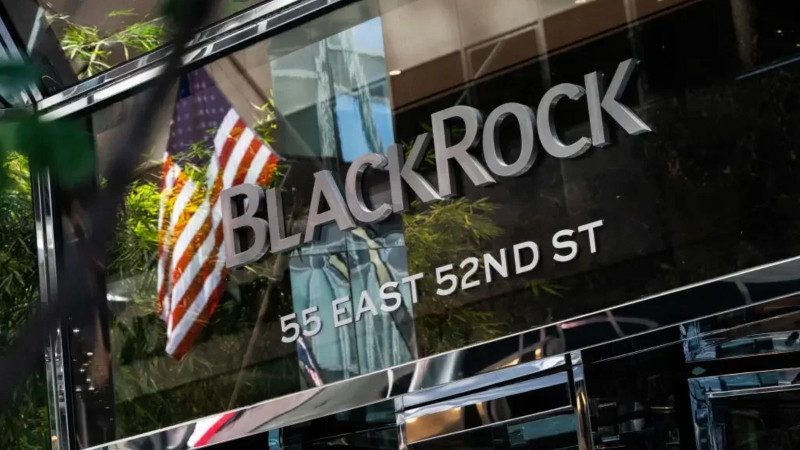
BlackRock’s tokenized money market fund, BUIDL, has now crossed $2 billion in assets and paid out more than $100 million in dividends to token holders. In any other cycle, those numbers would have dominated headlines. Instead, it feels like background noise, almost too traditional to be exciting, and maybe that is exactly the point.
Because BUIDL is not trying to reinvent finance. It is doing something much simpler, and arguably more important. It is putting real, regulated yield on chain, at institutional scale, and proving that the infrastructure actually works.
A Tokenized Fund That Acts Like a Money Market Fund
At its core, BUIDL is straightforward. The fund holds short term US Treasuries, cash, and repo agreements. The same assets that back traditional money market funds. No leverage, no exotic structures, no crypto native yield tricks.
What makes it different is how ownership is represented.
Instead of shares living inside legacy fund systems, BUIDL issues tokens that represent claims on the fund. Those tokens exist on public blockchains. Dividends are distributed on chain. Transfers settle without waiting for banking hours or back office reconciliation.
For crypto natives, this might not sound revolutionary. For institutions used to T plus settlement and restricted access windows, it is a real upgrade.
From Experiment to Infrastructure in Under Two Years
When BlackRock launched BUIDL in early 2024, many in crypto saw it as a symbolic move. A toe in the water. Something to signal interest without real commitment.
That framing no longer holds.
The fund scaled quickly, crossing $1 billion in assets within its first year, then continuing to grow past $2 billion by the end of 2025. Along the way, it paid out more than $100 million in dividends sourced from traditional fixed income returns, not token emissions or incentives.
That last part matters. This is not yield propped up by growth assumptions. It is yield coming from government debt, flowing directly to wallets.
Why This Matters to Crypto, Specifically
Crypto has spent years talking about real world assets and on chain yield. BUIDL is one of the first examples where those ideas are operating at scale without collapsing under their own complexity.
The fund gives on chain capital something it has often lacked: a low risk, regulated place to sit. For DAOs, market makers, funds, and protocols managing large treasuries, that is a meaningful development.
Instead of choosing between idle stablecoins or higher risk DeFi strategies, capital can now earn government backed yield while staying on chain. That is a structural shift, not a narrative one.
Multi Chain, Because Liquidity Does Not Live in One Place
Another reason BUIDL has gained traction is its multi chain approach.
The fund launched on Ethereum but has since expanded to several other networks, including Solana, Avalanche, Polygon, Optimism, Arbitrum, and Aptos. This is less about chasing ecosystems and more about recognizing reality.
Liquidity in crypto is fragmented. Institutions operate across multiple chains depending on speed, cost, and integration needs. By meeting them where they are, BUIDL avoids forcing a single technical choice and makes adoption easier.
It also reinforces an important idea: tokenized assets do not need to be chain maximalist to succeed.
The $100 Million Dividend Signal
The dividend milestone deserves more attention than it is getting.
More than $100 million has been paid out to token holders since launch. Not promised. Not projected. Paid.
In a space where yield numbers are often theoretical or short lived, that consistency stands out. It shows that on chain finance does not need to rely on speculation to be useful. Sometimes it just needs boring assets, clean execution, and trust in the issuer.
BlackRock’s involvement removes a layer of counterparty doubt that has historically limited institutional participation in DeFi adjacent products.
A Quiet Shift in Power Dynamics
There is an uncomfortable implication here for parts of crypto.
One of the largest asset managers in the world is now offering a product that competes with stablecoins, treasury backed tokens, and some low risk DeFi yield strategies. And it is doing so with regulatory clarity, scale, and brand trust.
That does not mean those products disappear. But it does raise the bar.
If tokenization is going to define the next phase of crypto infrastructure, it will not only be driven by startups and protocols. It will also be shaped by institutions that understand capital, compliance, and distribution.
Why This Moment Matters
BUIDL passing $2 billion in assets and $100 million in dividends is not a hype event. It is an adoption event.
It shows that tokenization can move beyond proofs of concept. It shows that on chain assets can generate real world yield without sacrificing regulatory guardrails. And it shows that crypto infrastructure is increasingly being used not just for speculation, but for cash management.
That may not pump tokens overnight. But it is the kind of progress that sticks.
And once institutions get comfortable earning yield on chain, the rest of the ecosystem tends to reorganize around that reality.
Stay Connected
You can stay up to date on all News, Events, and Marketing of Rare Network, including Rare Evo: America’s Premier Blockchain Conference, happening July 28th-31st, 2026 at The ARIA Resort & Casino, by following our socials on X, LinkedIn, and YouTube.