#ETFs
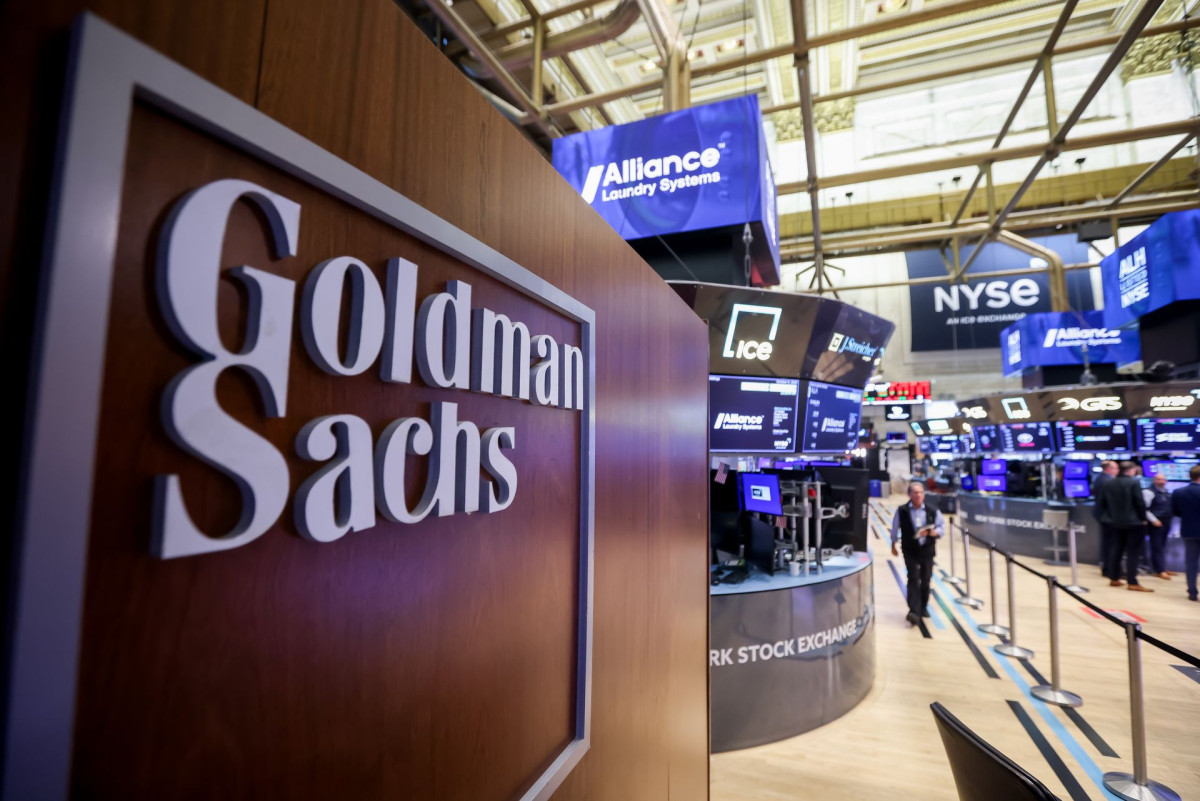
Goldman Sachs to Acquire ETF Manager NEOS for $2.25B

Goldman Sachs has agreed to acquire exchange-traded fund manager NEOS Investments in a deal that could reach $2.25 billion.

Announcing the acquisition plan, Goldman Sachs said in a press release that the move is aimed at expanding its offering of sophisticated, derivative-based ETFs to clients and investors.
“As investor demand for active ETFs grows, NEOS’ disciplined investment approach is highly complementary to our capabilities across buffer, managed outcome and income strategies. Together, we will give investors a diverse toolkit for different market environments,” said David Solomon, Chairman and CEO of Goldman Sachs.
With derivatives income ETFs being one of the fastest-growing categories in the ETF market, with approximately $180 billion in assets under management, financial research firm Morningstar projects that a combination of Goldman Sachs and NEOS could create the eighth-largest ETF manager in the world.
The acquisition is expected to be completed in the first quarter of 2027. Upon completion, NEOS co-founders Troy Cates and Garrett Paolella will join Goldman Sachs as managing partners. The full NEOS team, including its investment and client service teams, will also be absorbed into Goldman Sachs Asset Management.
About Goldman Sachs
Headquartered in New York, Goldman Sachs is one of the world’s leading investment firms, offering a range of services, including investment banking, securities trading, and asset management, to corporations, governments, and high-net-worth individuals.
The firm currently holds significant positions in Bitcoin and Ethereum ETFs and most recently filed for its Bitcoin-linked ETF in April, marking a shift from its previous skepticism toward the digital asset space to a more active engagement with the industry.

Uphold Launches Fractional Trading for 4,000+ US Stocks and ETFs

Uphold, the multi asset digital trading platform, has launched a new equities service that allows its U.S. customers to access more than 4,000 U.S. stocks and ETFs directly through the Uphold platform.

Image credit: x.com
The launch, which builds on Uphold's vision of becoming a comprehensive all in one multi asset financial platform, gives users access to both traditional investments and digital assets within a single platform, allowing them to manage both asset classes in one place.
"People want one app for all of their investing, including crypto," said Nancy Beaton, President of Uphold U.S. "Equities on Uphold is designed to make that real. Uphold customers can now sell Bitcoin to buy Berkshire Hathaway shares in a single step on the app, without clunky currency conversions or the need to transfer funds between stablecoins and cash balances."
Compared with other platforms that may require users to convert between fiat currencies and cryptocurrencies or move funds across multiple platforms, Uphold provides a frictionless experience that allows users to trade seamlessly between supported crypto assets, U.S. stocks, and ETFs within a single platform.
According to the Uphold team, users can access all of these services without paying any Uphold commissions. They can also purchase fractional shares for as little as $5.
Although Uphold's fractional U.S. stocks and ETFs are currently available only during standard U.S. market hours, typically from 9:30 a.m. to 4:00 p.m. ET, Monday through Friday, the company plans to expand trading availability to around the clock during the Monday through Friday trading week.
The launch of Uphold's U.S. equities service coincided with the launch of tokenized U.S. stocks and perpetual markets by Arcus, a decentralized exchange built by the dYdX team, on the Robinhood Chain.
The offering includes more than 95 leading U.S. stocks, including Nvidia, Apple, Tesla, Microsoft, Meta, and Amazon, which will be available for trading around the clock on the Robinhood Chain. Although the perpetual market remains in beta, it includes products from more than 35 markets spanning U.S. equities, commodities, cryptocurrencies, and indices.

BlackRock & Fidelity Taking Over Bitcoin ETF Market

When U.S. spot bitcoin exchange-traded funds launched in January 2024, the thinking was pretty straightforward: a dozen or so competing products, a level playing field, and investors picking winners over time. Eighteen months in, that vision has not quite held up. What has emerged instead looks a lot more like a two-firm market, and it is getting more concentrated by the month.
BlackRock's iShares Bitcoin Trust (IBIT) and Fidelity's Wise Origin Bitcoin Fund (FBTC) are now pulling in the overwhelming majority of new institutional capital flowing into the space. The data tells the story plainly. On January 14 of this year, total bitcoin ETF inflows hit $840.6 million, according to Farside Investors. IBIT alone captured $648.4 million of that. FBTC added another $125.4 million. Between them, the two funds accounted for more than 90 cents of every dollar that entered the market that day.
That was not a fluke. On April 17, when total inflows reached $663.9 million, IBIT and FBTC again represented roughly two-thirds of the total. By May 1, the same pattern repeated: combined flows from the pair neared $500 million out of a $629.8 million total. Day after day, the numbers point in the same direction.
Scale Is the Whole Game
The dominance comes down to a few structural advantages that are basically impossible for smaller players to replicate in the short term. BlackRock manages over $10 trillion in assets globally. It has deep, pre-existing relationships with thousands of wealth management platforms, financial advisors, family offices, and institutional allocators. Fidelity brings similar firepower through its massive retail brokerage network and deep roots in retirement savings. Both funds also benefit from the kind of liquidity and trading depth that large institutions need when moving big positions without significant slippage.
IBIT currently commands roughly $54 to $67 billion in assets under management depending on the reporting date, representing close to half of the entire U.S. spot bitcoin ETF market by AUM. FBTC sits in a distant second at around $17 to $18 billion. Together, the pair controls the vast majority of the institutional bitcoin allocation pie, leaving Grayscale's GBTC, Ark's ARKB, Bitwise's BITB, and others fighting over what's left.
For professional allocators, the decision often comes down to factors that have nothing to do with bitcoin itself. Liquidity, bid-ask spreads, trading volume, and issuer reputation weigh heavily. On those metrics, IBIT and FBTC clear the bar for most institutional risk frameworks. Many of the other funds, frankly, do not even come close.
Smaller Funds Are Getting Squeezed Out
The casualty list is getting longer. Funds from Franklin Templeton, VanEck, WisdomTree, and Valkyrie are now regularly posting daily flows measured in single-digit millions, or occasionally not appearing in the inflow tallies at all. Their presence in the market is becoming more of a footnote than a force. Earlier this year, Trump Media and Technology Group scrapped plans for its own spot bitcoin ETF entirely, an early sign that new entrants have correctly sized up what they would be walking into.
This consolidation has been particularly visible during the more turbulent stretches of 2026. Bitcoin is down roughly 29% year-to-date, and the broader ETF complex has lived through several waves of heavy redemptions, including a rough patch between mid-May and early June. During those selloffs, outflows have hit all the major funds, but IBIT has consistently absorbed smaller losses relative to its peers, and in some cases remained net positive on days when rivals saw significant withdrawals.
The Grayscale Factor and What It Tells Us
Worth remembering: when Grayscale converted its GBTC from a closed-end trust to a spot ETF in January 2024, the fund bled roughly $17.5 billion in cumulative outflows as investors rotated away from its 1.5% fee toward cheaper alternatives. The primary beneficiaries of that rotation were IBIT and FBTC, both at 0.25%. That rotation was arguably the founding event that cemented today's hierarchy, and it has proven remarkably sticky.
Both products hold physical bitcoin. Both carry similar expense ratios. Both have comparable tracking records. The difference is distribution, pure and simple. BlackRock and Fidelity had the pipes already built when spot approval came through. Everyone else was starting from scratch.
A Winner-Take-Most Market Takes Shape
What is unfolding in the bitcoin ETF market looks less like a competitive landscape and more like the dynamics you see in index fund or money market businesses, where scale and distribution create a self-reinforcing advantage. The bigger IBIT gets, the more liquid it becomes. The more liquid it becomes, the more institutions gravitate toward it. And the more institutions hold it, the harder it becomes for smaller products to pull capital away.
The implications for smaller issuers are not great. They are not going to disappear overnight, but their ability to influence market direction or attract meaningful institutional allocations looks increasingly limited. Barring a significant product innovation or fee shock, the bitcoin ETF market appears to be settling into a structure where BlackRock and Fidelity call the shots, and everyone else fills out the margins.
For the wide market, that concentration cuts both ways. It means greater stability and predictability from two well-capitalized, highly visible issuers. It also means that sentiment at BlackRock and Fidelity, more than anywhere else, will determine the direction of institutional bitcoin flows for the near future.

Binance Launches Access to 7,000 U.S. Stocks and ETFs

Binance, the world's largest cryptocurrency exchange by trading volume, has launched access to more than 7,000 U.S. stocks and exchange-traded funds (ETFs) for traders outside the United States.
The launch, announced on Monday, will give non-U.S. traders access to a range of U.S.-listed stocks, including major companies such as Apple, Tesla, and Nvidia, all within the Binance app.

To make investing more accessible, Binance has enabled users to purchase fractional shares with as little as $5. Traders will also be able to buy and sell U.S. stocks and ETFs with zero commissions, subject to a minimum platform fee of $0.35 per order or 10 basis points on orders above $350.
According to Binance, stock trading on the platform will be available 24 hours a day, five days a week. Because the service is integrated into the Binance app, users will no longer need to switch between platforms to manage different asset classes. Both stock and cryptocurrency holdings will be accessible through a single account.
The launch of U.S. stocks and ETFs for non-U.S. traders marks a significant step in Binance's effort to become a multi-asset financial super app.
"We have set out to reach the next 3 billion users, and to do that, we need to make it simpler for users to access opportunities across asset classes, diversify their portfolios, and move more easily between traditional investing and on-chain finance," said Yi He, a co-founder of Binance. "That is what a multi-asset financial super app should help people do," she added.
As part of the rollout, Binance said it will soon launch bStocks, tokenized securities that represent selected U.S. stocks and ETFs. Users will be able to convert their bStocks holdings into on-chain assets. The launch is expected in the coming weeks, with Binance saying additional details will be released at a later date.
The launch follows Binance's recent introduction of a wallet-lockdown feature designed to help prevent wrench attacks. Meanwhile, Steve Gregory, chief executive officer of Binance.US, is scheduled to speak at the upcoming Rare Evo 2026, which will take place from July 28 to July 31, 2026.
Bitget Launches Reality for Tokenized Stocks and ETFs

Bitget, a global cryptocurrency exchange, has launched Reality, a real-world asset (RWA) platform that gives users access to tokenized traditional financial assets.
With Reality, Bitget aims to bring tokenized U.S. stocks and exchange-traded funds into its trading ecosystem, enabling access to financial instruments that have traditionally been difficult to access due to geographic restrictions, market hours, and settlement barriers.

The launch aligns with Bitget’s Universal Exchange (UEX) roadmap, which aims to transform Bitget from a crypto exchange into a global trading platform that allows users to trade cryptocurrencies, tokenized stocks, exchange-traded funds, commodities, forex, and other real-world assets through a single account using cryptocurrencies.
“Reality is built around Bitget’s 10% vision: by 2030, nearly 10% of financial assets could exist in tokenized form,” said Gracy Chen, Bitget CEO. “Stablecoins, faster blockchain settlement, and growing interest from major exchanges are pushing RWAs from experiment to market infrastructure. Reality is Bitget’s step toward making that future accessible to global users.”
How Reality Will Work
Reality will be natively integrated into Bitget and serve as the exchange’s specialized arm for tokenizing traditional financial instruments. It will also serve as the primary layer for standardizing traditional market value in the crypto economy.
The Reality platform will issue rTokens to users, which are on-chain representations of publicly traded equities and exchange-traded funds (ETFs). Each rToken will be backed 1:1 by real shares held with a FINRA-registered, SIPC-protected U.S. broker-dealer.
To ensure the highest level of transparency, the Reality platform will be regularly audited by third-party auditors. These audits will provide a live proof-of-asset dashboard and CPA-level audit reports to ensure verifiable asset integrity at all times.
Reality will initially focus on providing tokenized exposure to selected U.S. stocks and ETFs, with the team introducing additional tokenized assets as the platform expands. However, access to the platform, including user eligibility, product availability, and trading features, will depend on applicable geographical laws and regional restrictions.
Bitget’s entry into the RWA tokenization industry comes as several institutions, including Payward, Bitwise, and Nasdaq, are tapping into the growing sector. The RWA tokenization market is currently valued at around $34 billion, with the Boston Consulting Group projecting it to reach $16 trillion by 2030.
Prediction Market ETFs May Launch Next Week

Bloomberg ETF analyst James Seyffart has revealed in an X post that we may be seeing the first set of prediction market exchange-traded funds (ETFs) hitting the market next week, following a recent SEC filing by New York-based issuer, Roundhill Investment.
On the 29th of last month, Roundhill Investment filed a post-effective amendment under Rule 485(b) with the U.S. Securities and Exchange Commission (SEC), setting a new date of May 5 for its previously filed registration statement (Form N1A).

Image credit: sec.gov
With this late April filing, Roundhill sets May 5 as the new effective date for the six prediction exchange-traded funds (ETFs) it had initially filed with the SEC on February 13, when it filed for six binary-style ETFs tied to the outcome of U.S. elections.
These ETFs included the Democratic President ETF (BLUP) and Republican President ETF (REDP), which are tied to the outcomes of the 2028 U.S. presidential election, the Democratic and Republican Senate ETFs (BLUS and REDS) tied to the 2026 midterms Senate elections, and the Democratic and Republican House ETFs (BLUH and REDH) tied to the 2026 midterms House of Representatives elections.
By launching these ETFs tied to the outcome of U.S. elections, Roundhill allows investors to buy shares of these ETFs without having to interact with cryptocurrencies or create accounts with prediction market platforms. However, like other exchange-traded funds, these ETFs are highly risky, with investors potentially benefiting significantly if a target party wins and suffering near total losses if they lose.
Other Companies Gear Up for Similar Launch
Roundhill is not the only company to have filed for a prediction market exchange-traded fund. In the same month it made its initial filing, global investment managers Bitwise and GraniteShares also filed for similar exchange-traded funds tied to the outcome of the upcoming United States midterm elections and the 2028 presidential election.
Although none of these companies have filed for a post-effective amendment, like Roundhill, Bloomberg analyst James Seyffart said in a post on X that we should expect Bitwise and GraniteShares to make similar filings in the coming days or hours.
Bitwise Launches BAVA Avalanche AVAX ETF

Global crypto asset manager Bitwise Asset Management has launched BAVA, a spot Avalanche Exchange-Traded Product (ETP) that provides investors with exposure to the Avalanche (AVAX) token, allowing them to earn yield without directly holding it.

Since the Avalanche network allows investors to earn rewards of up to 5.4% per year for staking AVAX, Bitwise, through its in-house staking division, Bitwise Onchain Solutions, will stake 70% of its AVAX holdings in the BAVA ETP, while the remaining 30% will be kept as a liquidity reserve to meet redemptions and operational needs.
Although BAVA allows investors to gain exposure to Avalanche’s AVAX, it is important to note that this exchange-traded product is not suitable for all investors. It is subject to a high degree of risk, is highly volatile, and could result in significant losses. Investors, therefore, need to exercise caution when investing in BAVA.
How BAVA Performed
Starting with initial assets under management of $2.5 million and a net asset value of approximately $25 per share, the BAVA crypto ETP recorded a trading volume of over $400,000 within the first 90 minutes of its launch.
Within its first day of trading, BAVA closed at $25.50, marking a 2 percent increase from its launch price and reaching $26. According to TradingView, BAVA is currently trading on the New York Stock Exchange at $26.30. Its assets under management have also grown from the initial $2.5 million to approximately $13 million to $19 million within days of its launch, while AVAX, the native cryptocurrency of the Avalanche network, is currently trading at $9.19, according to CoinGecko.
The launch of the spot AVAX ETP comes a few days after Bitwise launched the Hyperliquid Staking Exchange-Traded Product, BHYP, on Deutsche Börse Xetra in Europe. In January, the asset manager launched CLNK, a Chainlink exchange-traded fund that provides exposure to LINK, the native cryptocurrency of the Chainlink oracle network.
The Bitwise Proficio Currency Debasement fund, an exchange-traded fund that provides exposure to Bitcoin, gold, miners, and precious metals, was also launched by the asset manager earlier this year.
About the Avalanche Network
The Avalanche network is a high-performance Layer-1 blockchain designed for speed, scalability, and customization. It uses its own Avalanche, also known as Snow, consensus mechanism that allows a validator to select a small random subset of other validators to validate blockchain transactions.
Due to its high performance, several top-tier blockchain protocols have built on the Avalanche network, including the decentralized finance lending protocol Aave and the decentralized exchange WOOFi. Other tokenization institutions, such as Franklin Templeton, VanEck, and Securitize, have also built tokenized products on the Avalanche blockchain.

Franklin Templeton and Ondo Bring 24/7 Stocks Onchain

Franklin Templeton, one of the largest asset managers on the planet, has formally partnered with Ondo Finance to bring tokenized versions of its exchange-traded funds to blockchain networks, allowing investors to hold and trade exposure to traditional financial products directly through crypto wallets, at any hour of the day or night. The announcement, made Wednesday, marks a meaningful escalation in the firm's already aggressive push into digital asset infrastructure.
Under the arrangement, Ondo will purchase shares of five Franklin Templeton ETFs, including FFOG, FLQL, FDGL, FLHY, and INCE, then issue blockchain-based tokens through a special purpose vehicle. Those tokens pass along the economic exposure, so holders receive the return stream of the underlying fund but do not technically own the underlying shares directly. Liquidity will be supported by Ondo's network of market makers, including during windows when traditional exchanges are closed.
The platform powering this is Ondo Global Markets, which launched in September 2025 and has already reported more than $620 million in total value locked and north of $12 billion in cumulative trading volume across roughly 60,000 users. That kind of traction, relatively early in its life, helps explain why Franklin Templeton was willing to put its name on this deal.
Sandy Kaul, Franklin Templeton's head of innovation, framed the initial ETF lineup in straightforward terms: the chosen funds offer a broad mix of exposures and a useful test case to see what actually resonates with a new audience. The products will initially be available in Europe, Asia-Pacific, the Middle East, and Latin America. U.S. availability, the firm said, hinges on further regulatory clarity around how third parties can distribute registered funds on-chain.
Making Moves
For those tracking Franklin Templeton's blockchain strategy, this is less a sudden pivot and more the next logical chapter. The firm launched its Benji Technology Platform back in 2021 and with it the first U.S.-registered money market fund to run on a public blockchain, the Franklin OnChain U.S. Government Money Fund. That fund has since grown to $557 million in assets as of February 2026, not a trivial number for a product built on infrastructure that most institutional investors were still treating with skepticism just a few years ago.
Kaul also made waves at the Ondo Summit in New York in February, where she argued that the next evolution of asset management would be what she called "wallet-native": a world where stocks, bonds, private funds, and more are all held and managed through tokenized digital wallets rather than fragmented across brokerage accounts, banks, and paper records. The Franklin Templeton-Ondo partnership is a direct expression of that vision, and it is now live.
The Race Is On
Franklin Templeton is not operating in a vacuum. BlackRock's BUIDL fund has surpassed $2 billion in assets under management. JPMorgan rolled out its My OnChain Net Yield Fund on Ethereum late last year, crossing $100 million in short order. WisdomTree and Fidelity have both signaled similar intentions. And just this week, the New York Stock Exchange announced a partnership with Securitize to enable tokenized securities trading on its platform. The momentum is real and it is accelerating.
For Ondo, landing Franklin Templeton as a partner is a significant credibility stamp. The firm's ONDO token carries a market cap above $1.2 billion, and the broader real-world asset tokenization market has grown to over $15 billion in total assets according to RWA data, up sharply over the past year. The question now is whether tokenized fund structures can attract meaningful adoption beyond the crypto-native crowd that already lives in wallets.
What This All Means
None of this is without complication. Tokenized ETFs do not immunize investors from market volatility. Bitcoin hit an all-time high near $126,000 in October 2025 and was trading around $70,500 by late March 2026. Easy access to assets at any hour cuts both ways. Regulatory uncertainty in the U.S. remains a genuine constraint, with questions around compliance, investor identification, and how registered funds interact with decentralized infrastructure still unsettled.
Franklin Templeton has also partnered with Binance to allow tokenized fund shares to serve as collateral for institutional trades, which introduces new connections between regulated finance and crypto exchange infrastructure. That might be efficient under normal conditions, but critics will rightly note that interconnected systems have a history of amplifying stress in bad times. The 2022 crypto collapse left lessons that the industry has not fully metabolized.
Still, when a firm managing $1.7 trillion commits to blockchain as a primary distribution channel rather than a side experiment, competitors pay attention. The walls between traditional finance and crypto markets are getting thinner fast, and the Franklin Templeton-Ondo deal may end up being one of the more consequential ones to watch as this story unfolds.

SEC Approves Nasdaq Tokenized Stock Trading Pilot

The U.S. Securities and Exchange Commission (SEC) on Wednesday approved Nasdaq’s proposal to launch a pilot program for tokenized stock trading.
The proposal, first filed in September 2025, sought SEC approval to allow trading of both traditional and tokenized versions of high-volume stocks on the Nasdaq exchange. With the program now approved, traders will be able to trade both traditional stocks and their tokenized counterparts on the Nasdaq.

These tokenized stocks, according to the approval filing, will trade on the same order book at the same price, under the same ticker, with the same identifying number and rights as their traditional counterparts.
The pilot program will not be open to everyone. According to the SEC approval filing, participation will be limited to eligible participants. While Nasdaq has not disclosed the criteria, participants are likely to include Nasdaq-approved broker-dealers and firms approved by the Depository Trust Company (DTC).
It is also important to note that these tokenized stocks will be limited to securities in the Russell 1000 index, which tracks the 1,000 largest publicly traded companies in the United States, as well as exchange-traded funds that track the S&P 500 and Nasdaq-100 indices.
The Booming Tokenized Stocks Market
The tokenized stocks and equities market has experienced a remarkable surge over the past few months, growing from around $32 million at the start of 2025 to $963 million by January 2026, an increase of approximately 3,000%.
This growth has been attributed to the wider accessibility and faster settlement times offered by tokenized stocks compared with their traditional counterparts.
A wave of large fintech and crypto companies has also entered the tokenized equity market. In 2024, the cryptocurrency exchange Robinhood built a custom layer-2 blockchain for tokenization and began offering tokenized U.S. stocks to European users the following year.
Other cryptocurrency exchanges, including Kraken, Gemini, and eToro, have also begun offering tokenized U.S. stocks across multiple blockchains, such as Solana, BNB Chain, Arbitrum, and Ethereum. Most recently, Kraken, in partnership with Backed Finance, launched xChange, an on-chain trading engine for tokenized equities.
With the rapid attention and growth the tokenized equities market has seen, its market capitalization is projected by multiple research reports to reach trillions of dollars in the coming years.

Bitcoin Near $70K Again, Bottom or More Pain Ahead?

I came into Bitcoin in mid-2017. Not early, not late, but early enough to catch the euphoria and late enough to feel the consequences. I watched that cycle go vertical, then watched it unwind in slow motion through 2018. I stayed through the 2020–2022 cycle, including the November 2021 peak and the long grind down that followed.
So when Bitcoin slipped back toward $70,000 this week, the feeling wasn’t panic..well, maybe some panic. But there certainly was some recognition. The same quiet tension I’ve felt before, when the market shifts from confidence to defense and nobody is quite ready to admit it.
This move looks familiar on the surface. Risk assets are under pressure, equities are shaky, and Bitcoin is once again trading like the most volatile expression of risk in the room. But the environment around it feels very different than it did the last two times I lived through this.
Why $70,000 Matters More Than Most Want To Admit
For anyone who lived through 2021, $70K isn’t just a number. November of 2021 marked the prior cycle’s peak near $69,000. For years, that level symbolized excess. More recently, trading above it felt like proof that the market had finally moved on.
Once Bitcoin slipped back into that zone, the mood shifted fast. Selling stopped being about opinions and started being about mechanics. Stops were hit. Leverage came out. Liquidations took over. That transition is something I’ve learned to respect. When the market turns mechanical, it usually overshoots.That is obvious on both sides, euphoria and near depression.
I saw the same thing in early 2018 and again in 2022. Different triggers, same behavior.
BTC Still Trades Like A Risk Asset
As much as I want Bitcoin to be treated differently, moments like this remind me that it still trades like a high beta risk asset when macro pressure shows up.
Equities, especially tech, have been weak. Volatility is up. Liquidity feels tighter. In that environment, Bitcoin rarely resists. It amplifies. Crypto trades 24/7, it’s easy to exit quickly, and it’s deeply intertwined with leverage. When investors want to reduce risk immediately, Bitcoin is often first in line.
Once liquidations start cascading, fundamentals stop mattering in the short term. Exchanges sell into weakness, bids step away, and price pushes through levels that felt solid just days earlier.
ETF flows add a new dynamic I didn’t have to think about in 2018 or even 2021. Institutional money can now enter and exit Bitcoin daily. That can support price over time, but during drawdowns it can also accelerate downside when outflows cluster.
What Past Cycles Taught Us
Living through the 2017 peak and the 2018 bear market changed how I think about Bitcoin permanently. Support can fail. Narratives can break. Time can do more damage than price. And something always happens that you least expect.
The 2020–2022 cycle reinforced that lesson. After peaking in November 2021, Bitcoin fell roughly 75 percent into the November 2022 lows. That wasn’t just a crash, it was a year of slow erosion that wore people down.
Those experiences make it hard for me to assume this cycle can’t get uglier. Bitcoin has always been good at humbling people who think they’ve seen it all.
At the same time, I can’t ignore what’s different now.
Will This Cycle Be Different?
In 2017 and 2021, regulation was mostly noise. Institutions were cautious or absent. Spot ETFs didn’t exist. Bitcoin lived largely outside traditional markets
That’s no longer true.
Efforts like the Clarity Act and broader moves to define digital commodities give Bitcoin something it’s never really had during a downturn, a clearer legal and regulatory framework. That matters more when prices are falling than when they’re rising.
Institutions also behave differently than retail traders. They don’t buy because of excitement or belief. They buy because mandates allow them to. That can create steadier demand when prices fall far enough.
But they also sell without emotion. When risk models say reduce exposure, they reduce it. No attachment, no narrative. That means drawdowns can still be sharp, but they may resolve differently than in prior cycles.
This is the tension I’m trying to navigate in this cycle. Regulation and institutional access could limit the worst outcomes we’ve seen before. They could also change the character of both rallies and declines in ways we haven’t fully experienced yet.
Is This The Bottom?
Honestly, It feels rough out there and I know I wish this was the bottom. Maybe we see some relief before more pain? Or, in true crypto fashion, we rip the band-aid off and go even further down today, but I don’t think it’s safe to assume it’s the bottom of this cycle.
Liquidations have already done some eal damage. Sentiment has flipped quickly. Price is sitting near a level that matters historically and psychologically. If ETF flows stabilize, forced selling fades, and equities stop sliding, a bottoming process could start soon.
But I’ve been around long enough to know that real bottoms don’t feel relieving. They feel boring. They form through time, failed breakdowns, and long stretches where nothing seems to happen. This is happening fast so...the chop is still going to come. We may some moves up soon, and even more quick crashes, but the long boring bottom of the market has yet to reveal its face.
If conditions continue to deteriorate, Bitcoin will grind lower. Slow declines have always been more dangerous than fast crashes. They exhaust conviction. People just get complacent and leave.
What I’m Watching
Rather than trying to call the exact low, I’m focused on a few things.
Whether ETF flows stabilize over weeks, not days
Whether liquidation events shrink instead of cascade
Whether equities, especially tech, stop dragging crypto lower
Whether Bitcoin can reclaim broken levels and hold them, not just tag them
And time, true reversals don't happen fast. Those things just take time. That is true when the market is up and when the market is down.
I came into Bitcoin in 2017 thinking it was all about price. Staying through multiple cycles taught me it’s really about structure, psychology, and time.
This drop toward $70K feels familiar for a reason. What’s different is the environment around it. Institutions are here. Regulation is evolving. The market is more connected to traditional finance than it’s ever been.
I don’t know if that makes the outcome better or just different. What I do know is, that this fourth chapter I’m living through doesn’t feel like a clean repeat of the last one, and that alone is worth paying attention to. I also don't know if I made you feel better about this whole thing or not. Or maybe, I was just trying to make myself feel better in the end.

Indiana Crypto Pension Bill Could Transform Retirement Investing
Indiana’s Bold Move: Crypto in Public Pensions
In early December 2025, Indiana surprised a lot of people by stepping directly into the world of digital assets. A new proposal, House Bill 1042, was introduced by state representative Kyle Pierce, and it does something pretty groundbreaking. It requires public retirement programs to offer crypto linked exchange traded funds, or ETFs, as part of their standard investment lineup.
This means that many public employees, including teachers, government workers, and possibly police and firefighters, would now see crypto related funds sitting right next to traditional retirement options. Instead of crypto being something you explore on your own, Indiana wants it to be a normal part of the overall retirement system.
The bill also outlines a set of protections for everyday crypto users. It limits how much local governments can restrict or interfere with digital asset activity. That includes mining, payments, self custody, and private wallet use. Unless restrictions also apply to traditional financial assets, cities and counties would not be allowed to single out crypto for special limitations.
If this becomes law, Indiana would be the first state in the country to require Bitcoin linked ETFs in public pension systems. That alone sets a bold precedent for how states might approach retirement investing in the future.
A Broader Trend: States Are Warming Up To Crypto
Indiana might feel like it is out ahead, but the move fits into a larger trend. Several other states have already been exploring crypto exposure in different ways.
For example, some states have passed laws allowing retirement systems to purchase Bitcoin ETFs. Others have focused more on legal protections, such as protecting self custody, clarifying how digital assets are classified, or encouraging blockchain adoption within government departments.
What makes Indiana stand out is not the idea of crypto exposure itself, but the fact that the bill attempts to make it a standard part of public retirement offerings. This goes beyond optional access and moves toward normalizing crypto as a core part of long term, institutional investing.
What Supporters Are Saying
Backers of House Bill 1042 believe this is simply a reflection of financial reality. Crypto is becoming a bigger part of the global economy, and Indiana residents should have access to it in the same way they do to other investments.
Supporters argue that this gives people more financial flexibility, especially younger workers who want exposure to assets they believe will appreciate over the next several decades. They also point out that Bitcoin ETFs remove much of the risk and complexity of direct crypto ownership, since they function inside the regulated ETF structure.
The bill also proposes pilot programs to test blockchain technology within state agencies. That includes using distributed ledgers for record keeping, identity management, and improving government transparency and efficiency. Supporters say this could modernize the way public systems operate.
What Critics Are Concerned About
Not everyone is excited about crypto appearing in pension plans. Critics bring up several concerns.
One of the biggest issues is volatility. Cryptocurrencies can swing up or down rapidly, and pension systems are normally built around stability and long term reliability. Some people worry that exposing retirement funds to such unpredictable markets may not serve the best interests of retirees.
There are also questions about long term regulation. National rules around crypto continue to shift, and that uncertainty could create complications for publicly managed funds. Critics say lawmakers should move slowly and avoid building pension plans around assets that still feel risky to many households.
Another concern is whether the state should be responsible for promoting exposure to crypto at all. Some people feel that these decisions should be optional and entirely individual, rather than part of a default menu in a public benefits system.
Why Indiana’s Bill Could Be A Turning Point
If Indiana does pass House Bill 1042, the impact could go far beyond state borders.
It would accelerate the mainstream acceptance of crypto within public institutions. At the same time, it would create a legal framework that protects wallet access, mining, payments, and self custody rights. That combination of investment access and personal rights could easily serve as a template for other states.
It also encourages conversation about what public retirement investing should look like in the future. Some believe this is an opportunity for long term growth. Others feel the risks are too high. Either way, the bill forces the debate into the spotlight.
What To Watch Next
There are several things worth paying attention to in the months ahead.
First, lawmakers may modify the bill. They could adjust the requirement to offer crypto ETFs or turn it into an optional feature instead. They might also place limits on how much of a pension portfolio can be allocated to digital asset funds.
Second, pay attention to how pension administrators respond. Even if the bill passes, the practical process of integrating crypto ETFs will require careful planning.
Third, other states may begin crafting similar laws. Indiana’s move could spark a wave of legislative activity across the country as states look at whether they want to follow the same path.
Finally, federal regulatory changes will play a major role. As national crypto rules evolve, they could strengthen or weaken the long term viability of crypto pension investments.
Indiana’s proposal captures a pivotal moment in the evolution of digital assets. Crypto is no longer viewed as a fringe experiment. It is now part of serious, institutional conversation. Whether this turns out to be a smart long term shift or an overly ambitious leap is something only time will reveal, but it is clear that the landscape of public finance is changing quickly.

Is the End of Quantitative Tightening Setting Up Crypto’s Next Big Rebound?
The End of Quantitative Tightening Might Be Exactly What Crypto Needed

If you’ve been watching the crypto market lately, it has not felt great. Bitcoin dipping into the low 90s usually sparks panic, threads full of doom and plenty of “it’s over” takes. But this time, the headlines do not tell the full story. Something different is happening underneath the surface. Something that actually looks pretty promising.
A few major shifts are lining up at once, and together they point in one direction.
We might be closing out the long, grinding downtrend that has weighed on crypto for nearly two years.
The Federal Reserve formally ended quantitative tightening on Dec. 1, coinciding with the New York Fed conducting approximately $25 billion in morning repo operations and another $13.5 billion overnight, the largest injections that we've seen since 2020.
A Quiet Turning Point: Institutions Are Opening the Doors
For years, crypto’s biggest obstacle has not been technology or innovation. It has been access. Most big financial institutions treated crypto like a guest they did not want at the party.
That wall is finally cracking.
The clearest sign is Vanguard, managing roughly $9 trillion to $10 trillion in assets, opened its brokerage platform to third-party crypto ETFs and mutual funds tied to BTC, ETH, XRP, and SOL for the first time, creating immediate demand pressure.
This is a firm that has historically avoided anything remotely risky. They did not just ignore crypto; they actively rejected it. And now they are letting clients buy regulated crypto ETFs through the same accounts they use for retirement and index funds.
That is not a small change. When a company managing trillions finally decides that crypto belongs on the menu, it means something fundamental has shifted.
Even if only a small percentage of Vanguard’s clients add exposure, it creates a slow, steady flow of long term capital. That type of investor does not FOMO in or panic out. They allocate, rebalance and hold. That is the kind of capital that helps stabilize a market.
Crypto Moves on Liquidity, Not Hype
You can talk narratives all day, and crypto certainly loves its narratives. But the thing that consistently moves this market more than anything else is global liquidity.
And for the first time in a long while, liquidity is starting to return. The era of aggressive tightening looks like it is ending. If central banks start easing, capital gets cheaper, markets loosen up and investors take on more risk. Crypto usually reacts quickly.
The money supply had been shrinking for months. Now those indicators are stabilizing and, in some cases, ticking upward.
Look back at previous bull runs. They did not start because of tweets or new coins. They all aligned with periods of easier monetary policy.
We are entering one of those periods again.
ETFs Are Changing How Money Enters the Market
One of the underrated shifts happening right now is how investors access crypto.
Before ETFs, getting into Bitcoin or Ethereum meant dealing with exchanges, wallets, seed phrases and a bunch of complexity that ordinary investors simply did not want.
Now it is as simple as buying an index fund. ETFs are often part of automated portfolios. When crypto drops, the system buys more to rebalance. When it rises too fast, it trims. That smooths out volatility.
Investors trust the platforms they already use. If crypto is right there next to S&P 500 funds, the hesitation disappears. Those regulated products bring in the kind of capital that sticks around. Not tourists. Not gamblers. Long term investors.
This shift alone could reshape how crypto behaves during both rallies and corrections.
Why the End of Quantitative Tightening Is the Real Catalyst
The last couple of years have been rough for risk assets across the board. Higher rates, reduced liquidity and tighter financial conditions made it hard for anything speculative to breathe. Crypto got hit hardest.
Now that cycle is ending.
When quantitative tightening slows, liquidity flows back into the system. Banks lend more. Investors take more risk. Capital moves faster. Crypto is one of the first beneficiaries because it lives so far out on the risk curve.
Put simply, crypto does not need a hype cycle to turn around. It needs liquidity.
And liquidity is finally returning.
This Market Might Be Underestimating What Comes Next
People are tired. They are skeptical. And that is usually when markets quietly shift direction.
Think about the setup right now:
-
Institutions are entering.
-
ETFs are creating new pipelines.
-
Liquidity is stabilizing.
-
Rate cuts look increasingly likely.
-
Crypto is oversold and structurally stronger than it was in past cycles.
This is the kind of macro environment where bottoms form, often long before sentiment catches up.
The Foundation for the Next Run Is Taking Shape
Downtrends do not end on good news. They end when conditions change behind the scenes while everyone is too focused on the price chart.
That is what seems to be happening now.
The end of quantitative tightening is not just another headline. It is the kind of shift that has historically marked the beginning of major reversals in risk assets. And with crypto gaining easier access, stronger infrastructure and broader institutional acceptance, this could be the setup for something bigger than most people expect.
Crypto might not just recover.
It may be preparing for a stronger, more mature cycle than anything we have seen before.