#Macro
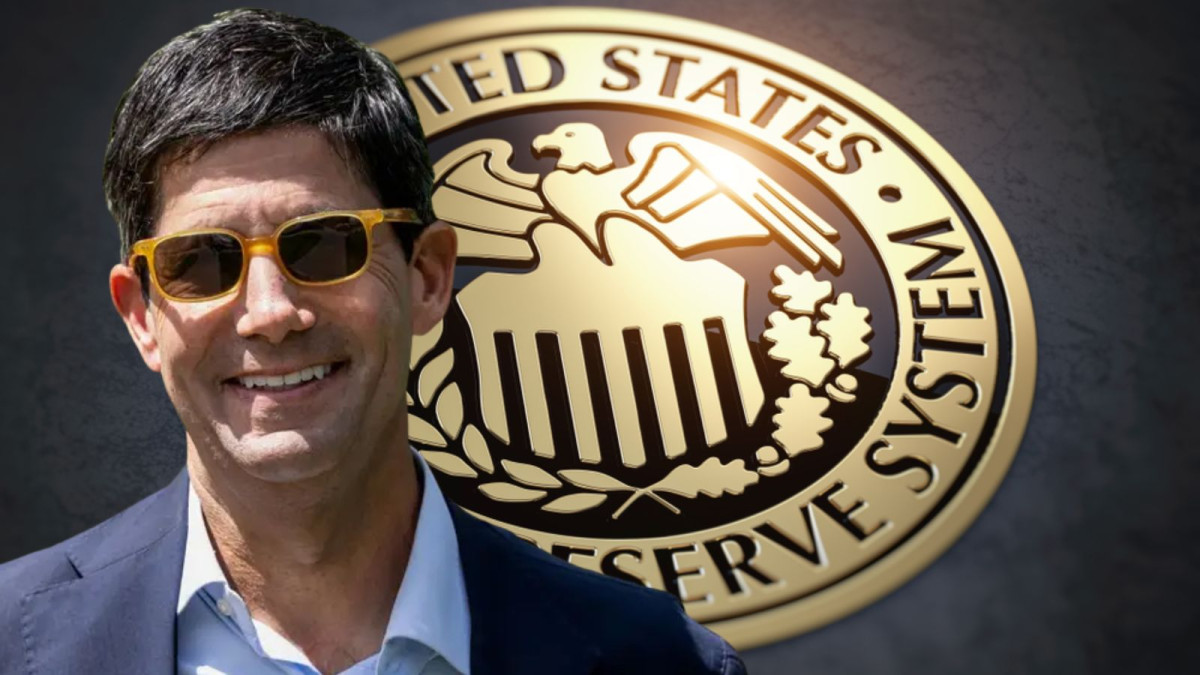
Fed Pick Kevin Warsh Brings Deep Crypto Knowledge

Most Fed chair nominations generate debate about interest rate philosophy, inflation targets, and balance sheet management. Kevin Warsh's confirmation is going to involve a lot of that, sure, but it is also going to involve a fairly lengthy conversation about DeFi lending protocols, Ethereum Layer 2 networks, and a Bitcoin Lightning Network startup.
Warsh, President Trump's nominee to chair the Federal Reserve, cleared the last bureaucratic hurdle before his Senate confirmation hearing when he submitted his required financial disclosure to the U.S. Office of Government Ethics. The filing reveals combined assets with his wife of at least $192 million. But it's the crypto positions scattered throughout the document, held through a web of venture fund structures, that are drawing the most attention from the digital asset industry right now.
Not Just A Casual Holder
Warsh did not just pick up some bitcoin through a Coinbase account during the 2021 bull run and forget about it. Through two fund structures, DCM Investments 10 LLC (via a vehicle called Abstract Holdings) and a series of funds labeled AVF I, AVF II, AVF III, and AVGF I and II, he holds equity positions in more than two dozen blockchain and digital asset companies. The breadth is notable: DeFi lending, decentralized derivatives, Layer 1 and Layer 2 networks, prediction markets, crypto neobanks, and Bitcoin payments infrastructure.
On the DeFi and trading side, the portfolio includes Compound, one of the foundational algorithmic crypto lending protocols, alongside dYdX, a decentralized derivatives exchange, and Lighter, a decentralized exchange protocol. On the infrastructure side, he has exposure to Solana, the high-throughput Layer 1 blockchain, Optimism and Blast, two Ethereum scaling networks, and Zero Gravity, a Layer 2 AI blockchain platform. Bitcoin-specific holdings include Flashnet, a Lightning Network trading platform, and a direct position in the Lightning Network itself.
There are also positions in Polychain and Scalar Capital, two prominent crypto investment firms, plus Polymarket, the prediction market platform, and several crypto-enabled neobanks including OnJuno and Lemon Cash. Rounding it out: Dapper Labs (best known for NBA Top Shot), Friends With Benefits, a Web3 community platform, and Crossmint, an NFT developer tools company. Warsh also previously held a stake in Bitwise Asset Management, the issuer of one of the spot Bitcoin ETFs, though that position does not appear in the current filing.
Selling liquid token positions is straightforward. Unwinding LP stakes in Polychain or venture fund structures is not, and federal ethics rules generally impose a one-year cooling-off period on matters directly affecting recently divested financial interests. That creates a potentially awkward situation given what the Fed has on its plate.
Congress is actively working through stablecoin legislation that would define which institutions can issue and custody stablecoins, directly affecting DeFi protocols and crypto neobanks of the type in Warsh's portfolio. The Fed's supervisory stance on whether banks can custody digital assets remains one of the most contested open questions in the industry. And while political appetite for a U.S. CBDC has cooled considerably, the Fed's ongoing research in that area intersects with the payment network infrastructure Warsh holds exposure to through Lightning Network and Solana.
Could Be Some Complications
The broader financial profile adds another layer. Warsh earned $10.2 million in consulting fees from Duquesne Family Office, the investment arm of Stanley Druckenmiller, one of the more prominent macro investors in the crypto space. Additional consulting income came from GoldenTree Asset Management ($1.55 million), Cerberus Capital Management ($750,000), and Brevan Howard ($750,000), all firms with meaningful digital asset trading operations. His speaking fee circuit in just the first half of 2025 alone topped $780,000 from firms including TPG, State Street, and Warburg Pincus. Combined with spouse Jane Lauder's estimated $1.9 billion net worth, Warsh would enter the Fed as one of the wealthiest chairs in the institution's modern history.
Senate Banking Committee chair Tim Scott said Tuesday that a confirmation hearing is scheduled for next week. However, Senator Thom Tillis of North Carolina is blocking any final vote until the Justice Department drops its criminal investigation of current Fed Chair Jerome Powell, whose term expires May 15. The crypto portfolio will almost certainly come up in questioning.
On one hand, a Fed chair who has personally sought out exposure to DeFi protocols and blockchain infrastructure is unlikely to approach crypto with the indifference or hostility that has characterized past leadership. On the other, the mandatory divestiture and recusal obligations could actively limit his ability to influence policy in the industry's favor during his first year in office, precisely when some of the most consequential regulatory decisions are expected to land. It is a double-edged sword, and the confirmation hearing will be the first real test of how Warsh plans to navigate it.
Bitcoin Near $70K Again, Bottom or More Pain Ahead?

I came into Bitcoin in mid-2017. Not early, not late, but early enough to catch the euphoria and late enough to feel the consequences. I watched that cycle go vertical, then watched it unwind in slow motion through 2018. I stayed through the 2020–2022 cycle, including the November 2021 peak and the long grind down that followed.
So when Bitcoin slipped back toward $70,000 this week, the feeling wasn’t panic..well, maybe some panic. But there certainly was some recognition. The same quiet tension I’ve felt before, when the market shifts from confidence to defense and nobody is quite ready to admit it.
This move looks familiar on the surface. Risk assets are under pressure, equities are shaky, and Bitcoin is once again trading like the most volatile expression of risk in the room. But the environment around it feels very different than it did the last two times I lived through this.
Why $70,000 Matters More Than Most Want To Admit
For anyone who lived through 2021, $70K isn’t just a number. November of 2021 marked the prior cycle’s peak near $69,000. For years, that level symbolized excess. More recently, trading above it felt like proof that the market had finally moved on.
Once Bitcoin slipped back into that zone, the mood shifted fast. Selling stopped being about opinions and started being about mechanics. Stops were hit. Leverage came out. Liquidations took over. That transition is something I’ve learned to respect. When the market turns mechanical, it usually overshoots.That is obvious on both sides, euphoria and near depression.
I saw the same thing in early 2018 and again in 2022. Different triggers, same behavior.
BTC Still Trades Like A Risk Asset
As much as I want Bitcoin to be treated differently, moments like this remind me that it still trades like a high beta risk asset when macro pressure shows up.
Equities, especially tech, have been weak. Volatility is up. Liquidity feels tighter. In that environment, Bitcoin rarely resists. It amplifies. Crypto trades 24/7, it’s easy to exit quickly, and it’s deeply intertwined with leverage. When investors want to reduce risk immediately, Bitcoin is often first in line.
Once liquidations start cascading, fundamentals stop mattering in the short term. Exchanges sell into weakness, bids step away, and price pushes through levels that felt solid just days earlier.
ETF flows add a new dynamic I didn’t have to think about in 2018 or even 2021. Institutional money can now enter and exit Bitcoin daily. That can support price over time, but during drawdowns it can also accelerate downside when outflows cluster.
What Past Cycles Taught Us
Living through the 2017 peak and the 2018 bear market changed how I think about Bitcoin permanently. Support can fail. Narratives can break. Time can do more damage than price. And something always happens that you least expect.
The 2020–2022 cycle reinforced that lesson. After peaking in November 2021, Bitcoin fell roughly 75 percent into the November 2022 lows. That wasn’t just a crash, it was a year of slow erosion that wore people down.
Those experiences make it hard for me to assume this cycle can’t get uglier. Bitcoin has always been good at humbling people who think they’ve seen it all.
At the same time, I can’t ignore what’s different now.
Will This Cycle Be Different?
In 2017 and 2021, regulation was mostly noise. Institutions were cautious or absent. Spot ETFs didn’t exist. Bitcoin lived largely outside traditional markets
That’s no longer true.
Efforts like the Clarity Act and broader moves to define digital commodities give Bitcoin something it’s never really had during a downturn, a clearer legal and regulatory framework. That matters more when prices are falling than when they’re rising.
Institutions also behave differently than retail traders. They don’t buy because of excitement or belief. They buy because mandates allow them to. That can create steadier demand when prices fall far enough.
But they also sell without emotion. When risk models say reduce exposure, they reduce it. No attachment, no narrative. That means drawdowns can still be sharp, but they may resolve differently than in prior cycles.
This is the tension I’m trying to navigate in this cycle. Regulation and institutional access could limit the worst outcomes we’ve seen before. They could also change the character of both rallies and declines in ways we haven’t fully experienced yet.
Is This The Bottom?
Honestly, It feels rough out there and I know I wish this was the bottom. Maybe we see some relief before more pain? Or, in true crypto fashion, we rip the band-aid off and go even further down today, but I don’t think it’s safe to assume it’s the bottom of this cycle.
Liquidations have already done some eal damage. Sentiment has flipped quickly. Price is sitting near a level that matters historically and psychologically. If ETF flows stabilize, forced selling fades, and equities stop sliding, a bottoming process could start soon.
But I’ve been around long enough to know that real bottoms don’t feel relieving. They feel boring. They form through time, failed breakdowns, and long stretches where nothing seems to happen. This is happening fast so...the chop is still going to come. We may some moves up soon, and even more quick crashes, but the long boring bottom of the market has yet to reveal its face.
If conditions continue to deteriorate, Bitcoin will grind lower. Slow declines have always been more dangerous than fast crashes. They exhaust conviction. People just get complacent and leave.
What I’m Watching
Rather than trying to call the exact low, I’m focused on a few things.
Whether ETF flows stabilize over weeks, not days
Whether liquidation events shrink instead of cascade
Whether equities, especially tech, stop dragging crypto lower
Whether Bitcoin can reclaim broken levels and hold them, not just tag them
And time, true reversals don't happen fast. Those things just take time. That is true when the market is up and when the market is down.
I came into Bitcoin in 2017 thinking it was all about price. Staying through multiple cycles taught me it’s really about structure, psychology, and time.
This drop toward $70K feels familiar for a reason. What’s different is the environment around it. Institutions are here. Regulation is evolving. The market is more connected to traditional finance than it’s ever been.
I don’t know if that makes the outcome better or just different. What I do know is, that this fourth chapter I’m living through doesn’t feel like a clean repeat of the last one, and that alone is worth paying attention to. I also don't know if I made you feel better about this whole thing or not. Or maybe, I was just trying to make myself feel better in the end.
Is the End of Quantitative Tightening Setting Up Crypto’s Next Big Rebound?
The End of Quantitative Tightening Might Be Exactly What Crypto Needed
If you’ve been watching the crypto market lately, it has not felt great. Bitcoin dipping into the low 90s usually sparks panic, threads full of doom and plenty of “it’s over” takes. But this time, the headlines do not tell the full story. Something different is happening underneath the surface. Something that actually looks pretty promising.
A few major shifts are lining up at once, and together they point in one direction.
We might be closing out the long, grinding downtrend that has weighed on crypto for nearly two years.
The Federal Reserve formally ended quantitative tightening on Dec. 1, coinciding with the New York Fed conducting approximately $25 billion in morning repo operations and another $13.5 billion overnight, the largest injections that we've seen since 2020.
A Quiet Turning Point: Institutions Are Opening the Doors
For years, crypto’s biggest obstacle has not been technology or innovation. It has been access. Most big financial institutions treated crypto like a guest they did not want at the party.
That wall is finally cracking.
The clearest sign is Vanguard, managing roughly $9 trillion to $10 trillion in assets, opened its brokerage platform to third-party crypto ETFs and mutual funds tied to BTC, ETH, XRP, and SOL for the first time, creating immediate demand pressure.
This is a firm that has historically avoided anything remotely risky. They did not just ignore crypto; they actively rejected it. And now they are letting clients buy regulated crypto ETFs through the same accounts they use for retirement and index funds.
That is not a small change. When a company managing trillions finally decides that crypto belongs on the menu, it means something fundamental has shifted.
Even if only a small percentage of Vanguard’s clients add exposure, it creates a slow, steady flow of long term capital. That type of investor does not FOMO in or panic out. They allocate, rebalance and hold. That is the kind of capital that helps stabilize a market.
Crypto Moves on Liquidity, Not Hype
You can talk narratives all day, and crypto certainly loves its narratives. But the thing that consistently moves this market more than anything else is global liquidity.
And for the first time in a long while, liquidity is starting to return. The era of aggressive tightening looks like it is ending. If central banks start easing, capital gets cheaper, markets loosen up and investors take on more risk. Crypto usually reacts quickly.
The money supply had been shrinking for months. Now those indicators are stabilizing and, in some cases, ticking upward.
Look back at previous bull runs. They did not start because of tweets or new coins. They all aligned with periods of easier monetary policy.
We are entering one of those periods again.
ETFs Are Changing How Money Enters the Market
One of the underrated shifts happening right now is how investors access crypto.
Before ETFs, getting into Bitcoin or Ethereum meant dealing with exchanges, wallets, seed phrases and a bunch of complexity that ordinary investors simply did not want.
Now it is as simple as buying an index fund. ETFs are often part of automated portfolios. When crypto drops, the system buys more to rebalance. When it rises too fast, it trims. That smooths out volatility.
Investors trust the platforms they already use. If crypto is right there next to S&P 500 funds, the hesitation disappears. Those regulated products bring in the kind of capital that sticks around. Not tourists. Not gamblers. Long term investors.
This shift alone could reshape how crypto behaves during both rallies and corrections.
Why the End of Quantitative Tightening Is the Real Catalyst
The last couple of years have been rough for risk assets across the board. Higher rates, reduced liquidity and tighter financial conditions made it hard for anything speculative to breathe. Crypto got hit hardest.
Now that cycle is ending.
When quantitative tightening slows, liquidity flows back into the system. Banks lend more. Investors take more risk. Capital moves faster. Crypto is one of the first beneficiaries because it lives so far out on the risk curve.
Put simply, crypto does not need a hype cycle to turn around. It needs liquidity.
And liquidity is finally returning.
This Market Might Be Underestimating What Comes Next
People are tired. They are skeptical. And that is usually when markets quietly shift direction.
Think about the setup right now:
-
Institutions are entering.
-
ETFs are creating new pipelines.
-
Liquidity is stabilizing.
-
Rate cuts look increasingly likely.
-
Crypto is oversold and structurally stronger than it was in past cycles.
This is the kind of macro environment where bottoms form, often long before sentiment catches up.
The Foundation for the Next Run Is Taking Shape
Downtrends do not end on good news. They end when conditions change behind the scenes while everyone is too focused on the price chart.
That is what seems to be happening now.
The end of quantitative tightening is not just another headline. It is the kind of shift that has historically marked the beginning of major reversals in risk assets. And with crypto gaining easier access, stronger infrastructure and broader institutional acceptance, this could be the setup for something bigger than most people expect.
Crypto might not just recover.
It may be preparing for a stronger, more mature cycle than anything we have seen before.