#US Regulation
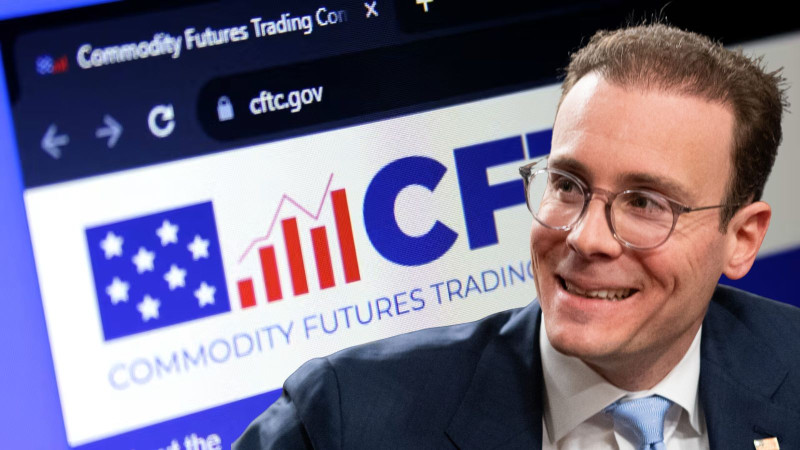
CFTC and DOJ Sue States Over Prediction Market Rules

The Commodity Futures Trading Commission (CFTC) and the U.S. Department of Justice (DOJ) have filed parallel federal lawsuits against the states of Illinois, Connecticut, and Arizona, as well as their gaming regulators, over the federal government’s right to regulate prediction markets.
The filings, which were made on Thursday, aim to prevent these states from restricting prediction market companies and enforcing state-level rules on them. The CFTC claims that it possesses exclusive regulatory authority over prediction markets and says it will defend participants from what it describes as overzealous state regulators.
With this move, the CFTC seeks to halt strict regulatory actions taken by these states’ authorities, including several cease-and-desist letters issued to prediction market companies such as Kalshi and Polymarket.
What These States Did
Earlier this year, the Arizona Attorney General filed criminal charges against KalshiEx LLC and Kalshi Trading LLC, accusing them of operating an illegal gambling business without a state license and violating state election wagering laws.
In December 2025, the Connecticut Department of Consumer Protection (DCP) issued cease-and-desist orders to multiple prediction market platforms, including Kalshi, Crypto.com, and Robinhood, accusing them of offering illegal sports event contracts and operating unlicensed online gambling operations within the state.
In April 2025, the Illinois Gaming Board (IGB) issued cease-and-desist letters to Kalshi, Polymarket, and Crypto.com, asserting that the sports event contracts offered by these platforms constituted illegal wagering under Illinois gambling law.
In the court filing against Illinois Governor JB Pritzker, Attorney General Kwame Raoul, and the Illinois Gaming Board, the U.S. commodities regulator argues that event contracts traded on approved exchanges qualify as “swaps” under federal law, not gambling. The regulator also contends that Congress granted it exclusive jurisdiction and that Illinois’s insistence on licensing requirements amounts to an attempt to block federally regulated exchanges from operating.

Image credit: courtlistener
CFTC Acting Chair Michael Selig reiterated in a post on X that the CFTC has exclusive authority to regulate prediction market activity in the United States, and confirmed that the lawsuit was jointly filed by his agency and the U.S. Department of Justice.

Crackdown on Prediction Market Intensifies
Prediction market companies have faced intense crackdowns and regulatory restrictions in the U.S. in recent times. There are currently over 20 nationwide lawsuits filed against prediction market companies by regulators from several states, including New York, Washington, Nevada, and Massachusetts.
Outside the U.S., there have also been several strict regulatory actions by authorities in multiple countries, with many regulators accusing prediction market companies, especially Polymarket and Kalshi, of operating unregistered gambling activities and offering illegal sports event contracts in their jurisdictions.
Tennessee Orders Kalshi, Polymarket, and Crypto.com to Halt Sports Contracts
Tennessee regulators have ordered Kalshi, Polymarket, and Crypto.com to immediately stop offering sports-related prediction contracts to residents of the state, escalating a growing conflict between state gambling authorities and federally regulated prediction markets.
The Tennessee Sports Wagering Council issued cease-and-desist orders on January 9, demanding that the three platforms halt all sports event contracts, void any open positions tied to Tennessee users, and refund customer funds by the end of the month.
State officials argue the products function as unlicensed sports betting under Tennessee law, regardless of how the companies describe them.
The move places Tennessee alongside a growing list of states pushing back against prediction markets that allow users to trade contracts based on the outcomes of sporting events, elections, or real-world events. While the platforms frame these products as financial instruments, state regulators increasingly see them as gambling by another name.
What Tennessee Is Demanding
According to the orders, Kalshi, Polymarket, and Crypto.com must immediately cease offering sports contracts to Tennessee residents. Any existing sports-related contracts must be canceled, and all funds deposited by users in the state must be returned by January 31.
Failure to comply could expose the companies to civil penalties, injunctions, and possible criminal enforcement under Tennessee’s sports gaming laws.
The council’s position is straightforward. If money is being risked on the outcome of a sporting event, the state considers it sports wagering, which requires a license, tax payments, and adherence to consumer protection rules.
The Regulatory Fault Line
At the heart of the dispute is a long-running jurisdictional battle between state gambling regulators and the federal framework governing derivatives and commodities trading.
Kalshi and Polymarket operate under federal oversight tied to commodities regulation, and Crypto.com has positioned its event contracts as a similar financial product. The companies argue that their platforms fall outside traditional sports betting laws and should be regulated at the federal level.
Tennessee, like several other states, rejects that argument. State officials maintain that federal oversight does not override state authority when it comes to gambling conducted within state borders.
This disagreement has become one of the most contentious regulatory issues facing crypto-adjacent markets in the U.S.
A Pattern Across the States
Tennessee’s action is not an isolated case. Over the past year, multiple states have issued warnings or cease-and-desist orders targeting prediction markets tied to sports outcomes. Recently, Coinbase filed suit against Connecticut, Michigan, and Illinois. Those states argue that Coinbase's prediction markets amount to illegal gambling and are attempting to ban them there.
Gaming regulators in states such as Nevada, New Jersey, Maryland, Ohio, and Illinois have raised similar concerns, arguing that prediction markets undermine state-regulated sports betting ecosystems while avoiding licensing requirements and taxes.
In some cases, platforms have pulled back voluntarily. In others, companies have opted to fight.
Kalshi has already challenged similar enforcement actions in court, arguing that state gambling laws are being improperly applied to federally regulated markets. The outcome of those cases could shape the future of prediction markets nationwide.
Why States Are Pushing Back Now
State regulators say the issue is not just about definitions, but about consumer protection and regulatory consistency.
Licensed sportsbooks are required to meet strict standards related to age verification, responsible gambling tools, fund segregation, and auditing. States argue that prediction markets offering sports contracts operate outside those guardrails while competing for the same customers.
There is also growing concern that prediction markets blur the line between financial trading and gambling in ways existing laws were never designed to address.
For regulators, allowing these products to operate unchecked could weaken the authority of state gaming frameworks that were carefully built following the legalization of sports betting.
What Happens Next
The Tennessee order adds new pressure on Kalshi, Polymarket, and Crypto.com at a time when prediction markets are expanding rapidly and attracting increased attention from both traders and policymakers.
The companies could comply and exit the state, challenge the order in court, or push for clearer federal guidance that limits states’ ability to intervene.
Until that happens, the industry remains stuck in a regulatory gray zone, where legality depends less on federal approval and more on how individual states choose to interpret decades-old gambling laws.
For crypto-linked prediction markets, Tennessee’s action is another reminder that regulatory risk in the U.S. remains fragmented, unpredictable, and increasingly aggressive.
Coinbase Is Suing Three States, and the Future of Prediction Markets Is on Trial
Coinbase has sued Connecticut, Michigan, and Illinois today, but it does not look like a typical regulatory skirmish. On the surface, it was about a few cease-and-desist orders targeting prediction market contracts. In practice, it put a much bigger question on the table. What exactly are prediction markets supposed to be?
Are they casinos in disguise, digital poker rooms with better UX, or a new kind of financial market that belongs under federal oversight?
The answer matters, because the wrong classification could freeze a fast-growing corner of finance in legal limbo.
Why Coinbase Is Taking States to Court
The states argue that Coinbase’s prediction markets amount to illegal gambling. Users put money down on outcomes. Some win, some lose. No state gambling license, no approval.
Coinbase sees it very differently. These contracts, the company argues, are event-based derivatives. They look like futures, trade like futures, and are already subject to federal commodities law. The Chief Legal Officer for Coinbase, Paul Grewal, stated in an X post on Friday that the company filed the lawsuits to "confirm what is clear" and that prediction market should fall under the jurisdiction of the U.S. Commodity Futures Trading Commission.
If states are allowed to regulate these markets anyway, the logic goes, national liquidity disappears. A market that works in one state but not another stops being a market at all. But, there are comparisons to existing gambling laws and we broke those down for you.
The Casino Comparison Only Goes So Far
State regulators tend to reach for the casino analogy first, and it is easy to see why. There is money at risk. Outcomes are uncertain. The optics are not subtle.
But structurally, prediction markets do not behave like casinos. Casinos set the odds. The house always wins over time. The product is entertainment.
Prediction markets do not work that way. Prices are set by participants. New information moves markets. There is no built-in house edge. The value comes from aggregating beliefs into a number that says something useful about the future.
Calling that gambling because it involves money is a shortcut, and not a very precise one.
Poker Explains the Skill Argument, and Its Limits
Poker is the comparison that usually comes next. Courts have spent years debating whether poker is mostly luck or mostly skill. Many have concluded that skill dominates over time, even if chance plays a role in the short run.
Yet poker is still regulated as gambling in most places. Not because it lacks skill, but because the law never quite figured out where else to put it.
That history matters. It shows how activities that clearly reward information and decision-making can still end up trapped in gaming frameworks that were built for something else entirely.
Prediction markets risk repeating that mistake. Like poker, they reward skill. Unlike poker, they are not games. They are continuous markets with prices, liquidity, and arbitrage. Treating them like a card room because money changes hands misses the point.
Why Prediction Markets Look Like Futures Markets
If you strip away the cultural baggage, prediction markets start to look familiar. They are standardized contracts tied to future outcomes. Prices reflect probability. Traders respond to data.
That is the same basic logic behind futures contracts tied to interest rates, inflation, or commodities. Those markets involve speculation, risk, and uncertainty too. They are regulated, but they are not treated as gambling.
This is where Coinbase’s argument lands. Congress already created a regulator for markets like this. The CFTC exists to oversee contracts that trade future outcomes, including event-based ones. The fact that an outcome is an election or a policy decision does not change the structure of the market.
What Changes If Coinbase Wins
If Coinbase wins, the impact goes well beyond these three states.
First, jurisdiction becomes clearer. States would no longer be able to regulate federally governed prediction markets simply by labeling them gambling. That alone would remove one of the biggest sources of uncertainty hanging over the industry.
Second, the casino argument loses legal weight. Courts would be acknowledging that uncertainty plus money does not automatically equal gambling, especially when prices are discovered through open trading rather than set by an operator.
Third, prediction markets would finally escape the poker problem. They would not sit in a gray zone where skill is recognized but regulation never quite fits. Instead, they would fall under a framework designed for markets, not games.
With that clarity, these markets could scale. Liquidity would deepen. Institutional participants could step in. Contracts tied to economic data, climate outcomes, and corporate milestones could expand without the constant risk of state-level shutdowns.
Over time, prediction markets could start to look less like a regulatory headache and more like infrastructure. Another tool, alongside surveys and models, for figuring out what the world might do next.
A Bigger Signal About Regulation
This case is not really about Coinbase. It is about whether U.S. regulation can adapt when finance starts to blur into something new, a question that has stifled digital asset growth for years.
Casinos deal in chance. Poker deals in skill inside a gaming framework. Futures markets deal in information. Prediction markets belong in the third category, even if they make people uncomfortable.
If courts agree, it would send a signal that regulation can still be about function rather than analogy. That is not a radical idea. It is how most financial markets came to exist in the first place. Prediction markets are here to stay. We've seen huge partnerships with major media news outlets and exchanges. The regulatory details need to be clearly defined for this emerging industry.
And if that happens, prediction markets may finally stop being debated as gambling, and start being treated as what they have been trying to become all along. Markets that trade in probabilities, under rules built for markets, not casinos.
Stay Connected
You can stay up to date on all News, Events, and Marketing of Rare Network, including Rare Evo: America’s Premier Blockchain Conference, happening July 28th-31st, 2026 at The ARIA Resort & Casino, by following our socials on X, LinkedIn, and YouTube.