#US Policy

Fed Pick Kevin Warsh Brings Deep Crypto Knowledge

Most Fed chair nominations generate debate about interest rate philosophy, inflation targets, and balance sheet management. Kevin Warsh's confirmation is going to involve a lot of that, sure, but it is also going to involve a fairly lengthy conversation about DeFi lending protocols, Ethereum Layer 2 networks, and a Bitcoin Lightning Network startup.
Warsh, President Trump's nominee to chair the Federal Reserve, cleared the last bureaucratic hurdle before his Senate confirmation hearing when he submitted his required financial disclosure to the U.S. Office of Government Ethics. The filing reveals combined assets with his wife of at least $192 million. But it's the crypto positions scattered throughout the document, held through a web of venture fund structures, that are drawing the most attention from the digital asset industry right now.
Not Just A Casual Holder
Warsh did not just pick up some bitcoin through a Coinbase account during the 2021 bull run and forget about it. Through two fund structures, DCM Investments 10 LLC (via a vehicle called Abstract Holdings) and a series of funds labeled AVF I, AVF II, AVF III, and AVGF I and II, he holds equity positions in more than two dozen blockchain and digital asset companies. The breadth is notable: DeFi lending, decentralized derivatives, Layer 1 and Layer 2 networks, prediction markets, crypto neobanks, and Bitcoin payments infrastructure.
On the DeFi and trading side, the portfolio includes Compound, one of the foundational algorithmic crypto lending protocols, alongside dYdX, a decentralized derivatives exchange, and Lighter, a decentralized exchange protocol. On the infrastructure side, he has exposure to Solana, the high-throughput Layer 1 blockchain, Optimism and Blast, two Ethereum scaling networks, and Zero Gravity, a Layer 2 AI blockchain platform. Bitcoin-specific holdings include Flashnet, a Lightning Network trading platform, and a direct position in the Lightning Network itself.
There are also positions in Polychain and Scalar Capital, two prominent crypto investment firms, plus Polymarket, the prediction market platform, and several crypto-enabled neobanks including OnJuno and Lemon Cash. Rounding it out: Dapper Labs (best known for NBA Top Shot), Friends With Benefits, a Web3 community platform, and Crossmint, an NFT developer tools company. Warsh also previously held a stake in Bitwise Asset Management, the issuer of one of the spot Bitcoin ETFs, though that position does not appear in the current filing.
Selling liquid token positions is straightforward. Unwinding LP stakes in Polychain or venture fund structures is not, and federal ethics rules generally impose a one-year cooling-off period on matters directly affecting recently divested financial interests. That creates a potentially awkward situation given what the Fed has on its plate.
Congress is actively working through stablecoin legislation that would define which institutions can issue and custody stablecoins, directly affecting DeFi protocols and crypto neobanks of the type in Warsh's portfolio. The Fed's supervisory stance on whether banks can custody digital assets remains one of the most contested open questions in the industry. And while political appetite for a U.S. CBDC has cooled considerably, the Fed's ongoing research in that area intersects with the payment network infrastructure Warsh holds exposure to through Lightning Network and Solana.
Could Be Some Complications
The broader financial profile adds another layer. Warsh earned $10.2 million in consulting fees from Duquesne Family Office, the investment arm of Stanley Druckenmiller, one of the more prominent macro investors in the crypto space. Additional consulting income came from GoldenTree Asset Management ($1.55 million), Cerberus Capital Management ($750,000), and Brevan Howard ($750,000), all firms with meaningful digital asset trading operations. His speaking fee circuit in just the first half of 2025 alone topped $780,000 from firms including TPG, State Street, and Warburg Pincus. Combined with spouse Jane Lauder's estimated $1.9 billion net worth, Warsh would enter the Fed as one of the wealthiest chairs in the institution's modern history.
Senate Banking Committee chair Tim Scott said Tuesday that a confirmation hearing is scheduled for next week. However, Senator Thom Tillis of North Carolina is blocking any final vote until the Justice Department drops its criminal investigation of current Fed Chair Jerome Powell, whose term expires May 15. The crypto portfolio will almost certainly come up in questioning.
On one hand, a Fed chair who has personally sought out exposure to DeFi protocols and blockchain infrastructure is unlikely to approach crypto with the indifference or hostility that has characterized past leadership. On the other, the mandatory divestiture and recusal obligations could actively limit his ability to influence policy in the industry's favor during his first year in office, precisely when some of the most consequential regulatory decisions are expected to land. It is a double-edged sword, and the confirmation hearing will be the first real test of how Warsh plans to navigate it.
CFTC Names 35 Crypto, Finance Leaders to Advisory Panel

-
Hayden Adams, CEO, Uniswap Labs
-
Brian Armstrong, CEO, Coinbase
-
Shayne Coplan, CEO, Polymarket
-
Brad Garlinghouse, CEO, Ripple
-
Luke Hoersten, CEO, Bitnomial
-
Tarek Mansour, CEO, Kalshi
-
Kris Marszalek, CEO, Crypto.com
-
Nathan McCauley, CEO, Anchorage Digital
-
Peter Mintzberg, CEO, Grayscale
-
Sergey Nazarov, CEO, Chainlink Labs
-
Arjun Sethi, Co CEO, Kraken
-
Peter Smith, CEO, Blockchain.com
-
Tyler Winklevoss, CEO, Gemini
-
Anatoly Yakovenko, CEO, Solana Labs
-
Andrej Bolkovic, CEO, Options Clearing Corporation
-
Thomas Chippas, CEO, Rothera Markets
-
Professor Harry Crane, Representative
-
Chris Dixon, General Partner, a16z Crypto
-
Craig Donohue, CEO, Cboe Global Markets
-
Terry Duffy, Chair and CEO, CME Group
-
Tom Farley, CEO, Bullish
-
Adena Friedman, Chair and CEO, Nasdaq
-
Christian Genetski, President, FanDuel
-
Frank LaSalla, President and CEO, Depository Trust and Clearing Corporation
-
Walt Lukken, CEO, FIA
-
Scott D. O’Malia, CEO, ISDA
-
Alana Palmedo, Managing Partner, Paradigm
-
Vivek Raman, CEO, Etherealize
-
Professor Carla Reyes, Representative
-
Jason Robins, CEO, DraftKings
-
David Schwimmer, CEO, LSEG
-
Vance Spencer, Co founder, Framework Ventures
-
Jeff Sprecher, CEO, Intercontinental Exchange
-
Vlad Tenev, CEO, Robinhood
-
Don Wilson, CEO, DRW
Banks Are Drawing a Hard Line on Stablecoin Yield

Washington has spent the past several months talking about crypto clarity. What it got this week was something closer to a standoff.
At the center of the latest White House meeting between crypto executives and banking lobbyists was a surprisingly narrow issue that has turned into a major fault line: stablecoin yield.
On paper, the CLARITY Act is supposed to settle jurisdictional turf wars between regulators and create a workable framework for digital assets in the United States. In practice, negotiations have slowed to a crawl over whether stablecoin holders should be allowed to earn rewards.
Crypto companies came to the table expecting to negotiate. Bank representatives arrived with something closer to a red line.
The Yield Problem
Stablecoin yield sounds simple. Platforms offer incentives, rewards, or returns to users who hold dollar-backed tokens. Sometimes that comes from lending activity. Sometimes it comes from promotional programs. Structurally, it does not always look like a bank deposit.
Banks are not buying that distinction.
From their perspective, if consumers can hold tokenized dollars and earn a return without stepping inside the banking system, that looks a lot like deposit competition. And not just competition, but competition without the same regulatory burden.
Banks operate under capital requirements, liquidity ratios, deposit insurance rules, stress testing frameworks, and layers of federal oversight. Stablecoin issuers, even under proposed legislation, would not be subject to the same regime.
So the banking lobby’s position has been blunt. No yield. Not from issuers, not indirectly through affiliated programs, not in ways that replicate interest-bearing accounts.
The crypto side sees that as overreach.
Is This About Risk or About Control?
Publicly, banks frame their opposition as a financial stability issue. If large amounts of capital flow out of insured deposits and into stablecoins offering yield, that could shrink the deposit base that supports lending. In a stress scenario, they argue, the dynamic could amplify volatility.
There is logic there. Deposits are the backbone of bank balance sheets. Disintermediation is not a trivial concern.
But crypto executives are asking a quieter question. If the issue is really about safety, why push for a blanket prohibition rather than tighter guardrails? Why not cap yield structures, restrict how they are funded, or impose disclosure standards?
Why eliminate them entirely?
Some in the industry suspect the answer is competitive pressure. Stablecoins have already become critical plumbing for crypto markets, facilitating trading, settlement, and cross-border transfers. Add yield into the equation and they start to look even more like digital savings instruments.
That begins to encroach on traditional banking territory.
The Competitive Threat
Banks have historically tolerated crypto in its speculative corners. Trading tokens is volatile, niche, and largely outside the core consumer banking relationship.
Stablecoins are different. They are dollar-denominated. They are increasingly integrated into payment systems. They can move across borders faster than traditional rails. And they are programmable.
Now imagine those same tokens offering yield, even modest incentives. The psychological shift for consumers could be meaningful. Why leave idle cash in a checking account earning almost nothing if a tokenized version offers some return and similar liquidity?
To bankers, that is not innovation. That is deposit leakage.
And in a higher rate environment, where funding costs matter, deposit competition becomes more acute.
The Legislative Bottleneck
The CLARITY Act was supposed to resolve long-running disputes between regulators and provide certainty for digital asset firms operating in the United States. Instead, stablecoin yield has turned into the sticking point holding up broader progress.
White House officials have reportedly pressed both sides to find compromise language. So far, that compromise remains elusive.
Crypto firms argue that banning yield outright could push innovation offshore. Jurisdictions in Asia and parts of Europe are moving ahead with stablecoin frameworks that do not automatically prohibit reward structures. The fear in Washington’s crypto circles is that overcorrection could hollow out domestic competitiveness.
Banking groups counter that allowing yield would create a parallel banking system without equivalent safeguards.
The tension is not just technical. It is philosophical.
A Larger Question About Money
At its core, this debate is about who gets to intermediate digital dollars.
If stablecoins become widely used and allowed to offer returns, they could evolve beyond trading tools into mainstream financial instruments. That challenges the traditional hierarchy where banks sit at the center of deposit-taking and credit creation.
Banks are not opposed to digital dollars in theory. Many are experimenting with tokenization and blockchain infrastructure themselves. But they want those innovations inside the regulated banking perimeter, not outside of it.
Crypto companies, on the other hand, see decentralization and alternative rails as the point.
So when banks push to ban stablecoin yield entirely, the crypto industry reads it as more than prudence. It looks like an attempt to protect market share.
The Bottom Line
For now, negotiations continue. There is still political appetite in Washington to pass comprehensive crypto legislation, especially as digital asset markets remain a significant part of the financial system.
But unless lawmakers can thread the needle between stability concerns and competitive fairness, stablecoin yield could remain the issue that stalls everything else.
And that leaves an uncomfortable reality.
If the United States cannot decide whether digital dollars are allowed to earn a return, the market may decide elsewhere.

White House Meets Crypto and Banking Leaders as Market Structure Bill Stalls

The White House is preparing to bring crypto executives and banking leaders into the same room again, a sign that Washington’s long running fight over how to regulate digital assets has reached another pressure point.
According to reporting citing Reuters, senior figures from the crypto industry and the banking sector are expected to meet with White House officials in early February to discuss a market structure bill that has recently hit a wall in Congress. The meeting comes at a moment when lawmakers have already locked in a stablecoin framework, but cannot seem to agree on the bigger question of who regulates crypto markets and how.
Market structure may sound abstract, but it is the foundation of everything else. It determines which agency has authority, how tokens are classified, how exchanges register, and whether new products are built in the United States or somewhere else.
The fact that the White House is stepping in suggests the administration believes the debate has moved beyond talking points and into the phase where compromises need to be made, especially between banks and crypto firms that see the future very differently.
Why this meeting matters now
When the White House convenes both sides of a financial policy fight, it usually means the normal legislative process is struggling. That is exactly what is happening with crypto market structure.
Congress made real progress last year by passing a federal stablecoin law. That victory raised expectations across the industry that broader rules for exchanges, tokens, and decentralized finance would be next. Instead, lawmakers have found themselves bogged down in disagreements that are harder to paper over.
At a high level, everyone says they want clarity. In practice, clarity means deciding winners and losers.
Banks want to make sure crypto products do not look or behave like deposits without being regulated like deposits. Crypto firms want rules that let them list assets, offer yield, and build new protocols without constant fear of enforcement actions. Regulators want authority that actually matches how the market works.
Those goals collide most directly in market structure legislation, which is why it has become the most contentious piece of crypto policy in Washington.
Where the bill stands today
The House has moved, the Senate is stuck
The House of Representatives has already passed a sweeping market structure bill that lays out a framework for classifying digital assets and dividing oversight between the SEC and the CFTC. The basic idea is simple. Tokens that function like securities fall under the SEC. Tokens that operate more like commodities fall under the CFTC, including spot market oversight.
That approach has strong support in the crypto industry because it offers a path to compliance that does not rely on years of litigation.
The Senate, however, is a different story. Jurisdiction is split between the Banking Committee and the Agriculture Committee, which oversees the CFTC. Each committee has released its own drafts, and neither side has a clear path to unifying them.
Markups have been delayed. Amendments are piling up. And the clock is ticking as lawmakers turn their attention to other priorities.
Stablecoin rewards have become the flashpoint
One of the biggest reasons the bill is stalled is stablecoin yield.
Even though stablecoins already have their own law, they still sit at the center of the market structure debate because they touch the banking system directly. The most controversial issue is whether stablecoins should be allowed to offer rewards simply for being held.
From the banking perspective, yield bearing stablecoins look uncomfortably close to deposits. Banks argue that if a token offers a return and can be redeemed at par, it competes with insured deposits without being subject to the same rules.
From the crypto side, rewards are seen as a feature, not a loophole. Many firms argue that stablecoins backed by cash and short term Treasurys are fundamentally different from bank liabilities, and that banning rewards would freeze innovation and entrench incumbents.
Some Senate drafts have tried to split the difference by restricting passive yield while allowing activity based incentives. That compromise has not satisfied everyone, which is why the issue keeps resurfacing.
This is also where a White House meeting could make a difference. Any bill that passes will need language banks can accept and crypto firms can actually use.
DeFi is the second unresolved battle
Decentralized finance is the other major fault line.
Lawmakers and regulators agree that DeFi cannot exist entirely outside the law. They disagree on how to draw the boundary. Some Senate proposals push Treasury to define compliance obligations for DeFi platforms, including disclosures and recordkeeping requirements.
The challenge is obvious. If the rules treat software like a traditional intermediary, developers will leave or go dark. If the rules are too permissive, lawmakers worry about money laundering, sanctions evasion, and consumer harm.
So far, no draft has solved this cleanly. The result is cautious, sometimes vague language that satisfies no one and invites future fights.
The SEC versus CFTC question is still unresolved
At its core, market structure is about classification.
Is a token a security, a commodity, something else, or some hybrid category that does not fit neatly into existing law? That answer determines which regulator takes the lead and how companies design their products.
Some Senate drafts introduce concepts like network tokens or ancillary assets to bridge the gap between traditional securities and decentralized systems. These ideas are meant to reduce uncertainty, but they also raise new questions about enforcement and interpretation.
For exchanges, custodians, and issuers, this is not academic. Classification determines what can be listed, how staking works, and whether certain products are viable in the US at all.
The Bottom Line
I am generally positive on the White House holding this meeting. At a minimum, it acknowledges what everyone in the industry already knows, which is that market structure is stuck and normal committee process is not getting it unstuck.
Getting banks and crypto firms in the same room matters, even if no one walks out with a breakthrough headline. These conversations tend to shape the edges of legislation more than the core, but in a bill this complex, the edges are often where everything breaks.
That said, expectations should stay grounded. A single meeting is not going to magically resolve the stablecoin yield debate, redraw the DeFi compliance perimeter, or settle the SEC versus CFTC turf war. Those fights are structural and political, and they will take time.
If anything meaningful comes out of this, it will likely show up quietly in revised draft language weeks from now, not in a press release the next day.
Still, the fact that the White House is leaning in is a good sign. It suggests there is real pressure to get something done, and an understanding that half measures or endless delay are no longer acceptable. For an industry that has spent years asking Washington to engage seriously, that alone is progress, even if the final outcome remains very much in flux.
CFTC Launches Future-Proof Initiative, Signaling Shift in U.S. Crypto Regulation

When Michael Selig stepped into the role of CFTC chair late last year, the crypto industry was already expecting a change in tone. This week, it got confirmation.
On January 20, Selig announced the launch of the CFTC’s new “Future-Proof” initiative, a program designed to rethink how U.S. markets regulate crypto, digital assets, and other fast-moving financial technologies. The message was clear. The old approach is no longer enough.
Rather than relying on enforcement actions and retroactive interpretations of decades-old rules, the CFTC wants to build regulatory frameworks that actually reflect how these markets function today.
For an industry that has spent years navigating uncertainty, that alone is a notable shift.
A Chair With Deep Crypto Roots
Selig is not new to crypto regulation. Before taking the top job at the CFTC, he worked closely with digital asset policy at the SEC and spent time in private practice advising both traditional financial firms and crypto companies. He also previously clerked at the CFTC, giving him an unusually well-rounded view of how regulators and markets interact.
That background shows up in his public comments. Since taking office, Selig has repeatedly emphasized predictability, clarity, and rules that market participants can actually follow without guessing how an agency might interpret them years later.
The Future-Proof initiative is the clearest expression of that philosophy so far.
What “Future-Proof” Really Means
At its core, Future-Proof is about moving away from improvisation. The CFTC wants to stop forcing novel digital products into regulatory boxes built for traditional derivatives and commodities.
Instead, the agency plans to pursue purpose-built rules through formal notice-and-comment processes. That means more upfront guidance and fewer surprises delivered through enforcement actions.
Selig has described the goal as applying the minimum effective level of regulation. Enough oversight to protect markets and participants, but not so much that innovation is choked off before it has a chance to mature.
For crypto firms, that approach could offer something they have long asked for but rarely received, which is regulatory certainty.
Why the Industry Is Paying Attention
The timing matters. Crypto markets are more institutional than they were even a few years ago. Large asset managers, trading firms, and infrastructure providers want clearer rules before committing serious capital. Uncertainty around jurisdiction and compliance has been one of the biggest obstacles.
If the CFTC follows through, Future-Proof could help define how derivatives, spot markets, and emerging products like prediction markets are treated under U.S. law. That would make it easier for firms to build, invest, and operate without constantly second-guessing regulators.
At the same time, clarity cuts both ways. More defined rules could also raise the bar for compliance, especially for smaller startups and decentralized platforms that have operated in legal gray zones.

Tennessee Attempts to Block Prediction Markets
A Broader Political Shift
Selig’s initiative does not exist in isolation. It comes as lawmakers in Washington continue debating how to split crypto oversight between the CFTC and the SEC. Several proposed bills aim to draw clearer lines around digital commodities and spot market regulation, potentially expanding the CFTC’s role.
Future-Proof appears designed to fit neatly into that broader push. If Congress hands the agency more authority, the CFTC wants to be ready with frameworks that can scale.
Still, challenges remain. The commission currently lacks a full slate of confirmed commissioners, raising questions about how durable these policy shifts will be. Coordination with the SEC is another open issue, especially where token classifications blur the line between securities and commodities.
What Does The Future Hold?
For now, Future-Proof is more direction than destination. The real test will be how quickly the CFTC turns principles into actual rules, and whether those rules survive political change and legal scrutiny.
But the tone alone represents a meaningful break from the past. After years of regulation by enforcement and ambiguity, the agency is signaling that crypto markets are not a temporary problem to be contained, but a permanent part of the financial system that deserves thoughtful governance.
Whether that vision becomes reality will shape the next phase of U.S. crypto regulation, and potentially determine whether innovation stays onshore or continues looking elsewhere.

What the CLARITY Act Means for Crypto and Why It Matters So Much

If you have spent any real time building, trading, or working in crypto in the U.S., you already know the pattern. The rules are never fully clear. Guidance usually comes after the fact. And “compliance” often feels less like a checklist and more like a guessing game.
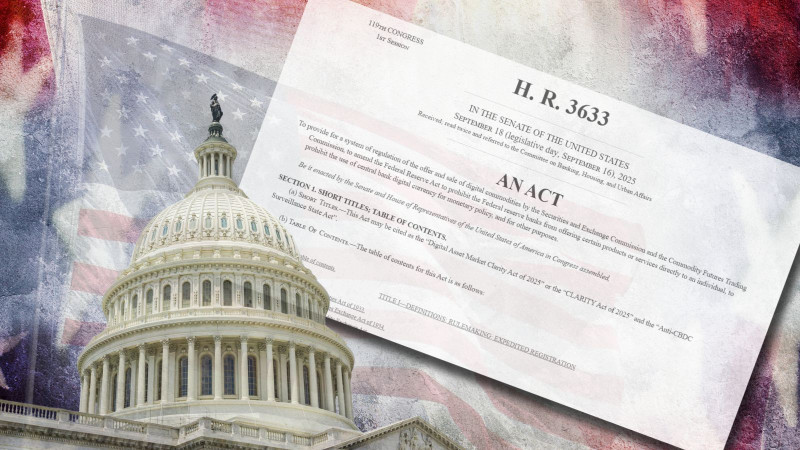
That is the environment the Digital Asset Market Clarity Act, better known as the CLARITY Act, is trying to change.
On January 15, 2026, the Senate Banking Committee is scheduled to hold a critical markup session on the bill. That might sound like inside-baseball legislative procedure, but it is not. A markup is where lawmakers decide what a bill really is. Language gets tightened. Loopholes get closed or widened. Entire sections can disappear.
For crypto, this is one of those moments where the future shape of U.S. regulation is actually being decided.
The problem CLARITY is trying to solve
Right now, crypto regulation in the U.S. is reactive.
The laws that exist were written long before blockchains, tokens, or decentralized networks. Regulators have mostly tried to force crypto into frameworks that were never designed for it, often relying on enforcement actions to define the rules retroactively.
CLARITY is an attempt to stop doing that.
The bill starts from a simple premise: not everything in crypto is the same, so it should not all be regulated the same way.
Launching a token to fund a network is not the same as trading that token years later. Writing open-source code is not the same as holding customer funds. Running a wallet is not the same as running an exchange.
Those distinctions sound obvious inside the industry. CLARITY tries to make them explicit in law.
Tokens are not frozen in time
One of the most important ideas in the bill is that a token’s legal treatment should not be locked forever to how it was first sold.
Under the current system, if a token was ever distributed in a way that looks like fundraising, it can carry securities risk indefinitely. Even if the network decentralizes. Even if the original team steps away. Even if the token functions more like a commodity than an investment.
CLARITY tries to separate:
-
The initial transaction, which may look like an investment contract
-
The token itself, once it is broadly distributed and actively used
That distinction matters because it opens the door to secondary markets operating without constant legal uncertainty, while still keeping guardrails around early fundraising.
What “mature blockchain” actually means
To make that transition possible, CLARITY introduces the concept of a mature blockchain system.
Stripped of legal language, the question is pretty straightforward: does anyone actually control this thing?
If a small group can still unilaterally change the rules, supply, or governance, regulators get more leverage. If control is meaningfully distributed and no one actor is calling the shots, the regulatory burden can ease.
The bill creates a certification process around this idea, with a defined window for regulators to challenge a claim of maturity.
This is one of the most debated sections of the bill. It is also one of the most important. The standard has to be real, but it also has to be achievable. Senate changes here could dramatically affect how useful the bill ends up being.
How token launches could work going forward
CLARITY does not remove oversight from token launches. Instead, it tries to make that oversight fit reality.
The bill allows certain token offerings to proceed under an exemption, but only with meaningful disclosures. Projects would need to explain things like:
-
How token supply and issuance work
-
What rights, if any, token holders have
-
How governance actually functions in practice
-
What the project plans to build and what risks exist
The shift here is away from clever legal gymnastics and toward plain-English transparency. For founders, that could mean fewer surprises and a clearer sense of what is expected.
Why exchanges are watching this so closely
For U.S. crypto exchanges, CLARITY is largely about secondary markets.
Today, listing a token can feel risky even if that same asset trades freely outside the U.S. The legal line between primary fundraising and secondary trading has never been cleanly drawn.
CLARITY tries to draw that line. If it holds, exchanges would finally have a framework designed specifically for spot crypto markets, instead of trying to fit into rules written for something else.
A bigger role for the CFTC
Another major shift is regulatory jurisdiction.
CLARITY gives the CFTC clear authority over spot markets for digital commodities, not just derivatives. It also creates new registration paths for exchanges, brokers, and dealers that are tailored to how crypto markets actually function.
Importantly, the bill pushes for speed. It directs the CFTC to create an expedited registration process, acknowledging that waiting years for clarity is not realistic in fast-moving markets.
DeFi, software, and where things get tricky
DeFi is where the bill walks a tightrope.
CLARITY says that people should not be treated as regulated intermediaries just for building or maintaining software, running nodes, providing wallets, or supporting non custodial infrastructure. It also makes clear that participating in certain liquidity pools, by itself, should not automatically trigger exchange-level regulation.
At the same time, fraud and manipulation laws still apply.
Supporters see this as long overdue recognition that infrastructure is not the same as custody or brokerage. Critics worry about edge cases, especially where front ends, admin controls, or governance tokens blur the lines.
This is an area where Senate edits could have outsized impact.
Federal rules versus state rules
The bill also leans toward stronger federal oversight and narrower state-by-state requirements in certain areas.
For companies, that means fewer conflicting regimes and lower compliance friction. For critics, it raises concerns about losing fast-moving state enforcement in an industry that still sees its share of bad actors.
That tension is not going away, and it will likely surface again during markup.
Self custody, explicitly protected
One of the clearest statements in CLARITY is its protection of self custody.
The bill explicitly affirms the right to hold your own crypto and transact peer to peer for lawful purposes. In an environment where indirect restrictions have been a constant fear, putting this into statute is not symbolic. It is structural.
Developers get some breathing room
CLARITY also addresses a long-running concern among builders.
The bill says that non-controlling developers and infrastructure providers should not be treated as money transmitters simply for writing code or publishing software, as long as they do not control user funds or transactions.
For many developers, this removes a quiet but persistent legal cloud that has hung over the industry.
Why January 15 is such a big deal
The January 15 markup is where all of this either becomes real or starts to unravel.
This is where lawmakers decide how strict the maturity standards are, how wide the DeFi exclusions go, how much authority regulators actually get, and whether the bill delivers usable clarity or just new gray areas.
If CLARITY moves forward in a recognizable form, it becomes the most serious attempt yet to give crypto a durable U.S. market structure. If it does not, the industry likely stays where it is now, building first and hoping the rules catch up later.
How you can get involved?
This is also the moment where voices outside Washington still matter.
Lawmakers are actively weighing feedback. Staffers are reading messages. Offices are tracking where their constituents stand. Silence gets interpreted as indifference, and indifference makes it easier for complex bills to stall or be watered down.
If you believe crypto should have clear rules instead of enforcement-by-surprise, this is the time to say so.
That means contacting your representatives. Find out who your representative is and where they stand on crypto policy. Tell them that market structure clarity matters. Explain why builders, users, and businesses need predictable rules to stay in the U.S. Explain why self custody, open infrastructure, and lawful innovation should be protected, not pushed offshore.
It also means supporting organizations that are trying to organize that voice.
One such organization is Rare PAC, a political action committee advocating for regulatory clarity, innovation, and economic opportunity powered by decentralized technologies. Rare PAC works to ensure that the United States remains a global leader in those decentralized technologies and supports candidates who are committed to building A Crypto Forward America.
Bills like CLARITY do not pass or fail in a vacuum. They pass because people show up, speak up, and make it clear that getting this right matters.
January 15 is not the end of the process, but it is one of the moments that will shape everything that comes after.