#Solana
ZetaChain to Shut Down Layer-1 Network, Migrate to Solana

ZetaChain will shut down its Layer 1 blockchain network and migrate to Solana after receiving almost unanimous approval in a governance vote.
The governance portal for the vote, which closed on Sunday at 14:58:18 UTC, recorded 99.4% of token holders voting in favour, while 0.3% each voted in opposition and abstained. Participation stood at 58%, exceeding the 40% quorum.

Stating the reasons for the ZetaChain to Solana migration, the team, in a recent blog post, gave a number of reasons, including the privacy features of the Solana blockchain and the infrastructure that Solana has been building for private AI.
According to the ZetaChain team, the subsecond and subcent finality features of the Solana blockchain, including its transaction confirmation time of 400 milliseconds and its one tenth of a cent fee, make it possible for AI agents to perform at scale.
In a test, the team claimed that the Solana blockchain handled more than 100,000 transactions per second, a result the team says is ideal for agents that are being built to execute transactions at machine speed.
Following the completion of a second governance proposal and the subsequent migration to the Solana network, the native ZETA token will be converted 1:1 to the Solana SPL ZETA, which will continue to be used to access Anuma, ZetaChain’s privacy AI platform.
About ZetaChain
Founded in 2021, ZetaChain is a Layer 1 blockchain network that was built to serve as an interoperability layer that connects blockchains without the need for traditional bridges.
Prior to its migration plans, the ZetaChain team had raised $27 million and processed hundreds of millions of transactions while onboarding millions of users and wallets.
However, the team made a strategic shift to AI this year with its first consumer multimodal AI app, which lets users carry one encrypted, user-controlled memory across dozens of AI models, including Claude, GPT, Gemini, and Grok.
With accessibility tied to the ZETA token, Anuma has grown to more than 300,000 users since its launch in February.
Solana-Based Hey Wallet Announces Shutdown

Hey Wallet, the non-custodial Solana-based social wallet, has announced it will be shutting down all of its products after nearly five years of operation.
Hey Wallet, which was launched in 2021 during a Solana hackathon, was founded to make sending cryptocurrencies as simple as using social media by allowing people to transfer SOL directly via Twitter/X handles.
Thus, instead of having to copy long wallet addresses, Hey Wallet leverages users' X handles or social usernames. Since it was linked to users' social accounts, Hey Wallet enabled transactions to occur seamlessly in-app through users' social accounts, while allowing users to retain control of their private keys.

Although the team did not explicitly state the reason for the closure, Hey Wallet's shutdown comes at a time when several crypto companies, including crypto wallets, have shut down or strategically pivoted into other sectors such as AI.
On September 1 of this year, the non-custodial wallet Cosmostation ceased its operations after previously announcing that users should export their private keys and assets before the shutdown, a similar move made by Cyberwallet last month.
Other crypto wallets, such as Magic Eden Wallet, have had to repivot and change their operational focus, shifting from being a multi-chain wallet to a Solana-focused wallet.
Coinbase and MetaMask have also made similar changes to their wallet operations. For Coinbase, the Base App was rebranded back to Coinbase Wallet, with a focus on multi-chain trading, while MetaMask split from its parent company, Consensys, and continued operating as an independent consumer-focused wallet company.
World Prediction Market Launches in Phantom Wallet

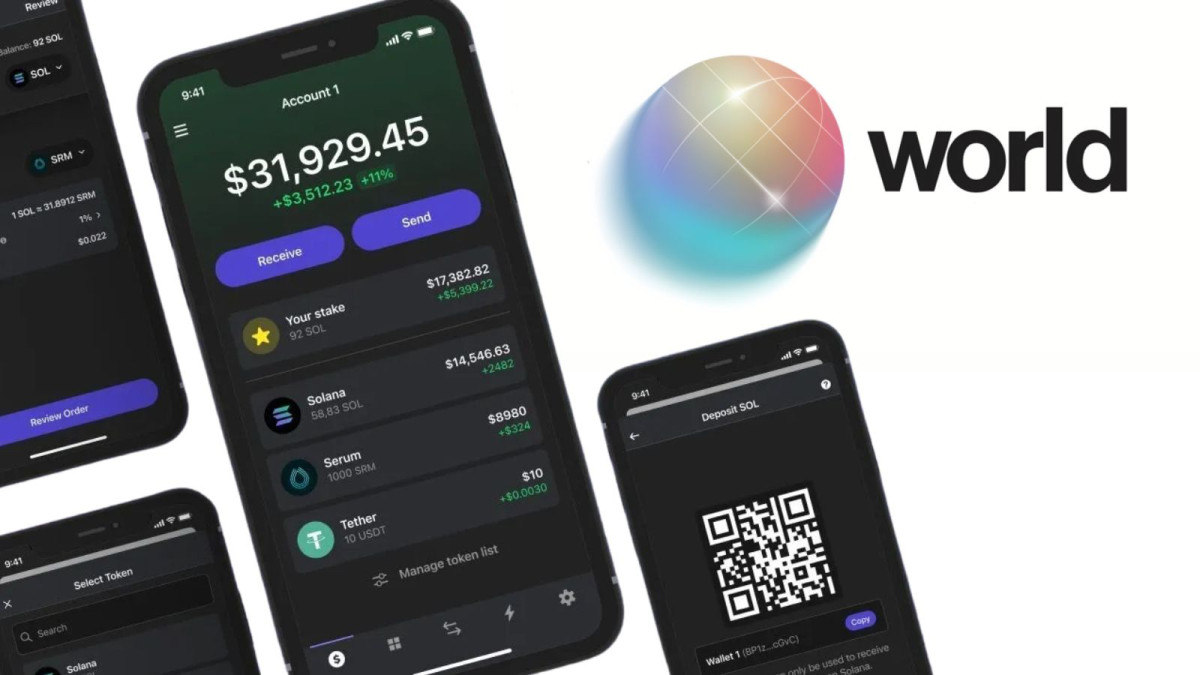
World, a fully on-chain, Solana native prediction market powered by Chainlink that aims to compete with Kalshi and Polymarket, has launched on Phantom Wallet.

Image credit: x.com
According to the team, the World prediction market will allow users to predict outcomes on crypto price movements and the ongoing 2026 FIFA Men's World Cup. Additional markets across sports, geopolitics, and macroeconomics will be added in the coming weeks.
"Prediction markets are one of the most powerful applications you can build on a high-performance blockchain," said Pedro Miranda, Head of Consumer at the Solana Foundation. "World is designed to show what Solana makes possible: real-time markets, on-chain settlement, and a user experience that meets people where they are."
Unlike most prediction markets that require users to interact with centralized infrastructure, World is designed to operate entirely on-chain. Every market, every position, and every settlement happens on-chain; as such, users do not have to move their funds to any custodial or centralized entity, as they can interact directly with Solana liquidity.
The platform uses $CASH as its settlement stablecoin. Since it’s launched directly within the Phantom Wallet, World will be available to more than 20 million Phantom Wallet users. It is also important to note that this World project is entirely different from Sam Altman's World. This World is a prediction market project, while Sam Altman's World is an identity project.
World's launch comes at a time when prediction markets are gaining significant traction, especially since the start of the 2026 FIFA Men's World Cup. Since early June, prediction market platforms, including Kalshi and Polymarket, have seen inflows of more than $3.8 billion.
Despite regulatory challenges in some jurisdictions, prediction market companies continue to grow and expand. Kalshi and Polymarket have both recently secured substantial funding from investors. Kalshi recently raised funding at a $22 billion valuation, while Polymarket raised $600 million at a $15 billion valuation and is reportedly in talks to raise an additional $400 million.
Exodus Partners With Ondo To Launch Tokenized Stocks

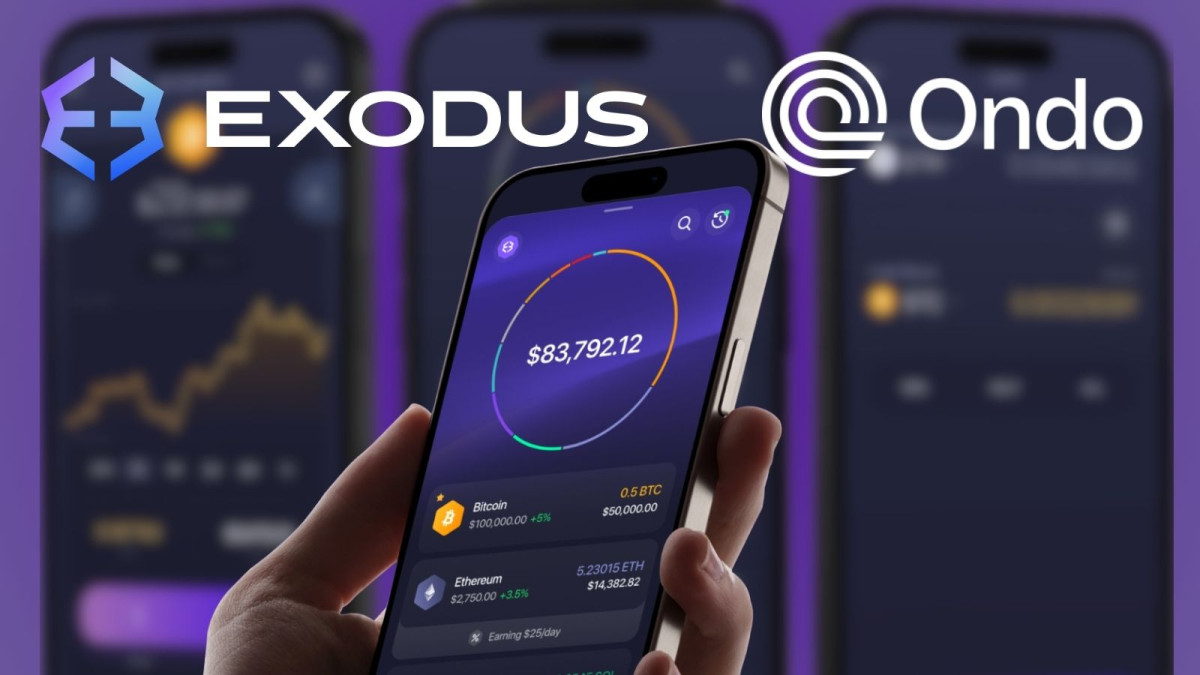
Exodus Movement Inc. (NYSE American: EXOD), a publicly traded financial technology company and developer of the Exodus wallet, has partnered with Ondo Finance to launch Exodus Markets, a platform for trading tokenized assets.

With Exodus Markets, users can now buy and sell more than 200 tokenized stocks, exchange-traded funds (ETFs), and real-world assets directly in the Exodus wallet app on the Solana blockchain.
"Tokenized stocks are one of the most important developments in modern finance," said JP Richardson, CEO and co-founder of Exodus.
"For the first time, our customers can trade and hold tokenized equities with the same direct control and global access they expect from crypto. Exodus is becoming the front door to every asset you hold, without compromising on trust and control."
The launch of Exodus Markets aligns with Exodus’s goal of transforming from a custodial wallet into a full financial platform that allows users to trade, earn rewards, send, spend, and manage money.
As part of its efforts to become a comprehensive financial app, Exodus launched Exodus Pay, a self-custodial payment feature within the Exodus app that enables users to transact with digital assets, including stablecoins, for everyday purchases. The company also launched XO Cash, a stablecoin pegged to the U.S. dollar.
The Tokenization Space
The tokenization space, particularly real-world assets (RWAs), has experienced significant growth over the past 1 to 2 years. Excluding stablecoins, the tokenization sector grew from roughly $5 billion to $6 billion at the start of 2025 to $27 billion to $31 billion or more by mid 2026, representing an increase of more than 400% over a period of 15 to 18 months.
Several institutions are also entering this growing sector, with Bitget most recently launching Reality, its real-world asset (RWA) platform. Kraken has also launched xChange, an on-chain trading engine designed for trading tokenized equities. MetaMask, Trust Wallet, Blockchain.com, and Robinhood have also made strategic moves to enter the sector, partnering with RWA firms and rolling out tokenized assets and stocks.
Given the level of growth and adoption the real-world asset and tokenization sector has seen so far, several projections have been made regarding its future potential. The Boston Consulting Group and Ripple have projected that the sector could be worth more than $15 trillion by 2030.
Solayer Launches Margin Trade Mainnet for Multi-Asset Perpetual Trading

Solayer, a hardware-accelerated Layer 1 blockchain and Solana’s first restaking platform, has launched the mainnet of Margin Trade, its new on-chain perpetual trading platform
Margin Trade is a Solana native, on-chain perpetuals trading platform that aims to bridge crypto native on chain trading with traditional finance (TradFi) instruments in a unified environment, making it possible for users to trade different asset classes, including cryptocurrencies, commodities such as silver and gold, and synthetic equity indices, all in one place.
By leveraging Solayer’s low-latency InfiniSVM infrastructure, Margin Trade delivers high-performance on-chain trading, enabling traders to benefit from real-time trade execution, high throughput, low fees, full transparency, and self-custody of their assets.
“Most perpetual futures trading infrastructure today remains siloed across separate markets and fragmented collateral account structures,” said Joshua Sum, Solayer’s Chief Product Officer.
“Margin Trade is designed to bring capital efficiency, real-time execution, and multi-asset exposure into a unified environment that feels closer to the vision of truly global financial markets than traditional trading platforms.”
Margin Trade is being developed by a team of professionals, including former traders from leading financial institutions and crypto exchanges such as Citadel and Kraken. The platform combines the speed and efficiency of centralized exchanges with the transparency, permissionless nature, and self-custody principles of decentralized finance (DeFi).
About Solayer
Solayer, also known as Solayer Labs, is a blockchain infrastructure company building a next-generation execution layer for real-time financial applications. Its goal is to create on-chain infrastructure that matches or exceeds the speed and performance of traditional financial systems.
Since its launch in 2023, the Solayer team has raised $12 million in funding. The company has also launched InfiniSVM, a hardware-accelerated Layer 1 blockchain built on the Solana Virtual Machine (SVM). According to the company, the network is capable of achieving up to 1,000,000 transactions per second and throughput exceeding 100 Gbps.
Margie Feng, Solayer’s Head of Marketing, is also scheduled to speak at the upcoming Rare Evo 2026 conference, which will be held from July 28 to July 31 this year.
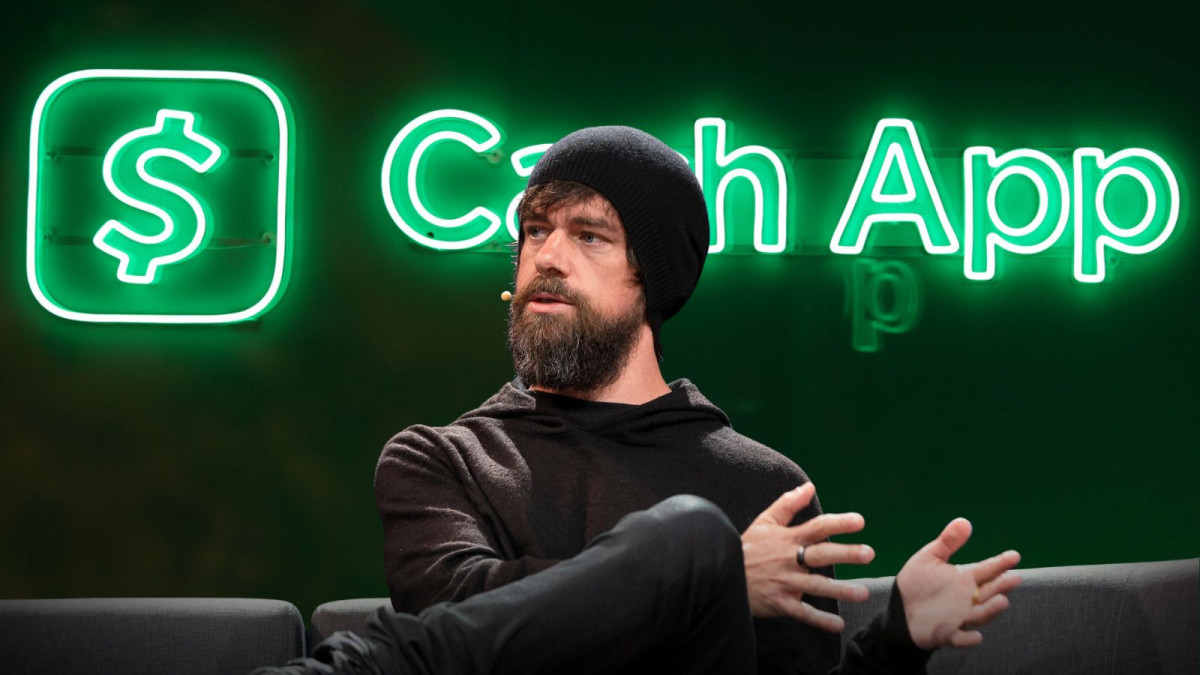
Cash App Goes Live With USDC For 60M Users

Block's Cash App has officially begun rolling out USDC stablecoin payments to its nearly 60 million monthly users. The feature went live today for roughly 25% of the platform's user base, with full availability expected by the end of the week.
The rollout covers four blockchain networks: Solana, Ethereum, Polygon, and Arbitrum. Users can now send USDC from their Cash App wallet to external wallets on any of the supported chains, and incoming USDC is automatically converted into a dollar balance within the app. No separate transfer fee applies, at least for now.
A Reluctant Pivot, Years in the Making
The launch carries some ideological weight. Jack Dorsey, Block's CEO and longtime Bitcoin maximalist, spent years positioning Cash App as a Bitcoin-first platform. He built out Bitcoin trading, backed mining hardware development, and integrated Lightning Network support for Square merchants globally. Stablecoins were not part of that vision.
That changed, grudgingly. In March, Dorsey publicly acknowledged the shift. "I don't like that we're going to support stablecoins but our customers want to use them," he said. "I don't think it's wise to go from one gatekeeper to another." The comment was candid in a way that's rare for major fintech announcements, and it framed the product addition less as strategic enthusiasm and more as a concession to market demand.
Block first hinted at the feature on the Cash App website late last year, describing stablecoins strictly as a payments mechanism rather than an investment tool. But that early hint has carried through to the live product.
Why Solana (and Why Not Just Solana)
Solana started as the sole chain involved with Cash App. Back in November 2025, Solana confirmed its involvement after sharing a demo by Circle's Jeremy Allaire showcasing a USDC transfer on the network. The choice made sense: Solana transactions typically cost under a cent and settle in under a second, conditions well-suited for the kind of peer-to-peer and remittance use cases Cash App serves.
But Block's Miles Suter framed the company's stance as "chain- and coin-agnostic" from the beginning. Solana was a starting point, not a commitment. The live rollout now includes Ethereum, Polygon, and Arbitrum alongside Solana, giving users flexibility across networks with different cost and speed profiles. Ethereum's gas fees can still spike during congestion, which is precisely why Layer 2 options like Arbitrum and Polygon matter.
The multi-chain approach also future-proofs the integration somewhat. If one network faces congestion or reliability issues at scale, users and the platform aren't locked in.
The Guardrails Are Real
Cash App is not positioning this as a DeFi on-ramp. The feature comes with meaningful restrictions. Sending is capped at $2,000 per day and $5,000 per week; receiving tops out at $10,000 weekly. The service is currently unavailable in New York and on sponsored accounts. Identity verification is required.
Perhaps most importantly, the app warns users that blockchain transactions are irreversible. Funds sent to a wrong address or unsupported network are gone permanently. That's a steep hill to climb for a consumer platform serving tens of millions of people who may be encountering on-chain transfers for the first time.
Stablecoins Are Here To Stay...and Thrive
Cash App's move lands against a backdrop of surging stablecoin adoption. As of this week, the total market value of stablecoins has hit a record $322 billion, exceeding the foreign exchange reserves of 95 nations, including the UK and Canada. USDC, issued by Circle, is the second-largest stablecoin and already sees over $14 billion in liquidity on Solana alone.
Western Union launched Solana-based remittances in the first half of 2026. Stripe has added USDC support across multiple chains. Visa has integrated Solana for stablecoin settlements. The regulatory picture has also clarified somewhat, with the GENIUS Act signed in July 2025 establishing a clearer federal framework for stablecoin issuance.
Taken together, this feels less like a novelty launch and more like a platform making its peace with where consumer payments are heading. Dorsey may not love it, but the product is live, the networks are there, and 60 million people now have a relatively frictionless path to on-chain dollar transfers whether they know what a blockchain is or not.
Flipcash and Coinbase Launch USDF Stablecoin

Flipcash, a digital payment app founded by Ted Livingston, the founder of messaging app Kik, has partnered with Coinbase to launch USDF, a stablecoin pegged to the U.S. dollar.

According to Coinbase, the launch aims to make stablecoin issuance more accessible. Through the partnership, Flipcash can leverage Coinbase’s custom stablecoin platform to create its own stablecoin asset without having to handle much of the underlying technical complexity itself. As a result, Flipcash does not need to build an entire stablecoin infrastructure from scratch.
The USDF stablecoin will be issued on the Solana blockchain and will be 1:1 backed by USDC. It will also serve as Flipcash’s native currency. Since Flipcash allows users to create their own digital currencies, USDF will be the asset in which those currencies are priced and settled. It will serve as the settlement asset for trading digital currencies within the Flipcash app.
Coinbase’s Custom Stablecoin Platform
Coinbase custom stablecoin, or stablecoin as a service, is a platform launched by Coinbase in 2025 that allows businesses to easily create and issue their own branded stablecoins backed by the United States dollar.
As the stablecoin market continues to grow and gain institutional adoption, Coinbase launched its stablecoin platform to make it easier for businesses to enter the stablecoin market, reducing the technical and compliance work associated with issuing stablecoins.
Stablecoins launched on Coinbase’s custom stablecoin platform, including USDF, which is the first stablecoin created on the platform, will maintain a 1-to-1 backing with USDC and will be supported across multiple chains, including Base and Solana.
About Flipcash
Flipcash is a Solana-based non-custodial mobile wallet and digital payment app created by Canadian entrepreneur Ted Livingston in 2021.
It was created to digitize cash and make peer-to-peer payments as frictionless as possible. Through its “Currency Creator” feature, which officially went live last month, Flipcash allows anyone to create a fixed supply of digital currencies.
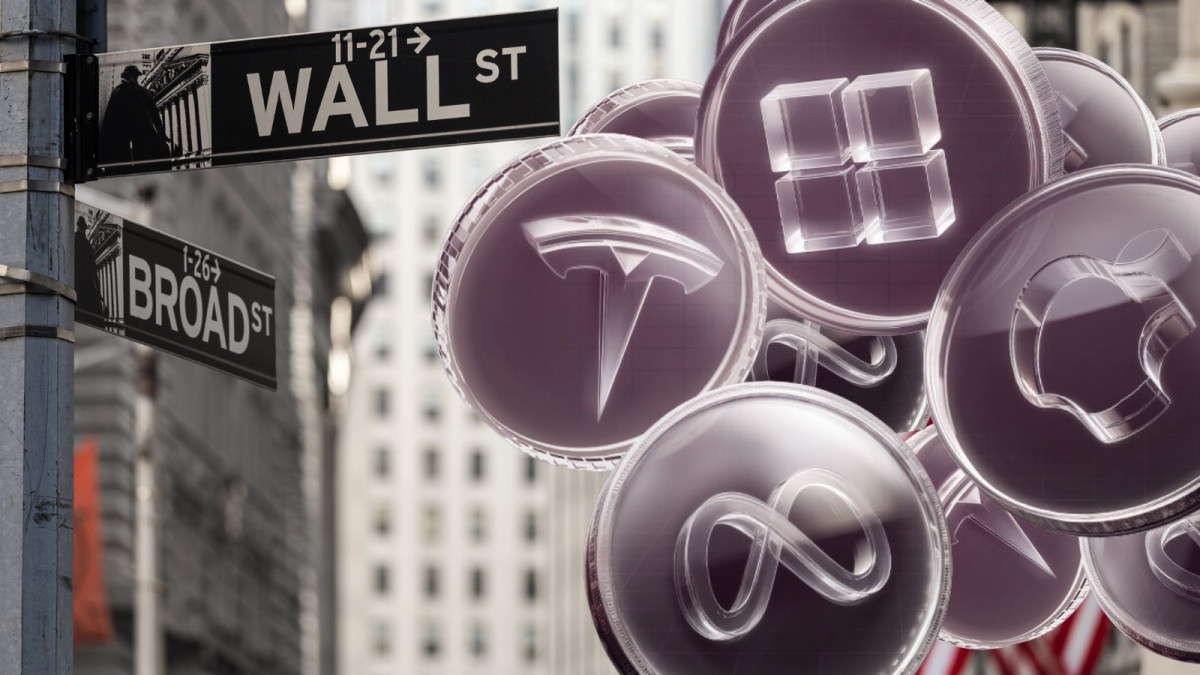
Wall Street Is Going To Tokenize Everything

There was a version of this story...told many moons ago that gets told as a prediction. Some future moment when the old guard of finance finally meets crypto on equal footing, when the suits and the degens find common ground, when a BlackRock executive and a DeFi protocol share the same balance sheet. Well that story is now pretty outdated...it's no longer some vision of an oracle peering into a crystal ball. We are already living in it. The future is here.
What we are seeing happen in global finance with tokenization is not some pilot program or a hedge. It is a structural transformation, and it is accelerating faster than most people outside of these two worlds seem to understand. Wall Street is no longer on the outside looking in, just dipping their toes in, to test the water. They have taken the plunge.
The Old System Was Always Broken
Here is something traditional finance never really wanted to say out loud: the infrastructure holding it together is ancient, slow, and held up largely by institutional inertia. Settlements that take days. Liquidity locked to six-and-a-half-hour trading windows. Layers of intermediaries, each one clipping a fee, each one adding time. For the largest players, those inefficiencies were baked into the cost of doing business. For everyone else, especially retail investors in markets outside the U.S., they were just walls.
Blockchain does not fix all of this overnight. But it offers something that legacy systems fundamentally cannot: a shared, programmable, real-time record of ownership that does not require three middlemen to reconcile. The World Economic Forum, in its 2025 report on asset tokenization, described the transition as potentially the next major phase in the development of financial market architecture, drawing a comparison to the shift away from paper certificates in the 1960s. That is not a crypto inside touting to his followers on X. That is the WEF stating how tokenization could transform finance.
When even the most establishment-facing institutions are framing this as a generational infrastructure shift, it's probably worth paying attention to.
The Institutions Are Not Coming. They Are Here.
BlackRock has a tokenized fund on Ethereum. JPMorgan launched a second tokenized money market product backed by U.S. Treasuries. Fidelity brought its own Digital Interest Token on-chain. Franklin Templeton has been quietly building its tokenized money market fund, BENJI, across multiple blockchains for years. These are live products managing real capital.
The total market for tokenized real-world assets crossed $75 billion in 2025. Projections from market analysts put the long-term ceiling at $18.9 trillion by 2033, and some estimates, citing the total addressable market of traditional finance, go much higher. Larry Fink has publicly stated, more than once, that he believes every financial asset can eventually be tokenized. When the CEO of the world's largest asset manager says that with conviction, the rest of the industry listens.The total crypto market sits at just shy of $2.6 trillion right now, to add some perspective to the type of volume tokenization can bring to the space.
And the whole idea behind this is not ideological. It is practical. Blockchain cuts settlement time, removes redundant intermediaries, enables fractional ownership, and allows assets to be composable across different financial products. For institutions moving hundreds of billions, those efficiency gains compound into something very significant, very quickly.
xStocks and the Part Where It Gets Really Interesting
Tokenized treasuries and money market funds are the institutional on-ramp. But the development that best captures where all of this is truly heading is xStocks, and it is worth understanding why it matters as much as it does.
Launched in June 2025 by Backed Finance, a Swiss RWA issuer, xStocks put more than 60 fully collateralized U.S. equities on Solana as SPL tokens. Apple. Tesla. Nvidia. Amazon. Each one backed 1:1 by real shares held under regulated custody. Not synthetic. Not a derivative. The actual stock, on-chain. Available the same day on Kraken and Bybit to users in over 185 countries, and within hours, live across Solana's DeFi ecosystem on Raydium, Jupiter, and Kamino.
The numbers since launch have been hard to argue with. Over $25 billion in total transaction volume. More than 80,000 unique on-chain holders. The platform has since expanded to 100 fully backed listings, and xStocks recently launched xChange, a unified execution layer for tokenized equities running 24/5 across Ethereum and Solana with atomic settlement built in. And we'll go back to the numbers. xStocks is amazing. It's done over $25 billion in volume. But daily stock market volume just in the U.S. is roughly $500-700 billion. Daily. Just in the U.S. Starting to get the big picture here? The much, much bigger picture?
What makes this genuinely different from everything that came before it is composability. With a brokerage account, you own a stock and that is more or less the end of the story. With xStocks inside Solana's DeFi ecosystem, you can use Nvidia as collateral in a lending protocol, provide liquidity with Apple against a stablecoin, or swap Tesla for SOL without touching a broker, a clearinghouse, or a trading window. That kind of programmable financial infrastructure does not exist in traditional markets. It simply never has.
Who This Actually Opens the Door For
For investors in the U.S., this is interesting. For investors everywhere else, it is potentially transformative. Access to U.S. equity markets has historically required meeting regulatory hurdles, working through licensed brokers, and navigating banking infrastructure that many parts of the world simply do not have. xStocks changes that math entirely. Trading starts at one euro. Dividends reinvest automatically. No broker required. No minimum account size. Just a wallet and a connection.
Franklin Templeton's partnership with Kraken, announced in early 2026, is another data point worth noting here. The two are exploring on-chain versions of Franklin's financial products, including tokenized stocks, yield instruments, and compliant custody solutions. A legacy asset manager and a crypto exchange building joint infrastructure is the kind of thing that a few years ago would have sounded like a very optimistic projection. Now it is a press release.
The Narrative Has Shifted. Permanently.
Crypto spent a long time fighting to be taken seriously by traditional finance. That fight is over, and crypto won it on the merits. What is replacing it is something more interesting: a negotiation over what the merged system actually looks like, who controls it, and how fast it scales.
The regulatory environment is improving. Interoperability between chains is being worked out. Liquidity in tokenized asset markets is growing month over month. The WEF framed the barriers as real but solvable, pointing to legacy infrastructure integration, inconsistent global standards, and cross-chain friction as the remaining friction points. None of those are permanent problems. They are engineering and coordination challenges, and the talent and capital now focused on solving them is enormous.
The General Manager of xStocks said it about as cleanly as it can be said: the question is no longer whether equities belong on-chain, but how fast they can be scaled. With 100 listings and $25 billion in volume already behind the platform, the model is proven. The next stage is expansion to every major U.S. equity and, eventually, global equities across international markets.
That is not a roadmap for some distant future version of crypto. That is the roadmap for the next few years. And if the last twelve months are any indication, it will probably move faster than anyone is currently projecting, including myself. As bullish as I am on all of this, I have a feeling that the transition to tokenize the world will be bigger than anything I could ever imagine.
KRWQ Stablecoin Expands to Solana for KRW Trading

KRWQ, a stablecoin pegged to the South Korean won, is expanding to Solana following a recent announcement from IQ, the company behind the stablecoin.
The expansion, according to IQ, is aimed at enhancing KRWQ support for various Korean won-denominated trading applications on Solana, including perpetual futures, on-chain foreign exchange markets, arbitrage strategies, cross-margin trading, and other institutional and algorithmic trading systems and applications.

“The Korean won is a major global currency with substantial activity in offshore derivatives markets, yet it has remained largely inaccessible in crypto native trading systems,” IQ said in a statement to reporters. “KRWQ allows market participants to trade, hedge, and deploy capital using Korean won liquidity directly on chain.”
Regarding its decision to launch KRWQ on Solana, the IQ team cited Solana’s low latency and deep liquidity as key reasons for selecting the network.
“Solana provides the performance and ecosystem depth needed to scale KRW liquidity on chain,” said Dave Shin, chief operating officer of KRWQ. “We are seeing clear demand for non-USD trading pairs, particularly in derivatives.”
As KRWQ’s adoption continues to grow among both retail and institutional users, IQ expects increased usage of the stablecoin across a wide range of applications, including cross-border settlements and advanced trading systems.
About the KRWQ stablecoin
KRWQ is a stablecoin developed by IQ in collaboration with Frax Finance, a notable decentralized finance project. It was created with the main goal of bringing the Korean won (KRW) onto the chain.
By enabling 24/7 trading, instant settlement, and low-cost on-chain transactions, KRWQ addresses major inefficiencies in offshore KRW trading, increasing demand for and use of KRW in global payments and decentralized finance, while reducing dependence on US dollar-pegged stablecoins.
Since its launch in October 2025, KRWQ has rapidly gained traction as the first on-chain settlement layer for Korean won trading, expanding beyond Base, its initial deployment chain, and going live on Fraxtal, Codex, Morph, and Hydrex. KRWQ was also recently listed on EDX Markets, an institutional-focused cryptocurrency exchange, across spot and perpetual futures.
KRWQ now has a spot trading volume of nearly $40 billion and a Non-Deliverable Forward (NDF) market worth about $60 billion.
Jupiter, Bitwise Launch Institutional USDe Lending Market

Jupiter, the Solana-based decentralized finance platform, has partnered with crypto asset manager Bitwise Asset Management and decentralized lending infrastructure protocol Fluid to launch an Ethena (USDe) focused lending market on the Jupiter platform.
The partnership will see the launch of an institutional grade USDe lending market on Jupiter’s lending platform, with Bitwise serving as the curator of the new market, setting risk parameters and overseeing operations, while Fluid powers the lending infrastructure.

By assigning USDe lending curation responsibilities to Bitwise, a traditional finance asset management firm, Jupiter aims to achieve institutional grade credibility and easier access to large scale institutional capital, with the potential for the market to grow into the billions of dollars.
“USDe is an institutional grade savings product built for scale. By combining Jupiter Lend's advanced lending infrastructure with Bitwise's asset management expertise, we have created an efficient USDe market ready for DeFi and institutional adoption,” said Guy Young, founder and chief executive officer of Ethena Labs.
Before now, institutional capital and DeFi lending mostly operated separately. However, with the launch of this USDe lending market for institutional access, all entities involved, including TradFi and DeFi participants, can work together: Jupiter providing the lending market, Bitwise curating the market, Ethena supplying the asset, and Fluid powering the infrastructure.
“Now more than ever, it is imperative that we take DeFi risk seriously. That is precisely why we are excited to partner with Bitwise, who bring both the expertise and the institutional credibility needed to help scale on chain lending from a niche into the default way to do finance,” said Kash Dhanda, chief operating officer of Jupiter.
“And by working with Ethena and Fluid, two of the most technically innovative teams in the space, we are thrilled to deliver a product experience like no other.”
Institutions Double Down on DeFi
With DeFi growing rapidly and its TVL reaching new highs of around $150 billion to $225 billion in 2025, there has been an increase in the number of institutions entering and doubling down on DeFi.
Institutional capital reportedly made up around 11.5% to 20% of DeFi volume or lending TVL in parts of 2025, with institutions like BlackRock, Bitwise, and JPMorgan Chase doubling down on real world asset tokenization and stablecoins.
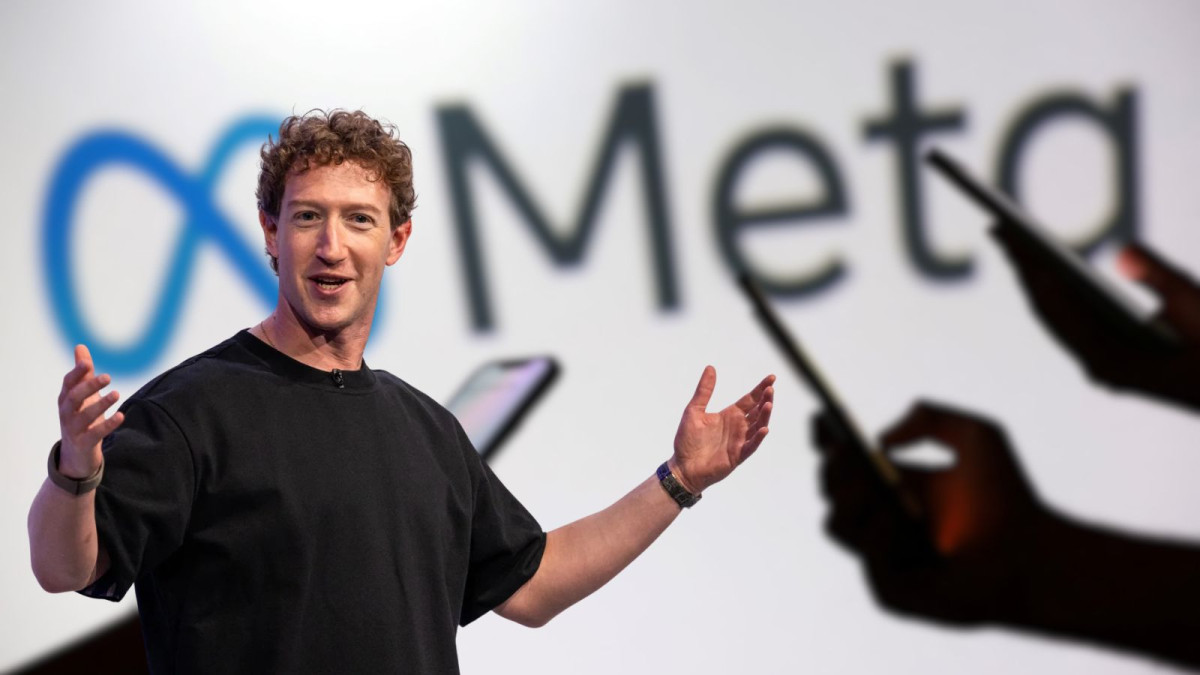
Meta Tests USDC Stablecoin Payouts for Creators

Social media giant Meta is currently running a pilot program that tests issuing creators’ payouts in stablecoins. “Meta now offers USDC stablecoin payouts via supported crypto wallets on the Solana and Polygon blockchain networks,” the team wrote on its Business Help Center page
Since this is still a pilot program, only creators in Colombia and the Philippines are currently eligible for the service, with the program expected to expand to more than 160 countries before the end of the year, according to an X post by Polygon Labs.

While the announcement was well received by many in the crypto community, a spokesperson for Meta clarified the goal of the initiative, stating that Meta was not issuing its own stablecoin but was instead tapping into Circle’s $77 billion USDC stablecoin, with plans to integrate the stablecoin into its payment infrastructure.
The Meta USDC creator payout program is currently supported by several popular crypto wallets, including MetaMask, Phantom, and Binance, with global payments platform Stripe handling the technical infrastructure and serving as the payments provider. Solana and Polygon are the only blockchain networks currently supported for this program.
Meta Pushes Again Into Crypto After Setbacks
Meta’s recent move into crypto follows several setbacks it has had to deal with in the past. In 2019, it launched Libra, a cryptocurrency which it said could be used across its different social media platforms, including Facebook, Instagram, and WhatsApp.
However, things did not go as planned, as some stakeholders, such as PayPal, Mastercard, and Visa, which were involved in the project, started pulling out due to scrutiny and backlash from U.S. regulators and from some members of the U.S. Congress.
Although Meta made several efforts to save the project, including rebranding it from Libra to Diem, a stablecoin backed by the U.S. dollar in an effort to appease federal regulators, nothing worked, as federal regulators stated that the project could not move forward.
Other projects associated with Libra and Diem, such as the Novi wallet, a cryptocurrency wallet built by Meta that allowed users to hold and transfer Libra, also failed, and the entire project was eventually wound down. According to Stuart Levey, then CEO of the Diem Association, “it became clear from our dialogue with federal regulators that the project could not move ahead.”
OKX Launches AI Agent Payments Protocol for Crypto Commerce

Cryptocurrency exchange OKX has launched Agent Payments Protocol (APP), a new payment protocol that allows AI agents to perform commercial activities.
The new payment protocol, according to OKX, is an open standard that defines how AI agents communicate and negotiate, pay for services, and pay each other. It also, for the first time, allows AI agents to move beyond simple payments and into full-scale commerce.

“In the past few months, AI agents moved from answering questions to running workflows, managing business processes, and acting autonomously on behalf of users,” OKX wrote in a blog post. “The bottleneck shifted from intelligence to commerce - not just paying, but the full cycle of doing business: quoting, negotiating, escrowing funds, metering usage, settling, and resolving disputes.”
This existing problem among AI agents is what OKX aims to solve with its new Agent Payments Protocol (APP), allowing agents not only to manage single payment requests but also to manage payment requests across multiple levels.
Inside the Agent Payment Protocol
The agent payment protocol (APP) from OKX is an open standard designed to work across all chains, especially the Solana and Ethereum blockchains.
APP unlocks new capabilities for AI agents, making it possible for these agents to operate and communicate autonomously across the full commerce lifecycle, pay each other through agent-to-agent payments, and also allowing AI agents to perform upfront and top-up payments, including deductions.
At its implementation layer is the payment software development kit (SDK) that makes it possible for developers to accept and make agent payments with just a few lines of code. According to the blog announcement, the agent payment protocol supports a wide variety of payments, including one-time payments, batch payments, pay-as-you-go, and escrow payments, which OKX says is coming soon.
Embedded within the payment protocol is the OKX self-custodial agentic wallet, which supports over 20 blockchains. Since the wallet is secured by means of a Trusted Execution Environment (TEE), a hardware-based security environment, the wallet’s private keys and sensitive operations are kept highly secure.
Despite its early launch, the OKX agent payment protocol is currently supported by major cloud infrastructure firms, including Amazon Web Services (AWS) and Alibaba Cloud, as well as blockchain companies such as Uniswap, Paxos, MoonPay, Zerion, and Nansen.
With the launch of its payment protocol, OKX joins companies such as Coinbase, Stripe, and OpenAI, which have already launched their payment protocols, namely x402, Agentic Commerce Protocol (ACP), and Machine Payments Protocol (MPP), respectively.