#market analysis

Bitcoin Risk Signals Flash Bullish: Is a Rally Coming?

Something may have shifted in the Bitcoin market. After months of grinding sideways action and periodic dips that had retail investors questioning their convictions, a handful of closely watched indicators are quietly aligning in the same direction, and it's not bearish.
Glassnode's proprietary Risk Index, which quantifies systemic market risk on a scale of 0 to 100, has dropped to zero. That's the floor. The firm's Moderate Strategy tracker has simultaneously flipped from "Moderate" to "High Confidence" for the first time since October 10, a combination analysts at the on-chain data firm are calling a "cleared risk landscape." The last time these two signals aligned, Bitcoin was on the cusp of a significant leg higher.
"This is an excellent window for strategic accumulation rather than chasing deeper dips," said Lacie Zhang, research analyst at Bitget Wallet. Zhang added the firm holds "a strong conviction for a positive close to 2026," pointing to improving market structure and mounting institutional confidence as the two pillars that could drive Bitcoin to a fresh all-time high before year-end.

Institutions Are Loading Up, Quietly
While retail sentiment has been mixed at best, institutional players appear to have decided the discount is too good to ignore. Strategy, Michael Saylor's Bitcoin-focused firm, made its largest BTC purchase since late 2024 in April, acquiring 34,164 coins for roughly $2.54 billion at an average price near $74,395. That brings the firm's total stash to over 815,000 BTC, a figure that continues to tighten long-term supply in ways that matter.
U.S. spot Bitcoin ETFs have also recorded five consecutive days of net inflows, with BlackRock's IBIT leading the charge at $256 million in a single session. Cumulative net inflows have now eclipsed $57.98 billion. For a market that spent much of Q1 2026 dealing with outflows and persistent selling pressure, that's a meaningful reversal. Exchange balances are declining, on-chain data shows addresses holding more than 1,000 BTC have grown by roughly 3.2% month-over-month, and stablecoin supply sitting on the sidelines has been creeping higher. The classic setup, in other words.
Sentiment Thaws as Geopolitical Clouds Part
It's not just the on-chain picture that's improving. The macro backdrop has started to cooperate too, at least at the margins. The Crypto Fear and Greed Index has climbed from "extreme fear" at the start of April to simply "fear," which doesn't sound like much but actually represents a significant thaw in how traders are feeling. Bitcoin briefly touched $79,388 on Wednesday, its highest print in over three months. It is currently sitting just below that around $78,300 at time of writing.
Separately, CryptoQuant's Bull Score Index, which blends ten different on-chain metrics, has climbed to a neutral reading of 50 for the first time since Bitcoin was trading above $126,000. Reaching neutral from a structurally bearish position is, in CryptoQuant's framework, confirmation that the bear market may have ended. The bounce from near $60,000 to current levels is, by that measure, something more than a dead-cat rally.
Easing tensions in the Middle East are helping too. "As the US-Iran conflict subsides, bullish bets will continue to propel the market upward in the near term," said Jeff Mei, COO at crypto exchange BTSE. Prediction markets appear to agree, with users on one popular platform assigning a 74% probability that Bitcoin extends its rally to $84,000 in the near term.
The Path to $80K and Beyond
Analysts are cautiously optimistic about what comes next. A clean break and hold above $80,000 would serve as both a technical and psychological trigger, opening up the road toward $90,000 and ultimately a retest of all-time highs. The technical structure supports it, with Bitcoin forming higher lows through the April consolidation and the MACD histogram beginning to flatten from negative territory.
Longer-term forecasts remain ambitious. Standard Chartered carries a $100,000 year-end target, while Bernstein has maintained $150,000, arguing that spot ETFs, corporate treasury adoption, and structured capital products have changed the underlying market structure in ways that make cycle drawdowns shallower and recoveries faster. JPMorgan's volatility-adjusted Bitcoin-to-gold framework puts implied fair value even higher, somewhere north of $170,000.
Momentum from Bitcoin’s recent rally could spill into the altcoin market, which could see gains of as much as 60% if Bitcoin continues to rise, according to a crypto analyst.
“I think this leg has enough room to continue to $86K, and altcoins to run 30-60% from here,” MN Trading Capital founder Michael van de Poppe said on Thursday. A move to that $86K price would only be a 9% increase.
The Risks Haven't Gone Away
That said, nobody credible is calling this a certainty, certainly not this guy...who has been in the space long enough to know that NO ONE has a crystal ball. Glassnode's own data shows 54% of recent buyers are currently sitting in profit, and short-term holders' realized profit has spiked to $4.4 million, three times the $1.5 million level that marked every local top so far in 2026. Those numbers suggest the market is not without vulnerability, particularly in the absence of a fresh demand catalyst.
A flare-up in Middle East hostilities, any disruption to oil flows that sparks renewed inflation, and the broader uncertainty around Federal Reserve policy. The potential CLARITY Act, Fed rate cuts, and a lasting geopolitical resolution remain the three catalysts most often cited by analysts as what the market needs to convincingly clear $80,000 and hold.
For now, the risk landscape has cleared at the indicator level. Whether the price follows is the only question that matters.

Crypto Markets Drop as Trump Threatens to Hit Iran 'Extremely Hard'

Whatever optimism had crept back into crypto markets over the past two days got wiped out Thursday morning after President Trump's primetime address to the nation offered not a path to peace, but a harder line. Crypto fell. Stocks fell. Oil surged past $106. The familiar cycle repeated itself, for roughly the fifth or sixth time in five weeks.
Bitcoin dropped 3% to around $66,000, giving back the gains it had quietly built on Tuesday. Ethereum fell by a similar margin, sliding to $2,056. BNB shed 4.9% to $580, XRP lost 3.5% to $1.30, and Solana's SOL had the worst session of the major tokens, off 5.2% and now down roughly 13% on the week. It was an ugly morning across the board, and it felt awfully familiar.
A Rally Built on Hope, Not Reality
Tuesday had been, briefly, a good day. Trump had made offhand comments suggesting the Iran conflict could wrap up within weeks and that a formal deal was not necessarily a prerequisite for a resolution. That was enough. Asian equities surged 4%. S&P 500 futures climbed. Bitcoin pushed back toward $69,000. The crypto Fear and Greed Index, which had been pinned at single digits for weeks, got a bit of air.
Then came the Wednesday speech. In nearly 20 minutes, Trump outlined no real shift in Iran policy, offered no pathway to a ceasefire, and gave no timeline for reopening the Strait of Hormuz, the critical oil shipping lane that has been effectively closed since mid-March. He said the strait would reopen 'naturally' once hostilities subside. That was not what markets had priced in and our small rally just went away.
The Real Problem Underneath the Headlines
Analysts and traders increasingly point out that tracking Trump's daily commentary on Iran may be beside the point. The underlying oil market situation has been quietly deteriorating, independent of whatever the president says on any given afternoon. The International Energy Agency's member nations authorized the largest coordinated strategic petroleum reserve release in the organization's 50-year history, around 426 million barrels in total, to compensate for the near-shutdown of Hormuz flows. Those flows represent about 20% of the world's seaborne oil trade.
The problem is that those emergency reserves are expected to run dry within weeks. When that happens, the manageable shortfall of roughly 4.5 to 5 million barrels per day could balloon to 10 or 11 million, which would be an entirely different kind of crisis. Ship insurance premiums for Hormuz transits remain elevated. Tanker traffic through the strait has not recovered. The real-world picture, independent of political statements, is not improving.
Going Nowhere Fast
Bitcoin has essentially traded between $60,000 and $73,000 for the entirety of the conflict, now entering its sixth week. It sells off on escalation headlines, bounces on de-escalation headlines, and ends up more or less where it started. The Fear and Greed Index has been stuck between 8 and 14 for a month, deep in extreme fear territory. The pattern has become almost mechanical at this point.
There are some who see reasons for cautious optimism, and they are not entirely without basis. April has historically been one of Bitcoin's stronger months, finishing green in 10 out of 15 years with an average gain of around 20.9%. Bitcoin also bounced clearly off two-month uptrend support near $60,000 last week and is attempting to reclaim its 50-day moving average. Spot Bitcoin ETFs have seen roughly $2.5 billion in net inflows over the past month, a sign that institutional interest has not collapsed. BlackRock noted this week that large investors are concentrating specifically in Bitcoin and Ether rather than spreading into the broader altcoin market.
But seasonality does not trade against a war. Until the conflict itself shows signs of genuinely unwinding, the pattern of hope, headline, reversal is unlikely to change. Wednesday was just another reminder of that.
The next few weeks will likely be decisive, not because of anything Trump says, but because of what happens with oil supply fundamentals that have been quietly building toward a breaking point regardless of the diplomatic noise.

Bitcoin Rally Builds Ahead of $14B Options Expiry

Bitcoin climbed back toward the $72,000 mark Wednesday as the derivatives market showed telltale signs of growing leverage, putting traders on alert for sharp moves in either direction. The world's largest cryptocurrency rose roughly 1.2% after midnight UTC, mirroring gains across U.S. equity futures, with the Nasdaq 100 up around 1% over the same window. BTC was last seen trading near $71,300, well within the choppy $69,000 to $76,000 band that has defined the market for much of March.
The session's gains carried a cautionary undertone. Futures open interest in bitcoin has climbed to a one-week high, driven in large part by short positioning rather than fresh bullish conviction. Traders who have seen BTC get turned away from $72,000 repeatedly appear to be leaning into those rejections rather than chasing a breakout. Funding rates and cumulative volume delta have stayed flat to muted, two readings that analysts typically cite when the OI build is defensive in nature rather than a signal of aggressive dip-buying.
$14 Billion Options Expiry Looms Large
The backdrop sharpens considerably when you factor in what is sitting on the calendar for Friday. Deribit, the dominant crypto options venue, is set to settle roughly $14.16 billion in bitcoin contracts at 08:00 UTC on March 27, a figure that accounts for nearly 40% of all open interest on the exchange. The quarterly event is the single largest derivatives settlement of Q1 2026, and it arrives with a specific price level commanding outsized attention.
That level is $75,000. According to Deribit, max pain for this Friday's expiry sits right there, meaning it is the price at which the highest number of contracts expire worthless and option writers, typically large funds and institutional players, would owe the least. Deribit Chief Commercial Officer Jean-David Pequignot described the dynamic as a gravitational pull, noting that delta-hedging activity by market makers historically nudges spot prices toward that pain threshold in the hours leading up to settlement.
The gap between where bitcoin is trading now and $75,000 is not trivial, a roughly 5% move from current levels. Whether max pain theory ultimately delivers on that gravitational pull remains a matter of debate even inside the industry. But with nearly 40% of Deribit's open interest scheduled to roll off in one session, the mechanical hedging flows alone are worth watching closely.
Altcoins Showing Stronger Positioning
While Bitcoin grinds sideways with mounting leverage, a more constructive picture is forming in parts of the altcoin market. Ethereum open interest has climbed to multi-month highs, and the positioning profile looks more directionally bullish than what is currently visible in BTC futures. DeFi-adjacent tokens and AI infrastructure projects are outperforming Bitcoin on a short-term basis, with the CoinDesk Computing Select Index, which tracks TAO, FET, and Chainlink, rising about 1.9% Wednesday to lead all major benchmarks.
Chainlink alone accounts for roughly 62% of that index and added 1.5% on the day, while TAO and FET posted gains of 4.9% and 2.9% respectively. The broader CoinDesk 20 benchmark gained around 0.9%, with the altcoin-heavy CoinDesk 80 generally outpacing the bitcoin-heavy CoinDesk 5. The pattern suggests that risk appetite has not evaporated, it is simply migrating toward names where there is clearer near-term narrative momentum.
A Market Trapped Between Catalysts
Zoom out and the picture gets harder to trade comfortably. Bitcoin is on pace to close March in the red, which would extend a losing or flat monthly streak to six consecutive months, the longest such run since the 2022 bear market. The final week of the month carries several potential catalysts, including the U.S. Personal Consumption Expenditures data on March 28, which could shift rate-cut expectations and send ripples through risk assets.
For now, the market appears to be threading a needle between a derivatives setup that could pull prices higher ahead of Friday and a macro backdrop that has not yet given bulls a clean reason to push through resistance with conviction. Rising open interest without corresponding spot demand and funding is historically the kind of configuration that resolves violently, though the direction is rarely obvious until it starts moving. With $14 billion in contracts settling in roughly 48 hours, the next few sessions aren't looking to be very quiet.

Dormant Bitcoin Wallet Moves After 13 Years
A Bitcoin wallet holding 2,100 BTC (worth over $147 million) became active after more than 13 years of dormancy.
The wallet, identified by the address 1NB3ZXx…BQB6ZX, moved 0.00079 BTC (approximately $55.71) at 11:27 a.m. UTC on Friday, a tiny fraction of its total holdings. According to data from Bitinfocharts, the wallet received the 2,100 BTC in a single transaction on July 4, 2012.
At the time, Bitcoin was trading at $6.59, valuing the holdings at about $13,839. The wallet’s value has since increased by more than 10,000x, rising to over $147 million today.

Image credit: Bitinfocharts
This move did not go unnoticed in the crypto community, with many applauding the whale’s patience and others calling it one of the most effective trading strategies.
“13.7 years of silence… just to move $56. That’s not a sell signal — it’s a reminder of what conviction looks like in Bitcoin. From $6 to $75,000, the biggest returns didn’t come from trading… they came from time,” said Andy Wang, CEO of crypto platform HashWhale.
This isn’t the first Bitcoin whale wallet to be reactivated this year. In January, a 13-year-old dormant wallet moved 909 BTC, worth about $85 million, to a new address.
About a week ago, another Bitcoin whale that had been dormant for roughly two years transferred 343 BTC, worth approximately $23.85 million, between Binance and Cobo.
Bitcoin’s Price Action This Month
Despite experiencing significant volatility this month, Bitcoin has posted a net positive month-to-date gain.
Starting the month at around $67,000, Bitcoin dipped to $65,303 before surging to $74,000 days later, and was trading at $69,927 as of March 10. It also reached a peak of $75,988, with some analysts speculating about a potential breakout above $80,000.
According to data from CoinMarketCap, Bitcoin is currently trading at around $69,807, with a 24-hour trading volume of approximately $39 billion and a market capitalization of nearly $1.396 trillion.

Bitcoin Near $70K Again, Bottom or More Pain Ahead?
I came into Bitcoin in mid-2017. Not early, not late, but early enough to catch the euphoria and late enough to feel the consequences. I watched that cycle go vertical, then watched it unwind in slow motion through 2018. I stayed through the 2020–2022 cycle, including the November 2021 peak and the long grind down that followed.
So when Bitcoin slipped back toward $70,000 this week, the feeling wasn’t panic..well, maybe some panic. But there certainly was some recognition. The same quiet tension I’ve felt before, when the market shifts from confidence to defense and nobody is quite ready to admit it.
This move looks familiar on the surface. Risk assets are under pressure, equities are shaky, and Bitcoin is once again trading like the most volatile expression of risk in the room. But the environment around it feels very different than it did the last two times I lived through this.
Why $70,000 Matters More Than Most Want To Admit
For anyone who lived through 2021, $70K isn’t just a number. November of 2021 marked the prior cycle’s peak near $69,000. For years, that level symbolized excess. More recently, trading above it felt like proof that the market had finally moved on.
Once Bitcoin slipped back into that zone, the mood shifted fast. Selling stopped being about opinions and started being about mechanics. Stops were hit. Leverage came out. Liquidations took over. That transition is something I’ve learned to respect. When the market turns mechanical, it usually overshoots.That is obvious on both sides, euphoria and near depression.
I saw the same thing in early 2018 and again in 2022. Different triggers, same behavior.
BTC Still Trades Like A Risk Asset
As much as I want Bitcoin to be treated differently, moments like this remind me that it still trades like a high beta risk asset when macro pressure shows up.
Equities, especially tech, have been weak. Volatility is up. Liquidity feels tighter. In that environment, Bitcoin rarely resists. It amplifies. Crypto trades 24/7, it’s easy to exit quickly, and it’s deeply intertwined with leverage. When investors want to reduce risk immediately, Bitcoin is often first in line.
Once liquidations start cascading, fundamentals stop mattering in the short term. Exchanges sell into weakness, bids step away, and price pushes through levels that felt solid just days earlier.
ETF flows add a new dynamic I didn’t have to think about in 2018 or even 2021. Institutional money can now enter and exit Bitcoin daily. That can support price over time, but during drawdowns it can also accelerate downside when outflows cluster.
What Past Cycles Taught Us
Living through the 2017 peak and the 2018 bear market changed how I think about Bitcoin permanently. Support can fail. Narratives can break. Time can do more damage than price. And something always happens that you least expect.
The 2020–2022 cycle reinforced that lesson. After peaking in November 2021, Bitcoin fell roughly 75 percent into the November 2022 lows. That wasn’t just a crash, it was a year of slow erosion that wore people down.
Those experiences make it hard for me to assume this cycle can’t get uglier. Bitcoin has always been good at humbling people who think they’ve seen it all.
At the same time, I can’t ignore what’s different now.
Will This Cycle Be Different?
In 2017 and 2021, regulation was mostly noise. Institutions were cautious or absent. Spot ETFs didn’t exist. Bitcoin lived largely outside traditional markets
That’s no longer true.
Efforts like the Clarity Act and broader moves to define digital commodities give Bitcoin something it’s never really had during a downturn, a clearer legal and regulatory framework. That matters more when prices are falling than when they’re rising.
Institutions also behave differently than retail traders. They don’t buy because of excitement or belief. They buy because mandates allow them to. That can create steadier demand when prices fall far enough.
But they also sell without emotion. When risk models say reduce exposure, they reduce it. No attachment, no narrative. That means drawdowns can still be sharp, but they may resolve differently than in prior cycles.
This is the tension I’m trying to navigate in this cycle. Regulation and institutional access could limit the worst outcomes we’ve seen before. They could also change the character of both rallies and declines in ways we haven’t fully experienced yet.
Is This The Bottom?
Honestly, It feels rough out there and I know I wish this was the bottom. Maybe we see some relief before more pain? Or, in true crypto fashion, we rip the band-aid off and go even further down today, but I don’t think it’s safe to assume it’s the bottom of this cycle.
Liquidations have already done some eal damage. Sentiment has flipped quickly. Price is sitting near a level that matters historically and psychologically. If ETF flows stabilize, forced selling fades, and equities stop sliding, a bottoming process could start soon.
But I’ve been around long enough to know that real bottoms don’t feel relieving. They feel boring. They form through time, failed breakdowns, and long stretches where nothing seems to happen. This is happening fast so...the chop is still going to come. We may some moves up soon, and even more quick crashes, but the long boring bottom of the market has yet to reveal its face.
If conditions continue to deteriorate, Bitcoin will grind lower. Slow declines have always been more dangerous than fast crashes. They exhaust conviction. People just get complacent and leave.
What I’m Watching
Rather than trying to call the exact low, I’m focused on a few things.
Whether ETF flows stabilize over weeks, not days
Whether liquidation events shrink instead of cascade
Whether equities, especially tech, stop dragging crypto lower
Whether Bitcoin can reclaim broken levels and hold them, not just tag them
And time, true reversals don't happen fast. Those things just take time. That is true when the market is up and when the market is down.
I came into Bitcoin in 2017 thinking it was all about price. Staying through multiple cycles taught me it’s really about structure, psychology, and time.
This drop toward $70K feels familiar for a reason. What’s different is the environment around it. Institutions are here. Regulation is evolving. The market is more connected to traditional finance than it’s ever been.
I don’t know if that makes the outcome better or just different. What I do know is, that this fourth chapter I’m living through doesn’t feel like a clean repeat of the last one, and that alone is worth paying attention to. I also don't know if I made you feel better about this whole thing or not. Or maybe, I was just trying to make myself feel better in the end.
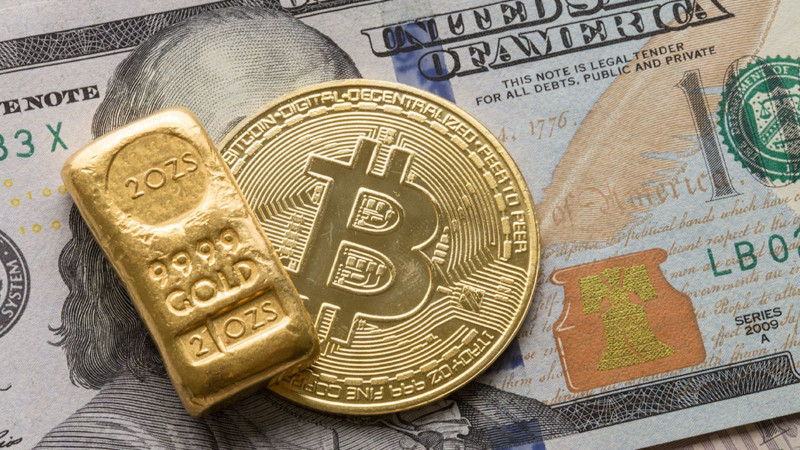
Bitcoin vs. Gold: Why the Yellow Metal is Soaring While ‘Digital Gold’ Stumbles And Why I’m Betting on Bitcoin’s Long Game

As a relatively new reporter in the financial space here in Cincinnati, I’m still learning the ropes of these massive markets every day. I’ve pored over charts, read analyst reports, and talked to people who live and breathe this work. The facts right now are clear: gold is on fire, while Bitcoin, often called “digital gold,” is lagging or even pulling back. Gold has surged past $5,000 per ounce amid global tensions and renewed safe-haven buying, while Bitcoin is hovering around $87,000 to $88,000 after dipping from recent highs near $98,000. It is tempting to think gold has won this round outright. But when I look deeper at the data and think about where we are headed, I cannot shake the feeling that Bitcoin is still the head of the future.
Let me break down the current picture using real data and major players, then explain why, as someone still green in this industry, I am leaning toward the digital side over the long term.
The Numbers Don’t Lie: Gold’s Dominance in Early 2026
Gold’s dominance in early 2026 has been unmistakable. As of January 26, 2026, spot gold is trading roughly between $5,067 and $5,100 per ounce, up about 1.6 percent on the day and nearly 85 percent from a year ago. It recently pushed past $5,100 as investors rushed into safe assets driven by geopolitical flashpoints, a weaker U.S. dollar, and continued central bank accumulation. Analysts at firms such as J.P. Morgan are projecting average prices near $5,055 by the fourth quarter of 2026, with more aggressive scenarios reaching $5,400 or even $6,000 if uncertainty remains elevated.
This surge is being driven by familiar forces. Demand for safe havens has intensified amid global risks, including tensions involving Venezuela, Iran, and broader macroeconomic stress. Central banks continue to purchase gold at a strong pace, and expectations for lower interest rates are making non-yielding assets like gold more attractive relative to bonds and cash.
Major mining companies are capitalizing on these conditions. Newmont Corp., the world’s largest gold producer, is benefiting from its diversified operations and has seen its shares rise alongside record prices. Barrick Gold continues to deliver strong output from its core assets, while Agnico Eagle is expanding in politically stable jurisdictions. The emphasis these companies place on operational efficiency and ESG-conscious production has helped attract institutional capital, reinforcing gold’s reputation as a reliable hedge in uncertain times.
Bitcoin’s Rough Patch: Stagnation Amid the Rally
Bitcoin, meanwhile, is struggling to keep pace. It is trading in the $87,000 to $88,000 range, down from highs near $98,000 earlier this month and well below its 2025 peak. Year-to-date performance has been flat to negative at times, and the Bitcoin-to-gold ratio has fallen to roughly 17 to 18, meaning one Bitcoin now buys significantly fewer ounces of gold than it did previously. Recent outflows from crypto-focused ETFs have added pressure, and Bitcoin has failed to capture the same fear-driven momentum that is powering gold’s rally.
Several factors are weighing on sentiment. Regulatory uncertainty and ongoing energy concerns remain unresolved, while broader macro resets are pushing investors toward traditional safe havens first. At the same time, profit-taking by early Bitcoin holders has contributed to selling pressure during rallies.
On the mining side, companies such as Marathon Digital and Riot Platforms are facing margin pressure from higher energy costs and the effects of the most recent halving. Some firms, including CleanSpark, are attempting to adapt by shifting portions of their operations toward AI-related infrastructure. Institutional backing through products like BlackRock’s Bitcoin ETFs has helped establish a price floor, but so far it has not been enough to spark a sustained breakout.
Ty’s Take: Gold Feels Safe Now, But Bitcoin Is the Future I’m Betting On
I will be upfront: I am new to covering this beat, and the data clearly shows that gold has been the winner so far in 2026. Its thousands of years of history as a store of value, its lower volatility, and its tangible demand during periods of turmoil make it feel especially solid when headlines are filled with uncertainty. From my desk in Cincinnati, where many investors favor steady and familiar assets, gold’s rally makes complete sense. Mining stocks such as Newmont and Barrick look like attractive options for those seeking exposure without extreme swings.
But here is where my gut...and what I have learned through deeper research, come into play. Bitcoin is not failing; it is moving through a cyclical pullback while gold does what it has always done best during risk-off environments. Bitcoin’s fixed supply of 21 million coins, expanding adoption, and potential as borderless, programmable money position it as an evolution in how value is stored and transferred. Gold has history on its side, but Bitcoin brings innovation, including growing institutional participation, the possibility of clearer regulation under current leadership, and continued improvements in efficiency and infrastructure. Forecasts for Bitcoin range from relatively conservative targets of $120,000 to $170,000 by year end, with much higher outcomes possible if momentum returns.
As someone still learning this industry, I see gold winning the short-term fear trade, while Bitcoin leads the longer-term shift toward digital assets. For investors building wealth over the next decade, allocating to both can make sense: gold for near-term stability through miners or ETFs, and a heavier tilt toward Bitcoin or its broader ecosystem for long-term growth. The facts show gold shining today, but the future, in my view, remains digital.
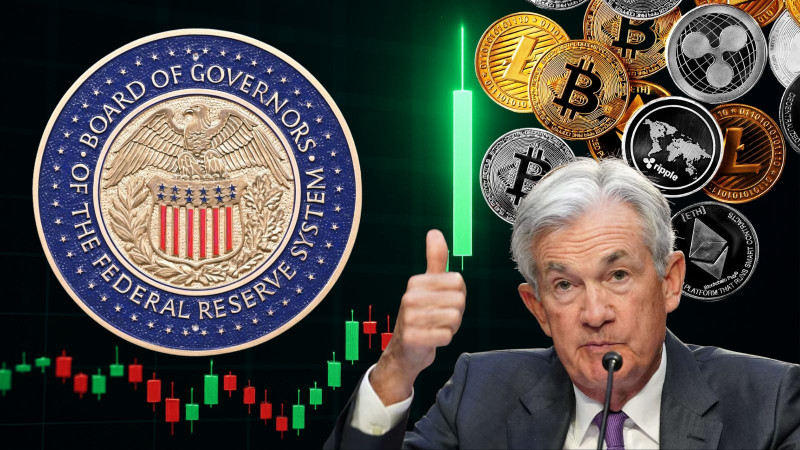
Crypto Surges Ahead of FOMC Decision as Traders Position for Policy Shift
Crypto Market Surges Ahead of the FOMC Decision and What It Means for the Market
The crypto market has seen a sharp rise in volatility and price movement, with Bitcoin and Ethereum leading the rally. This surge has not come out of nowhere. It is tied closely to speculation surrounding the latest Federal Open Market Committee decision. As traders positioned themselves for potential changes in U.S. monetary policy, the crypto market responded with a wave of buying, short liquidations, and renewed bullish sentiment.
The move is another clear example of how deeply connected crypto has become to broader macroeconomic conditions.
How FOMC Speculation Became the Spark for the Latest Crypto Rally
In the days leading up to the meeting, expectations grew that the Federal Reserve might soften its stance on interest rates. Even the possibility of a rate cut or a more dovish tone tends to shift investors toward higher risk assets. Crypto is usually among the first to react.
Lower interest rates reduce the appeal of cash and bonds, while making speculative and growth oriented assets more attractive. That dynamic has long played out in equities. Now it is becoming increasingly visible in crypto as well.
Bitcoin and Ethereum both climbed into short term highs before the decision. As prices moved up, heavily leveraged short positions began to unwind. This added fuel to the rally as forced liquidations pushed prices even higher. It was a feedback loop that often appears during major macro events and is especially common in the crypto market due to its high leverage environment.
Market Behavior Shows the Fed Still Drives Risk Appetite
Even though crypto operates independently of government control, the industry still reacts strongly to the tone and trajectory of central bank policy.
A few things are becoming clear:
-
Traders treat FOMC guidance as a direct indicator of risk sentiment.
-
Expectations alone can drive price action before the decision is released.
-
Liquidity conditions continue to shape the strength of crypto market rebounds.
-
Bitcoin and Ethereum are increasingly acting like macro assets rather than purely speculative ones.
As the market leaned toward a more accommodative outlook, traders began rotating capital back into large cap cryptocurrencies. Bitcoin and Ethereum benefited the most, but the effect spilled into altcoins as well.
Short term, this created a volatile environment. Longer term, it signals a deeper connection between crypto and global financial cycles.
Why Some Analysts See This as More Than a Temporary Move
While investors always react to big economic events, this moment feels different. The alignment of easing inflation, slower economic pressure, and the possibility of rate cuts creates a setup where risk assets could see more sustained inflows.
Crypto is no longer operating separately from traditional finance. If liquidity improves across the economy, that liquidity tends to find its way into high growth and high volatility markets. Bitcoin and Ethereum fit that profile perfectly.
This raises a question that many in the industry are now considering. Is this the beginning of a broader shift where crypto consistently responds to macro cycles the same way equities and bonds do?
If so, price behavior may become more predictable around central bank events than it was in the early years of the industry.
What Could Go Right and What Could Still Disrupt the Momentum
What Could Go Right
-
If the Fed follows a path of easing or signals greater flexibility, crypto markets could experience a sustained wave of inflows.
-
Investors may shift back toward risk, viewing Bitcoin and Ethereum as core components of a diversified macro portfolio.
-
Lower interest rates increase liquidity across financial markets, which historically supports larger moves in non traditional assets.
-
A clearer link between crypto and macro conditions could attract more institutional traders who specialize in macro driven strategies.
What Could Go Wrong
-
If the Fed holds rates higher for longer or delivers a hawkish message, the market could see an immediate reversal.
-
Liquidations can cut both ways. The same leverage that amplifies rallies can intensify declines.
-
Uncertainty in global markets, geopolitical pressure, or a sudden risk off event could stall any recovery.
-
Crypto may remain highly sensitive to macro shifts, reducing the independence that once drove speculative surges.
What This Phase Means for Investors and the Broader Market
This moment serves as a reminder that crypto does not move in isolation. Bitcoin and Ethereum now sit within the larger financial ecosystem. When central bank policy shifts, these assets feel the impact quickly. That connection is growing stronger, not weaker.
For traders, FOMC weeks will continue to be periods of heightened volatility. Positioning before and after the decision may offer opportunities, but it also increases risk.
For long term investors, understanding macro cycles is becoming just as important as understanding blockchain fundamentals.
For the market as a whole, this could signal a shift toward a more mature ecosystem. If crypto continues to move with global financial cycles, it may attract more institutional interest, more capital, and more stability over time.
The surge before the FOMC decision is not just another short term rally. It is a signal of where the market is heading and how interconnected crypto has become with traditional finance.
Stay Connected
You can stay up to date on all News, Events, and Marketing of Rare Network, including Rare Evo: America’s Premier Blockchain Conference, happening July 28th-31st, 2026 at The ARIA Resort & Casino, by following our socials on X, LinkedIn, and YouTube.

Bitwise CIO Predicts 10x to 20x Crypto Growth as Regulation Shifts
Why Bitwise Is Thinking Bigger About Crypto, and Why the Timing Matters
The crypto industry is moving into a new phase, and Bitwise Chief Investment Officer Matt Hougan believes the shift is much larger than the market realizes. His view is that the combination of regulatory changes, institutional interest, and the rise of on chain financial infrastructure is creating an environment that could redefine how global markets function.
What is striking is not just his optimism, but the level of detail behind it. Hougan is not talking about the next bull run or a temporary upswing. He is talking about a structural change that could reshape how assets move and how financial services are delivered.
A Regulatory Turn That Few Saw Coming
For years, regulation has been the main obstacle standing between crypto and traditional finance. That has started to change in a very real way. In a recent address, Securities and Exchange Commission Chair Paul Atkins presented a plan known informally as Project Crypto. Instead of focusing primarily on enforcement, the initiative outlines a path for integrating traditional markets with public blockchains.
Hougan called this the most optimistic regulatory stance he has ever seen and said it forced him to revise not just the scale of crypto’s potential, but the timeline as well. His point is straightforward. The market has not fully absorbed what a cooperative regulatory regime could unlock. Investors have priced in caution for so long that they have not adjusted to the possibility of acceleration.
Three Areas Where the Biggest Winners May Emerge
Hougan identifies three categories where he sees the strongest potential.
1. Layer 1 blockchains and core crypto networks.
If financial activity continues to move on chain, the blockchains that support settlement, tokenization, stablecoins, and decentralized financial rails could see massive growth. Hougan mentions networks like Ethereum, Solana, Cardano, Avalanche, Aptos, Sui, NEAR and others. His view is that the right approach is not to pick a single winner, but to build a diversified basket of networks that are gaining real world usage.
2. Decentralized finance protocols.
With clearer regulatory treatment, DeFi could move from a niche set of applications to the backbone of a new financial system. Protocols that automate trading, lending, borrowing, derivatives, and stablecoin issuance could scale far beyond their current user base. Hougan believes that once regulatory friction drops, institutional participation could flow in rapidly.
3. Financial super apps.
This is one of the most ambitious parts of the projection. Hougan believes new platforms will combine traditional finance and crypto into a single interface. Instead of having brokerage accounts in one place, bank accounts in another, and crypto apps somewhere else, users could interact with all financial assets through one unified system. He thinks a company in this category could become the largest financial services firm in the world, potentially passing a one trillion dollar valuation.
Why a Ten to Twenty Times Expansion Does Not Sound Unrealistic
Hougan has consistently argued that crypto could deliver ten to twenty times growth over the next decade. His reasoning is not based on hype. It is based on the idea that crypto is entering a period where cycles driven by halving events or speculative trading matter less than structural factors. He believes the “four year cycle” narrative has lost relevance. What now matters is the maturation of the asset class and the integration of crypto with global finance.
In his view, the size of the market today reflects years of hesitation driven by legal uncertainty. Once that uncertainty lifts, capital could move faster than analysts expect. Institutions that have been watching from the sidelines may feel more comfortable allocating real budget to crypto infrastructure, tokens, or tokenized assets.
What Could Go Right, and What Could Still Undermine This Vision
There is no guarantee that the optimistic scenario plays out. Hougan acknowledges both sides.
What could go right:
-
Regulatory clarity could remove the largest barrier to institutional adoption.
-
Layer 1 networks with real usage could become the settlement layers of a digital financial system.
-
Super apps could reduce friction for everyday users, pulling millions more into on chain ecosystems.
-
The industry could attract capital at a scale closer to major traditional asset classes.
What could go wrong:
-
Regulatory implementation may move slower than expected, or shift again under new political leadership.
-
Some networks or protocols may fail to scale, or may lose out to competitors.
-
Macroeconomic conditions could suppress risk assets even if fundamentals improve.
-
Volatility could remain a psychological barrier for mainstream investors.
What This Means for Investors, Builders, and Policymakers
If Hougan is right, the industry is not just entering a new market cycle. It is entering the early stages of a long transformation in how financial markets operate. Investors who once tried to time cycles may need to rethink their approach and focus more on diversified exposure to infrastructure. Builders may find themselves working in an environment that is more supportive than anything they have experienced so far. Policymakers may influence the shape of global finance for decades based on decisions they make in the next few years.
It is possible that crypto still has years of volatility ahead. It is also possible that the industry is standing on the edge of the most meaningful phase of its development. Hougan’s message is that the market may be thinking too small. He believes the shift underway is not incremental. It is transformative.
Stay Connected
You can stay up to date on all News, Events, and Marketing of Rare Network, including Rare Evo: America’s Premier Blockchain Conference, happening July 28th-31st, 2026 at The ARIA Resort & Casino, by following our socials on X, LinkedIn, and YouTube.