#DeFi infrastructure
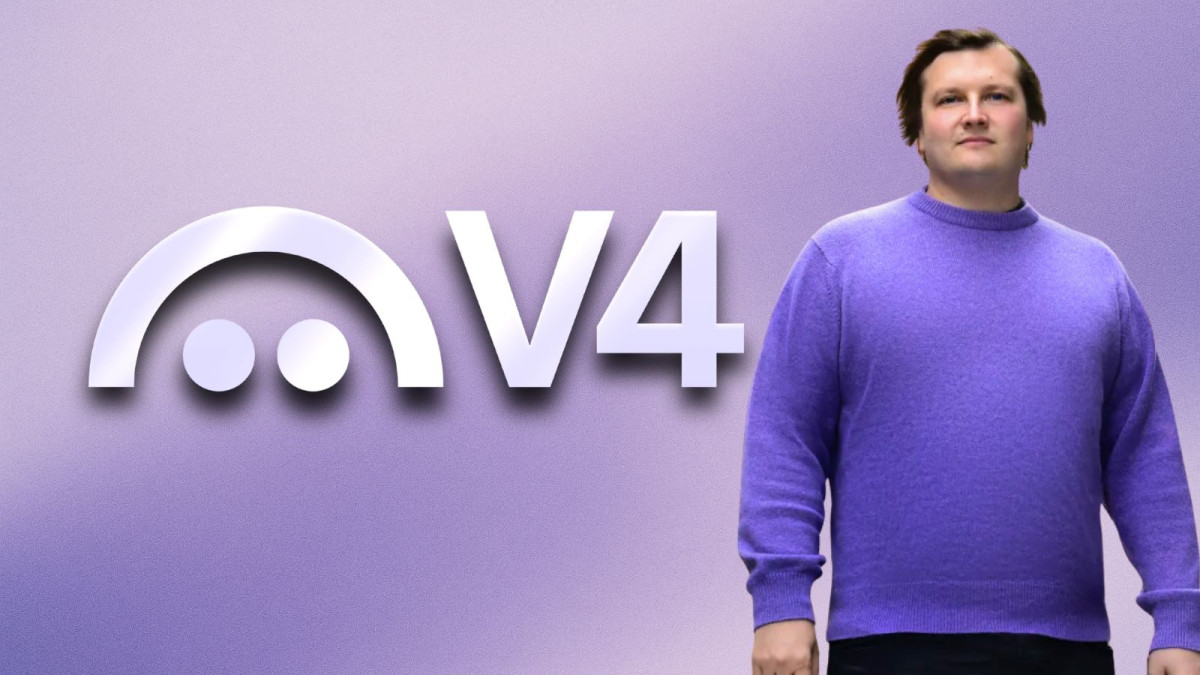
Aave V4 Is Live, How It Is Transforming DeFi Lending

After more than two years in development, Aave has officially deployed its fourth protocol iteration on the Ethereum mainnet, introducing what the team is calling a fundamental redesign of the way decentralized lending works. The upgrade is built around a hub-and-spoke architecture that Aave Labs CEO Stani Kulechov says positions the protocol as the most resilient lending market in the world.
Speaking at DeFi Day during ECC in Cannes, Kulechov sat down with The ROLLUP to walk through what the upgrade means and where Aave goes from here. The conversation covered everything from the protocol's new risk tooling to its partnership with Chainlink, and for a protocol that has survived the FTX collapse, multiple bear markets, and various DeFi exploits without accruing bad debt, Kulechov's confidence did not feel misplaced.
A New Plumbing System for DeFi Liquidity
The core change in V4 is a shift away from isolated liquidity pools, the model that defined both V2 and V3. In the previous design, each market on Ethereum held its own separate pool of assets. Capital in one market could not serve borrowers in another, which made it notoriously difficult to list new assets or bootstrap fresh lending markets without starting from scratch.
V4 replaces that structure with a central Liquidity Hub that aggregates capital across the protocol. Specialized spoke markets connect to the hub and draw from its shared pool, each with its own risk parameters, collateral rules, and liquidation settings. Kulechov used the tranching model from traditional finance as a reference point, explaining it to The ROLLUP as three tiers: a plus spoke for riskier, tail-end opportunities; a core hub for risk-adjusted mainstream markets; and a prime hub for the conservative end of the curve.
The practical implication is that a builder wanting to list a newer, less-proven token can now plug into the plus spoke without needing to bootstrap liquidity from zero. If that market matures, it can work its way toward the core hub. "One of the biggest challenges for DeFi builders has been how to bootstrap their product and liquidity," Kulechov told The ROLLUP. "This is the perfect way where if you build something exciting, it can be connected into existing Aave liquidity."
That said, Kulechov was clear the gates are not wide open yet. Spoke creation remains DAO-governed during the controlled launch phase, with the protocol prioritizing security over growth in the early going.
Risk Management Gets a Real Overhaul
Two specific features stand out on the risk side. The first is risk premiums, which allow the protocol to price risk differently depending on the collateral type a borrower is using. Under V3, every borrower taking out a loan against a given stablecoin paid roughly the same rate. V4 changes that, layering in a variable premium so that riskier collateral positions carry a higher borrow cost.
The second is dynamic risk configuration, which lets the protocol update parameters for new positions without touching existing ones. Kulechov walked The ROLLUP through why this matters: "Configurations can be applied to new positions without affecting old positions," he said, describing it as fundamentally new tooling that simply did not exist in prior Aave architecture.
The security buildout behind V4 reportedly spanned more than a year, with roughly eight months dedicated specifically to hardening the protocol's infrastructure. Formal verification firm Certora worked alongside the Aave Labs engineering team from the earliest architectural stages, embedding smart contract protections into the design rather than treating them as a pre-launch formality. V4 launched with conservative supply and borrow caps across all three hubs, a posture Aave says is entirely intentional while the protocol proves itself in production.
Chainlink SVR Adds a Revenue Stream on the Liquidation Side
Running alongside the V4 launch is Aave's expanding integration with Chainlink's Smart Value Recapture product, known as SVR. The mechanism routes oracle price updates through a private channel ahead of the public mempool, allowing an auction to occur for the right to backrun liquidations. Value that would otherwise flow entirely to block builders and MEV searchers instead gets shared between Aave and Chainlink.
Kulechov explained the appeal of the integration to The ROLLUP in fairly direct terms: "It helps all the users and it also helps the Aave treasury," he said. "It's a balance of being able to get Aave, as a community, to capture some of that revenue that liquidations occur with, directly into the Aave treasury."
As a launch partner, Aave currently receives 65% of recaptured MEV with Chainlink taking 35%, a rate locked in for the first six months of the live integration. The Aave DAO voted unanimously to expand SVR coverage on Ethereum from roughly 3% of protocol TVL to approximately 27%, following a pilot period during which no bad debt accrued. The integration has since been extended to Arbitrum. Chainlink's own testing suggests SVR can recapture around 40% of non-toxic liquidation MEV, which at Aave's scale represents a meaningful addition to treasury revenues.
What Existing Users Actually Need to Do
For users currently sitting in V3 positions, Kulechov's message on The ROLLUP was simple: there is no urgency to move. V1, V2, and V3 deployments will continue operating as long as the underlying blockchains remain available. "Our V3 is a perfectly working system," he said. "There is no rush. We want it to be as organic as possible."
V4 does offer new collateral compositions, new hub options, and potentially improved rates depending on the position, but migration is purely optional for now. Aave Pro, the new interface designed specifically for V4, surfaces all hubs and spokes in a unified account view and shows real-time risk premiums and health factors. It is freely accessible despite the name.
When asked on The ROLLUP which category of protocols would benefit most if the tokenization thesis plays out and trillions of dollars of assets come onchain, his answer was concise: "Where Aave is sitting is in the middle of DeFi, stablecoins, and RWAs. And I think those three components make the future of finance." Whether V4 proves durable enough to support that kind of scale is the question the next few months will start to answer. But given Aave's long track record of delivering a quality product, we think that their success is a safe bet.
Ripple Payments Goes Global for Faster Cross-Border Transfers

Ripple is expanding Ripple Payments, its stablecoin payment platform, for banks, fintechs, enterprises, and financial institutions worldwide.
The goal? To make cross-border transactions faster. By expanding Ripple Payments globally, Ripple aims to make it easier for businesses to move money worldwide in record time.

To understand what Ripple is trying to achieve, let's briefly examine how cross-border payments work in traditional banking systems:
Before money can be transferred across borders, several banks, often known as a correspondent banking network, are usually involved. These banks work together to ensure users worldwide can send and receive money.
While this method of money transfer isn't inherently bad, it is complex and often marred by delays. Thus, a user may often need to wait days to receive funds transferred from users on the other side of the world.
This delay and complexity in cross-border transfers are what Ripple aims to remove through its global stablecoin payment platform, Ripple Payments.
Ripple Payments is a complete, end-to-end platform that enables banks, fintechs, and companies to move money faster and more cheaply across borders.
By using Ripple Payments, fintechs can:
1. Collect funds globally in fiat or stablecoins, automatically convert inflows into their preferred currency, and settle into a unified account.
2. Hold balances using named virtual accounts and wallets that support both end users and internal treasury operations.
3. Exchange funds instantly 24/7/365, including direct access to RLUSD.
4. Pay out in minutes instead of days, including real-time mass disbursements to suppliers, creators, and employees in their preferred currency (fiat or stablecoin).
According to the team, Ripple reduces settlement times from days to minutes and eliminates manual processes tied to legacy rails like SWIFT.
Ripple Payments is now live in more than 60 markets and has processed over $100 billion in transaction volume to date. The platform has also partnered with over 20 banks, including Switzerland's AMINA Bank, Brazil's Banco Genial, and Malaysia's ECIB.
The Current State of the Stablecoin Market
The stablecoin market has grown significantly in the last few years. According to Coingecko, the stablecoin currently has a market cap of over $313 billion, with USD Tether (USDT) and USD Coin (USDC) having the most market share.
To position itself as a payment and stablecoin infrastructure provider, Ripple launched Ripple USD (RLUSD) in 2024, a stablecoin pegged 1:1 to the US Dollar and designed for institutional and enterprise use.
To facilitate its stablecoin goals, Ripple acquired Rail for $200 million and Palisade for an undisclosed amount. According to the team, these acquisitions were strategic and pivotal to expanding its stablecoin payment platform.
BlackRock’s BUIDL Hits $2B in Assets and $100M in On-Chain Dividends

For something this significant, the reaction from crypto markets has been oddly quiet.
BlackRock’s tokenized money market fund, BUIDL, has now crossed $2 billion in assets and paid out more than $100 million in dividends to token holders. In any other cycle, those numbers would have dominated headlines. Instead, it feels like background noise, almost too traditional to be exciting, and maybe that is exactly the point.
Because BUIDL is not trying to reinvent finance. It is doing something much simpler, and arguably more important. It is putting real, regulated yield on chain, at institutional scale, and proving that the infrastructure actually works.
A Tokenized Fund That Acts Like a Money Market Fund
At its core, BUIDL is straightforward. The fund holds short term US Treasuries, cash, and repo agreements. The same assets that back traditional money market funds. No leverage, no exotic structures, no crypto native yield tricks.
What makes it different is how ownership is represented.
Instead of shares living inside legacy fund systems, BUIDL issues tokens that represent claims on the fund. Those tokens exist on public blockchains. Dividends are distributed on chain. Transfers settle without waiting for banking hours or back office reconciliation.
For crypto natives, this might not sound revolutionary. For institutions used to T plus settlement and restricted access windows, it is a real upgrade.
From Experiment to Infrastructure in Under Two Years
When BlackRock launched BUIDL in early 2024, many in crypto saw it as a symbolic move. A toe in the water. Something to signal interest without real commitment.
That framing no longer holds.
The fund scaled quickly, crossing $1 billion in assets within its first year, then continuing to grow past $2 billion by the end of 2025. Along the way, it paid out more than $100 million in dividends sourced from traditional fixed income returns, not token emissions or incentives.
That last part matters. This is not yield propped up by growth assumptions. It is yield coming from government debt, flowing directly to wallets.
Why This Matters to Crypto, Specifically
Crypto has spent years talking about real world assets and on chain yield. BUIDL is one of the first examples where those ideas are operating at scale without collapsing under their own complexity.
The fund gives on chain capital something it has often lacked: a low risk, regulated place to sit. For DAOs, market makers, funds, and protocols managing large treasuries, that is a meaningful development.
Instead of choosing between idle stablecoins or higher risk DeFi strategies, capital can now earn government backed yield while staying on chain. That is a structural shift, not a narrative one.
Multi Chain, Because Liquidity Does Not Live in One Place
Another reason BUIDL has gained traction is its multi chain approach.
The fund launched on Ethereum but has since expanded to several other networks, including Solana, Avalanche, Polygon, Optimism, Arbitrum, and Aptos. This is less about chasing ecosystems and more about recognizing reality.
Liquidity in crypto is fragmented. Institutions operate across multiple chains depending on speed, cost, and integration needs. By meeting them where they are, BUIDL avoids forcing a single technical choice and makes adoption easier.
It also reinforces an important idea: tokenized assets do not need to be chain maximalist to succeed.
The $100 Million Dividend Signal
The dividend milestone deserves more attention than it is getting.
More than $100 million has been paid out to token holders since launch. Not promised. Not projected. Paid.
In a space where yield numbers are often theoretical or short lived, that consistency stands out. It shows that on chain finance does not need to rely on speculation to be useful. Sometimes it just needs boring assets, clean execution, and trust in the issuer.
BlackRock’s involvement removes a layer of counterparty doubt that has historically limited institutional participation in DeFi adjacent products.
A Quiet Shift in Power Dynamics
There is an uncomfortable implication here for parts of crypto.
One of the largest asset managers in the world is now offering a product that competes with stablecoins, treasury backed tokens, and some low risk DeFi yield strategies. And it is doing so with regulatory clarity, scale, and brand trust.
That does not mean those products disappear. But it does raise the bar.
If tokenization is going to define the next phase of crypto infrastructure, it will not only be driven by startups and protocols. It will also be shaped by institutions that understand capital, compliance, and distribution.
Why This Moment Matters
BUIDL passing $2 billion in assets and $100 million in dividends is not a hype event. It is an adoption event.
It shows that tokenization can move beyond proofs of concept. It shows that on chain assets can generate real world yield without sacrificing regulatory guardrails. And it shows that crypto infrastructure is increasingly being used not just for speculation, but for cash management.
That may not pump tokens overnight. But it is the kind of progress that sticks.
And once institutions get comfortable earning yield on chain, the rest of the ecosystem tends to reorganize around that reality.
Stay Connected
You can stay up to date on all News, Events, and Marketing of Rare Network, including Rare Evo: America’s Premier Blockchain Conference, happening July 28th-31st, 2026 at The ARIA Resort & Casino, by following our socials on X, LinkedIn, and YouTube.
Tether Hits Major Milestones: User Reach and Supply Soar
Tether has reached an important phase of growth. The company behind the USD-pegged stablecoin USDT now counts an estimated hundreds of millions of users and is reporting a circulating supply of well over $150 billion. One report places the user base near 500 million, while others cite more than 400 million users. Meanwhile, USDT’s supply has surged past $170 billion and as high as $175 billion.
These numbers reflect more than just scale. They show that USDT continues to serve as a foundational layer in the crypto economy, especially in emerging markets and cross-border transactions.
Why These Numbers Matter
• Liquidity and market depth
The rising supply means more liquidity is available for crypto exchanges, decentralized finance (DeFi) platforms, and remittance flows. With USDT circulating on major blockchains and reaching new highs, it supports more on-chain activity and trading.
• Global reach and user adoption
Tether’s user growth, especially in Asia, Latin America and the Middle East, is a key factor in its dominance. It has become the default dollar-proxy in many markets where access to stable value and borderless transfers matter.
• Corporate strength and valuation ambitions
Tether is not just growing supply and users, it is also expanding its business ambitions. The company is reportedly exploring a major private fundraising round worth $15–20 billion that could value it at up to $500 billion. This reflects investor confidence in Tether’s scale and the future potential of its infrastructure.
Tether’s Strategy: Where It Is Heading
-
User growth and market penetration: Expanding wallet and payment reach globally, especially in regions where the dollar is less accessible.
-
Supply expansion: Minting more USDT to increase distribution and support higher transaction volumes.
-
Diversification and infrastructure play: With a valuation target in the hundreds of billions, Tether is positioning itself beyond being just a stablecoin issuer.
-
Reserve and investment management: Tether has disclosed large holdings in U.S. Treasuries and even bitcoin as part of its reserve strategy, showing how it manages growth and liquidity.
Risks and Key Considerations
-
Regulatory scrutiny: As the largest stablecoin issuer, Tether attracts close attention regarding reserves and global financial flows.
-
Concentration risk: With such large scale, operational or systemic shocks could have outsized effects on the broader crypto ecosystem.
-
Competition: Rivals such as Circle (issuer of USDC) and potential central bank digital currencies present competitive threats.
-
Utility vs. speculation: While USDT is widely used in trading, remittances, and liquidity, its broader role as financial infrastructure is still being built out.
What It Means for the Crypto Industry
Tether’s growth shows that stablecoins are no longer niche tools but are becoming core infrastructure in digital finance. When a stablecoin reaches hundreds of millions of users and supply in the hundreds of billions, it becomes a systemic piece of financial plumbing.
The implications include:
-
Easier capital flows between fiat and crypto.
-
Stablecoins powering trade, remittance and treasury functions in real time.
-
Greater regulatory integration as stablecoins link with traditional finance.
-
More applications being built around stablecoin liquidity.
Conclusion
Tether has grown into a giant. With a user base approaching half a billion and USDT supply nearing $182 billion, it is firmly cemented as a pillar of the digital asset ecosystem. At the same time, its ambitions to be valued at $500 billion and to expand into broader financial services show that Tether is aiming to become more than a crypto company.
Whether it achieves this depends on regulation, execution, and adoption, but the direction is clear: stablecoins are now an essential part of global finance.

Coinbase Acquires Echo for $375 Million to Build On-Chain Capital Raising
Coinbase Global has entered into an agreement to acquire Echo for approximately $375 million, a deal made in a combination of cash and stock. Echo is a blockchain-based investment platform that enables crypto startups and token-based projects to raise capital through private and public token sales.
What Echo Brings to the Table
Founded by crypto influencer and trader Jordan Fish, better known as “Cobie,” Echo has rapidly grown in the crypto startup funding space. Its platform has helped projects raise more than $200 million across roughly 300 deals.
Echo offers two major fundraising modes:
-
Private token raises for selected investors.
-
Public token sales via its Sonar product, enabling broader community access.
This dual approach positions Echo as a full-stack capital formation platform for crypto startups — from raising funds to launching tokens.
Why Coinbase Is Making the Move
For Coinbase, the acquisition is part of a broader ambition to expand beyond being solely a trading platform. The deal reflects several strategic goals:
-
Capital-raising infrastructure: By acquiring Echo, Coinbase gains direct access to the infrastructure that allows projects to fundraise on-chain and later trade tokens in secondary markets.
-
Expanded services: Coinbase intends to serve both investors and early-stage projects, creating a one-stop shop for launching, funding and trading.
-
Ecosystem growth: Echo’s on-chain fundraising model supports Coinbase’s push into tokenized securities and real-world assets, areas identified as growth drivers.
-
Acquisition strategy: The deal is part of an ongoing series of acquisitions, reflecting an aggressive strategy to expand Coinbase’s role in crypto infrastructure.
Potential Impact and Key Considerations
Impact
-
For startups: Easier access to capital through Coinbase’s global reach and brand reputation.
-
For investors: Potential to access token sales and new asset classes in a secure and regulated environment.
-
For Coinbase: Broader user engagement, diversified revenue streams, and a stronger position in the ecosystem.
Considerations
-
Execution risk: Integration of Echo’s model into Coinbase’s platform will require careful execution.
-
Regulation: Token sales and tokenized securities face ongoing regulatory scrutiny, which could shape how the service operates.
-
Competition: Other platforms also offer fundraising services, raising questions about how much advantage Coinbase will gain.
-
Integration workload: Combining Echo’s systems with Coinbase’s compliance and infrastructure will take time and resources.
What This Means for the Industry
The acquisition highlights broader trends in crypto:
-
On-chain capital formation is becoming a mainstream strategy, bridging the gap between venture funding and community token sales.
-
Exchanges are evolving into full-stack financial service providers, covering fundraising, investment, and trading.
-
Ecosystem-building through developer support and early-stage funding is now central to major crypto firms’ growth strategies.
Conclusion
Coinbase’s acquisition of Echo for $375 million is a significant milestone in the evolution of crypto finance. For Coinbase, it strengthens its position as more than just an exchange, aligning it with a future where raising capital, launching tokens, and trading all occur seamlessly on-chain. For startups and investors, it promises expanded opportunities — though success will depend on execution, regulatory clarity, and market adoption.
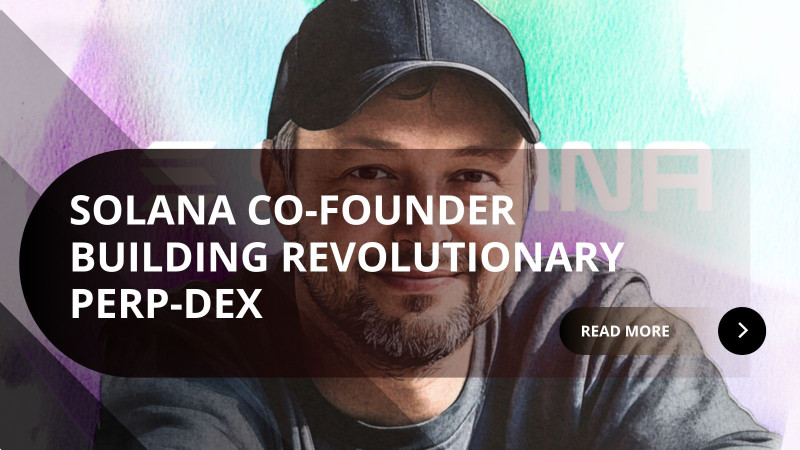
Solana Co-Founder Anatoly Yakovenko Reveals Percolator, a New Perp DEX Design
Anatoly Yakovenko, co-founder of Solana, has introduced a blueprint for a decentralized perpetual futures exchange called Percolator. The design was released publicly and is positioned as a potential Solana-native alternative to established platforms such as Hyperliquid and Aster.
A Solana-Native Exchange Concept
Percolator is described as an “implementation-ready” framework for a perpetual futures DEX that runs directly on Solana. Unlike centralized exchanges, it would rely on a sharded architecture to distribute trading activity across multiple “slabs.” Each slab acts as an independent engine, handling its own set of markets in parallel.
A router layer would manage collateral, portfolio margining, and the routing of trades between slabs. The goal is to achieve low-latency execution at scale, reduce congestion during high demand, and allow users to retain custody of their assets while trading.
Yakovenko has suggested that this design could enable centralized-exchange-level speeds within a fully decentralized structure. If implemented, it would represent a step forward in marrying the performance advantages of Solana with the growing demand for decentralized derivatives.
Addressing a Market Gap
Perpetual futures have become one of the most active areas of crypto trading, often accounting for a large share of overall derivatives volume. Platforms such as Hyperliquid and Aster have attracted significant activity, but Solana has not yet established a dominant native alternative in this space.
Percolator is seen as a way to change that. By offering a blueprint for a scalable and efficient perp DEX, the design could strengthen Solana’s DeFi ecosystem and attract more sophisticated traders. It would also broaden the network’s use cases beyond its reputation for high-speed transactions and meme coin speculation.
Open Development Approach
One notable feature of Yakovenko’s announcement was the decision to publish the design openly on GitHub. Rather than launching Percolator as a closed project, he invited developers to experiment, adapt, and build upon the code.
This open-source approach aligns with Solana’s broader strategy of encouraging community-driven innovation. It positions Percolator not just as a single potential product, but as a framework that could inspire multiple teams and projects across the ecosystem.
Challenges and Risks
Despite the enthusiasm, there are several challenges. Yakovenko himself has downplayed expectations, noting that the release was experimental and not necessarily a commitment to launching a production-ready DEX.
Regulatory pressure is another factor. Perpetual futures are leveraged products that have drawn scrutiny from regulators worldwide. Operating such markets in a decentralized structure could bring legal uncertainty, especially if they attract high volumes.
Technical risks also remain. Building and maintaining a sharded DEX with multiple trading engines introduces complexity, and it is unclear how the design would perform under sustained high-volume trading. Competition is also fierce, with other perp DEXs already establishing liquidity and user bases.
The Outlook for Solana
Even with these risks, Percolator underscores Solana’s ambition to expand into more advanced financial infrastructure. The release highlights the network’s strengths in throughput and efficiency, while showing a willingness to experiment in areas that are becoming increasingly important to crypto markets.
If the concept develops into a working platform, it could elevate Solana’s role in decentralized finance and attract a new wave of derivatives traders. Even if it does not, the blueprint has already sparked discussion about what is possible when high-performance blockchains are combined with open-source collaboration.
Conclusion
Percolator is not yet a product, but it is a statement of intent. It reflects Yakovenko’s ongoing focus on technical experimentation and Solana’s drive to compete at the highest levels of decentralized finance. Whether it emerges as a functioning exchange or remains a reference design, it signals a move toward more complex, scalable infrastructure that could shape the future of on-chain derivatives.