#stablecoin
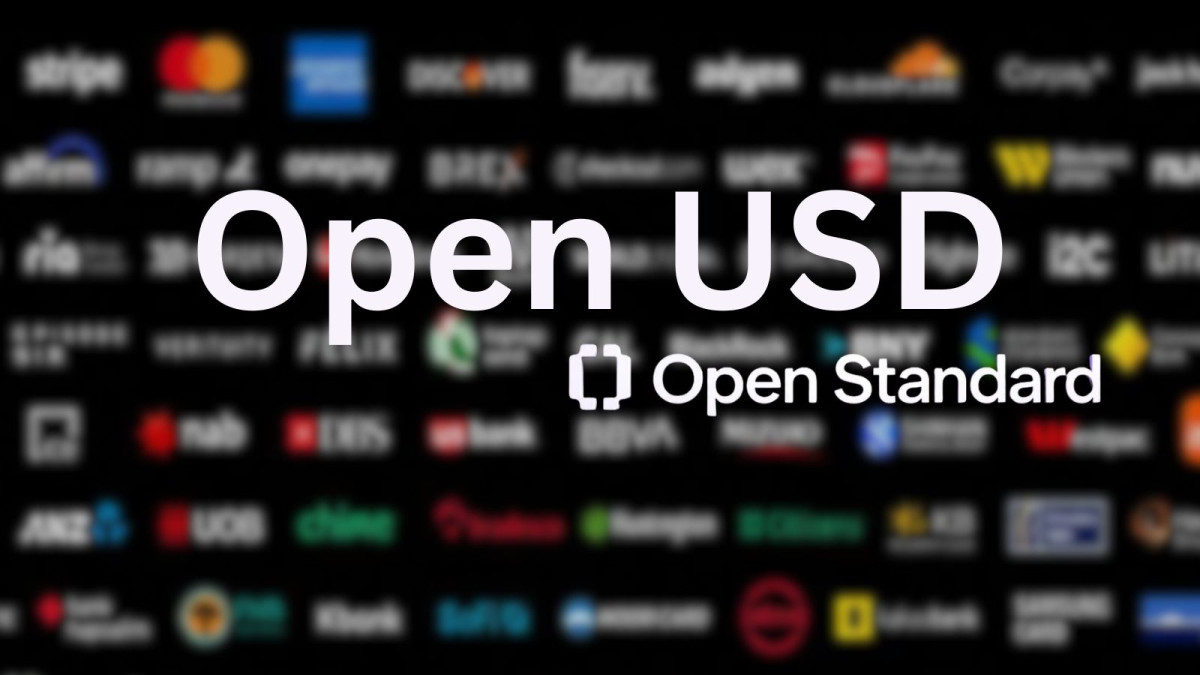
Coinbase, Visa, Stripe Join Consortium to Build OpenUSD Stablecoin

Coinbase, Visa, and Stripe have joined the Open Standard consortium, which comprises more than 140 companies working to support the development of the OpenUSD (OUSD) stablecoin.

Announced on June 30, 2026, OpenUSD (OUSD) is a United States dollar-pegged stablecoin developed by Open Standard, a consortium that includes BlackRock, Google, Ripple, Solana, Aave, and more than 140 companies.
Although the OpenUSD token has not yet launched, it is expected to go live later this year. According to the core development team, the OUSD stablecoin will be backed on a one-to-one basis by the United States dollar and U.S. Treasuries. Because it is designed to scale, businesses can mint and redeem the stablecoin at no cost, with no volume caps for founding partners.
"Existing stablecoins have great strengths, but to use them at scale, businesses need something that is open, low cost, high throughput, broadly accessible, and aligned with their interests," Open Standard CEO Zach Adam said.
"We are thrilled to bring together more than 140 businesses to launch OpenUSD. It is a stablecoin built for the internet economy and designed by the businesses growing it."
Another distinguishing feature of the OpenUSD stablecoin is its shared yield model. After the operating costs of running the stablecoin infrastructure are deducted, users and participants will share almost all of the earnings generated from the stablecoin's reserves based on network activity.
Shortly after the announcement of the OpenUSD stablecoin, Circle's CRCL stock fell more than 16%, with many analysts attributing the decline to the launch of OUSD. Despite the sharp drop, Circle CEO Jeremy Allaire welcomed competition in the stablecoin sector, saying that USDC remains the most widely adopted stablecoin for institutional use while reiterating the company's expansion plans. Tether CEO Paolo Ardoino also welcomed the launch of OUSD in a post on X, saying, "Player 2 has entered the game."

Western Union to Launch USDPT Stablecoin on Solana

Global financial services company Western Union has announced its plans to launch its long awaited U.S. Dollar Payment Token (USDPT) stablecoin next month.
The Solana based USDPT stablecoin, which is to be issued by crypto bank Anchorage Digital, is already in its final stages of preparation and is expected to launch, Devin McGranahan, Western Union CEO and President, revealed during the firm’s recent first quarter earnings call.
"It is no longer a question of if Western Union will be active in digital assets; it is now how fast we can scale," McGranahan said during the call with investors and financial analysts.
McGranahan also revealed in a Q&A session that the USDPT stablecoin will not be launched as a consumer product, but will instead initially be used internally as an alternative to the SWIFT network. With the USDPT stablecoin, Western Union aims to facilitate fast transaction settlements in real time with its agents around the world.
Other Services to Be Launched Alongside USDPT
Alongside the USDPT stablecoin, Western Union will be launching two additional services and products: its USD stablecard and the Digital Asset Network, or DAN, which allows digital assets, including USDPT and crypto wallets, to connect with Western Union’s existing infrastructure.
By means of a single connection to Western Union’s API, DAN provides off ramp services to users, enabling them to convert stablecoins held in crypto wallets into local currencies.
"Through DAN, millions of wallet users will be able to move from digital assets into local currency using Western Union's retail network, with an experience that is simple for customers and familiar for our agents," McGranahan said, while also stating that the first partner of the network will be revealed next week. DAN will be made available in over 360,000 locations across more than 200 countries and territories.
To allow users to hold value in stablecoins, including USDPT, Western Union will also be launching its USD stablecard, a consumer based card developed by crypto wallet provider Rain and Visa.
The stablecard, according to McGranahan, will be especially compelling in inflation sensitive markets where customers want dollar denominated value, and it will be launched across dozens of markets worldwide. With the card, users living in areas hit by high inflation will be able to hold USD based stablecoins and spend them globally.
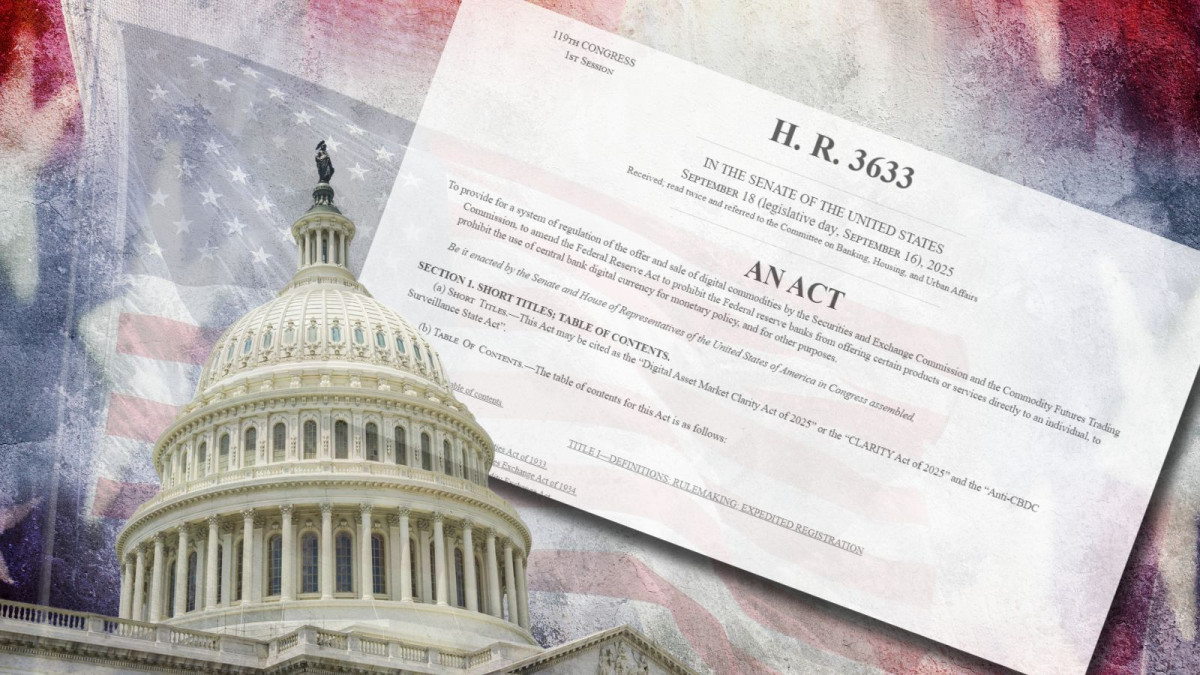
Senate Strikes Stablecoin Yield Deal, Clearing Path for the CLARITY Act

Something shifted in Washington on Friday, and the people who have been watching the CLARITY Act back and forth for months could feel it. Two key lawmakers, Republican Thom Tillis of North Carolina and Democrat Angela Alsobrooks of Maryland, reached an agreement in principle on one of the most stubbornly contested provisions in the bill: stablecoin yield. It is the kind of deal that, when the details finally shake out, may well be remembered as the moment the United States stopped kicking the crypto regulatory can down the road.
The news broke late Friday and was first reported by Politico. Senator Alsobrooks confirmed it plainly. "Sen. Tillis and I do have an agreement in principle," she said. "We've come a long way. And I think what it will do is to allow us to protect innovation, but also gives us the opportunity to prevent widespread deposit flight." The White House's crypto executive director, Patrick Witt, called it a "major milestone" and added that more work remains, but that progress toward passing the CLARITY Act was now real and tangible.
Senator Cynthia Lummis, the Wyoming Republican who chairs the Senate Banking Committee's crypto subcommittee and has been one of the most tireless advocates for this legislation, marked the occasion in her own way. She posted a photo on X of a "yield" sign. No caption needed.
The Stablecoin Yield Standoff, Explained
For months, the stablecoin yield question was the immovable object blocking the CLARITY Act from getting its Senate Banking Committee hearing.
The GENIUS Act, signed into law by President Trump in July 2025, prohibits stablecoin issuers from paying interest directly to holders. The intent was to prevent stablecoins from functioning as de facto bank deposit accounts, which would put them in direct competition with traditional savings products and, as the American Bankers Association argued loudly, threaten deposit flows into community banks. The concern: if Coinbase or another platform could offer users 4% on their dollar-pegged tokens simply for holding them, why would anyone keep money in a checking account?
The problem is that the GENIUS Act only covered issuers. It left a gap for third-party platforms that might offer rewards to customers who hold stablecoins on their systems. The ABA saw this as a loophole and spent months in Washington lobbying to close it. Crypto companies, for their part, said those rewards programs were fundamentally different from deposit interest and should be allowed.
Section 404 of the Senate Banking Committee's draft tried to thread this needle. It prohibits digital asset service providers from paying interest or yield "solely in connection with the holding of a payment stablecoin," while explicitly allowing "activity-based" rewards tied to transactions, payments, platform use, loyalty programs, liquidity provision, and other behaviors. The distinction is real: a reward for moving money through a system is not the same thing as interest paid for parking money in one.
Senator Mike Rounds, a South Dakota Republican on the Banking Committee, captured the nuance at an ABA summit earlier this month: rewards cannot be simply about how much money sits in an account, but they might reasonably be tied to how active that account is. "We're trying to reflect that in the discussions," he said.
Lummis had suggested the final compromise would disallow anything that "sounds like banking product terminology" and bar rewards tied to the size of a user's balance. Coinbase CEO Brian Armstrong, whose withdrawal of support in January helped torpedo a scheduled markup hearing, has been described by Lummis as "really pretty good about being willing to give on this issue."
From 99% to Done
The past week has been a rapid acceleration. As recently as Thursday, sources familiar with the situation described the stablecoin yield issue as being on the verge of resolution. A closed Senate Republican meeting on Wednesday, attended by White House crypto council director Patrick Witt, produced what Lummis told reporters afterward were significant breakthroughs, with "major light bulbs" switched on among the participants.
FinTech Weekly, which has closely tracked the legislative calendar, reported that stablecoin yield negotiations were "99% of the way to resolution" coming out of that meeting. The digital asset provisions of the bill more broadly were described as being in a "good place." The remaining friction, sources said, was not technical but political, specifically around whether community bank deregulation provisions might be attached to the CLARITY Act as part of a broader legislative trade.
Then came Friday's agreement. "We've come a long way," Alsobrooks told Politico, with a formality that understated just how much ground has been covered since January, when the scheduled markup hearing collapsed under the weight of over 100 proposed amendments and an industry revolt over the yield language.
What Comes Next and Why the Timeline Matters
An agreement on yield does not mean the CLARITY Act is done. Several other issues need resolution, decentralized finance remains a live debate, and the bill still needs to clear the Senate Banking Committee before it can go to a full Senate vote. After that, it must be reconciled with the version that passed the Senate Agriculture Committee in January. And before the President can sign it, that combined Senate text has to be reconciled with the House-passed version from July 2025.
But the clock is ticking here. Senate Majority Leader John Thune controls the floor calendar, and it is crowded. Unrelated fights, including the Republican voter-ID bill and ongoing debate over the situation in Iran, are competing for limited floor time. Haun Ventures CEO Katie Haun, in a CNBC interview Friday, put it directly: "The big question on the Clarity Act is, is Congress going to get a bill to the floor on time to vote?"
Lummis has said she expects a Banking Committee hearing in the latter half of April, after the Easter recess. Advocates have been hoping for a May resolution. Prediction markets are currently pricing the odds of the CLARITY Act being signed in 2026 at around 72%, according to FinTech Weekly. Treasury Secretary Scott Bessent has described passage as a spring 2026 target. Ripple CEO Brad Garlinghouse has put the odds at 80 to 90%.
JPMorgan analysts have described CLARITY Act passage by midyear as a positive catalyst for digital assets, pointing to regulatory clarity, institutional scaling, and tokenization growth as the key drivers. The crypto industry committed nearly $150 million to the Fairshake political action committee in the current cycle and announced a $193 million war chest around the Agriculture Committee markup in January. The companies behind that spending are waiting.
What This All Means
The stakes of the CLARITY Act extend well beyond Senate procedure. Markets are waiting. Institutions that have been slowly building out crypto infrastructure, custody solutions, tokenized asset offerings, trading desks, need to know what the rules are before they can fully commit capital and resources. The SEC's interpretation helps, but as Atkins himself acknowledged, it is not a substitute for law.
The CLARITY Act, if signed, would give the CFTC clear jurisdiction over most digital asset spot markets, create a path to register exchanges and brokers, establish consumer protections with real enforcement teeth, and provide the kind of statutory framework that companies can build businesses around. It would, in the language of its Senate Banking Committee sponsors, establish the United States as the crypto capital of the world, not just by rhetoric but by law.
If the bill fails this year, the status quo continues. Crypto companies operate under regulatory uncertainty. The SEC retains broad discretion to treat digital assets as securities. Institutional adoption continues but without a clear statutory framework. And the crypto lobby, which has made clear it will treat failure as a political liability, turns its $193 million war chest into something that looks a lot more like electoral pressure.
Friday's agreement does not guarantee passage. It does something important though. It removes the single biggest substantive obstacle to moving forward. The stablecoin yield question, which derailed a January markup hearing and has consumed months of negotiations, now has a resolution in principle. The path ahead still has obstacles, but for the first time in a while, it looks like an actual path.
Senators Tillis and Alsobrooks just handed the crypto industry something it has been asking for since the last bull market: a credible signal that Washington is finally going to do its job. The deal is in principle, the details are not yet public, and there is still legislative work ahead. But after years of false starts, shelved bills, collapsed markup hearings, and agency standoffs, this is the moment the trajectory changed.
Senators Race to Save the CLARITY Act With Stablecoin Yield Compromise
The room at the Marriott Marquis in Washington was full of community bankers on Tuesday, and Senator Angela Alsobrooks walked straight into the lion's den. Speaking at the American Bankers Association's annual Washington Summit, the Maryland Democrat delivered a message neither side particularly wanted to hear: everyone involved in the Digital Asset Market Clarity Act is going to have to walk away a little bit unhappy.
It was a remarkably candid thing to say in front of 1,400 people who have spent the better part of three months trying to kill the very provision that's been holding up the bill. But Alsobrooks, along with Republican Senator Thom Tillis of North Carolina, is now the central figure in a late-stage push to get the Clarity Act off the Senate Banking Committee floor and into an actual markup hearing before the legislative window closes for good.
The two senators confirmed Tuesday they're actively working on compromise language around stablecoin yield which keeps coming up as the main issue that has stalled what was supposed to be a landmark piece of crypto regulation.
A Bill In Limbo
The Digital Asset Market Clarity Act, or CLARITY Act, was supposed to have its Senate Banking Committee markup in January. That session got pulled at the last minute. The reason was stablecoin yield, specifically, amendments co-sponsored by Alsobrooks and Tillis that would restrict crypto firms from offering interest-like returns to customers who simply hold dollar-pegged digital tokens like USDC or USDT.
Banks had been lobbying hard against any provision that allowed that kind of reward. Their argument, which they've pushed loudly and repeatedly, is that stablecoins offering yield would function like bank accounts without the regulatory obligations of bank accounts. Executives at JPMorgan and Bank of America have cited Treasury Department modeling that suggested banks could lose up to $6.6 trillion in deposits if stablecoin yield programs went mainstream. Their argument is that it would starve the lending market and ultimately destabilize smaller regional banks that are particularly dependent on deposit funding.
The crypto industry dismisses most of that as fearmongering. Coinbase CEO Brian Armstrong called out the banking lobby publicly for what he characterized as anticompetitive blocking tactics and has pulled his support for the bill. In January at Davos, JPMorgan's Jamie Dimon reportedly told Armstrong he was, in quite colorful terms, wrong. The anecdote leaked out and became something of a symbol for just how personal this fight had gotten.
"We absolutely have to have these protections to prevent the deposit flight, but we're going to probably have to make some compromises." — Senator Angela Alsobrooks, D-Md.
The White House Steps In, Then Gets Rejected
By late February, the White House had grown impatient. Administration officials spent weeks brokering what they hoped would be an acceptable middle ground: allow stablecoin yield in limited contexts, particularly for activity tied to payments and transactions, while banning rewards on idle balances that look more like savings accounts. Crypto firms signed off on the framework. The banks did not.
On March 3rd, President Trump went public with his frustration. In a Truth Social post, he wrote that banks should not be trying to undercut the GENIUS Act or hold the CLARITY Act hostage, a shot across the bow that was notable both for its directness and for the fact that it did essentially nothing to move the American Bankers Association. Two days later, the ABA formally rejected the White House compromise anyway.
The March 1st deadline the White House had set for a resolution passed without published compromise text. Prediction markets, which had briefly priced Clarity Act passage at around 80% odds, fell back toward 55% as the stalemate hardened.
What the ABA rejection didn't do, however, is kill the legislation outright. Congress has passed bills over banking lobby opposition before. The question, as analysts and lobbyists have been pointing out all week, is whether there are enough Senate votes to do it again — and whether the calendar allows the time to find out.
Can We Get A Compromise?
The emerging deal that Alsobrooks and Tillis are proposing is a slimmed-down version of what the White House tried. Under the framework being discussed, yield on stablecoin holdings that closely resemble bank deposits would remain prohibited. But rewards tied to specific activities, like using stablecoins for payments or transactions on a given platform, could remain eligible for some form of customer incentive.
Both senators and many crypto advocates actually agree on the premise that pure holding rewards that look and function like savings account interest are a problem. The dispute is over where exactly to draw the line and how to define the categories well enough that neither side can game them after the fact.
Cody Carbone, the CEO of the Digital Chamber, said this week that Tillis has been very receptive to discussions about stablecoin yield and that he's optimistic the industry can get to yes on the bill. Summer Mersinger, the CEO of the Blockchain Association, noted that the White House weighing in on the negotiations and pushing banks to engage in good faith adds important momentum as talks continue.
The banks have maintained, publicly at least, that those assurances aren't enough. Their representatives at the ABA summit this week underlined again what they see as the risks of any yield loophole to their business model. The question of whether a markup hearing happens in late March or gets delayed again, depends entirely on whether Alsobrooks and Tillis can produce language the committee will actually vote on.
Timing Is An Issue
Behind every conversation about the Clarity Act this week is an unspoken anxiety about time. The Senate calendar is tight. Midterm elections are in November, and lawmakers will start dispersing from meaningful legislating sometime around May or June as campaign season accelerates. Unfortunately it seems, Congress prefers to stop working as they try to convince voters to keep them in their jobs. I know, makes perfect sense. If a markup isn't held and a floor vote isn't scheduled by sometime in April, realistically the bill is looking at the next Congress which could be a completely different party in power. And complicating things even more. Despite which party ends up winning the midterms, this could mean another 12 to 18 months of regulatory uncertainty for an industry that has been waiting years for a clear legal framework.
That timeline matters not just for the crypto industry's domestic ambitions, but for its competitive positioning globally. Under the European Union's MiCA framework, stablecoin yield products that are restricted or banned in the U.S. are already legal in European jurisdictions. Coinbase and others have been explicit about the risk that continued regulatory ambiguity in the U.S. will push capital, talent, and product development offshore. Trump made a version of the same argument in his Truth Social post last week, warning that failure would drive the industry to China.
There's also a strategic Bitcoin Reserve angle sitting quietly in the background. According to people familiar with the situation, the Trump administration has determined it needs congressional action to operationalize the planned Strategic Bitcoin Reserve that the president signed an executive order for over a year ago. That creates at least some White House motivation to see the broader Clarity Act process succeed.
What Happens Next
The Senate Banking Committee is targeting a late-March markup. Whether that happens depends on whether the Alsobrooks-Tillis compromise language satisfies enough members to call the vote. If it does, the bill would then need to be merged with a version that already passed the Senate Agriculture Committee on a party-line vote in late 2025. The combined text would require significant Democratic support to clear a full Senate vote, always a tall ask in the current politcal environment and the fact that seven Democratic senators have separately raised concerns about potential conflicts of interest involving senior government officials, including the president himself, who have financial ties to the crypto industry.
Even if the Senate acts, the bill still needs the House, where an earlier version of the CLARITY Act passed committee last year but has yet to reach the floor. The path to a signed law before November is narrow but not impossible. It requires the Senate Banking Committee to move in the next few weeks, the combined bill to hold together politically, and a Senate floor schedule that is packed with little wiggle room.
For the moment, all of it hinges on two senators and a room full of bankers in Washington D.C., trying to decide how much compromise is actually compromise and if they can all agree to leave a bit unhappy about the results for the greater good. Typically the best compromises do make both sides a bit unhappy. In Washington, that usually means the deal is closer than it looks. It also usually means it's harder than it sounds.

X User Loses $24 million in a Violent Crypto Attack

An X user with the username "Sillytuna" has reportedly lost $24 million in Aave Ethereum USDC (aEthUSDC) in an attack that involved a combination of violence, sexual assault, weapons, and threats to life.

"Bruised, held off while I could, but can't do that much with axes over your hands and feet," Sillytuna wrote. The user further stated that he was, at this point, done with crypto. In his words, "And now... definitely out of crypto ****ers."
While the matter has already been reported to law enforcement, no official statement has been issued by the authorities. However, the X user has announced a 10% bounty for whoever helps recover the stolen funds.

How the Crypto Community Reacted
Shortly after the news went viral, the crypto community reacted with mixed feelings, with many commiserating with the user over their loss. Some also raised awareness about the deplorable state of security in the United Kingdom. Apparently, the victim is a UK resident.

Amid the sympathy from the global crypto community, some, however, doubted the authenticity of the victim's story.
According to YokaiCapital, an X user, the victim had not posted anything about crypto before. He also alleges that the victim's account appears to have been bought recently.
"He will probably shill the coin at some point or say that he will take donations from the coin," YokaiCapital went on to write.
However, the victim has denied allegations that he intentionally wanted to trend and claims the stolen funds were long-term holdings.
How the Attackers Moved the Stolen Funds
Tracking the stolen funds, blockchain analytics firm Arkham Intelligence said that the attackers moved the funds across Layer 2 networks, Bitcoin, and Monero, obviously to evade trail.

Roughly $20 million of the stolen funds were stored in two Ethereum addresses as DAI, a stablecoin on the Ethereum network, while $2.48 million was bridged to USDC on Arbitrum.
Arkham reported that the attackers sent $2.47 million to Hyperliquid through 19 separate Wagyu accounts, which were used to convert the funds to Monero (XMR).
The attackers also bridged $1.1 million to the Bitcoin blockchain using LiFi, noting that 0.5 BTC was deposited into a mixing service, Arkham added.
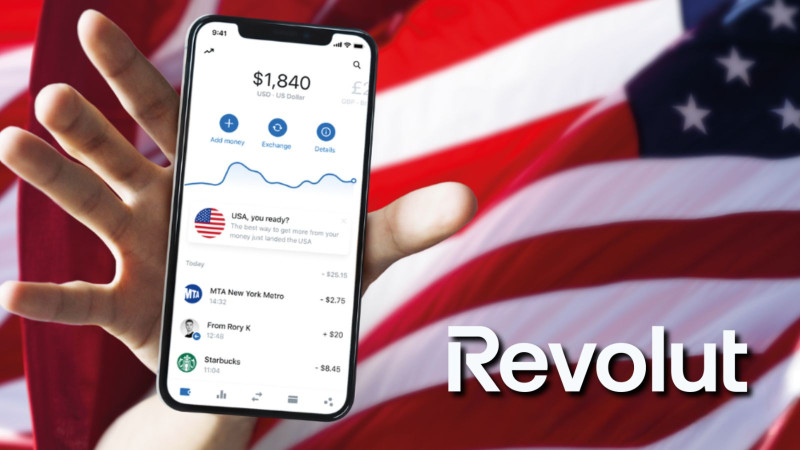
Revolut Files for U.S. Banking License

Fintech giant Revolut announced Thursday that it had officially filed for a U.S. banking license.
Revolut filed its application with both the Office of the Comptroller of the Currency and the Federal Deposit Insurance Corporation, seeking to operate across all 50 states under the name Revolut Bank US, N.A. The filing represents what the company is calling a "de novo" charter, meaning it's building a new banking entity from scratch rather than acquiring an existing institution.
As recently as January, Revolut had reportedly been exploring the acquisition of an existing U.S. bank, which would have been a faster path to full banking status. The company scrapped those plans in favor of the de novo route, a decision that likely reflects the OCC's growing willingness under the current administration to greenlight new entrants. The OCC has already granted conditional approval to several stablecoin issuers seeking bank charters, signaling a more permissive stance toward crypto-adjacent financial firms.
Approval of a charter would mark one of Revolut's biggest regulatory milestones outside Europe. The company already holds banking licenses across parts of Europe and secured a restricted U.K. banking license from the Prudential Regulation Authority in 2024, though it is still working through the mobilization phase required before that becomes a full license. The U.S. is a different beast entirely.
Right now, Revolut operates in the United States through a partnership with Lead Bank, a Kansas City-based institution. That arrangement gets the job done for basic accounts and payments, but it's a ceiling, not a foundation. A license would give Revolut direct access to payment networks such as Fedwire and the Automated Clearing House, systems that move trillions of dollars between banks each year.
More importantly, the charter would let Revolut shed its dependency on third-party partners entirely and start acting like a real bank. Customer deposits would be insured by the FDIC, strengthening trust and regulatory protection for users, and the company could begin offering credit cards and personal loans directly to consumers.
For a company that has built its reputation around being a financial super-app, the inability to offer federally insured deposits or extend credit in America has been a glaring gap. Revolut's European customers can access a full stack of financial products. U.S. customers get a stripped-down version. The charter is meant to fix that.
By securing a federal charter, Revolut aims to bypass the fragmented state-by-state regulatory landscape in favor of a single national framework, providing the infrastructure necessary to scale its suite of retail and business services.
The Crypto Angle
Revolut isn't just a digital bank. It's one of the more crypto-integrated financial platforms in the world, offering trading for dozens of digital assets, and it has been selected by the U.K.'s Financial Conduct Authority as one of four companies to test stablecoin services under proposed regulations.
In that context, the timing of Thursday's filing is striking. It came just one day after Kraken became the first crypto-native firm to secure a Federal Reserve master account, a development that sent a loud signal about where U.S. regulators are headed.
Kraken's approval lets its banking arm speed up deposits and withdrawals for large traders and institutional clients, though the account is limited, with Kraken not earning interest on reserves or accessing the Fed's emergency lending. Still, the symbolic weight of a crypto exchange plugging directly into Fed payment rails cannot be overstated.
Securing a full banking license would position Revolut to more deeply embed crypto services within a regulated framework, potentially easing concerns for both users and policymakers about the safety and soundness of hybrid platforms.
That's the broader story here. We're watching the lines between traditional banking, fintech, and crypto blur in real time, and it's happening faster than most observers expected even a year ago.
Revolut's U.S. chief executive at the time of the filing, Sid Jajodia, was blunt about the timing in comments to the Financial Times. Jajodia said the timing of the application had been boosted by the White House's willingness to back new entrants to the regulated banking system, welcoming greater regulatory clarity, including around crypto.
That's a diplomatic way of saying what much of the fintech industry has been saying privately for months: the Biden-era posture toward crypto and non-traditional banking entrants was a significant deterrent, and the current administration's approach has opened a window that may not stay open forever.
Revolut isn't the only one moving through it. Firms like PayPal and Coinbase are pursuing similar charters following regulatory changes introduced under Donald Trump. ZeroHash, a Chicago-based crypto infrastructure company, has applied for a National Trust Bank Charter from the OCC as well, seeking a federal framework for its stablecoin and digital asset services.
New Leadership, New Commitment
Alongside the charter filing, Revolut announced a significant leadership shuffle for its American operation. Cetin Duransoy has been named the new U.S. CEO, stepping in as Jajodia moves into a global chief banking officer role. Duransoy previously served as the U.S. CEO of fintech marketplace Raisin and held senior leadership roles at both Capital One and Visa.
The hire is deliberate. Getting a de novo bank charter through the OCC is a long and grinding process, requiring extensive scrutiny of capital adequacy, risk management frameworks, and compliance programs. Having someone with deep institutional banking experience at the helm of the U.S. operation sends a message to regulators that Revolut is not approaching this casually.
Revolut plans to invest $500 million in the U.S. market over the next three to five years. That's a serious number, and a significant commitment for a company that has had to walk away from a U.S. banking effort before.
Why Past Attempts Failed, and Why This One Might Stick
Revolut's first U.S. banking license attempt, which began with California regulators in 2021, unraveled by 2023 amid concerns about the company's internal controls and compliance infrastructure. Those issues have since been widely characterized as growing pains typical of a fast-scaling startup that had not yet built the back-office rigor expected of a regulated bank.
The company's trajectory since then, the UK banking license milestone, the dramatic financial turnaround, the global licensing push, suggests that those structural weaknesses have largely been addressed. Experts note that while European digital banks like N26 and Monzo have previously struggled to crack the U.S. market, Revolut's massive 70-million global customer base gives it a level of power and self-confidence that its predecessors lacked.
There's also the multi-currency angle. Revolut's strong brand recognition and product breadth, including support for multi-currency services, will appeal to digital, mobile, and globally-minded customers, filling a gap in North America where domestic neobanks still offer a limited range of private banking products.
That said, skeptics remain. Some analysts have warned that the current rush to acquire U.S. banking licenses is partly a function of regulatory optimism that may not translate into sustained approval rates once the OCC and FDIC begin their detailed reviews. The regulatory process for a de novo bank charter typically takes years, not months, and the political environment in Washington can shift.
The OCC's review process will be comprehensive. Revolut will need to demonstrate adequate capital levels, a robust compliance program, a credible business plan, and a management team capable of running a federally regulated bank. Given its prior withdrawal, the company will almost certainly face additional scrutiny around its internal controls and audit functions.
If approved, the broader implications reach well beyond Revolut's bottom line. For U.S. regulators, granting or denying the application will send an important signal about how open the system is to globally active, crypto-friendly fintechs seeking full bank status. The decision will likely take into account not only Revolut's financial strength and compliance track record, but also broader debates about innovation, competition and consumer protection.
The fact that a crypto exchange now sits on the Fed's payment rails, and that a $75 billion crypto-integrated neobank is simultaneously knocking on the OCC's door, suggests we are entering a genuinely new phase in the relationship between digital finance and the traditional banking system.
Whether the regulators are ready for that, or whether the window closes before the paperwork clears, is the question that will define the next chapter for Revolut, and for the broader industry watching closely behind it.

YouTube Adds PayPal Stablecoin as Payout Option for U.S. Creators

YouTube letting U.S. creators get paid in PayPal’s stablecoin, PYUSD, might sound like a small update. It isn’t. It’s one of those changes that looks minor on the surface but actually says a lot about where tech and finance are headed.
This is a major platform, at massive scale, choosing to plug digital assets into a real payout system. Not a test. Not a pilot hidden in a corner. A real option for real creators.
And that matters.
Why YouTube’s Move Feels Different
YouTube touches millions of creators and billions of users. When a platform like that makes a decision, it’s usually because the risk feels manageable and the upside feels real.
Creators now have another way to get paid. Faster access to funds. More flexibility. Less dependence on slow banking rails. For some creators, especially those working internationally or managing income across platforms, that can make a noticeable difference.
What’s interesting is how this is being done. YouTube itself isn’t diving into crypto head first. PayPal handles the complexity. The blockchain stuff stays in the background.
That was actually the point. PayPal’s head of crypto, May Zabaneh, put it plainly.
“The beauty of what we’ve built is that YouTube doesn’t have to touch crypto and so we can help take away that complexity,”
She added that PayPal introduced the PYUSD payout option for payment recipients in the third quarter of 2025, with YouTube choosing to extend it only to U.S. creators.
That quote says a lot. Adoption works best when users don’t have to think too hard about what’s happening under the hood.
This Isn’t Just About YouTube
The bigger story is that this keeps happening. Not loudly. Not with flashy marketing. Just steadily.
Payment companies are experimenting with stablecoins. Fintech platforms are adding crypto rails next to traditional ones. Big institutions are building infrastructure instead of arguing about whether crypto is real.
That’s usually the sign that something is maturing.
Digital assets are starting to look less like a bet and more like plumbing. Not exciting, but very important.
Stablecoins Are Doing the Heavy Lifting
A big reason this works is stablecoins.
They’re boring by design. Pegged to the dollar. Predictable. No wild price swings. That’s exactly why companies are comfortable using them for payouts.
For creators, it feels familiar. You’re still getting paid in dollars. It just moves faster and sometimes with fewer fees. The crypto part doesn’t have to be front and center.
That’s a good thing.
Trusted Brands Make a Difference
PayPal being involved matters more than people realize.
Most users don’t want to manage wallets or worry about private keys. They want to get paid and move on with their day. PayPal already has trust, compliance, and global reach. Adding stablecoins inside that ecosystem makes adoption feel safe and normal.
That’s usually how new tech wins. Not by forcing people to learn everything, but by quietly fitting into what already works.
What This Means for Creators and Users
For creators, this is about options. Choice matters.
Some will stick with traditional payouts. Others will experiment with stablecoins. Over time, those options can lead to better cash flow, easier global payments, and new ways to manage income.
For users more broadly, this kind of integration pushes innovation forward. Once digital asset rails exist, new tools and services tend to follow. Better monetization. Faster payments. More global access.
It doesn’t all happen at once, but it builds.
Why This Is a Positive Signal Long Term
This kind of adoption doesn’t happen if companies think digital assets are a passing trend. It happens when the technology feels useful enough and stable enough to deploy at scale.
There are still risks. Regulation will keep evolving. Education is still needed. But the direction is clear.
Digital assets are no longer sitting on the sidelines. They’re being woven into systems people already use, without much fuss.
YouTube offering stablecoin payouts is a quiet move. But quiet moves from big companies are often the ones that matter most.
Stay Connected
You can stay up to date on all News, Events, and Marketing of Rare Network, including Rare Evo: America’s Premier Blockchain Conference, happening July 28th-31st, 2026 at The ARIA Resort & Casino, by following our socials on X, LinkedIn, and YouTube.

World Liberty Financial to Airdrop $1.4M in WLFI Tokens
Trump-Backed World Liberty Financial to Distribute Tokens in USD1 Stablecoin Initiative
World Liberty Financial (WLFI), the crypto venture affiliated with U.S. President Donald Trump, has announced plans to distribute 8.4 million WLFI tokens, valued at roughly 1.2 million dollars, to early participants in its USD1 stablecoin loyalty program.
This airdrop is tied to the USD1 Points Program, which launched approximately two months ago to promote adoption of the company’s U.S.-dollar backed stablecoin, USD1. Participants earn points by trading USD1 pairs across partner exchanges and maintaining qualifying balances.
According to WLFI, distribution criteria will vary by exchange: “The criteria and eligibility for earning points and rewards and distribution details may vary based on each exchange’s rules,” the company said in a post on X.
The token distribution is scheduled to take place on six platforms, including Gate.io, KuCoin, LBank, HTX Global, Flipster and MEXC, with each exchange determining eligibility and award amounts under the terms agreed with WLFI.
Strategic Context
The initiative serves several purposes. First, it acts as both a reward for early ecosystem supporters and a mechanism to stimulate USD1-stablecoin usage. Second, it tests the underlying infrastructure for token and stablecoin distribution in a real-world environment. Recognizing the scale, the governance vote preceding the proposal registered overwhelming support from holders.
For WLFI the move is also a visibility play. In a stablecoin market dominated by other major issuers, offering a loyalty-driven token distribution tied to a dollar-backed coin helps position USD1 as more than just another entry. It underscores WLFI’s ambition of building a full Web3 payments ecosystem around USD1, with WLFI governance tokens acting as connective tissue.
The company said the loyalty campaign has driven over $500 million in trading activity since its introduction two months ago, positioning USD1 as the sixth-largest stablecoin by market value, according to CoinGecko data.
Operational and Market Considerations
From a technical standpoint the execution is noteworthy. Eligible wallets do not need to claim their drop; the tokens are sent automatically once eligibility is confirmed. That reduces friction and enhances user experience, which is crucial for adoption at scale.
However several factors warrant attention. While the WLFI airdrop rewards early adopters, the eventual utility of the WLFI token remains tied to governance rights and ecosystem participation. Trading status for the token is still subject to internal decision-making and regulatory alignment. Market watchers also note the importance of transparency around USD1 reserves—its backing by U.S. dollar deposits, Treasury securities and equivalents is central to trust.
Regulatory scrutiny is a further dimension. Given WLFI’s connection to high-profile political figures, the project sits at the intersection of innovation and public interest. Lawmakers and watchdogs have flagged potential conflicts of interest in cases where stablecoins are linked to politically exposed persons. That context raises the importance of governance and disclosure for WLFI and USD1 alike.
What to Watch Next
Key metrics and upcoming milestones will influence perception and adoption of the program:
-
Ecosystem Integration: Monitoring how USD1 becomes usable in real payments, treasury functions or DeFi contexts will matter.
-
Token Tradability: The transition of WLFI tokens from governance-only to tradable status could unlock liquidity and broader market participation.
-
Reserve Audits and Transparency: Regular reports confirming USD1 backing, asset custody and redemption mechanisms will build confidence.
-
Regulatory Progress: U.S. stablecoin legislation and oversight developments will affect how projects like WLFI position themselves globally.
-
Exchange Listings and Adoption: The number and quality of partner exchanges supporting USD1 and WLFI will drive network effects and utility.
Conclusion
The forthcoming airdrop by World Liberty Financial signals a strategic push: leveraging token rewards tied to a stablecoin launch to drive engagement and adoption. It reflects an evolving model in crypto where loyalty programs and token economics interplay with payments infrastructure.
If executed well, this program could strengthen USD1’s role in the stablecoin landscape and reinforce WLFI’s ecosystem narrative. If not, trust issues around reserves, governance or politicised affiliations may overshadow potential gains. For now, the project stands as a significant experiment at the nexus of finance, blockchain and public-figure influence.
Stay Connected
You can stay up to date on all News, Events, and Marketing of Rare Network, including Rare Evo: America’s Premier Blockchain Conference, happening July 28th-31st, 2026 at The ARIA Resort & Casino, by following our socials on X, LinkedIn, and YouTube.

Western Union Launches Stablecoin on Solana to Revolutionize Global Payments
Western Union Stablecoin Launch on Solana Could Transform Global Payments
A Turning Point for Remittances
Western Union is stepping boldly into the future of digital finance. The company has announced plans to launch a U.S. dollar backed stablecoin on the Solana blockchain in early 2026. This initiative marks one of the most significant moves yet by a global money transfer leader to embrace blockchain technology at scale.
Western Union’s stablecoin will be issued by a regulated U.S. bank partner and fully backed by cash and short-term Treasuries. The company aims to deliver instant cross-border settlement, dramatically lower transfer costs, and a modern user experience for millions of customers worldwide.
A Major Win for the Crypto Ecosystem
Western Union’s entry into blockchain payments signals a major milestone for the broader crypto industry. For years, stablecoins have demonstrated their potential to move money quickly and efficiently. Now, one of the largest payment companies in the world is validating that model.
Rather than viewing crypto as a competitor, Western Union is integrating it into its business. The company’s network of digital users, agents, and mobile partners will give blockchain payments global reach. This could open new corridors for stablecoin adoption in countries that depend heavily on remittances.
Why Solana is the Right Fit
Solana’s technology is at the heart of this project. The network is known for its high transaction speed, low fees, and scalability, which are critical factors for small-value remittances. Solana can process thousands of transactions per second with settlement finality measured in seconds.
These capabilities make Solana a practical choice for Western Union’s global payment volume. Low-cost transfers ensure affordability for customers, while rapid settlement creates a better experience for both senders and receivers. Solana’s expanding ecosystem of wallets, exchanges, and payment apps also strengthens the project’s foundation for future growth.
A Powerful Combination of Trust and Innovation
Western Union brings something to the blockchain space that few crypto projects can match: decades of experience in global money movement, deep compliance expertise, and an existing infrastructure for cash pick-up and payout. Combining these strengths with Solana’s performance creates a bridge between traditional finance and digital assets.
Anchorage Digital, Western Union’s issuance and custody partner, ensures that the stablecoin is backed by regulated reserves and operates under strict banking standards. This structure combines the security of traditional banking with the speed and transparency of blockchain technology.
Expanding Financial Access
This project could have an especially meaningful impact in emerging markets. In many countries, remittances are a vital lifeline for families, yet traditional transfers can take days and cost up to ten percent in fees. A blockchain-based stablecoin can cut those costs significantly while allowing users to hold digital dollars safely during times of local currency volatility.
Western Union’s massive footprint, which includes hundreds of thousands of agent locations and mobile partnerships, allows it to bridge the gap between digital and physical money. Customers could send and receive digital dollars instantly, then cash out locally or use their balance in digital apps.
A Model for the Future of Payments
The Western Union stablecoin represents more than a new product. It is a roadmap for how traditional financial institutions can integrate crypto responsibly. It shows that public blockchains like Solana can serve as infrastructure for regulated money movement on a global scale.
This model could inspire other banks, payment firms, and fintechs to issue stablecoins backed by transparent reserves. It also sets the stage for a world where cross-border transactions happen in seconds, with full auditability and minimal friction.
Looking Ahead
Western Union’s stablecoin initiative positions it at the intersection of finance and technology. It reflects growing confidence in blockchain as a foundation for everyday payments. If successful, it could redefine how money moves around the world and accelerate mainstream adoption of stablecoins.
This is more than just another digital asset project. It is a vote of confidence in Solana’s technology and in the promise of crypto to create faster, fairer, and more inclusive financial systems.
Stay Connected
You can stay up to date on all News, Events, and Marketing of Rare Network, including Rare Evo: America’s Premier Blockchain Conference, happening July 28th-31st, 2026 at The ARIA Resort & Casino, by following our socials on X, LinkedIn, and YouTube.

Tether Targets 100 Million Americans with New USAT Stablecoin Launch
Tether Targets 100 Million Americans with New USAT Stablecoin Launch
Tether, the company behind the world’s largest stablecoin, is preparing for one of its most ambitious moves yet. The firm plans to launch USAT, a new U.S.-focused stablecoin, in December 2025, with a goal of reaching 100 million American users.
This represents a major shift in Tether’s strategy. The company is moving from global dominance to deep domestic integration, positioning itself to compete directly in the regulated U.S. financial landscape.
A Regulated Stablecoin for the U.S. Market
USAT will be a dollar-pegged stablecoin issued through a U.S.-based entity known as Tether America, developed in partnership with Anchorage Digital. The token will comply with new federal rules governing stablecoins under the recently approved GENIUS Act.
Tether says USAT will be fully backed and independently audited, with transparency and reserve management as top priorities. The product aims to serve not only crypto-native users but also the millions of Americans entering digital payments for the first time.
Expanding Through Partnerships and Platforms
To reach its ambitious 100 million user target, Tether is expanding into the creator economy and consumer platforms. The company has already invested in Rumble, a U.S. video platform with over 50 million monthly users, suggesting that integration and distribution partnerships will play a key role in adoption.
This outreach shows Tether’s intent to move beyond crypto exchanges and into mainstream financial and social platforms. The strategy blends regulatory alignment with mass-market reach, a combination that could redefine how stablecoins enter daily life.
Competing in a Growing Market
With USAT, Tether will compete directly with other major U.S. stablecoins such as USDC and PayPal USD. Unlike USDT, which dominates global markets, USAT is designed specifically for American consumers and institutions operating under U.S. financial oversight.
Analysts suggest this could allow Tether to capture both institutional trust and retail adoption. The focus on compliance and open auditing might also give it an advantage with regulators and payment partners.
Why It Matters
Tether’s move comes at a time when stablecoins are being recognized as core infrastructure for digital finance. By aligning with U.S. law, Tether is signaling confidence in the regulatory environment and a willingness to help shape its evolution.
If successful, USAT could become a gateway for traditional finance, fintech, and creators to access digital payments at scale. It also sets a new benchmark for transparency and compliance, potentially reshaping how stablecoins operate worldwide.
What Comes Next
-
Launch and Accessibility: USAT is expected to roll out in December across exchanges, wallets, and select consumer platforms.
-
Audits and Reserves: Investors will watch for regular public audits to verify Tether’s commitment to compliance.
-
Integration and Adoption: Partnerships in content, commerce, and fintech could drive rapid U.S. user growth.
-
Industry Response: Competing stablecoin issuers are likely to adjust strategies to maintain market share.
Final Thoughts
Tether’s upcoming USAT stablecoin launch represents a turning point for digital finance in the United States. The company is aiming to merge global liquidity with local regulation, creating a bridge between blockchain innovation and traditional banking.
Reaching 100 million users is an ambitious target, but Tether’s combination of brand power, compliance, and strategic partnerships gives it a strong foundation.
The message is clear: the next era of stablecoins will not only be global, it will be regulated, transparent, and built for everyday use.
You can stay up to date on all News, Events, and Marketing of Rare Network, including Rare Evo: America's Premier Blockchain Conference by following our socials on X, LinkedIn, and YouTube.
Ripple $1B GTreasury Move Unlocks RLUSD Pathway into Corporate Treasuries
In a strategic leap bridging DeFi and traditional finance, Ripple has acquired GTreasury for $1 billion — a move that creates a direct pipeline for its regulated stablecoin RLUSD into Fortune 500 treasuries and institutional finance. The implications are huge: unlocking idle capital, enabling 24/7 liquidity, and embedding digital assets into core corporate finance tools.
Here’s a full walkthrough of what this means — and why it matters.
What Exactly Happened
-
Ripple announced it would acquire GTreasury, a leading treasury management software firm, valued at about $1 billion.
-
GTreasury offers SaaS solutions used by corporations to manage cash, liquidity, risk, foreign exchange, and forecasting.
-
By folding GTreasury into its stack, Ripple gains access to its client base (including large enterprises and Fortune 500s), as well as compliance infrastructure, finance tooling, and corporate relationships.
-
The acquisition positions RLUSD — Ripple’s regulated, USD-backed stablecoin — to serve as the settlement asset for tokenized treasuries and capital flows within corporate finance.
-
The deal is pending regulatory approvals and is expected to close in the coming months.
Why This Is a Big Deal
1. RLUSD Gains a Fast Lane into Big Finance
One of the central narratives is that this acquisition accelerates the ability for RLUSD to enter the strategic treasury flows of large companies. This has been a goal echoed in earlier analyses: that RLUSD’s real promise is as a bridge between onchain capital and corporate finance.
The GTreasury acquisition gives Ripple the infrastructure and relationships necessary to embed RLUSD into real-world liquidity systems and cash management workflows.
2. Tokenized Treasuries Take Off on XRPL
Ripple has also pushed forward on deploying tokenized U.S. Treasuries on the XRP Ledger (XRPL). For example:
-
Ondo Finance’s OUSG (short-term US government treasuries) is now live on XRPL, letting qualified purchasers mint and redeem securities using RLUSD onchain, around the clock.
-
This integration demonstrates the functioning bridge: tokenized treasuries becoming accessible via RLUSD settlement — making treasury assets move with the speed, composability, and liquidity of crypto instruments.
-
RLUSD is now active in tokenized treasury markets via partnerships (e.g. with Securitize), enabling instant settlement, atomic transfers, and 24/7 liquidity.
These developments show the ambition: not just to build DeFi primitives, but to make core finance assets programmable, liquid, and interoperable.
3. Corporate Treasury Adoption of XRP Crosses $1B
This move also occurs in the context of growing corporate adoption of XRP in treasuries:
-
Several publicly traded firms have announced plans to raise capital to build XRP-centered treasury reserves, with total commitments nearing $1 billion.
-
Singapore’s Trident Digital (a Nasdaq-listed firm) aims to raise $500 million to house XRP in its treasury, staking its future on the Ripple ecosystem.
-
Other companies across sectors — energy, logistics, fintech — are quietly setting aside capital for XRP allocations as part of treasury diversification strategies.
Such adoption signals increasing institutional confidence in XRP’s role beyond speculation, as a working building block of corporate capital management.
4. A Strategy of Stacking Acquisitions
This is not Ripple’s first major move in 2025:
-
Earlier, Ripple acquired Hidden Road, a prime brokerage firm, for ~$1.25 billion.
-
It also acquired Stellar Rail, a payments/stablecoin infrastructure platform.
The GTreasury acquisition fits into a coherent vision: build out a full-stack, enterprise-focused financial infrastructure combining payments, capital markets, and treasury tooling.
Key Risks & Challenges to Watch
While the potential is significant, there are real challenges ahead:
-
Regulatory approval: The deal must navigate securities, fintech licensing, and national oversight in multiple jurisdictions.
-
Integration complexity: Merging GTreasury’s legacy systems and client relationships with Ripple’s blockchain-based stack is nontrivial.
-
Trust & adoption friction: Convincing legacy treasurers to adopt RLUSD and onchain tools over trusted systems will take time and proof.
-
Volatility & reserve mechanics: RLUSD must maintain stability and credible reserves (e.g. U.S. Treasuries, cash) to function as a safe settlement asset.
-
Competition & standards: Other stablecoins, tokenized asset platforms, and blockchain infrastructure providers are racing toward similar goals.
What to Watch Next
Here are the near-term developments to monitor:
-
Closing of the GTreasury acquisition and how Ripple integrates its client base into RLUSD flows
-
Expansion of tokenized treasury products on XRPL, and how many institutions adopt minting/redeeming via RLUSD
-
How RLUSD’s reserves and backing evolve — how much in U.S. Treasuries, cash, etc.
-
Corporate announcements from Fortune 500 / large CFOs adopting RLUSD-based treasury operations
-
Regulation or guidance from U.S. and global authorities concerning stablecoins, treasury operations, and tokenized securities
The Bigger Picture
Ripple is signaling its ambition to be more than a payments provider or blockchain infrastructure. It now aims to be a core participant in enterprise finance. By acquiring GTreasury, emphasizing RLUSD liquidity, and pushing tokenized treasuries live, it’s banking on bridging TradFi and DeFi.
If successful, this could reshape how corporate treasuries move capital, manage risk, and access liquidity — all with programmable assets. We may be watching the early stages of a new paradigm in institutional finance.

Sony Issuing Stablecoin: A Growing Tidal Wave For Crypto?
Sony just shocked markets with strong financial results and a bold new frontier: it’s piloting its own stablecoin. While earnings headlines moved Wall Street, this quiet move into Web3 may be far more important. It could mark the beginning of a new era where household-name companies adopt blockchain not as an experiment, but as a core financial layer.
Why Sony’s Move Matters
For years, crypto adoption has been fueled by startups, fintechs, and native blockchain companies. Sony entering the stablecoin race changes the optics entirely. This isn’t a fringe player — it’s a global technology and entertainment giant with decades of brand equity.
By piloting a stablecoin through Sony Bank, the company is signaling:
-
Stablecoins are going mainstream — not just speculative assets, but real tools for payments and liquidity.
-
Global brands are ready to test Web3 rails for real business use cases, not just PR stunts.
-
Regulatory progress is unlocking adoption — Japan’s updated stablecoin rules created the space for Sony to act.
The Ripple Effect: Why Other Firms May Follow
Sony’s move could create a domino effect:
-
Entertainment & Media: Companies with massive ecosystems (Disney, Netflix, Warner) may see the value in native tokens for licensing, royalties, and digital commerce.
-
Gaming: Stablecoins inside game ecosystems could simplify payments and player-to-player transactions. Sony, with PlayStation, is perfectly positioned to lead this.
-
E-Commerce & Retail: Giants like Amazon or Walmart might take cues from Sony and experiment with branded stablecoins for loyalty, faster settlement, or cross-border efficiency.
-
Financial Services: If tech companies normalize stablecoins, banks and fintechs will accelerate their own offerings to stay competitive.
Why This Is Good News for Crypto
Instead of being seen as speculative or niche, stablecoins are moving toward corporate legitimacy. Sony’s involvement:
-
Validates the technology — showing that blockchain rails are mature enough for global enterprises.
-
Encourages regulators — proving that rules can enable responsible innovation.
-
Expands use cases — from trading to payments, royalties, and digital experiences.
-
Onboards millions of users indirectly — if Sony integrates stablecoins into its ecosystem (gaming, music, streaming), users may interact with Web3 without realizing it.
Final Thoughts
Sony’s stablecoin trial isn’t just about one company experimenting with digital money. It’s a signal to the entire corporate world that crypto’s infrastructure is ready for prime time.
If successful, it could inspire a wave of other enterprises to explore stablecoins as part of their business models — a shift that brings crypto closer to the everyday lives of millions.
For the industry, this is a major win. When brands like Sony embrace blockchain, they bring trust, legitimacy, and scale — the exact ingredients needed for the next adoption wave.