#Remittance

KBank Partners Ripple for Blockchain Remittances

KBank, South Korea’s first internet-only bank and the exclusive fiat partner of Upbit, South Korea’s largest crypto exchange, has partnered with Ripple to test its on-chain remittance system.
The partnership, according to a local news report, is aimed at leveraging Ripple’s global blockchain infrastructure and network to improve KBank’s international remittance systems, including the speed, cost, and transparency of its services through a proof-of-concept system.

The proof-of-concept system will test the possibility of KBank moving its cross border remittance system from traditional networks to a faster and cheaper blockchain based system. The process, which has already begun, will involve a two stage verification step.
In the first verification stage, which has already been completed, KBank and Ripple examined and verified a wallet app based remittance system. The second stage, which is currently ongoing, will test the stability of the on chain remittance system and will involve the virtual linking of customer accounts to KBank’s internal systems. These accounts will then be used to make on chain transfers to countries such as the United Arab Emirates and Thailand.
Although KBank developed its own digital wallet, which was used for the first verification stage, it will leverage Palisade, Ripple’s global SaaS based digital wallet, for the second stage of the proof of concept verification.
About KBank
KBank is South Korea’s first internet only, fully digital bank that operates entirely online without physical branches. It gained prominence in the crypto industry when it became Upbit’s exclusive fiat partner. As a result, every trader who buys or sells crypto on Upbit must move their funds through KBank. In this role, KBank serves as an intermediary between traders and Upbit.
Because Upbit is South Korea’s largest cryptocurrency exchange, with a user base of over 13 million, its partnership with KBank had a ripple effect on KBank’s own user base, increasing it from 2 million in 2020 to 15 million by the end of 2025.
Apart from its partnership with Upbit, KBank has also been involved in several other crypto related partnerships. Earlier this year, it signed an agreement with UAE based digital asset firm Changer.ae and Korean blockchain company BPMG to build won to dirham stablecoin remittance rails.
KBank has also gone public, completing its initial public offering (IPO) last month, and is now listed on the Korea Composite Stock Price Index, also known as KOSPI.
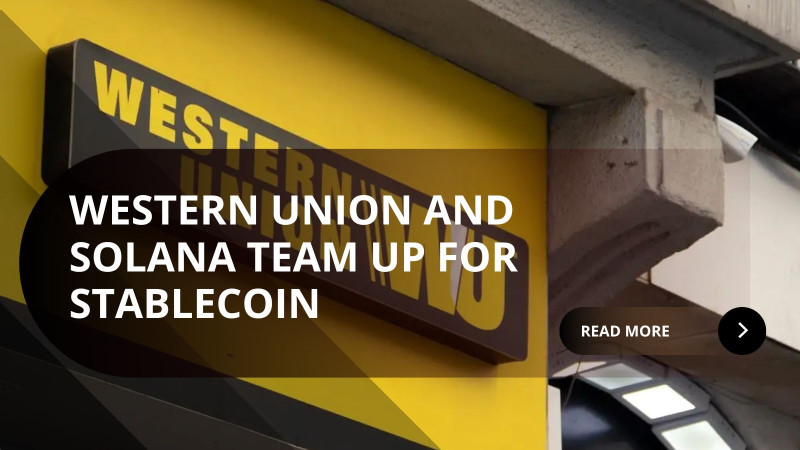
Western Union Launches Stablecoin on Solana to Revolutionize Global Payments
Western Union Stablecoin Launch on Solana Could Transform Global Payments
A Turning Point for Remittances
Western Union is stepping boldly into the future of digital finance. The company has announced plans to launch a U.S. dollar backed stablecoin on the Solana blockchain in early 2026. This initiative marks one of the most significant moves yet by a global money transfer leader to embrace blockchain technology at scale.
Western Union’s stablecoin will be issued by a regulated U.S. bank partner and fully backed by cash and short-term Treasuries. The company aims to deliver instant cross-border settlement, dramatically lower transfer costs, and a modern user experience for millions of customers worldwide.
A Major Win for the Crypto Ecosystem
Western Union’s entry into blockchain payments signals a major milestone for the broader crypto industry. For years, stablecoins have demonstrated their potential to move money quickly and efficiently. Now, one of the largest payment companies in the world is validating that model.
Rather than viewing crypto as a competitor, Western Union is integrating it into its business. The company’s network of digital users, agents, and mobile partners will give blockchain payments global reach. This could open new corridors for stablecoin adoption in countries that depend heavily on remittances.
Why Solana is the Right Fit
Solana’s technology is at the heart of this project. The network is known for its high transaction speed, low fees, and scalability, which are critical factors for small-value remittances. Solana can process thousands of transactions per second with settlement finality measured in seconds.
These capabilities make Solana a practical choice for Western Union’s global payment volume. Low-cost transfers ensure affordability for customers, while rapid settlement creates a better experience for both senders and receivers. Solana’s expanding ecosystem of wallets, exchanges, and payment apps also strengthens the project’s foundation for future growth.
A Powerful Combination of Trust and Innovation
Western Union brings something to the blockchain space that few crypto projects can match: decades of experience in global money movement, deep compliance expertise, and an existing infrastructure for cash pick-up and payout. Combining these strengths with Solana’s performance creates a bridge between traditional finance and digital assets.
Anchorage Digital, Western Union’s issuance and custody partner, ensures that the stablecoin is backed by regulated reserves and operates under strict banking standards. This structure combines the security of traditional banking with the speed and transparency of blockchain technology.
Expanding Financial Access
This project could have an especially meaningful impact in emerging markets. In many countries, remittances are a vital lifeline for families, yet traditional transfers can take days and cost up to ten percent in fees. A blockchain-based stablecoin can cut those costs significantly while allowing users to hold digital dollars safely during times of local currency volatility.
Western Union’s massive footprint, which includes hundreds of thousands of agent locations and mobile partnerships, allows it to bridge the gap between digital and physical money. Customers could send and receive digital dollars instantly, then cash out locally or use their balance in digital apps.
A Model for the Future of Payments
The Western Union stablecoin represents more than a new product. It is a roadmap for how traditional financial institutions can integrate crypto responsibly. It shows that public blockchains like Solana can serve as infrastructure for regulated money movement on a global scale.
This model could inspire other banks, payment firms, and fintechs to issue stablecoins backed by transparent reserves. It also sets the stage for a world where cross-border transactions happen in seconds, with full auditability and minimal friction.
Looking Ahead
Western Union’s stablecoin initiative positions it at the intersection of finance and technology. It reflects growing confidence in blockchain as a foundation for everyday payments. If successful, it could redefine how money moves around the world and accelerate mainstream adoption of stablecoins.
This is more than just another digital asset project. It is a vote of confidence in Solana’s technology and in the promise of crypto to create faster, fairer, and more inclusive financial systems.
Stay Connected
You can stay up to date on all News, Events, and Marketing of Rare Network, including Rare Evo: America’s Premier Blockchain Conference, happening July 28th-31st, 2026 at The ARIA Resort & Casino, by following our socials on X, LinkedIn, and YouTube.