#Custody
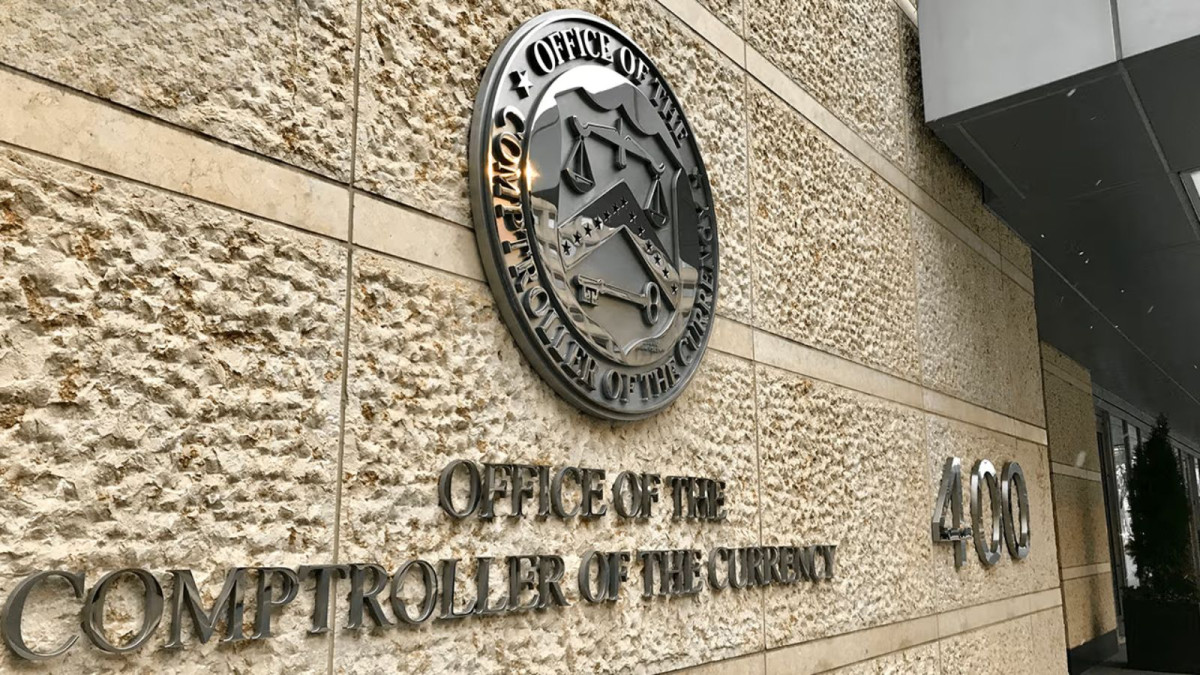
Bastion Receives Conditional Approval for National Trust Bank Charter

Bastion, the stablecoin infrastructure provider for global enterprises and financial institutions, has received preliminary conditional approval from the Office of the Comptroller of the Currency (OCC) to establish a national trust bank.

Following the approval, Bastion, through the Bastion Platforms National Trust Company, will now offer regulated digital asset services under OCC supervision, including stablecoin wallets and custody, payment infrastructure, and white-label issuance.
"Enterprises and financial institutions can now access stablecoins through a federally regulated counterparty, with the controls and oversight they already expect from their banks. We’ve built Bastion for this moment from day one,” said Nassim Eddequiouaq, CEO of Bastion.
With OCC approval now in the bag, enterprise clients and financial institutions can fully access Bastion’s products, including its wallet and issuance services such as minting, redemption, and conversion between stablecoins and fiat, with services that meet required regulatory and compliance standards.
Prior to receiving the conditional charter from the OCC, Bastion had secured a limited purpose trust company charter from the New York State Department of Financial Services, which enabled it to offer certain fiduciary and trust services.
It was during that period that Bastion acquired Dibbs Trust Company, which was eventually renamed Bastion Platforms Trust Company, the entity that is now playing a pivotal role in Bastion’s OCC-regulated fiduciary offerings.
Like Bastion, several other financial institutions have received similar conditional or even full trust charters from the OCC, notably Trump-backed World Liberty Financial, Catena, and Agora.

Indiana Crypto Pension Bill Could Transform Retirement Investing
Indiana’s Bold Move: Crypto in Public Pensions
In early December 2025, Indiana surprised a lot of people by stepping directly into the world of digital assets. A new proposal, House Bill 1042, was introduced by state representative Kyle Pierce, and it does something pretty groundbreaking. It requires public retirement programs to offer crypto linked exchange traded funds, or ETFs, as part of their standard investment lineup.
This means that many public employees, including teachers, government workers, and possibly police and firefighters, would now see crypto related funds sitting right next to traditional retirement options. Instead of crypto being something you explore on your own, Indiana wants it to be a normal part of the overall retirement system.
The bill also outlines a set of protections for everyday crypto users. It limits how much local governments can restrict or interfere with digital asset activity. That includes mining, payments, self custody, and private wallet use. Unless restrictions also apply to traditional financial assets, cities and counties would not be allowed to single out crypto for special limitations.
If this becomes law, Indiana would be the first state in the country to require Bitcoin linked ETFs in public pension systems. That alone sets a bold precedent for how states might approach retirement investing in the future.
A Broader Trend: States Are Warming Up To Crypto
Indiana might feel like it is out ahead, but the move fits into a larger trend. Several other states have already been exploring crypto exposure in different ways.
For example, some states have passed laws allowing retirement systems to purchase Bitcoin ETFs. Others have focused more on legal protections, such as protecting self custody, clarifying how digital assets are classified, or encouraging blockchain adoption within government departments.
What makes Indiana stand out is not the idea of crypto exposure itself, but the fact that the bill attempts to make it a standard part of public retirement offerings. This goes beyond optional access and moves toward normalizing crypto as a core part of long term, institutional investing.
What Supporters Are Saying
Backers of House Bill 1042 believe this is simply a reflection of financial reality. Crypto is becoming a bigger part of the global economy, and Indiana residents should have access to it in the same way they do to other investments.
Supporters argue that this gives people more financial flexibility, especially younger workers who want exposure to assets they believe will appreciate over the next several decades. They also point out that Bitcoin ETFs remove much of the risk and complexity of direct crypto ownership, since they function inside the regulated ETF structure.
The bill also proposes pilot programs to test blockchain technology within state agencies. That includes using distributed ledgers for record keeping, identity management, and improving government transparency and efficiency. Supporters say this could modernize the way public systems operate.
What Critics Are Concerned About
Not everyone is excited about crypto appearing in pension plans. Critics bring up several concerns.
One of the biggest issues is volatility. Cryptocurrencies can swing up or down rapidly, and pension systems are normally built around stability and long term reliability. Some people worry that exposing retirement funds to such unpredictable markets may not serve the best interests of retirees.
There are also questions about long term regulation. National rules around crypto continue to shift, and that uncertainty could create complications for publicly managed funds. Critics say lawmakers should move slowly and avoid building pension plans around assets that still feel risky to many households.
Another concern is whether the state should be responsible for promoting exposure to crypto at all. Some people feel that these decisions should be optional and entirely individual, rather than part of a default menu in a public benefits system.
Why Indiana’s Bill Could Be A Turning Point
If Indiana does pass House Bill 1042, the impact could go far beyond state borders.
It would accelerate the mainstream acceptance of crypto within public institutions. At the same time, it would create a legal framework that protects wallet access, mining, payments, and self custody rights. That combination of investment access and personal rights could easily serve as a template for other states.
It also encourages conversation about what public retirement investing should look like in the future. Some believe this is an opportunity for long term growth. Others feel the risks are too high. Either way, the bill forces the debate into the spotlight.
What To Watch Next
There are several things worth paying attention to in the months ahead.
First, lawmakers may modify the bill. They could adjust the requirement to offer crypto ETFs or turn it into an optional feature instead. They might also place limits on how much of a pension portfolio can be allocated to digital asset funds.
Second, pay attention to how pension administrators respond. Even if the bill passes, the practical process of integrating crypto ETFs will require careful planning.
Third, other states may begin crafting similar laws. Indiana’s move could spark a wave of legislative activity across the country as states look at whether they want to follow the same path.
Finally, federal regulatory changes will play a major role. As national crypto rules evolve, they could strengthen or weaken the long term viability of crypto pension investments.
Indiana’s proposal captures a pivotal moment in the evolution of digital assets. Crypto is no longer viewed as a fringe experiment. It is now part of serious, institutional conversation. Whether this turns out to be a smart long term shift or an overly ambitious leap is something only time will reveal, but it is clear that the landscape of public finance is changing quickly.
$30M Upbit Hack Exposes Critical Wallet Flaw and Triggers Security Overhaul
Upbit’s $30M Hack Exposes Critical Wallet Flaw and Sparks Exchange-Wide Security Overhaul
In late November 2025, South Korea’s largest cryptocurrency exchange, Upbit, confirmed a security breach resulting in the theft of approximately $30 million in digital assets. Following the incident, an emergency audit uncovered a critical vulnerability in Upbit’s internal wallet software, a flaw that, under certain conditions, could allow private keys to be inferred from public blockchain data. The revelation has shaken the industry, raising serious questions about exchange-level wallet security and exposing structural risks that go far beyond typical smart-contract exploits.
What Happened: The Hack and the Audit Discovery
On November 27, Upbit detected irregular withdrawals from wallets associated with Solana ecosystem assets. The suspicious activity triggered an immediate freeze on deposits and withdrawals, and all hot wallets were swept into cold storage for security. The total loss was confirmed at roughly $30 million in tokens, with approximately $1.5 million successfully frozen after being flagged in the withdrawal process.
As part of the recovery efforts, Upbit initiated a full emergency audit of its wallet infrastructure and blockchain transaction logs. The audit revealed that a flaw in the wallet’s internal signature implementation could have compromised private keys. Specifically, the software generated weak or predictable signature patterns. In cryptographic terms, this can make it mathematically possible to reconstruct private keys from publicly visible blockchain signatures. This is a deeply serious vulnerability that strikes at the core of how digital signatures are supposed to work.
Although Upbit has not concluded that this issue directly caused the hack, the exchange stated that the discovery will guide its complete rebuild of wallet and key-management infrastructure.
Why This Flaw Is Particularly Dangerous
Private Key Exposure At the Infrastructure Level
Typically, blockchain signatures are designed so that private keys remain secure even though transactions are public. The weakness in Upbit’s wallet implementation breaks that core principle. A flaw like this is not a user-level mistake, it is a systemic threat, where all assets held by the platform are at risk, not just an individual account.
Historical Transactions Could Be Vulnerable
Even if attackers did not exploit the flaw this time, it may have existed for years. That means older signatures could be analyzed retroactively. If any historical signature was generated under weak conditions, an attacker could potentially reconstruct private keys long after the transaction was made.
Custodial Trust Under Pressure
Most users trust centralized exchanges to safeguard private keys properly. A flaw of this magnitude undermines that trust. Institutional investors and large holders, who rely on strict compliance and robust custodial safeguards, may rethink their risk assessments after this discovery.
Upbit’s History of Security Breaches
This is not the first time Upbit has faced major security threats. In 2019 the exchange suffered a breach involving 342,000 ETH, valued at roughly $50 million at the time. That attack was later attributed to state-sponsored hacking groups. The incident influenced South Korean regulators to tighten security and mandate stronger custodial protections.
More recently, Upbit disclosed that it faced more than 159,000 hacking attempts within a six-month period in 2023. That wave of attacks led the exchange to modify its wallet architecture and lean more heavily on cold-storage practices.
The recurrence of significant security issues suggests that Upbit remains a high-value target and that its security infrastructure requires ongoing, rigorous oversight.
What Upbit Is Doing Now
Following the hack and the emergency audit, Upbit has taken several immediate actions:
-
All deposits and withdrawals have been suspended while systems are secured.
-
All hot wallet funds have been transferred into cold storage.
-
The wallet infrastructure is being completely rebuilt, with particular focus on signature safety and key-management processes.
-
Upbit has pledged to reimburse all affected customers from corporate reserves.
-
The exchange is coordinating with law-enforcement agencies to track the stolen funds and freeze assets wherever possible.
The company has described the flaw as extremely rare and emphasized that proper blockchain signatures should never allow private-key inference under normal circumstances. Even so, the discovery will influence exchange security standards going forward.
Wider Industry Implications
Custodial Risk Must Be Re-Evaluated
The Upbit incident demonstrates that even large, established exchanges can harbor deeply critical vulnerabilities. The risk here is not just theft, but cryptographic failure. Institutions and retail users may reconsider whether centralized custody is appropriate, and may shift to multi-sig, cold storage, or hardware-based self-custody solutions.
Regulatory Scrutiny Will Increase
As more high-profile breaches occur, regulators are likely to introduce stricter auditing and compliance requirements. These may include mandatory signature verification audits, stronger hardware security module standards, and enhanced reporting rules for exchanges.
Developers Must Reassess Wallet Security
The flaw highlights a reality that many developers overlook. While smart-contract security often receives the most attention, wallet security, signature generation, and key-management logic are equally critical. A failure in these components can compromise entire platforms, regardless of smart-contract safety.
Final Thoughts
The Upbit breach and the subsequent discovery of a critical signature vulnerability represent a major turning point in how the industry views custodial risk. This incident is not simply another hack. It is a lesson in the fragility of cryptographic assumptions when wallet infrastructures are not implemented perfectly.
Upbit has taken serious steps to contain the damage, reimburse users, and rebuild its systems. Yet the broader implications extend far beyond one exchange. The incident serves as a reminder that in crypto, private keys are the ultimate line of defense, and any systemic flaw that jeopardizes them can create cascading risks across an entire ecosystem.
Exchanges, institutions, developers, and users must take this as a call to action. Security must evolve. Auditing must deepen. And the industry must continue moving toward architectures that reduce reliance on single points of failure.
Stay Connected
You can stay up to date on all News, Events, and Marketing of Rare Network, including Rare Evo: America’s Premier Blockchain Conference, happening July 28th-31st, 2026 at The ARIA Resort & Casino, by following our socials on X, LinkedIn, and YouTube.
Anchorage Digital Brings Institutional Credibility to Bitcoin DeFi
Anchorage Digital Brings Institutional Credibility to Bitcoin DeFi
Institutional infrastructure is beginning to enter one of crypto’s most promising frontiers: decentralized finance built on Bitcoin. The latest signal comes from Anchorage Digital, which announced it will provide regulated custody services for institutional clients engaging with emerging Bitcoin DeFi platforms such as BOB Finance.
This partnership marks a turning point for the industry. It signals that Bitcoin’s role in decentralized finance is no longer theoretical. It is becoming a regulated, investable reality for institutions that demand compliance, security, and transparency.
Understanding Bitcoin DeFi
For years, DeFi was synonymous with Ethereum and other smart contract platforms. Users could lend, borrow, and trade without intermediaries, while Bitcoin largely remained a store of value. Now, a new wave of developers is extending DeFi’s reach to Bitcoin.
Bitcoin DeFi refers to financial applications built on or around Bitcoin, where users can earn yield, provide liquidity, and interact with decentralized systems while still relying on Bitcoin’s robust network for security. The challenge has always been technical: Bitcoin’s scripting language is limited, so most of these innovations rely on Layer 2 solutions, sidechains, or bridging frameworks that connect Bitcoin to programmable networks.
Anchorage’s move brings something that has been missing: institutional-grade custody and compliance. For funds and corporate investors, this is what transforms experimentation into adoption.
Anchorage’s Institutional Advantage
Anchorage Digital is a U.S. federally chartered digital asset bank, one of the few with the regulatory approval to custody digital assets for institutional clients. Its entrance into the Bitcoin DeFi arena changes the calculus for institutional investors who have been hesitant to participate due to security and compliance concerns.
By offering custody and secure access to protocols like BOB Finance, Anchorage provides the backbone institutions need to engage with on-chain Bitcoin yield opportunities. This development not only reduces custody risk but also strengthens confidence that Bitcoin-based DeFi can scale under proper oversight.
For DeFi protocols, institutional custody means more than safety. It opens the door to deeper liquidity pools, regulated capital, and integration with traditional financial systems. The involvement of Anchorage suggests that institutional investors can now treat Bitcoin DeFi as a legitimate extension of their crypto strategy rather than an unregulated niche.
The Growth of Institutional Bitcoin DeFi
While the total value locked in Bitcoin DeFi remains small compared to Ethereum’s vast DeFi ecosystem, it is growing steadily. Platforms such as BOB Finance are exploring hybrid models that use Bitcoin as collateral while leveraging programmable infrastructure on other chains.
This design lets users access yield and lending opportunities tied directly to Bitcoin without giving up self-custody or transparency. The institutional entry point that Anchorage provides could unlock a wave of new participation from funds and treasuries that were previously sidelined.
Bitcoin’s reputation as the most secure network in the world gives it a natural advantage. If its liquidity and market cap can be mobilized through DeFi infrastructure, Bitcoin could become a productive financial asset, not just a passive store of value.
Bridging Bitcoin and DeFi
Bitcoin DeFi’s growth depends on interoperability — the ability to bridge Bitcoin’s stability and security with the flexibility of programmable ecosystems. The emerging solutions often use cross-chain infrastructure to connect Bitcoin to Ethereum-compatible networks, enabling lending, borrowing, and yield generation without losing Bitcoin exposure.
Anchorage’s involvement provides the compliance and governance layer necessary for that interoperability to appeal to institutions. It helps bridge two worlds that have long been siloed: traditional capital markets and decentralized protocols.
Challenges and Risks
Despite growing optimism, Bitcoin DeFi faces clear challenges. The technology remains young, and the bridges connecting Bitcoin to other networks carry smart contract and security risks. Regulatory clarity is also still evolving, especially as global watchdogs evaluate the role of tokenized assets, wrapped tokens, and decentralized lending systems.
However, Anchorage’s move indicates that progress is being made. Institutions are now demanding solutions that balance innovation with accountability, and that demand will accelerate the creation of safer, more transparent systems.
Final Thoughts
Anchorage Digital’s entry into Bitcoin DeFi represents a significant milestone for both Bitcoin and decentralized finance. It proves that institutions are ready to move beyond Bitcoin as merely a “store of value” and begin using it as a productive, yield-generating asset.
This evolution could redefine how capital flows across the crypto ecosystem. With secure custody, regulatory oversight, and growing cross-chain infrastructure, Bitcoin DeFi is emerging as the next major chapter in the asset’s story — one where Bitcoin becomes not only a symbol of digital sovereignty, but also a cornerstone of decentralized finance itself.
Stay Connected
You can stay up to date on all News, Events, and Marketing of Rare Network, including Rare Evo: America’s Premier Blockchain Conference, happening July 28th-31st, 2026 at The ARIA Resort & Casino, by following our socials on X, LinkedIn, and YouTube.

Ripple Raises $500 Million at $40B Valuation, Signaling Strong Institutional Confidence in Crypto
Ripple Raises $500 Million at $40 Billion Valuation, Signaling Surging Institutional Confidence in Crypto
Ripple Labs has announced a landmark $500 million fundraising round led by affiliates of Fortress Investment Group and Citadel Securities, propelling its valuation to approximately $40 billion. The raise cements Ripple’s position among the most valuable private blockchain companies in the world and underscores a powerful shift in institutional sentiment toward digital assets and crypto infrastructure.
Major participants in the round reportedly include heavyweight firms such as Pantera Capital, Galaxy Digital, Brevan Howard, and Marshall Wace, marking one of the most significant institutional-backed financings in the digital asset sector to date. Ripple’s leadership described the round as “a signal that blockchain infrastructure is moving from experimentation to mainstream adoption.”
A Strategic Expansion Beyond Payments
Ripple’s identity has long been associated with its cross-border payment technology and the XRP Ledger, but the company has spent the past several years expanding its footprint into institutional finance and enterprise-grade blockchain infrastructure.
This raise is intended to accelerate that strategy. Ripple plans to deploy the new capital across several key business segments, including stablecoin development, digital asset custody, prime brokerage services, and enterprise treasury solutions.
CEO Brad Garlinghouse noted that the company’s focus now extends far beyond the XRP token, emphasizing Ripple’s ambition to build “the next-generation infrastructure for global value exchange.”
Ripple has already launched its U.S. dollar stablecoin, RLUSD, which recently surpassed $1 billion in circulation, and the company’s acquisition of Metaco earlier this year established its presence in institutional digital asset custody. The new capital will help scale both of these ventures, as well as expand Ripple’s global payments and liquidity network, which has already processed nearly $100 billion in volume this year.
A Bullish Signal for Institutional Crypto Adoption
The participation of global financial powerhouses such as Fortress and Citadel is a major signal for the broader crypto market. It represents a notable shift from skepticism to conviction among traditional finance institutions, many of which are now actively positioning for the tokenization of assets, the growth of stablecoins, and blockchain-enabled payments.
The timing of the raise also reflects a broader resurgence of confidence in digital assets. Bitcoin’s continued strength above six figures, renewed attention on real-world asset tokenization, and rising institutional demand for compliant crypto infrastructure have all contributed to a more mature and sustainable growth environment.
Ripple’s successful raise at such a high valuation suggests that institutional investors see the company not merely as a crypto firm, but as a core component of global financial modernization. It represents the convergence of blockchain technology and traditional finance, a theme that has gained enormous traction as banks, funds, and corporates explore on-chain settlement and tokenized instruments.
Ripple’s Expanding Role in the Financial Ecosystem
The new capital positions Ripple to strengthen its role as a trusted partner for banks, governments, and enterprises looking to bridge traditional financial systems with blockchain innovation.
The company’s growing suite of products—ranging from cross-border payment solutions to custody, stablecoin issuance, and liquidity management—makes Ripple one of the few blockchain firms offering an institutional-grade platform that can integrate directly with existing financial infrastructure.
Ripple’s continued collaboration with regulators and financial institutions has also helped build credibility at a time when compliance and governance are key differentiators. Its ability to maintain relationships with central banks, sovereign partners, and large enterprises gives it a unique advantage as the financial industry transitions into tokenized models.
The Broader Message for the Crypto Industry
Ripple’s raise is more than a company milestone—it is a reflection of the growing institutionalization of crypto and blockchain technology. The same financial institutions that once viewed digital assets with caution are now leading billion-dollar funding rounds and integrating blockchain rails into their own operations.
This is part of a wider trend reshaping global finance. The lines between traditional banking, fintech, and crypto are blurring, and firms like Ripple are at the center of this transformation. As capital markets evolve toward digital-native assets, the companies that provide trust, scalability, and compliance will become the foundation of the next financial era.
Institutional investors increasingly view blockchain infrastructure as essential, not experimental. Ripple’s $40 billion valuation confirms that belief, underscoring the market’s confidence in the future of regulated, enterprise-grade crypto solutions.
Final Thoughts
Ripple’s $500 million raise represents a turning point not only for the company but for the broader digital asset industry. With leading global financial institutions now backing its vision, Ripple is positioned to become a cornerstone of blockchain-powered finance.
The company’s expansion into stablecoins, custody, and institutional liquidity services shows that it is evolving into a full-stack financial technology provider capable of powering the next generation of value exchange.
For the crypto ecosystem, this moment carries a clear message: institutional adoption is no longer theoretical—it is happening. Ripple’s success highlights how established players in finance are no longer standing on the sidelines but are actively investing in and shaping the future of blockchain infrastructure.
As capital flows, partnerships grow, and regulatory clarity improves, Ripple’s rise reflects the dawn of a more connected, compliant, and credible era for global crypto finance.
Stay Connected
You can stay up to date on all News, Events, and Marketing of Rare Network, including Rare Evo: America’s Premier Blockchain Conference, happening July 28th-31st, 2026 at The ARIA Resort & Casino, by following our socials on X, LinkedIn, and YouTube.