#Payments

Apple, Google Hiring for Crypto Roles

Apple and Google, two of the largest technology companies, are currently on the lookout for crypto professionals who can help develop and shape their blockchain and payment initiatives.
In an Apple job posting, the technology giant advertised a position for a Financial Product Strategy Lead in the Apple Pay department.
According to the job description, the candidate would be involved in working with the Apple Card and Apple Cash product teams, developing a long-term strategy, assessing new growth opportunities, and managing and coordinating large initiatives that drive growth, with projects including Wallet, Payments, and Commerce.
Although the role particularly seeks candidates with experience in payment strategy, the job description also mentions a deep understanding of and experience with P2P payments, stablecoins, tokenised deposits, and blockchain technology.
For the Google role, the company is seeking a principal architect in the Web3 field, with the job description requiring a minimum of 10 years of experience in system architecture, distributed systems design, and cloud infrastructure.
Qualified candidates are also required to have years of experience architecting, deploying, or operating production-grade Web3 systems, blockchain protocols, institutional digital infrastructure, low-latency blockchain node infrastructure, Zero Knowledge (ZK) infrastructure, and rollup architectures.
The job description specifically mentions that qualified candidates should have institutional experience across different Web3 sectors, including Real World Asset (RWA) tokenisation, stablecoin rails, tokenised deposits, and custody architectures within financial environments, among other technical requirements.
Compared to the role at Apple, the Google role is much more technically demanding and requires candidates to have an in-depth and solid understanding of the inner workings and architecture of blockchain infrastructure and systems.
A Positive Sign for Crypto Adoption
The hiring of crypto professionals by two of the biggest non-crypto technology companies in the world is a good sign that highlights how much exploration and adoption the crypto sector, particularly stablecoins, is beginning to receive.
Although these companies are not entirely new to the crypto sector, there appears to be a big shift in how big tech companies are beginning to view blockchain and crypto, with many already integrating blockchain technology into their infrastructure.
For example, Google launched the Google Cloud Universal Ledger (GCUL), its permissioned, private distributed ledger that supports cross-border payments, tokenisation, and blockchain use cases for financial institutions. It also launched its own agent payment protocol and Pay.sh, a pay-as-you-go payment layer that enables AI agents to make payments.

Mastercard Expands Stablecoin Settlements Across Network

Mastercard is expanding its stablecoin settlement capabilities to support intraday, weekend, and holiday settlements using both fiat currencies and on-chain card settlements.

According to Mastercard, the expansion is aimed at providing users across the company's global payments network with greater flexibility, allowing them to better manage liquidity and gain greater control over how their money moves. The expansion is also expected to facilitate transactions that depend on timing and transparency, including cross-border payments, treasury operations, and payouts.
"The next phase of stablecoin adoption is about real-world utility, especially in settlement, where timing and liquidity matter most," said Raj Dhamodharan, executive vice president of Blockchain & Digital Assets at Mastercard.
"By introducing intraday and weekend settlement options across our global network, we're expanding how partners manage liquidity and operate in an always-on digital economy while maintaining the trust, resilience, and safeguards they expect from Mastercard."
With this expansion, Mastercard will support additional stablecoins, including Paxos's PYUSD, USDG, and USDP; Ripple's RLUSD; and SoFi's SoFiUSD, in addition to Circle's USDC, which it already supports. These stablecoins will be supported across multiple blockchain networks, including Arbitrum, Base, Canton, Ethereum, Polygon, Solana, Tempo, and XRPL.
ARQ (formerly known as DolarApp), CBW Bank, Cross River, Lead Bank, and Nuvei will be among the first companies in the United States and Latin America to support Mastercard's stablecoin settlement options, with further expansion expected throughout the year.
Mastercard's addition of more settlement options comes shortly after the payments giant acquired BVNK, a leading stablecoin infrastructure company, in March. The acquisition is part of Mastercard's broader strategy to connect on-chain payment rails with traditional fiat rails.
Mastercard is currently one of the world's largest payment processing networks, with more than 150 million merchant locations across 210 countries and territories. The company processed approximately $10.6 trillion in gross dollar volume (GDV) and reported net revenue of about $8.4 billion in the first quarter of this year.

Cash App Goes Live With USDC For 60M Users

Block's Cash App has officially begun rolling out USDC stablecoin payments to its nearly 60 million monthly users. The feature went live today for roughly 25% of the platform's user base, with full availability expected by the end of the week.
The rollout covers four blockchain networks: Solana, Ethereum, Polygon, and Arbitrum. Users can now send USDC from their Cash App wallet to external wallets on any of the supported chains, and incoming USDC is automatically converted into a dollar balance within the app. No separate transfer fee applies, at least for now.
A Reluctant Pivot, Years in the Making
The launch carries some ideological weight. Jack Dorsey, Block's CEO and longtime Bitcoin maximalist, spent years positioning Cash App as a Bitcoin-first platform. He built out Bitcoin trading, backed mining hardware development, and integrated Lightning Network support for Square merchants globally. Stablecoins were not part of that vision.
That changed, grudgingly. In March, Dorsey publicly acknowledged the shift. "I don't like that we're going to support stablecoins but our customers want to use them," he said. "I don't think it's wise to go from one gatekeeper to another." The comment was candid in a way that's rare for major fintech announcements, and it framed the product addition less as strategic enthusiasm and more as a concession to market demand.
Block first hinted at the feature on the Cash App website late last year, describing stablecoins strictly as a payments mechanism rather than an investment tool. But that early hint has carried through to the live product.
Why Solana (and Why Not Just Solana)
Solana started as the sole chain involved with Cash App. Back in November 2025, Solana confirmed its involvement after sharing a demo by Circle's Jeremy Allaire showcasing a USDC transfer on the network. The choice made sense: Solana transactions typically cost under a cent and settle in under a second, conditions well-suited for the kind of peer-to-peer and remittance use cases Cash App serves.
But Block's Miles Suter framed the company's stance as "chain- and coin-agnostic" from the beginning. Solana was a starting point, not a commitment. The live rollout now includes Ethereum, Polygon, and Arbitrum alongside Solana, giving users flexibility across networks with different cost and speed profiles. Ethereum's gas fees can still spike during congestion, which is precisely why Layer 2 options like Arbitrum and Polygon matter.
The multi-chain approach also future-proofs the integration somewhat. If one network faces congestion or reliability issues at scale, users and the platform aren't locked in.
The Guardrails Are Real
Cash App is not positioning this as a DeFi on-ramp. The feature comes with meaningful restrictions. Sending is capped at $2,000 per day and $5,000 per week; receiving tops out at $10,000 weekly. The service is currently unavailable in New York and on sponsored accounts. Identity verification is required.
Perhaps most importantly, the app warns users that blockchain transactions are irreversible. Funds sent to a wrong address or unsupported network are gone permanently. That's a steep hill to climb for a consumer platform serving tens of millions of people who may be encountering on-chain transfers for the first time.
Stablecoins Are Here To Stay...and Thrive
Cash App's move lands against a backdrop of surging stablecoin adoption. As of this week, the total market value of stablecoins has hit a record $322 billion, exceeding the foreign exchange reserves of 95 nations, including the UK and Canada. USDC, issued by Circle, is the second-largest stablecoin and already sees over $14 billion in liquidity on Solana alone.
Western Union launched Solana-based remittances in the first half of 2026. Stripe has added USDC support across multiple chains. Visa has integrated Solana for stablecoin settlements. The regulatory picture has also clarified somewhat, with the GENIUS Act signed in July 2025 establishing a clearer federal framework for stablecoin issuance.
Taken together, this feels less like a novelty launch and more like a platform making its peace with where consumer payments are heading. Dorsey may not love it, but the product is live, the networks are there, and 60 million people now have a relatively frictionless path to on-chain dollar transfers whether they know what a blockchain is or not.

OKX Launches AI Agent Payments Protocol for Crypto Commerce

Cryptocurrency exchange OKX has launched Agent Payments Protocol (APP), a new payment protocol that allows AI agents to perform commercial activities.
The new payment protocol, according to OKX, is an open standard that defines how AI agents communicate and negotiate, pay for services, and pay each other. It also, for the first time, allows AI agents to move beyond simple payments and into full-scale commerce.

“In the past few months, AI agents moved from answering questions to running workflows, managing business processes, and acting autonomously on behalf of users,” OKX wrote in a blog post. “The bottleneck shifted from intelligence to commerce - not just paying, but the full cycle of doing business: quoting, negotiating, escrowing funds, metering usage, settling, and resolving disputes.”
This existing problem among AI agents is what OKX aims to solve with its new Agent Payments Protocol (APP), allowing agents not only to manage single payment requests but also to manage payment requests across multiple levels.
Inside the Agent Payment Protocol
The agent payment protocol (APP) from OKX is an open standard designed to work across all chains, especially the Solana and Ethereum blockchains.
APP unlocks new capabilities for AI agents, making it possible for these agents to operate and communicate autonomously across the full commerce lifecycle, pay each other through agent-to-agent payments, and also allowing AI agents to perform upfront and top-up payments, including deductions.
At its implementation layer is the payment software development kit (SDK) that makes it possible for developers to accept and make agent payments with just a few lines of code. According to the blog announcement, the agent payment protocol supports a wide variety of payments, including one-time payments, batch payments, pay-as-you-go, and escrow payments, which OKX says is coming soon.
Embedded within the payment protocol is the OKX self-custodial agentic wallet, which supports over 20 blockchains. Since the wallet is secured by means of a Trusted Execution Environment (TEE), a hardware-based security environment, the wallet’s private keys and sensitive operations are kept highly secure.
Despite its early launch, the OKX agent payment protocol is currently supported by major cloud infrastructure firms, including Amazon Web Services (AWS) and Alibaba Cloud, as well as blockchain companies such as Uniswap, Paxos, MoonPay, Zerion, and Nansen.
With the launch of its payment protocol, OKX joins companies such as Coinbase, Stripe, and OpenAI, which have already launched their payment protocols, namely x402, Agentic Commerce Protocol (ACP), and Machine Payments Protocol (MPP), respectively.

KBank Partners Ripple for Blockchain Remittances

KBank, South Korea’s first internet-only bank and the exclusive fiat partner of Upbit, South Korea’s largest crypto exchange, has partnered with Ripple to test its on-chain remittance system.
The partnership, according to a local news report, is aimed at leveraging Ripple’s global blockchain infrastructure and network to improve KBank’s international remittance systems, including the speed, cost, and transparency of its services through a proof-of-concept system.

The proof-of-concept system will test the possibility of KBank moving its cross border remittance system from traditional networks to a faster and cheaper blockchain based system. The process, which has already begun, will involve a two stage verification step.
In the first verification stage, which has already been completed, KBank and Ripple examined and verified a wallet app based remittance system. The second stage, which is currently ongoing, will test the stability of the on chain remittance system and will involve the virtual linking of customer accounts to KBank’s internal systems. These accounts will then be used to make on chain transfers to countries such as the United Arab Emirates and Thailand.
Although KBank developed its own digital wallet, which was used for the first verification stage, it will leverage Palisade, Ripple’s global SaaS based digital wallet, for the second stage of the proof of concept verification.
About KBank
KBank is South Korea’s first internet only, fully digital bank that operates entirely online without physical branches. It gained prominence in the crypto industry when it became Upbit’s exclusive fiat partner. As a result, every trader who buys or sells crypto on Upbit must move their funds through KBank. In this role, KBank serves as an intermediary between traders and Upbit.
Because Upbit is South Korea’s largest cryptocurrency exchange, with a user base of over 13 million, its partnership with KBank had a ripple effect on KBank’s own user base, increasing it from 2 million in 2020 to 15 million by the end of 2025.
Apart from its partnership with Upbit, KBank has also been involved in several other crypto related partnerships. Earlier this year, it signed an agreement with UAE based digital asset firm Changer.ae and Korean blockchain company BPMG to build won to dirham stablecoin remittance rails.
KBank has also gone public, completing its initial public offering (IPO) last month, and is now listed on the Korea Composite Stock Price Index, also known as KOSPI.
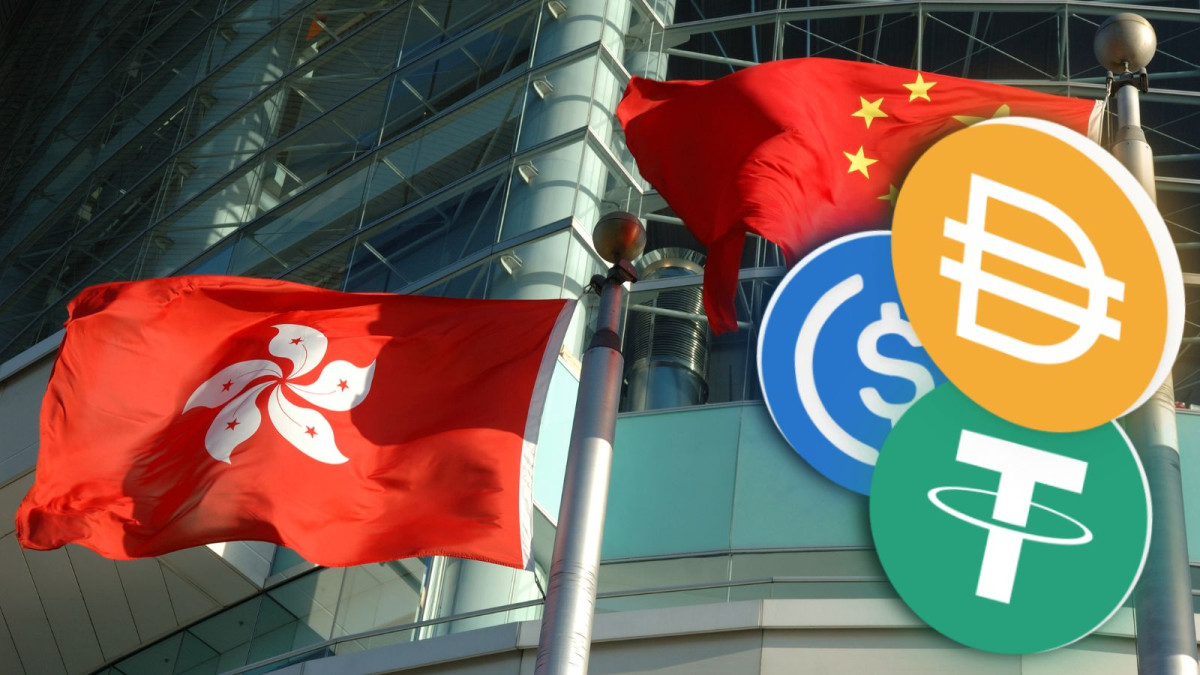
Hong Kong Approves First Stablecoins, HSBC Set to Launch

The Hong Kong Monetary Authority (HKMA), Hong Kong’s primary banking regulator, has issued its first stablecoin issuer licenses to the Hongkong and Shanghai Banking Corporation (HSBC) and Anchorpoint Financial Limited, in line with the city’s new stablecoin framework.
The licenses, which were granted on April 10, represent the first batch issued under Hong Kong’s Stablecoins Ordinance framework. The process was competitive, involving 36 applicants, with selections based on several factors, including risk management, credible use cases, and compliance readiness.
With these licenses granted, HSBC, one of Hong Kong’s largest and oldest banks, and Anchorpoint Financial Limited, a joint financial venture led by Standard Chartered Bank, Hong Kong Telecommunications (HKT), and Animoca Brands, are now a step closer to achieving their stablecoin plans.
HSBC plans to launch a Hong Kong dollar-denominated stablecoin by the second half of 2026. The stablecoin will maintain a one-to-one peg with the Hong Kong dollar and will be backed by high-quality liquid assets held in segregated accounts. It will also be integrated into two of HSBC’s consumer applications, the PayMe app, which already has more than 3.3 million users, and the HSBC HK Mobile Banking app.
With this integration, HSBC users will be able to perform peer-to-peer transfers and peer-to-merchant payments using the Hong Kong dollar-backed stablecoin directly within HSBC applications.
Anchorpoint Financial Limited also plans to launch a Hong Kong dollar-pegged stablecoin, with its first rollout expected this quarter. While the stablecoin is intended to support the digital economy, including cross-border and local payments, Anchorpoint’s initial focus will be on institutional investors and business partners, with retail users to follow at a later stage.
With this first batch of stablecoin issuer licenses and additional approvals underway, the Hong Kong Monetary Authority aims to address financial challenges in Hong Kong and support the development of the city’s digital asset industry.
“The granting of stablecoin issuer licenses is an important milestone for the development of digital assets in Hong Kong. We look forward to the issuers launching their businesses according to their plans, exploring growth opportunities while properly managing risks,” said Eddie Yue, Chief Executive of the HKMA. “We hope their promotion of regulated stablecoins will address pain points in financial and economic activities, create value for both individuals and businesses, and support the healthy development of digital assets in Hong Kong.”
Hong Kong Stablecoin Ordinance
The Hong Kong Stablecoin Ordinance is a regulatory framework passed into law by Hong Kong's Legislative Council in August 2025. The framework establishes a comprehensive licensing and supervisory regime specifically for fiat-backed stablecoins.
Under this framework, the Hong Kong Monetary Authority sets standards for stablecoin issuers seeking licenses in the jurisdiction. These include requirements related to financial resources, reserve assets, risk management, and anti-money laundering and counter-financing of terrorism compliance, among others.
Although Hong Kong’s stablecoin regime is considered one of the strictest in the world, it is designed to promote trust and support the long term adoption of stablecoins rather than allow unregulated growth that could ultimately lead to systemic risks.

Alchemy Tackles AI Payment Chaos with AgentPay

Blockchain infrastructure company Alchemy has launched AgentPay, an interoperability tool designed to enable communication between AI payment systems.
AgentPay was introduced with the goal of addressing the fragmentation that exists among AI payment agents. By unifying different payment agents regardless of the payment protocols they use, AgentPay enables agents, including those from major payment companies such as Coinbase, Stripe, Visa, and Circle, to work together and communicate with one another.
The Fragmentation Problem
There has been a shift in recent times in the way AI agents are used, with AI agents evolving from being chat assistants like ChatGPT into autonomous economic actors.
These AI agents do not only assist or provide feedback. They are able to independently discover services, compare options, negotiate, and execute payments without human intervention. This development has been described by some as the agentic commerce era.
With major technology and finance institutions such as OpenAI, Anthropic, Google, Coinbase, Stripe, Visa, Mastercard, and Circle actively developing and deploying AI agents capable of conducting real transactions, the adoption of AI in commercial activity has accelerated over the past year. Because these agents often rely on different payment protocols, communication between AI payment agents and systems can be complex.
This fragmentation, if left unresolved, could hinder the growth of businesses integrating AI into their platforms. Analysts project that up to 90 percent of business-to-business purchases could be facilitated by AI agents by 2028, making compatibility with AI agents increasingly important for businesses, regardless of the underlying protocol used by the agent.
If an AI agent is not compatible with a business’s application programming interface (API) or service, it may simply move on to another platform that is compatible. In this environment, the most compatible platform may gain a significant advantage. This challenge is what Alchemy’s AgentPay aims to address.

Image credit: Alchemy
Instead of requiring businesses to build separate integrations for every protocol used by AI agents, businesses can register their existing application programming interface endpoints with Alchemy. After that, AgentPay generates a proxied endpoint, which is a single, uniform URL that AI agents can use to make payments regardless of the protocol they use, including x402, MPP, A2P, or L402.
Circle Unveils Fully Managed USDC Payments Solution

Circle is pushing even further into the global payments infrastructure. On April 8, the company officially launched CPN Managed Payments, a fully managed stablecoin settlement product built on top of its Circle Payments Network that lets banks, fintechs, and payment processors tap into USDC rails without ever touching digital assets themselves. Yes, you heard that correctly, they never even have to touch USDC.
The solution handles everything on the backend, including USDC minting and burning, payment orchestration, compliance controls, and blockchain infrastructure, so that partner institutions can operate entirely in fiat. In other words, a payment provider signs up, connects once, and Circle does the rest.
That is a huge shift in how stablecoin adoption typically works. Until now, most institutions eyeing blockchain-based settlement had to deal with the full stack: custody arrangements, internal compliance buildout, licensing questions, and the operational headaches that come with managing digital assets on a balance sheet. CPN Managed Payments is designed to help institutions overcome those barriers, including digital asset custody, licensing requirements, compliance complexity, and operational risk.
"With CPN Managed Payments, we're simplifying how institutions adopt and scale stablecoin payments," said Nikhil Chandhok, Circle's Chief Product and Technology Officer. "By combining issuance, liquidity, compliance, and programmable infrastructure into a unified solution, we are enabling financial institutions to embed stablecoin settlement into their existing payment stacks with enterprise-grade reliability and operational readiness."
The launch is an extension of CPN, which Circle first announced in April 2025 and brought live the following month. CPN was designed to connect banks, neo-banks, payment service providers, virtual asset service providers, and digital wallets to enable real-time settlement of cross-border payments using regulated stablecoins. Cross-border payments can still take longer than one business day to settle and cost more than 6%, according to the World Bank, disproportionately impacting emerging markets.
The underlying mechanics are worth understanding. On the sending side, an originating financial institution handles customer onboarding, KYC, and fiat-to-USDC conversion. On the receiving side, a beneficiary institution receives USDC and converts it to local currency for payout. Circle sits in the middle as network operator but is not holding or moving the funds itself, acting instead as a coordination layer between member institutions. With the managed payments product, Circle now absorbs even more of that operational complexity on behalf of its partners.
USDC's market cap currently sits at around $74.8 billion, and Circle reported Q4 2025 revenue of $770 million, 77% better than the same period the prior year. The company has been aggressively expanding its licensing footprint globally and is now leaning into that compliance infrastructure as a competitive moat rather than just a cost center. Circle said that USDC has supported over $70 trillion in "cumulative onchain settlement," with nearly $12 trillion of that amount coming in Q4 2025 alone.
CPN Managed Payments is built on Circle's existing infrastructure, which covers payouts across more than 20 blockchains and domestic payment rails, with connectivity to CPN fiat payout corridors worldwide. The platform is also composable, meaning institutions can start fully managed and gradually take on more of the stack themselves as their internal capabilities develop.
Launch partners include Veem, along with other global payment service providers. Earlier CPN adopters included Alfred Pay, which is using the network to enable stablecoin-to-fiat offramps via PIX and SPEI; Tazapay, supporting compliant fiat disbursements into Hong Kong; and RedotPay, initiating USDC-based payments into Brazil.
The competitive picture is getting crowded. PayPal has had its own stablecoin product on the market for over a year, and Ripple's RLUSD has been gaining ground in cross-border settlement use cases, particularly in corridors where USDC's footprint has been slower to develop. But Circle's bet with CPN Managed Payments is distinct: rather than compete stablecoin-to-stablecoin, it is trying to become the rails that other institutions use, regardless of which digital dollar eventually wins.
Circle is currently focusing on serving organizations transacting in high-value, underserved global trade corridors, with plans to explore expansion into Nigeria, the EU, UK, Colombia, India, the UAE, China, Turkey, the Philippines, Vietnam, and Argentina.
For traditional finance players who have wanted stablecoin efficiency without the crypto balance sheet exposure, the product is about as clean an entry point as the market has offered.
x402 Foundation Launches Under Linux Foundation

The internet has always had a payments problem. HTTP moved data. SMTP moved email. But money? Money got stuck behind proprietary rails, bank integrations, and checkout forms that were never really built for a digital-first world. That gap, which the industry has spent decades papering over with varying degrees of success, is now the target of something bigger than any one company: the x402 Foundation, launched today under the Linux Foundation, with Coinbase, Cloudflare, and Stripe among its founding backers.
The announcement, timed to April 2 (a nod to HTTP status code 402, "Payment Required"), marks a formal step toward turning x402 into a neutral, community-governed standard. And the list of companies signing on makes it hard to dismiss as just another crypto lab experiment. Adyen, Amazon Web Services, American Express, Ant International, Google, Mastercard, Microsoft, Shopify, the Solana Foundation, Visa, and more than a dozen other names from across fintech, big tech, and crypto all attached their names to the effort.
What x402 Actually Does
The protocol is simple. When a client tries to access a resource gated behind x402, the server responds with the 402 Payment Required status code along with machine-readable payment instructions: amount, asset, network, recipient. The client then attaches a payment authorization header and resends the request. A facilitator verifies the payment and settles the transaction. That is the whole flow. No accounts, no subscriptions, no API keys, no manual billing cycles.
Coinbase launched the first version in May 2025, quietly, with the 402 HTTP status code having sat largely dormant since it was first defined in the early 1990s. Within months the protocol had processed over 100 million payments across APIs, apps, and AI agents. By December, the team shipped x402 V2, which added multi-chain support by default, cleaner separation between clients, servers, and facilitators, and the architectural foundations for session management and identity. The reference SDKs are available across TypeScript, Go, and Python.
Transaction costs sit near zero, with Coinbase's facilitator offering the first 1,000 transactions per month free and charging $0.001 per transaction beyond that. For micropayments, the kind worth a fraction of a cent that credit card networks have never handled well, that matters enormously. The protocol currently runs on Base, Polygon, and Solana, with stablecoins like USDC as the primary settlement layer. Future versions are designed to accommodate traditional rails as well, including ACH, SEPA, and card networks, using the same payment model.
Why This Moment, Why This Structure
The timing is not accidental. The push into autonomous AI agents across the industry has exposed a glaring problem: agents need to pay for things. When an AI assistant browses the web to buy something, or a trading bot needs a real-time data feed, or a robot needs to procure compute on the fly, making a human stop and authorize each payment defeats the entire point. What the industry needs is a payment primitive that works the way HTTP works: in the background, at machine speed, without friction.
"The internet was built on open protocols," said Jim Zemlin, CEO of the Linux Foundation, in comments tied to the launch. The Foundation's involvement is a deliberate move to ensure no single company ends up owning the payment layer of the agentic web. Cloudflare CEO Matthew Prince echoed that logic in September when the two companies announced their intent to launch the Foundation together: the internet's core protocols have always been governed independently, and x402 should be no different.
That governance structure is a meaningful part of the pitch. The x402 Foundation is framed explicitly as stewardship, not ownership. No single company controls the standard. The membership body is open to developers, startups, and enterprises. Cloudflare's alignment with the effort also signals that x402 is being treated as infrastructure at the edge level, not just a crypto developer toy. Integrating x402 into Cloudflare's edge compute and CDN stack means payment requests can slot into everyday web workflows the same way SSL became table stakes for basic security.
The Bigger Picture
Early use cases already live in production. Hyperbolic, an AI compute marketplace, uses x402 for AI agents paying per GPU inference session rather than committing to a monthly subscription. OpenMind has robots autonomously procuring compute and data. Cal.com embeds x402 for paid human interactions directly inside scheduling workflows. The scope of what a frictionless pay-per-use primitive unlocks is genuinely wide, and that is before the protocol adds broader identity support and more payment backends.
There are real risks worth naming. The protocol currently leans heavily on Coinbase's own facilitator infrastructure, which handles verification and settlement and is, today, the most mature option in the ecosystem. Cloudflare and others reduce protocol-level concentration, but early traffic still routes largely through Coinbase's stack. The facilitator is free now. That may not last indefinitely once network effects solidify. And unlike credit card networks, x402 has no network-level payment reversal. Refunds require a compensating transfer from the merchant, making the protocol closer to cash than to a reversible card transaction. For high-frequency API calls that is a feature. For consumer flows that expect buyer protections, it is a liability worth monitoring.
What x402 has going for it, beyond the technical architecture, is the coalition. Visa and Mastercard alongside the Solana Foundation and Polygon Labs in the same founding member list is unusual. Google Cloud's managing director for Web3 and Digital Assets called the shift toward agentic commerce a fundamental reason Google is joining, describing the need for cloud infrastructure that is as open as the protocols it supports. Whether that breadth translates into real interoperability or remains aspirational will be one of the defining stories to watch as the Foundation gets off the ground. If x402 does become foundational plumbing, the question will be who benefits most from having been at the table when the standard was written.
MoonPay Sets a New Standard for AI Agent Wallets

For most of the past decade, the conversation around artificial intelligence and crypto stayed largely theoretical. Two industries, both moving fast, both attracting enormous capital, but mostly running on parallel tracks. That started to change in late 2024, and by early 2026 the overlap had become hard to ignore. MoonPay, the crypto payments firm that built its name on fiat-to-crypto on-ramps, is now positioning itself as the financial infrastructure layer for a future where AI agents don't just analyze markets but actively participate in them.
On February 24, the company officially launched MoonPay Agents, a non-custodial software layer built on top of MoonPay CLI, its developer-focused command-line interface. The product gives autonomous AI systems the ability to generate wallets, fund them through fiat on-ramps or crypto transfers, execute on-chain trades, and convert holdings back to fiat, all without requiring a human to approve each individual step. Less than three weeks later, on March 13, MoonPay followed up with a second announcement: a deep integration with Ledger, the hardware wallet maker, designed to let users sign off on AI-initiated transactions directly from a physical device.
MoonPay CEO Ivan Soto-Wright put it bluntly in the launch statement: "AI agents can reason, but they cannot act economically without capital infrastructure." The line is a bit pithy, but it captures the actual gap. Building a bot that can identify an arbitrage opportunity across three chains is a solved problem in 2026. Building one that can act on that opportunity, fund itself, execute the trade, and off-ramp the proceeds into a bank account without exposing private keys or requiring a human babysitter is not.
MoonPay Agents is designed to close that gap. The setup is relatively straightforward: a developer installs MoonPay CLI, a user completes a one-time KYC verification, funds a wallet, and grants the agent permission to transact within defined parameters. After that initial handshake, the agent can operate independently. Wallets are non-custodial and stored locally on the user's device using OS keychain encryption. Private keys never leave the machine. Spending limits and pre-execution transaction simulations serve as guardrails against runaway agents doing something unintended.
What Is Moonpay Agents?
The product ships with 54 tools across 17 categories, covering most of what a developer building a financially active agent would actually need. That includes real-time cross-chain swaps, recurring buy schedules, portfolio tracking, token discovery and analysis, multi-chain deposit links with automatic stablecoin conversion, fiat funding via virtual accounts that accept bank transfers, Apple Pay, Venmo, and PayPal, and the ability to off-ramp back to traditional currencies from the terminal.
Multi-chain coverage at launch spans Ethereum, Solana, Base, Polygon, Arbitrum, Optimism, BNB Chain, Avalanche, TRON, and Bitcoin. Over 100 tokens are supported. Developers can also extend the platform with custom skills. The system is compatible with Claude, ChatGPT, Gemini, and Grok, and can be accessed via the CLI, a local Model Context Protocol server, or a web chat interface.
One detail that has caught the attention of developers in the agentic AI space is native x402 support. The x402 protocol, introduced by Coinbase in May 2025, revives the long-dormant HTTP 402 status code to enable machine-to-machine payments using stablecoins, with no API keys or subscriptions required. An agent simply pays for a resource or service at the time of access. MoonPay's inclusion of x402 compatibility positions MoonPay Agents within the emerging standard that Stripe, QuickNode (which extended x402 support across more than 80 chains), and a growing number of infrastructure providers have rallied around.
MoonPay Agents is not architected for one or two bots. The infrastructure is built to support thousands, eventually millions, of agents running concurrently across use cases that range from trading and portfolio management to gaming economies, commerce automation, and corporate treasury operations.
The Ledger Integration
MoonPay's solution was to bring Ledger into the loop. By integrating Ledger's Device Management Kit into the CLI wallet for MoonPay Agents, the company now allows every AI-generated transaction to be routed through a physical hardware device for approval. The agent constructs and proposes the transaction. The user confirms it on the Ledger. Private keys never touch the software layer at any point.
MoonPay says this makes the CLI wallet the first agent-focused wallet to support Ledger's secure signing through the Device Management Kit. Soto-Wright put the strategic framing plainly: "Autonomous agents will manage trillions in digital assets. But autonomy without security is reckless. We built MoonPay Agents with Ledger so intelligence can scale without surrendering control. The agent executes. The human stays in the loop."
Ledger's chief experience officer, Ian Rogers, acknowledged that the partnership reflects a real shift in what wallet infrastructure needs to support. "There is a new wave of CLI and agent-centric wallets emerging," he said, "and these will need Ledger security as a feature, too." It is a meaningful endorsement from a company whose entire value proposition is built on the premise that hardware is the only storage you can actually trust.
The model that results from the integration is structurally similar to two-factor authentication in traditional finance: the AI handles the analytical and execution work, but physical confirmation is required to release funds. Even a fully compromised software environment cannot move money without the physical Ledger device and its PIN.
What This Means for Developers
For developers building agents that need to touch money, the practical implications of MoonPay Agents are fairly direct. The product abstracts away most of the hard parts: custody, key management, fiat connectivity, cross-chain routing, compliance. A single CLI install and a one-time user verification is genuinely all that stands between a developer and an agent that can fund itself, trade across chains, and off-ramp back to a bank account.
The ability to add custom skills also matters. MoonPay Agents ships with 54 tools across 17 categories, but the open extension model means developers can build on top of the existing toolkit rather than working around its edges. That kind of extensibility is usually what determines whether a platform becomes a default or a footnote.
What remains to be seen is how the ecosystem grows around it. MoonPay has the infrastructure and the user base. The question now is whether developers building the next generation of agentic applications pick MoonPay Agents as their default financial layer, or whether a competitor, or a collection of open standards, fills that space instead.
A Structural Shift, Not a Feature Launch
It is worth stepping back from the product details for a moment to consider what MoonPay is actually doing here. This is not a company adding AI features to an existing payments product. It is a payments company making a deliberate bet that the financial system is about to acquire a new class of participant, one that is not human, that will require infrastructure designed specifically for machine-speed, machine-scale capital movement, and that will need to be anchored to compliant fiat rails if it is ever going to interact with the broader economy.
That bet is not obviously wrong. Stablecoin volumes are growing at rates that would have seemed implausible even two years ago. Agent tokens and AI-driven trading systems are proliferating faster than most infrastructure providers anticipated. The convergence of AI and crypto, long discussed in the abstract, is becoming a concrete engineering problem that real companies are being paid to solve.
MoonPay's move is a claim that it has already built most of what that future requires, and that the work of this moment is connecting those existing rails to the autonomous systems that will run on them. It is an ambitious claim. The next 18 months will do a lot to determine whether it holds up.
Mastercard Acquires BVNK for $1.8 Billion in Biggest Stablecoin Deal Yet

Mastercard has agreed to acquire BVNK, the London-based stablecoin infrastructure company, for up to $1.8 billion in a deal that includes $300 million in contingent payments tied to future performance milestones. The agreement, announced Tuesday morning, is expected to close before the end of 2026, pending regulatory approvals.
The deal is the latest and largest chapter in a stablecoin acquisition frenzy that has gripped traditional finance and crypto alike, and it carries a backstory messier than most. BVNK didn't end up at Mastercard's door by accident. It got there after a months-long bidding war with Coinbase, exclusivity agreements, a very public deal collapse, and a detour that briefly had Mastercard chasing a different company entirely.
The Road to This Deal Was Anything But Clean
Back in October 2025, Fortune reported that both Mastercard and Coinbase had separately held advanced acquisition talks with BVNK, with the price tag floating somewhere between $1.5 billion and $2.5 billion. At the time, Coinbase looked like the clear front-runner. Three sources familiar with the matter told Fortune that the crypto exchange had the inside track, and by late October, BVNK had entered into exclusivity with Coinbase, meaning the startup legally couldn't entertain other offers.
It seemed like a done deal. Then it wasn't.
In November, Coinbase and BVNK quietly called off talks. The deal had gotten as far as due diligence and exclusivity before the two sides parted ways. Coinbase issued a carefully worded non-statement about "continuously seeking opportunities to expand on our mission," and BVNK was suddenly back on the market.
Meanwhile, after losing out to Coinbase in the first round, Mastercard had pivoted and was reported to be in serious discussions to acquire Zerohash, a Chicago-based crypto infrastructure firm, for somewhere between $1.5 billion and $2 billion. That deal apparently didn't close either, and Mastercard eventually circled back to the startup it had wanted all along.
The result is the deal announced today: Mastercard gets BVNK for a price that, at $1.8 billion, comes in below the $2 billion Coinbase had been pursuing and meaningfully below the top of the original $2.5 billion range. Whether that represents a discount, a reflection of changed market conditions, or simply the realities of a second negotiation is hard to say. But for a company that was valued at around $750 million as recently as mid-2025, it is still a remarkable outcome.
Who is BVNK and Why Does It Matter
Founded in 2021 by Chris Harmse, Jesse Bernson-Struthers, and Donald Jackson, BVNK was built with a specific problem in mind: enterprises wanted to use stablecoins, but the plumbing didn't exist to make that happen at scale. The company's pitch was never about building a consumer wallet or launching its own token. It was about becoming the invisible layer that lets other financial businesses actually move money using stablecoins.
The platform operates across more than 130 countries and supports payments on all major blockchain networks. Its customers include Worldpay, Deel, Flywire, Rapyd, Thunes, and a growing list of enterprise clients that process real commercial volume. In its own end-of-year review published in January 2026, BVNK said it was processing $30 billion in annualized stablecoin payment volume, up 2.3x from the prior year, across 2.8 million transactions. A year before that, its volumes were reported at roughly $12 billion when Visa was announced as an investor.
One third of that volume now comes from the U.S. market alone, where BVNK launched operations at the start of 2025 and scaled from essentially zero to $10 billion in annualized volume by year end. The company opened two San Francisco offices and a New York outpost in just twelve months.
The investor roster reads like a who's who of institutions that have come around to stablecoins as strategic infrastructure rather than speculative technology. Haun Ventures led BVNK's $50 million Series Bin December 2024. Coinbase Ventures participated. Tiger Global was already in. And then Visa Ventures and Citi Ventures both made strategic investments, a signal that even the largest incumbent financial networks were willing to bet on the startup they might otherwise consider a competitive threat.
Bernson-Struthers described BVNK as the "global leader" in stablecoin infrastructure in a December 2024 interview, citing the company's banking relationships and financial licenses as the harder-to-replicate moat. That licensing infrastructure, built out painstakingly across multiple jurisdictions including full U.S. state-level coverage and comprehensive EU authorization, is likely a substantial part of what Mastercard is paying for.
What Mastercard Is Actually Buying
Jorn Lambert, Mastercard's Chief Product Officer, put it plainly in the company's announcement Tuesday: "We expect that most financial institutions and fintechs will in time provide digital currency services, be it with stablecoins or tokenized deposits. We want to support them and their customers with a best in class, highly compliant, interoperable offering that brings the benefits of tokenized money to the real world."
That framing says a lot about how Mastercard is positioning this acquisition. The company isn't buying BVNK because it thinks stablecoins will replace its core business. It's buying BVNK because it wants to be the network that connects stablecoin rails to everything else, the way it currently connects card networks to merchants and banks around the world.
The logic is straightforward, if you squint at it. Mastercard's entire business model is built on being the trusted intermediary between different financial systems. Stablecoins create new rails that, without an orchestration layer, are isolated from the broader financial system. BVNK's core product is precisely that orchestration layer: the infrastructure that lets money move fluidly between dollars, stablecoins, blockchains, and traditional bank accounts. Mastercard plugs that into its global network and, theoretically, becomes the interoperability layer for the next generation of payments.
Lambert added that adding on-chain rails to Mastercard's network "will support speed and programmability for virtually every type of transaction," pointing to use cases beyond just consumer payments including capital markets, treasury management, B2B transactions, and cross-border remittances. That's a broader canvas than most people associate with stablecoins today, but it reflects where the industry is headed.
Mastercard cited a Boston Consulting Group figure showing digital currency payment use cases hit at least $350 billion in volume in 2025. The company also pointed to the growing regulatory clarity around digital currencies in multiple jurisdictions as a catalyst for financial institutions and fintechs that are now looking to build stablecoin-enabled payment products for their own customers.
The Stablecoin Acquisition Parade
This is the latest in a series of major acquisitions that have reshaped how the payments industry thinks about stablecoin infrastructure.
The deal that started the current wave was Stripe's acquisition of Bridge, another stablecoin infrastructure startup, for $1.1 billion. That deal closed in early 2025 and set a new benchmark for what stablecoin infrastructure could fetch. BVNK's volumes at the time of Bridge's acquisition were already significantly larger, which is part of why the bidding quickly escalated into the multi-billion dollar range.
Since then, MoonPay acquired Iron, stablecoin M&A activity has continued to accelerate, and the market cap of all stablecoins combined crossed $300 billion. Circle's IPO on the NYSE in June 2025 added further legitimacy and brought mainstream investor attention to the sector. The U.S. GENIUS Act, signed by President Trump in July 2025, provided the regulatory framework that large institutions had been waiting for before fully committing to stablecoin strategies.
That legislative clarity changed the calculus for traditional finance almost overnight. JPMorgan launched its JPMD deposit tokens. Citigroup announced a Citi stablecoin. Banks that had previously treated stablecoins as a fringe curiosity started treating them as product lines they needed to support.
For a payments network like Mastercard, the pressure is acute. The company's stock was reportedly hit when the GENIUS Act passed, with investors worried that stablecoins could erode the interchange fee model that underpins Mastercard's revenue. Buying BVNK is, in part, a direct response to that concern. Rather than cede the stablecoin payments market to crypto-native competitors or fintech newcomers, Mastercard is acquiring the infrastructure to own a piece ofit.
A Telling U-Turn on Stablecoins
There is a certain irony in today's announcement. As recently as July 2025, Raj Seshadri, Mastercard's chief commercial payments officer, told analysts on an earnings call that the company expected most payment flows to "begin and end in fiat," and that stablecoins would be "just one more currency for some specific use cases." That is a significant shift in tone from announcing a near-$2 billion acquisition to get into the middle of those flows.
To be fair, Mastercard's position has been nuanced. The company has been quietly building its crypto infrastructure for years, having acquired blockchain analytics firm CipherTrace back in 2021. It later shut down many of CipherTrace's key products, suggesting that early acquisition didn't pan out as planned. The company also joined a consortium focused on stablecoin technology alongside Robinhood and K:raken, and launched its Crypto Partner Program to foster collaboration in the space.
But the BVNK deal is a different order of magnitude. This is not a defensive data play or a consortium membership. This is Mastercard paying top dollar for the most battle-tested stablecoin infrastructure business in the world and betting that the orchestration layer between fiat and on-chain money will be one of the most valuable positions in payments over the next decade.
What Happens Next
The deal is expected to close by end of 2026, and both companies will presumably spend the intervening months navigating regulatory reviews across multiple jurisdictions. Given BVNK's existing licenses in the U.S. and EU and Mastercard's regulatory relationships globally, the path to approval is probably cleaner than it might be for a crypto-native acquirer.
The more interesting question is how BVNK's existing enterprise clients will react. Worldpay, Deel, Flywire and others built integrations with an independent infrastructure provider. Being absorbed into one of the world's largest payments networks changes the dynamic. Mastercard will need to make the case that the independence and product velocity those customers rely on will survive the acquisition intact.
And then there is the competitive landscape. Stripe now has Bridge. Mastercard will have BVNK. Coinbase, having walked away from the deal, will presumably continue building or find another infrastructure target. PayPal, which just announced the expansion of its own stablecoin PYUSD to 70 markets worldwide, is clearly not sitting still either. The scramble for position in the stablecoin payments stack is only getting more crowded, and today's announcement is more an acceleration of that competition than a resolution of it.
For BVNK's founders, who built the company from scratch in 2021 into a $1.8 billion exit in under five years, it is an extraordinary outcome. For Mastercard, it is a significant bet that the future of payments runs on both rails at once, fiat and on-chain, and that the company that controls the bridge between them will be in a very strong position.
Whether that bet pays off depends on whether stablecoin payment volumes continue their current trajectory or whether the technology hits the kind of adoption ceiling that has frustrated crypto advocates before.
The contingent $300 million in the deal structure suggests both sides are hedging a little on that question. Which, all things considered, is probably the right instinct.

Wells Fargo Files WFUSD Trademark

Wells Fargo has filed a trademark application for "WFUSD" with the U.S. Patent and Trademark Office, covering a broad slate of cryptocurrency services.
The 'USD" within the filling leads to huge speculation about stablecoins as it follows the same naming convention used by Tether's USDT and Circle's USDC, the two more notable stablecoins account for the vast majority of the roughly $200 billion stablecoin market. Whether Wells Fargo is building toward a consumer-facing stablecoin product, an institutional settlement layer, or something else entirely, is not clear, and all just speculation.
The trademark was filed just months after President Trump signed the GENIUS Act into law in July 2025, the first comprehensive federal framework for payment stablecoins in U.S. history. The law opened a clear path for bank subsidiaries to issue dollar-pegged digital tokens under regulatory oversight, and Wells Fargo's trademark application reads like a bank that intends to walk through that door.
A Long History, A New Gear
Wells Fargo is not a newcomer to blockchain experimentation. Back in 2019, the bank unveiled Wells Fargo Digital Cash, a dollar-linked stablecoin built on R3's Corda blockchain designed to handle internal book transfers and cross-border settlements within its global network. The pilot worked. The bank successfully ran test transactions between its U.S. and Canadian accounts. But it stayed internal, never touching retail customers or external counterparties.
That earlier project had a narrow scope to try to reduce friction in the bank's own back-office transfers. The WFUSD trademark filing feels different. The scope covers cryptocurrency exchange services, digital asset transfers, payment processing, tokenization, blockchain transaction verification, and digital wallet services. That is not a description of an internal settlement tool. It is a description of a full-spectrum digital asset platform.
Wells Fargo's own research analysts had been tracking the stablecoin market closely well before the trademark filing surfaced. In a note published in May 2025, analysts led by Andrew Bauch wrote that stablecoin momentum had reached what they called "must-monitor levels," pointing to a 16% jump in total stablecoin market capitalization that year and a 43% rise over the prior twelve months. The report flagged payments companies including Mastercard, Visa, and PayPal as stocks with the most strategic exposure to the stablecoin wave. Whether those analysts knew about internal trademark discussions is unclear, but the research and the filing tell a consistent story about where the bank's thinking may have landed.
Wells Fargo is not acting alone. In May 2025, the Wall Street Journal reported that JPMorgan Chase, Bank of America, Citigroup, and Wells Fargo were in early discussions about building a jointly operated U.S. dollar stablecoin, with payment infrastructure providers including Zelle and The Clearing House also at the table. Sources familiar with the matter described the conversations as exploratory, but the ambition was clear: create a bank-backed digital dollar that would compete with the success of crypot-native products.
JPMorgan has the most developed track record in this space, having operated JPM Coin since 2019 as an internal settlement instrument for institutional clients. The bank has reportedly settled more than $200 billion in transactions through the system.
The GENIUS Act, which passed the Senate with a bipartisan vote of 68 to 30 and the House 308 to 122 before Trump signed it on July 18, 2025, created the regulatory framework that banks had been waiting for. Under the law, bank subsidiaries can issue payment stablecoins under the supervision of their primary federal banking regulator.
Issuers must maintain one-to-one reserves in highly liquid assets like Treasury bills, submit to regular audits, and comply with anti-money laundering and Bank Secrecy Act requirements. The law also gave stablecoin holders priority claims over other creditors in any insolvency proceeding, a significant consumer protection provision.
For a bank like Wells Fargo, that framework essentially legalizes and licenses what its trademark filing envisions. The FDIC has already approved a proposed rulemaking to implement the GENIUS Act's application procedures for supervised institutions seeking to issue stablecoins, moving the machinery toward full implementation by January 2027 as the law prescribes.
Competition or Collaboration with Crypto?
While the big four banks have been circling the stablecoin market, crypto-native firms have been circling the banking sector. Circle, the issuer of USDC, has been in discussions about obtaining a bank charter. Coinbase, BitGo, and Paxos are all reportedly pursuing various forms of banking licensure that would let them compete more directly with traditional institutions for deposits and payment volumes. And, most notably, Kraken just recentlly received a Federal Reserve master account, gaining direct access to the Federal Reserve's payment infrastructure.
That competitive dynamic is partly what has given the joint stablecoin exploration among the major banks its urgency. A dollar-denominated stablecoin backed by federally chartered banks would carry a different kind of institutional weight than products issued by crypto firms, regardless of how well those firms have managed their reserves.
Still, the incumbents face real headwinds. The GENIUS Act, while giving banks a clear path to issue stablecoins, also permits nonbank firms like fintechs and crypto companies to issue them under OCC oversight. Grant Thornton's national blockchain and digital assets practice leader, Markus Veith, noted after the law passed that banks could face serious competition from nonbank entities that don't carry the same regulatory burden or capital requirements. Stablecoins from USDT and USDC already saw their combined market share dip from 89% to under 84% over the past year as newer entrants gained traction.
What WFUSD Could Become
The trademark itself, of course, is not a product. Banks and large corporations file trademarks for concepts that never reach the market all the time, and a filing covering cryptocurrency services does not obligate Wells Fargo to ship a stablecoin by any particular date. The application does, however, reserve the commercial rights to the WFUSD brand across a spectrum of digital asset services, which is a form of strategic positioning that serious companies do when they intend to eventually use what they are protecting.
If Wells Fargo does build out WFUSD into a live product, the most likely initial form would be an institutional-grade settlement and payment layer, mirroring what Wells Fargo Digital Cash did internally but opening it to corporate clients and potentially other financial institutions. Cross-border payments represent the most obvious near-term use case. The market for global cross-border transactions was roughly $44 trillion in 2023 according to McKinsey estimates cited by the bank's own research team, and stablecoins offer demonstrably faster settlement, lower funding costs, and programmability through smart contracts compared to the correspondent banking infrastructure that currently handles most of that volume.
A consumer-facing version would require more work and more time. Wells Fargo analysts themselves noted in their May research note that everyday consumer adoption of stablecoins is likely still a decade away. But the infrastructure being built now, the trademarks being registered, the regulatory licenses being sought, the interoperability frameworks being designed, will determine who is positioned to serve that market when it arrives.
What Comes Next?
For Wells Fargo specifically, WFUSD represents the most concrete public signal of the bank's digital asset intentions to date.
Whether the bank ultimately issues WFUSD as a standalone product, folds it into a larger bank consortium stablecoin, or uses the trademark as a branding vehicle for a custody and trading platform remains to be seen. The competitive pressure from both crypto-native firms building toward bank charters and fellow Wall Street institutions building their own digital dollar products means the bank can't afford to stay in patent-pending limbo for too long.
The name was chosen carefully. When the fourth-largest bank in the United States puts its initials on a dollar-pegged ticker and files it with the federal government, it is placing a bet on where finance is going. The question now is how fast it gets there.