#Multi-Chain
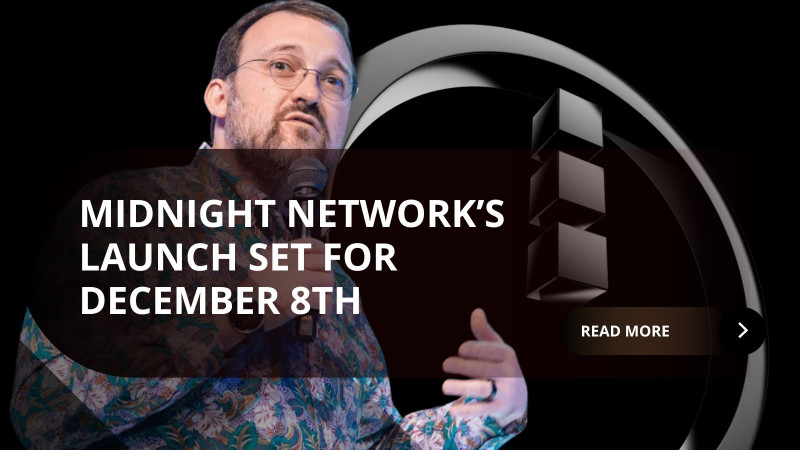
Midnight Sets December 8, 2025 Launch for NIGHT Token and Privacy Network
Midnight Announces NIGHT Token Launch Set for December 8, 2025
A New Era of Programmable Privacy Begins
The Midnight Network is officially preparing for one of the most anticipated launches in the blockchain space. During the Midnight Summit in London, Charles Hoskinson announced the official roadmap and launch date for Midnight’s NIGHT token and its multi phase rollout. The network will go live on December 8, 2025, marking the transition from years of development into a fully functioning, privacy focused blockchain ecosystem.
This launch introduces a fourth generation blockchain designed from the ground up for real world adoption, programmable privacy, regulatory friendly architecture and multi chain interoperability. Midnight is positioning itself as a new standard for privacy, identity protection and on chain compliance, and the four phase roadmap outlines how the network will reach full decentralization.
Until this point, most privacy oriented chains have focused on anonymity or narrow use cases. Midnight aims to redefine the category entirely by blending enterprise compliance with zero knowledge cryptography, creating a system where privacy and regulation are not mutually exclusive but fully compatible.
With the launch date locked in and the phases clearly defined, the coming months will be a critical period for awareness, onboarding, builders and partnerships.
What Is Midnight?
Midnight is a privacy focused blockchain platform developed by Shielded Technologies in partnership with the Midnight Foundation. It is built around the concept of rational privacy, which means users, developers and enterprises can choose what is private, what is shared and what is selectively disclosed. Midnight’s design recognizes that privacy and compliance both matter, and both can coexist through advanced cryptography and modern security frameworks.
Key Architectural Features
-
Zero knowledge proofs and selective disclosure contracts give users control over their data, while still enabling compliance when necessary.
-
A dual token model: NIGHT serves as the governance and utility token, while DUST powers shielded transactions and enables predictable operating costs.
-
Multi chain interoperability allows Midnight to plug into existing blockchain ecosystems rather than compete against them.
-
Developer friendly tooling, including the Compact language, lowers barriers to building private decentralized applications for mainstream adoption.
Midnight’s goal is to become the trusted privacy layer for Web3, supporting individuals, enterprises, institutions and global scale applications.
December 8 Launch and the Four Phase Roadmap
The December 8 milestone is not just a single event. It is the beginning of Midnight’s structured rollout through four major phases, each designed to activate different elements of the ecosystem.
Phase 1: Hilo
Launch Date: December 8, 2025
Hilo marks the official launch of the NIGHT token. Exchange listings, liquidity provision and open trading will begin on this date. Midnight is expected to launch across major exchanges, with widespread listings anticipated on platforms such as Binance, Coinbase and others.
Phase 2: Kukolu
Launch Window: Q1 2026
Kukolu activates privacy enabled decentralized applications on the network. This phase represents the launch of the fully federated mainnet and allows builders to deploy the first wave of privacy centric DApps and enterprise tools.
Phase 3: Mohalu
Launch Window: Q2 2026
Mohalu begins the process of decentralizing the network. Stake pool operators and nodes come online, and the DUST Capacity Exchange is activated. The phase starts fully federated and transitions toward community driven block production. Rare Network has already been running a Midnight node in preparation and is offering ADA staking rewards now, with NIGHT rewards expected to go live upon Mohalu’s rollout.
Phase 4: Hua
Launch Window: Q3 2026
Hua completes Midnight’s decentralization pathway. Stake pool operators become responsible for all block production. The bridging infrastructure goes live and full interoperability with other blockchains is enabled. This is the stage where Midnight matures into a fully decentralized, multi chain privacy network.
This four phase structure reflects Midnight’s commitment to stability, security and participation rather than rushing to mainnet. Each phase activates critical components in sequence to ensure the ecosystem can scale successfully.
Why Midnight Matters
Privacy Built for Real Adoption
Most privacy blockchains struggle because they favor anonymity over usability. Midnight’s programmable privacy model solves this by giving developers and enterprises control over what must remain private and what must be disclosed. This is essential for global adoption in regulated industries.
Major Institutional and Enterprise Partnerships
Midnight has already announced partnerships with well known organizations including Google, Webisoft, Fireblocks and others. These collaborations validate the network’s approach to privacy and hint at significant enterprise adoption on the horizon.
Interoperability and Ecosystem Flexibility
By integrating with existing chains and avoiding isolation, Midnight aligns itself with the growing multi chain reality of Web3. Developers from other ecosystems can build on Midnight and bring privacy to their applications without abandoning their existing infrastructure.
Strong Tokenomics and Predictability
The NIGHT and DUST model aligns incentives across users, developers and enterprises. NIGHT holders earn DUST, and DUST fuels the network’s privacy transactions. This gives projects predictable costs, which is especially valuable for long term enterprise adoption.
Final Thoughts
December 8, 2025 represents far more than a token launch. It marks the start of a major new chapter in blockchain privacy and infrastructure. Midnight has laid out a thoughtful roadmap, established key partnerships, prepared institutional tooling and positioned itself to deliver what many blockchains promise but rarely achieve.
Privacy, compliance, scale and adoption are difficult to combine, yet Midnight aims to deliver them all.
For developers, this is a rare opportunity to build on a technically advanced network that supports identity protection, private DeFi, secure data sharing and tokenized real world assets.
For users and token holders, the countdown to December 8 is more than hype. It is the beginning of a new standard for privacy in Web3 and a powerful new direction for the entire blockchain industry.
If Midnight executes on this roadmap, it may very well set the template for how privacy and regulation coexist in the next era of digital infrastructure.
Stay Connected
You can stay up to date on all News, Events, and Marketing of Rare Network, including Rare Evo: America’s Premier Blockchain Conference, happening July 28th-31st, 2026 at The ARIA Resort & Casino, by following our socials on X, LinkedIn, and YouTube.
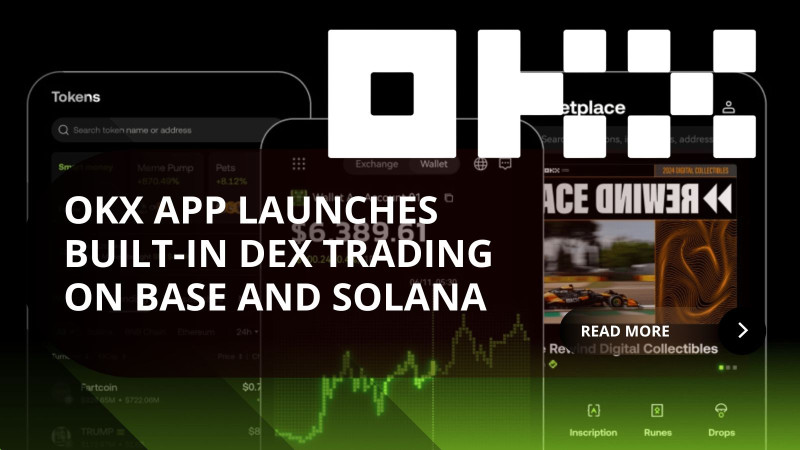
OKX Launches Built-In DEX Trading Across Base, Solana and X Layer
OKX Launches Unified DEX Trading for Base, Solana and X Layer
The global crypto exchange OKX has introduced a major upgrade to its app that integrates decentralized exchange (DEX) trading across multiple chains: Base, Solana and its own X Layer network. Users can now execute decentralized trades inside the OKX mobile application, enabling both centralized and decentralized trading from a single interface.
This move signals a new phase of centralized exchanges embracing DeFi liquidity rather than competing against it.
Unified interface for CEX and DEX
OKX’s update allows users to shift seamlessly between centralized order-books and on-chain markets. The wallet automatically sets up a self-custody passkey wallet when DEX mode is activated, ensuring users retain control of private keys while trading decentralized liquidity.
Liquidity is aggregated from more than 100 pools across supported chains, enabling the app to route orders toward the best available price.
Multi-chain support: Base, Solana and X Layer
-
On Base the integration taps into the growing ecosystem of Web3 apps building on its Ethereum-compatible roll-up.
-
On Solana the feature connects to high-performance on-chain DEXs that specialize in ultra-low fees and high throughput.
-
On X Layer OKX’s own modular Layer-2 supports EVM equivalence, throughput of several thousand transactions per second and is positioned to be a key part of OKX’s future modular infrastructure.
Self-custody meets exchange convenience
OKX emphasizes that users retain full self-custody of the DEX trades while benefiting from the liquidity and user-experience of a large exchange. For many retail users this removes the friction of switching between wallet apps, bridges and trading venues.
Lowering friction between CEX and DeFi
Historically traders faced two worlds: centralized exchanges (fast, liquid, custodial) and decentralized exchanges (non-custodial, self-sovereign, often clunkier). OKX’s integration helps bridge that divide. By offering both modes in one app it reduces switching cost and increases accessibility to on-chain markets.
Supporting multi-chain adoption
By including Base, Solana and X Layer networks OKX is betting that multi-chain strategies will dominate Web3. Users can access tokens, swaps and liquidity beyond a single network and participate in ecosystems that specialize in performance, low cost and innovation.
Strategic advantage for OKX
For OKX this feature furthers differentiation. Many exchanges now support wallet-apps, but fewer integrate full DEX trading across major chains inside their main app. OKX’s move could drive retention, user growth and stronger positioning in both CEX and DeFi sectors.
The broader context in DeFi evolution
Decentralized exchange volumes recently reached record highs with monthly totals exceeding $600 billion. The early DeFi wave emphasized pure open protocols while the current phase is more about unified UX, interoperability and ease of on-chain access from mass-market portals. OKX’s upgrade is consistent with this maturation trend.
At the same time, other major platforms are pursuing similar strategies. For example Coinbase recently added DEX access for Base network tokens and Binance has integrated wallet-native DEX routing on its app. OKX’s multi-chain DEX rollout therefore represents an escalation.
Potential risks and challenges
-
Liquidity fragmentation: Even though OKX aggregates over 100 pools, liquidity on some chains and tokens may still be shallow, increasing slippage for large trades.
-
Smart-contract and chain risk: Trading on-chain introduces protocol risks like bridge failures, network downtime or contract exploits which are less common on centralized markets.
-
Centralization criticism: While the feature offers non-custodial trading, critics may argue that routing via a centralized app reintroduces centralization trade-offs under the guise of decentralization.
-
User education: Retail users may assume the same protections apply across CEX and DEX modes; mismatches in custody, recovery or regulation awareness could lead to errors.
What to watch next
-
Adoption metrics: How many users enable the DEX mode and how much trading volume flows through the integrated system on each of the three chains.
-
Token listings: Will OKX prioritize new token launches or cross-chain assets via DEX mode, and how quickly will additional chains be added?
-
Development of X Layer: As OKX’s proprietary roll-up matures, liquidity and user activity on that network will be a key strategic indicator.
-
User experience and security feedback: Reports of slippage, wallet setup issues or custody concerns could influence how successful the rollout is.
-
Competitive responses: How other major exchanges respond with similar features, and whether this becomes standard across the industry.
Final thoughts
OKX’s rollout of built-in DEX trading across Base, Solana and X Layer marks a meaningful evolution in the convergence of centralized exchanges and decentralized finance. By enabling users to access on-chain liquidity from within a trusted exchange app, OKX is making DeFi more accessible, multi-chain, and user-friendly.
For traders and DeFi enthusiasts this is a powerful tool: multi-chain access, self-custody trading and deep-liquidity routing in a single environment. For OKX it is a strategic differentiation as the industry moves into its next phase of scale and adoption.
That said, execution will matter: how smoothly the feature works, how security is upheld and how users adopt it will determine whether this raises the bar for exchange-DeFi integration or remains a headline feature.
If OKX nails it, the result could be a clearer path for the average user to interact with DeFi fully, from wallet to swap to multi-chain strategy...all inside one seamless interface.
Stay Connected
You can stay up to date on all News, Events, and Marketing of Rare Network, including Rare Evo: America’s Premier Blockchain Conference, happening July 28th-31st, 2026 at The ARIA Resort & Casino, by following our socials on X, LinkedIn, and YouTube.
Apex Fusion Unlocks Native USDC Liquidity for Cardano with Stargate Integration
Apex Fusion Brings Native USDC Liquidity to Cardano Through Stargate Integration
The Cardano DeFi ecosystem just gained a major boost. Apex Fusion, the rapidly growing interoperability and liquidity infrastructure, has officially integrated with Stargate to bring native USDC liquidity into the Cardano network.
For years, one of Cardano’s biggest challenges has been stablecoin liquidity and accessibility. With this move, Apex Fusion has not only solved a long-standing gap but also laid the groundwork for Cardano’s entry into the next era of multi-chain DeFi. This is a world where assets and liquidity flow freely across ecosystems, supported by security and efficiency.
Apex Fusion’s Mission and Vision
Apex Fusion is more than just another blockchain project. It is an interoperability framework that connects multiple ecosystems, including Cardano, Ethereum, Arbitrum, and others, while maintaining native-level security and performance.
At the heart of its architecture are two key components:
-
VECTOR, a Cardano-aligned chain designed for speed, scalability, and native interoperability.
-
NEXUS, an EVM-compatible layer that connects Apex Fusion to major ecosystems like Ethereum, Polygon, and Arbitrum.
Together, these two layers form a cross-chain bridge that allows assets and liquidity to move natively between Cardano and other leading blockchains. The goal is simple but ambitious: to build a unified and interconnected ecosystem where liquidity, applications, and users can move without friction.
By integrating with Stargate, Apex Fusion has now given Cardano direct access to native USDC, one of the most trusted and widely used stablecoins in the world.
How the Stargate Integration Works
The integration between Apex Fusion and Stargate is designed to make cross-chain liquidity transfer seamless, secure, and efficient.
-
Native USDC Liquidity Onboarding:
Stargate’s omnichain technology enables the movement of stablecoins like USDC across multiple networks. Apex Fusion has built the connection point that allows that same liquidity to reach Cardano without using wrapped or synthetic assets. -
Secure Interoperability via VECTOR and NEXUS:
Within Apex Fusion, VECTOR manages the Cardano-side logic, while NEXUS acts as the interoperability layer to EVM-compatible ecosystems. Together, they form the infrastructure that allows USDC to flow natively between chains. -
Liquidity Activation:
The Apex Fusion Foundation has seeded $2.5 million in USDC liquidity to immediately activate use cases within the Cardano DeFi space, such as lending protocols, decentralized exchanges, and yield aggregators. -
Unified Liquidity Pools:
This integration means Cardano DeFi apps can now tap into the same liquidity pools available to Ethereum, Arbitrum, and other ecosystems. This creates a unified DeFi environment where users experience real interoperability instead of isolated markets.
Why This Is a Major Win for Cardano DeFi
Cardano’s DeFi ecosystem has grown steadily in recent years, but it has often faced limitations due to the absence of deep stablecoin liquidity. That changes now.
With Apex Fusion’s Stargate integration:
-
Developers gain access to reliable stablecoin infrastructure, allowing them to build products like lending platforms, automated market makers, and cross-chain DeFi applications without workarounds.
-
Investors and liquidity providers can finally deploy USDC natively within Cardano protocols, unlocking opportunities for yield and liquidity strategies that were previously only available in EVM ecosystems.
-
Cardano’s DeFi TVL (total value locked) could see substantial growth, as stablecoins are the foundation of liquidity and DeFi scalability.
This is not just a bridge. It is a breakthrough that allows Cardano to compete directly with ecosystems like Ethereum, Solana, and Arbitrum, while maintaining its unique strengths in scalability, security, and research-driven design.
Apex Fusion: Uniting The World of Web3
What makes Apex Fusion’s achievement so powerful is its broader vision. The team is not just solving liquidity for Cardano; they are building the foundation for true multi-chain interoperability.
Recent milestones demonstrate this clearly:
-
LayerZero Integration: Apex Fusion’s NEXUS layer now connects to over 145 blockchains, enabling unified liquidity and messaging across EVM and non-EVM chains.
-
Zero-Wrapping Architecture: Assets move in native form, meaning no synthetic tokens or wrapped versions that create unnecessary risk or complexity.
-
Cross-Chain Data Flow: Beyond liquidity, Apex Fusion is building systems that allow contracts and applications to communicate across chains, a key step for the next evolution of decentralized apps.
The result is an infrastructure that benefits not only Cardano but the entire DeFi ecosystem. It is the type of cross-chain standard that blockchain developers have been waiting for — one that brings real usability, real assets, and real scalability to Web3.
The Broader Implications
This integration will likely reshape how developers and users view Cardano. For the first time, the network can fully participate in global stablecoin markets, attract liquidity from other ecosystems, and host DeFi applications that rival those on Ethereum and beyond.
It also reinforces Cardano’s reputation as a blockchain that is evolving rapidly beyond its early image. The combination of Apex Fusion’s interoperability and Cardano’s scalability positions both at the center of what could become a more unified and efficient financial layer for Web3.
Apex Fusion has proven that interoperability is not just about connecting blockchains. It is about connecting opportunities, liquidity, and innovation.
Learn More About Apex Fusion
For readers who want to explore more about Apex Fusion’s technology, mission, and ongoing integrations, visit the following official links:
- Website: https://apexfusion.org/
- Twitter (X): https://x.com/apexfusion
- Discord: https://discord.com/invite/2nSBGyvjpZ
- LinkedIn: https://www.linkedin.com/company/apexfusioncore
- Telegram: https://t.me/apexfusion
These channels provide regular updates on partnerships, cross-chain integrations, and developer programs for Apex Fusion.
Final Thoughts
The Stargate integration is a defining moment for Apex Fusion's mission of uniting the world of Web3.. It delivers something the community has long wanted: native USDC liquidity, real interoperability, and access to global DeFi capital.
For Cardano, it represents the evolution from a promising platform to a fully connected ecosystem ready to compete with the largest chains in DeFi.
For Apex Fusion, it is a validation of their approach to building bridges that do not compromise decentralization or user trust.
As DeFi continues to move toward a multi-chain world, Apex Fusion and Cardano are proving that collaboration, not isolation, is the key to growth.
By connecting the dots between ecosystems, they are not just improving liquidity — they are helping to build the infrastructure for the next era of blockchain finance.
Stay Connected
You can stay up to date on all News, Events, and Marketing of Rare Network, including Rare Evo: America’s Premier Blockchain Conference, happening July 28th-31st, 2026 at The ARIA Resort & Casino, by following our socials on X, LinkedIn, and YouTube.
Rare Network: Building Beyond Live Events
Rare Network: Building Beyond Live Events
When people hear the name Rare Network, the first thought is often, "Oh, those are the guys behind the Rare Evo convention and live events." It’s true—Rare Network has become well known for its successful live events, including the Rare Evo convention and Rare Socials. However, what many don't realize is that there's much more happening behind the scenes at Rare Network than just organizing and executing events.
While we frequently talk to people about Rare Evo, our media ventures, and our live event plans, we rarely dive into the long-term vision for Rare Network. We're not just focused on improving each event, clawing our way to better experiences year after year. Instead, we’re also building a robust ecosystem for the future.
Let’s start with our tech stack, a topic anyone who’s been frustrated by high event fees can relate to.
Tackling the Live Event Monopoly
Do you hate Ticketmaster’s fees? Most of us do. Ticketmaster, with its $18 billion monopoly on live event ticketing, often burdens consumers with outrageous fees. Ever bought a $15 ticket to a sports event, only to get slapped with an additional $12 in fees? Or perhaps your favorite concert cost $50, but suddenly, it's $62 due to processing charges.
The situation isn't much better for conventions. The high costs for convention tickets can often be traced back to Cvent, a $4 billion company that monopolizes the backend of live events—everything from booth mapping to agenda management, hotel block arrangements, and affiliate programs. This Software-as-a-Service (SaaS) model takes a large slice of ticket revenue for its services.
Recognizing these pain points, we decided to build our own backend systems at Rare Network. Over the past two years, we’ve developed both a Web2 and Web3 tech stack that runs without the excessive fees that plague the industry. We’ve already tested it in live scenarios, where flawless performance is critical.
At the 2024 Rare Evo event, over 2,200 attendees checked in using a mix of Web2 and NFT tickets. Whether they were exhibitors, speakers, sponsors, or general attendees, the process was seamless, and the attendees didn’t miss Ticketmaster at all.
Expanding Into a Multi-Chain Future
But this is just the beginning. By 2025, we aim to take our ticketing system multi-chain, allowing attendees to buy tickets using various blockchains. We’re also committed to ensuring that even those unfamiliar with blockchain technology can easily purchase tickets using traditional methods, like credit cards.
This multi-chain approach will yield valuable insights into user preferences, showing us which chains people prefer for purchasing and minting tickets. Over time, this data will offer a more accurate reflection of consumer behavior than metrics like wallet counts or transaction volumes, which can sometimes be manipulated by bots. Live event check-ins, however, are human-driven and harder to spoof.
Creating a Seamless Event Experience
Once you’ve checked in at Rare Evo, the real experience begins. Our website—and soon, our mobile decentralized app (dApp)—offers easy access to essential event information like the agenda, speaker lists, and event tracks. Our interactive event and booth map allows attendees to explore sponsors or exhibitors through a zoom feature, all without the high costs of using Cvent’s software. Attendees barely notice the difference, but we’re providing a much more cost-effective solution.
Of course, we still have plenty of improvements to make. We're constantly iterating and refining the agenda and booth mapping experience. We recently rolled out a decentralized affiliate program and are working on affiliate bounties. Additionally, we’re exploring new ways to facilitate communication between attendees and exhibitors to foster greater interaction at our events.
A Glimpse Into the Future
If you’ve stuck with us this far, here's a bit of alpha for you. You’ve probably noticed those Web2 reward points on our website. If our lawyers wrap things up smoothly, there’s a chance that these points could convert into a token in the future. Stay tuned for updates!
As we continue to build Rare Network, we’re excited to share more through Rare Network Media and Rare Network State. So, when you think about Rare Network in the future, remember—we’re far more than just live events.
Written by Rand McHenry