#Aster

Aster Opens Public Layer-1 Testnet Ahead Of Mainnet

Aster has taken its biggest step yet toward becoming a standalone blockchain.
The decentralized trading platform announced that its Layer-1 testnet is now live and open to all users, moving the project out of private testing and into a broader public phase. The launch puts Aster on track for a planned mainnet debut later this quarter and signals a clear shift in strategy, from operating across multiple chains to running its own purpose-built network.
For a project that started as a perpetual futures DEX, the move reflects how competitive onchain trading has become. Speed, execution quality, and control over infrastructure are now as important as liquidity.
From Perp Dex To Full Blockchain
Aster originally gained traction by offering perpetual futures trading across major networks like Ethereum, BNB Chain, Arbitrum, and Solana. Its pitch was simple but effective: capital-efficient trading, deep liquidity aggregation, and tools designed to limit front-running and MEV.
That model worked, but it also came with constraints. Relying on shared blockspace means competing with unrelated activity, dealing with variable fees, and making tradeoffs on latency. As onchain derivatives volumes surged over the past year, those limitations became harder to ignore.
The Layer-1 effort is Aster’s answer. Instead of adapting to general-purpose blockchains, the team is building a network optimized from the ground up for trading.
What Makes Aster Chain Different
Aster Chain is designed specifically for high-frequency, high-volume trading. The focus is on fast finality, high throughput, and predictable execution, features that traders typically associate with centralized venues.
Privacy is another core element. The chain integrates zero-knowledge proofs to allow trades to be verified onchain without broadcasting sensitive order details. That matters in derivatives markets, where exposed positions can attract front-running and liquidation pressure.
Rather than positioning itself as a broad smart contract platform, Aster is leaning into specialization. The goal is to make the chain feel like trading infrastructure first, DeFi playground second.
Testnet Goes Public
Until recently, access to the Aster testnet was limited. An early cohort of about 1,000 users, selected from hundreds of thousands of applicants, was invited to test core features like perpetual trading, spot markets, and order execution. Those users received test tokens through a faucet and were encouraged to stress the system and report bugs.
Opening the testnet to everyone marks a shift from controlled experimentation to real-world simulation. More users mean more edge cases, more feedback, and a better sense of how the chain performs under load.
For Aster, it is also a signaling moment. Public testnets are where projects start to be judged less on vision and more on execution.
The Road Ahead
The testnet launch feeds directly into Aster’s broader 2026 roadmap. The next major milestone is the Layer-1 mainnet launch, currently targeted for the first quarter of the year.
Beyond that, the team plans to roll out developer tooling, staking and governance features tied to the ASTER token, and deeper integrations for fiat on-ramps and off-ramps. There are also plans for advanced order types, expanded real-world asset markets, and additional privacy features aimed at professional traders.
If it works, Aster could end up occupying a middle ground that many projects talk about but few achieve: the speed and sophistication of centralized exchanges, delivered through decentralized infrastructure.
Competitive Pressure And Open Questions
Aster is not alone in betting on custom blockchains for trading. Several derivatives platforms are exploring similar paths, all chasing the same prize: better execution without sacrificing self-custody.
The challenge will be adoption. Traders are pragmatic, and loyalty is thin. Aster’s Layer-1 will need to prove not just that it works, but that it works better, consistently, and at scale.
There are also the usual caveats. Testnet tokens have no value, timelines can slip, and regulatory uncertainty still hangs over derivatives trading in many regions.
Still, the public testnet launch is a meaningful milestone. It shows that Aster is serious about owning its infrastructure and confident enough to put it in front of the wider market.
For now, the real test begins.
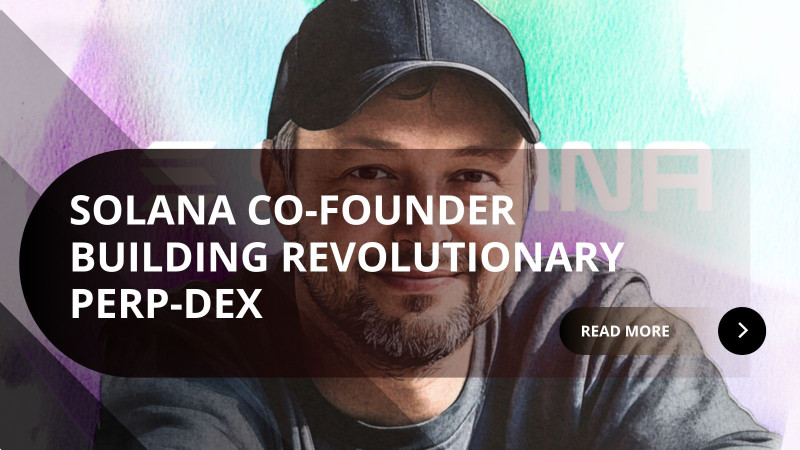
Solana Co-Founder Anatoly Yakovenko Reveals Percolator, a New Perp DEX Design
Anatoly Yakovenko, co-founder of Solana, has introduced a blueprint for a decentralized perpetual futures exchange called Percolator. The design was released publicly and is positioned as a potential Solana-native alternative to established platforms such as Hyperliquid and Aster.
A Solana-Native Exchange Concept
Percolator is described as an “implementation-ready” framework for a perpetual futures DEX that runs directly on Solana. Unlike centralized exchanges, it would rely on a sharded architecture to distribute trading activity across multiple “slabs.” Each slab acts as an independent engine, handling its own set of markets in parallel.
A router layer would manage collateral, portfolio margining, and the routing of trades between slabs. The goal is to achieve low-latency execution at scale, reduce congestion during high demand, and allow users to retain custody of their assets while trading.
Yakovenko has suggested that this design could enable centralized-exchange-level speeds within a fully decentralized structure. If implemented, it would represent a step forward in marrying the performance advantages of Solana with the growing demand for decentralized derivatives.
Addressing a Market Gap
Perpetual futures have become one of the most active areas of crypto trading, often accounting for a large share of overall derivatives volume. Platforms such as Hyperliquid and Aster have attracted significant activity, but Solana has not yet established a dominant native alternative in this space.
Percolator is seen as a way to change that. By offering a blueprint for a scalable and efficient perp DEX, the design could strengthen Solana’s DeFi ecosystem and attract more sophisticated traders. It would also broaden the network’s use cases beyond its reputation for high-speed transactions and meme coin speculation.
Open Development Approach
One notable feature of Yakovenko’s announcement was the decision to publish the design openly on GitHub. Rather than launching Percolator as a closed project, he invited developers to experiment, adapt, and build upon the code.
This open-source approach aligns with Solana’s broader strategy of encouraging community-driven innovation. It positions Percolator not just as a single potential product, but as a framework that could inspire multiple teams and projects across the ecosystem.
Challenges and Risks
Despite the enthusiasm, there are several challenges. Yakovenko himself has downplayed expectations, noting that the release was experimental and not necessarily a commitment to launching a production-ready DEX.
Regulatory pressure is another factor. Perpetual futures are leveraged products that have drawn scrutiny from regulators worldwide. Operating such markets in a decentralized structure could bring legal uncertainty, especially if they attract high volumes.
Technical risks also remain. Building and maintaining a sharded DEX with multiple trading engines introduces complexity, and it is unclear how the design would perform under sustained high-volume trading. Competition is also fierce, with other perp DEXs already establishing liquidity and user bases.
The Outlook for Solana
Even with these risks, Percolator underscores Solana’s ambition to expand into more advanced financial infrastructure. The release highlights the network’s strengths in throughput and efficiency, while showing a willingness to experiment in areas that are becoming increasingly important to crypto markets.
If the concept develops into a working platform, it could elevate Solana’s role in decentralized finance and attract a new wave of derivatives traders. Even if it does not, the blueprint has already sparked discussion about what is possible when high-performance blockchains are combined with open-source collaboration.
Conclusion
Percolator is not yet a product, but it is a statement of intent. It reflects Yakovenko’s ongoing focus on technical experimentation and Solana’s drive to compete at the highest levels of decentralized finance. Whether it emerges as a functioning exchange or remains a reference design, it signals a move toward more complex, scalable infrastructure that could shape the future of on-chain derivatives.