#Blockchain Adoption
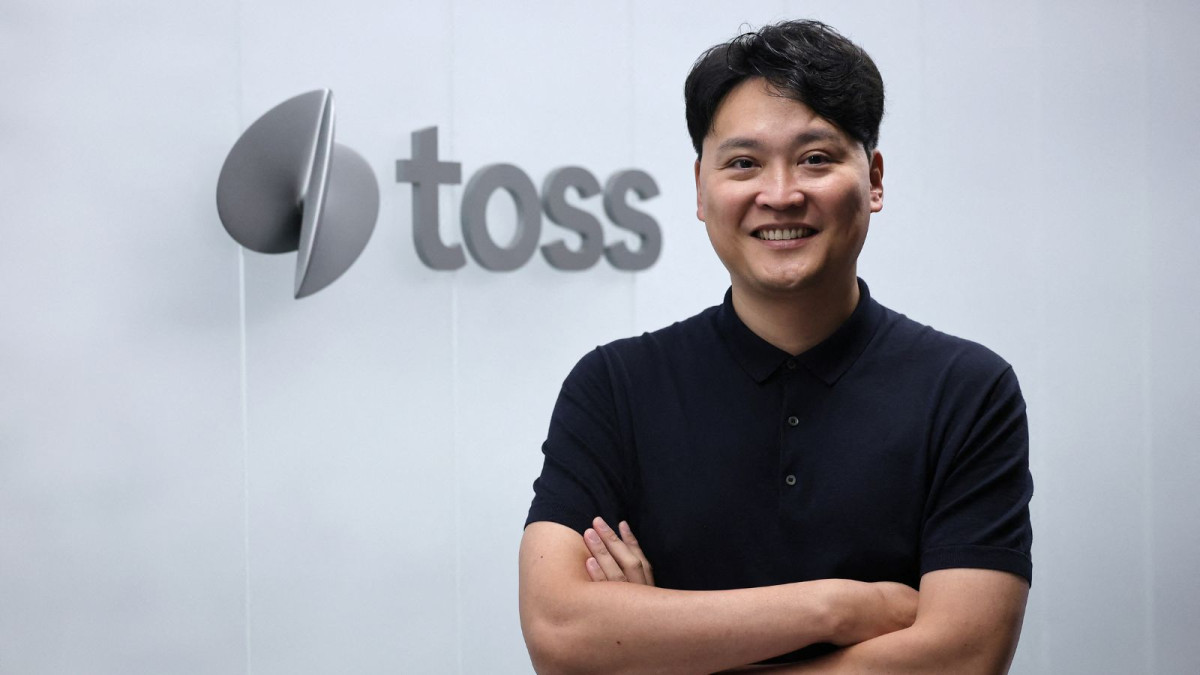
Toss Eyes Blockchain Network and Native Crypto Token

South Korean fintech and payment company Toss is reportedly considering the launch of its own blockchain network and a native cryptocurrency token for its payment and financial services.
While preparations had already begun, Blockmedia, one of South Korea’s leading cryptocurrency media outlets, reports that the firm has not yet decided whether to launch a Layer 1 or Layer 2 blockchain, as decision-making has been paused amid delays in some compliance discussions.
By launching its own blockchain, Toss would be building a solid infrastructure for its super app, enabling the integration of several blockchain features, including on-chain finance, scalability, and smart contracts, into its existing payment system.
Toss: A Crypto-Friendly Fintech Platform
Despite operating mostly in the traditional finance space and amassing over 30 million registered users, about 60 percent of the population of South Korea, Toss has long been taking several pro-blockchain and crypto-friendly steps.
In June 2025, Toss, through its Stablecoin Task Force led by Chief Business Officer Kyuha Kim, filed 24 stablecoin applications with the Korean Intellectual Property Office, the country’s trademark and patent authority, securing stablecoin names including TOSSKRW. During the same period, Toss Bank, its banking subsidiary, submitted 48 additional stablecoin-related applications.
These efforts were part of Toss’s broader strategy to establish a position in South Korea’s crypto sector as a potential issuer of Korean won-backed stablecoins. The company also began recruiting blockchain engineers to advance this initiative.
In March 2026, at the Seoul Blockchain Meetup Conference in Seoul, Toss unveiled its Money 3.0 vision, which it describes as the next era of money.
According to Toss, this vision leverages blockchain and stablecoins to build a digital money system that combines programmability, borderless transactions, and composability, extending beyond the physical cash era of Money 1.0 and the electronic fiat money era of Money 2.0.
At the same event, Toss publicly announced plans to issue and distribute its Korean won-backed stablecoin.
Despite recent regulatory pressure on non-compliant cryptocurrency exchanges in South Korea, several fintech companies and banking institutions in the country, including Toss, have continued to adopt and integrate blockchain technology into their systems.
KakaoPay, a major domestic fintech company, recently joined the Coinbase-led x402 Foundation, a move that suggests potential future integration of blockchain technology into its payment systems. In addition, around eight domestic banks formed a consortium last year to jointly explore issuing Korean won-backed stablecoins.

Schwab Jumps into the Crypto Ring: A New Era for TradFi?

The walls between Wall Street and the "Wild West" of digital assets just got a little thinner.
Charles Schwab, the stalwart of retail investing, has officially signaled its intent to join the spot crypto trading fray.
CEO Rick Wurster confirmed on Yahoo Finance’s Opening Bid podcast that Schwab plans to roll out spot Bitcoin and Ethereum trading within the next 12 months. The rollout will debut on their high-octane Thinkorswim platform before migrating to the standard Schwab.com and mobile interfaces.
The Strategy: Blue Chips Only
While platforms like Robinhood or Coinbase often lean into the viral chaos of "meme coins," Schwab is taking a predictably measured approach. Wurster made it clear that the firm isn't interested in the speculative frenzy of the latest Shiba Inu derivative.
"Those are areas we will leave to the side," Wurster stated, emphasizing that Schwab’s focus remains on "everyday investors" looking to integrate crypto into a diversified, long-term portfolio.
A Shifting Regulatory Tide
Schwab isn't acting in a vacuum. The move comes as the regulatory environment in Washington undergoes a massive vibe shift. Since the Trump administration took office, the SEC has pivoted from its previously aggressive "regulation by enforcement" stance.
With the swearing-in of the pro-crypto Paul Atkins as SEC Chair—replacing the crypto-skeptic Gary Gensler—lawsuits against major exchanges have been dropped, and restrictive accounting rules for banks holding crypto have been scrapped. Morgan Stanley is reportedly following a similar blueprint, with eyes on adding spot trading to E*Trade by 2026.
Ty’s Take: The View from the New Guy
As someone who is relatively new to the financial industry, watching this unfold feels like seeing a massive cruise ship finally decide to change course. For years, the "old guard" of finance treated crypto like a radioactive hobby. Now, they're laying out the red carpet.
My honest opinion? This is the "Adults in the Room" moment for crypto.
I think Schwab’s decision to avoid meme coins is a brilliant move for their brand. It tells their clients: "We aren't here to help you gamble; we're here to help you invest." For a guy like me, seeing these legacy institutions provide a regulated, familiar bridge to Bitcoin makes the space feel less like a casino and more like a legitimate asset class.
However, there’s a catch. Part of me wonders if Schwab is a little late to the party. By the time they launch, many retail investors may have already set up shop elsewhere. But if there’s one thing I’ve learned in my short time here, it’s that you never bet against the convenience of having all your money—stocks, bonds, and now crypto—under one roof.
The "crypto winter" is officially over, and the thaw is being led by the very people who once told us to stay away. It’s an exciting time to be entering the industry, even if it means I have a lot more homework to do on blockchain tech.

Cardano Partners With Draper Dragon on $80M Fund to Drive Global Adoption
Cardano has talked for years about building real world infrastructure, institutional grade DeFi, and sustainable on chain growth. This week, it put real numbers behind that vision.
In a newly published governance proposal, the Cardano Foundation outlined a strategic partnership with Draper Dragon and Draper University to launch a long term ecosystem investment vehicle targeting up to $80 million. If approved by the community, it would become one of the largest and most structured ecosystem funds ever attempted by a Layer 1 network.
The goal is simple on paper and ambitious in practice: use treasury capital not just to fund grants, but to invest like a professional venture fund, grow real businesses on Cardano, and ultimately return capital and profits back to the Cardano treasury itself.
For a blockchain ecosystem that has often been criticized as slow moving or overly academic, this proposal signals a clear shift toward execution, markets, and measurable outcomes.
What is actually being proposed
At the center of the plan is the Cardano x Draper Dragon Ecosystem Fund, a multi year investment fund designed to back Cardano aligned startups from early accelerator stages through pre Series A.
The total target size is $80 million. Of that, $75 million would come from the Cardano treasury, deployed gradually over at least six years. The remaining $5 million would be raised from external limited partners, mainly strategic investors rather than passive capital.
This is not framed as a one off spend. The fund is explicitly designed to operate like a venture vehicle, with equity and token investments, portfolio construction, follow on support, and an expectation of returns. If the fund performs, capital flows back to the treasury, not out of the ecosystem.
That distinction matters.
Why Cardano is doing this now
For years, Cardano has relied heavily on grants, community programs, and infrastructure funding. Those tools helped bootstrap the ecosystem, but they also created a gap.
Many teams could build prototypes, but struggled to scale, raise follow on capital, or break into global markets. Grants alone do not solve distribution, liquidity, or institutional credibility.
This fund is designed to fill that gap.
Instead of asking builders to leave the ecosystem once they outgrow grants, Cardano wants to offer a full pipeline: education, early capital, growth support, and access to a global venture network.
It also aligns closely with Cardano’s broader 2030 strategy, which is increasingly focused on hard KPIs like total value locked, monthly active users, transaction volume, and real revenue.
In short, this is Cardano saying it wants to compete not just on research and decentralization, but on adoption and outcomes.
The structure is unusually deliberate for crypto
One of the most notable aspects of the proposal is how traditional it is, in a good way.
The fund would be managed by Draper Dragon through a standard GP and LP structure. Draper Dragon would handle investment decisions, portfolio management, and execution. The Cardano Foundation would not pick deals or manage capital. Its role is governance coordination, ecosystem support, and ensuring the treasury’s interests are represented.
The treasury itself would participate through a special purpose vehicle set up specifically to hold the fund interest for Cardano’s economic benefit.
This separation of roles is important. It reduces conflicts, clarifies accountability, and aligns the structure with how institutional venture capital actually works.
Crypto has seen plenty of ecosystem funds announced with vague mandates and little follow through. This one reads like it was designed by people who have actually run funds before.
How the money gets deployed
The proposed allocation of the $75 million treasury portion is broken down clearly.
Roughly $50 million is earmarked for direct investments into startups building on Cardano. These would range from post accelerator teams to companies approaching Series A, with flexibility to adapt as markets change.
About $11.5 million is allocated to growth capital. This is where things get interesting. Growth capital can be used for exchange introductions, liquidity strategy, marketing support, partnerships, and hands on help scaling products. This is the unglamorous but critical work that often determines whether a project actually gains users.
Another $6 million is dedicated to education and talent development. This includes a structured accelerator program and a shorter Hacker House format designed to turn developers into founders.
The rest covers management fees and operational expenses, which are laid out transparently and capped.
What stands out is that unspent funds from one category can be recycled into others. If fewer educational dollars are needed in a given year, more can flow into direct investments. The capital stays productive.
The Draper advantage
Draper Dragon brings something Cardano has historically lacked: deep, global venture connectivity.
Founded in 2006, Draper Dragon sits within the broader Draper network and has experience investing across Asia, the US, and emerging markets. Draper University adds an education layer that is tightly integrated with venture funding, not bolted on as an afterthought.
That combination matters for Cardano’s ambitions around real world assets, institutional DeFi, and enterprise adoption. These are not purely crypto native markets. They require regulatory awareness, credible founders, and relationships outside the usual Web3 bubble.
This partnership is effectively Cardano buying itself a seat inside a global venture ecosystem, rather than trying to build one from scratch.
External investors are a feature, not a bug
Some community members may ask why any outside investors are involved at all.
The answer is leverage.
The proposal allows up to $5 million from external limited partners. These are positioned as strategic investors who bring more than money. Think exchanges, infrastructure providers, family offices, and ecosystem funds that can open doors.
In practical terms, this helps Cardano projects access liquidity, users, and partnerships faster. It also signals to the market that Cardano is investable, not just ideologically interesting.
Importantly, the treasury remains the dominant LP. The ecosystem is not being diluted. It is being amplified.
Returns, accountability, and transparency
The fund targets venture style returns, roughly a 3x gross multiple and a 25 percent plus internal rate of return. Those numbers are ambitious, but not unrealistic in early stage crypto investing if execution is strong.
More importantly, the proposal commits to regular public reporting. That includes quarterly updates, ecosystem KPIs, program outcomes, and ongoing community engagement through AMAs and open forums.
Not everything can be public. Deal terms and valuations are sensitive by nature. But the intent is clear: this is not meant to be a black box.
Over time, the team has even floated the idea of on chain verification of certain fund data, which would be a meaningful innovation if delivered.
Risks are real, but so is the upside
No venture fund is risk free. Returns are uneven. Markets change. Governance processes introduce delays. Crypto adds volatility on top of all of that.
But the alternative is stagnation.
Without a structured way to support teams beyond grants, ecosystems tend to lose their best builders to better funded chains. This proposal directly addresses that risk.
It also introduces something crypto treasuries rarely attempt: recycling capital instead of just spending it.
If successful, this fund could become a blueprint not just for Cardano, but for how decentralized networks think about long term sustainability.
Why this matters beyond Cardano
Zooming out, this proposal reflects a broader maturation of the crypto industry.
The era of infinite incentives and short term hype is fading. Networks are being forced to think like economies, not marketing campaigns.
Cardano partnering with Draper Dragon is a statement that serious adoption requires serious capital allocation, professional management, and patience.
This is not about chasing the next cycle. It is about building companies, users, and revenue that still matter years from now.
If the community approves it, Cardano will be making one of the boldest governance backed investments in its own future that the industry has seen.
Stay Connected
You can stay up to date on all News, Events, and Marketing of Rare Network, including Rare Evo: America’s Premier Blockchain Conference, happening July 28th-31st, 2026 at The ARIA Resort & Casino, by following our socials on X, LinkedIn, and YouTube.
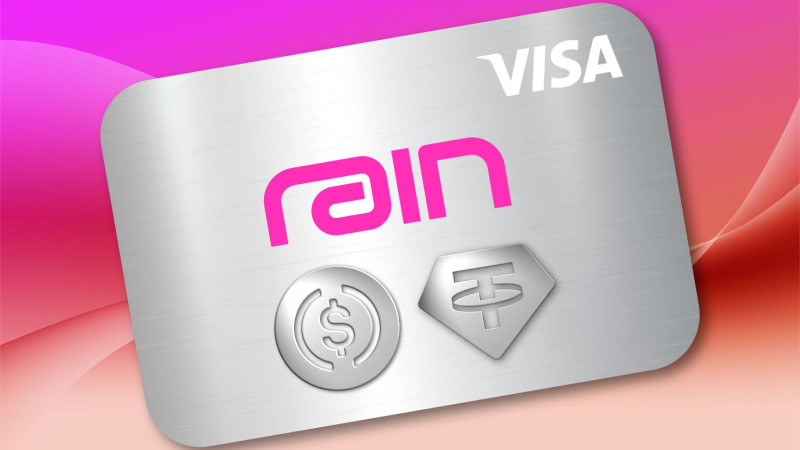
Stablecoin Payments Firm Rain Hits $1.95B Valuation in Major Funding Round
Rain’s Big Raise Signals Stablecoins Are Moving Toward Everyday Money

Rain just raised $250 million at a valuation just shy of $2 billion, and the size of the round is only part of the story.
What really stands out is what investors are backing. This is not a bet on a new token, a trading platform, or a speculative crypto narrative. It’s a bet that stablecoins are quietly becoming part of the global payments system, and that Rain is positioning itself as one of the companies building the pipes.
For years, stablecoins have been treated as a behind-the-scenes tool for traders and crypto-native users. Rain is trying to move them out of the background and into everyday spending.
What Rain Actually Builds
Rain describes itself as stablecoin payments infrastructure, but in practice, it operates more like a full-stack payments company.
The platform allows partners to issue payment cards that are directly connected to stablecoin balances. Those cards can be used anywhere Visa is accepted, which immediately changes how practical stablecoins become for everyday use. From the user’s perspective, it looks and feels like a normal card transaction. Under the hood, the value is settled using stablecoins.
Rain also provides wallets, on- and off-ramps, compliance tooling, and APIs that enterprises can plug into. The goal is to let fintechs, crypto companies, and global platforms launch stablecoin-based payment products without having to build payments infrastructure from scratch.
This setup is already live across more than 150 countries, giving Rain a global footprint that goes well beyond experimental pilots.
The Visa Connection Is a Big Part of the Story
One of the reasons Rain stands out is its direct relationship with Visa.
Rain is a Visa principal member, which means it can issue cards directly on the Visa network rather than relying on third-party sponsors. That status is not trivial. It places Rain closer to traditional payments infrastructure while still operating on crypto rails.
Even more important is how settlement works. Rain has been involved in Visa’s move toward stablecoin settlement, allowing card transactions to be settled on chain using stablecoins rather than relying entirely on legacy banking settlement systems. That opens the door to faster settlement cycles, including weekends and holidays, and reduces some of the friction that exists in traditional cross-border payments.
In simple terms, Visa handles the merchant acceptance and point-of-sale experience. Rain handles the stablecoin side of the transaction. Together, they create something that looks familiar to users but operates very differently in the background.
Why Investors Are Paying Attention
Rain’s growth metrics look more like a payments company than a typical crypto startup.
The company reports billions of dollars in annualized transaction volume, rapid growth in active cards, and a growing list of enterprise partners using its infrastructure to launch payment programs. That traction helps explain why investors were willing to price the company near $2 billion in this round.
The investor roster also tells a story. The round was led by a major growth firm, with participation from both traditional venture capital and crypto-focused investors. That mix suggests Rain is being viewed as a bridge company, one that sits between fintech and crypto rather than fully in either camp.
The fresh capital is expected to support expansion into new markets, deeper enterprise integrations, and continued investment in compliance and licensing, which remain critical for any payments business operating at global scale.
Stablecoins Are Shifting From Trading Tools to Payment Rails
Rain’s rise comes as stablecoins themselves are going through a quiet identity shift.
They still play a major role in trading and on-chain finance, but more companies are now looking at them as a way to move dollar-like value globally with fewer intermediaries. The challenge has always been usability. Most people do not want to think about wallets, gas fees, or blockchain confirmations when they pay for something.
Rain’s model hides that complexity. Users swipe a card. The merchant gets paid. The settlement happens using stablecoins in the background.
That approach aligns with a broader trend across payments and fintech, where blockchain is increasingly treated as infrastructure rather than a product in itself.
A Competitive Landscape and Real Execution Risk
None of this guarantees success.
The space is getting crowded. Other crypto infrastructure companies are building similar tools, and large fintechs and banks are experimenting with stablecoin settlement of their own. Regulatory frameworks are evolving, but uncertainty still exists, especially across jurisdictions.
Rain’s challenge now is execution. Scaling payments infrastructure is hard. Doing it globally, while staying compliant and reliable, is even harder. The Series C gives Rain the resources to try, but the next phase will be about proving that stablecoin-powered payments can move from niche programs to mainstream usage.
Why This Matters
Rain’s funding round is a signal that the crypto market’s focus is shifting again.
Not toward speculation, but toward utility. Not toward flashy narratives, but toward infrastructure that quietly connects crypto to the real economy.
If stablecoins are going to become everyday money, they will need to work through systems people already trust and understand. Rain’s partnership with Visa, and its push to make stablecoin settlement invisible to users, suggests one possible path forward.
That makes this raise more than just another big crypto funding headline. It marks a moment where stablecoins start to look less like an experiment and more like a serious part of the global payments conversation.
Stay Connected
You can stay up to date on all News, Events, and Marketing of Rare Network, including Rare Evo: America’s Premier Blockchain Conference, happening July 28th-31st, 2026 at The ARIA Resort & Casino, by following our socials on X, LinkedIn, and YouTube.
Kalshi Integrates TRON to Expand On-Chain Liquidity for Prediction Market
Kalshi is gaining deeper onchain liquidity with new TRON integration.
The U.S. regulated prediction market operator has integrated the TRON network, expanding on-chain access to liquidity for what it calls the world’s largest prediction market. The move gives traders new ways to move funds in and out of Kalshi using blockchain rails, while signaling that the company is getting more serious about meeting crypto native users where they already are.
At a basic level, the integration allows users to deposit and withdraw assets like USDT on TRON directly into Kalshi. That may sound incremental, but for a platform built inside the U.S. regulatory perimeter, it is a meaningful shift. Blockchain rails offer faster settlement, lower friction, and access to global liquidity that traditional payment systems still struggle to match.
Kalshi’s bet is that prediction markets work better when capital can move freely.
A Hybrid Market Takes Shape
Kalshi occupies a strange but increasingly important corner of finance. It operates under the oversight of the Commodity Futures Trading Commission, which gives it the ability to offer event based contracts tied to real world outcomes like inflation prints, election results, and economic data releases.
What makes Kalshi different is that it is now trying to blend that regulated structure with crypto infrastructure.
By integrating TRON, and previously Solana, Kalshi is building what amounts to a hybrid market. The core exchange remains regulated and off-chain, but the access points are increasingly on-chain. Users can tap blockchain liquidity while still trading contracts that settle under U.S. rules.
For Kalshi, liquidity is the whole game. Prediction markets only work when there are enough participants on both sides of a trade. Crypto users already understand how to move stablecoins, bridge assets, and arbitrage prices across venues. Bringing those users into Kalshi’s ecosystem could deepen markets that have historically been thinner than traditional financial products.
Why TRON
TRON’s appeal here is straightforward. It is one of the most widely used blockchain networks in the world for real payment activity, particularly stablecoin transfers. A significant portion of global USDT volume already flows through TRON every day, making it a natural fit for a platform focused on liquidity and accessibility.
For Kalshi, that usage matters more than brand perception. TRON offers fast settlement, low transaction costs, and a network that is already embedded in how traders move dollars on-chain. Those characteristics make it easier for both institutional and international users to move capital efficiently without friction eating into trading activity.
TRON’s reach outside the United States is also a feature, not a bug. Prediction markets benefit from diverse participation and constant flow, and TRON’s global footprint helps bring in users who already operate on-chain as part of their daily financial activity.
The integration also reflects a pragmatic approach. Rather than betting on hype cycles, Kalshi is aligning with infrastructure that is already proven at scale. Alongside its work on Solana, TRON adds another high throughput rail that supports Kalshi’s broader goal of making prediction markets more liquid, accessible, and always on.
Regulation Meets Crypto Reality
Kalshi’s regulatory status remains central to its pitch. Unlike fully decentralized prediction markets, Kalshi operates under explicit U.S. approval. That has allowed it to offer contracts that other platforms either cannot or will not touch.
At the same time, regulation comes with constraints. Kalshi cannot simply open the floodgates to every DeFi user worldwide. Integrating blockchains like TRON is a way to expand access without abandoning compliance.
It is a careful balancing act. Too much decentralization risks regulatory pushback. Too little innovation risks irrelevance in a market where crypto native platforms move faster.
So far, Kalshi seems intent on threading that needle.
A Growing Role in Media and Markets
Prediction markets have also become more visible in mainstream discourse, and Kalshi has leaned into that. Its data is increasingly referenced as a real time signal of market expectations, particularly around politics and macroeconomic events.
That visibility matters. Prediction markets tend to gain relevance when people start trusting them as indicators rather than curiosities. More liquidity, especially from crypto users accustomed to trading around the clock, could reinforce that feedback loop.
The more capital flows through these markets, the more informative prices become.
Stay Connected
You can stay up to date on all News, Events, and Marketing of Rare Network, including Rare Evo: America’s Premier Blockchain Conference, happening July 28th-31st, 2026 at The ARIA Resort & Casino, by following our socials on X, LinkedIn, and YouTube.