#Crypto Infrastructure
Trace Finance Raises $32M to Expand Stablecoin Payment Infrastructure

Trace Finance, a U.S.-based infrastructure company for cross-border banking and payments, has raised $32 million in a Series A round led by CoinFund. Other investors involved include Coinbase Ventures, Haun Ventures, Valor Capital, Jump Capital, Paxos, and HOF Capital.
According to the team, the funds will be used to support Trace’s expansion by scaling its transaction capacity and extending its stablecoin infrastructure beyond its current limits. With this funding, the team also aims to advance its vision of connecting the U.S. with Latin America.
Launched in 2021, Trace Finance was created to address settlement challenges such as poor service, high fees, and operational friction that hindered cross-border settlements and international remittances in Latin America. So far, the Trace team has remained focused on its mission, processing more than $10 billion in cross-border volume while serving as a leading provider for four of the largest global payment companies in Latin America.
“The international payments market has transformed profoundly in recent years. Beyond technological advances, flows are becoming increasingly complex, requiring operators to have deep regulatory knowledge and to operate through local regulated structures,” said Bernardo Brites, co-founder and CEO of Trace Finance.
“This round allows us to deepen the payments, compliance, and settlement infrastructure used by the largest technology companies, exchanges, international banks, and payment companies to connect digital settlement with trusted local financial systems.”
The team also plans to strengthen its product capabilities in foreign exchange, banking connectivity, compliance, and international settlement, while expanding its regulated footprint across the United States, Brazil, Latin America, and the Asia Pacific region.
Stablecoin Companies See Continued Investor Interest
Just as Trace Finance has, several crypto startups, especially stablecoin-focused companies, have attracted millions of dollars in investment. Range, a Switzerland-based company building stablecoin treasury and compliance tools for wallets, banks, and exchanges, recently raised $8.3 million in a Series A round.
Last month, OpenTrade, a company building institutional-grade "yield as a service" infrastructure for stablecoins, raised $17 million in a seed round led by a16z crypto. Checker, a company building a platform that allows financial institutions to access stablecoin liquidity, cross-border payments, treasury management, and credit, raised $8 million. To date, Checker has processed over $8 billion.

Checker Raises $8M to Scale Stablecoin Infrastructure

Stablecoin infrastructure startup Checker has just raised over $8 million across pre-seed and seed funding rounds to accelerate development of its stablecoin network.
The funding round was led by Galaxy Ventures, Al Mada Ventures, and Framework Ventures, with participation from Onigiri, IGNIA, Cerulean, Aquanow, Commerce Ventures, Pharsalus Capital, SNZ Capital, DFS Lab, Breed, Overlook, Velocity, Bitso Business, and AirTM.
Other angel investors involved in the round include Stripe, Tala, Flutterwave, Mesh, ComplyAdvantage, and Superstate, among others.

With this new funding, the Checker team aims to accelerate its global expansion plans while building a credit infrastructure embedded within its platform that allows users to lend and borrow without always having to pre-fund their accounts. The team also plans to automate its operations by building AI agents to handle treasury management, back office operations, and predictive analytics, all aimed at helping the platform scale efficiently.
Another goal for the Checker team is to solve the fragmentation problem currently facing stablecoin infrastructure. Despite the growing adoption of stablecoins and tokenized assets, liquidity fragmentation, operational complexity, and compliance hurdles continue to hamper large-scale adoption, particularly among institutions.
While institutions have adopted several makeshift solutions to work around these hurdles, such solutions are often difficult to maintain and scale. This is the problem Checker aims to solve.
Through its single API, institutions can launch and scale products across trading, payments, treasury, and credit markets. Institutions do not need to worry about integrating multiple providers into their platforms, as Checker abstracts these complex integration processes into a single API connection.
About Checker
Checker is a stablecoin infrastructure startup that allows financial institutions access to stablecoin and fiat liquidity through its single API platform. Its platform currently supports over 75 currencies, supporting over 50 liquidity providers, including exchanges, OTC desks, and banks.
Since its launch, Checker has processed several billion dollars, processing over 43 billion within its first 12 months of operation. It also serves several financial institutions across the US, Europe, Latin America, Africa, and Asia, notable among them are Rail, which was acquired by Ripple, and Brasa Bank in Brazil.
Swift and Chainlink Drive Blockchain in Banking

Swift and Chainlink just finished another interoperability trial focused on tokenized bond transactions, and it pulled in some serious European banking names: BNP Paribas Securities Services, Intesa Sanpaolo, and Société Générale FORGE all took part, testing how digital assets can move across both blockchain networks and traditional systems without anyone having to rebuild their existing infrastructure. The setup uses Swift's messaging standards alongside Chainlink's Cross-Chain-Interopability-Protocol (CCIP) so institutions can interact with blockchain networks through rails they already know and trust.

This builds on earlier work with over a dozen global institutions including Citi, BNY Mellon, and UBS Asset Management, who were already testing cross chain settlement on existing payment rails. The throughline across all of it is pretty straightforward: banks aren't going to adopt anything that forces them to gut their current systems, so if you can make tokenized asset settlement feel like a natural extension of what they already do, you've actually got a shot at making this work at scale.

Back in 2023, Swift ran experiments with Chainlink alongside Citi, BNY Mellon, BNP Paribas, Euroclear, Clearstream, and a bunch of others. They moved tokenized assets between wallets on the same chain, across public and private chains, and between different public chains entirely. CCIP validated the Swift requests, posted the transactions on chain, tracked execution, and sent confirmations back so banks saw one clean workflow on their end.
Then in 2024, under the Monetary Authority of Singapore's Project Guardian, Swift teamed up with UBS Asset Management and Chainlink to actually settle tokenized fund subscriptions and redemptions. Swift handled the fiat cash side, CCIP handled the on-chain asset side which shows digital asset transactions plugging into the payment systems that over 11,500 institutions across 200 countries already use, rather than needing some separate parallel settlement network nobody has actually built yet.
Legacy systems need to be able to talk to blockchains and right now you've got different CBDCs, tokenized deposits, and all kinds of assets sitting on different ledgers that can't be exchanged easily. By making CCIP the standard cross chain messaging layer, Swift gives banks a way to touch multiple chains without having to rebuild their whole stack every single time a new network shows up. There's identity work layered in too with GLEIF and Chainlink working on verifiable institutional IDs, and you can't have regulated cross border settlement without knowing who's on the other end.
Chainlink has already pulled in hundreds of millions in revenue, and it's coming from a mix of sources. A big chunk is large enterprises paying off-chain for platform access, integrations, usage, and maintenance. On top of that, there are on-chain fees from subscription and per call models, plus revenue sharing arrangements.
Chainlink's CCIP has been processing around $18 billion in monthly cross chain volume back in early 2026, which was up roughly 62 percent from the year before. JPMorgan and UBS both have live blockchain settlement pilots running on it.
March saw some solid activity with Coinbase activated a $5 billion cbBTC bridge to the Monad network, which basically brought their wrapped Bitcoin liquidity into Monad's DeFi ecosystem. Apps like Curvance and Neverland have already adopted related markets because of this. Coinbase also hooked up Chainlink's DataLink to bring premium exchange data on-chain for the first time, and that's powering billions in trading volume now. They were already using Chainlink for Proof of Reserve and as their exclusive bridging solution for wrapped assets, so this felt like the natural next move.
Institutions don’t have to directly use $LINK and can pay however works for them, whether that's fiat, stablecoins, gas tokens, or other digital assets which gets programmatically converted into LINK and deposited into the Chainlink Reserve. Node operators and service providers get paid out in LINK, and staking adds another layer of security on top of that. So, there is some design to keep creating demand for the token as usage grows, rather than just treating it as an afterthought.
Swift is the control panel for global banking, Chainlink CCIP is the router that speaks every blockchain's language, and banks keep doing what they do and the translation layer handles everything else.

Polymarket To Launch Stablecoin and Exchange Overhaul

Polymarket just announced what it is calling the biggest infrastructure change in its history. The on-chain prediction market platform is rolling out a rebuilt trading engine, a new smart contract architecture, and its own stablecoin, Polymarket USD, over the next two to three weeks. Whether you follow prediction markets closely or just heard about Polymarket during the last election cycle, this is a huge shift on how the protocol operates.
A New Stablecoin Built for the Platform
The centerpiece of the upgrade is Polymarket USD, a new collateral token that will replace the platform's current use of USDC.e. If you're not familiar, USDC.e is a bridged version of Circle's USDC stablecoin. It works fine, mostly, but it relies on cross-chain bridge infrastructure to exist on Polygon, which adds friction and a layer of risk that a platform handling this much trading volume probably shouldn't be comfortable with.
Polymarket USD will be backed 1:1 with Circle's native USDC, giving the company direct control over its settlement infrastructure for the first time. That's a bigger deal than it sounds. Control over your own collateral token means tighter liquidity management, more predictable settlement, and a foundation for whatever the company wants to build next.
For most regular users, the transition is supposed to be seamless. The platform's frontend will handle the conversion automatically with a one-time approval. Advanced users and developers running bots or API integrations are a different story. Those folks will need to update their SDKs and manually call a wrap function on the new Collateral Onramp contract to convert funds into Polymarket USD. The team says it will give at least a week's advance notice before any order book cancellations happen.
The Exchange Itself Is Getting a Full Rebuild
Beyond the stablecoin, Polymarket is launching CTF Exchange V2, a redesigned matching engine that processes orders faster and at lower gas costs. The updated Central Limit Order Book blends off-chain order placement with on-chain settlement.. The new order structure trims should reduce complexity for developers and improve execution across the board.
One notable addition is EIP-1271 support, which lets smart contract wallets, such as multi-signature wallets, interact with the platform directly without needing intermediaries.
The POLY Token Question
The announcement has predictably reignited speculation about POLY, Polymarket's long-rumored native governance token. The platform's chief marketing officer confirmed back in October 2025 that a POLY airdrop is in the works, contingent on completing a strong U.S. relaunch. But Monday's announcement makes no mention of POLY at all, and ironically... the odds on Polymarket itself currently put the chance of a POLY launch before May at just 11%
The speculation isn't really unfounded. Polymarket has historically relied on UMA's optimistic oracle system to resolve market outcomes, a setup where token holders vote to settle disputes. That system has faced criticism, particularly during geopolitically sensitive markets, where large token holders can exert outsized influence. A native governance token could eventually allow Polymarket to bring dispute resolution in-house, separating trading activity from outcome validation. Whether that's still the plan remains unclear.
What's Next For Polymarket
The company, founded in 2020, is reportedly seeking a new funding round at a valuation near $20 billion. Last month, Intercontinental Exchange, the parent company of the New York Stock Exchange, made a $600 million direct cash investment in the platform. That type of institutional backing puts a lot of pressure on the infrastructure to perform like a proper exchange.
Polymarket also registered with the Commodity Futures Trading Commission in July 2025 after shutting down U.S. operations in 2022. An invite-only U.S. version of the platform has since launched under a regulatory no-action letter. The migration to a CFTC-registered model, combined with building settlement infrastructure around a regulated stablecoin issuer like Circle, is consistent with a company that wants to operate in the U.S. long-term, not just avoid regulators.
The rollout is expected to happen over the next two to three weeks. But there are some real risks here: any smart contract migration carries execution risk, and there could be liquidity fragmentation as traders straddle two collateral systems during the transition window. Whether Polymarket USD will face third-party reserve audits comparable to what Circle applies to native USDC is also an open question.
Still, if the upgrade goes smoothly, Polymarket will emerge with a cleaner technical foundation, lower transaction costs, and better tools for institutional participants. All of that should translate into significantly higher trading volume and a broader institutional footprint. But these next few weeks should tell us a lot.

MoonPay Sets a New Standard for AI Agent Wallets

For most of the past decade, the conversation around artificial intelligence and crypto stayed largely theoretical. Two industries, both moving fast, both attracting enormous capital, but mostly running on parallel tracks. That started to change in late 2024, and by early 2026 the overlap had become hard to ignore. MoonPay, the crypto payments firm that built its name on fiat-to-crypto on-ramps, is now positioning itself as the financial infrastructure layer for a future where AI agents don't just analyze markets but actively participate in them.
On February 24, the company officially launched MoonPay Agents, a non-custodial software layer built on top of MoonPay CLI, its developer-focused command-line interface. The product gives autonomous AI systems the ability to generate wallets, fund them through fiat on-ramps or crypto transfers, execute on-chain trades, and convert holdings back to fiat, all without requiring a human to approve each individual step. Less than three weeks later, on March 13, MoonPay followed up with a second announcement: a deep integration with Ledger, the hardware wallet maker, designed to let users sign off on AI-initiated transactions directly from a physical device.
MoonPay CEO Ivan Soto-Wright put it bluntly in the launch statement: "AI agents can reason, but they cannot act economically without capital infrastructure." The line is a bit pithy, but it captures the actual gap. Building a bot that can identify an arbitrage opportunity across three chains is a solved problem in 2026. Building one that can act on that opportunity, fund itself, execute the trade, and off-ramp the proceeds into a bank account without exposing private keys or requiring a human babysitter is not.
MoonPay Agents is designed to close that gap. The setup is relatively straightforward: a developer installs MoonPay CLI, a user completes a one-time KYC verification, funds a wallet, and grants the agent permission to transact within defined parameters. After that initial handshake, the agent can operate independently. Wallets are non-custodial and stored locally on the user's device using OS keychain encryption. Private keys never leave the machine. Spending limits and pre-execution transaction simulations serve as guardrails against runaway agents doing something unintended.
What Is Moonpay Agents?
The product ships with 54 tools across 17 categories, covering most of what a developer building a financially active agent would actually need. That includes real-time cross-chain swaps, recurring buy schedules, portfolio tracking, token discovery and analysis, multi-chain deposit links with automatic stablecoin conversion, fiat funding via virtual accounts that accept bank transfers, Apple Pay, Venmo, and PayPal, and the ability to off-ramp back to traditional currencies from the terminal.
Multi-chain coverage at launch spans Ethereum, Solana, Base, Polygon, Arbitrum, Optimism, BNB Chain, Avalanche, TRON, and Bitcoin. Over 100 tokens are supported. Developers can also extend the platform with custom skills. The system is compatible with Claude, ChatGPT, Gemini, and Grok, and can be accessed via the CLI, a local Model Context Protocol server, or a web chat interface.
One detail that has caught the attention of developers in the agentic AI space is native x402 support. The x402 protocol, introduced by Coinbase in May 2025, revives the long-dormant HTTP 402 status code to enable machine-to-machine payments using stablecoins, with no API keys or subscriptions required. An agent simply pays for a resource or service at the time of access. MoonPay's inclusion of x402 compatibility positions MoonPay Agents within the emerging standard that Stripe, QuickNode (which extended x402 support across more than 80 chains), and a growing number of infrastructure providers have rallied around.
MoonPay Agents is not architected for one or two bots. The infrastructure is built to support thousands, eventually millions, of agents running concurrently across use cases that range from trading and portfolio management to gaming economies, commerce automation, and corporate treasury operations.
The Ledger Integration
MoonPay's solution was to bring Ledger into the loop. By integrating Ledger's Device Management Kit into the CLI wallet for MoonPay Agents, the company now allows every AI-generated transaction to be routed through a physical hardware device for approval. The agent constructs and proposes the transaction. The user confirms it on the Ledger. Private keys never touch the software layer at any point.
MoonPay says this makes the CLI wallet the first agent-focused wallet to support Ledger's secure signing through the Device Management Kit. Soto-Wright put the strategic framing plainly: "Autonomous agents will manage trillions in digital assets. But autonomy without security is reckless. We built MoonPay Agents with Ledger so intelligence can scale without surrendering control. The agent executes. The human stays in the loop."
Ledger's chief experience officer, Ian Rogers, acknowledged that the partnership reflects a real shift in what wallet infrastructure needs to support. "There is a new wave of CLI and agent-centric wallets emerging," he said, "and these will need Ledger security as a feature, too." It is a meaningful endorsement from a company whose entire value proposition is built on the premise that hardware is the only storage you can actually trust.
The model that results from the integration is structurally similar to two-factor authentication in traditional finance: the AI handles the analytical and execution work, but physical confirmation is required to release funds. Even a fully compromised software environment cannot move money without the physical Ledger device and its PIN.
What This Means for Developers
For developers building agents that need to touch money, the practical implications of MoonPay Agents are fairly direct. The product abstracts away most of the hard parts: custody, key management, fiat connectivity, cross-chain routing, compliance. A single CLI install and a one-time user verification is genuinely all that stands between a developer and an agent that can fund itself, trade across chains, and off-ramp back to a bank account.
The ability to add custom skills also matters. MoonPay Agents ships with 54 tools across 17 categories, but the open extension model means developers can build on top of the existing toolkit rather than working around its edges. That kind of extensibility is usually what determines whether a platform becomes a default or a footnote.
What remains to be seen is how the ecosystem grows around it. MoonPay has the infrastructure and the user base. The question now is whether developers building the next generation of agentic applications pick MoonPay Agents as their default financial layer, or whether a competitor, or a collection of open standards, fills that space instead.
A Structural Shift, Not a Feature Launch
It is worth stepping back from the product details for a moment to consider what MoonPay is actually doing here. This is not a company adding AI features to an existing payments product. It is a payments company making a deliberate bet that the financial system is about to acquire a new class of participant, one that is not human, that will require infrastructure designed specifically for machine-speed, machine-scale capital movement, and that will need to be anchored to compliant fiat rails if it is ever going to interact with the broader economy.
That bet is not obviously wrong. Stablecoin volumes are growing at rates that would have seemed implausible even two years ago. Agent tokens and AI-driven trading systems are proliferating faster than most infrastructure providers anticipated. The convergence of AI and crypto, long discussed in the abstract, is becoming a concrete engineering problem that real companies are being paid to solve.
MoonPay's move is a claim that it has already built most of what that future requires, and that the work of this moment is connecting those existing rails to the autonomous systems that will run on them. It is an ambitious claim. The next 18 months will do a lot to determine whether it holds up.
Citadel and Tether Back LayerZero’s Zero Chain

LayerZero is making a very clear statement about where crypto infrastructure is headed.
On February 10, the interoperability protocol unveiled Zero, a new Layer 1 blockchain built specifically for global financial markets. The pitch is ambitious. Zero is not positioning itself as another DeFi playground or NFT chain. It is being framed as infrastructure capable of handling institutional trading, settlement, tokenization and eventually AI-driven financial activity at serious scale.
The launch is backed by an unusually heavyweight group: Citadel Securities, Intercontinental Exchange, DTCC, Google Cloud, ARK Invest and, in a separate but closely related move, a strategic investment from Tether.
Taken together, it feels less like a crypto product launch and more like a coordinated push to bring capital markets on chain.
What Zero Is Actually Trying to Do
LayerZero’s core business has always been interoperability. It allows different blockchains to communicate and move assets across ecosystems. Zero is the next step. Instead of simply connecting chains, LayerZero now wants to build one optimized for institutional throughput.
The headline claim is scale. The company says Zero can theoretically handle millions of transactions per second across multiple execution zones, with transaction costs measured in fractions of a cent. Those numbers put it in the conversation with traditional market infrastructure rather than typical public blockchains.
The architectural shift is key. Zero uses a heterogeneous validator design that separates transaction execution from verification. In simple terms, not every node has to reprocess every transaction. Zero relies heavily on zero-knowledge proofs and a proprietary performance system referred to internally as Jolt. The goal is to reduce redundancy while preserving security guarantees.
If it works as described, it addresses one of the longest standing criticisms of blockchain systems in institutional finance: replication requirements make them too slow and too expensive for serious trading environments.
Zones, Specialization and Market Structure
Zero is expected to launch with specialized “zones” tailored to different use cases.
One zone will support general EVM compatibility for smart contracts. Another is designed with trading and settlement workloads in mind. There are also plans for privacy-focused rails, which could be important for institutions that need compliance controls and data segmentation.
The broader idea is modular financial infrastructure. Instead of forcing all activity into one monolithic execution environment, Zero segments performance based on purpose.
That design choice mirrors how traditional exchanges and clearinghouses operate. Different systems handle matching, clearing and reporting. Zero appears to be borrowing from that playbook.
Citadel, ICE and the Institutional Signal
The involvement of Citadel Securities carries weight.
Citadel is one of the largest market makers in the world. Its participation includes a strategic investment in ZRO, the token associated with the Zero ecosystem. More importantly, the firm plans to explore how Zero’s architecture could support trading and post-trade workflows.
DTCC’s participation signals interest in settlement and collateral chains. ICE, the parent company of the New York Stock Exchange, is evaluating how 24/7 tokenized markets might fit into existing exchange infrastructure.
These are not crypto native firms experimenting on the margins. They are core components of global market plumbing. Their engagement does not guarantee adoption, but it does suggest serious evaluation.
ARK Invest joining the advisory board adds another familiar name from the digital asset side of finance. Google Cloud’s involvement introduces the cloud infrastructure layer that most enterprise systems still depend on.
Tether Steps In
On the same day Zero was unveiled, Tether Investments announced a strategic investment in LayerZero Labs.
This piece is significant for a different reason.
Tether has been expanding beyond issuing USDT. It has been investing in infrastructure that strengthens cross-chain liquidity. LayerZero’s omnichain framework already underpins USDt0, an omnichain version of USDT that can move natively across dozens of blockchains without traditional wrapping mechanisms.
Since launch, USDt0 has reportedly facilitated more than $70 billion in cross-chain transfers. That figure gives Tether a direct interest in ensuring LayerZero’s technology remains reliable and scalable.
The investment is not just financial. It reinforces Tether’s strategy to make USDT the default settlement layer across ecosystems. If liquidity can move frictionlessly across chains, USDT remains central to that movement.
There is also a forward looking element. Both companies have referenced “agentic finance,” a concept where autonomous AI agents transact, rebalance portfolios and execute strategies using stablecoins without constant human input. It sounds futuristic, but the underlying requirement is simple: programmable money that can move instantly across networks.
LayerZero provides the interoperability rails. Tether provides the liquidity.
Market Reaction and Token Dynamics
ZRO saw a bump following the announcement, reflecting renewed investor interest. The token has been volatile since launch, like most mid-cap crypto assets, but institutional validation tends to draw short-term momentum.
More broadly, the story has reinforced a narrative that infrastructure tokens tied to interoperability and institutional use cases may have stronger staying power than purely speculative assets.
That said, performance claims are still unproven at scale. Throughput numbers in the millions sound impressive, but real world stress testing in live markets will matter far more than whitepaper metrics.
The Bottom Line
Zero arrives at a moment when tokenization is moving from pilot projects to actual deployment conversations. Asset managers are experimenting with tokenized funds. Exchanges are exploring extended trading hours. Settlement windows remain a friction point in global markets.
Blockchain infrastructure that can operate continuously, reduce reconciliation layers and support programmable settlement has appeal. The question is whether it can integrate with regulatory frameworks and legacy systems without creating new risks.
Cross-chain interoperability introduces additional complexity. Bridges and cross-chain systems have historically been attack vectors. LayerZero argues its design mitigates many of those risks, but scrutiny will be intense.
Tether’s involvement also draws attention. While USDT remains dominant in stablecoin markets, it is often at the center of regulatory and transparency debates. Aligning closely with infrastructure providers increases both influence and responsibility.
What stands out about the Zero announcement is not just the technology. It is the alignment.
Interoperability infrastructure. Stablecoin liquidity. Market makers. Exchanges. Clearinghouses. Cloud providers.
This is crypto’s infrastructure stack starting to resemble traditional finance architecture, but rebuilt with on-chain components.
Zero has not launched into full production yet. Much of what has been announced is roadmap and partnership exploration. The real test will be deployment, integration and regulatory navigation over the next year.
Still, the signal is hard to ignore. Crypto infrastructure is no longer trying to disrupt finance from the outside. It is attempting to rebuild parts of it from within.
Apex Fusion and Ouroboros Tachys Expand Cardano Scaling

Cardano has always taken a long-term view of blockchain design. Security, formal verification, and careful engineering come first, even when that means moving more deliberately than other networks. That philosophy has shaped a system people trust.
Apex Fusion does not try to change that. Instead, it builds around it.
Using Cardano’s technology as a foundation, Apex Fusion introduces a multi-chain system designed to support different performance needs without compromising the principles that made Cardano compelling in the first place. At the heart of that effort is Ouroboros Tachys, a consensus model focused on predictable, high-frequency block production.
The goal is not to replace Cardano mainnet, but to extend what Cardano-based infrastructure can do.
Why Ouroboros Tachys Exists
Tachys is built for environments where responsiveness matters.
While Cardano’s consensus prioritizes decentralization and security, certain applications benefit from tighter timing and more frequent confirmations. This is especially true for interactive systems like DeFi, gaming, and cross-chain execution, where predictability improves both usability and developer experience.
Ouroboros Tachys addresses this by using a public, deterministic leader schedule. Validators know ahead of time when they are expected to produce blocks. This reduces empty slots and allows blocks to be produced consistently at one-second intervals.
The result is a chain that feels smooth and responsive, while still inheriting the design discipline of the Ouroboros family.
This model is intended for partner chains with well-defined validator sets and operational standards. It reflects a different set of assumptions, not a compromise of values.
Apex Fusion’s Multi-Chain Design
Apex Fusion is structured as a system of specialized chains, each optimized for a specific role.
Prime serves as the secure, UTXO-based foundation. It emphasizes stability, decentralization, and long-term trust, closely aligned with Cardano’s architectural principles.
Vector is the high-performance execution layer powered by Ouroboros Tachys. This is where low latency and dense block production matter most. Applications that need fast feedback and predictable timing are designed to run here.
Nexus provides an EVM-compatible environment. This opens the door to Ethereum-style smart contracts and existing developer tooling, allowing projects to operate across ecosystems without friction.
These chains are connected through the Reactor Bridge, enabling assets and data to move seamlessly across the system. Rather than forcing all use cases onto a single chain, Apex Fusion separates concerns and lets each layer do what it does best.
What One-Second Blocks Actually Enable
The impact of one-second blocks is less about numbers and more about experience.
Predictable confirmations make applications feel intuitive. Users stop waiting and start interacting. Developers gain clearer timing assumptions and simpler logic. Cross-chain interactions become easier to coordinate.
Ouroboros Tachys provides that consistency without trying to redefine what Cardano is meant to be. It complements ongoing mainnet improvements by serving use cases that benefit from a different performance profile.
It is an expansion of the ecosystem, not a divergence from it.
Bridging Execution Models Without Forcing a Choice
Apex Fusion’s support for both UTXO and EVM environments reflects a practical understanding of the market.
UTXO systems offer strong guarantees around predictability and security. EVM environments bring mature tooling and a broad developer base. Apex Fusion does not ask builders to choose between them.
Instead, it creates a framework where both can coexist and interoperate.
This approach mirrors how real applications are built today. Different components have different needs, and flexibility matters more than rigid design purity.
A Thoughtful Evolution of Cardano-Based Infrastructure
Apex Fusion and Ouroboros Tachys represent a measured evolution of Cardano technology.
Mainnet continues to serve as a secure, decentralized foundation. Partner chains powered by Tachys introduce performance characteristics tailored for responsive applications. Together, they form a broader ecosystem that adapts to varied demands without abandoning core principles.
In a space where trade-offs are unavoidable, Apex Fusion’s approach is refreshingly clear. Build on what works. Extend it where it makes sense. And let different layers specialize instead of competing.
That kind of structure may prove essential as blockchain infrastructure continues to mature.
Tether Launches Open Bitcoin Mining Operating System

Tether is best known for issuing USDT, the stablecoin that underpins much of the crypto market’s daily liquidity. But over the past few years, the company has been quietly expanding far beyond stablecoins. Its latest move pushes it even deeper into Bitcoin’s core infrastructure.
Tether has launched an open-source operating system designed specifically for Bitcoin mining. The software, called MiningOS, is meant to compete with the proprietary platforms that currently run much of the global mining industry. Unlike those systems, MiningOS is free, open to inspection, and designed to operate without centralized control.
It is a technical release, but also a philosophical one. At a time when Bitcoin mining is increasingly dominated by large, well-funded players, Tether is positioning itself as a company willing to open the tooling layer and lower at least some of the barriers to participation.
What MiningOS Is and Why It Matters
MiningOS is software that helps miners manage and coordinate their machines. It handles things like monitoring performance, configuring devices, managing power usage, and scaling operations across large numbers of mining rigs.
That may not sound exciting, but in mining, software choices matter a lot. Most large mining firms rely on closed, proprietary systems that are licensed and often tied to specific hardware vendors. These platforms work well, but they come with fees, restrictions, and limited transparency.
MiningOS takes a different approach. It is modular, meaning operators can adapt it to different setups and environments. It can run on lightweight hardware for small operations, but it is also designed to scale to industrial mining sites with thousands of machines.
One of the more interesting aspects is its peer-to-peer architecture. Instead of relying on centralized servers, devices communicate directly with one another. That design choice can reduce infrastructure costs and make operations more resilient, especially in environments where connectivity or uptime is a concern.
By making the software open source, Tether is also allowing anyone to inspect the code, modify it, or build on top of it. That alone is a big departure from how mining software has traditionally been distributed.
Why Tether Is Doing This Now
This release fits into a much broader shift inside Tether. The company has been steadily moving into mining, energy infrastructure, and artificial intelligence, positioning itself as more than just a stablecoin issuer.
Timing also matters. Bitcoin mining has become a tougher business, especially after the most recent halving cut block rewards again. Margins are tighter, competition is intense, and efficiency is everything. For miners trying to stay profitable, cutting software costs and gaining more control over operations can make a real difference.
At minimum, MiningOS gives miners another option. At best, it could force existing software providers to compete harder on transparency, pricing, and flexibility.
A Direct Challenge to Proprietary Mining Software
The mining software market rarely gets attention, but it has real influence. Whoever controls the software often controls how hardware is deployed, optimized, and integrated with pools and power systems.
An open-source alternative disrupts that model. Miners can audit the code themselves, customize it for specific environments, or adapt it to unusual power setups. They are no longer forced to trust a black box or depend on a vendor’s roadmap.
For smaller and mid-sized miners, this could be especially valuable. Licensing fees may not be the biggest expense in mining, but when margins are thin, every recurring cost matters. Removing software fees lowers the break-even point and gives operators more room to adapt.
There is also a broader network effect to consider. Bitcoin’s security depends on distributed hash power. Anything that makes it easier for independent miners to stay online and competitive helps reinforce that foundation, even if the impact is gradual rather than immediate.
Limits and Open Questions
This is not a magic solution. Mining is still capital-intensive and energy-dependent. Open-source software does not solve access to cheap electricity, hardware supply, or regulatory pressure.
Adoption will also take time. Mining operators tend to be conservative with infrastructure changes, especially when uptime and reliability are critical. MiningOS will need to prove itself in real-world deployments, not just in theory.
There is also the question of trust. Tether remains a controversial company in parts of the crypto world. Even with open-source code, some miners and developers may be hesitant to engage until the project builds a track record and an active community.
Still, the fact that the code is open means the software can outgrow its origin. If it is useful, the ecosystem can take it in directions Tether itself may not control.
The Bottom Line
I like this move. Open-sourcing mining software feels overdue in an industry that depends so heavily on closed systems most people never see. For all the talk about decentralization in Bitcoin, a surprising amount of the mining stack has remained locked behind proprietary tools and vendor agreements. This at least pushes in the opposite direction.
Will this suddenly make Bitcoin mining accessible to everyone? No. Power, hardware, and capital still matter, probably more than software ever will. But removing one layer of friction does count, especially at a time when miners are under real pressure to cut costs and stay flexible.
I am also glad this is open source rather than another branded platform with a free tier and strings attached. Anyone can inspect it, improve it, or fork it if they want. That alone changes the power dynamic. Even miners who never run MiningOS may benefit if existing software vendors are forced to be more transparent or more competitive as a result.
Tether is a complicated company, and skepticism around anything it touches is fair. But good ideas do not stop being good just because they come from a controversial source. Open infrastructure tends to outlive the companies that release it, and that is sort of the point.
If Bitcoin is going to stay resilient over the long run, it needs more open tools at the base layer, not fewer. On that front, this feels like a step in the right direction, and I am genuinely happy to see it happen.

BitGo NYSE IPO Signals Wall Street’s Renewed Appetite for Crypto Infrastructure

BitGo’s first day on the New York Stock Exchange was not just another IPO. It was a signal that Wall Street is once again willing to place real bets on crypto, provided the business is grounded in infrastructure, regulation, and steady revenue rather than hype.
The digital asset custody firm began trading under the ticker BTGO after pricing its IPO at $18 per share, above its expected range. That pricing put BitGo’s valuation at roughly $2 billion, with early trading pushing the figure even higher as shares jumped shortly after the opening bell.
For an industry that has spent the past two years navigating regulatory pressure, market volatility, and investor fatigue, BitGo’s reception felt like a turning point.
A Different Kind of Crypto Company
Founded in 2013 by Mike Belshe, BitGo is not a trading platform or a token issuer. Its business sits deeper in the crypto stack. The company provides custody, wallet infrastructure, staking services, and institutional trading tools for hedge funds, asset managers, exchanges, and other large crypto holders.
At the time of its public debut, BitGo was safeguarding close to $100 billion in digital assets. That scale matters. Custody is one of the few crypto businesses that can grow regardless of whether bitcoin is rising or falling, as long as institutions remain involved.
This infrastructure-first model has increasingly appealed to traditional investors who want exposure to digital assets without directly touching price risk.
Strong Demand at the Open
BitGo sold roughly 11.8 million Class A shares, raising just over $200 million in gross proceeds. Demand was strong enough that the deal priced above its initial range, a notable outcome given the cautious tone that has defined much of the IPO market over the past year.
Once trading began, shares quickly moved higher, at one point climbing more than 20 percent. That early momentum pushed BitGo’s market capitalization closer to $2.5 billion, at least on paper, reinforcing the view that institutional investors see value in crypto plumbing even when token prices are under pressure.
Regulation as a Selling Point
Part of BitGo’s appeal comes from its long-running focus on compliance. The company has spent years positioning itself as a bridge between crypto markets and traditional finance.
Late last year, BitGo received conditional approval to operate as a federally regulated trust bank in the United States. That status allows it to offer custody services nationwide under a single regulatory framework, rather than navigating a patchwork of state licenses.
In an industry often criticized for moving faster than regulators can respond, BitGo’s willingness to work within existing rules has become a competitive advantage.
A Test Case for Crypto IPOs
BitGo is widely viewed as the first major crypto IPO of 2026, and its performance is already being watched closely by other companies considering public listings.
Over the past year, several crypto firms have quietly prepared for IPOs, waiting for a moment when investor sentiment improved. BitGo’s debut suggests that moment may be arriving, at least for firms with mature business models and predictable revenue streams.
Market analysts have also pointed to a broader reopening of the IPO window across technology, fintech, and artificial intelligence. Crypto may not lead that wave, but BitGo’s success shows it is no longer sidelined either.
Financial Momentum Behind the Story
Behind the market excitement is a company that has quietly improved its financial position. BitGo reported strong revenue growth heading into its IPO, with custody, staking, and institutional services driving recurring income. The company also posted periods of profitability in recent years, a rarity among crypto-native firms.
That financial discipline likely helped reassure investors who remain wary after previous cycles of overleveraged crypto startups and sudden collapses.
What It Means for the Industry
BitGo’s NYSE debut sends a clear message. Crypto infrastructure, when paired with regulation and institutional demand, can still command investor confidence.
The listing does not mean the industry’s challenges are over. Regulatory clarity remains incomplete, and market volatility is never far away. But BitGo’s reception suggests that public markets are willing to reward companies building the backbone of digital finance, even if they remain cautious about the assets themselves.
For now, BitGo has become a benchmark. Its performance in the months ahead may determine whether other crypto firms follow it onto Wall Street or return to waiting on the sidelines.
Alchemix v3 Upgrade Signals the Next Phase of Self-Repaying DeFi
Alchemix has always been built around a simple but powerful idea. Use yield to repay debt over time and let users borrow without the pressure of liquidations. That foundation remains fully intact in Alchemix v3.
What v3 introduces is scale, structure, and confidence.
With the full protocol migration set for February 6th, 2026, Alchemix is rolling out its most advanced architecture to date, expanding what self-repaying loans can support while keeping the experience familiar to long-time users.
v3 Is Built to Do More, Cleanly and Intentionally
Alchemix v3 represents a step forward in how the protocol organizes yield, debt, and user positions.
The new system introduces standardized vaults, clearer internal accounting, and a modular design that allows the protocol to support higher capital efficiency and more predictable outcomes. These upgrades do not change how Alchemix works at a conceptual level. They allow it to work at a larger scale, with more flexibility.
It is the difference between a system that functions well and one that is designed to support growth.
Fixed Redemption Windows Add Structure to the System
A standout feature of v3 is the upgraded Transmuter and the introduction of fixed redemption windows.
Synthetic assets like alUSD and alETH can now be redeemed for underlying collateral after defined timeframes. This gives the system a clearer rhythm and strengthens peg behavior, while still relying on yield as the core engine behind redemptions.
For users, this means clearer expectations. For the protocol, it means more predictable flows and easier long-term planning.
This added structure is a major step forward in making self-repaying loans easier to understand and trust at scale.
Mix-Yield Expands Yield’s Role in the Protocol
Yield has always been central to Alchemix, and v3 expands what yield can do through the introduction of the Mix-Yield Token, or MYT.
MYT represents aggregated yield exposure managed at the protocol level. Instead of interacting with individual strategies, users gain access to diversified yield through a single mechanism governed by the DAO.
This design allows Alchemix to adapt as yield opportunities evolve, without changing the user experience. It also strengthens the protocol’s ability to manage risk and allocate capital efficiently across strategies and environments.
It is yield abstraction done with intention.
Higher Capital Efficiency, Same Calm Experience
One of the most visible improvements in v3 is the increase in borrowing capacity to up to 90 percent loan-to-value.
This unlocks significantly more flexibility for users, allowing capital to work harder while maintaining the defining characteristics of Alchemix. Loans still repay themselves over time. There are still no liquidations. Users are still free from constant position management.
The improvement comes from a stronger internal structure and more efficient system design, not from added complexity.
Position NFTs Open the Door to Composability
In v3, user positions are represented as NFTs that fully encode collateral, debt, and yield exposure.
This approach makes positions easier to track, transfer, and integrate with other DeFi protocols in the future. It also simplifies the protocol’s internal architecture, making it more modular and easier to extend.
Position NFTs serve as a building block, enabling Alchemix to plug into a wider ecosystem without altering its core mechanics.
A Migration Designed for Continuity and Confidence
The move to v3 is being executed through a protocol-level migration that prioritizes continuity.
On February 6th, 2026, v2 contracts will be frozen, positions will be snapshotted, and equivalent positions will be recreated in v3. Economic value is preserved, and users are not required to take action unless they choose to.
To reinforce alignment, Alchemix is also introducing a Migration Mana Program that rewards users who remain deposited through the transition.
The process reflects a careful, deliberate approach to upgrading critical infrastructure.
v3 Clarifies Where Alchemix Is Headed
As details around v3 have emerged, the direction of the protocol has become clearer.
Alchemix is focusing on predictability, capital efficiency, and long-term composability. The goal is not to chase trends, but to strengthen the foundations of self-repaying finance so it can support broader use cases over time.
Alchemix, Expanded
Alchemix v3 does not replace what came before. It expands on it.
Self-repaying loans remain the core. Yield remains the engine. Time remains a feature, not a risk.
With the v3 migration scheduled for February 6th, 2026, Alchemix is demonstrating how a proven DeFi model can evolve thoughtfully, gaining structure and scale without losing its identity.
Sometimes the most powerful upgrades are the ones that simply let a great idea grow into its full potential.
Stay Connected
You can stay up to date on all News, Events, and Marketing of Rare Network, including Rare Evo: America’s Premier Blockchain Conference, happening July 28th-31st, 2026 at The ARIA Resort & Casino, by following our socials on X, LinkedIn, and YouTube.
Apex Fusion, VECTOR, and Cardano’s Push Into a Cross-Chain Future

Cardano has always taken a different path. While much of crypto optimized for speed and experimentation, Cardano focused on getting the fundamentals right... security, correctness, and long-term sustainability. That approach earned trust, especially from engineers and institutions, but it also came with a cost. In a market that moves fast and increasingly spans multiple chains, being careful can sometimes look like being slow.
That gap is exactly where Apex Fusion seems to be stepping in. What is interesting about Apex Fusion is how deliberately un-confrontational it is. This is not a “Cardano is broken” story. It is closer to “Cardano works, but builders need more room to operate.”
Rather than pitching itself as a competitor or a fork that breaks away from Cardano, Apex Fusion is positioning itself as an extension, a way for Cardano-native builders to move faster and connect more easily to the rest of the ecosystem without abandoning the principles that brought them there in the first place. It is less about rewriting Cardano’s story and more about helping it operate in a market that has changed around it.
At the center of that effort is VECTOR, a high-performance execution layer designed for applications that need quicker finality and smoother user experiences. For DeFi teams, this is not an abstract upgrade. Faster confirmations can be the difference between a usable protocol and one that feels clunky under real-world conditions. For teams already building in the Cardano ecosystem, VECTOR is a way to scale without starting over somewhere else. Same philosophy, better responsiveness.
What makes this approach feel more grounded is that Apex Fusion is not pretending the rest of crypto does not exist. The old debates around UTxO versus EVM have largely been settled by reality. Builders want flexibility. Liquidity wants to move. Apex Fusion reflects that by embracing interoperability as a baseline requirement, not a future roadmap item, and by not forcing anyone to choose sides.
That mindset shows up clearly in the project’s cross-chain strategy. Through its integration with LayerZero, Apex Fusion is building pathways that connect Cardano-aligned execution with EVM environments and a wider network of chains. The goal is not flashy bridge mechanics, but something quieter and more practical, making liquidity and applications portable across ecosystems. That matters for Cardano builders who want exposure to broader markets without abandoning their technical roots.
There is also a strong signal around quality and assurance. Apex Fusion’s collaboration with Well-Typed ties VECTOR back to the same engineering culture that shaped Cardano itself. This is not just about speed. It is about speed with guarantees, about building infrastructure that can stand up to audits, institutions, and long-term use. In a space where “institutional-grade” is often more marketing than substance, that connection matters.
Zooming out, Apex Fusion also gives the partner-chain idea a clearer shape. Cardano has talked for years about scaling through specialized, aligned chains rather than forcing everything onto a single base layer. VECTOR is the first serious attempt to show how that model can work in practice. The emphasis is not just on launching a chain, but on proving a repeatable pattern that other teams could follow.
Taken together, Apex Fusion feels less like a bold gamble and more like a pragmatic response to where crypto is now. Multi-chain is no longer theoretical. Interoperability is no longer optional. The question is how ecosystems adapt without losing what made them distinct.
Apex Fusion is betting that Cardano’s strengths, careful engineering, strong assurances, and a clear philosophical foundation, do not have to be sacrificed to stay relevant. With VECTOR, partner-chain infrastructure, and real cross-chain connectivity, it is making the case that Cardano’s next phase is not about catching up, but about plugging in and finally operating at the pace of the broader market. Cardano does not need to compromise its values to compete. It just needs better ways to connect, faster ways to execute, and clearer paths for builders to grow. Apex Fusion brings all of that.
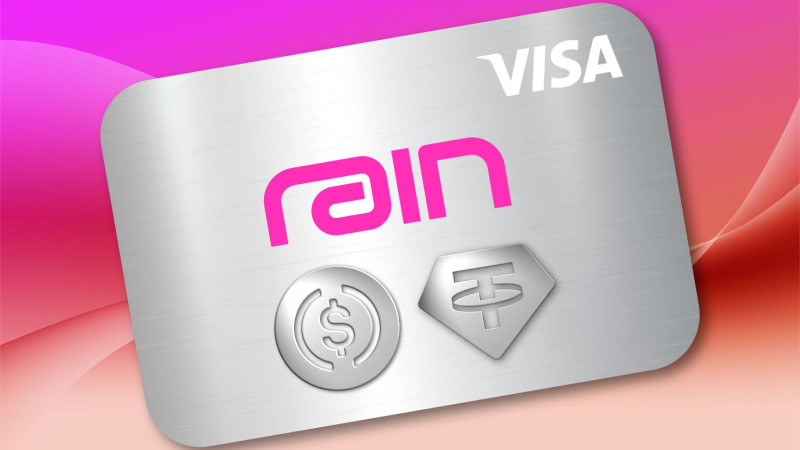
Stablecoin Payments Firm Rain Hits $1.95B Valuation in Major Funding Round
Rain’s Big Raise Signals Stablecoins Are Moving Toward Everyday Money

Rain just raised $250 million at a valuation just shy of $2 billion, and the size of the round is only part of the story.
What really stands out is what investors are backing. This is not a bet on a new token, a trading platform, or a speculative crypto narrative. It’s a bet that stablecoins are quietly becoming part of the global payments system, and that Rain is positioning itself as one of the companies building the pipes.
For years, stablecoins have been treated as a behind-the-scenes tool for traders and crypto-native users. Rain is trying to move them out of the background and into everyday spending.
What Rain Actually Builds
Rain describes itself as stablecoin payments infrastructure, but in practice, it operates more like a full-stack payments company.
The platform allows partners to issue payment cards that are directly connected to stablecoin balances. Those cards can be used anywhere Visa is accepted, which immediately changes how practical stablecoins become for everyday use. From the user’s perspective, it looks and feels like a normal card transaction. Under the hood, the value is settled using stablecoins.
Rain also provides wallets, on- and off-ramps, compliance tooling, and APIs that enterprises can plug into. The goal is to let fintechs, crypto companies, and global platforms launch stablecoin-based payment products without having to build payments infrastructure from scratch.
This setup is already live across more than 150 countries, giving Rain a global footprint that goes well beyond experimental pilots.
The Visa Connection Is a Big Part of the Story
One of the reasons Rain stands out is its direct relationship with Visa.
Rain is a Visa principal member, which means it can issue cards directly on the Visa network rather than relying on third-party sponsors. That status is not trivial. It places Rain closer to traditional payments infrastructure while still operating on crypto rails.
Even more important is how settlement works. Rain has been involved in Visa’s move toward stablecoin settlement, allowing card transactions to be settled on chain using stablecoins rather than relying entirely on legacy banking settlement systems. That opens the door to faster settlement cycles, including weekends and holidays, and reduces some of the friction that exists in traditional cross-border payments.
In simple terms, Visa handles the merchant acceptance and point-of-sale experience. Rain handles the stablecoin side of the transaction. Together, they create something that looks familiar to users but operates very differently in the background.
Why Investors Are Paying Attention
Rain’s growth metrics look more like a payments company than a typical crypto startup.
The company reports billions of dollars in annualized transaction volume, rapid growth in active cards, and a growing list of enterprise partners using its infrastructure to launch payment programs. That traction helps explain why investors were willing to price the company near $2 billion in this round.
The investor roster also tells a story. The round was led by a major growth firm, with participation from both traditional venture capital and crypto-focused investors. That mix suggests Rain is being viewed as a bridge company, one that sits between fintech and crypto rather than fully in either camp.
The fresh capital is expected to support expansion into new markets, deeper enterprise integrations, and continued investment in compliance and licensing, which remain critical for any payments business operating at global scale.
Stablecoins Are Shifting From Trading Tools to Payment Rails
Rain’s rise comes as stablecoins themselves are going through a quiet identity shift.
They still play a major role in trading and on-chain finance, but more companies are now looking at them as a way to move dollar-like value globally with fewer intermediaries. The challenge has always been usability. Most people do not want to think about wallets, gas fees, or blockchain confirmations when they pay for something.
Rain’s model hides that complexity. Users swipe a card. The merchant gets paid. The settlement happens using stablecoins in the background.
That approach aligns with a broader trend across payments and fintech, where blockchain is increasingly treated as infrastructure rather than a product in itself.
A Competitive Landscape and Real Execution Risk
None of this guarantees success.
The space is getting crowded. Other crypto infrastructure companies are building similar tools, and large fintechs and banks are experimenting with stablecoin settlement of their own. Regulatory frameworks are evolving, but uncertainty still exists, especially across jurisdictions.
Rain’s challenge now is execution. Scaling payments infrastructure is hard. Doing it globally, while staying compliant and reliable, is even harder. The Series C gives Rain the resources to try, but the next phase will be about proving that stablecoin-powered payments can move from niche programs to mainstream usage.
Why This Matters
Rain’s funding round is a signal that the crypto market’s focus is shifting again.
Not toward speculation, but toward utility. Not toward flashy narratives, but toward infrastructure that quietly connects crypto to the real economy.
If stablecoins are going to become everyday money, they will need to work through systems people already trust and understand. Rain’s partnership with Visa, and its push to make stablecoin settlement invisible to users, suggests one possible path forward.
That makes this raise more than just another big crypto funding headline. It marks a moment where stablecoins start to look less like an experiment and more like a serious part of the global payments conversation.
Stay Connected
You can stay up to date on all News, Events, and Marketing of Rare Network, including Rare Evo: America’s Premier Blockchain Conference, happening July 28th-31st, 2026 at The ARIA Resort & Casino, by following our socials on X, LinkedIn, and YouTube.