#Institutional Finance

Checker Raises $8M to Scale Stablecoin Infrastructure

Stablecoin infrastructure startup Checker has just raised over $8 million across pre-seed and seed funding rounds to accelerate development of its stablecoin network.
The funding round was led by Galaxy Ventures, Al Mada Ventures, and Framework Ventures, with participation from Onigiri, IGNIA, Cerulean, Aquanow, Commerce Ventures, Pharsalus Capital, SNZ Capital, DFS Lab, Breed, Overlook, Velocity, Bitso Business, and AirTM.
Other angel investors involved in the round include Stripe, Tala, Flutterwave, Mesh, ComplyAdvantage, and Superstate, among others.

With this new funding, the Checker team aims to accelerate its global expansion plans while building a credit infrastructure embedded within its platform that allows users to lend and borrow without always having to pre-fund their accounts. The team also plans to automate its operations by building AI agents to handle treasury management, back office operations, and predictive analytics, all aimed at helping the platform scale efficiently.
Another goal for the Checker team is to solve the fragmentation problem currently facing stablecoin infrastructure. Despite the growing adoption of stablecoins and tokenized assets, liquidity fragmentation, operational complexity, and compliance hurdles continue to hamper large-scale adoption, particularly among institutions.
While institutions have adopted several makeshift solutions to work around these hurdles, such solutions are often difficult to maintain and scale. This is the problem Checker aims to solve.
Through its single API, institutions can launch and scale products across trading, payments, treasury, and credit markets. Institutions do not need to worry about integrating multiple providers into their platforms, as Checker abstracts these complex integration processes into a single API connection.
About Checker
Checker is a stablecoin infrastructure startup that allows financial institutions access to stablecoin and fiat liquidity through its single API platform. Its platform currently supports over 75 currencies, supporting over 50 liquidity providers, including exchanges, OTC desks, and banks.
Since its launch, Checker has processed several billion dollars, processing over 43 billion within its first 12 months of operation. It also serves several financial institutions across the US, Europe, Latin America, Africa, and Asia, notable among them are Rail, which was acquired by Ripple, and Brasa Bank in Brazil.
Crypto’s Moment: The Shift Has Happened



Mitsubishi Adopts JPMorgan Kinexys for Cash Management

Mitsubishi Corporation, one of Japan’s largest trading and industrial companies, has adopted JPMorgan’s Kinexys blockchain network for intragroup U.S. dollar cash management across its global subsidiaries.
By leveraging the blockchain deposit accounts (BDAs) feature on JPMorgan’s Kinexys Digital Payments Network, Mitsubishi’s treasury team will be able to automatically move funds in real time between subsidiaries, including those in key financial centers such as Singapore, London, and New York, without the delays typically associated with traditional finance.
According to Kazuyoshi Kawakami, treasurer at Mitsubishi Corporation, the goal of this initiative is to strengthen the company’s liquidity management and resilience across its subsidiaries.
“Our liquidity management is a core source of credit strength. As we develop and operate businesses globally across a wide range of industries, it is essential that funds raised in the market and cash generated through our operations can be allocated efficiently throughout our consolidated group,” Kawakami said.
“As we pursue stable and sustainable growth through investment, trading, and other business activities, we believe our liquidity management must continue to evolve. Instant and programmable payments can support this while also strengthening our resilience during periods of market stress. We expect this initiative to represent an important step in enhancing our liquidity management framework.”
In summary, Mitsubishi Corporation is adopting JPMorgan’s Kinexys Digital Payments Network for its global subsidiaries. Because Kinexys operates automatically based on predefined conditions, Mitsubishi’s treasury team will be able to move funds in real time across subsidiaries whenever needed, 24/7, without relying on manual intervention or traditional banking networks that can involve delays.
What Is Kinexys?
Kinexys is an enterprise blockchain built by America’s largest bank, J.P. Morgan. It was designed to modernize how money, assets, and financial information move across institutional finance.
The Kinexys blockchain comprises three main components:
1. Kinexys Digital Payments: A permissioned blockchain payments rail and deposit account ledger that enables near real-time transfers of tokenized deposits between institutional clients.
2. Kinexys Digital Assets: A tokenization platform that brings financial assets (including funds, collateral, debt, and repo instruments) on-chain.
3. Kinexys Liink: A scalable, permissioned network for exchanging payment-related information across institutions.
Since its launch in November 2024, Kinexys has recorded several notable milestones, including processing more than $1.5 trillion in cumulative value and handling approximately $5–7 billion in transactions per day. J.P. Morgan has indicated plans to increase this daily transaction volume to more than $10 billion.
Kinexys is also being used by several high-profile institutional clients, including Siemens, BlackRock, Qatar National Bank, and BMW.
S&P Tokenizes iBoxx US Treasury Index on Canton Network

S&P Dow Jones Indices and digital asset data firm Kaiko have tokenized a major US Treasury bond index and put it on a blockchain. The iBoxx US Treasuries Index, one of the most closely tracked fixed-income benchmarks in global finance, is now live on the Canton Network as a native digital asset. It is the first time a benchmark of this caliber has been issued directly onchain, and the implications for how institutional markets handle data infrastructure are worth unpacking.
To be clear about what this is and what it is not: the tokenized index is not a tradeable or investable product. Nobody is buying a token and getting exposure to Treasuries. What S&P and Kaiko have created is closer to a permissioned data pipeline, one that wraps licensing rights, compliance controls, and benchmark data into a single non-fungible token. Authorized institutions get access to end-of-day pricing, intraday data, and corporate actions through that token, without going through the traditional off-chain licensing and feed processes that have long been a friction point in finance.
Why Treasuries?
The choice of the iBoxx index as the starting point was not random. US Treasuries have become the de facto entry point for institutional tokenization activity, and the numbers back that up. The total tokenized real-world asset market sits at roughly $27 billion, and US government bonds account for the largest share of that, with more than $12.5 billion in Treasuries already issued onchain across various platforms. That is still a fraction of the nearly $28 trillion in outstanding US debt, but the direction of travel is not really in question anymore.
Cameron Drinkwater, Chief Product and Operations Officer at S&P Dow Jones Indices, said the rising use of Treasuries as onchain collateral is creating genuine demand for benchmark data that institutions can access natively on a blockchain. The idea is that as more financial products get built on-chain infrastructure, the underlying reference data needs to live there too. The iBoxx index serves as that reference for countless fixed-income products and strategies. Getting it onchain, in Drinkwater's puts it, is less about novelty and more about meeting clients where the market is heading.
Kaiko CEO Ambre Soubiran has made this point before, the absence of institutional-grade data natively onchain has been one of the persistent infrastructure gaps holding back the broader tokenization market. Asset managers, exchanges, and DeFi protocols that want to reference the iBoxx benchmark previously had to rely on off-chain integrations that were cumbersome and introduced certain data risks. The tokenized version eliminates that middleman step.
Why Canton Network?
The decision to launch on Canton Network rather than a more public or crypto-native chain reflects what S&P and Kaiko were aiming for. Canton is an institutional-grade public blockchain with over 600 participating institutions and validators. Goldman Sachs and Citadel are among its backers, which gives it a credibility for the kind of regulated players S&P is trying to reach. The network has also been building its Treasury infrastructure for a while: the Depository Trust & Clearing Corporation (DTCC) has been running a tokenization service on Canton focused on US Treasuries, with a broader industry rollout expected later in 2026.
But the S&P play is not a solo move at all. Moody's recently integrated its credit ratings with Canton Network, and Bloomberg struck a deal with Kaiko in February to develop on-chain access for its Data License offerings through the same infrastructure, with an initial focus on Treasury and repo workflows. And the pattern is unmistakable, a cluster of major financial data providers is steadily converging on Canton as a shared layer for institutional-grade onchain data. That is a pretty meaningful development for the ecosystem, even if it is not generating the price-action headlines that typically drive crypto coverage.
RWA Tokenization Is Becoming The Play
The iBoxx announcement lands during what has genuinely been a breakout stretch for real-world asset tokenization. The total RWA market grew somewhere in the range of 266% through 2025, crossing $24 billion by early 2026. BlackRock's BUIDL fund, Franklin Templeton's onchain government money market product (FOBXX), and a growing roster of institutional players have moved from announcing tokenization pilots to running live products at scale. McKinsey has estimated the market could hit $2 trillion by 2030, a figure that felt wild two years ago and now seems more like a floor than a ceiling.
What is changing most visibly is not just asset issuance but infrastructure. For tokenized markets to function like real markets, they need reliable pricing data, trusted benchmarks, and compliance tooling that works natively in a blockchain environment. The S&P and Kaiko collaboration is an attempt to build exactly that, extending S&P's existing intellectual property protections and licensing frameworks into the onchain world rather than recreating them from scratch. The companies said the approach can be expanded to other indexes if demand warrants it, which is a clear signal that this is a product line in progress rather than just some one-off experiment.
The tokenized Treasury market has arrived at a point where the asset side is pretty well developed. The harder problem now is data and settlement: ensuring that when institutions build onchain products referencing US Treasuries, they can do so with the same data quality and rigor they would expect in traditional markets. S&P and Kaiko are making a direct play that institutions will pay for that, and given the trajectory of the market, that play looks like a very good one.
The iBoxx tokenization does not change what Treasuries are or how they behave. But it does change, how the financial infrastructure around them gets built. And at this stage of the onchain transition, infrastructure moves like this tend to matter more than they first appear to look.
Davos 2026 Shows How Crypto and Digital Assets Entered Mainstream Finance

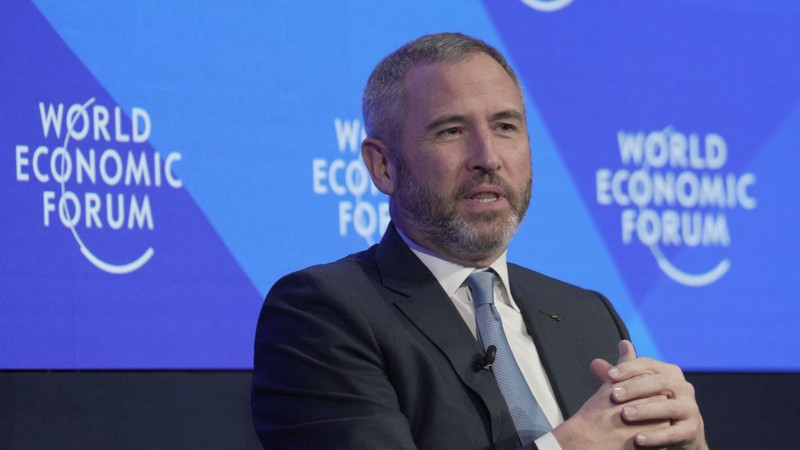
The World Economic Forum’s annual gathering in Davos didn’t treat crypto like a fringe experiment or a buzzword for the sidelines. In 2026, digital assets were woven into the fabric of mainstream finance discussions, with dedicated sessions, public clashes, and real institutional debate. What stood out wasn’t hype about price charts but serious questions about how blockchain, stablecoins, and tokenization might actually function inside global financial markets.
The forum still had the usual Davos theatrics: world leaders, geopolitical angst, and even some absurd headlines. But under that backdrop, crypto’s presence felt more substantive than symbolic.
Dedicated Sessions for Crypto’s Practical Questions
This year’s agenda included two clearly labeled sessions that would have been unthinkable just a few years ago. One was titled “Is Tokenization the Future?” and another “Where Are We on Stablecoins?” These weren’t happy-talk panels. They featured heavy hitters from both the crypto world and traditional finance, and the exchanges got frank and occasionally tense.
In the tokenization session, the debate wasn’t about whether tokenization mattered, but how to make it work in real markets. Executives from leading exchanges and tokenization platforms shared the stage with regulators and central bank representatives. Banks and custodians talked about technical issues like governance, custody, and interoperability. The message from financial incumbents was cautious but clear: tokenization is interesting, but it has to fit into existing market infrastructure with clear rules and risk controls.
Stablecoins got their own moment too. The session on stablecoins drew some of the biggest names in crypto alongside central bankers and global settlement experts. One of the most explosive moments came when industry CEOs pushed back against regulators on whether stablecoins should be allowed to pay yield to holders. That argument went far beyond textbook economics. On stage, executives argued that interest-bearing stablecoins were essential for consumer utility and global competitiveness, while some central bankers warned that yields could undermine banking systems and monetary sovereignty. Those side conversations revealed just how uneasy regulators still are, even when they acknowledge stablecoins’ potential as settlement rails.
These discussions reflected a broader shift. The question at Davos was no longer whether digital assets belong in the financial system, but how they should be regulated, engineered, and governed if they are going to be part of the future of payments, markets, and enterprise infrastructure.
Tokenization Takes the Spotlight
Out in the corridors and at side events, almost every conversation came back to one theme: tokenization of real-world assets. Whether you were talking to a sovereign wealth fund advisor or a fintech CEO, the framing was similar. Crypto tech is moving past speculation and into something that could materially change liquidity and access in global finance.
The story from a range of institutional participants was that tokenization is no longer an academic idea. There are live projects tokenizing government bonds and traditional funds, and institutional settlement firms are piloting systems that blend blockchain principles with existing financial rails. The buzz was not about replacing banks but about layering new capabilities on top of old systems in ways that reduce friction and increase transparency.
One telling difference this year was that tokenization was discussed in terms of liquidity and fractional ownership, not volatility. That shows where the conversation has matured: from digital assets as a wild bet to digital assets as potential plumbing for capital markets.
Stablecoins, Regulation, and Real Debate
The stablecoin panel was one of the most watched crypto moments in Davos. People crowded into the room not for price predictions but for substance. Here you had exchange CEOs, stablecoin issuers, and veteran regulators hashing out definitions, safeguards, and the practical role stablecoins could play in cross-border settlement.
One point that came up repeatedly was that stablecoins could act as a connective layer between traditional finance and digital markets. Advocates painted a picture where businesses run treasury operations using stablecoins, and global money movement gets more efficient as a result. Critics, especially from central banking circles, countered that allowing stablecoins to pay competitive yields could disrupt bank deposits and challenge monetary policy levers.
That tension came out in specific debates on policy design. Industry representatives argued for clearer frameworks that enable innovation while protecting holders and financial stability. Regulators struck back with questions about reserve requirements, audit regimes, and who ultimately backs these digital dollars.
This was not Davos speak for broader audiences. The conversation was technical, at times dry, and realistic about where the risks and opportunities lie.
Crossroads Between Crypto and Geopolitics
Crypto at Davos didn’t exist in a vacuum. It was wrapped into broader threads of geopolitical competition and economic strategy. Several high-profile talks touched on how digital finance intersects with national priorities. Leaders from the United States framed crypto engagement as part of broader global competitiveness. European regulators emphasized monetary sovereignty and financial stability in ways that indirectly questioned unfettered digital asset growth. These differing philosophies underscored how regulatory fragmentation is almost guaranteed for now.
You could see it play out in individual exchanges between CEOs and policymakers. Some firms pushed the narrative that restrictive rules in one region would push innovation offshore. Others pushed back, saying that control and trust are prerequisites for large institutional adoption.
Institutional Players, Not Just Crypto Natives
What was remarkable at Davos this year was how many traditional institutions turned up with real substance on digital assets, not just lip service. Big banks, settlement providers, and regulators were on panels alongside crypto founders. Conversations about custody solutions, compliance tools, interoperability standards, and governance models were not niche; they were mainstream finance topics with crypto elements built into them.
Some of the most detailed sessions focused on technical integration questions, including how blockchain standards could interoperate with legal and compliance frameworks around the world. That kind of discussion would have felt out of place at Davos only a few years ago.
What This All Means for Crypto’s Place in Finance Today
Out of Davos 2026 comes a clear message: crypto is no longer an outsider in global finance. There’s still enormous disagreement about details. Regulators worry, technologists dream, and institutions hedge. But the conversation has shifted toward execution and integration, not justification.
Crypto is being talked about not for short-term price moves but for what it could mean for settlement, liquidity, cross-border flows, and asset ownership structures going forward. The debates were real, messy, and imperfect, but they were also grounded and practical in a way they hadn’t been before.
For the crypto world, that is a much bigger step forward than any headline about price or bull markets. Davos has made clear that digital assets are now a topic global leaders feel they have to wrestle with, seriously and directly. The question now is not whether crypto belongs in the future of finance. It is how that future gets built, who shapes it, and where the regulatory guardrails ultimately land.

JPMorgan Launches Tokenized Money Market Fund on Ethereum

JPMorgan Chase is stepping deeper into blockchain finance, this time with a product that looks very familiar to Wall Street.
The bank has launched a tokenized money-market fund on Ethereum, marking one of the clearest signs yet that large financial institutions are moving beyond experiments and into real onchain products designed for investors.
The fund, called My OnChain Net Yield, or MONY, is a private money-market vehicle issued by JPMorgan Asset Management. It is seeded with $100 million of the bank’s own capital and is aimed squarely at institutional clients and high-net-worth investors, not crypto traders chasing volatility.
In simple terms, it is a traditional money-market fund, but the ownership lives on a blockchain.
A Familiar Product, Delivered Differently
Money-market funds are among the most conservative products in finance. They invest in short-term, high-quality debt and are used by institutions to park cash, manage liquidity, and earn modest yield.
JPMorgan is not changing that formula. What it is changing is how the fund is issued, held, and transferred.
Instead of relying solely on traditional fund administration systems, MONY issues digital tokens on Ethereum that represent ownership in the fund. Investors can subscribe using cash or stablecoins and receive tokenized shares that can be held in compatible digital wallets.
The pitch is efficiency. Blockchain settlement can be faster, more transparent, and easier to integrate with other digital financial tools. For large investors managing billions in cash, shaving time and operational friction matters.
Why Ethereum, Why Now
Ethereum has become the default blockchain for large financial institutions experimenting with tokenization. It offers a mature ecosystem, deep liquidity, and a growing set of standards for issuing real-world assets onchain.
Timing also plays a role. Tokenized funds have gained momentum over the past year as interest rates remain elevated and investors search for safe yield options that can operate alongside digital assets.
Stablecoins now move enormous sums across blockchains, but they typically do not pay interest. Tokenized money-market funds fill that gap, allowing capital to stay onchain while earning yield backed by regulated assets. That combination is proving difficult for institutions to ignore.
JPMorgan has framed the move as a response to client demand rather than a bet on crypto prices. The goal is infrastructure, not speculation.
Growing Appetite for Tokenization and Real-World Assets
Behind JPMorgan’s move is a surge in client interest that has been building quietly.
“There is a massive amount of interest from clients around tokenization,” said John Donohue, who leads liquidity at JPMorgan Asset Management. The firm expects to be a leader in the space and to give investors the same range of choices on blockchain that they already have in traditional money-market funds.
That demand is arriving as the regulatory picture in the U.S. begins to look more settled. Policymakers have taken steps this year to clarify how digital asset activity fits within the existing financial system. New rules around dollar-backed stablecoins and clearer signals on oversight of blockchain-based products have reduced some of the uncertainty that previously kept large institutions cautious.
Those changes have encouraged banks and asset managers to move faster on tokenization initiatives across funds, securities, and other real-world assets.
The market reflects that shift. The total value of tokenized real-world assets reached roughly $38 billion in 2025, a record level. Tokenized money-market funds have been particularly attractive to crypto-native investors, offering a way to earn yield without leaving the blockchain or converting assets back into traditional cash accounts.
A Crowded Field Is Taking Shape
JPMorgan’s launch places it alongside a growing group of large financial firms experimenting with tokenized funds.
BlackRock operates the largest tokenized money-market fund, with assets already measured in the billions. Goldman Sachs and Bank of New York Mellon have also outlined plans to issue digital tokens tied to money-market products from major asset managers. At the same time, crypto exchanges have begun rolling out tokenized stocks and other securities in select markets.
What was once a collection of pilot programs is turning into a competitive landscape.
The Quiet Bet Behind the Headlines
There is a longer-term bet embedded in JPMorgan’s move. If financial assets increasingly live onchain, money-market funds could become core building blocks of a new financial stack.
Tokenized cash can be used as collateral, settle instantly, and plug into automated systems that move value without waiting for bank cut-off times or settlement windows.
That future is still taking shape, and it will not arrive overnight. But moves like this bring it closer, one conservative product at a time.
For JPMorgan, MONY is not a moonshot. It is something more deliberate. Take a product Wall Street already trusts, put it on new rails, and see where efficiency leads.
That approach may end up being the most convincing case yet for blockchain finance inside traditional markets.
Stay Connected
You can stay up to date on all News, Events, and Marketing of Rare Network, including Rare Evo: America’s Premier Blockchain Conference, happening July 28th-31st, 2026 at The ARIA Resort & Casino, by following our socials on X, LinkedIn, and YouTube.
Ripple Raises $500 Million at $40B Valuation, Signaling Strong Institutional Confidence in Crypto
Ripple Raises $500 Million at $40 Billion Valuation, Signaling Surging Institutional Confidence in Crypto
Ripple Labs has announced a landmark $500 million fundraising round led by affiliates of Fortress Investment Group and Citadel Securities, propelling its valuation to approximately $40 billion. The raise cements Ripple’s position among the most valuable private blockchain companies in the world and underscores a powerful shift in institutional sentiment toward digital assets and crypto infrastructure.
Major participants in the round reportedly include heavyweight firms such as Pantera Capital, Galaxy Digital, Brevan Howard, and Marshall Wace, marking one of the most significant institutional-backed financings in the digital asset sector to date. Ripple’s leadership described the round as “a signal that blockchain infrastructure is moving from experimentation to mainstream adoption.”
A Strategic Expansion Beyond Payments
Ripple’s identity has long been associated with its cross-border payment technology and the XRP Ledger, but the company has spent the past several years expanding its footprint into institutional finance and enterprise-grade blockchain infrastructure.
This raise is intended to accelerate that strategy. Ripple plans to deploy the new capital across several key business segments, including stablecoin development, digital asset custody, prime brokerage services, and enterprise treasury solutions.
CEO Brad Garlinghouse noted that the company’s focus now extends far beyond the XRP token, emphasizing Ripple’s ambition to build “the next-generation infrastructure for global value exchange.”
Ripple has already launched its U.S. dollar stablecoin, RLUSD, which recently surpassed $1 billion in circulation, and the company’s acquisition of Metaco earlier this year established its presence in institutional digital asset custody. The new capital will help scale both of these ventures, as well as expand Ripple’s global payments and liquidity network, which has already processed nearly $100 billion in volume this year.
A Bullish Signal for Institutional Crypto Adoption
The participation of global financial powerhouses such as Fortress and Citadel is a major signal for the broader crypto market. It represents a notable shift from skepticism to conviction among traditional finance institutions, many of which are now actively positioning for the tokenization of assets, the growth of stablecoins, and blockchain-enabled payments.
The timing of the raise also reflects a broader resurgence of confidence in digital assets. Bitcoin’s continued strength above six figures, renewed attention on real-world asset tokenization, and rising institutional demand for compliant crypto infrastructure have all contributed to a more mature and sustainable growth environment.
Ripple’s successful raise at such a high valuation suggests that institutional investors see the company not merely as a crypto firm, but as a core component of global financial modernization. It represents the convergence of blockchain technology and traditional finance, a theme that has gained enormous traction as banks, funds, and corporates explore on-chain settlement and tokenized instruments.
Ripple’s Expanding Role in the Financial Ecosystem
The new capital positions Ripple to strengthen its role as a trusted partner for banks, governments, and enterprises looking to bridge traditional financial systems with blockchain innovation.
The company’s growing suite of products—ranging from cross-border payment solutions to custody, stablecoin issuance, and liquidity management—makes Ripple one of the few blockchain firms offering an institutional-grade platform that can integrate directly with existing financial infrastructure.
Ripple’s continued collaboration with regulators and financial institutions has also helped build credibility at a time when compliance and governance are key differentiators. Its ability to maintain relationships with central banks, sovereign partners, and large enterprises gives it a unique advantage as the financial industry transitions into tokenized models.
The Broader Message for the Crypto Industry
Ripple’s raise is more than a company milestone—it is a reflection of the growing institutionalization of crypto and blockchain technology. The same financial institutions that once viewed digital assets with caution are now leading billion-dollar funding rounds and integrating blockchain rails into their own operations.
This is part of a wider trend reshaping global finance. The lines between traditional banking, fintech, and crypto are blurring, and firms like Ripple are at the center of this transformation. As capital markets evolve toward digital-native assets, the companies that provide trust, scalability, and compliance will become the foundation of the next financial era.
Institutional investors increasingly view blockchain infrastructure as essential, not experimental. Ripple’s $40 billion valuation confirms that belief, underscoring the market’s confidence in the future of regulated, enterprise-grade crypto solutions.
Final Thoughts
Ripple’s $500 million raise represents a turning point not only for the company but for the broader digital asset industry. With leading global financial institutions now backing its vision, Ripple is positioned to become a cornerstone of blockchain-powered finance.
The company’s expansion into stablecoins, custody, and institutional liquidity services shows that it is evolving into a full-stack financial technology provider capable of powering the next generation of value exchange.
For the crypto ecosystem, this moment carries a clear message: institutional adoption is no longer theoretical—it is happening. Ripple’s success highlights how established players in finance are no longer standing on the sidelines but are actively investing in and shaping the future of blockchain infrastructure.
As capital flows, partnerships grow, and regulatory clarity improves, Ripple’s rise reflects the dawn of a more connected, compliant, and credible era for global crypto finance.
Stay Connected
You can stay up to date on all News, Events, and Marketing of Rare Network, including Rare Evo: America’s Premier Blockchain Conference, happening July 28th-31st, 2026 at The ARIA Resort & Casino, by following our socials on X, LinkedIn, and YouTube.
Coinbase and Citi Join Forces to Advance Stablecoin Payments
Coinbase and Citi Join Forces to Advance Stablecoin Payments for Institutions
A new chapter in institutional digital asset adoption and payment innovation
In a significant step for the convergence of traditional finance and crypto, Citigroup and Coinbase have partnered to explore digital payment solutions using stablecoins and blockchain infrastructure for Citi’s corporate and institutional clients. This collaboration highlights how digital assets are shifting from speculative use to becoming core financial tools.
What’s Happening
Citigroup and Coinbase are working together to develop digital asset payment capabilities for Citi’s institutional clients. The initiative focuses on simplifying fiat-to-crypto conversions, enabling payouts through stablecoins, and supporting faster, cheaper cross-border transactions using blockchain technology.
For Coinbase, this partnership represents another step in its expansion beyond retail crypto trading into enterprise-grade financial infrastructure. For Citi, it reflects an ongoing commitment to digital innovation, with efforts in stablecoin issuance, tokenized deposits, and blockchain settlement systems.
This partnership is not just about crypto payments. It is about transforming how large financial institutions handle liquidity, treasury operations, and settlement in a global economy that increasingly values speed and transparency.
Why This Matters
1. Digital Assets Move Toward the Financial Mainstream
Just a few years ago, most major banks treated digital assets cautiously. Now, one of the world’s largest banks is partnering with a leading crypto exchange to bring stablecoins into its payments network. This shows that digital assets are maturing into real financial infrastructure.
2. Stablecoins Gain Institutional Utility
Stablecoins are evolving beyond their original use in trading and DeFi. They are now being used for corporate payments, treasury management, and international settlements. Citi and Coinbase are helping push this transition, turning stablecoins into practical tools for global finance.
3. Payment Systems Get a Modern Upgrade
Traditional payment networks can be slow and expensive, often operating only during business hours. Stablecoin transactions on blockchain networks are fast, borderless, and available 24/7. For institutions, that means better liquidity management and reduced friction in cross-border transactions.
4. Banks Are Embracing Partnerships Over Isolation
Rather than developing everything internally, banks like Citi are forming partnerships with crypto-native firms that already understand blockchain technology and digital infrastructure. This approach combines the scale and regulatory experience of traditional banks with the innovation and speed of crypto companies.
The Bigger Picture: Why Now
Several industry and regulatory trends make this collaboration especially timely:
-
Regulatory Clarity: Governments and financial authorities are providing more defined frameworks for stablecoins, making it easier for banks to adopt them responsibly.
-
Stablecoin Growth: Industry research suggests that stablecoins could become a multi-trillion-dollar asset class by the end of the decade, transforming how global businesses move money.
-
Pressure to Innovate: Legacy payment systems are under increasing pressure to modernize. Banks that adopt blockchain rails early will have a competitive advantage in speed and cost efficiency.
-
Partnership-Driven Innovation: The financial world is realizing that collaboration with crypto-native companies is faster and more efficient than building new systems alone.
Challenges and What to Watch
While the partnership is promising, several challenges lie ahead:
-
Scalability: Turning small pilot projects into large-scale enterprise systems will require significant integration with existing banking infrastructure.
-
Compliance: Even with clearer regulations, stablecoin payments must meet strict requirements for anti-money-laundering controls, reserves, and audits.
-
Revenue Impact: If blockchain-based payments significantly reduce transaction costs, banks will need to rethink existing fee structures and profit models.
-
Interoperability: Connecting blockchain rails with legacy systems introduces technical and security complexities that must be addressed.
-
Global Consistency: Citi operates across many jurisdictions, and stablecoin adoption depends on how each region’s regulators treat digital assets.
The Future of Institutional Payments
The collaboration between Coinbase and Citi marks an important moment in the evolution of digital payments and finance. Stablecoins are no longer just a crypto experiment. They are being recognized as real financial instruments that can enhance efficiency, reduce costs, and streamline settlement for global institutions.
This partnership shows the growing alignment between traditional finance and decentralized technology. As more banks and crypto platforms work together, the boundaries between the two worlds are fading. The next era of payments may be powered by stablecoins and tokenized assets, operating on blockchain rails that never sleep.
If successful, the Coinbase–Citi partnership could pave the way for faster global payments, smarter liquidity management, and a more inclusive financial system. The message is clear: the future of money is programmable, and institutions are already laying the groundwork to make it real.
Stay Connected
You can stay up to date on all News, Events, and Marketing of Rare Network, including Rare Evo: America’s Premier Blockchain Conference, happening July 28th-31st, 2026 at The ARIA Resort & Casino, by following our socials on X, LinkedIn, and YouTube.
JPMorgan Embraces Crypto Collateral: A Major Shift in Banking
JPMorgan Embraces Crypto Collateral: A Major Shift in Banking
JPMorgan Chase is preparing to allow institutional clients to use Bitcoin and Ethereum holdings as collateral for loans. This move, expected by year-end, marks a decisive pivot from the bank’s earlier skeptical stance toward cryptocurrencies.
Reports from Bloomberg, CoinDesk and others indicate the program will rely on third-party custody for the pledged assets and extends JPMorgan’s earlier acceptance of crypto-linked ETFs as collateral.
Why This Matters
From Skeptic to Adopter
CEO Jamie Dimon long dismissed Bitcoin—calling it “worthless” or a “pet rock”—yet this policy change suggests a hard turn by JPMorgan toward crypto integration.
This is not about hype. It’s about a bank with over $4 trillion in assets formally recognising crypto as part of its credit infrastructure.
Crypto Moves Into the Core System
Traditionally, banks only accepted highly liquid, low-volatility assets as loan collateral. Bitcoin and Ethereum are neither of those. So JPMorgan’s interest signals crypto is being treated more like mainstream assets—albeit with special guardrails.
Financial institutions now appear ready to unlock liquidity for clients who hold crypto without forcing them to sell. This could reshape how crypto assets are used in major portfolios and by large institutions.
Implications for Institutions and Investors
-
Liquidity without selling: Crypto holders can pledge assets as collateral instead of selling, preserving upside while accessing cash.
-
Broader adoption: Large banks entering the space bring legitimacy and infrastructure—moving crypto further toward the mainstream.
-
Competitive pressure: If JPMorgan rolls this out, other banks will likely follow, accelerating institutional crypto services.
-
Regulatory interplay: The move aligns with a more friendly regulatory tone in Washington and signals that banks believe the legal risks are manageable.
Key Details of the Proposal
-
Institutionally focused: The offering is targeted at institutional clients, not retail.
-
Third-Party Custody Model: Crypto pledged will be held by an approved external custodian, so the bank avoids direct asset custody.
-
Global Scope: The program is expected to launch “by end of year” across relevant jurisdictions, though final details remain subject to change.
-
Extension from ETFs: Earlier this year, JPMorgan accepted crypto-linked ETFs as loan collateral. This step advances directly to underlying crypto assets.
What to Watch Moving Forward
-
Launch Date and Terms: When exactly will the program go live and on what terms (loan-to-value ratios, margin calls, etc.)?
-
Asset Coverage: Will it start with Bitcoin and Ethereum only, or eventually include other major tokens?
-
Risk Framework: How will JPMorgan manage volatility, liquidation risk, custody failure and regulatory oversight?
-
Market Reaction: Will this spur greater institutional crypto investment and service offerings from banks, or will it prompt caution due to the novelty of crypto as collateral?
-
Competitive Impact: Which banks follow JPMorgan’s lead and how fast will the industry evolve?
Final Thoughts
JPMorgan’s plan to allow Bitcoin and Ethereum as loan collateral is a landmark for the crypto-banking crossover. It reflects growing confidence in digital assets, regulatory progress and the adoption of the crypto industry.
For crypto investors, this is a strong signal: the era of fringe use-cases is fading, and crypto is increasingly being integrated into core financial services. For the banking sector, it marks the beginning of a new chapter where digital assets may become standard tools in credit and liquidity management.
The details still matter—but the direction is clear. Crypto is stepping firmly into the mainstream.