#Ripple
Ripple, SettleMint Partner to Boost Custody and Tokenization in Asia Pacific

Ripple has partnered with SettleMint, a global leader in digital asset lifecycle management, to offer financial institutions in the Asia Pacific region a unified solution for custody and tokenized asset management across different asset lifecycles.

The partnership combines Ripple’s institutional grade digital asset custody infrastructure with SettleMint’s Digital Asset Lifecycle Platform (DALP), giving institutions a more compliant way to custody and manage their assets through a single solution rather than multiple vendors.
“Financial institutions across Asia Pacific are putting digital assets to work. They are asking how to do more without stitching together separate solutions for custody, issuance and governance,” said Fiona Murray, Managing Director, Asia Pacific at Ripple. “This partnership gives them the foundation to roll out digital assets and future proof them from there: Ripple Custody to hold and govern those assets, and SettleMint to manage their entire lifecycle.”
Although the platform will initially be available to financial institutions in Asia, it will subsequently expand to other markets as institutional demand for the platform increases.
About Ripple’s Custody and SettleMint’s DALP
Ripple’s custody infrastructure provides financial institutions, such as banks, asset managers and fintechs, with a secure way to manage their digital assets, including stablecoins and real world assets, without compromising security or control.
To strengthen the security and flexibility of this infrastructure, Ripple uses multi party computation (MPC) and hardware security modules (HSMs) for private key management, with options for self custody or cloud and on premises deployments.
The Digital Asset Lifecycle Platform, or DALP, is an institutional grade, composable digital asset platform designed by SettleMint to help financial institutions manage the lifecycle of tokenized assets.
By integrating with Ripple’s Custody infrastructure, DALP provides a unified way for institutions to manage the entire asset lifecycle, including the seamless handling of issuance, settlement and asset servicing from a single platform
South Korea’s Jeonbuk Bank Taps Ripple for Cross-Border Payments

Image credit: news1.kr
Jeonbuk Bank, one of South Korea’s commercial banks, has partnered with Ripple to enhance cross-border remittances and enable real-time transaction settlements.
The partnership is aimed at eliminating common bottlenecks associated with the settlement of transactions by traditional institutions, which often involve several intermediaries.

Through the partnership, Jeonbuk Bank plans to leverage the real-time settlement capabilities of Ripple’s blockchain infrastructure, reducing the settlement time for cross-border remittances from minutes to seconds while enabling 24/7 operations.
“With this partnership with Ripple, JB Jeonbuk Bank is ready to move beyond its role as a regional bank and emerge as a digital finance leader that meets global standards,” said Park Choon-won, President of JB Jeonbuk Bank.
“This partnership will become a new growth engine for the bank, and we will lead innovation that reshapes the financial paradigm, going beyond the adoption of new technology.”
Ripple’s partnership with Jeonbuk Bank isn’t the first of its kind with a South Korean institution. In April of this year, Ripple partnered with KBank, South Korea’s first internet-only bank. The partnership aimed to enable KBank to more securely manage its digital assets while leveraging Ripple’s blockchain infrastructure for cross-border remittances.
That same month, Ripple also partnered with Kyobo Life Insurance, one of South Korea’s leading life insurance companies. Through the partnership, Kyobo leveraged Ripple’s blockchain infrastructure to tokenize government bonds.
Institutional Adoption Continues to Grow
Despite South Korea’s tightening regulation around crypto, institutional involvement in the sector continues to grow rapidly in the country.
According to a report from Tiger Research, a South Korean crypto research firm, well over 195 crypto-related partnerships involving approximately 150 institutions had been tracked as of mid-year, with many of these partnerships revolving around stablecoins and cross-border remittances, custody, security token offerings, and real-world asset tokenization.
Ripple Secures Full MiCA CASP License in Europe

Ripple, the leading blockchain technology company building digital infrastructure for cross-border payments, has secured a full Crypto Asset Service Provider (CASP) license from the Commission de Surveillance du Secteur Financier in Luxembourg.

Image credit: x.com
The full CASP authorization, announced on Monday, comes shortly after Ripple received preliminary approval from Luxembourg's financial regulator in June. With this license, Ripple is now fully compliant with the Markets in Crypto Assets (MiCA) regulation, enabling it to offer its crypto services to businesses and institutions across all 30 countries of the European Economic Area.
"This CASP authorization means Ripple enters the post-transitional MiCA era fully compliant and ready to scale," said Cassie Craddock, Managing Director for the United Kingdom and Europe at Ripple.
"The institutions we work with across Europe are looking to build their digital asset services alongside regulated partners, and Ripple is licensed and ready to meet that demand."
Ripple now joins a small group of digital asset firms, including Coinbase, Kraken, Crypto.com, Bitstamp, and OKX, that have obtained full authorization under MiCA. The company says it now holds more than 75 regulatory licenses worldwide, in addition to the Electronic Money Institution (EMI) license it secured in February.
Elsewhere on the regulatory front, the MiCA July 1 deadline is now fully in effect, with unlicensed digital asset firms required to stop serving clients in the European Union. It is estimated that more than 80 percent of the approximately 1,200 previously registered firms that lacked full licenses by late June have either exited the European Union or restricted their operations there.
Ripple's full CASP license comes shortly after the company was named among more than 140 members of the Open Standard consortium, a group of companies collaborating on the launch of OpenUSD (OUSD), a dollar-pegged stablecoin. The company also recently invested in Flutterwave, Africa's largest fintech unicorn.

Ripple Invests in Flutterwave to Boost Africa Payments

Ripple, the leading blockchain technology company that provides blockchain-based solutions to banks and financial institutions, has just invested in Flutterwave, Africa’s biggest fintech unicorn.
The investment, which was part of Flutterwave’s Series E funding round, aligns with the unicorn’s long-term value proposition to build Africa’s leading unified payments infrastructure that connects the continent seamlessly to the global economy.

According to Flutterwave, the partnership is built on three core pillars: embedding Ripple’s RLUSD into Flutterwave’s payment rails to scale large volume payments and remittances; leveraging Ripple’s XRP Ledger for faster transaction clearing; and deploying a unified API that seamlessly bridges Flutterwave’s domestic network with Ripple’s global payment network.
"This investment marks a pivotal moment in our journey, enabling us to significantly scale our infrastructure and expand our stablecoin-enabled payments roadmap,” said Olugbenga "GB" Agboola, Flutterwave’s Founder and CEO.
“By unlocking faster settlement and lower cost cross-border payments, we are building a payment superhighway that connects African commerce directly to the global economy. This partnership is a catalyst for Nigerian and African sovereignty in the digital financial age, ensuring our markets are primary participants in the global digital asset revolution.”
Through partnering with Ripple, Flutterwave takes a significant step towards achieving its “stablecoin first” payment infrastructure that eliminates traditional bottlenecks. By integrating Ripple’s RLUSD stablecoin into its payment infrastructure, Flutterwave aims to deliver immense speed, liquidity, and cost efficiency to Africa’s cross-border payment network, transforming how Africa interacts with global markets.
About Flutterwave
Flutterwave is one of Africa’s leading fintech companies. Launched in 2016, Flutterwave was created to solve fragmented payment systems that limited Africa’s connection to the global economy. Through a single API and platform, Flutterwave enables businesses to accept payments, make payouts, and process cross-border transactions across Africa and internationally.
Since its inception, Flutterwave has raised over $ 500 million through multiple funding rounds and is currently valued at $ 3.2 billion, making it Africa’s most highly valued fintech company. Its services are available in more than 35 African countries, and its payment infrastructure supports over 150 currencies.
Warren Continues Her Crusade On Crypto

Senator Elizabeth Warren is not letting up. Not after the GENIUS Act. Not after the CLARITY Act. Not after nine crypto firms got federal trust charters. And certainly not after the Office of the Comptroller of the Currency spent the better part of five months quietly waving through some of the biggest names in digital assets.
On Monday, the Massachusetts Democrat and ranking member of the Senate Banking Committee fired off a sharply worded letter to OCC Comptroller Jonathan Gould, accusing his agency of violating the National Bank Act by granting trust charters to at least nine crypto companies, including Coinbase, Ripple, Paxos, BitGo, Circle, Fidelity Digital Asset Services, Crypto.com, Stripe subsidiary Bridge, and Protego. The letter, dated May 18, demands a full accounting of the approvals, along with any communications between OCC officials and the White House or Trump family members, by June 1.
Regulatory Arbitrage, or Smart Business?
At the core of Warren's complaint is a fairly pointed argument: these companies are behaving like banks while holding charters that do not require them to operate like banks. National trust companies are, by design, more limited than full-service institutions. They cannot take FDIC-insured deposits. They do not engage in traditional commercial lending. They are supposed to focus on fiduciary work, managing assets on behalf of clients.
But Warren says the business plans she reviewed tell a different story. Several of the approved firms appear to be pursuing stablecoin issuance, custodial services, payments processing, and lending activities that resemble full-scale banking operations more than traditional trust work. She argues this creates systemic risk and amounts to regulatory arbitrage, writing: “These companies are effectively crypto banks that want to evade the fundamental safeguards and obligations that come with being a bank.”
That argument becomes harder to justify with how the modern banking system already operates. Under fractional reserve banking, traditional banks are permitted to lend out the vast majority of depositor funds while holding only a fraction in reserve, prioritizing leverage, liquidity, and profit generation over true one-to-one custody of customer assets. Critics argue that Warren is defending a legacy system built on counterparty risk while attacking crypto firms that, in many cases, are attempting to offer more transparent and fully reserved financial infrastructure.
The OCC has not responded to requests for comment. Gould, for his part, has been publicly bullish on the move toward crypto integration. When the agency announced its first wave of five conditional charter approvals back in December 2025, he framed it as a win for consumers and competition. "New entrants into the federal banking sector are good for consumers, the banking industry and the economy," he said at the time.
The Trump Angle Warren Will Not Ignore
There is a political dimension here that Warren has been pushing hard, and it involves the Trump family directly. World Liberty Financial, the crypto venture backed by President Donald Trump and his family, is reportedly in the final stages of receiving a conditional OCC approval of its own. Warren and Gould clashed over the pending application at a Senate hearing in February, when Gould declined to commit to delaying or denying it. Warren, visibly frustrated, called him an accomplice to what she described as presidential corruption.
In her latest letter, Warren went further, requesting all emails, text messages, meeting summaries, and call transcripts between OCC staff and Trump, his immediate family, or anyone acting on their behalf, specifically as they relate to any of the nine approved charters. It is a broad ask, and one that almost certainly will not be met without a fight.
Industry Momentum Has Not Slowed Warren Down
The crypto industry has had a genuinely strong stretch in Washington. The GENIUS Act, which created a federal framework for stablecoin issuance, passed into law last year and was hailed across the industry as a landmark moment. The SEC under Chair Paul Atkins has signaled major regulatory relief, including a potential innovation exemption for tokenized securities. Crypto-friendly appointments have reshaped several key agencies.
And still, Warren keeps pushing back. Her office has framed the GENIUS Act as legislation that creates "light-touch regulation for crypto banks" while weakening the consumer protections that took decades to build. The trust charter campaign fits neatly into that critique. From Warren's perspective, every charter granted to a Coinbase or a Ripple is another step toward a two-tiered financial system, where traditional banks operate under strict rules while crypto firms get a cheaper, faster path into the same market.
What Happens Next
The June 1 deadline Warren has set is more political theater than hard deadline. The OCC is not legally obligated to respond on her timeline. But the letter sets up a paper trail, and if the agency stonewalls or the World Liberty Financial approval comes through before then, expect Warren to take that back to the committee floor.
The broader question, one that neither side has fully answered, is whether the OCC's chartering activity actually violates the National Bank Act or whether it represents a reasonable interpretation of existing authority. The agency has defended the charters as consistent with prior interpretive letters, some dating back to 2021. Lawyers on both sides will be watching the OCC's formal response closely, assuming one comes.
For crypto firms, the political noise is mostly background at this point. Charters have been granted. Business plans are moving forward. But Warren's sustained pressure does carry real risk, particularly if Democrats gain ground in 2026 midterms or if any of the chartered institutions runs into trouble. In this regulatory environment, one high-profile failure could reframe the entire debate very quickly.
KBank Partners Ripple for Blockchain Remittances

KBank, South Korea’s first internet-only bank and the exclusive fiat partner of Upbit, South Korea’s largest crypto exchange, has partnered with Ripple to test its on-chain remittance system.
The partnership, according to a local news report, is aimed at leveraging Ripple’s global blockchain infrastructure and network to improve KBank’s international remittance systems, including the speed, cost, and transparency of its services through a proof-of-concept system.

The proof-of-concept system will test the possibility of KBank moving its cross border remittance system from traditional networks to a faster and cheaper blockchain based system. The process, which has already begun, will involve a two stage verification step.
In the first verification stage, which has already been completed, KBank and Ripple examined and verified a wallet app based remittance system. The second stage, which is currently ongoing, will test the stability of the on chain remittance system and will involve the virtual linking of customer accounts to KBank’s internal systems. These accounts will then be used to make on chain transfers to countries such as the United Arab Emirates and Thailand.
Although KBank developed its own digital wallet, which was used for the first verification stage, it will leverage Palisade, Ripple’s global SaaS based digital wallet, for the second stage of the proof of concept verification.
About KBank
KBank is South Korea’s first internet only, fully digital bank that operates entirely online without physical branches. It gained prominence in the crypto industry when it became Upbit’s exclusive fiat partner. As a result, every trader who buys or sells crypto on Upbit must move their funds through KBank. In this role, KBank serves as an intermediary between traders and Upbit.
Because Upbit is South Korea’s largest cryptocurrency exchange, with a user base of over 13 million, its partnership with KBank had a ripple effect on KBank’s own user base, increasing it from 2 million in 2020 to 15 million by the end of 2025.
Apart from its partnership with Upbit, KBank has also been involved in several other crypto related partnerships. Earlier this year, it signed an agreement with UAE based digital asset firm Changer.ae and Korean blockchain company BPMG to build won to dirham stablecoin remittance rails.
KBank has also gone public, completing its initial public offering (IPO) last month, and is now listed on the Korea Composite Stock Price Index, also known as KOSPI.

Wrapped XRP Launches on Solana

Wrapped XRP (wXRP) is now live on Solana, issued by regulated custodian Hex Trust and bridged securely via LayerZero, backed 1:1 of XRP that lets users trade, provide liquidity, lend, and earn yield across Solana’s DeFi apps.

This is the latest piece of a multi-chain rollout that Hex Trust detailed back in December 2025, as the same wXRP infrastructure is already operating on Ethereum, Optimism, and HyperEVM, giving XRP holders regulated on-ramps into deeper liquidity pools wherever DeFi happens. RippleX SVP Markus Infanger, noted the move addresses growing demand to use XRP across the wider crypto ecosystem and it aligns with Ripple’s own RLUSD stablecoin work. LayerZero handles the bridging that has captured the majority of reliable cross-chain volume after earlier bridge exploits elsewhere.
Major Solana based players such as Ondo Finance which has expanded tokenized treasury and equity products onto the network, and Superstate whose leadership has publicly endorsed Solana as one of only two viable chains for RWAs work alongside Ethereum now operate in a way where they can integrate wXRP straight into liquidity pools lending markets and atomic settlement flows.
At the same time, big institutions like BlackRock and Franklin Templeton are building on Solana with their own tokenized market funds. BlackRock brought its BUIDL fund which holds cash and Treasuries to deliver dollar yields to Solana, giving qualified investors fast, low-cost access to on-chain returns. Franklin Templeton did the same with its on-chain US Government Money Market Fund. WisdomTree brought its tokenized funds covering money markets, stocks, bonds, alternatives, and balanced portfolios, VanEck launched its low-fee Treasury bill fund VBILL, Hamilton Lane added tokenized access to private infrastructure and secondary funds, and Apollo made its ACRED private credit product available as collateral in protocols like Morpho. This lets firms keep their traditional compliance and custody setups intact while plugging these assets straight into Solana, so institutions can easily use wXRP for liquidity, collateral, or quick settlements.
Solana has been scaling RWA activity with tokenized ecosystems on-chain surpassing two billion dollars in value and protocols like Kamino handling over one billion dollars in real world asset deposits across isolated lending markets, where institutions borrow against assets and earn yield from cash flows. Ripple has targeted these kinds of entities through its custody solutions and partnerships with banks, including BBVA, DBS Bank, DZ Bank, Intesa Sanpaolo, and more recently Kyobo Life Insurance, for on-chain settlement and staking capabilities that now extend naturally to Solana networks.
There’s support across Phantom wallet, Jupiter Exchange, Meteora, and Titan Exchange, ensures that the infrastructure is ready for immediate use, which removes one of the frictions that has kept payment assets like XRP siloed from builders who prefer Solana for its sub-cent fees and near instant finality.
Ripple Payments Goes Global for Faster Cross-Border Transfers
Ripple is expanding Ripple Payments, its stablecoin payment platform, for banks, fintechs, enterprises, and financial institutions worldwide.
The goal? To make cross-border transactions faster. By expanding Ripple Payments globally, Ripple aims to make it easier for businesses to move money worldwide in record time.

To understand what Ripple is trying to achieve, let's briefly examine how cross-border payments work in traditional banking systems:
Before money can be transferred across borders, several banks, often known as a correspondent banking network, are usually involved. These banks work together to ensure users worldwide can send and receive money.
While this method of money transfer isn't inherently bad, it is complex and often marred by delays. Thus, a user may often need to wait days to receive funds transferred from users on the other side of the world.
This delay and complexity in cross-border transfers are what Ripple aims to remove through its global stablecoin payment platform, Ripple Payments.
Ripple Payments is a complete, end-to-end platform that enables banks, fintechs, and companies to move money faster and more cheaply across borders.
By using Ripple Payments, fintechs can:
1. Collect funds globally in fiat or stablecoins, automatically convert inflows into their preferred currency, and settle into a unified account.
2. Hold balances using named virtual accounts and wallets that support both end users and internal treasury operations.
3. Exchange funds instantly 24/7/365, including direct access to RLUSD.
4. Pay out in minutes instead of days, including real-time mass disbursements to suppliers, creators, and employees in their preferred currency (fiat or stablecoin).
According to the team, Ripple reduces settlement times from days to minutes and eliminates manual processes tied to legacy rails like SWIFT.
Ripple Payments is now live in more than 60 markets and has processed over $100 billion in transaction volume to date. The platform has also partnered with over 20 banks, including Switzerland's AMINA Bank, Brazil's Banco Genial, and Malaysia's ECIB.
The Current State of the Stablecoin Market
The stablecoin market has grown significantly in the last few years. According to Coingecko, the stablecoin currently has a market cap of over $313 billion, with USD Tether (USDT) and USD Coin (USDC) having the most market share.
To position itself as a payment and stablecoin infrastructure provider, Ripple launched Ripple USD (RLUSD) in 2024, a stablecoin pegged 1:1 to the US Dollar and designed for institutional and enterprise use.
To facilitate its stablecoin goals, Ripple acquired Rail for $200 million and Palisade for an undisclosed amount. According to the team, these acquisitions were strategic and pivotal to expanding its stablecoin payment platform.
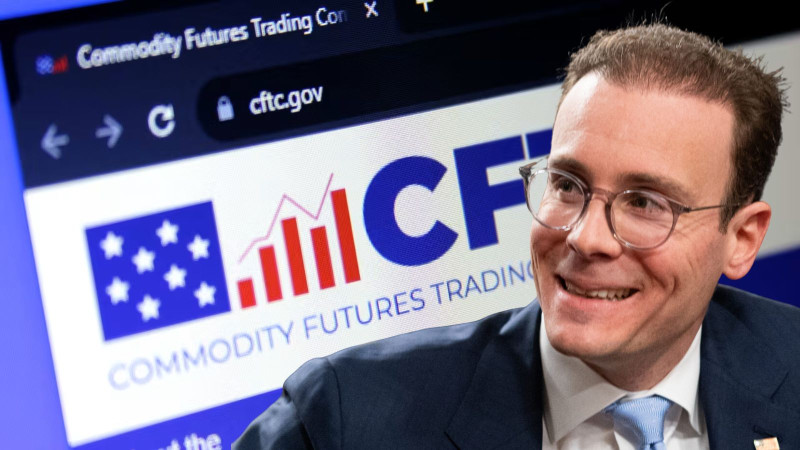
CFTC Names 35 Crypto, Finance Leaders to Advisory Panel

-
Hayden Adams, CEO, Uniswap Labs
-
Brian Armstrong, CEO, Coinbase
-
Shayne Coplan, CEO, Polymarket
-
Brad Garlinghouse, CEO, Ripple
-
Luke Hoersten, CEO, Bitnomial
-
Tarek Mansour, CEO, Kalshi
-
Kris Marszalek, CEO, Crypto.com
-
Nathan McCauley, CEO, Anchorage Digital
-
Peter Mintzberg, CEO, Grayscale
-
Sergey Nazarov, CEO, Chainlink Labs
-
Arjun Sethi, Co CEO, Kraken
-
Peter Smith, CEO, Blockchain.com
-
Tyler Winklevoss, CEO, Gemini
-
Anatoly Yakovenko, CEO, Solana Labs
-
Andrej Bolkovic, CEO, Options Clearing Corporation
-
Thomas Chippas, CEO, Rothera Markets
-
Professor Harry Crane, Representative
-
Chris Dixon, General Partner, a16z Crypto
-
Craig Donohue, CEO, Cboe Global Markets
-
Terry Duffy, Chair and CEO, CME Group
-
Tom Farley, CEO, Bullish
-
Adena Friedman, Chair and CEO, Nasdaq
-
Christian Genetski, President, FanDuel
-
Frank LaSalla, President and CEO, Depository Trust and Clearing Corporation
-
Walt Lukken, CEO, FIA
-
Scott D. O’Malia, CEO, ISDA
-
Alana Palmedo, Managing Partner, Paradigm
-
Vivek Raman, CEO, Etherealize
-
Professor Carla Reyes, Representative
-
Jason Robins, CEO, DraftKings
-
David Schwimmer, CEO, LSEG
-
Vance Spencer, Co founder, Framework Ventures
-
Jeff Sprecher, CEO, Intercontinental Exchange
-
Vlad Tenev, CEO, Robinhood
-
Don Wilson, CEO, DRW
Ripple Integrates Hyperliquid for Institutional DeFi Access

Ripple is pushing further into decentralized markets.
The company said it will support Hyperliquid through Ripple Prime, its institutional brokerage platform, giving professional trading firms access to on-chain derivatives without having to interact directly with DeFi infrastructure.
For Ripple, the move is about meeting institutional demand where it already exists. Many hedge funds and asset managers want exposure to decentralized markets, but they still operate inside traditional risk, margin, and reporting systems. Ripple Prime is designed to sit between those worlds.
With Hyperliquid now supported, Ripple Prime clients can trade decentralized perpetual futures while managing exposure alongside more familiar products like FX and cleared derivatives.
What Changes for Institutions
The biggest shift here is not access, but structure.
Instead of setting up wallets, managing smart contracts, or splitting capital across multiple venues, institutions can route trades through Ripple Prime and maintain a single counterparty relationship. Margin, collateral, and reporting remain centralized, even though execution happens onchain.
That matters for firms that are comfortable trading derivatives but not interested in rebuilding their internal processes for DeFi. It also reduces capital inefficiencies that come from isolating on-chain positions from the rest of a trading book.
This is not retail access. It is aimed squarely at professional desks.
Why Hyperliquid Keeps Showing Up
Hyperliquid has become one of the more active decentralized derivatives platforms in crypto, largely because it does not feel like most DeFi exchanges.
It runs an on-chain order book instead of an automated market maker, which allows for tighter spreads and execution that better suits high-volume traders. Perpetual futures on major assets make up most of the activity, with new markets continuing to roll out.
That combination has drawn liquidity, which is still the hardest thing to build in decentralized markets. For institutions, liquidity tends to matter more than ideology.
Ripple’s support puts Hyperliquid in front of firms that may not have considered trading on a decentralized venue before.
Part of a Bigger Institutional Shift
This announcement fits into a wider trend across crypto infrastructure.
Firms that serve institutions are no longer treating DeFi as a separate category. Instead, they are trying to make it another venue, similar to how traditional desks access exchanges, clearing houses, or OTC markets.
Ripple’s approach reflects that thinking. The company is not asking institutions to learn DeFi. It is packaging DeFi in a way that looks familiar enough to be usable.
That model is starting to show up more often, especially as tokenized assets and on-chain credit products gain traction.
What It Means for XRP Markets
For XRP, deeper on-chain liquidity and derivatives access matter.
Derivatives tend to pull in more sophisticated traders, which can tighten spreads and improve price discovery over time. Connecting XRP-related markets to high-performance decentralized venues adds another layer to its institutional story.
It also shows how fragmented crypto markets are slowly being stitched together, with execution happening in one place and risk managed somewhere else.
Risks Are Still There
Decentralized derivatives come with obvious risks.
Leverage, liquidations, and volatility can move fast, and regulatory attention around perpetual futures is not going away. Even with a prime brokerage layer in front, institutions are still exposed to market dynamics that can get messy.
Ripple’s platform can simplify access and controls, but it does not remove those risks.
The Bottom Line
Ripple’s Hyperliquid support is not a flashy consumer announcement. It is infrastructure work.
It points to a future where on-chain markets are accessed the same way institutions already access everything else, through familiar systems, familiar counterparties, and familiar controls.
Whether that future scales depends on liquidity, regulation, and market demand. But for now, Ripple is clearly positioning itself to be part of that next phase.
Ripple and LMAX Push Institutional Stablecoin Adoption
Ripple and LMAX Push Institutional Stablecoin Adoption
Ripple’s reported deal with LMAX Group is not really about another exchange listing or a short-term liquidity boost. It is about where stablecoins are finally starting to show up inside institutional finance, and what that shift says about the next phase of crypto market structure.
The headline is simple enough. Ripple and LMAX have struck a $150 million agreement that brings Ripple’s dollar-backed stablecoin, RLUSD, deeper into LMAX’s institutional trading venues. The more interesting part is what comes next: RLUSD is expected to be usable as collateral, margin, and settlement capital by professional trading firms.
That may not sound dramatic at first glance, but inside institutional markets, it is a big deal.
From parking asset to working capital
For years, stablecoins have mostly played a supporting role. They were the thing traders sat in between positions or used to move money between exchanges when banks were closed. Retail users cared about convenience and price stability. Institutions cared about something else entirely: whether a stablecoin could actually replace cash in live trading workflows.
Using a stablecoin as collateral changes the conversation. Suddenly, that token is not just sitting idle. It is supporting leveraged positions, absorbing margin requirements, and moving around trading venues without waiting for bank wires or settlement windows.
LMAX is a meaningful place for that shift to happen. The firm has built its reputation on institutional-grade execution in FX and digital assets, serving banks, brokers, hedge funds, and proprietary trading firms. If RLUSD is accepted inside that ecosystem as usable collateral, it moves closer to being treated as functional cash, not just crypto-native liquidity.
Why LMAX matters more than a typical exchange
This is not a retail exchange partnership. LMAX’s client base is made up of firms that already manage risk, margin, and balance sheets for a living. These are the players who care about haircut schedules, collateral eligibility, operational reliability, and compliance comfort.
If those firms are willing to post RLUSD as collateral, it suggests confidence not only in the token’s peg, but also in the issuer behind it. That trust is harder to earn than a listing, and far more valuable once it exists.
It also reflects a broader institutional reality. Firms want capital that moves around the clock, across venues, and across asset classes. Cash tied to banking hours and regional settlement systems increasingly feels like a constraint.
Ripple’s stablecoin strategy is becoming clearer
RLUSD is not a side project for Ripple. The company has been positioning it as an enterprise-grade stablecoin, backed by segregated reserves and supported by regular attestations. It runs on both XRP Ledger and Ethereum, and Ripple has been explicit about pushing it into real financial workflows rather than letting it exist as a passive asset.
That push has shown up in a few places already. RLUSD has been integrated into Ripple’s payments stack. It has been listed on institutional venues. And now, with LMAX, it is moving into collateral use cases.
Seen together, these steps suggest Ripple is trying to build something closer to an institutional cash layer than a retail stablecoin brand.
The collateral flywheel institutions care about
For professional trading firms, collateral is where the real leverage sits. If a stablecoin can be posted as margin, it becomes part of the firm’s core capital stack. That unlocks capital efficiency, especially for firms operating across time zones and asset classes.
Once a stablecoin clears that bar, it can expand into settlement, netting, and treasury operations. It can move between venues over the weekend. It can reduce idle balances. It can simplify how firms manage liquidity across crypto and traditional markets.
This is also why Ripple’s broader institutional moves matter. The company has been building out infrastructure that connects stablecoins, custody, prime brokerage, and payments. The LMAX deal fits neatly into that picture.
A crowded market with a narrow institutional lane
RLUSD is entering a stablecoin market dominated by incumbents with massive scale. But market cap is not the only metric that matters in institutional finance. Acceptance as collateral, integration into regulated venues, and operational trust often matter more than raw supply.
Institutions do not ask which stablecoin is biggest. They ask which one their venue will accept, which one clears risk checks, and which one will still work under stress.
Ripple is clearly aiming at that narrow lane, where trust, compliance, and plumbing matter more than retail mindshare.
What still needs to be proven
There are still open questions. The exact scope of RLUSD’s collateral eligibility at LMAX matters. Haircuts, product coverage, and custody integration will determine how widely it is actually used.
There is also the question of scale. True institutional adoption shows up in volume, not announcements. It shows up during volatile markets, when liquidity and redemptions are tested.
And as always, jurisdiction matters. Stablecoin availability and usage depend on regulatory boundaries that vary by region and client type.
Why this matters now
The broader takeaway is that stablecoins are quietly moving from the edges of crypto markets toward the center of institutional finance. Not through hype cycles, but through plumbing.
If RLUSD becomes a routine piece of collateral inside venues like LMAX, it will be less about Ripple winning a headline and more about stablecoins winning a role they have been chasing for years.
In that sense, this deal is less about a token and more about a shift. Stablecoins are no longer just crypto’s cash. They are starting to look like finance’s.
Stay Connected
You can stay up to date on all News, Events, and Marketing of Rare Network, including Rare Evo: America’s Premier Blockchain Conference, happening July 28th-31st, 2026 at The ARIA Resort & Casino, by following our socials on X, LinkedIn, and YouTube.

Japan’s XRP Integration Could Reshape Global Capital Flows

Japan is quietly laying some important groundwork that could make XRP more than just another crypto token. What’s happening now in Tokyo and in the country’s banking corridors could shape the way large pools of capital get sent across borders in the years ahead.
The big idea circulating among traders and institutional tech teams is that Japan is turning its regulatory and financial attention toward programmable settlement rails. XRP fits into that picture because it can move value fast and cheaply. But the real story is about infrastructure, banks, and the rules that let them play without fear of breaking the law.
Here’s what’s going on.
Regulation is Shifting from Theory to Reality
For years Japan has talked about clarifying how digital assets should be treated under the law. That conversation has been moving into serious policy change. Regulators in Tokyo are preparing updates that would treat crypto assets more like traditional financial products. That changes the risk profile for big incumbents. It makes it easier for banks and brokers to offer crypto services without special carve-outs or excessive legal gymnastics.
At the same time, Japan’s government has publicly backed projects from major banking groups to issue stablecoins. This is the kind of step that signals policymakers see on-chain settlement as more than a novelty. Stablecoins are the closest thing in crypto to digital cash, and when big banks start experimenting with them, it opens the door for broader adoption.
For XRP specifically, these regulatory shifts matter because they reduce uncertainty. If regulators are saying, “Yes, this is finance. Let’s give clear rules,” then large institutions are closer to saying, “Yes, we can build real products here.”
SBI and Ripple: A Relationship That Keeps Delivering
Much of the buzz around XRP in Japan centers on the work between SBI Group and Ripple. These two have been collaborating for years to push payment innovation, remittance services, and now regulated digital asset distribution.
One of the biggest developments to watch is the planned rollout of a regulated stablecoin called RLUSD in Japan. Ripple and SBI’s exchange arm have said they intend to bring it to market soon. While RLUSD isn’t XRP itself, it matters to XRP as part of the ecosystem. More regulated on-chain money means more use cases where a fast settlement asset like XRP can add real value.
If RLUSD gets traction and institutions start using it for real flows, that could create a halo effect for XRP. Liquidity and rails built around regulated tokens help the whole market.
What “Integration” Really Means
When the headlines say “Japan is adopting XRP,” it doesn’t literally mean every bank is running XRP nodes tomorrow. What’s actually happening is more nuanced. There are three main layers in play:
-
Remittance and payment rails The work between SBI entities and others to offer faster and cheaper cross-border payments is a base layer. XRP’s speed and low cost make it interesting here.
-
Regulated stablecoin frameworks These open the door for tokenized fiat in ways that Japan’s largest banks can legally touch.
-
Capital markets access If Japanese brokers and banks can offer structured products involving XRP, that could lead to real institutional capital flows.
That last part is what people mean when they talk about “global capital flows.” It’s not just remittance. It’s corporate treasury movement, fund flows, cross-border settlement in amounts that matter to institutional desks.
The Bigger Picture on Liquidity
For XRP to truly shine as a bridge asset, liquidity and execution quality have to be reliable around the clock. This isn’t just about regulatory licenses. It’s about markets that don’t freeze up when volatility hits. So while Japan might be creating the conditions for adoption, the rest of the ecosystem has to be ready too.
But here’s the positive spin: the institutional interest in XRP is no longer theoretical. It’s tied to real product plans, real regulatory engagement, and partnerships with major financial groups.
Why This Matters Outside Japan
If Japan ends up with a live, regulated stack that includes stablecoins, regulated exchanges, bank participation, and real settlement activity, that becomes a proof point. Other countries watch this stuff. When a major developed market shows it can integrate crypto tech with regulated finance, it marks a shift in global capital infrastructure.
That doesn’t guarantee XRP will win every corridor or every use case. But it does mean that XRP is not sitting on the crypto fringes. Japan’s approach shows it is being considered in serious planning for next-generation settlement rails.
What to Watch in the Coming Months
Real adoption doesn’t come from announcements alone. What we want to see is:
-
Live throughput on remittance corridors using on-chain settlement.
-
Institutional partners offering XRP exposure in regulated products.
-
Bank and broker integration that goes beyond pilot mode.
-
Stablecoin and regulated token use that actually moves significant value.
If those conditions start showing up in quarterly reports and product launches, then the narrative shifts from potential to performance.
Bottom Line
Japan is not shouting at the top of its lungs that XRP is the future money rail. What is happening is more meaningful. The country is building a compliant, regulated framework that makes it possible for assets like XRP to be used in real capital movement at scale.
In an industry where regulation and finance often move at glacial pace, this feels like movement. For XRP holders and anyone watching the evolution of cross-border settlement, that is headline-worthy. It might not be the revolution yet, but it could easily be the start of one.
Stay Connected
You can stay up to date on all News, Events, and Marketing of Rare Network, including Rare Evo: America’s Premier Blockchain Conference, happening July 28th-31st, 2026 at The ARIA Resort & Casino, by following our socials on X, LinkedIn, and YouTube.