#GENIUS Act

JPMorgan Files Tokenized Treasury Fund on Ethereum

JPMorgan Chase filed paperwork Tuesday with the U.S. Securities and Exchange Commission to launch a new tokenized money market fund on Ethereum, marking the bank's second push into blockchain-based investment products and the latest signal that Wall Street is serious about putting traditional finance on-chain.
The proposed fund, called the JPMorgan OnChain Liquidity-Token Money Market Fund and carrying ticker JLTXX, would issue digital tokens on the Ethereum blockchain representing shares backed by short-term U.S. Treasuries, cash, and overnight repurchase agreements. The fund's underlying blockchain infrastructure would be operated by Kinexys Digital Assets, the bank's blockchain unit that was formerly known as Onyx.
Built for the GENIUS Act
What makes this filing a bit different from typical money-market launches is who it's designed for. JPMorgan has structured JLTXX specifically to satisfy reserve asset requirements under the GENIUS Act, the U.S. legislation aimed at bringing stablecoin issuers under a regulatory framework. In short, the fund is positioned as a yield-bearing reserve vehicle for stablecoin firms looking for compliant, on-chain Treasury exposure.
That's a strategically significant market. Stablecoin supply has surged past $303 billion as of May 2026, with a large chunk of that liquidity sitting idle in exchange wallets generating nothing. When a bank the size of JPMorgan launches a regulated, on-chain money market product, this changes the game for institutional stablecoin issuers.
BlackRock Moved First, Then JPMorgan Followed Days Later
Just days before JPMorgan's Tuesday filing, BlackRock, the world's largest asset manager overseeing roughly $14 trillion, submitted its own pair of SEC filings tied to tokenized Treasury products. One of those filings outlined the BlackRock Daily Reinvestment Stablecoin Reserve Vehicle, designed to hold cash and short-term Treasuries and issue what the firm is calling OnChain Shares. Another filing proposed adding an Ethereum-based tokenized share class to its existing $7 billion Select Treasury-Based Liquidity Fund, with BNY Mellon maintaining official ownership records on-chain using ERC-20 token standards.
BlackRock CEO Larry Fink has been vocal about this for a while. He's argued publicly that blockchain-based settlement can compress transaction cycles, enable round-the-clock trading, and add transparency to capital markets. The firm is now acting on this, and at scale. BlackRock's existing BUIDL fund already manages more than $2.5 billion across eight blockchain networks including Ethereum, Solana, and Avalanche, and is increasingly being used as collateral across crypto markets.
A Market That Has Tripled in a Year
The broader tokenized real-world asset sector has crossed $30 billion in total value, more than tripling over the past twelve months. Tokenized U.S. Treasuries alone represent $14 billion of that, with Ethereum holding over $8 billion of the total. These aren't little numbers anymore.
Goldman Sachs and BNY Mellon have also announced tokenization initiatives in recent months. Just last week, JPMorgan's Kinexys platform joined Mastercard, Ripple, and Ondo Finance in completing the first cross-border, cross-bank redemption of a tokenized U.S. Treasury fund, settling the transaction on the XRP Ledger in under five seconds. This is another huge step... it's one thing to file an SEC registration, quite another to actually run a live settlement across borders in the time it takes to read this sentence.
The Race Is On
For context on how quickly this space is evolving, a Boston Consulting Group and Ripple joint projection estimates the tokenized asset market could reach $18.9 trillion by 2033. Whether or not that number proves accurate, the direction is pretty clear. Major banks are not waiting for the market to come to them.
JPMorgan seeded its first tokenized fund, the OnChain Net Yield Fund (MONY), with $100 million of its own capital after launching it through its $4 trillion asset management unit. JLTXX represents the bank's next step, this time aimed squarely at the emerging stablecoin compliance market rather than traditional qualified investors.
The filings from JPMorgan and BlackRock within days of each other are not a coincidence. Regulatory clarity, combined with the sheer scale of idle stablecoin liquidity looking for a compliant home, has created an opening. Wall Street is moving quickly to fill it, and the tokenization race is looking less like a crypto experiment and more like the next phase of institutional finance.
Morgan Stanley Launches Stablecoin Reserve Fund

The Morgan Stanley Investment Management (MSIM) has launched the Stablecoin Reserves Portfolio (MSNXX), a new government money market fund that aligns with the stablecoin reserve investment requirements set by the Guiding and Establishing National Innovation for U.S. Stablecoins Act (GENIUS Act).
The new stablecoin reserve fund aims to offer payment stablecoin issuers an eligible money market fund option in which they can invest their stablecoin reserves backing their payment stablecoins.
According to Fred McMullen, Co-Head of Global Liquidity at Morgan Stanley Investment Management, the reserve fund offers stablecoin issuers investment solutions that allow them to safely and securely invest the reserve assets backing the stablecoins they hold.
With this stablecoin reserve fund, stablecoin issuers can safely and efficiently preserve their reserve capital while maintaining daily liquidity and competitive interest yields. Since the fund only invests in cash, Treasury bills, notes, and bonds with maturities of about 93 days or less, stablecoin issuers are not required to manage complex regulatory compliance processes or continuously audit reserves to demonstrate sufficient liquidity backing their stablecoins.
Speaking on the launch of the stablecoin reserve fund, Amy Oldenburg, Head of Digital Asset Strategy for Morgan Stanley, said that the launch of the MSIM Stablecoin Reserves Portfolio is another step toward modernizing Morgan Stanley’s financial infrastructure and is a key step in improving the firm’s institutional client experience.
"Creating opportunities for all client segments as markets evolve will make the next phase of finance possible and more broadly accessible," Oldenburg added.
Morgan Stanley Expands Its Digital Assets Offerings
The launch of the Stablecoin Reserves Portfolio (MSNXX) is part of Morgan Stanley’s efforts toward expanding its digital asset offerings and comes shortly after Morgan Stanley Investment Management, early this month, launched the Morgan Stanley Bitcoin Trust (MSBT), a spot exchange-traded product that tracks the price performance of Bitcoin.
Upon launching on the New York Stock Exchange, the MSBT fund drew approximately $34 million in net inflows on its first day, processing more than 1.6 million shares and significantly outperforming older exchange-traded funds.
Eric Balchunas, one of Bloomberg’s notable ETF analysts, ranked it in the top 1 percent of all ETF launches, describing it as “arguably the biggest bitcoin ETF launch in the history of the spot bitcoin ETF market.” Balchunas also projects that the MSBT fund will reach $5 billion in assets under management within the next year.
FDIC Moves to Regulate Stablecoin Issuers Under GENIUS Act

The Federal Deposit Insurance Corporation (FDIC), the primary insurance body for bank deposits in the United States, has recently moved to regulate FDIC supervised stablecoin issuers in accordance with the Guiding and Establishing National Innovation for US Stablecoins (GENIUS) Act.
The agency, in a recent press release, announced that its board of directors had approved a Notice of Proposed Rulemaking to implement key provisions under the GENIUS Act.
According to the FDIC, this proposal would provide a prudential framework for permitted payment stablecoin issuers under its supervision, setting standards with regard to stablecoin reserve assets, redemption, capital, liquidity, and risk management that will be uniformly adhered to by all FDIC supervised stablecoin issuers.
The proposal will also establish requirements for FDIC supervised permitted payment stablecoin issuers and insured depository institutions that provide certain payment stablecoin related custodial and safekeeping services.
All entities under FDIC supervision, including permitted payment stablecoin issuers, which are entities legally approved to issue stablecoins in the United States, and insured depository institutions, which include banks and other federally insured financial institutions, must comply with this new FDIC stablecoin prudential rule if they are engaged in issuing stablecoins or providing related services.
Although the FDIC insures deposits at more than 4,000 financial institutions in the United States and supervises more than 2,700 banks, there are currently no approved permitted payment stablecoin issuers or insured depository institutions operating under this specific framework. Approval would only follow once the proposal becomes a final rule, after which entities may begin applying for supervision under the FDIC.
For the proposal to become a rule, it must be released for public comment, which has already occurred, with a 60-day window provided for feedback. After the 60-day window elapses, the FDIC will review the comments and feedback and make any necessary adjustments based on the public response.
The Office of the Comptroller of the Currency, the Federal Reserve, and, in some cases, the Treasury Department may be invited to review the final proposal to ensure it does not conflict with existing banking and financial laws. After this review, the FDIC board may approve it as a final rule, after which it is published in the Federal Register.
What happens after the proposal becomes law?
Upon the proposal becoming law, banks and other eligible financial institutions can then apply for designation as a Permitted Payment Stablecoin Issuer (PPSI) under FDIC supervision. The application is reviewed and either approved or denied by the FDIC within a period of 120 days.
The FDIC will also regularly review the capital, reserves, risk controls, and compliance systems of these approved entities to ensure they are safe to operate.
Tether Hires KPMG for First Full USDT Reserve Audit

Tether, the world’s largest stablecoin issuer, has hired KPMG, one of the Big Four accounting firms, to conduct its first full audit of its USDT reserves. It has also engaged PwC to support the preparation of its internal systems.
The move comes days after Tether announced plans to work with one of the Big Four firms on an inaugural audit of its stablecoin reserves. Although it did not initially name the firm, the Financial Times reported that KPMG had been selected, citing sources familiar with the matter.
Prior to now, Tether had, for several years, engaged BDO Italia, an Italian affiliate of the global accounting firm BDO, to conduct periodic attestations of its reserves. These attestations involved BDO Italia taking a point-in-time snapshot of Tether's USDT reserves.
These snapshots helped confirm that, at a specific date, Tether's reported assets, including cash, U.S. Treasuries, gold, Bitcoin, and secured loans, met or exceeded the circulating supply of USDT. They were conducted quarterly and also included details on Tether's profit, reserve composition, and excess reserves.
While these attestations provided a degree of transparency and accountability, they were not full, comprehensive audits, as they relied on agreed-upon procedures and did not include elements typically associated with a full audit, such as in-depth testing of internal controls, continuous transaction verification, and formal risk assessments.
Tether’s Expansion Goals
Apart from ensuring transparency, the audit of its reserves aligns with Tether’s U.S. expansion goals under the GENIUS framework for stablecoins.
Signed into law by President Trump on July 18, 2025, the Guiding and Establishing National Innovation for U.S. Stablecoins (GENIUS) Act establishes a federal regulatory framework for dollar-backed payment stablecoins.
The framework outlines requirements that must be met by stablecoin issuers operating in the United States, including:
- Full reserve backing with high-quality liquid assets, such as cash and short-term U.S. Treasuries.
- Comprehensive audits and robust internal controls for larger issuers.
- Strict anti-money laundering (AML), redemption, and consumer protection requirements.
- Monthly public disclosures of reserve composition.
Tether, in partnership with crypto bank Anchorage Digital, launched USAT, a dollar-pegged stablecoin designed to comply with the GENIUS Act, as part of efforts to expand its presence in the U.S. market under the GENIUS framework.
The launch provides Tether with immediate regulatory cover, potentially making the asset more attractive to U.S. institutions that have previously avoided offshore-issued stablecoins such as USDT. Because USAT is issued by Anchorage Digital, a U.S.-based company, it has been positioned as a “made in America” product—marking a significant step in Tether’s broader U.S. expansion strategy.
Since comprehensive reserve audits are among the requirements for stablecoin issuers seeking to operate in the U.S., the KPMG audit helps position Tether as compliant with U.S. standards.
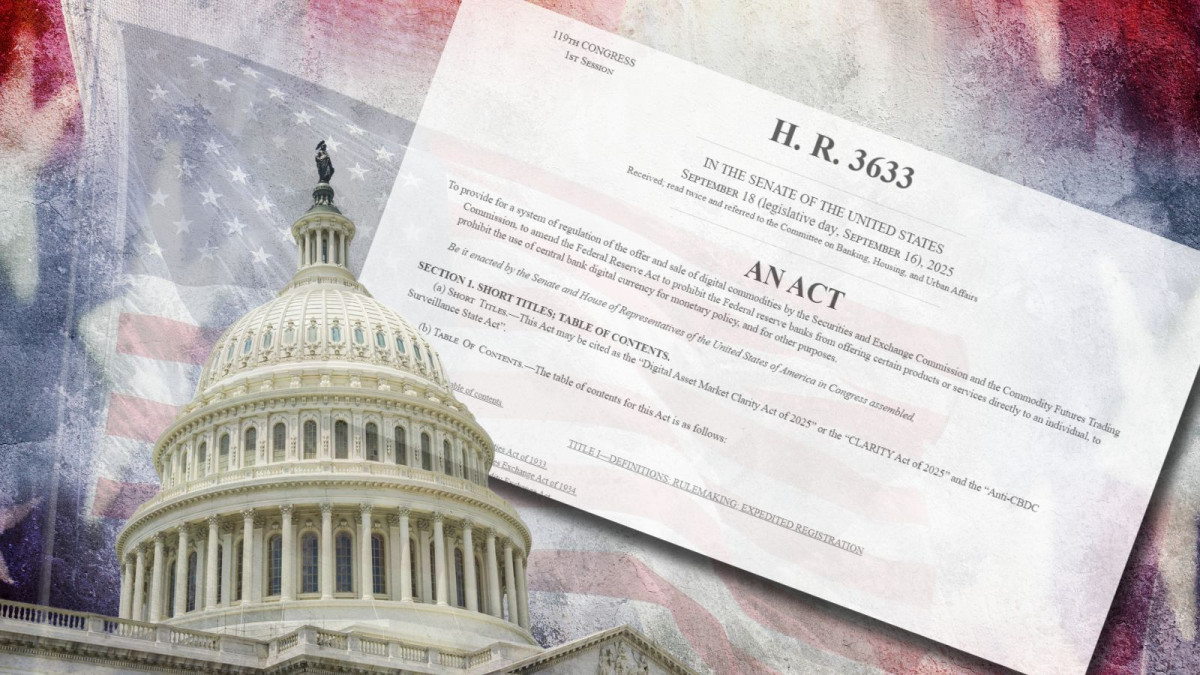
Senate Strikes Stablecoin Yield Deal, Clearing Path for the CLARITY Act

Something shifted in Washington on Friday, and the people who have been watching the CLARITY Act back and forth for months could feel it. Two key lawmakers, Republican Thom Tillis of North Carolina and Democrat Angela Alsobrooks of Maryland, reached an agreement in principle on one of the most stubbornly contested provisions in the bill: stablecoin yield. It is the kind of deal that, when the details finally shake out, may well be remembered as the moment the United States stopped kicking the crypto regulatory can down the road.
The news broke late Friday and was first reported by Politico. Senator Alsobrooks confirmed it plainly. "Sen. Tillis and I do have an agreement in principle," she said. "We've come a long way. And I think what it will do is to allow us to protect innovation, but also gives us the opportunity to prevent widespread deposit flight." The White House's crypto executive director, Patrick Witt, called it a "major milestone" and added that more work remains, but that progress toward passing the CLARITY Act was now real and tangible.
Senator Cynthia Lummis, the Wyoming Republican who chairs the Senate Banking Committee's crypto subcommittee and has been one of the most tireless advocates for this legislation, marked the occasion in her own way. She posted a photo on X of a "yield" sign. No caption needed.
The Stablecoin Yield Standoff, Explained
For months, the stablecoin yield question was the immovable object blocking the CLARITY Act from getting its Senate Banking Committee hearing.
The GENIUS Act, signed into law by President Trump in July 2025, prohibits stablecoin issuers from paying interest directly to holders. The intent was to prevent stablecoins from functioning as de facto bank deposit accounts, which would put them in direct competition with traditional savings products and, as the American Bankers Association argued loudly, threaten deposit flows into community banks. The concern: if Coinbase or another platform could offer users 4% on their dollar-pegged tokens simply for holding them, why would anyone keep money in a checking account?
The problem is that the GENIUS Act only covered issuers. It left a gap for third-party platforms that might offer rewards to customers who hold stablecoins on their systems. The ABA saw this as a loophole and spent months in Washington lobbying to close it. Crypto companies, for their part, said those rewards programs were fundamentally different from deposit interest and should be allowed.
Section 404 of the Senate Banking Committee's draft tried to thread this needle. It prohibits digital asset service providers from paying interest or yield "solely in connection with the holding of a payment stablecoin," while explicitly allowing "activity-based" rewards tied to transactions, payments, platform use, loyalty programs, liquidity provision, and other behaviors. The distinction is real: a reward for moving money through a system is not the same thing as interest paid for parking money in one.
Senator Mike Rounds, a South Dakota Republican on the Banking Committee, captured the nuance at an ABA summit earlier this month: rewards cannot be simply about how much money sits in an account, but they might reasonably be tied to how active that account is. "We're trying to reflect that in the discussions," he said.
Lummis had suggested the final compromise would disallow anything that "sounds like banking product terminology" and bar rewards tied to the size of a user's balance. Coinbase CEO Brian Armstrong, whose withdrawal of support in January helped torpedo a scheduled markup hearing, has been described by Lummis as "really pretty good about being willing to give on this issue."
From 99% to Done
The past week has been a rapid acceleration. As recently as Thursday, sources familiar with the situation described the stablecoin yield issue as being on the verge of resolution. A closed Senate Republican meeting on Wednesday, attended by White House crypto council director Patrick Witt, produced what Lummis told reporters afterward were significant breakthroughs, with "major light bulbs" switched on among the participants.
FinTech Weekly, which has closely tracked the legislative calendar, reported that stablecoin yield negotiations were "99% of the way to resolution" coming out of that meeting. The digital asset provisions of the bill more broadly were described as being in a "good place." The remaining friction, sources said, was not technical but political, specifically around whether community bank deregulation provisions might be attached to the CLARITY Act as part of a broader legislative trade.
Then came Friday's agreement. "We've come a long way," Alsobrooks told Politico, with a formality that understated just how much ground has been covered since January, when the scheduled markup hearing collapsed under the weight of over 100 proposed amendments and an industry revolt over the yield language.
What Comes Next and Why the Timeline Matters
An agreement on yield does not mean the CLARITY Act is done. Several other issues need resolution, decentralized finance remains a live debate, and the bill still needs to clear the Senate Banking Committee before it can go to a full Senate vote. After that, it must be reconciled with the version that passed the Senate Agriculture Committee in January. And before the President can sign it, that combined Senate text has to be reconciled with the House-passed version from July 2025.
But the clock is ticking here. Senate Majority Leader John Thune controls the floor calendar, and it is crowded. Unrelated fights, including the Republican voter-ID bill and ongoing debate over the situation in Iran, are competing for limited floor time. Haun Ventures CEO Katie Haun, in a CNBC interview Friday, put it directly: "The big question on the Clarity Act is, is Congress going to get a bill to the floor on time to vote?"
Lummis has said she expects a Banking Committee hearing in the latter half of April, after the Easter recess. Advocates have been hoping for a May resolution. Prediction markets are currently pricing the odds of the CLARITY Act being signed in 2026 at around 72%, according to FinTech Weekly. Treasury Secretary Scott Bessent has described passage as a spring 2026 target. Ripple CEO Brad Garlinghouse has put the odds at 80 to 90%.
JPMorgan analysts have described CLARITY Act passage by midyear as a positive catalyst for digital assets, pointing to regulatory clarity, institutional scaling, and tokenization growth as the key drivers. The crypto industry committed nearly $150 million to the Fairshake political action committee in the current cycle and announced a $193 million war chest around the Agriculture Committee markup in January. The companies behind that spending are waiting.
What This All Means
The stakes of the CLARITY Act extend well beyond Senate procedure. Markets are waiting. Institutions that have been slowly building out crypto infrastructure, custody solutions, tokenized asset offerings, trading desks, need to know what the rules are before they can fully commit capital and resources. The SEC's interpretation helps, but as Atkins himself acknowledged, it is not a substitute for law.
The CLARITY Act, if signed, would give the CFTC clear jurisdiction over most digital asset spot markets, create a path to register exchanges and brokers, establish consumer protections with real enforcement teeth, and provide the kind of statutory framework that companies can build businesses around. It would, in the language of its Senate Banking Committee sponsors, establish the United States as the crypto capital of the world, not just by rhetoric but by law.
If the bill fails this year, the status quo continues. Crypto companies operate under regulatory uncertainty. The SEC retains broad discretion to treat digital assets as securities. Institutional adoption continues but without a clear statutory framework. And the crypto lobby, which has made clear it will treat failure as a political liability, turns its $193 million war chest into something that looks a lot more like electoral pressure.
Friday's agreement does not guarantee passage. It does something important though. It removes the single biggest substantive obstacle to moving forward. The stablecoin yield question, which derailed a January markup hearing and has consumed months of negotiations, now has a resolution in principle. The path ahead still has obstacles, but for the first time in a while, it looks like an actual path.
Senators Tillis and Alsobrooks just handed the crypto industry something it has been asking for since the last bull market: a credible signal that Washington is finally going to do its job. The deal is in principle, the details are not yet public, and there is still legislative work ahead. But after years of false starts, shelved bills, collapsed markup hearings, and agency standoffs, this is the moment the trajectory changed.

Mastercard Acquires BVNK for $1.8 Billion in Biggest Stablecoin Deal Yet

Mastercard has agreed to acquire BVNK, the London-based stablecoin infrastructure company, for up to $1.8 billion in a deal that includes $300 million in contingent payments tied to future performance milestones. The agreement, announced Tuesday morning, is expected to close before the end of 2026, pending regulatory approvals.
The deal is the latest and largest chapter in a stablecoin acquisition frenzy that has gripped traditional finance and crypto alike, and it carries a backstory messier than most. BVNK didn't end up at Mastercard's door by accident. It got there after a months-long bidding war with Coinbase, exclusivity agreements, a very public deal collapse, and a detour that briefly had Mastercard chasing a different company entirely.
The Road to This Deal Was Anything But Clean
Back in October 2025, Fortune reported that both Mastercard and Coinbase had separately held advanced acquisition talks with BVNK, with the price tag floating somewhere between $1.5 billion and $2.5 billion. At the time, Coinbase looked like the clear front-runner. Three sources familiar with the matter told Fortune that the crypto exchange had the inside track, and by late October, BVNK had entered into exclusivity with Coinbase, meaning the startup legally couldn't entertain other offers.
It seemed like a done deal. Then it wasn't.
In November, Coinbase and BVNK quietly called off talks. The deal had gotten as far as due diligence and exclusivity before the two sides parted ways. Coinbase issued a carefully worded non-statement about "continuously seeking opportunities to expand on our mission," and BVNK was suddenly back on the market.
Meanwhile, after losing out to Coinbase in the first round, Mastercard had pivoted and was reported to be in serious discussions to acquire Zerohash, a Chicago-based crypto infrastructure firm, for somewhere between $1.5 billion and $2 billion. That deal apparently didn't close either, and Mastercard eventually circled back to the startup it had wanted all along.
The result is the deal announced today: Mastercard gets BVNK for a price that, at $1.8 billion, comes in below the $2 billion Coinbase had been pursuing and meaningfully below the top of the original $2.5 billion range. Whether that represents a discount, a reflection of changed market conditions, or simply the realities of a second negotiation is hard to say. But for a company that was valued at around $750 million as recently as mid-2025, it is still a remarkable outcome.
Who is BVNK and Why Does It Matter
Founded in 2021 by Chris Harmse, Jesse Bernson-Struthers, and Donald Jackson, BVNK was built with a specific problem in mind: enterprises wanted to use stablecoins, but the plumbing didn't exist to make that happen at scale. The company's pitch was never about building a consumer wallet or launching its own token. It was about becoming the invisible layer that lets other financial businesses actually move money using stablecoins.
The platform operates across more than 130 countries and supports payments on all major blockchain networks. Its customers include Worldpay, Deel, Flywire, Rapyd, Thunes, and a growing list of enterprise clients that process real commercial volume. In its own end-of-year review published in January 2026, BVNK said it was processing $30 billion in annualized stablecoin payment volume, up 2.3x from the prior year, across 2.8 million transactions. A year before that, its volumes were reported at roughly $12 billion when Visa was announced as an investor.
One third of that volume now comes from the U.S. market alone, where BVNK launched operations at the start of 2025 and scaled from essentially zero to $10 billion in annualized volume by year end. The company opened two San Francisco offices and a New York outpost in just twelve months.
The investor roster reads like a who's who of institutions that have come around to stablecoins as strategic infrastructure rather than speculative technology. Haun Ventures led BVNK's $50 million Series Bin December 2024. Coinbase Ventures participated. Tiger Global was already in. And then Visa Ventures and Citi Ventures both made strategic investments, a signal that even the largest incumbent financial networks were willing to bet on the startup they might otherwise consider a competitive threat.
Bernson-Struthers described BVNK as the "global leader" in stablecoin infrastructure in a December 2024 interview, citing the company's banking relationships and financial licenses as the harder-to-replicate moat. That licensing infrastructure, built out painstakingly across multiple jurisdictions including full U.S. state-level coverage and comprehensive EU authorization, is likely a substantial part of what Mastercard is paying for.
What Mastercard Is Actually Buying
Jorn Lambert, Mastercard's Chief Product Officer, put it plainly in the company's announcement Tuesday: "We expect that most financial institutions and fintechs will in time provide digital currency services, be it with stablecoins or tokenized deposits. We want to support them and their customers with a best in class, highly compliant, interoperable offering that brings the benefits of tokenized money to the real world."
That framing says a lot about how Mastercard is positioning this acquisition. The company isn't buying BVNK because it thinks stablecoins will replace its core business. It's buying BVNK because it wants to be the network that connects stablecoin rails to everything else, the way it currently connects card networks to merchants and banks around the world.
The logic is straightforward, if you squint at it. Mastercard's entire business model is built on being the trusted intermediary between different financial systems. Stablecoins create new rails that, without an orchestration layer, are isolated from the broader financial system. BVNK's core product is precisely that orchestration layer: the infrastructure that lets money move fluidly between dollars, stablecoins, blockchains, and traditional bank accounts. Mastercard plugs that into its global network and, theoretically, becomes the interoperability layer for the next generation of payments.
Lambert added that adding on-chain rails to Mastercard's network "will support speed and programmability for virtually every type of transaction," pointing to use cases beyond just consumer payments including capital markets, treasury management, B2B transactions, and cross-border remittances. That's a broader canvas than most people associate with stablecoins today, but it reflects where the industry is headed.
Mastercard cited a Boston Consulting Group figure showing digital currency payment use cases hit at least $350 billion in volume in 2025. The company also pointed to the growing regulatory clarity around digital currencies in multiple jurisdictions as a catalyst for financial institutions and fintechs that are now looking to build stablecoin-enabled payment products for their own customers.
The Stablecoin Acquisition Parade
This is the latest in a series of major acquisitions that have reshaped how the payments industry thinks about stablecoin infrastructure.
The deal that started the current wave was Stripe's acquisition of Bridge, another stablecoin infrastructure startup, for $1.1 billion. That deal closed in early 2025 and set a new benchmark for what stablecoin infrastructure could fetch. BVNK's volumes at the time of Bridge's acquisition were already significantly larger, which is part of why the bidding quickly escalated into the multi-billion dollar range.
Since then, MoonPay acquired Iron, stablecoin M&A activity has continued to accelerate, and the market cap of all stablecoins combined crossed $300 billion. Circle's IPO on the NYSE in June 2025 added further legitimacy and brought mainstream investor attention to the sector. The U.S. GENIUS Act, signed by President Trump in July 2025, provided the regulatory framework that large institutions had been waiting for before fully committing to stablecoin strategies.
That legislative clarity changed the calculus for traditional finance almost overnight. JPMorgan launched its JPMD deposit tokens. Citigroup announced a Citi stablecoin. Banks that had previously treated stablecoins as a fringe curiosity started treating them as product lines they needed to support.
For a payments network like Mastercard, the pressure is acute. The company's stock was reportedly hit when the GENIUS Act passed, with investors worried that stablecoins could erode the interchange fee model that underpins Mastercard's revenue. Buying BVNK is, in part, a direct response to that concern. Rather than cede the stablecoin payments market to crypto-native competitors or fintech newcomers, Mastercard is acquiring the infrastructure to own a piece ofit.
A Telling U-Turn on Stablecoins
There is a certain irony in today's announcement. As recently as July 2025, Raj Seshadri, Mastercard's chief commercial payments officer, told analysts on an earnings call that the company expected most payment flows to "begin and end in fiat," and that stablecoins would be "just one more currency for some specific use cases." That is a significant shift in tone from announcing a near-$2 billion acquisition to get into the middle of those flows.
To be fair, Mastercard's position has been nuanced. The company has been quietly building its crypto infrastructure for years, having acquired blockchain analytics firm CipherTrace back in 2021. It later shut down many of CipherTrace's key products, suggesting that early acquisition didn't pan out as planned. The company also joined a consortium focused on stablecoin technology alongside Robinhood and K:raken, and launched its Crypto Partner Program to foster collaboration in the space.
But the BVNK deal is a different order of magnitude. This is not a defensive data play or a consortium membership. This is Mastercard paying top dollar for the most battle-tested stablecoin infrastructure business in the world and betting that the orchestration layer between fiat and on-chain money will be one of the most valuable positions in payments over the next decade.
What Happens Next
The deal is expected to close by end of 2026, and both companies will presumably spend the intervening months navigating regulatory reviews across multiple jurisdictions. Given BVNK's existing licenses in the U.S. and EU and Mastercard's regulatory relationships globally, the path to approval is probably cleaner than it might be for a crypto-native acquirer.
The more interesting question is how BVNK's existing enterprise clients will react. Worldpay, Deel, Flywire and others built integrations with an independent infrastructure provider. Being absorbed into one of the world's largest payments networks changes the dynamic. Mastercard will need to make the case that the independence and product velocity those customers rely on will survive the acquisition intact.
And then there is the competitive landscape. Stripe now has Bridge. Mastercard will have BVNK. Coinbase, having walked away from the deal, will presumably continue building or find another infrastructure target. PayPal, which just announced the expansion of its own stablecoin PYUSD to 70 markets worldwide, is clearly not sitting still either. The scramble for position in the stablecoin payments stack is only getting more crowded, and today's announcement is more an acceleration of that competition than a resolution of it.
For BVNK's founders, who built the company from scratch in 2021 into a $1.8 billion exit in under five years, it is an extraordinary outcome. For Mastercard, it is a significant bet that the future of payments runs on both rails at once, fiat and on-chain, and that the company that controls the bridge between them will be in a very strong position.
Whether that bet pays off depends on whether stablecoin payment volumes continue their current trajectory or whether the technology hits the kind of adoption ceiling that has frustrated crypto advocates before.
The contingent $300 million in the deal structure suggests both sides are hedging a little on that question. Which, all things considered, is probably the right instinct.
Wells Fargo Files WFUSD Trademark

Wells Fargo has filed a trademark application for "WFUSD" with the U.S. Patent and Trademark Office, covering a broad slate of cryptocurrency services.
The 'USD" within the filling leads to huge speculation about stablecoins as it follows the same naming convention used by Tether's USDT and Circle's USDC, the two more notable stablecoins account for the vast majority of the roughly $200 billion stablecoin market. Whether Wells Fargo is building toward a consumer-facing stablecoin product, an institutional settlement layer, or something else entirely, is not clear, and all just speculation.
The trademark was filed just months after President Trump signed the GENIUS Act into law in July 2025, the first comprehensive federal framework for payment stablecoins in U.S. history. The law opened a clear path for bank subsidiaries to issue dollar-pegged digital tokens under regulatory oversight, and Wells Fargo's trademark application reads like a bank that intends to walk through that door.
A Long History, A New Gear
Wells Fargo is not a newcomer to blockchain experimentation. Back in 2019, the bank unveiled Wells Fargo Digital Cash, a dollar-linked stablecoin built on R3's Corda blockchain designed to handle internal book transfers and cross-border settlements within its global network. The pilot worked. The bank successfully ran test transactions between its U.S. and Canadian accounts. But it stayed internal, never touching retail customers or external counterparties.
That earlier project had a narrow scope to try to reduce friction in the bank's own back-office transfers. The WFUSD trademark filing feels different. The scope covers cryptocurrency exchange services, digital asset transfers, payment processing, tokenization, blockchain transaction verification, and digital wallet services. That is not a description of an internal settlement tool. It is a description of a full-spectrum digital asset platform.
Wells Fargo's own research analysts had been tracking the stablecoin market closely well before the trademark filing surfaced. In a note published in May 2025, analysts led by Andrew Bauch wrote that stablecoin momentum had reached what they called "must-monitor levels," pointing to a 16% jump in total stablecoin market capitalization that year and a 43% rise over the prior twelve months. The report flagged payments companies including Mastercard, Visa, and PayPal as stocks with the most strategic exposure to the stablecoin wave. Whether those analysts knew about internal trademark discussions is unclear, but the research and the filing tell a consistent story about where the bank's thinking may have landed.
Wells Fargo is not acting alone. In May 2025, the Wall Street Journal reported that JPMorgan Chase, Bank of America, Citigroup, and Wells Fargo were in early discussions about building a jointly operated U.S. dollar stablecoin, with payment infrastructure providers including Zelle and The Clearing House also at the table. Sources familiar with the matter described the conversations as exploratory, but the ambition was clear: create a bank-backed digital dollar that would compete with the success of crypot-native products.
JPMorgan has the most developed track record in this space, having operated JPM Coin since 2019 as an internal settlement instrument for institutional clients. The bank has reportedly settled more than $200 billion in transactions through the system.
The GENIUS Act, which passed the Senate with a bipartisan vote of 68 to 30 and the House 308 to 122 before Trump signed it on July 18, 2025, created the regulatory framework that banks had been waiting for. Under the law, bank subsidiaries can issue payment stablecoins under the supervision of their primary federal banking regulator.
Issuers must maintain one-to-one reserves in highly liquid assets like Treasury bills, submit to regular audits, and comply with anti-money laundering and Bank Secrecy Act requirements. The law also gave stablecoin holders priority claims over other creditors in any insolvency proceeding, a significant consumer protection provision.
For a bank like Wells Fargo, that framework essentially legalizes and licenses what its trademark filing envisions. The FDIC has already approved a proposed rulemaking to implement the GENIUS Act's application procedures for supervised institutions seeking to issue stablecoins, moving the machinery toward full implementation by January 2027 as the law prescribes.
Competition or Collaboration with Crypto?
While the big four banks have been circling the stablecoin market, crypto-native firms have been circling the banking sector. Circle, the issuer of USDC, has been in discussions about obtaining a bank charter. Coinbase, BitGo, and Paxos are all reportedly pursuing various forms of banking licensure that would let them compete more directly with traditional institutions for deposits and payment volumes. And, most notably, Kraken just recentlly received a Federal Reserve master account, gaining direct access to the Federal Reserve's payment infrastructure.
That competitive dynamic is partly what has given the joint stablecoin exploration among the major banks its urgency. A dollar-denominated stablecoin backed by federally chartered banks would carry a different kind of institutional weight than products issued by crypto firms, regardless of how well those firms have managed their reserves.
Still, the incumbents face real headwinds. The GENIUS Act, while giving banks a clear path to issue stablecoins, also permits nonbank firms like fintechs and crypto companies to issue them under OCC oversight. Grant Thornton's national blockchain and digital assets practice leader, Markus Veith, noted after the law passed that banks could face serious competition from nonbank entities that don't carry the same regulatory burden or capital requirements. Stablecoins from USDT and USDC already saw their combined market share dip from 89% to under 84% over the past year as newer entrants gained traction.
What WFUSD Could Become
The trademark itself, of course, is not a product. Banks and large corporations file trademarks for concepts that never reach the market all the time, and a filing covering cryptocurrency services does not obligate Wells Fargo to ship a stablecoin by any particular date. The application does, however, reserve the commercial rights to the WFUSD brand across a spectrum of digital asset services, which is a form of strategic positioning that serious companies do when they intend to eventually use what they are protecting.
If Wells Fargo does build out WFUSD into a live product, the most likely initial form would be an institutional-grade settlement and payment layer, mirroring what Wells Fargo Digital Cash did internally but opening it to corporate clients and potentially other financial institutions. Cross-border payments represent the most obvious near-term use case. The market for global cross-border transactions was roughly $44 trillion in 2023 according to McKinsey estimates cited by the bank's own research team, and stablecoins offer demonstrably faster settlement, lower funding costs, and programmability through smart contracts compared to the correspondent banking infrastructure that currently handles most of that volume.
A consumer-facing version would require more work and more time. Wells Fargo analysts themselves noted in their May research note that everyday consumer adoption of stablecoins is likely still a decade away. But the infrastructure being built now, the trademarks being registered, the regulatory licenses being sought, the interoperability frameworks being designed, will determine who is positioned to serve that market when it arrives.
What Comes Next?
For Wells Fargo specifically, WFUSD represents the most concrete public signal of the bank's digital asset intentions to date.
Whether the bank ultimately issues WFUSD as a standalone product, folds it into a larger bank consortium stablecoin, or uses the trademark as a branding vehicle for a custody and trading platform remains to be seen. The competitive pressure from both crypto-native firms building toward bank charters and fellow Wall Street institutions building their own digital dollar products means the bank can't afford to stay in patent-pending limbo for too long.
The name was chosen carefully. When the fourth-largest bank in the United States puts its initials on a dollar-pegged ticker and files it with the federal government, it is placing a bet on where finance is going. The question now is how fast it gets there.
Senators Race to Save the CLARITY Act With Stablecoin Yield Compromise
The room at the Marriott Marquis in Washington was full of community bankers on Tuesday, and Senator Angela Alsobrooks walked straight into the lion's den. Speaking at the American Bankers Association's annual Washington Summit, the Maryland Democrat delivered a message neither side particularly wanted to hear: everyone involved in the Digital Asset Market Clarity Act is going to have to walk away a little bit unhappy.
It was a remarkably candid thing to say in front of 1,400 people who have spent the better part of three months trying to kill the very provision that's been holding up the bill. But Alsobrooks, along with Republican Senator Thom Tillis of North Carolina, is now the central figure in a late-stage push to get the Clarity Act off the Senate Banking Committee floor and into an actual markup hearing before the legislative window closes for good.
The two senators confirmed Tuesday they're actively working on compromise language around stablecoin yield which keeps coming up as the main issue that has stalled what was supposed to be a landmark piece of crypto regulation.
A Bill In Limbo
The Digital Asset Market Clarity Act, or CLARITY Act, was supposed to have its Senate Banking Committee markup in January. That session got pulled at the last minute. The reason was stablecoin yield, specifically, amendments co-sponsored by Alsobrooks and Tillis that would restrict crypto firms from offering interest-like returns to customers who simply hold dollar-pegged digital tokens like USDC or USDT.
Banks had been lobbying hard against any provision that allowed that kind of reward. Their argument, which they've pushed loudly and repeatedly, is that stablecoins offering yield would function like bank accounts without the regulatory obligations of bank accounts. Executives at JPMorgan and Bank of America have cited Treasury Department modeling that suggested banks could lose up to $6.6 trillion in deposits if stablecoin yield programs went mainstream. Their argument is that it would starve the lending market and ultimately destabilize smaller regional banks that are particularly dependent on deposit funding.
The crypto industry dismisses most of that as fearmongering. Coinbase CEO Brian Armstrong called out the banking lobby publicly for what he characterized as anticompetitive blocking tactics and has pulled his support for the bill. In January at Davos, JPMorgan's Jamie Dimon reportedly told Armstrong he was, in quite colorful terms, wrong. The anecdote leaked out and became something of a symbol for just how personal this fight had gotten.
"We absolutely have to have these protections to prevent the deposit flight, but we're going to probably have to make some compromises." — Senator Angela Alsobrooks, D-Md.
The White House Steps In, Then Gets Rejected
By late February, the White House had grown impatient. Administration officials spent weeks brokering what they hoped would be an acceptable middle ground: allow stablecoin yield in limited contexts, particularly for activity tied to payments and transactions, while banning rewards on idle balances that look more like savings accounts. Crypto firms signed off on the framework. The banks did not.
On March 3rd, President Trump went public with his frustration. In a Truth Social post, he wrote that banks should not be trying to undercut the GENIUS Act or hold the CLARITY Act hostage, a shot across the bow that was notable both for its directness and for the fact that it did essentially nothing to move the American Bankers Association. Two days later, the ABA formally rejected the White House compromise anyway.
The March 1st deadline the White House had set for a resolution passed without published compromise text. Prediction markets, which had briefly priced Clarity Act passage at around 80% odds, fell back toward 55% as the stalemate hardened.
What the ABA rejection didn't do, however, is kill the legislation outright. Congress has passed bills over banking lobby opposition before. The question, as analysts and lobbyists have been pointing out all week, is whether there are enough Senate votes to do it again — and whether the calendar allows the time to find out.
Can We Get A Compromise?
The emerging deal that Alsobrooks and Tillis are proposing is a slimmed-down version of what the White House tried. Under the framework being discussed, yield on stablecoin holdings that closely resemble bank deposits would remain prohibited. But rewards tied to specific activities, like using stablecoins for payments or transactions on a given platform, could remain eligible for some form of customer incentive.
Both senators and many crypto advocates actually agree on the premise that pure holding rewards that look and function like savings account interest are a problem. The dispute is over where exactly to draw the line and how to define the categories well enough that neither side can game them after the fact.
Cody Carbone, the CEO of the Digital Chamber, said this week that Tillis has been very receptive to discussions about stablecoin yield and that he's optimistic the industry can get to yes on the bill. Summer Mersinger, the CEO of the Blockchain Association, noted that the White House weighing in on the negotiations and pushing banks to engage in good faith adds important momentum as talks continue.
The banks have maintained, publicly at least, that those assurances aren't enough. Their representatives at the ABA summit this week underlined again what they see as the risks of any yield loophole to their business model. The question of whether a markup hearing happens in late March or gets delayed again, depends entirely on whether Alsobrooks and Tillis can produce language the committee will actually vote on.
Timing Is An Issue
Behind every conversation about the Clarity Act this week is an unspoken anxiety about time. The Senate calendar is tight. Midterm elections are in November, and lawmakers will start dispersing from meaningful legislating sometime around May or June as campaign season accelerates. Unfortunately it seems, Congress prefers to stop working as they try to convince voters to keep them in their jobs. I know, makes perfect sense. If a markup isn't held and a floor vote isn't scheduled by sometime in April, realistically the bill is looking at the next Congress which could be a completely different party in power. And complicating things even more. Despite which party ends up winning the midterms, this could mean another 12 to 18 months of regulatory uncertainty for an industry that has been waiting years for a clear legal framework.
That timeline matters not just for the crypto industry's domestic ambitions, but for its competitive positioning globally. Under the European Union's MiCA framework, stablecoin yield products that are restricted or banned in the U.S. are already legal in European jurisdictions. Coinbase and others have been explicit about the risk that continued regulatory ambiguity in the U.S. will push capital, talent, and product development offshore. Trump made a version of the same argument in his Truth Social post last week, warning that failure would drive the industry to China.
There's also a strategic Bitcoin Reserve angle sitting quietly in the background. According to people familiar with the situation, the Trump administration has determined it needs congressional action to operationalize the planned Strategic Bitcoin Reserve that the president signed an executive order for over a year ago. That creates at least some White House motivation to see the broader Clarity Act process succeed.
What Happens Next
The Senate Banking Committee is targeting a late-March markup. Whether that happens depends on whether the Alsobrooks-Tillis compromise language satisfies enough members to call the vote. If it does, the bill would then need to be merged with a version that already passed the Senate Agriculture Committee on a party-line vote in late 2025. The combined text would require significant Democratic support to clear a full Senate vote, always a tall ask in the current politcal environment and the fact that seven Democratic senators have separately raised concerns about potential conflicts of interest involving senior government officials, including the president himself, who have financial ties to the crypto industry.
Even if the Senate acts, the bill still needs the House, where an earlier version of the CLARITY Act passed committee last year but has yet to reach the floor. The path to a signed law before November is narrow but not impossible. It requires the Senate Banking Committee to move in the next few weeks, the combined bill to hold together politically, and a Senate floor schedule that is packed with little wiggle room.
For the moment, all of it hinges on two senators and a room full of bankers in Washington D.C., trying to decide how much compromise is actually compromise and if they can all agree to leave a bit unhappy about the results for the greater good. Typically the best compromises do make both sides a bit unhappy. In Washington, that usually means the deal is closer than it looks. It also usually means it's harder than it sounds.
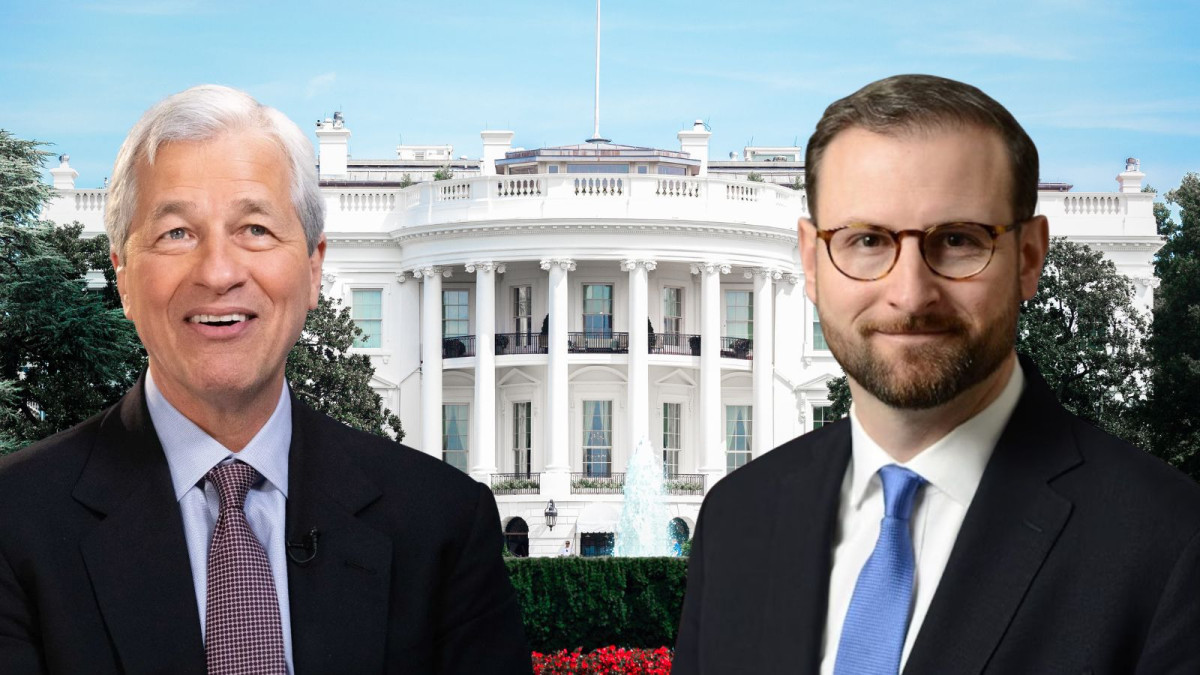
White House Calls Out Dimon on Stablecoin Yields

Washington's stablecoin standoff just got a whole lot more personal.
Patrick Witt, the executive director of the President's Council of Advisors for Digital Assets, publicly fired back at JPMorgan Chase CEO Jamie Dimon on Tuesday, calling his arguments about stablecoin yields misleading and, in Witt's own word, a "deceit."
The exchange marks one of the sharpest moments yet in a months-long tug-of-war between Wall Street and the White House over the future of digital asset regulation in America.
Dimon Draws a Line in the Sand
It started Monday, when Dimon went on CNBC and didn't mince words. His position was simple, if uncompromising: any platform holding customer balances and paying interest on them is functionally a bank, and should be regulated like one.
"If you do that, the public will pay. It will get bad," Dimon warned, arguing that a two-tiered system where crypto firms operate with fewer restrictions than banks is unsustainable.
Dimon suggested a narrow compromise: platforms could offer rewards tied to transactions. But he drew a clear line at interest-like payments on idle balances, saying, "If you're going to be holding balances and paying interest, that's a bank."
The list of obligations Dimon believes should apply is long, FDIC insurance, capital and liquidity requirements, anti-money laundering controls, transparency standards, community lending mandates, and board governance requirements. "If they want to be a bank, so be it," he said.
For Dimon, it's fundamentally about fairness. JPMorgan uses blockchain in its own operations, and the CEO was careful to frame his argument not as anti-crypto but as pro-competition on equal terms. "We're in favor of competition. But it's got to be fair and balanced," he said.
The White House Fires Back
Witt wasn't going to let that stand. In a post on X late Tuesday, he went directly at Dimon's framing, calling it deliberately misleading.
"The deceit here is that it is not the paying of yield on a balance per se that necessitates bank-like regulations, but rather the lending out or rehypothecation of the dollars that make up the underlying balance," Witt wrote. "The GENIUS Act explicitly forbids stablecoin issuers from doing the latter."
The argument gets at something technically important. What makes a bank risky, and therefore subject to heavy regulation, isn't that it pays interest. It's that banks take deposits and lend them back out, creating credit and the systemic risk that comes with it. If too many people want their money back at once, that's a bank run. Stablecoin issuers operating under the GENIUS Act must maintain reserves at a 1:1 ratio. There is no fractional reserve lending, no rehypothecation, no credit creation.
In Witt's view, stablecoin balances aren't deposits, and treating them as such misrepresents what's actually happening. He closed with a pointed equation: "Stablecoins ≠ Deposits."
President Donald Trump didn't stay quiet either. On Tuesday, he took to Truth Social with a message that made his position unmistakably clear.
"The U.S. needs to get Market Structure done, ASAP. Americans should earn more money on their money. The Banks are hitting record profits, and we are not going to allow them to undermine our powerful Crypto Agenda that will end up going to China, and other Countries if we don't get the Clarity Act taken care of," Trump wrote.
Senator Cynthia Lummis quickly reposted Trump's message, adding her own call to action: "America can't afford to wait. Congress must move quickly to pass the Clarity Act."
The same day Trump posted, a Coinbase delegation led by CEO Brian Armstrong visited the White House for talks. The timing was not subtle.
The Real Stakes: The CLARITY Act
To understand why this debate matters so much right now, you need to understand the legislation being held hostage by it.
The GENIUS Act, signed into law in July 2025, established the first federal framework for payment stablecoins. The CLARITY Act is its sequel: a broader market structure bill that would assign clear regulatory jurisdiction to the SEC and CFTC over the crypto industry, and is widely seen as the piece of legislation needed to unlock large-scale institutional participation in digital assets.
The bill cleared the House comfortably but has been mired in Senate gridlock since January, when the Senate Banking Committee indefinitely postponed a planned markup vote. The trigger was Coinbase withdrawing support over a proposed amendment that would have restricted stablecoin rewards for users.
That withdrawal, announced by CEO Brian Armstrong in a post on X the night before the scheduled committee vote, split the crypto industry. a16z crypto's Chris Dixon publicly disagreed, posting "Now is the time to move the Clarity Act forward." Kraken's co-CEO Arjun Sethi also pushed back, writing that "walking away now would not preserve the status quo in practice" and warning it "would lock in uncertainty and leave American companies operating under ambiguity while the rest of the world moves forward."
The stakes for Coinbase are concrete. Stablecoins contribute nearly 20% of Coinbase's revenue, roughly $355 million in the third quarter of 2025 alone, and most of USDC's growth is occurring on Coinbase's platform. Coinbase currently offers 3.5% yield on USDC, a figure most traditional bank accounts can't come close to matching.
Banks Are Scared, and They Have the Numbers to Show It
The banking lobby's concern isn't hypothetical. Banking trade groups, led by the Bank Policy Institute, have warned that unrestricted stablecoin yield could trigger deposit outflows of up to $6.6 trillion, citing U.S. Treasury Department analysis. Bank of America CEO Brian Moynihan put a similar figure forward, reportedly suggesting as much as $6 trillion in deposits, representing roughly 30-35% of all U.S. commercial bank deposits, could be at risk.
Stablecoins registered $33 trillion in transaction volume in 2025, up 72% year-over-year. Bernstein projects total stablecoin supply will reach approximately $420 billion by the end of 2026, with longer-run forecasts from Citi putting the market at up to $4 trillion by 2030. Those aren't niche numbers anymore. At that scale, deposit competition becomes a serious macroeconomic question.
The American Bankers Association and 52 state bankers' associations explicitly urged Congress to extend the GENIUS Act's yield prohibitions to partners and affiliates of stablecoin issuers, warning of deposit disintermediation.
The Bottom Line
What's playing out right now is a genuine philosophical disagreement about what money is and how it should be regulated, wrapped inside a very consequential legislative fight, a prize fight with Banks in one corner and Crypto in the other.
Dimon's argument is not frivolous. Banks are regulated as heavily as they are because of what they do with deposited money, and a world where consumers move trillions into yield-bearing crypto instruments held at lightly regulated platforms carries real risks. The history of financial crises is largely a history of regulatory arbitrage gone wrong.
But Witt's counter is also not frivolous. The GENIUS Act was designed specifically to prevent stablecoin issuers from doing the things that make banks dangerous. A fully reserved, non-lending stablecoin issuer is structurally different from a fractional reserve bank, and applying the same regulatory framework to both risks conflating two fundamentally different business models.
What's harder to square is that the banking lobby's intervention in the CLARITY Act seems, to many in the crypto world, less about prudential regulation and more about protecting market share. President Trump has not been subtle about that read, accusing banks of holding the CLARITY Act hostage to protect incumbent interests against crypto competition.
With the legislative window narrowing, Armstrong back at the White House, and Trump openly calling out the banking lobby by name, this standoff has reached the kind of inflection point where someone is going to have to blink. The question is whether either side is willing to do it before time runs out entirely.

Tether’s USAT Takes on USDC in Battle for the U.S. Stablecoin Market

After years on the sidelines of the U.S. regulatory system, Tether is stepping directly into it.
On January 27, the issuer behind the world’s largest stablecoin unveiled USAT, a new dollar-backed token designed specifically for the American market. Unlike USDT, which has long operated globally with limited U.S. regulatory footing, USAT is built from the ground up to comply with federal rules, and it is being issued through Anchorage Digital Bank, the only federally chartered crypto bank in the country.
The launch marks a turning point for Tether, a company that has historically thrived outside the U.S. regulatory perimeter, and signals how dramatically the stablecoin landscape has shifted over the past two years.
A Stablecoin Built for Washington, Not Around It
USAT is a one-to-one dollar-pegged stablecoin, but the similarities to USDT largely stop there.
The token is structured under the GENIUS Act, the U.S. stablecoin law passed in 2025 that finally gave issuers a clear federal framework to operate within. Under the law, stablecoins must be fully reserved, issued through regulated entities, and subject to ongoing oversight and reporting requirements.
Anchorage Digital Bank is the official issuer of USAT, placing the token squarely inside the U.S. banking system. Anchorage operates under a federal charter and is overseen by the Office of the Comptroller of the Currency, which gives USAT a regulatory status that few crypto-native assets have ever enjoyed.
For institutions that have spent years waiting on regulatory clarity before touching stablecoins, that distinction matters.
Why Tether Is Doing This Now
For most of its history, USDT dominated stablecoin markets outside the United States, while rivals like USDC carved out regulated footholds domestically. As U.S. policy remained uncertain, Tether focused overseas. That calculus changed once Washington created a formal stablecoin regime.
USAT gives Tether a compliant entry point into the U.S. financial system without forcing changes to USDT itself. Instead of retrofitting an existing global product, the company opted to launch something new, with a different issuer, different governance, and a different regulatory posture.
In effect, Tether now runs two stablecoin tracks. One optimized for global liquidity and another designed for American institutions.
The Role of Anchorage and Cantor Fitzgerald
Anchorage’s involvement goes beyond branding.
As issuer, the bank is responsible for compliance, custody, and operational controls. That includes AML and KYC processes, reserve management, and ongoing reporting obligations. These are not optional features under the GENIUS Act. They are baseline requirements.
USAT’s reserves are held in U.S. dollar-denominated assets and overseen by Cantor Fitzgerald, which serves as custodian and preferred primary dealer. Cantor’s role adds another layer of institutional familiarity, particularly for traditional financial firms that already interact with the firm in Treasury and fixed-income markets.
Taken together, the structure is clearly aimed at banks, asset managers, and corporate treasury teams rather than purely crypto-native users.
New Leadership, Different Message
Tether has also made a notable leadership choice for USAT.
The company appointed Bo Hines as CEO of the USAT unit. Hines previously served as executive director of the White House’s Crypto Council, giving him direct experience navigating U.S. policy discussions at the highest level. He was directly involved with GENIUS Act legislation.
That background reflects the broader message Tether is sending with USAT. This is not a product built to push regulatory boundaries. It is designed to operate comfortably inside them.
Early Distribution and Market Access
At launch, the token will be available on several major trading platforms and payment gateways, including Kraken, OKX, Bybit, Crypto.com, and MoonPay. Noticeably absent from that list is Coinbase. The US's largest exchange has a long partnership history with Circle and USDC, by far Tether's largest competitor. It will be interesting to see if they list the new stablecoin in the future. The early distribution provides liquidity from day one, though the longer-term focus appears to be institutional usage rather than retail trading volume.
The token is expected to be used for payments, settlement, and treasury operations, particularly by firms that want exposure to stablecoins without regulatory ambiguity.
What This Means for the Stablecoin Market
USAT adds another serious competitor to the regulated stablecoin field, which until now has been dominated by a small number of issuers.
For Circle and other U.S.-focused stablecoin providers, Tether’s entry raises the stakes. Tether brings unmatched scale, deep liquidity, and years of operational experience. At the same time, it is entering a market where regulatory compliance is no longer a differentiator but a requirement. Competition is always welcome, and Tether is providing that.
The Bottom Line
Tether’s USAT is more than just another stablecoin.
It represents a strategic shift by one of crypto’s most influential companies toward direct engagement with U.S. regulators, banks, and institutions. By launching a federally regulated product rather than modifying USDT, Tether has effectively separated its global operations from its American ambitions.
Whether USAT gains the same dominance in the U.S. that USDT enjoys globally remains to be seen. But one thing is clear. The era of stablecoins operating in regulatory gray zones is ending, and Tether intends to be part of what comes next. This is an amazing time to be involved in the blockchain and stablecoin space. The tides are turning and I think we will see exciting times ahead for adoption.

How US Crypto Regulation Changed in 2025 and What Comes Next
For years, crypto regulation in the United States felt stuck in a loop. Regulators argued over definitions. Courts weighed in after the fact. Companies tried to guess how existing rules might be applied to new technology. Progress was slow, uneven, and often reactive.
In 2025, something changed.
Instead of debating what crypto is, lawmakers and regulators began focusing on how crypto markets actually function. The shift was not loud or dramatic, but it was meaningful. And it made 2025 one of the most consequential years for U.S. crypto regulation so far.
From Debate to Infrastructure
The defining feature of crypto regulation in 2025 was its practicality.
Regulators spent the year tackling questions that are not especially flashy but matter enormously for market growth. Who is allowed to issue a digital dollar. What backs a stablecoin in real terms. How quickly exchange traded products can be approved. What custody looks like when ownership is defined by control of a private key.
These are not philosophical debates. They are infrastructure decisions. And infrastructure is what determines whether a market stays niche or becomes part of the financial system.
That shift did not mean regulators became more permissive. It meant they became more operational.
A Fragmented System, With Clearer Edges
The U.S. regulatory structure remains fragmented. Congress sets the legal framework, but oversight is split across agencies.
- The Securities and Exchange Commission oversees securities markets.
- The Commodity Futures Trading Commission regulates commodities and derivatives.
- The Internal Revenue Service governs tax treatment.
- Banking regulators supervise insured institutions and their subsidiaries.
That structure did not change in 2025. A single digital asset can still fall under multiple regimes depending on how it is traded, marketed, custodied, or used.
What did change is that the parts of crypto that intersect most directly with traditional finance began to get clearer boundaries and processes.
Stablecoins Became a Federal Issue
The most significant development of the year was the passage of the GENIUS Act, which established the first federal framework for payment stablecoins in the United States.
Before this law, stablecoins largely operated under state level money transmission rules or informal regulatory expectations. Issuers relied on disclosures and attestations. Banks stayed cautious, unsure how supervisors might view their involvement.
The new framework set expectations around who can issue payment stablecoins, how reserves must be held, and how redemption works under supervision. In practical terms, it began to treat stablecoins less like an experiment and more like financial infrastructure.
That matters because stablecoins sit at the center of crypto trading, payments, and settlement. Clear federal rules make it easier for banks and regulated firms to engage without risking regulatory surprises.
Investment Products Got More Predictable
Crypto investment products also moved forward.
The SEC approved generic listing standards for certain commodity based trust products. That change reduced the need for one off negotiations for every new exchange traded product and made approval timelines more predictable.
Predictability may not generate headlines, but it changes behavior. It lowers legal costs, shortens timelines, and makes firms more willing to launch products beyond the most obvious ones. It also makes advisers and institutions more comfortable allocating capital through standardized structures.
Tax treatment improved as well. The IRS introduced a staking safe harbor for certain trust structures, allowing proof of stake assets to generate yield without automatically breaking tax classification. That adjustment brought tax rules closer to how these networks actually operate.
Custody Finally Moved Into Focus
Custody has long been one of crypto’s most difficult issues.
Traditional finance is built around regulated custodians, clear chains of control, and established customer protection rules. Crypto does not fit neatly into that model, since control is defined by private keys rather than physical possession or centralized records.
In late 2025, regulators began addressing this gap more directly. The SEC provided guidance on how broker dealers should approach custody of crypto asset securities. Banking regulators outlined how institutions could apply to issue stablecoins through supervised subsidiaries.
These steps did not eliminate complexity, but they replaced ambiguity with process. In regulated markets, that distinction is crucial.
What Was Left Unfinished
Not everything was resolved.
The largest unresolved issue remains market structure, particularly the line between SEC and CFTC jurisdiction. The Digital Asset Market Clarity Act advanced in Congress but did not become law in 2025. That uncertainty continues to influence how companies list tokens and design compliance programs.
Still, the fact that market structure legislation remained active suggests the debate has moved from whether crypto should be regulated to how best to finish the framework.
Why 2025 Mattered
Most of the regulatory changes in 2025 were not about enforcement actions or penalties. They were about building rules that allow institutions to participate without improvisation.
Stablecoins gained a federal framework. Investment products became more standardized. Custody moved closer to supervision rather than theory.
Taken together, these steps made crypto look less like a legal edge case and more like emerging financial infrastructure.
Looking Ahead
If 2025 was about laying groundwork, 2026 will be about implementation.
The next phase will involve rulemaking, supervision, and real world deployment. Stablecoin issuers will apply for licenses. Banks will test new payment rails. Product sponsors will launch under clearer standards.
The momentum from 2025 created something the U.S. crypto market has lacked for years: a sense that the rules, while still evolving, are becoming legible.
That may not satisfy everyone. But for a market that thrives on scale, clarity is often more valuable than certainty.
Where the Conversation Continues
For anyone trying to understand where crypto regulation and policy are actually headed, these conversations are no longer abstract. They are happening in real time, often face to face.
That is part of what makes Rare Evo stand out.
Rare Evo takes place July 28-31, 2026, in Las Vegas at The ARIA Resort & Casino, and has become one of the premier industry event where regulators, policymakers, and blockchain builders share the same room. It is not just a conference about price action or product launches. It is a place to hear directly from the people shaping policy, alongside the teams building the technology those policies will govern.
Panels and discussions at Rare Evo tend to focus on how regulation works in practice, what regulators are actually thinking, and how the industry can engage constructively rather than reactively. For anyone serious about long term adoption, it is one of the more valuable rooms to be in.
You can learn more about the event and purchase tickets at https://rareevo.io/buy-tickets
Alongside that conversation is the role of Rare PAC.
Rare PAC focuses on supporting policymakers who understand digital assets and who are willing to engage seriously with the work of building clear, workable rules in the United States. It is not about opposing regulation. It is about avoiding regulation by confusion or enforcement after the fact.
As 2026 approaches, the progress made in 2025 will only matter if it is protected and extended. That requires continued participation, education, and engagement from people who care about the future of crypto in the US.
For those interested in learning more or getting involved, information is available at https://rarepac.io
If 2025 was the year crypto regulation became practical, the next phase will depend on whether that momentum is carried forward. Conversations like the ones at Rare Evo, and efforts like Rare PAC, are part of how that happens.
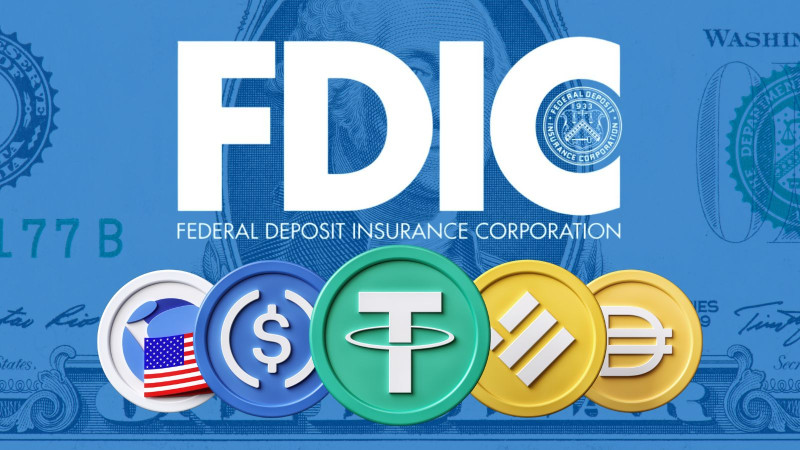
FDIC Proposes First US Stablecoin Rules Under the GENIUS Act
For years, stablecoins have lived in an uncomfortable gray zone in the U.S. financial system. Big enough to matter, but never quite official enough to be fully welcomed. That may finally be changing.
On December 16, the Federal Deposit Insurance Corporation took a significant step by proposing the first formal rules for stablecoins under the recently passed GENIUS Act. It is the clearest signal yet that Washington intends to treat certain stablecoins less like an experiment and more like financial infrastructure.
This is not a sweeping overhaul overnight. But it is a meaningful start.
What the FDIC Is Actually Proposing
The FDIC’s proposal focuses on process before product. Rather than setting hard capital or reserve requirements immediately, the agency is laying out how banks can apply to issue stablecoins through regulated subsidiaries.
In simple terms, the rule defines how a bank asks permission, what information regulators expect to see, how long the FDIC has to respond, and what happens if an application is rejected.
Under the proposal, banks would submit detailed applications covering governance, risk management, compliance controls, and operational readiness. The FDIC would have set timelines to review submissions, determine whether they are complete, and issue approvals or denials. There is also an appeals process, which is notable in a space where regulatory decisions have often felt opaque.
There is even a temporary safe harbor for early applicants, giving institutions a window to engage before all GENIUS Act requirements fully take effect.
None of this is flashy. That is the point.
Why the GENIUS Act Changed the Conversation
The FDIC’s move only makes sense in the context of the GENIUS Act, which passed earlier this year after years of stalled crypto legislation. The law created a new category for payment stablecoins and, crucially, decided who gets to supervise them.
Under the act, stablecoins designed for payments are no longer left floating between agencies. The FDIC is responsible for stablecoin-issuing subsidiaries of insured banks, while other regulators handle different corners of the market.
The law also sets the broad expectations. Stablecoins must be fully backed, redeemable at par, and supported by transparent reserves. They are not treated as securities, and they are not left entirely to state regulators either.
That clarity alone has shifted the leading question from “Is this allowed?” to “How does this work in practice?”
A Quiet but Important Shift
What stands out about the FDIC proposal is how procedural it is. This is not Washington hyping innovation or trying to pick winners. It is regulators building guardrails, slowly and deliberately.
That may frustrate parts of the crypto industry that hoped for faster approval paths or broader access for nonbank issuers. But for traditional financial institutions, this kind of rulemaking is familiar. It reduces uncertainty, and uncertainty is often the biggest barrier to participation.
Banks have been hesitant to touch stablecoins directly, not because they lacked interest, but because the regulatory consequences were unclear. This proposal begins to close that gap.
What Comes Next
The current proposal is only the first layer. The FDIC and other agencies are expected to follow with rules covering capital, liquidity, reserve composition, and ongoing supervision.
Those details will matter. A lot.
Too strict, and stablecoin issuance could remain concentrated among a small number of players. Too loose, and regulators risk recreating the same fragilities they are trying to prevent.
There is also the question of how these U.S. rules will interact with frameworks emerging in Europe and Asia. Stablecoins move across borders easily. Regulation does not.
Why This Matters Beyond Crypto
Stablecoins are no longer just a crypto market issue. They sit at the intersection of payments, banking, and monetary policy.
If regulated correctly, they could make settlement faster, cheaper, and more resilient. If handled poorly, they could introduce new forms of run risk into the financial system.
The FDIC’s proposal suggests regulators understand that tension. This is not an endorsement of stablecoins, but it is an acknowledgment that they are not going away.
After years of debate, enforcement actions, and regulatory silence, the U.S. is finally starting to write the rulebook. Slowly. Carefully. And very much on its own terms.
That alone marks a turning point.
Stay Connected
You can stay up to date on all News, Events, and Marketing of Rare Network, including Rare Evo: America’s Premier Blockchain Conference, happening July 28th-31st, 2026 at The ARIA Resort & Casino, by following our socials on X, LinkedIn, and YouTube.