#FutureOfFinance
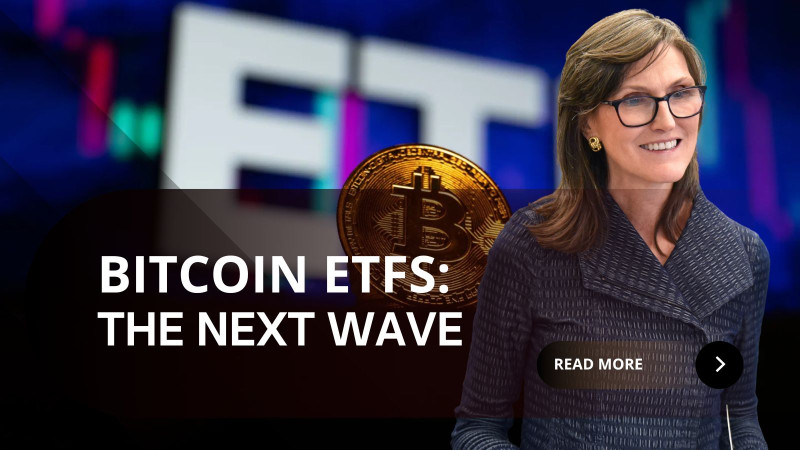
Cathie Wood Doubles Down on Crypto: ARK Files for Multiple New Bitcoin ETFs
Cathie Wood and her firm ARK Invest are making headlines again. On October 14, 2025, ARK filed new applications with the U.S. Securities and Exchange Commission (SEC) for several Bitcoin-related ETFs. The filings include ARK Bitcoin Yield ETF, ARK DIET Bitcoin 1 ETF, and ARK DIET Bitcoin 2 ETF.
It’s a bold move: ARK already operates the ARKB spot Bitcoin ETF, which currently holds over $2 billion in assets. These new filings aim to expand ARK’s offerings beyond just tracking Bitcoin’s price.
What’s in the New ETF Filings?
Yield + Option Strategies
The ARK Bitcoin Yield ETF would not simply mirror Bitcoin’s price. Instead, it plans to generate income by writing options and collecting premiums, allowing investors to earn yield on their holdings.
Downside Protection / Defined Outcomes
-
ARK DIET Bitcoin 1: This fund offers 50% downside protection, meaning it cushions the first half of losses but only participates in upside above a certain threshold.
-
ARK DIET Bitcoin 2: Provides 10% downside protection, and starts participating in gains if Bitcoin exceeds its starting price at the beginning of a period.
These structure types are known as defined outcome strategies. They aim to balance risk and reward in volatile markets.
Why Now? SEC and ETF Regulatory Changes
One reason ARK’s timing makes sense: the SEC has approved generic listing rules for commodity-based exchange-traded products. That means certain ETFs can be listed without requiring a full Section 19(b) review. Under the old system, a new product could take up to 240 days for approval; under generic listings, the process may shrink to around 75 days.
With the application window opening wider, ARK is moving aggressively to stake its place in a fast-growing space.
Crypto ETFs vs. Wallets: Cathie Wood’s View
Wood has also shared her thoughts on how crypto ETFs fit in a world with more and more digital wallets. She argues that although wallets offer control and independence, many retail and traditional investors prefer the simplicity of ETFs. “Wallets seem so complicated … they just wanna push a button,” she said.
Wood believes that even as wallet adoption rises, ETFs won’t lose their appeal. She sees them as a stable, convenient entry point into crypto that balances ease and security.
Market Response & Inflows
Stocks of spot Bitcoin ETFs have seen renewed momentum. On October 14, U.S. spot Bitcoin ETFs recorded a net inflow of roughly $103 million. Among them, Fidelity’s FBTC took in $133 million alone. Meanwhile, ARKB pulled in around $6.8 million.
Overall, since their launch in January 2024, spot Bitcoin ETFs have captured over $44 billion in total inflows. In contrast, spot Ethereum ETFs lag behind, largely because U.S. regulations currently prevent them from staking Ether.
What This Means for Investors
-
More choices: Investors could soon decide between a pure Bitcoin ETF or yield/defined outcome options.
-
Risk management: The “DIET” funds may appeal to those wanting downside protection in volatile markets.
-
Competition heats up: ARK isn’t alone — others like Fidelity, BlackRock, and VanEck are also jockeying for position in the ETF landscape.
-
Broader adoption: By simplifying access to Bitcoin via regulated ETFs, more traditional investors may enter the space.
Final Thoughts
Cathie Wood’s latest filings show ARK Invest doubling down on crypto. Rather than simply ride the Bitcoin price wave, ARK is aiming to offer structured, income-oriented, and risk-managed exposure. With regulatory tailwinds and growing investor appetite, the timing is calculated. But whether all these novel ETF proposals are approved is another question — one that may define the next chapter in institutional crypto adoption.

Trump Confirms World Liberty Financial Pushes Into Tokenized Real Estate and Crypto
A new crypto venture backed by the Trump family, World Liberty Financial (WLFI), is making bold bets — from issuing a governance token to tokenizing real estate and launching a stablecoin. The project is stirring both interest and controversy as it bridges traditional assets and blockchain innovation.
What Is WLFI?
World Liberty Financial was founded in 2024 with deep ties to Donald Trump and his family. The Trump family holds a significant stake — estimated at 40–60% — in the firm, and up to 22.5 billion WLFI tokens were allocated to its members as part of the token launch.
WLFI is more than a token: it’s meant to be a crypto ecosystem. The project plans to issue a USD-pegged stablecoin called USD1, backed by U.S. Treasuries and cash equivalents, and to use WLFI holders’ votes to guide governance decisions. The platform also aims to let investors own fractional shares of real estate like Trump Tower Dubai, bringing property ownership onchain.
How the WLFI Token Debut Went
The WLFI token launch was explosive. Early trading pushed its value significantly higher than what early investors paid. But volatility followed. On its first day, the token dropped by nearly 15 %, then recovered partially.
At the token’s peak, the Trump family’s WLFI holdings were valued on paper at around $5–6 billion. However, insiders’ tokens were initially locked and could not be sold until later.
WLFI’s big listing came after a community vote with overwhelming support — around 99.9% of voting WLFI holders voted to unlock trading. That vote signaled a shift from closed governance toward public market participation.
Tokenizing Real Estate: What They’re Doing
One of WLFI’s boldest ambitions is fractional real estate. The company aims to convert iconic Trump properties into blockchain tokens, lowering the barrier to entry so that ordinary investors can own slices of luxury estates. For example, Trump Tower Dubai has been mentioned as a candidate for tokenization.
This model promises liquidity, divisibility, and exposure to real-world assets. But it also faces a major obstacle: liquidity. Many tokenized real-world assets (RWAs) struggle to sustain active secondary markets — just because you can split a property’s value into tokens doesn’t mean you can easily trade them on demand.
Broader Ecosystem Moves
WLFI isn’t just real estate. The project has expanded ambitions:
-
Partnership with Ondo: WLFI aims to integrate with real-world asset platforms so users can borrow, lend, and trade tokenized assets backed by real assets.
-
Stablecoin USD1: The stablecoin is already live on Ethereum and Binance Smart Chain. WLFI plans to expand USD1 to more chains and use it to fuel internal payments and trading.
-
Tokenized commodities: Plans are underway to tokenize commodities like oil, cotton, or timber — pairing them with USD1 to trade them under trustable, blockchain-based systems.
-
Crypto treasury: World Liberty set up a $1.5B “crypto treasury” via a partnership with a Nasdaq-listed blockchain firm, using WLFI tokens to fund growth, buybacks, and debt coverage.
Risks & Red Flags to Watch
This ambitious model comes with some red flags:
-
Insider concentration: A large share of WLFI is held by insiders (Trump family). Though WLFI’s terms try to limit influence by any one wallet, the concentration remains a governance risk.
-
Illiquid tokens: Many real-world asset tokens struggle with low trading volume. Even if ownership is fractionalized, it may not be easy to exit positions.
-
Regulatory scrutiny: WLFI blurs lines. With Trump family involvement, large token allocations, and real estate assets, the potential for conflict of interest and scrutiny from regulators is high.
-
Valuation volatility: Early gains were massive, but price swings are severe — what’s on paper today might evaporate tomorrow.
-
Execution risk: Tokenizing real estate, stablecoin issuance, and crypto finance all require strong legal, technical, and financial execution. Any weak link could derail the model.
Why It Matters
WLFI reflects a new phase in crypto: combining real-world assets, governance, stablecoins, and public figures. If successful, it could redefine access to luxury assets, reshape how wealth is tokenized, and bring more traditional investors into blockchain.
But WLFI’s trajectory will test whether tokenization is more than hype — whether markets, regulation, and infrastructure can support the vision. It’s a high-stakes experiment at the intersection of power, money, and innovation.