#Digital Payments
Mastercard Completes Acquisition of BVNK

Mastercard has completed its acquisition of stablecoin payment infrastructure company BVNK.
According to Mastercard, the acquisition marks a step toward advancing the company's strategy of enabling seamless value exchange between people and businesses through interoperability between fiat and digital currencies.
"In a multi-money world where fiat, stablecoins, tokenised deposits, and other forms of value coexist, the next payments paradigm will be defined by how effectively each rail, network, or form of money connects and works together," said Jorn Lambert, chief product officer at Mastercard.
"By combining Mastercard's global network with BVNK's on-chain infrastructure and stablecoin native technology, we can deliver a more efficient, trusted, and seamless payment experience."
Mastercard's acquisition of BVNK comes five months after it announced that it had reached a definitive agreement to acquire BVNK for $1.8 billion. The agreement was reached after Coinbase, the principal contender that had also been pursuing an acquisition of BVNK, mutually ended acquisition talks.
About BVNK
Founded in 2021, BVNK is a London-based crypto infrastructure company that bridges the gap between traditional finance and blockchain finance.
Through its stablecoin payment infrastructure, BVNK makes stablecoins compliant and practical for real-world use. The company also provides the infrastructure that enables businesses, fintechs, and payment service providers to receive, convert, and settle payments across fiat and digital currencies.
Prior to its acquisition, BVNK had raised more than $90 million across two seed funding rounds. By the end of 2025, the company had reached an annualised payment volume of nearly $30 billion, onboarded 226 new enterprise clients during the year, and supported payments in more than 230 countries.

Ripple Invests in Flutterwave to Boost Africa Payments

Ripple, the leading blockchain technology company that provides blockchain-based solutions to banks and financial institutions, has just invested in Flutterwave, Africa’s biggest fintech unicorn.
The investment, which was part of Flutterwave’s Series E funding round, aligns with the unicorn’s long-term value proposition to build Africa’s leading unified payments infrastructure that connects the continent seamlessly to the global economy.

According to Flutterwave, the partnership is built on three core pillars: embedding Ripple’s RLUSD into Flutterwave’s payment rails to scale large volume payments and remittances; leveraging Ripple’s XRP Ledger for faster transaction clearing; and deploying a unified API that seamlessly bridges Flutterwave’s domestic network with Ripple’s global payment network.
"This investment marks a pivotal moment in our journey, enabling us to significantly scale our infrastructure and expand our stablecoin-enabled payments roadmap,” said Olugbenga "GB" Agboola, Flutterwave’s Founder and CEO.
“By unlocking faster settlement and lower cost cross-border payments, we are building a payment superhighway that connects African commerce directly to the global economy. This partnership is a catalyst for Nigerian and African sovereignty in the digital financial age, ensuring our markets are primary participants in the global digital asset revolution.”
Through partnering with Ripple, Flutterwave takes a significant step towards achieving its “stablecoin first” payment infrastructure that eliminates traditional bottlenecks. By integrating Ripple’s RLUSD stablecoin into its payment infrastructure, Flutterwave aims to deliver immense speed, liquidity, and cost efficiency to Africa’s cross-border payment network, transforming how Africa interacts with global markets.
About Flutterwave
Flutterwave is one of Africa’s leading fintech companies. Launched in 2016, Flutterwave was created to solve fragmented payment systems that limited Africa’s connection to the global economy. Through a single API and platform, Flutterwave enables businesses to accept payments, make payouts, and process cross-border transactions across Africa and internationally.
Since its inception, Flutterwave has raised over $ 500 million through multiple funding rounds and is currently valued at $ 3.2 billion, making it Africa’s most highly valued fintech company. Its services are available in more than 35 African countries, and its payment infrastructure supports over 150 currencies.

Japan’s Top Banks to Launch Yen Stablecoin by 2027

Japan’s top three largest banks, Mitsubishi UFJ Financial Group (MUFG), Sumitomo Mitsui Banking Corporation, and Mizuho Bank, Ltd, have announced plans to jointly launch a yen-backed stablecoin by March 2027.
In a recent press release, the three megabanks said plans were already in place for the trio to conduct actual commercial transactions using the stablecoin. This is not a test or pilot program but a real financial infrastructure enabling stablecoin-based payments.
As a major step toward this goal, the three megabanks signed a Memorandum of Understanding (MoU) to establish a voluntary joint council responsible for developing the stablecoin operational framework, including issuance infrastructure, systems, schemes, governance, and future collaboration with other institutions.
Together with the Financial Services Agency (FSA), Japan’s primary financial regulatory authority, the three banks conducted a FinTech Proof of Concept pilot program around November 2025. The goal of the pilot was to assess whether multiple banks could jointly issue the stablecoin while ensuring compliance with all regulatory, legal, and compliance standards.
The Mitsubishi UFJ Financial Group’s partnership with the two other megabanks comes shortly after Mitsubishi Corporation, an entity within the broader Mitsubishi Group, adopted JPMorgan’s Kinexys blockchain network for cash management for its global subsidiaries.
Just like Japan’s megabanks' collaboration to launch a stablecoin, other banks have made similar moves, notable among which is Qivalis, a consortium comprising 37 European banks that are collaborating to launch a stablecoin for the euro.
Stablecoins continue to grow rapidly, with many traditional financial institutions entering the sector. According to a recent report, stablecoin transaction volume exceeded 28 trillion dollars in the first quarter of this year, approaching the 33 trillion dollar annual transaction volume recorded in 2025. US dollar pegged stablecoins still make up a large share of the global stablecoin supply, representing about 97 percent of the total global stablecoin supply.
Corpay Partners With BVNK to Add Stablecoin Payments

Corpay, the leading corporate payments company, has partnered with stablecoin infrastructure company BVNK to provide stablecoin wallets and settlement capabilities to its global customer base.
The partnership, announced on Monday, will see the integration of stablecoin wallet capabilities into Corpay’s financial platform, enabling its customers to view stablecoin balances alongside their fiat balances, while also providing embedded stablecoin wallets for sending, receiving, storing, and converting stablecoins, all within the platform.

Corpay will also integrate stablecoin rails into its treasury operations, reducing reliance on pre-funded accounts when sending and receiving funds. This is expected to improve capital efficiency and enhance the way funds are moved globally. As a result, customers will no longer be limited to traditional banking hours, as the embedded stablecoin rails will allow them to process transactions even outside these hours.
“At our scale, the ability to move liquidity quickly and reliably is critical,” said Mark Frey, Group President, Corpay Cross Border Solutions. “Stablecoins introduce a 24/7 settlement capability that strengthens our existing infrastructure. BVNK provides the technology and compliance framework we need to deliver this securely and at scale.”
Jesse Hemson Struthers, CEO of BVNK, said in a statement that he believes stablecoins are reshaping the foundation of global payments, and that Corpay’s scale and reach make the two companies ideal partners in bringing these stablecoin capabilities into the mainstream.
What to Know About Corpay and BVNK
Corpay is a global S&P 500 corporate payments company that enables businesses and users to manage and pay expenses in a simple and controlled manner. In 2025, it recorded revenue of about $4.5 billion, a 14% year over year increase, and reported $1.26 billion in revenue last quarter. Corpay currently serves over 800,000 business clients globally.
BVNK, on the other hand, is an enterprise-grade stablecoin payment infrastructure company that enables businesses and corporates to send, receive, store, convert, and settle transactions using stablecoins.
As one of the most notable stablecoin infrastructure companies, BVNK processed about $30 billion in annualized stablecoin payment volume last year and has been integrated into several major traditional finance platforms, including Visa, Mastercard, Worldpay, and Deel.
Visa Joins Tempo Blockchain as Validator Node

Global payments giant Visa has launched a validator node on Tempo’s Layer 1 blockchain network, enabling it to participate directly in the verification and processing of transactions on the network.
The validator role follows a six month collaboration between Visa and Tempo’s engineering team, which worked to integrate Visa’s secure infrastructure into the Tempo network. According to Visa, the validator will be configured and managed in house.
With the integration of Visa’s infrastructure into the Tempo network, Visa joins Stripe and Zodia Custody as the first external validators to verify and process transactions on the Tempo blockchain, with more validators expected in the future.

Since Visa processes billions of transactions globally, its role as an anchor validator places it in a crucial position in securing Tempo’s blockchain and strengthening its resilience, reliability and performance for stablecoin payment use cases.
Speaking on the collaboration, Cuy Sheffield, head of crypto at Visa, said the move highlights Visa’s role in supporting the development of stablecoin payment systems and its commitment to reliability, security, and trust in blockchain networks.
What is Tempo Layer-1 Blockchain?
Tempo is a purpose-built Layer 1 blockchain designed for large-scale stablecoin payments and other real-world financial applications. Although Tempo was initially incubated by Stripe and the crypto venture capital firm Paradigm, it became an independent company with its own team, Tempo Labs, in September 2025.
Unlike most Layer 1 blockchains, which are designed for general-purpose decentralized finance activity, the Tempo blockchain was designed for fast, low-cost, and reliable stablecoin transfers that traditional blockchains often struggle to support under high load.
The Tempo blockchain was also designed for agentic and machine-to-machine commerce. Through Stripe’s Machine Payments Protocol (MPP), the Tempo network enables autonomous AI agents to make payments and conduct other real-world commerce activities without human intervention.
Visa Intensifies Push for Blockchain Adoption
Visa remains one of the few traditional finance (TradFi) giants spearheading global adoption and integration of blockchain technology into TradFi payment infrastructure. Similar to its most recent Tempo validator role, in March of this year, Visa became the first major payment company to serve as a super validator on Canton Network, a privacy-focused institutional blockchain network, with plans to also become one of the validators on Circle’s Arc blockchain.
It has also expanded its push for blockchain-based payments, including the launch of USDC settlement on Solana for US residents, enabling support for four stablecoins on its platform, and powering over 130 stablecoin card programs in more than 40 countries.

Toss Eyes Blockchain Network and Native Crypto Token

South Korean fintech and payment company Toss is reportedly considering the launch of its own blockchain network and a native cryptocurrency token for its payment and financial services.
While preparations had already begun, Blockmedia, one of South Korea’s leading cryptocurrency media outlets, reports that the firm has not yet decided whether to launch a Layer 1 or Layer 2 blockchain, as decision-making has been paused amid delays in some compliance discussions.
By launching its own blockchain, Toss would be building a solid infrastructure for its super app, enabling the integration of several blockchain features, including on-chain finance, scalability, and smart contracts, into its existing payment system.
Toss: A Crypto-Friendly Fintech Platform
Despite operating mostly in the traditional finance space and amassing over 30 million registered users, about 60 percent of the population of South Korea, Toss has long been taking several pro-blockchain and crypto-friendly steps.
In June 2025, Toss, through its Stablecoin Task Force led by Chief Business Officer Kyuha Kim, filed 24 stablecoin applications with the Korean Intellectual Property Office, the country’s trademark and patent authority, securing stablecoin names including TOSSKRW. During the same period, Toss Bank, its banking subsidiary, submitted 48 additional stablecoin-related applications.
These efforts were part of Toss’s broader strategy to establish a position in South Korea’s crypto sector as a potential issuer of Korean won-backed stablecoins. The company also began recruiting blockchain engineers to advance this initiative.
In March 2026, at the Seoul Blockchain Meetup Conference in Seoul, Toss unveiled its Money 3.0 vision, which it describes as the next era of money.
According to Toss, this vision leverages blockchain and stablecoins to build a digital money system that combines programmability, borderless transactions, and composability, extending beyond the physical cash era of Money 1.0 and the electronic fiat money era of Money 2.0.
At the same event, Toss publicly announced plans to issue and distribute its Korean won-backed stablecoin.
Despite recent regulatory pressure on non-compliant cryptocurrency exchanges in South Korea, several fintech companies and banking institutions in the country, including Toss, have continued to adopt and integrate blockchain technology into their systems.
KakaoPay, a major domestic fintech company, recently joined the Coinbase-led x402 Foundation, a move that suggests potential future integration of blockchain technology into its payment systems. In addition, around eight domestic banks formed a consortium last year to jointly explore issuing Korean won-backed stablecoins.

Mitsubishi Adopts JPMorgan Kinexys for Cash Management

Mitsubishi Corporation, one of Japan’s largest trading and industrial companies, has adopted JPMorgan’s Kinexys blockchain network for intragroup U.S. dollar cash management across its global subsidiaries.
By leveraging the blockchain deposit accounts (BDAs) feature on JPMorgan’s Kinexys Digital Payments Network, Mitsubishi’s treasury team will be able to automatically move funds in real time between subsidiaries, including those in key financial centers such as Singapore, London, and New York, without the delays typically associated with traditional finance.
According to Kazuyoshi Kawakami, treasurer at Mitsubishi Corporation, the goal of this initiative is to strengthen the company’s liquidity management and resilience across its subsidiaries.
“Our liquidity management is a core source of credit strength. As we develop and operate businesses globally across a wide range of industries, it is essential that funds raised in the market and cash generated through our operations can be allocated efficiently throughout our consolidated group,” Kawakami said.
“As we pursue stable and sustainable growth through investment, trading, and other business activities, we believe our liquidity management must continue to evolve. Instant and programmable payments can support this while also strengthening our resilience during periods of market stress. We expect this initiative to represent an important step in enhancing our liquidity management framework.”
In summary, Mitsubishi Corporation is adopting JPMorgan’s Kinexys Digital Payments Network for its global subsidiaries. Because Kinexys operates automatically based on predefined conditions, Mitsubishi’s treasury team will be able to move funds in real time across subsidiaries whenever needed, 24/7, without relying on manual intervention or traditional banking networks that can involve delays.
What Is Kinexys?
Kinexys is an enterprise blockchain built by America’s largest bank, J.P. Morgan. It was designed to modernize how money, assets, and financial information move across institutional finance.
The Kinexys blockchain comprises three main components:
1. Kinexys Digital Payments: A permissioned blockchain payments rail and deposit account ledger that enables near real-time transfers of tokenized deposits between institutional clients.
2. Kinexys Digital Assets: A tokenization platform that brings financial assets (including funds, collateral, debt, and repo instruments) on-chain.
3. Kinexys Liink: A scalable, permissioned network for exchanging payment-related information across institutions.
Since its launch in November 2024, Kinexys has recorded several notable milestones, including processing more than $1.5 trillion in cumulative value and handling approximately $5–7 billion in transactions per day. J.P. Morgan has indicated plans to increase this daily transaction volume to more than $10 billion.
Kinexys is also being used by several high-profile institutional clients, including Siemens, BlackRock, Qatar National Bank, and BMW.
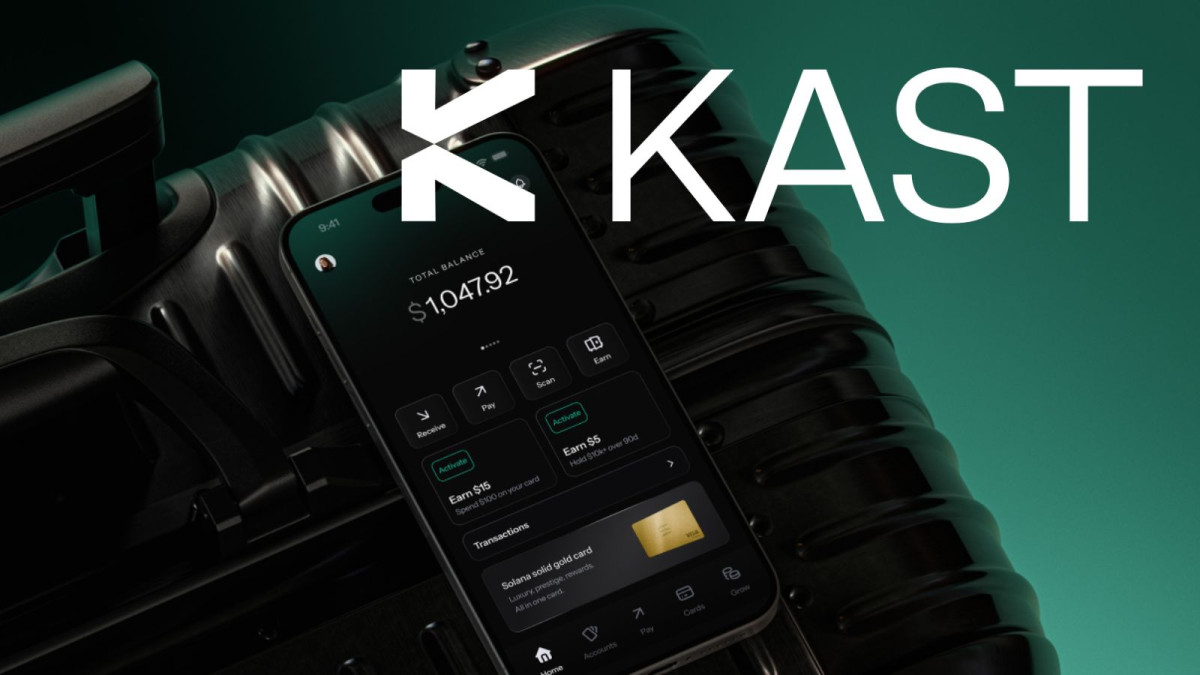
Stablecoin Payment Firm Kast Raises $80M in Funding Round

Kast, a stablecoin payments company, has raised $80 million in a Series A funding round co-led by QED Investors and Left Lane Capital, bringing its valuation to $600 million.
According to the team, the funding will be used to accelerate Kast’s global expansion across North America, Latin America, and the Middle East, as well as to expand the company’s workforce, licensing, and product development efforts.
What Kast is Building
Kast is a stablecoin-powered neobank founded in 2024 by Daniel Bertoli, an ex-partner at Quona Capital, and Raagulan Pathy, a former executive at Circle Internet Financial, the company behind the USD Coin (USDC) stablecoin.
To reduce the delays and high costs often associated with international remittances through traditional banking systems, Kast is building a blockchain-based platform that uses stablecoins as its settlement layer.
According to the team, “Our end game is clear: to become the leading neobank for the stablecoin economy, serving both users and businesses.”
To ensure that users and businesses of all sizes are catered to, Kast has built a platform that allows users to create digital dollar accounts. These accounts enable users to store dollars digitally, send money globally, and receive international payments. As a result, users do not need a U.S. bank account to hold dollars digitally.
Since its launch in 2024, Kast has achieved a number of impressive milestones, including:
- Reaching over 1 million users on its platform.
- Processing about $5 billion in transaction volume to date.
- Enabling users to send money to more than 190 countries.
This funding marks Kast’s second fundraising round, months after the company raised $10 million in December 2024 in a round led by HongShan Capital Group and Peak XV Partners.
The Surge of Stablecoins in Institutional Remittances
With a market cap of over $300 billion, stablecoins have seen a remarkable increase in institutional use for cross-border payments.
According to a stablecoin report, enterprise cross-border stablecoin transaction volume grew threefold year over year in 2025, with 25% of corporates now using stablecoins for supply-chain payments, particularly for trade settlement, treasury transfers, and gig-economy payouts.
This increased adoption is due to the very fast settlement times of stablecoins, usually less than 24 hours, a sharp contrast from traditional banking systems, which often take days.
Based on current adoption trends, stablecoins are projected to capture 10 to 15% of global cross-border payments by 2030, with their annual settlements reaching approximately $5 trillion by the end of this year.
Circle Launches Arc: A Blockchain Built for Stablecoin Finance
Circle’s Arc Could Be the Breakthrough Blockchain Has Been Waiting For
Circle, the company behind the USD Coin (USDC) stablecoin, has unveiled Arc, an open Layer 1 blockchain designed specifically for stablecoin finance. This move isn’t just another blockchain launch — it’s a signal that crypto infrastructure is maturing and evolving toward real-world use cases that matter: payments, tokenisation, and global financial connectivity.
A Layer 1 Built for the Real Economy
Arc is engineered from the ground up to power stablecoin transactions and on-chain finance with speed, predictability, and regulatory readiness.
Here’s what makes it stand out:
-
USDC as gas: Arc uses USDC as its native gas token, so fees are stable and predictable. No more dealing with volatile gas prices in native tokens.
-
EVM compatible: Developers can build using familiar Ethereum tools, making migration and integration easy.
-
Enterprise ready: Arc offers sub-second settlement times, privacy-optional transactions, and infrastructure that supports large-scale, compliant use cases.
-
On-chain FX and settlement: A built-in foreign exchange engine enables seamless conversion between stablecoins and tokenised assets.
In essence, Arc aims to serve as the “settlement layer” for digital dollars, tokenised securities, and other real-world assets. This is where blockchain moves from speculation to real utility.
Institutions Are Paying Attention
Arc isn’t launching into a vacuum — it’s already attracting interest from some of the biggest names in finance and technology. BlackRock, Visa, and Anthropic are reportedly participating in its public testnet, and over 100 institutions are expected to onboard through Circle’s ecosystem.
The blockchain will also launch with Fireblocks support from day one, giving banks, asset managers, and fintechs enterprise-grade custody and tokenisation tools immediately.
This level of institutional engagement marks an important milestone for crypto. For years, traditional finance has tested blockchain in controlled pilots. Now, with Arc, we’re seeing real deployment at scale.
The Next Step in Stablecoin Evolution
Stablecoins are becoming the bridge between traditional finance and crypto. USDC alone has grown more than 90 percent year over year, reaching over 61 billion dollars in circulation.
Arc positions Circle to lead the next phase of that growth. Instead of depending solely on third-party chains, Circle is building a dedicated network optimised for compliance, speed, and interoperability. By doing this, Circle strengthens the entire crypto ecosystem — offering a foundation for payments, DeFi, and tokenised assets that regulators and enterprises can trust.
This is exactly the kind of infrastructure crypto has needed to move beyond speculation and into mainstream adoption.
Why Arc Matters for the Blockchain Industry
Arc represents a clear vote of confidence in blockchain’s long-term potential. It shows that crypto companies are not just launching new tokens or apps — they’re building the next-generation financial rails.
A growing number of global financial and technology leaders are exploring Arc, Circle’s new blockchain network. Traditional finance heavyweights such as State Street, Deutsche Bank, Invesco, and Société Générale are among the participants, alongside digital asset pioneers like Coinbase and Kraken, fintech innovators Nuvei and Brex, and global tech providers AWS and Mastercard.
Visa is using the Arc testnet to explore how stablecoin-backed payment infrastructure could accelerate cross-border money movement. BlackRock’s head of digital assets, Robert Mitchnick, said the firm is examining how Arc’s built-in support for stablecoin settlement and on-chain FX could “unlock additional utility” for capital markets.
Invesco is studying how blockchain can make tokenized funds more efficient, while Société Générale is testing programmable settlement and enhanced transparency for cross-border capital flows. HSBC, one of the world’s largest banks, is assessing Arc’s potential to deliver faster and more transparent international payments.
State Street is focused on digital asset custody integrations, and SBI Holdings is evaluating how regulated financial services might extend into on-chain environments. Deutsche Bank, Standard Chartered, and First Abu Dhabi Bank are also participating, highlighting the growing interest from major global banking networks in blockchain-based settlement infrastructure.
A Positive Signal for Crypto’s Future
Yes, there are risks. Governance, adoption, and regulatory clarity will shape Arc’s success. But the overall direction is undeniably positive.
Circle’s decision to build Arc demonstrates confidence in blockchain’s staying power. It’s a statement that crypto isn’t just here to disrupt — it’s here to rebuild finance from the ground up, better, faster, and more connected than ever.
Final Take
Arc could mark the beginning of a new chapter for blockchain. By combining stablecoin stability, institutional trust, and modern chain design, Circle is creating a system that brings crypto closer to the real economy.
If Arc’s testnet launch in fall 2025 delivers on its promise, it won’t just be a milestone for Circle — it will be a breakthrough moment for the entire blockchain and crypto industry.
Stay Connected
You can stay up to date on all News, Events, and Marketing of Rare Network, including Rare Evo: America’s Premier Blockchain Conference, happening July 28th-31st, 2026 at The ARIA Resort & Casino, by following our socials on X, LinkedIn, and YouTube.
Coinbase and Citi Join Forces to Advance Stablecoin Payments
Coinbase and Citi Join Forces to Advance Stablecoin Payments for Institutions
A new chapter in institutional digital asset adoption and payment innovation
In a significant step for the convergence of traditional finance and crypto, Citigroup and Coinbase have partnered to explore digital payment solutions using stablecoins and blockchain infrastructure for Citi’s corporate and institutional clients. This collaboration highlights how digital assets are shifting from speculative use to becoming core financial tools.
What’s Happening
Citigroup and Coinbase are working together to develop digital asset payment capabilities for Citi’s institutional clients. The initiative focuses on simplifying fiat-to-crypto conversions, enabling payouts through stablecoins, and supporting faster, cheaper cross-border transactions using blockchain technology.
For Coinbase, this partnership represents another step in its expansion beyond retail crypto trading into enterprise-grade financial infrastructure. For Citi, it reflects an ongoing commitment to digital innovation, with efforts in stablecoin issuance, tokenized deposits, and blockchain settlement systems.
This partnership is not just about crypto payments. It is about transforming how large financial institutions handle liquidity, treasury operations, and settlement in a global economy that increasingly values speed and transparency.
Why This Matters
1. Digital Assets Move Toward the Financial Mainstream
Just a few years ago, most major banks treated digital assets cautiously. Now, one of the world’s largest banks is partnering with a leading crypto exchange to bring stablecoins into its payments network. This shows that digital assets are maturing into real financial infrastructure.
2. Stablecoins Gain Institutional Utility
Stablecoins are evolving beyond their original use in trading and DeFi. They are now being used for corporate payments, treasury management, and international settlements. Citi and Coinbase are helping push this transition, turning stablecoins into practical tools for global finance.
3. Payment Systems Get a Modern Upgrade
Traditional payment networks can be slow and expensive, often operating only during business hours. Stablecoin transactions on blockchain networks are fast, borderless, and available 24/7. For institutions, that means better liquidity management and reduced friction in cross-border transactions.
4. Banks Are Embracing Partnerships Over Isolation
Rather than developing everything internally, banks like Citi are forming partnerships with crypto-native firms that already understand blockchain technology and digital infrastructure. This approach combines the scale and regulatory experience of traditional banks with the innovation and speed of crypto companies.
The Bigger Picture: Why Now
Several industry and regulatory trends make this collaboration especially timely:
-
Regulatory Clarity: Governments and financial authorities are providing more defined frameworks for stablecoins, making it easier for banks to adopt them responsibly.
-
Stablecoin Growth: Industry research suggests that stablecoins could become a multi-trillion-dollar asset class by the end of the decade, transforming how global businesses move money.
-
Pressure to Innovate: Legacy payment systems are under increasing pressure to modernize. Banks that adopt blockchain rails early will have a competitive advantage in speed and cost efficiency.
-
Partnership-Driven Innovation: The financial world is realizing that collaboration with crypto-native companies is faster and more efficient than building new systems alone.
Challenges and What to Watch
While the partnership is promising, several challenges lie ahead:
-
Scalability: Turning small pilot projects into large-scale enterprise systems will require significant integration with existing banking infrastructure.
-
Compliance: Even with clearer regulations, stablecoin payments must meet strict requirements for anti-money-laundering controls, reserves, and audits.
-
Revenue Impact: If blockchain-based payments significantly reduce transaction costs, banks will need to rethink existing fee structures and profit models.
-
Interoperability: Connecting blockchain rails with legacy systems introduces technical and security complexities that must be addressed.
-
Global Consistency: Citi operates across many jurisdictions, and stablecoin adoption depends on how each region’s regulators treat digital assets.
The Future of Institutional Payments
The collaboration between Coinbase and Citi marks an important moment in the evolution of digital payments and finance. Stablecoins are no longer just a crypto experiment. They are being recognized as real financial instruments that can enhance efficiency, reduce costs, and streamline settlement for global institutions.
This partnership shows the growing alignment between traditional finance and decentralized technology. As more banks and crypto platforms work together, the boundaries between the two worlds are fading. The next era of payments may be powered by stablecoins and tokenized assets, operating on blockchain rails that never sleep.
If successful, the Coinbase–Citi partnership could pave the way for faster global payments, smarter liquidity management, and a more inclusive financial system. The message is clear: the future of money is programmable, and institutions are already laying the groundwork to make it real.
Stay Connected
You can stay up to date on all News, Events, and Marketing of Rare Network, including Rare Evo: America’s Premier Blockchain Conference, happening July 28th-31st, 2026 at The ARIA Resort & Casino, by following our socials on X, LinkedIn, and YouTube.
Tether Targets 100 Million Americans with New USAT Stablecoin Launch
Tether Targets 100 Million Americans with New USAT Stablecoin Launch
Tether, the company behind the world’s largest stablecoin, is preparing for one of its most ambitious moves yet. The firm plans to launch USAT, a new U.S.-focused stablecoin, in December 2025, with a goal of reaching 100 million American users.
This represents a major shift in Tether’s strategy. The company is moving from global dominance to deep domestic integration, positioning itself to compete directly in the regulated U.S. financial landscape.
A Regulated Stablecoin for the U.S. Market
USAT will be a dollar-pegged stablecoin issued through a U.S.-based entity known as Tether America, developed in partnership with Anchorage Digital. The token will comply with new federal rules governing stablecoins under the recently approved GENIUS Act.
Tether says USAT will be fully backed and independently audited, with transparency and reserve management as top priorities. The product aims to serve not only crypto-native users but also the millions of Americans entering digital payments for the first time.
Expanding Through Partnerships and Platforms
To reach its ambitious 100 million user target, Tether is expanding into the creator economy and consumer platforms. The company has already invested in Rumble, a U.S. video platform with over 50 million monthly users, suggesting that integration and distribution partnerships will play a key role in adoption.
This outreach shows Tether’s intent to move beyond crypto exchanges and into mainstream financial and social platforms. The strategy blends regulatory alignment with mass-market reach, a combination that could redefine how stablecoins enter daily life.
Competing in a Growing Market
With USAT, Tether will compete directly with other major U.S. stablecoins such as USDC and PayPal USD. Unlike USDT, which dominates global markets, USAT is designed specifically for American consumers and institutions operating under U.S. financial oversight.
Analysts suggest this could allow Tether to capture both institutional trust and retail adoption. The focus on compliance and open auditing might also give it an advantage with regulators and payment partners.
Why It Matters
Tether’s move comes at a time when stablecoins are being recognized as core infrastructure for digital finance. By aligning with U.S. law, Tether is signaling confidence in the regulatory environment and a willingness to help shape its evolution.
If successful, USAT could become a gateway for traditional finance, fintech, and creators to access digital payments at scale. It also sets a new benchmark for transparency and compliance, potentially reshaping how stablecoins operate worldwide.
What Comes Next
-
Launch and Accessibility: USAT is expected to roll out in December across exchanges, wallets, and select consumer platforms.
-
Audits and Reserves: Investors will watch for regular public audits to verify Tether’s commitment to compliance.
-
Integration and Adoption: Partnerships in content, commerce, and fintech could drive rapid U.S. user growth.
-
Industry Response: Competing stablecoin issuers are likely to adjust strategies to maintain market share.
Final Thoughts
Tether’s upcoming USAT stablecoin launch represents a turning point for digital finance in the United States. The company is aiming to merge global liquidity with local regulation, creating a bridge between blockchain innovation and traditional banking.
Reaching 100 million users is an ambitious target, but Tether’s combination of brand power, compliance, and strategic partnerships gives it a strong foundation.
The message is clear: the next era of stablecoins will not only be global, it will be regulated, transparent, and built for everyday use.