#USD1
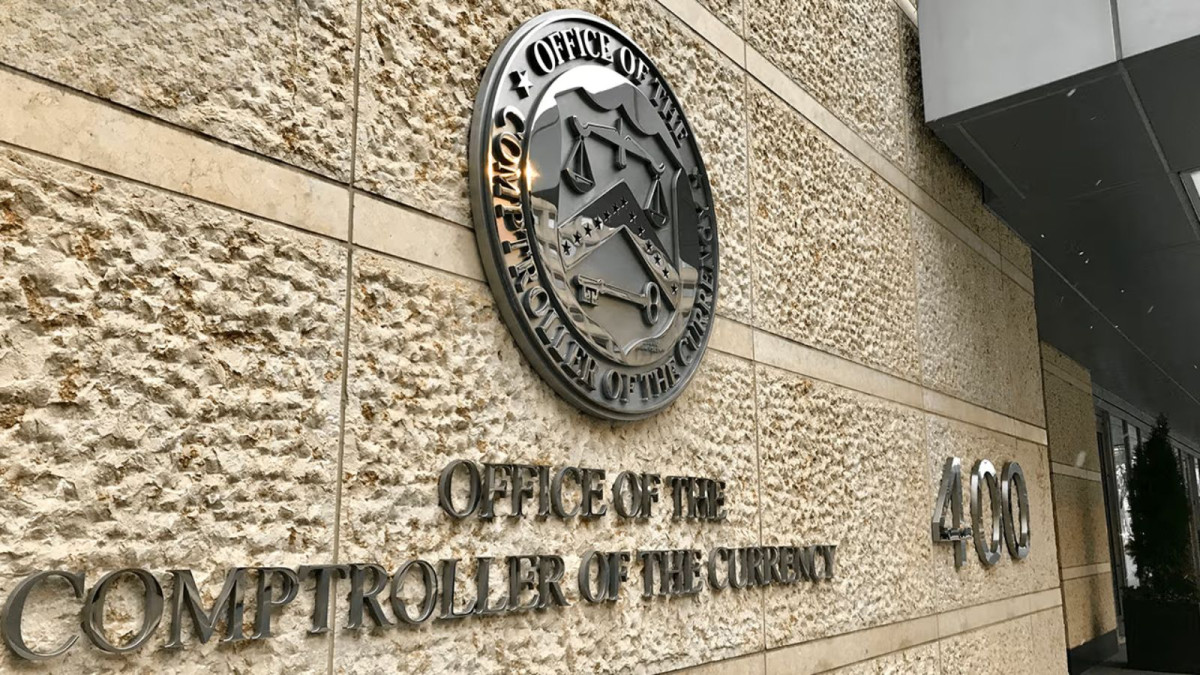
OCC Greenlights Conditional Trust Bank Charter for World Liberty Financial

The Office of the Comptroller of the Currency (OCC) has granted President Trump-backed World Liberty Financial preliminary conditional approval to establish World Liberty Trust Company, N.A., a national trust bank that would oversee its USD1 stablecoin operations.
Since the charter is conditional, World Liberty Trust Company will serve as a limited purpose national trust bank, handling the fiduciary and trust aspects of the USD1 stablecoin, including the issuance and redemption of the stablecoin, management of the reserves backing USD1, and custody services for institutional clients using USD1.
Regarding the regulatory milestone, Zach Witkoff, CEO and co-founder of World Liberty Financial, wrote in an X post, “Rigorous oversight, institutional controls and clear accountability are how stablecoins become trusted financial infrastructure.”
“Our ambition is clear: to build the most trusted and widely used digital dollar in the world while strengthening the role of the U.S. dollar across the global economy.”
As part of the conditions stated by the OCC in its approval letter, World Liberty Trust Company must restrict its activities strictly to those relating to trust activities. If it intends to deviate from these activities, the bank must provide the OCC with 60 days’ prior notice.
Before any executive is appointed, World Liberty Trust Company must submit information about the executives to the OCC and receive a non-objection letter from the regulator.
The trust bank will initially be governed by a five member team: Zach Witkoff, who will serve as board chair; Scott Alper, President and Chief Investment Officer of Witkoff Group; Robert Witkoff, former Co-Chief Investment Officer of The Chubb Corporation; Jeffrey Weiner, former Chairman and CEO of Marcum LLP, one of the largest accounting firms in the U.S.; and Erin Baskett, a member of the FINRA Board of Governors and founder of brokerage firm Sine Qua Non Capital.
Trump-Backed World Liberty Financial Launches DeFi Lending Platform Built on USD1

World Liberty Financial, the crypto venture tied to President Donald Trump and his family, has crossed another big milestone in its effort to turn a stablecoin and decentralized finance products into a real business. The firm quietly rolled out World Liberty Markets, a new on-chain borrowing and lending platform built around its flagship stablecoin, USD1, and it’s already pulled in tens of millions in assets from early users.
The launch puts World Liberty right into one of the most competitive and risky corners of crypto: decentralized lending. This is where you can earn interest by supplying assets or borrow against your holdings without going through a bank or broker. It’s the plumbing that makes much of DeFi tick, and it’s also where huge liquidations and smart contract exploits have regularly happened. The difference here is political gravity: this project is backed by one of the most polarizing figures in modern American business and politics.
What World Liberty Markets Actually Offers
World Liberty Markets isn’t reinventing DeFi. The way it works is familiar if you’ve used other decentralized money markets: you supply assets to earn interest, and you can borrow against collateral you’ve locked up. At launch, supported assets include the company’s own USD1 stablecoin, its governance token WLFI, Ethereum, tokenized Bitcoin, and major stablecoins like USDC and USDT. Once you deposit, you can take a loan out in any of those supported assets based on how much you’ve put up as collateral.
The platform is built with the infrastructure of an existing DeFi protocol called Dolomite, which means World Liberty didn’t have to write an entire lending stack itself. Think of it as a branded front door and dashboard on top of established smart contract mechanics.
In the first week or so, the protocol showed some early traction, with roughly $20 million in supplied assets moving through it. That number is small compared to big DeFi players, but it’s eye-catching because of how recent the launch was and the fact that USD1 supply is growing quickly.
To jump-start liquidity, World Liberty is dangling a very high yield on USD1 deposits, along with a “reward points” program for larger suppliers. World Liberty was announced on X, writing that “WLFI Markets is built to support the future of tokenized finance by providing access to third party and WLFI-branded real-world asset products, supporting new tokenized assets as they launch, and creating deeper and wider access to USD1 across all WLFI applications. It’s designed to provide future access to WLFI’s broader RWA roadmap.”
Betting on USD1
Behind all this is USD1, World Liberty’s dollar-pegged stablecoin that has really become the center of the project’s story. Since its debut in early 2025, the coin has ballooned into one of the larger dollar stablecoins by market capitalization, trading alongside names people actually recognize and use every day. It’s backed by cash, short-term Treasuries, and things like dollar deposits through professional custody arrangements, and it aims to be redeemable at parity with the U.S. dollar.
That backing and that promise of redemption put USD1 in the same product category as USDC and USDT, which dominate the stablecoin market. But stablecoins only become useful when there are places for them to be spent, lent, traded or borrowed, and until now USD1 had mostly been used as a tradable asset with some big institutional deals. The lending launch is the first real step toward making it function like money in crypto’s own financial ecosystem.
World Liberty has been aggressively pushing USD1 into major venues, including listings on big exchanges and use as collateral or settlement assets in large trades. That has helped it grow in circulation fast, and have enough liquidity that a lending market now makes sense. Because USD1 is tied so directly to World Liberty’s broader business, how well the lending product does could be a big factor in whether USD1 becomes sticky in the market or remains a speculative novelty.
From On-Chain Products to Traditional Finance
This lending rollout comes at a moment when the company is also trying to pull USD1 and its associated services into the regulated financial world. A subsidiary of World Liberty has applied for a national trust bank charter with U.S. regulators. If approved, that would allow the entity to issue and custody stablecoins and digital assets under federal supervision, provide conversion between fiat and stablecoin, and generally operate more like a regulated institution rather than a pure DeFi startup.
That’s a trend you’re seeing across crypto right now. Regulators have started to outline formal frameworks for stablecoins through new legislation aimed at reducing risk and improving disclosure. Projects that tie themselves to those frameworks stand to get easier access to traditional players like banks, exchanges and institutional clients. But it also subjects them to a lot more scrutiny than the wild west of DeFi.
Will it succeed?
Here’s the hard truth: decentralized lending markets are notoriously volatile and complex. You can get liquidation events overnight if collateral values tumble. Smart contracts have flaws and exploits. Incentives can attract short-term capital that leaves as soon as the rewards stop. That’s all before you even factor in political risk, regulatory noise, or questions about reserve transparency.
Then there’s the optics of the thing. World Liberty is connected to Donald Trump and his family, who have been publicly associated with this project since the beginning. That’s drawn critics who say there are conflicts of interest embedded in how the venture promotes itself and how big deals get structured. Whether you see that as a feature or a bug, it certainly makes this different from your run-of-the-mill DeFi launch.
For anyone watching this space, the next few months will answer big questions. Will World Liberty Markets continue to draw real deposits once the initial incentives slow down? Will borrowing activity pick up in ways that look organic rather than promotional? Can USD1 maintain its peg and redemption promise under pressure? And how will regulators respond if this trust charter application moves forward?
One thing is clear: if a political figure’s name is going to be tied to a crypto product that interacts with both decentralized users and regulated finance, people in the market will watch every data point, every rate change, every on-chain metric and every regulatory filing with extra attention.
Whether it pans out or not will matter to traders, developers, regulators and probably a whole lot of voters too.
Stay Connected
You can stay up to date on all News, Events, and Marketing of Rare Network, including Rare Evo: America’s Premier Blockchain Conference, happening July 28th-31st, 2026 at The ARIA Resort & Casino, by following our socials on X, LinkedIn, and YouTube.
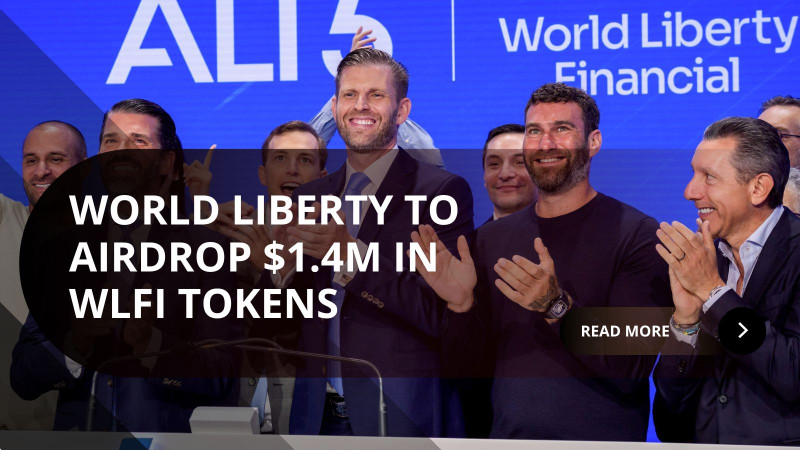
World Liberty Financial to Airdrop $1.4M in WLFI Tokens
Trump-Backed World Liberty Financial to Distribute Tokens in USD1 Stablecoin Initiative
World Liberty Financial (WLFI), the crypto venture affiliated with U.S. President Donald Trump, has announced plans to distribute 8.4 million WLFI tokens, valued at roughly 1.2 million dollars, to early participants in its USD1 stablecoin loyalty program.
This airdrop is tied to the USD1 Points Program, which launched approximately two months ago to promote adoption of the company’s U.S.-dollar backed stablecoin, USD1. Participants earn points by trading USD1 pairs across partner exchanges and maintaining qualifying balances.
According to WLFI, distribution criteria will vary by exchange: “The criteria and eligibility for earning points and rewards and distribution details may vary based on each exchange’s rules,” the company said in a post on X.
The token distribution is scheduled to take place on six platforms, including Gate.io, KuCoin, LBank, HTX Global, Flipster and MEXC, with each exchange determining eligibility and award amounts under the terms agreed with WLFI.
Strategic Context
The initiative serves several purposes. First, it acts as both a reward for early ecosystem supporters and a mechanism to stimulate USD1-stablecoin usage. Second, it tests the underlying infrastructure for token and stablecoin distribution in a real-world environment. Recognizing the scale, the governance vote preceding the proposal registered overwhelming support from holders.
For WLFI the move is also a visibility play. In a stablecoin market dominated by other major issuers, offering a loyalty-driven token distribution tied to a dollar-backed coin helps position USD1 as more than just another entry. It underscores WLFI’s ambition of building a full Web3 payments ecosystem around USD1, with WLFI governance tokens acting as connective tissue.
The company said the loyalty campaign has driven over $500 million in trading activity since its introduction two months ago, positioning USD1 as the sixth-largest stablecoin by market value, according to CoinGecko data.
Operational and Market Considerations
From a technical standpoint the execution is noteworthy. Eligible wallets do not need to claim their drop; the tokens are sent automatically once eligibility is confirmed. That reduces friction and enhances user experience, which is crucial for adoption at scale.
However several factors warrant attention. While the WLFI airdrop rewards early adopters, the eventual utility of the WLFI token remains tied to governance rights and ecosystem participation. Trading status for the token is still subject to internal decision-making and regulatory alignment. Market watchers also note the importance of transparency around USD1 reserves—its backing by U.S. dollar deposits, Treasury securities and equivalents is central to trust.
Regulatory scrutiny is a further dimension. Given WLFI’s connection to high-profile political figures, the project sits at the intersection of innovation and public interest. Lawmakers and watchdogs have flagged potential conflicts of interest in cases where stablecoins are linked to politically exposed persons. That context raises the importance of governance and disclosure for WLFI and USD1 alike.
What to Watch Next
Key metrics and upcoming milestones will influence perception and adoption of the program:
-
Ecosystem Integration: Monitoring how USD1 becomes usable in real payments, treasury functions or DeFi contexts will matter.
-
Token Tradability: The transition of WLFI tokens from governance-only to tradable status could unlock liquidity and broader market participation.
-
Reserve Audits and Transparency: Regular reports confirming USD1 backing, asset custody and redemption mechanisms will build confidence.
-
Regulatory Progress: U.S. stablecoin legislation and oversight developments will affect how projects like WLFI position themselves globally.
-
Exchange Listings and Adoption: The number and quality of partner exchanges supporting USD1 and WLFI will drive network effects and utility.
Conclusion
The forthcoming airdrop by World Liberty Financial signals a strategic push: leveraging token rewards tied to a stablecoin launch to drive engagement and adoption. It reflects an evolving model in crypto where loyalty programs and token economics interplay with payments infrastructure.
If executed well, this program could strengthen USD1’s role in the stablecoin landscape and reinforce WLFI’s ecosystem narrative. If not, trust issues around reserves, governance or politicised affiliations may overshadow potential gains. For now, the project stands as a significant experiment at the nexus of finance, blockchain and public-figure influence.
Stay Connected
You can stay up to date on all News, Events, and Marketing of Rare Network, including Rare Evo: America’s Premier Blockchain Conference, happening July 28th-31st, 2026 at The ARIA Resort & Casino, by following our socials on X, LinkedIn, and YouTube.