#Trump
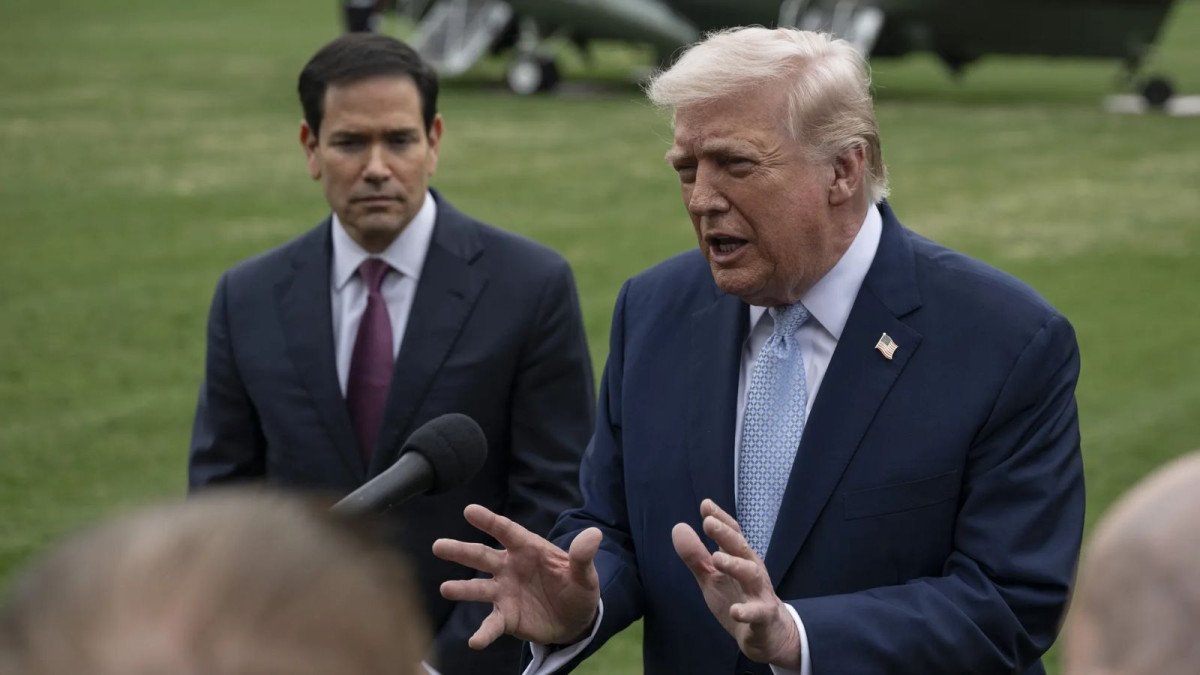
Bitcoin Climbs Past $71,000 as Trump Claims Iran Ceasefire

Bitcoin surged to $71,200 on Monday as investors are optimisitc on de-escalation of the Iran conflict.
The move started when President Trump posted on Truth Social that he had instructed the Department of War to postpone planned strikes against Iranian power plants and energy infrastructure for five days, following what he called "very good and productive" talks with Tehran. Crypto jumped roughly 5% on the news. Ether climbed above $2,100, BNB pushed through $650, and XRP traded above $1.40. Oil plunged around 11%, S&P 500 futures gained nearly 4%, and global markets added an estimated $2.5 trillion in value within about 20 minutes.
Then Iran's state-affiliated Fars News Agency cited an unidentified source denying any talks had taken place. Gains started reversing almost immediately. Bitcoin is now up about 2.5% on the day and down roughly 5% on the week, sitting just under $71,000 after hitting an intraday high of $71,224 per CoinGecko data.
The session is the latest chapter in a conflict that has rattled crypto markets since Operation Epic Fury launched on February 28, when the U.S. and Israel struck targets across Iran and killed Supreme Leader Ali Khamenei. Iran's subsequent blockade of the Strait of Hormuz, a critical chokepoint for global oil flows, has kept energy prices elevated and risk appetite suppressed. The Federal Reserve, meeting earlier this month against that backdrop, revised its 2026 inflation forecast upward to 2.7% and signaled a higher-for-longer stance on rates.
Despite the chaos, Bitcoin has held above its pre-war price level, a fact that has not gone unnoticed. When the strikes began on a Saturday morning and every traditional market was closed, crypto was the only liquid venue available for investors to respond. That 24/7 trading reality, once seen as a volatility risk, has started looking more like a feature.
The five-day pause, if it holds at all, does not end the conflict. Iran continues to strike targets across the Gulf, and Israel would need to sign on to any broader ceasefire. Israel has publicly said it has thousands of remaining targets and requires at least three more weeks of operations. Prediction markets currently favor a ceasefire by late April at the earliest.
Bitcoin's 30-day implied volatility index has bounced to 60%, and $791 million in total leveraged positions have been wiped across crypto markets this session according to CoinGlass, with $425 million of those being longs. The clock on Trump's five-day window is ticking, and so is the market's patience.
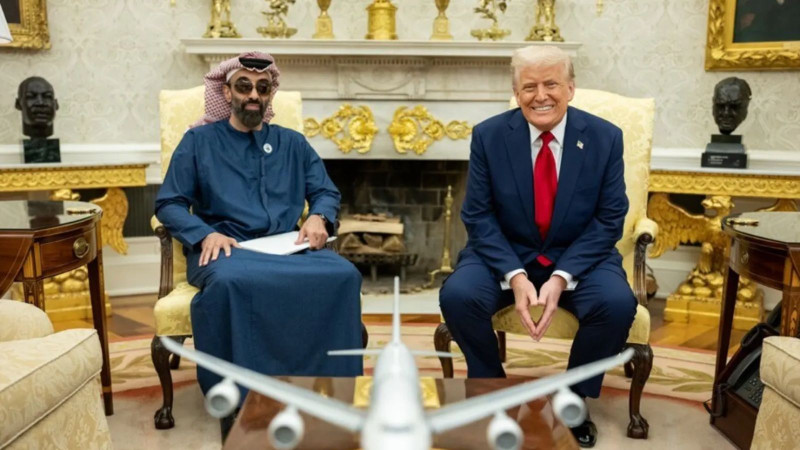
UAE Sheikh’s Stake in Trump-Linked Crypto Firm Raises Questions

A few days before Donald Trump was sworn in for his second term, a little-known crypto company tied to his family quietly changed hands in a very big way.
According to reporting from The Wall Street Journal, an investment network linked to Sheikh Tahnoon bin Zayed al Nahyan, one of the most powerful figures in the United Arab Emirates, agreed to acquire a 49 percent stake in World Liberty Financial, a Trump-associated crypto venture. The price tag was roughly $500 million. The deal was not disclosed at the time.
On its own, that might sound like another splashy foreign investment in crypto. But when you line up the timing, the players involved, and what happened next in Washington, the story is far less routine.
The deal that surfaced after the fact
World Liberty Financial has been marketed as a crypto and stablecoin project aligned with the Trump brand. It has drawn attention before for its political overtones, but the WSJ reporting introduced a new layer entirely.
The Journal reported that the agreement gave Emirati-linked investors just under half the company, enough to wield serious influence without triggering automatic control disclosures. Under the agreement, half of the $500 million was paid upfront, with $187 million flowing to Trump family-controlled entities and at least $31 million going to entities affiliated with the family of Steve Witkoff, the real estate magnate who co-founded World Liberty and was later named U.S. Special Envoy to the Middle East. Witkoff's son Zach is the current CEO of the project.
The timing did not help the optics. The deal was reached days before inauguration, when policy direction for the next four years was coming into focus and foreign governments were jockeying for position.
David Wachsman, a spokesperson for World Liberty Financial, said the company moved forward with Aryam’s investment because it believes the deal supports World Liberty’s long-term growth. He pushed back on the idea that the company should be held to a higher bar than other privately held U.S. firms when raising capital, calling that notion unreasonable and out of step with core American business principles.
Wachsman said neither President Trump nor Steve Witkoff played any role in the transaction, and that neither has been involved in World Liberty Financial’s operations since taking office. He added that Witkoff has never held an operational role at the company. According to Wachsman, the investment does not give any party access to government decision-making or policy influence, and the company follows the same rules and regulatory requirements as others in the industry.
Who is Sheikh Tahnoon?
Sheikh Tahnoon is not a Silicon Valley VC taking a flier on tokens. He is the UAE’s national security adviser, a senior royal, and a central figure in Abu Dhabi’s intelligence, defense, and investment apparatus.
He also oversees or influences a web of firms operating at the intersection of AI, data infrastructure, and geopolitics. That includes G42, an Emirati AI company that has faced scrutiny in the past over its international ties and access to advanced computing technology.
A person familiar with the investment of World Liberty said Sheikh Tahnoon and his team spent months reviewing World Liberty Financial’s business plans before committing capital, ultimately completing the deal alongside several co-investors. The person said the investment did not involve funds from G42.
The source also said the investment was never discussed with President Trump, either during the due diligence process or afterward, and described Tahnoon as a significant investor in the crypto sector.
The AI chip question hovering over everything
One reason this story has legs beyond crypto is what happened after the investment.
Following Trump’s return to office, the administration moved on policies involving advanced AI chips, an area where the UAE has been actively lobbying for expanded access. These chips are tightly controlled, highly strategic, and essential for modern AI development.
No reporting has established a direct quid pro quo. There is no document that says money went in and policy came out.
From a governance perspective, this is exactly the kind of situation ethics experts warn about. Even if no one crosses a legal line, foreign investors with deep political ties may gain goodwill, access, or priority simply by being financially intertwined with the president’s broader business ecosystem.
The legal fight may be narrow, the political fallout less so
Some legal scholars cited in reporting have raised the emoluments clause, the constitutional provision meant to prevent U.S. officials from receiving benefits from foreign states. Trump’s defenders counter that he is not directly receiving payments and that the structure insulates him from day-to-day involvement.
That argument may hold up in court. It often has before.
But the political risk is broader. Even without a legal violation, the appearance of foreign influence is enough to trigger congressional scrutiny, especially with Trump's polarizing nature and Senate Democrats, many anti-crypto, looking for any angle to stifle crypto innovation and hang Trump out to dry...all at the same time. Some Lawmakers have already begun calling for reviews, especially given the national security dimensions of AI and crypto infrastructure.
The Bottom Line
This is not just a Trump story or a UAE story. It is a preview of how crypto-era influence works.
Instead of overt lobbying, capital moves through private deals. Instead of formal control, investors stop at 49 percent. Instead of campaign donations, value flows through equity, tokens, and stablecoin rails.
It is cleaner, quieter, and harder to regulate.
Whether or not this specific deal leads to formal investigations or enforcement, it highlights a structural vulnerability. Crypto allows political proximity, financial upside, and strategic infrastructure to blend in ways legacy systems never quite allowed.
And that is why this episode is likely to be studied long after the headlines fade.
Crypto Prices Surge After Trump Announces Tariff Dividend Plan
Crypto Prices Surge After Trump Announces Tariff Dividend Plan
Crypto markets moved sharply higher after President Trump announced his intent to send “at least” a $2,000 tariff dividend to every American, funded by tariff revenues. Bitcoin climbed roughly 1.7% to trade above $103,000, while Ethereum rose more than 3% to around $3,480. Solana also gained nearly 2%, helping the broader crypto market recover from a difficult week.
The announcement, which Trump described as a “dividend for the American people,” immediately set off speculation about a new wave of consumer stimulus. Market watchers compared the idea to the 2020–2021 stimulus checks that fueled both retail investing and crypto adoption during the pandemic.
What a “Tariff Dividend” Means
The proposal is straightforward: redistribute federal tariff revenue to households in the form of direct payments. The administration framed it as “returning America’s money to Americans,” though the plan would likely require congressional authorization and a detailed funding framework.
In practical terms, this would act much like a stimulus payment, except funded through tariffs rather than new government borrowing. Whether or not it comes to fruition, the market’s reaction suggests traders are already pricing in the possibility of renewed liquidity entering the system.
Why Crypto Reacted: The 2020 Playbook
When the United States issued direct stimulus checks in 2020 and 2021, data showed a measurable uptick in crypto activity. Exchanges recorded surges in $1,200 deposits — the same amount as the first stimulus payment — and analysts noted a wave of new retail wallets buying Bitcoin and Ethereum.
In other words, stimulus checks created a wealth shock that found its way into digital assets. The pattern was clear: free cash plus frictionless access to trading apps equaled inflows into crypto.
If a 2025 “tariff dividend” reaches consumer bank accounts, it could produce a similar reaction:
-
Immediate liquidity shock: Households receive cash, and some percentage of it flows into high-risk, high-reward assets.
-
Ease of access: It is easier than ever to buy crypto directly through apps that support bank transfers and debit cards.
-
Narrative power: Headlines about free money drive social media buzz, which has historically amplified market moves.
-
Altcoin momentum: In 2020 and 2021, retail inflows often rotated into smaller tokens, fueling broader speculative rallies.
How 2025 Differs From 2020
There are important differences between the two environments.
-
Economic backdrop: Interest rates are higher, inflation is more persistent, and households are facing tighter budgets. Liquidity injections might not carry the same purchasing power they did during lockdowns.
-
Policy complexity: A tariff dividend is not an emergency measure. It would require legislation, debate, and administrative systems to distribute funds.
-
Market maturity: Crypto ownership is broader and more institutionalized now. Retail checks could still drive excitement, but large funds and ETFs dominate trading volume.
-
Tariff revenue limits: Total tariff collections may not fully cover such large payments, which could influence how much money actually reaches citizens.
Even with these caveats, the narrative alone can move markets. Traders have a short memory for policy hurdles but a long memory for liquidity events.
Possible Scenarios
Scenario 1: Full $2,000 payments in early 2025.
Expect an immediate increase in retail deposits and small-ticket crypto buys. Bitcoin would likely lead the rally, followed by Ethereum and major Layer 1 tokens. Within days, altcoins could outperform as speculative capital spreads through the market.
Scenario 2: Reduced or delayed payments.
A scaled-down version would still spark optimism, but the impact would be smaller. Prices could rise on anticipation and then fade if payments are limited or phased in over time.
Scenario 3: No payments, only rhetoric.
If Congress rejects or delays the plan, the initial market rally could unwind quickly. Traders would shift focus back to macro factors such as interest rates and ETF inflows.
What to Watch Next
-
Policy developments: Official statements from the White House and Treasury will clarify how serious the proposal is.
-
Legislative signals: Watch for draft bills or congressional discussions that determine timing and funding.
-
Exchange activity: Look for clustering of retail-sized purchases near the proposed check amount, as seen in 2020.
-
Altcoin breadth: If retail flows return, altcoins typically benefit first due to their lower market caps and higher volatility.
-
Tariff policy shifts: Increased tariffs could pressure supply chains and offset some of the stimulus effect, adding complexity to market sentiment.
Final Thoughts
Today’s market reaction shows how sensitive crypto remains to liquidity narratives. History suggests that direct payments to households act as fuel for risk assets, particularly digital currencies.
In 2020, stimulus checks helped ignite one of the strongest bull runs in crypto history. Bitcoin’s price more than tripled in less than a year as new retail investors piled in. If a 2025 “tariff dividend” delivers similar injections of cash, it could trigger another wave of retail-driven buying — especially in the smaller, more speculative corners of the market.
Still, the outcome depends on whether policy turns into action. Until checks start landing, investors should treat this as a potential catalyst rather than a certainty. Yet if history is any guide, the prospect of free money flowing into crypto is enough to remind markets just how powerful liquidity can be.
Stay Connected
You can stay up to date on all News, Events, and Marketing of Rare Network, including Rare Evo: America’s Premier Blockchain Conference, happening July 28th-31st, 2026 at The ARIA Resort & Casino, by following our socials on X, LinkedIn, and YouTube.
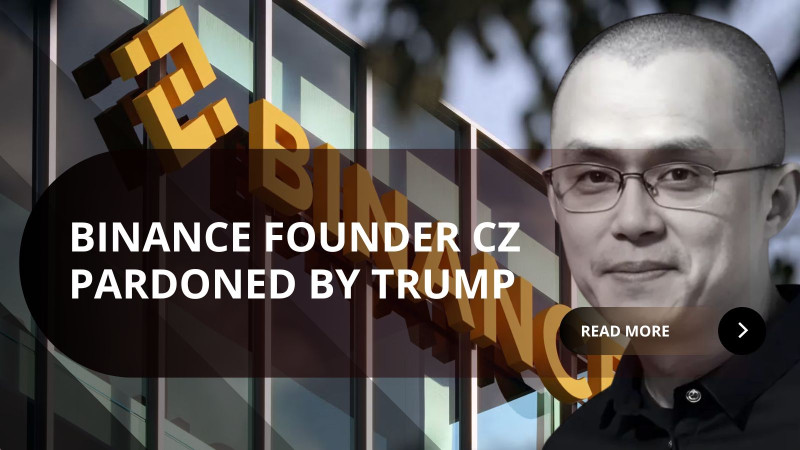
Binance Founder CZ Pardoned by President Donald Trump
CZ Pardoned: A Major Reset for Binance and the Global Crypto Market
On October 23, 2025, President Donald Trump granted a full pardon to Changpeng Zhao, the founder of Binance, in one of the most consequential political and financial moves of the year. The decision effectively clears Zhao’s record, erases the legal barriers tied to his conviction, and reignites a wave of optimism across the global crypto industry.
Zhao, widely known as CZ, previously pled guilty to failing to maintain an effective anti–money–laundering program at Binance. After serving a portion of his sentence and paying a record $4.3 billion settlement, he stepped down from his leadership role. Now, with the stroke of a presidential pen, one of crypto’s most iconic figures is free to return to business, investment, and public life — and the implications could be enormous.
A New Regulatory Era
The pardon is being interpreted by market analysts as a signal of shifting sentiment in Washington. For years, U.S. regulators took an increasingly strict approach toward the crypto industry, pushing companies offshore and chilling innovation. Trump’s decision to pardon Zhao suggests a reversal of that stance — one that may emphasize economic growth, innovation, and collaboration over enforcement alone.
Industry insiders say this move could encourage renewed dialogue between major crypto platforms and policymakers, potentially leading to clearer, more constructive regulatory frameworks. For investors, it signals that the U.S. may once again aim to compete globally in the digital–asset economy rather than regulate it from the sidelines.
This could also unlock new institutional confidence. Funds, fintech firms, and traditional banks that were once hesitant to engage with crypto could begin exploring partnerships, investments, and product launches with greater comfort and clarity.
What It Means for Binance
Although CZ stepped away from Binance’s leadership in 2023, he remains a majority shareholder and influential voice within the company. His pardon could mark a turning point for Binance itself, both strategically and symbolically.
The exchange has spent the past two years rebuilding its compliance infrastructure, expanding in regulated markets, and deepening relationships with payment providers and global governments. With Zhao now legally cleared, Binance can move forward without the shadow of its founder’s conviction — a psychological and reputational boost that could help the company reassert its dominance in the market.
Insiders suggest that Zhao could return to an advisory or ambassadorial role, helping Binance pursue strategic partnerships, guide expansion efforts, or even spearhead new ventures tied to blockchain innovation. His renewed presence could also help attract new investors, strengthen the company’s credibility, and inspire other crypto entrepreneurs navigating complex regulatory landscapes.
Ripple Effects Across the Crypto Market
The ripple effects of the pardon extend far beyond Binance. For the broader crypto ecosystem, this development is being seen as a symbol of legitimacy and maturity. Major figures in the industry have publicly celebrated the move, calling it a moment of reconciliation between government and innovation.
The pardon may help ease political pressure on other leading projects and exchanges, allowing for greater collaboration and policy alignment across the global crypto landscape. It could also spur increased venture funding, new listings, and corporate partnerships as confidence returns to the market.
In the short term, analysts expect renewed momentum in market sentiment — particularly for large–cap cryptocurrencies like Bitcoin, Ethereum, and BNB — as investors interpret the decision as a green light for the industry’s future.
A New Chapter for CZ and Crypto
For Changpeng Zhao, the pardon represents a personal and professional revival. Once at the center of regulatory controversy, he now stands as a symbol of resilience and reinvention. For the crypto industry, it represents something larger — a sign that the sector is entering a new chapter marked by accountability, recognition, and global growth.
The message is clear: after years of legal battles and uncertainty, crypto may finally be turning the corner toward mainstream acceptance. With CZ free to participate once again and Binance positioned for renewed expansion, the digital–asset world appears ready to move forward with confidence and purpose.

Trump Confirms World Liberty Financial Pushes Into Tokenized Real Estate and Crypto
A new crypto venture backed by the Trump family, World Liberty Financial (WLFI), is making bold bets — from issuing a governance token to tokenizing real estate and launching a stablecoin. The project is stirring both interest and controversy as it bridges traditional assets and blockchain innovation.
What Is WLFI?
World Liberty Financial was founded in 2024 with deep ties to Donald Trump and his family. The Trump family holds a significant stake — estimated at 40–60% — in the firm, and up to 22.5 billion WLFI tokens were allocated to its members as part of the token launch.
WLFI is more than a token: it’s meant to be a crypto ecosystem. The project plans to issue a USD-pegged stablecoin called USD1, backed by U.S. Treasuries and cash equivalents, and to use WLFI holders’ votes to guide governance decisions. The platform also aims to let investors own fractional shares of real estate like Trump Tower Dubai, bringing property ownership onchain.
How the WLFI Token Debut Went
The WLFI token launch was explosive. Early trading pushed its value significantly higher than what early investors paid. But volatility followed. On its first day, the token dropped by nearly 15 %, then recovered partially.
At the token’s peak, the Trump family’s WLFI holdings were valued on paper at around $5–6 billion. However, insiders’ tokens were initially locked and could not be sold until later.
WLFI’s big listing came after a community vote with overwhelming support — around 99.9% of voting WLFI holders voted to unlock trading. That vote signaled a shift from closed governance toward public market participation.
Tokenizing Real Estate: What They’re Doing
One of WLFI’s boldest ambitions is fractional real estate. The company aims to convert iconic Trump properties into blockchain tokens, lowering the barrier to entry so that ordinary investors can own slices of luxury estates. For example, Trump Tower Dubai has been mentioned as a candidate for tokenization.
This model promises liquidity, divisibility, and exposure to real-world assets. But it also faces a major obstacle: liquidity. Many tokenized real-world assets (RWAs) struggle to sustain active secondary markets — just because you can split a property’s value into tokens doesn’t mean you can easily trade them on demand.
Broader Ecosystem Moves
WLFI isn’t just real estate. The project has expanded ambitions:
-
Partnership with Ondo: WLFI aims to integrate with real-world asset platforms so users can borrow, lend, and trade tokenized assets backed by real assets.
-
Stablecoin USD1: The stablecoin is already live on Ethereum and Binance Smart Chain. WLFI plans to expand USD1 to more chains and use it to fuel internal payments and trading.
-
Tokenized commodities: Plans are underway to tokenize commodities like oil, cotton, or timber — pairing them with USD1 to trade them under trustable, blockchain-based systems.
-
Crypto treasury: World Liberty set up a $1.5B “crypto treasury” via a partnership with a Nasdaq-listed blockchain firm, using WLFI tokens to fund growth, buybacks, and debt coverage.
Risks & Red Flags to Watch
This ambitious model comes with some red flags:
-
Insider concentration: A large share of WLFI is held by insiders (Trump family). Though WLFI’s terms try to limit influence by any one wallet, the concentration remains a governance risk.
-
Illiquid tokens: Many real-world asset tokens struggle with low trading volume. Even if ownership is fractionalized, it may not be easy to exit positions.
-
Regulatory scrutiny: WLFI blurs lines. With Trump family involvement, large token allocations, and real estate assets, the potential for conflict of interest and scrutiny from regulators is high.
-
Valuation volatility: Early gains were massive, but price swings are severe — what’s on paper today might evaporate tomorrow.
-
Execution risk: Tokenizing real estate, stablecoin issuance, and crypto finance all require strong legal, technical, and financial execution. Any weak link could derail the model.
Why It Matters
WLFI reflects a new phase in crypto: combining real-world assets, governance, stablecoins, and public figures. If successful, it could redefine access to luxury assets, reshape how wealth is tokenized, and bring more traditional investors into blockchain.
But WLFI’s trajectory will test whether tokenization is more than hype — whether markets, regulation, and infrastructure can support the vision. It’s a high-stakes experiment at the intersection of power, money, and innovation.