#RWA
Exodus Partners With Ondo To Launch Tokenized Stocks

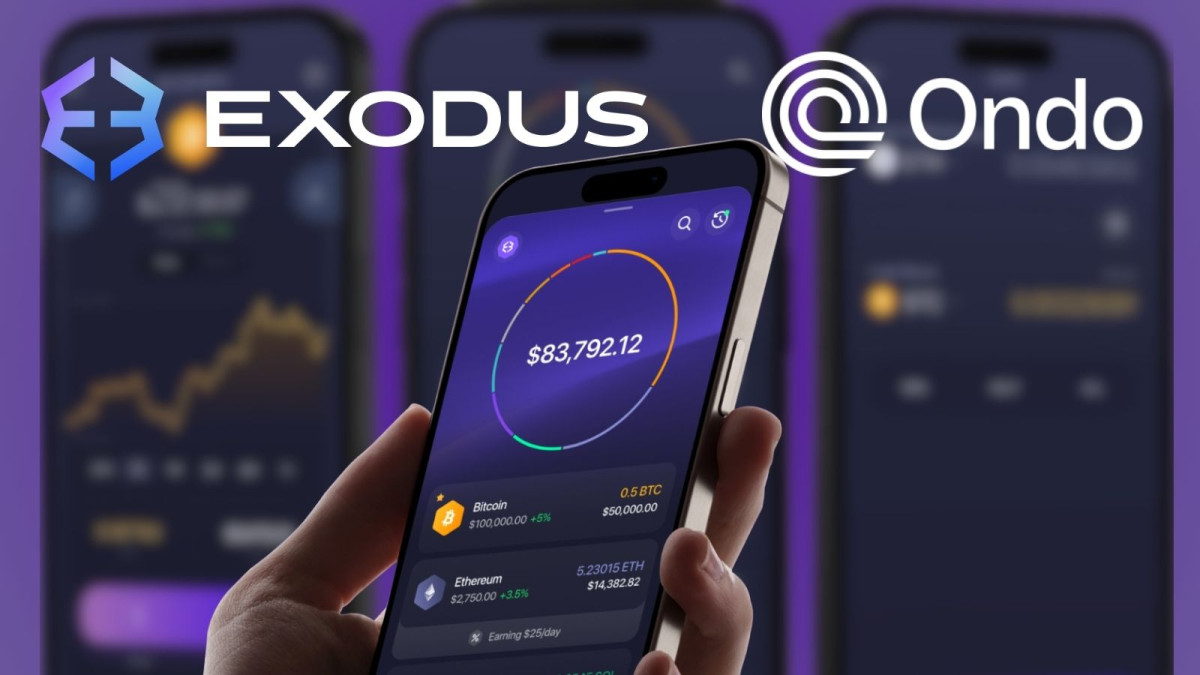
Exodus Movement Inc. (NYSE American: EXOD), a publicly traded financial technology company and developer of the Exodus wallet, has partnered with Ondo Finance to launch Exodus Markets, a platform for trading tokenized assets.

With Exodus Markets, users can now buy and sell more than 200 tokenized stocks, exchange-traded funds (ETFs), and real-world assets directly in the Exodus wallet app on the Solana blockchain.
"Tokenized stocks are one of the most important developments in modern finance," said JP Richardson, CEO and co-founder of Exodus.
"For the first time, our customers can trade and hold tokenized equities with the same direct control and global access they expect from crypto. Exodus is becoming the front door to every asset you hold, without compromising on trust and control."
The launch of Exodus Markets aligns with Exodus’s goal of transforming from a custodial wallet into a full financial platform that allows users to trade, earn rewards, send, spend, and manage money.
As part of its efforts to become a comprehensive financial app, Exodus launched Exodus Pay, a self-custodial payment feature within the Exodus app that enables users to transact with digital assets, including stablecoins, for everyday purchases. The company also launched XO Cash, a stablecoin pegged to the U.S. dollar.
The Tokenization Space
The tokenization space, particularly real-world assets (RWAs), has experienced significant growth over the past 1 to 2 years. Excluding stablecoins, the tokenization sector grew from roughly $5 billion to $6 billion at the start of 2025 to $27 billion to $31 billion or more by mid 2026, representing an increase of more than 400% over a period of 15 to 18 months.
Several institutions are also entering this growing sector, with Bitget most recently launching Reality, its real-world asset (RWA) platform. Kraken has also launched xChange, an on-chain trading engine designed for trading tokenized equities. MetaMask, Trust Wallet, Blockchain.com, and Robinhood have also made strategic moves to enter the sector, partnering with RWA firms and rolling out tokenized assets and stocks.
Given the level of growth and adoption the real-world asset and tokenization sector has seen so far, several projections have been made regarding its future potential. The Boston Consulting Group and Ripple have projected that the sector could be worth more than $15 trillion by 2030.
Wall Street Giants Pour $355M Into Canton Network

Digital Asset, the firm behind the Canton Network, has closed a $355 million funding round led by a16z crypto, pulling in a sprawling cast of Wall Street names and at least one sovereign wealth fund along the way.
Digital Asset, the company quietly building out the plumbing for tokenized capital markets, has just pulled off one of the bigger raises in cryptos institutional corner this year. The firm announced Thursday that it closed a $355 million round led by Andreessen Horowitz's crypto arm, a16z crypto, which alone wrote a $100 million check. The size of the raise, and the names attached to it, say a lot about where smart money thinks blockchain infrastructure is headed next ... and it's not toward retail trading apps.
The round's backer list reads like a who's who of global finance. Citadel Securities, Apollo, BNP Paribas, HSBC, S&P Global, CME Ventures, Coinbase Ventures, Optiver, SoFi, Tradeweb and SBI Group all participated, alongside a subsidiary of the Abu Dhabi Investment Authority, one of the world's largest sovereign wealth funds. Smaller but notable names like 7RIDGE, Polychain, Broadridge and William Blair rounded things out. It's a genuinely odd mix of old guard TradFi and crypto native venture money, which is sort of the whole point of Canton in the first place.
What Exactly is Canton, and Why Does Wall Street Care
Canton is a layer-1 blockchain, but it doesn't look much like the chains most crypto users are familiar with. It was designed from the ground up for regulated finance, with built-in privacy controls that let institutions keep sensitive transaction data hidden from competitors while still settling on a shared, synchronized ledger. Digital Asset describes it as a network of networks, meaning banks and asset managers can run their own permissioned systems that plug into the broader Canton ecosystem without giving up control over their own data or compliance processes.
This is basically the opposite of how chains like Bitcoin or Ethereum work. There's no anonymous validator set, no permissionless access, and institutions retain authority over the assets they issue. Some purists aren't thrilled about that. TD analyst Lance Vitanza wrote back in February that some experts consider Canton a glorified database in the cloud, and not really consistent with the open, trustless architecture that defines Bitcoin. Fair point, maybe, but it also might be missing why banks are actually showing up.
Since launching nearly two years ago, Canton has reportedly supported around $6 trillion in tokenized issuance, and the network now counts more than 700 ecosystem participants according to Digital Asset CEO Yuval Rooz. That's a big number for a network most retail crypto traders have probably never interacted with directly. Its native token, CC, was trading around 16 cents at the time of the announcement, up roughly 12% over the prior week, though still well below its February all time high near 19 cents.
A Valuation That's Climbing Fast
This isn't Digital Asset's first rodeo with a16z. The new $355 million round comes on the heels of a previously reported $300 million raise from just a month earlier, which valued the company at close to $2 billion, again with a16z leading. Before that, in 2025, Digital Asset raised $50 million from backers including Nasdaq and Bank of New York Mellon. Add it all up, and Digital Asset has now raised somewhere north of $800 million across its various rounds, a pace that's hard not to notice in a sector where many infrastructure plays are still pre revenue.
Speaking of revenue, that's another detail buried in the announcement worth pulling out. According to reporting from ChainCatcher, Digital Asset says it has now reached profitability following this latest raise. For a blockchain infrastructure company, that's a fairly rare claim to make, and it's likely one reason institutional investors who don't typically touch crypto, like Apollo or HSBC, felt comfortable writing checks.
Where The Money is Going
Digital Asset says the fresh capital will go toward three buckets, forging new partnerships, pursuing mergers and acquisitions, and expanding the broader Canton ecosystem. There's also a developer angle here. Rooz has been fairly vocal about wanting to deepen engagement with the people actually building on Canton, not just the institutions issuing assets on top of it.
"Blockchain adoption will be defined by practical, production-grade applications in the world's largest markets," Rooz said in a statement tied to the announcement. "For capital markets to move onchain, institutions need infrastructure that reflects how they actually operate, with privacy, compliance, scale, and interoperability built in from the start."
Notably, this round also marks the formal start of a partnership between Digital Asset and a16z crypto, not just a check. Ali Yahya, a general partner at a16z crypto, framed it as a bet on a thesis that's been floating around crypto circles for years finally becoming real, real world assets and institutional workflows actually moving onchain, rather than just being talked about at conferences.
The bigger picture for RWAs
Zoom out a bit and this raise fits a pattern that's been building for a while now. Tokenization of real world assets, things like bonds, money market funds, equities and commodities, has gone from a niche talking point to something BlackRock, Franklin Templeton and a growing list of traditional asset managers are actively building around. Canton's pitch is that it can be the settlement layer underneath a lot of that activity, handling the messy parts around privacy and regulatory compliance that public chains generally weren't built to handle.
Whether Canton ends up being the dominant rail for this kind of activity, or just one of several competing standards, is still very much an open question. Other institutional focused networks and consortia are chasing similar territory, and banks have a long history of building their own private ledgers rather than relying on shared infrastructure. But with this round, Digital Asset has clearly bought itself runway, credibility, and a deep bench of new institutional relationships, which in this market counts for a lot.
Financial Technology Partners served as the exclusive financial advisor on the deal, according to the company's release. For now, the immediate market reaction has been modest, with CC ticking higher alongside a broader crypto rally this week, but the more interesting story here probably isn't the token price. It's the growing list of names from Citadel to ADIA who are now, at least on paper, aligned with Canton's success.
Bitget Launches Reality for Tokenized Stocks and ETFs

Bitget, a global cryptocurrency exchange, has launched Reality, a real-world asset (RWA) platform that gives users access to tokenized traditional financial assets.
With Reality, Bitget aims to bring tokenized U.S. stocks and exchange-traded funds into its trading ecosystem, enabling access to financial instruments that have traditionally been difficult to access due to geographic restrictions, market hours, and settlement barriers.

The launch aligns with Bitget’s Universal Exchange (UEX) roadmap, which aims to transform Bitget from a crypto exchange into a global trading platform that allows users to trade cryptocurrencies, tokenized stocks, exchange-traded funds, commodities, forex, and other real-world assets through a single account using cryptocurrencies.
“Reality is built around Bitget’s 10% vision: by 2030, nearly 10% of financial assets could exist in tokenized form,” said Gracy Chen, Bitget CEO. “Stablecoins, faster blockchain settlement, and growing interest from major exchanges are pushing RWAs from experiment to market infrastructure. Reality is Bitget’s step toward making that future accessible to global users.”
How Reality Will Work
Reality will be natively integrated into Bitget and serve as the exchange’s specialized arm for tokenizing traditional financial instruments. It will also serve as the primary layer for standardizing traditional market value in the crypto economy.
The Reality platform will issue rTokens to users, which are on-chain representations of publicly traded equities and exchange-traded funds (ETFs). Each rToken will be backed 1:1 by real shares held with a FINRA-registered, SIPC-protected U.S. broker-dealer.
To ensure the highest level of transparency, the Reality platform will be regularly audited by third-party auditors. These audits will provide a live proof-of-asset dashboard and CPA-level audit reports to ensure verifiable asset integrity at all times.
Reality will initially focus on providing tokenized exposure to selected U.S. stocks and ETFs, with the team introducing additional tokenized assets as the platform expands. However, access to the platform, including user eligibility, product availability, and trading features, will depend on applicable geographical laws and regional restrictions.
Bitget’s entry into the RWA tokenization industry comes as several institutions, including Payward, Bitwise, and Nasdaq, are tapping into the growing sector. The RWA tokenization market is currently valued at around $34 billion, with the Boston Consulting Group projecting it to reach $16 trillion by 2030.
Wall Street Is Going To Tokenize Everything

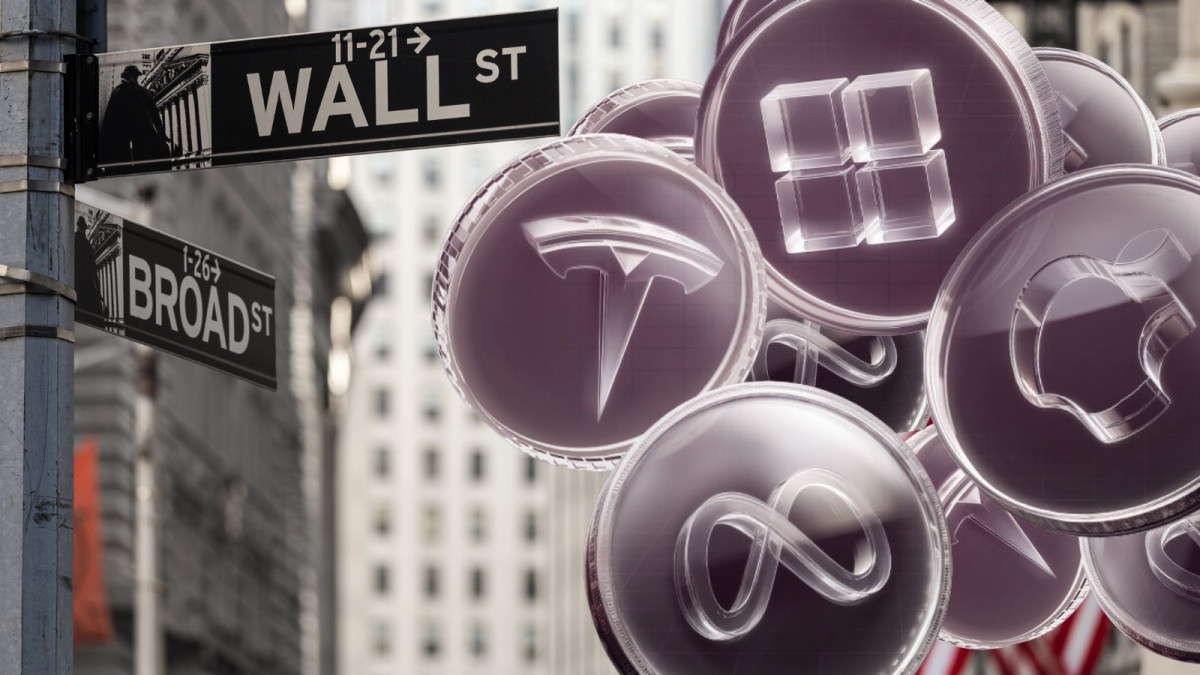
There was a version of this story...told many moons ago that gets told as a prediction. Some future moment when the old guard of finance finally meets crypto on equal footing, when the suits and the degens find common ground, when a BlackRock executive and a DeFi protocol share the same balance sheet. Well that story is now pretty outdated...it's no longer some vision of an oracle peering into a crystal ball. We are already living in it. The future is here.
What we are seeing happen in global finance with tokenization is not some pilot program or a hedge. It is a structural transformation, and it is accelerating faster than most people outside of these two worlds seem to understand. Wall Street is no longer on the outside looking in, just dipping their toes in, to test the water. They have taken the plunge.
The Old System Was Always Broken
Here is something traditional finance never really wanted to say out loud: the infrastructure holding it together is ancient, slow, and held up largely by institutional inertia. Settlements that take days. Liquidity locked to six-and-a-half-hour trading windows. Layers of intermediaries, each one clipping a fee, each one adding time. For the largest players, those inefficiencies were baked into the cost of doing business. For everyone else, especially retail investors in markets outside the U.S., they were just walls.
Blockchain does not fix all of this overnight. But it offers something that legacy systems fundamentally cannot: a shared, programmable, real-time record of ownership that does not require three middlemen to reconcile. The World Economic Forum, in its 2025 report on asset tokenization, described the transition as potentially the next major phase in the development of financial market architecture, drawing a comparison to the shift away from paper certificates in the 1960s. That is not a crypto inside touting to his followers on X. That is the WEF stating how tokenization could transform finance.
When even the most establishment-facing institutions are framing this as a generational infrastructure shift, it's probably worth paying attention to.
The Institutions Are Not Coming. They Are Here.
BlackRock has a tokenized fund on Ethereum. JPMorgan launched a second tokenized money market product backed by U.S. Treasuries. Fidelity brought its own Digital Interest Token on-chain. Franklin Templeton has been quietly building its tokenized money market fund, BENJI, across multiple blockchains for years. These are live products managing real capital.
The total market for tokenized real-world assets crossed $75 billion in 2025. Projections from market analysts put the long-term ceiling at $18.9 trillion by 2033, and some estimates, citing the total addressable market of traditional finance, go much higher. Larry Fink has publicly stated, more than once, that he believes every financial asset can eventually be tokenized. When the CEO of the world's largest asset manager says that with conviction, the rest of the industry listens.The total crypto market sits at just shy of $2.6 trillion right now, to add some perspective to the type of volume tokenization can bring to the space.
And the whole idea behind this is not ideological. It is practical. Blockchain cuts settlement time, removes redundant intermediaries, enables fractional ownership, and allows assets to be composable across different financial products. For institutions moving hundreds of billions, those efficiency gains compound into something very significant, very quickly.
xStocks and the Part Where It Gets Really Interesting
Tokenized treasuries and money market funds are the institutional on-ramp. But the development that best captures where all of this is truly heading is xStocks, and it is worth understanding why it matters as much as it does.
Launched in June 2025 by Backed Finance, a Swiss RWA issuer, xStocks put more than 60 fully collateralized U.S. equities on Solana as SPL tokens. Apple. Tesla. Nvidia. Amazon. Each one backed 1:1 by real shares held under regulated custody. Not synthetic. Not a derivative. The actual stock, on-chain. Available the same day on Kraken and Bybit to users in over 185 countries, and within hours, live across Solana's DeFi ecosystem on Raydium, Jupiter, and Kamino.
The numbers since launch have been hard to argue with. Over $25 billion in total transaction volume. More than 80,000 unique on-chain holders. The platform has since expanded to 100 fully backed listings, and xStocks recently launched xChange, a unified execution layer for tokenized equities running 24/5 across Ethereum and Solana with atomic settlement built in. And we'll go back to the numbers. xStocks is amazing. It's done over $25 billion in volume. But daily stock market volume just in the U.S. is roughly $500-700 billion. Daily. Just in the U.S. Starting to get the big picture here? The much, much bigger picture?
What makes this genuinely different from everything that came before it is composability. With a brokerage account, you own a stock and that is more or less the end of the story. With xStocks inside Solana's DeFi ecosystem, you can use Nvidia as collateral in a lending protocol, provide liquidity with Apple against a stablecoin, or swap Tesla for SOL without touching a broker, a clearinghouse, or a trading window. That kind of programmable financial infrastructure does not exist in traditional markets. It simply never has.
Who This Actually Opens the Door For
For investors in the U.S., this is interesting. For investors everywhere else, it is potentially transformative. Access to U.S. equity markets has historically required meeting regulatory hurdles, working through licensed brokers, and navigating banking infrastructure that many parts of the world simply do not have. xStocks changes that math entirely. Trading starts at one euro. Dividends reinvest automatically. No broker required. No minimum account size. Just a wallet and a connection.
Franklin Templeton's partnership with Kraken, announced in early 2026, is another data point worth noting here. The two are exploring on-chain versions of Franklin's financial products, including tokenized stocks, yield instruments, and compliant custody solutions. A legacy asset manager and a crypto exchange building joint infrastructure is the kind of thing that a few years ago would have sounded like a very optimistic projection. Now it is a press release.
The Narrative Has Shifted. Permanently.
Crypto spent a long time fighting to be taken seriously by traditional finance. That fight is over, and crypto won it on the merits. What is replacing it is something more interesting: a negotiation over what the merged system actually looks like, who controls it, and how fast it scales.
The regulatory environment is improving. Interoperability between chains is being worked out. Liquidity in tokenized asset markets is growing month over month. The WEF framed the barriers as real but solvable, pointing to legacy infrastructure integration, inconsistent global standards, and cross-chain friction as the remaining friction points. None of those are permanent problems. They are engineering and coordination challenges, and the talent and capital now focused on solving them is enormous.
The General Manager of xStocks said it about as cleanly as it can be said: the question is no longer whether equities belong on-chain, but how fast they can be scaled. With 100 listings and $25 billion in volume already behind the platform, the model is proven. The next stage is expansion to every major U.S. equity and, eventually, global equities across international markets.
That is not a roadmap for some distant future version of crypto. That is the roadmap for the next few years. And if the last twelve months are any indication, it will probably move faster than anyone is currently projecting, including myself. As bullish as I am on all of this, I have a feeling that the transition to tokenize the world will be bigger than anything I could ever imagine.
Hyperliquid Is Quietly Becoming the Future of Trading

Hyperliquid's RWA trading just hit a new all time high, with open interest crossing $2.3 billion on its blockchain which says a lot about how much liquidity is actually flowing into real world assets through a decentralized venue. The platform has quietly become a go-to spot for trading, building apps, and launching tokens all in one place, and the RWA growth is starting to grow rapidly. It’s fees are competing with top blockchains and stable coin companies within crypto.

On March 31, Cointelegraph reported that Ripple Prime expanded its Hyperliquid integration with HIP-3. That means institutions now get seamless on-chain perpetuals on traditional assets like gold, silver, oil, and even compute prices.
This is the kind of bridge that allows retail to hedge oil exposure at 3 a.m on a Sunday when traditional futures are closed. The same rails powering crypto perps now handle real-world commodities that move markets worldwide. It's infrastructure that pulls capital on-chain because the UX finally matches what people expect from a modern trading venue.
On the prime brokerage side, a traditional S&P futures trade runs through six different entities: prime broker, FCM, CME Clearing, and so on with multiple fee layers, T+1 settlement, financing charges, and all the custody overhead that comes with it. On HIP-3, connect your wallet, post USDC margin, trade the perp, and settle instantly on-chain. One fee, self-custody, the smart contract is the clearinghouse, and the blockchain handles custody. It's making large chunks of what they actually do look pretty unnecessary, once the regulatory picture clears up.
Hyperliquid's terms of service explicitly block US users, and enforce this with IP geoblocking, so if you're in the States you'll hit a wall at app.hyperliquid.xyz. The underlying protocol is fully permissionless since it's non-custodial and requires no KYC, but using it from the US still carries real regulatory risk given the CFTC's jurisdiction over leveraged perps. In February 2026 they launched a $29 million Policy Center in D.C. led by Jake Chervinsky, pushing for regulatory clarity around on-chain derivatives. Until something like the CLARITY Act or formal CFTC guidance moves things forward, the restriction is basically the protocol protecting itself while it keeps running 24/7 for the rest of the world. For US builders and investors, the play is watching that policy push closely because when the rails open, the infrastructure is already battle tested and ready to go.
Non-crypto assets on Hyperliquid with HIP-3 markets now cover licensed indices like the S&P 500 and Nasdaq 100, individual equities, commodities, and even compute perps tied to GPU rental rates for H100, H200, and A100 chips through projects like Global Compute Index and Hyperbolic. At peak moments these non-crypto pairs have accounted for up to 45% of total volume, with HIP-3 open interest recently sitting around $1.9 billion.
Late last year, Aster looked like it could replace Hyperliquid with BNB Chain speed, incentives, and early buzz that some called the “Hyperliquid killer.” Hyperliquid has pulled ahead in TVL, open interest, fees, and real value returned to holders. Aster remains solid, yet Hyperliquid’s dedicated L1 edge with tighter spreads, deeper books, and consistent performance has widened the gap.

@CosimoCapital posted a thread making a pretty compelling case for why a future proposal of HIP-4 prediction markets could be a serious unlock. The core problem with most prediction market platforms is thin liquidity and parlays that just don't work because every market is isolated from everything else. Hyperliquid flips that by letting prediction markets tap into the same infrastructure already handling massive perpetuals and commodities volume. "When prediction markets share a unified liquidity pool with perpetual markets," Cosimo wrote, "the parlay math transforms completely." One account, cross-margined across oil perps, equity moves, and event outcomes, all settling instantly. It's not just another betting app. It could end up being "the everything market for global event risk."

This opens up some genuinely interesting scenarios with macro hedges like "if CPI beats and the Fed holds and BTC closes green," or geopolitical risk desks chaining election outcomes to commodity moves, parametric insurance, treasury automation, you name it. Every multi-leg position multiplies fee events too, so five legs means five burns, which turns HIP-4 volume into structural HYPE supply reduction over time. Hyperliquid is pulling in roughly $700 million in annualized trading fees from its perpetuals and spot markets, and around 97 to 99% of it flows automatically into the Assistance Fund, which runs daily HYPE buybacks on a continuous basis. There's constant structural demand and deflationary pressure on circulating supply whether the market is up, down, or sideways.
And yet CEXs still dominate headlines, but Hyperliquid delivers the speed and depth traders love as everything is transparent, on-chain, and runs non-stop. For builders shipping interoperability tools, this is the tool that makes cross-border and cross-asset trading feel native.
Hyperliquid is quietly becoming a 24/7 venue where crypto-native capital meets macro and physical assets without intermediaries. The current restriction is more about protecting the protocol long term than anything else, and the policy push happening in DC is very much part of the plan. Once clarity comes, the floodgates will open and give a much needed update to trading.
S&P Tokenizes iBoxx US Treasury Index on Canton Network

S&P Dow Jones Indices and digital asset data firm Kaiko have tokenized a major US Treasury bond index and put it on a blockchain. The iBoxx US Treasuries Index, one of the most closely tracked fixed-income benchmarks in global finance, is now live on the Canton Network as a native digital asset. It is the first time a benchmark of this caliber has been issued directly onchain, and the implications for how institutional markets handle data infrastructure are worth unpacking.
To be clear about what this is and what it is not: the tokenized index is not a tradeable or investable product. Nobody is buying a token and getting exposure to Treasuries. What S&P and Kaiko have created is closer to a permissioned data pipeline, one that wraps licensing rights, compliance controls, and benchmark data into a single non-fungible token. Authorized institutions get access to end-of-day pricing, intraday data, and corporate actions through that token, without going through the traditional off-chain licensing and feed processes that have long been a friction point in finance.
Why Treasuries?
The choice of the iBoxx index as the starting point was not random. US Treasuries have become the de facto entry point for institutional tokenization activity, and the numbers back that up. The total tokenized real-world asset market sits at roughly $27 billion, and US government bonds account for the largest share of that, with more than $12.5 billion in Treasuries already issued onchain across various platforms. That is still a fraction of the nearly $28 trillion in outstanding US debt, but the direction of travel is not really in question anymore.
Cameron Drinkwater, Chief Product and Operations Officer at S&P Dow Jones Indices, said the rising use of Treasuries as onchain collateral is creating genuine demand for benchmark data that institutions can access natively on a blockchain. The idea is that as more financial products get built on-chain infrastructure, the underlying reference data needs to live there too. The iBoxx index serves as that reference for countless fixed-income products and strategies. Getting it onchain, in Drinkwater's puts it, is less about novelty and more about meeting clients where the market is heading.
Kaiko CEO Ambre Soubiran has made this point before, the absence of institutional-grade data natively onchain has been one of the persistent infrastructure gaps holding back the broader tokenization market. Asset managers, exchanges, and DeFi protocols that want to reference the iBoxx benchmark previously had to rely on off-chain integrations that were cumbersome and introduced certain data risks. The tokenized version eliminates that middleman step.
Why Canton Network?
The decision to launch on Canton Network rather than a more public or crypto-native chain reflects what S&P and Kaiko were aiming for. Canton is an institutional-grade public blockchain with over 600 participating institutions and validators. Goldman Sachs and Citadel are among its backers, which gives it a credibility for the kind of regulated players S&P is trying to reach. The network has also been building its Treasury infrastructure for a while: the Depository Trust & Clearing Corporation (DTCC) has been running a tokenization service on Canton focused on US Treasuries, with a broader industry rollout expected later in 2026.
But the S&P play is not a solo move at all. Moody's recently integrated its credit ratings with Canton Network, and Bloomberg struck a deal with Kaiko in February to develop on-chain access for its Data License offerings through the same infrastructure, with an initial focus on Treasury and repo workflows. And the pattern is unmistakable, a cluster of major financial data providers is steadily converging on Canton as a shared layer for institutional-grade onchain data. That is a pretty meaningful development for the ecosystem, even if it is not generating the price-action headlines that typically drive crypto coverage.
RWA Tokenization Is Becoming The Play
The iBoxx announcement lands during what has genuinely been a breakout stretch for real-world asset tokenization. The total RWA market grew somewhere in the range of 266% through 2025, crossing $24 billion by early 2026. BlackRock's BUIDL fund, Franklin Templeton's onchain government money market product (FOBXX), and a growing roster of institutional players have moved from announcing tokenization pilots to running live products at scale. McKinsey has estimated the market could hit $2 trillion by 2030, a figure that felt wild two years ago and now seems more like a floor than a ceiling.
What is changing most visibly is not just asset issuance but infrastructure. For tokenized markets to function like real markets, they need reliable pricing data, trusted benchmarks, and compliance tooling that works natively in a blockchain environment. The S&P and Kaiko collaboration is an attempt to build exactly that, extending S&P's existing intellectual property protections and licensing frameworks into the onchain world rather than recreating them from scratch. The companies said the approach can be expanded to other indexes if demand warrants it, which is a clear signal that this is a product line in progress rather than just some one-off experiment.
The tokenized Treasury market has arrived at a point where the asset side is pretty well developed. The harder problem now is data and settlement: ensuring that when institutions build onchain products referencing US Treasuries, they can do so with the same data quality and rigor they would expect in traditional markets. S&P and Kaiko are making a direct play that institutions will pay for that, and given the trajectory of the market, that play looks like a very good one.
The iBoxx tokenization does not change what Treasuries are or how they behave. But it does change, how the financial infrastructure around them gets built. And at this stage of the onchain transition, infrastructure moves like this tend to matter more than they first appear to look.
Franklin Templeton and Ondo Bring 24/7 Stocks Onchain

Franklin Templeton, one of the largest asset managers on the planet, has formally partnered with Ondo Finance to bring tokenized versions of its exchange-traded funds to blockchain networks, allowing investors to hold and trade exposure to traditional financial products directly through crypto wallets, at any hour of the day or night. The announcement, made Wednesday, marks a meaningful escalation in the firm's already aggressive push into digital asset infrastructure.
Under the arrangement, Ondo will purchase shares of five Franklin Templeton ETFs, including FFOG, FLQL, FDGL, FLHY, and INCE, then issue blockchain-based tokens through a special purpose vehicle. Those tokens pass along the economic exposure, so holders receive the return stream of the underlying fund but do not technically own the underlying shares directly. Liquidity will be supported by Ondo's network of market makers, including during windows when traditional exchanges are closed.
The platform powering this is Ondo Global Markets, which launched in September 2025 and has already reported more than $620 million in total value locked and north of $12 billion in cumulative trading volume across roughly 60,000 users. That kind of traction, relatively early in its life, helps explain why Franklin Templeton was willing to put its name on this deal.
Sandy Kaul, Franklin Templeton's head of innovation, framed the initial ETF lineup in straightforward terms: the chosen funds offer a broad mix of exposures and a useful test case to see what actually resonates with a new audience. The products will initially be available in Europe, Asia-Pacific, the Middle East, and Latin America. U.S. availability, the firm said, hinges on further regulatory clarity around how third parties can distribute registered funds on-chain.
Making Moves
For those tracking Franklin Templeton's blockchain strategy, this is less a sudden pivot and more the next logical chapter. The firm launched its Benji Technology Platform back in 2021 and with it the first U.S.-registered money market fund to run on a public blockchain, the Franklin OnChain U.S. Government Money Fund. That fund has since grown to $557 million in assets as of February 2026, not a trivial number for a product built on infrastructure that most institutional investors were still treating with skepticism just a few years ago.
Kaul also made waves at the Ondo Summit in New York in February, where she argued that the next evolution of asset management would be what she called "wallet-native": a world where stocks, bonds, private funds, and more are all held and managed through tokenized digital wallets rather than fragmented across brokerage accounts, banks, and paper records. The Franklin Templeton-Ondo partnership is a direct expression of that vision, and it is now live.
The Race Is On
Franklin Templeton is not operating in a vacuum. BlackRock's BUIDL fund has surpassed $2 billion in assets under management. JPMorgan rolled out its My OnChain Net Yield Fund on Ethereum late last year, crossing $100 million in short order. WisdomTree and Fidelity have both signaled similar intentions. And just this week, the New York Stock Exchange announced a partnership with Securitize to enable tokenized securities trading on its platform. The momentum is real and it is accelerating.
For Ondo, landing Franklin Templeton as a partner is a significant credibility stamp. The firm's ONDO token carries a market cap above $1.2 billion, and the broader real-world asset tokenization market has grown to over $15 billion in total assets according to RWA data, up sharply over the past year. The question now is whether tokenized fund structures can attract meaningful adoption beyond the crypto-native crowd that already lives in wallets.
What This All Means
None of this is without complication. Tokenized ETFs do not immunize investors from market volatility. Bitcoin hit an all-time high near $126,000 in October 2025 and was trading around $70,500 by late March 2026. Easy access to assets at any hour cuts both ways. Regulatory uncertainty in the U.S. remains a genuine constraint, with questions around compliance, investor identification, and how registered funds interact with decentralized infrastructure still unsettled.
Franklin Templeton has also partnered with Binance to allow tokenized fund shares to serve as collateral for institutional trades, which introduces new connections between regulated finance and crypto exchange infrastructure. That might be efficient under normal conditions, but critics will rightly note that interconnected systems have a history of amplifying stress in bad times. The 2022 crypto collapse left lessons that the industry has not fully metabolized.
Still, when a firm managing $1.7 trillion commits to blockchain as a primary distribution channel rather than a side experiment, competitors pay attention. The walls between traditional finance and crypto markets are getting thinner fast, and the Franklin Templeton-Ondo deal may end up being one of the more consequential ones to watch as this story unfolds.
Robinhood Chain Launches Ethereum L2 Testnet

Robinhood is going deeper into crypto infrastructure.
The company has launched the public testnet for Robinhood Chain, its own Ethereum layer 2 network built on Arbitrum’s rollup technology. Until now, Robinhood has mostly acted as a gateway, letting users trade crypto and, in some regions, tokenized equities. This move changes that. It is now building the underlying blockchain where those assets could live.
It is a meaningful shift. Running a brokerage app is one thing. Operating blockchain infrastructure is another.
What Robinhood Chain Actually Is
Robinhood Chain is a permissionless Ethereum layer 2. It uses Arbitrum’s technology, which means it inherits Ethereum’s security while offering lower transaction costs and higher throughput through rollups.
“With Arbitrum’s developer-friendly technology, Robinhood Chain is well-positioned to help the industry deliver the next chapter of tokenization and permissionless financial services,” said Steven Goldfeder, Co-Founder and CEO of Offchain Labs. “Working alongside the Robinhood team, we are excited to help build the next stage of finance.”
For developers, it is EVM compatible. Smart contracts built for Ethereum can be deployed here with standard tooling. Wallets, developer libraries, and infrastructure services should feel familiar.
On paper, nothing radical. The differentiation is not in the virtual machine. It is in the intended use case.
The Core Bet: Tokenized Stocks
Robinhood is clearly focused on tokenized real world assets, especially public equities and ETFs.
The company has already offered tokenized stock exposure in Europe. Now it is building infrastructure that could support broader issuance and trading of these assets directly onchain.
A big part of the pitch is continuous trading. Crypto markets operate 24 7. Traditional stock exchanges do not. If equities are represented as tokens on a blockchain, they can, in theory, trade at any time and settle much faster than traditional systems.
That sounds straightforward. In practice, it depends heavily on regulatory clarity. Tokenized securities raise questions around custody, investor protections, and jurisdictional restrictions. Robinhood has acknowledged this and appears to be designing the chain with compliance in mind.
Compliance Is Not an Afterthought
Unlike many general purpose layer 2 networks, Robinhood Chain is being built with regulated financial products as the primary target.
That means infrastructure that can handle minting and burning of tokenized securities in a controlled way. It likely also means features that support jurisdiction based restrictions and other compliance requirements at the protocol or system level.
Robinhood has not framed this as a purely decentralized experiment. It is positioning the network as financial infrastructure, with guardrails.
That will appeal to some institutions. It may frustrate parts of the crypto community. Both reactions are predictable.
Infrastructure Partners in Place
Robinhood is not building this alone.
Chainlink is involved to provide oracle services, which are essential if you are dealing with tokenized stocks that need accurate real world price feeds. Alchemy is supporting developer infrastructure. Other analytics and compliance firms are integrated from the outset.
This is not a bare bones testnet thrown into the wild. It is being launched with a fairly complete infrastructure stack.
The company is also rolling out developer documentation and encouraging builders to start experimenting immediately.
The Exchange Layer 2 Trend
Robinhood joins a growing list of exchanges and fintech firms launching their own Ethereum layer 2 networks.
Coinbase operates Base. Kraken is developing its own network. Other trading platforms are exploring similar strategies.
The rationale is not complicated. If tokenized assets and onchain trading grow, exchanges would prefer that activity to happen on networks they influence, rather than on third party chains. Controlling infrastructure can mean more flexibility in product design, fee structures, and integration with existing platforms.
For Robinhood, which already serves millions of retail users, owning a layer 2 could tighten the loop between its app, its wallet, and onchain markets.
Testnet Today, Mainnet Later
Right now, Robinhood Chain is in public testnet. Developers can deploy contracts, test integrations, and experiment with wallet flows, including direct testing with Robinhood Wallet. No production assets are live yet.
To drive activity, Robinhood is backing developer engagement with hackathons and incentives, including a seven figure prize pool aimed at financial applications built on the network.
A mainnet launch is expected later this year, though exact timing has not been pinned down publicly. Technical stability and regulatory comfort will likely dictate the pace.
The Bottom Line
Robinhood Chain is a signal that tokenized finance is not just a side project for major platforms anymore.
If tokenized equities become widely accepted, infrastructure will matter as much as distribution. Robinhood already has distribution through its app. Now it is trying to build the rails underneath.
There are open questions. Will regulators in the US allow meaningful onchain trading of tokenized securities? Will liquidity concentrate on exchange backed layer 2s or on more neutral networks? Will users care which chain their tokenized stock sits on?
For now, Robinhood has made its position clear. It wants to be more than a broker. It wants to operate the blockchain layer where digital versions of traditional assets trade and settle.
The testnet is the first real step in that direction.
MetaMask Adds Tokenized Stocks, ETFs via Ondo

Metamask, the popular self-custody wallet announced it now supports tokenized U.S. stocks, ETFs, and commodities through an integration with Ondo Global Markets. For eligible users outside the United States, this means exposure to names like Apple, Tesla, Nvidia, major index ETFs, and even gold and silver, all from inside the MetaMask wallet.
It is one of the clearest signals yet that tokenized real-world assets are moving from theory into everyday crypto products.
What’s Actually Being Offered
The new offering includes more than 200 tokenized securities at launch. These tokens track the price of publicly traded U.S. stocks, ETFs, and commodity funds. Users can buy them with stablecoins, hold them in their wallet, and transfer them onchain just like any other ERC-20 token.
These are not shares in the legal sense. Holding a tokenized stock does not give voting rights or direct ownership of the underlying equity. Instead, the tokens provide economic exposure to the price movements of the asset, backed by traditional market infrastructure on the other side.
For many crypto users, that distinction may matter less than the experience itself. The ability to gain U.S. market exposure without opening a brokerage account or leaving a self-custodial wallet is the real draw.
How It Works Inside MetaMask
The integration runs through MetaMask Swaps, meaning users do not need to leave the wallet or interact with unfamiliar interfaces. Trades are executed onchain, while pricing and asset backing are handled through Ondo’s infrastructure.
Minting and redemption of the tokens generally follow U.S. market hours, reflecting how the underlying assets trade in traditional markets. Transfers between wallets, however, can happen at any time. That hybrid setup blends old market rules with blockchain flexibility, even if it is not fully 24/7 trading yet.
Fractional exposure is also built in, allowing users to buy small amounts of high-priced stocks or ETFs without committing large sums of capital.
Who Can Use It
Access is limited to eligible users in supported jurisdictions outside the U.S. and several other regions. Regulatory restrictions around securities remain a major factor, and MetaMask has been clear that availability depends on local rules.
For now, the product is primarily aimed at international users who want U.S. market exposure without navigating the friction of legacy brokerage systems.
The Bigger Industry Context
This move highlights how quickly real-world assets are becoming part of the crypto stack.
For years, tokenized stocks were discussed as a future use case. Today, they are appearing inside one of the most widely used wallets in the industry. That changes the conversation. Instead of asking whether tokenization will happen, the focus shifts to how fast it scales and how regulators respond.
It also reframes MetaMask’s role. The wallet is no longer just a gateway to DeFi and NFTs. It is starting to look more like a universal financial interface, one that sits between crypto markets and traditional assets.
For users, the appeal is simplicity. One wallet, one interface, exposure to crypto, equities, ETFs, and commodities. No bank logins, no brokerage apps, no asset silos.
MetaMask’s integration with Ondo fits into a broader push across the industry. Tokenization is being explored by crypto-native firms, fintech platforms, and even large financial institutions. The idea is straightforward. Traditional markets are slow, fragmented, and geographically constrained. Blockchains promise faster settlement, global access, and programmable assets.
Tokenized real-world assets already represent tens of billions of dollars in value, and many expect that number to grow sharply if regulatory clarity improves.
Still, challenges remain. Regulatory uncertainty is the biggest one. Liquidity and pricing ultimately depend on traditional markets. And for some investors, the lack of shareholder rights will always be a drawback.
The Bottom Line
Ondo has said it plans to expand its catalog to thousands of assets over time. If that happens, wallets like MetaMask could become primary access points for global capital markets, especially in regions underserved by traditional finance.
For now, the launch marks a clear trend. Crypto wallets are no longer just about holding crypto. They are becoming portals into the broader financial system, one token at a time.
BlackRock’s BUIDL Hits $2B in Assets and $100M in On-Chain Dividends

For something this significant, the reaction from crypto markets has been oddly quiet.
BlackRock’s tokenized money market fund, BUIDL, has now crossed $2 billion in assets and paid out more than $100 million in dividends to token holders. In any other cycle, those numbers would have dominated headlines. Instead, it feels like background noise, almost too traditional to be exciting, and maybe that is exactly the point.
Because BUIDL is not trying to reinvent finance. It is doing something much simpler, and arguably more important. It is putting real, regulated yield on chain, at institutional scale, and proving that the infrastructure actually works.
A Tokenized Fund That Acts Like a Money Market Fund
At its core, BUIDL is straightforward. The fund holds short term US Treasuries, cash, and repo agreements. The same assets that back traditional money market funds. No leverage, no exotic structures, no crypto native yield tricks.
What makes it different is how ownership is represented.
Instead of shares living inside legacy fund systems, BUIDL issues tokens that represent claims on the fund. Those tokens exist on public blockchains. Dividends are distributed on chain. Transfers settle without waiting for banking hours or back office reconciliation.
For crypto natives, this might not sound revolutionary. For institutions used to T plus settlement and restricted access windows, it is a real upgrade.
From Experiment to Infrastructure in Under Two Years
When BlackRock launched BUIDL in early 2024, many in crypto saw it as a symbolic move. A toe in the water. Something to signal interest without real commitment.
That framing no longer holds.
The fund scaled quickly, crossing $1 billion in assets within its first year, then continuing to grow past $2 billion by the end of 2025. Along the way, it paid out more than $100 million in dividends sourced from traditional fixed income returns, not token emissions or incentives.
That last part matters. This is not yield propped up by growth assumptions. It is yield coming from government debt, flowing directly to wallets.
Why This Matters to Crypto, Specifically
Crypto has spent years talking about real world assets and on chain yield. BUIDL is one of the first examples where those ideas are operating at scale without collapsing under their own complexity.
The fund gives on chain capital something it has often lacked: a low risk, regulated place to sit. For DAOs, market makers, funds, and protocols managing large treasuries, that is a meaningful development.
Instead of choosing between idle stablecoins or higher risk DeFi strategies, capital can now earn government backed yield while staying on chain. That is a structural shift, not a narrative one.
Multi Chain, Because Liquidity Does Not Live in One Place
Another reason BUIDL has gained traction is its multi chain approach.
The fund launched on Ethereum but has since expanded to several other networks, including Solana, Avalanche, Polygon, Optimism, Arbitrum, and Aptos. This is less about chasing ecosystems and more about recognizing reality.
Liquidity in crypto is fragmented. Institutions operate across multiple chains depending on speed, cost, and integration needs. By meeting them where they are, BUIDL avoids forcing a single technical choice and makes adoption easier.
It also reinforces an important idea: tokenized assets do not need to be chain maximalist to succeed.
The $100 Million Dividend Signal
The dividend milestone deserves more attention than it is getting.
More than $100 million has been paid out to token holders since launch. Not promised. Not projected. Paid.
In a space where yield numbers are often theoretical or short lived, that consistency stands out. It shows that on chain finance does not need to rely on speculation to be useful. Sometimes it just needs boring assets, clean execution, and trust in the issuer.
BlackRock’s involvement removes a layer of counterparty doubt that has historically limited institutional participation in DeFi adjacent products.
A Quiet Shift in Power Dynamics
There is an uncomfortable implication here for parts of crypto.
One of the largest asset managers in the world is now offering a product that competes with stablecoins, treasury backed tokens, and some low risk DeFi yield strategies. And it is doing so with regulatory clarity, scale, and brand trust.
That does not mean those products disappear. But it does raise the bar.
If tokenization is going to define the next phase of crypto infrastructure, it will not only be driven by startups and protocols. It will also be shaped by institutions that understand capital, compliance, and distribution.
Why This Moment Matters
BUIDL passing $2 billion in assets and $100 million in dividends is not a hype event. It is an adoption event.
It shows that tokenization can move beyond proofs of concept. It shows that on chain assets can generate real world yield without sacrificing regulatory guardrails. And it shows that crypto infrastructure is increasingly being used not just for speculation, but for cash management.
That may not pump tokens overnight. But it is the kind of progress that sticks.
And once institutions get comfortable earning yield on chain, the rest of the ecosystem tends to reorganize around that reality.
Stay Connected
You can stay up to date on all News, Events, and Marketing of Rare Network, including Rare Evo: America’s Premier Blockchain Conference, happening July 28th-31st, 2026 at The ARIA Resort & Casino, by following our socials on X, LinkedIn, and YouTube.
Securitize Plans to Bring Stocks On-Chain as Tokenized Equities Gain Momentum
Securitize is making a move that, not long ago, would have sounded more theoretical than practical. The company plans to launch tokenized versions of stocks on-chain, pushing one of the most traditional parts of finance a little closer to blockchain infrastructure.
This is not about meme stocks or crypto-native experiments. Securitize operates squarely within the existing regulatory system. It has spent years working with asset managers, institutions, and regulators, quietly building the pipes needed to issue and manage digital versions of real-world assets.
That context matters. Putting stocks on-chain is not just a technical upgrade. It is an attempt to modernize how equities are issued, traded, and settled, without breaking the legal framework that keeps markets functioning.
What Putting Stocks On-Chain Really Looks Like
Tokenized stocks are essentially digital representations of real shares, recorded on a blockchain. These are not synthetic products that simply track prices. Each token is designed to correspond to an actual share, with ownership recognized in corporate and legal records.
In practice, that means the blockchain handles transfer and settlement, while traditional systems still govern shareholder rights, compliance, and corporate actions. It is less a replacement of existing markets and more a new layer running alongside them.
The appeal is straightforward. Blockchain settlement is faster. Transfers can happen in minutes rather than days. Tokens can also be divided into smaller pieces, which makes fractional ownership easier and potentially opens the door to a broader set of investors.
It is not revolutionary on its own, but it is meaningfully more efficient.
Why Securitize Is in a Position to Try This
Securitize has been focused on tokenization long before it became a popular narrative. The company already handles issuance, compliance, and transfer agent duties for tokenized funds and other financial products. Billions of dollars in assets have passed through its platform.
Because it operates with regulatory approval, Securitize has been able to work inside the system rather than around it. That makes its push into tokenized stocks feel less speculative and more like a logical next step.
If funds, bonds, and private assets can be tokenized, public equities were always going to be part of the conversation. The question was when, not if.
Why This Matters for Markets
The strongest case for tokenized equities comes down to efficiency.
Settlement in traditional stock markets still takes two days. Blockchain-based settlement happens much faster, which reduces counterparty risk and frees up capital.
There is also the question of access. Tokenized stocks can, in theory, trade around the clock and reach investors beyond traditional market hours and geographies, depending on regulatory constraints.
Fractional ownership is another piece. Smaller units of stock make it easier for investors to gain exposure without committing large amounts of capital.
And once equities live on-chain, they become programmable. Compliance checks, dividend payments, and other corporate actions can be automated in ways that legacy systems struggle to match.
None of this guarantees widespread adoption. But for institutions that spend heavily on operational complexity, the benefits are hard to ignore.
Regulation Still Sets the Pace
None of this works without regulators. Stocks are among the most tightly governed financial instruments in the world, and tokenization does not change that.
Securitize’s approach has been to treat tokenized stocks as securities first. Identity checks remain in place. Transfers are restricted based on jurisdiction and eligibility. Corporate governance follows existing rules.
That conservative stance may slow things down, but it also makes the product usable for institutions that cannot afford regulatory uncertainty.
Around the world, regulators are moving carefully. Some are experimenting with blockchain-based trading and settlement systems. Others are still figuring out how digital records fit into long-standing legal definitions of ownership.
The progress is uneven, but the direction is clear. Tokenization is no longer being dismissed. It is being studied.
Part of a Bigger Shift
Securitize’s move fits into a broader trend across financial markets. Tokenization is spreading from pilot projects to real issuance. Bonds, private credit, and structured products are increasingly being brought on-chain, often with the backing of established financial players.
Stocks are different. They are more visible and more symbolic. Bringing them on-chain would signal that blockchain technology has moved beyond niche use cases and into the core of global markets.
That shift, once it starts, tends to be difficult to unwind.
The Challenges Are Real
There are still open questions.
Liquidity is a big one. Tokenized stocks only matter if there are enough buyers and sellers to create healthy markets. That takes time.
Interoperability is another. Bridging blockchain systems with legacy infrastructure adds complexity and introduces new risks.
And then there is trust. Investors tend to be conservative with assets as central as stocks. New formats have to earn credibility slowly.
None of these challenges are deal breakers, but they help explain why this transition is likely to be gradual rather than dramatic.
A Quiet but Important Step
Securitize putting stocks on-chain is not a revolution. It is something more understated.
It suggests that the future of markets may be less about tearing down existing institutions and more about updating the infrastructure beneath them. Blockchain, in this framing, becomes a tool rather than a statement.
If that vision holds, tokenized stocks may eventually feel unremarkable. They will simply be another way equities move through the system, faster, cleaner, and mostly behind the scenes.
And that is often how real change shows up in finance.
Stay Connected
You can stay up to date on all News, Events, and Marketing of Rare Network, including Rare Evo: America’s Premier Blockchain Conference, happening July 28th-31st, 2026 at The ARIA Resort & Casino, by following our socials on X, LinkedIn, and YouTube.

JPMorgan Launches Tokenized Money Market Fund on Ethereum

JPMorgan Chase is stepping deeper into blockchain finance, this time with a product that looks very familiar to Wall Street.
The bank has launched a tokenized money-market fund on Ethereum, marking one of the clearest signs yet that large financial institutions are moving beyond experiments and into real onchain products designed for investors.
The fund, called My OnChain Net Yield, or MONY, is a private money-market vehicle issued by JPMorgan Asset Management. It is seeded with $100 million of the bank’s own capital and is aimed squarely at institutional clients and high-net-worth investors, not crypto traders chasing volatility.
In simple terms, it is a traditional money-market fund, but the ownership lives on a blockchain.
A Familiar Product, Delivered Differently
Money-market funds are among the most conservative products in finance. They invest in short-term, high-quality debt and are used by institutions to park cash, manage liquidity, and earn modest yield.
JPMorgan is not changing that formula. What it is changing is how the fund is issued, held, and transferred.
Instead of relying solely on traditional fund administration systems, MONY issues digital tokens on Ethereum that represent ownership in the fund. Investors can subscribe using cash or stablecoins and receive tokenized shares that can be held in compatible digital wallets.
The pitch is efficiency. Blockchain settlement can be faster, more transparent, and easier to integrate with other digital financial tools. For large investors managing billions in cash, shaving time and operational friction matters.
Why Ethereum, Why Now
Ethereum has become the default blockchain for large financial institutions experimenting with tokenization. It offers a mature ecosystem, deep liquidity, and a growing set of standards for issuing real-world assets onchain.
Timing also plays a role. Tokenized funds have gained momentum over the past year as interest rates remain elevated and investors search for safe yield options that can operate alongside digital assets.
Stablecoins now move enormous sums across blockchains, but they typically do not pay interest. Tokenized money-market funds fill that gap, allowing capital to stay onchain while earning yield backed by regulated assets. That combination is proving difficult for institutions to ignore.
JPMorgan has framed the move as a response to client demand rather than a bet on crypto prices. The goal is infrastructure, not speculation.
Growing Appetite for Tokenization and Real-World Assets
Behind JPMorgan’s move is a surge in client interest that has been building quietly.
“There is a massive amount of interest from clients around tokenization,” said John Donohue, who leads liquidity at JPMorgan Asset Management. The firm expects to be a leader in the space and to give investors the same range of choices on blockchain that they already have in traditional money-market funds.
That demand is arriving as the regulatory picture in the U.S. begins to look more settled. Policymakers have taken steps this year to clarify how digital asset activity fits within the existing financial system. New rules around dollar-backed stablecoins and clearer signals on oversight of blockchain-based products have reduced some of the uncertainty that previously kept large institutions cautious.
Those changes have encouraged banks and asset managers to move faster on tokenization initiatives across funds, securities, and other real-world assets.
The market reflects that shift. The total value of tokenized real-world assets reached roughly $38 billion in 2025, a record level. Tokenized money-market funds have been particularly attractive to crypto-native investors, offering a way to earn yield without leaving the blockchain or converting assets back into traditional cash accounts.
A Crowded Field Is Taking Shape
JPMorgan’s launch places it alongside a growing group of large financial firms experimenting with tokenized funds.
BlackRock operates the largest tokenized money-market fund, with assets already measured in the billions. Goldman Sachs and Bank of New York Mellon have also outlined plans to issue digital tokens tied to money-market products from major asset managers. At the same time, crypto exchanges have begun rolling out tokenized stocks and other securities in select markets.
What was once a collection of pilot programs is turning into a competitive landscape.
The Quiet Bet Behind the Headlines
There is a longer-term bet embedded in JPMorgan’s move. If financial assets increasingly live onchain, money-market funds could become core building blocks of a new financial stack.
Tokenized cash can be used as collateral, settle instantly, and plug into automated systems that move value without waiting for bank cut-off times or settlement windows.
That future is still taking shape, and it will not arrive overnight. But moves like this bring it closer, one conservative product at a time.
For JPMorgan, MONY is not a moonshot. It is something more deliberate. Take a product Wall Street already trusts, put it on new rails, and see where efficiency leads.
That approach may end up being the most convincing case yet for blockchain finance inside traditional markets.
Stay Connected
You can stay up to date on all News, Events, and Marketing of Rare Network, including Rare Evo: America’s Premier Blockchain Conference, happening July 28th-31st, 2026 at The ARIA Resort & Casino, by following our socials on X, LinkedIn, and YouTube.