#TradFi
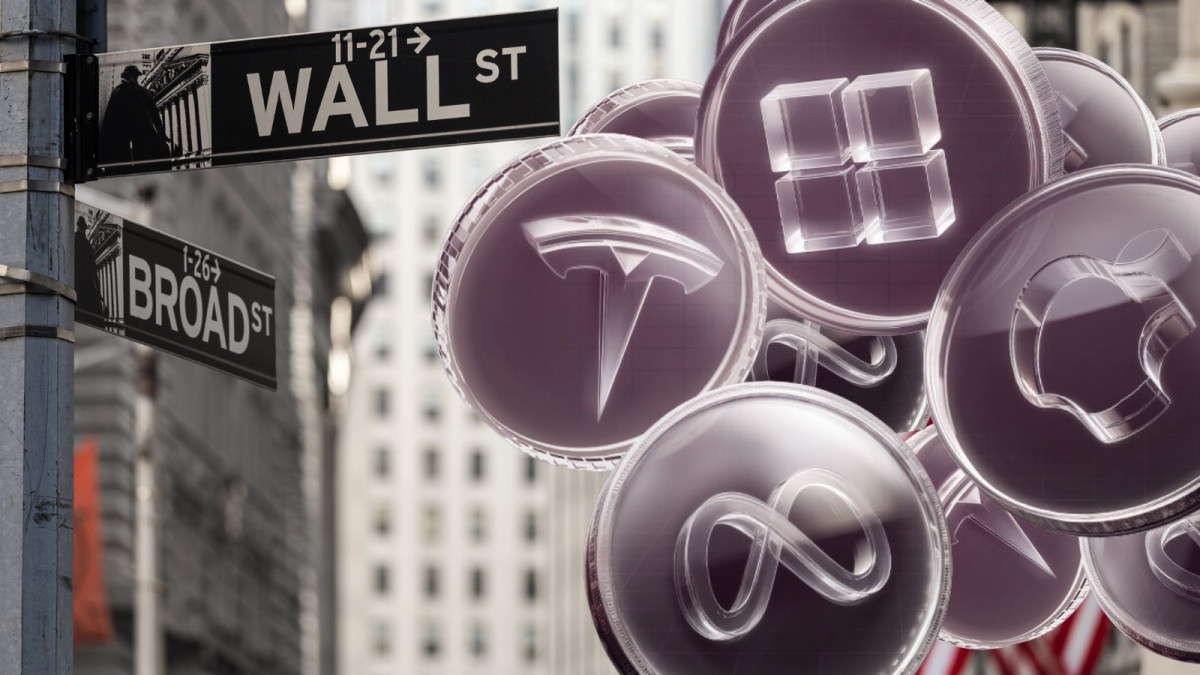
Wall Street Is Going To Tokenize Everything

There was a version of this story...told many moons ago that gets told as a prediction. Some future moment when the old guard of finance finally meets crypto on equal footing, when the suits and the degens find common ground, when a BlackRock executive and a DeFi protocol share the same balance sheet. Well that story is now pretty outdated...it's no longer some vision of an oracle peering into a crystal ball. We are already living in it. The future is here.
What we are seeing happen in global finance with tokenization is not some pilot program or a hedge. It is a structural transformation, and it is accelerating faster than most people outside of these two worlds seem to understand. Wall Street is no longer on the outside looking in, just dipping their toes in, to test the water. They have taken the plunge.
The Old System Was Always Broken
Here is something traditional finance never really wanted to say out loud: the infrastructure holding it together is ancient, slow, and held up largely by institutional inertia. Settlements that take days. Liquidity locked to six-and-a-half-hour trading windows. Layers of intermediaries, each one clipping a fee, each one adding time. For the largest players, those inefficiencies were baked into the cost of doing business. For everyone else, especially retail investors in markets outside the U.S., they were just walls.
Blockchain does not fix all of this overnight. But it offers something that legacy systems fundamentally cannot: a shared, programmable, real-time record of ownership that does not require three middlemen to reconcile. The World Economic Forum, in its 2025 report on asset tokenization, described the transition as potentially the next major phase in the development of financial market architecture, drawing a comparison to the shift away from paper certificates in the 1960s. That is not a crypto inside touting to his followers on X. That is the WEF stating how tokenization could transform finance.
When even the most establishment-facing institutions are framing this as a generational infrastructure shift, it's probably worth paying attention to.
The Institutions Are Not Coming. They Are Here.
BlackRock has a tokenized fund on Ethereum. JPMorgan launched a second tokenized money market product backed by U.S. Treasuries. Fidelity brought its own Digital Interest Token on-chain. Franklin Templeton has been quietly building its tokenized money market fund, BENJI, across multiple blockchains for years. These are live products managing real capital.
The total market for tokenized real-world assets crossed $75 billion in 2025. Projections from market analysts put the long-term ceiling at $18.9 trillion by 2033, and some estimates, citing the total addressable market of traditional finance, go much higher. Larry Fink has publicly stated, more than once, that he believes every financial asset can eventually be tokenized. When the CEO of the world's largest asset manager says that with conviction, the rest of the industry listens.The total crypto market sits at just shy of $2.6 trillion right now, to add some perspective to the type of volume tokenization can bring to the space.
And the whole idea behind this is not ideological. It is practical. Blockchain cuts settlement time, removes redundant intermediaries, enables fractional ownership, and allows assets to be composable across different financial products. For institutions moving hundreds of billions, those efficiency gains compound into something very significant, very quickly.
xStocks and the Part Where It Gets Really Interesting
Tokenized treasuries and money market funds are the institutional on-ramp. But the development that best captures where all of this is truly heading is xStocks, and it is worth understanding why it matters as much as it does.
Launched in June 2025 by Backed Finance, a Swiss RWA issuer, xStocks put more than 60 fully collateralized U.S. equities on Solana as SPL tokens. Apple. Tesla. Nvidia. Amazon. Each one backed 1:1 by real shares held under regulated custody. Not synthetic. Not a derivative. The actual stock, on-chain. Available the same day on Kraken and Bybit to users in over 185 countries, and within hours, live across Solana's DeFi ecosystem on Raydium, Jupiter, and Kamino.
The numbers since launch have been hard to argue with. Over $25 billion in total transaction volume. More than 80,000 unique on-chain holders. The platform has since expanded to 100 fully backed listings, and xStocks recently launched xChange, a unified execution layer for tokenized equities running 24/5 across Ethereum and Solana with atomic settlement built in. And we'll go back to the numbers. xStocks is amazing. It's done over $25 billion in volume. But daily stock market volume just in the U.S. is roughly $500-700 billion. Daily. Just in the U.S. Starting to get the big picture here? The much, much bigger picture?
What makes this genuinely different from everything that came before it is composability. With a brokerage account, you own a stock and that is more or less the end of the story. With xStocks inside Solana's DeFi ecosystem, you can use Nvidia as collateral in a lending protocol, provide liquidity with Apple against a stablecoin, or swap Tesla for SOL without touching a broker, a clearinghouse, or a trading window. That kind of programmable financial infrastructure does not exist in traditional markets. It simply never has.
Who This Actually Opens the Door For
For investors in the U.S., this is interesting. For investors everywhere else, it is potentially transformative. Access to U.S. equity markets has historically required meeting regulatory hurdles, working through licensed brokers, and navigating banking infrastructure that many parts of the world simply do not have. xStocks changes that math entirely. Trading starts at one euro. Dividends reinvest automatically. No broker required. No minimum account size. Just a wallet and a connection.
Franklin Templeton's partnership with Kraken, announced in early 2026, is another data point worth noting here. The two are exploring on-chain versions of Franklin's financial products, including tokenized stocks, yield instruments, and compliant custody solutions. A legacy asset manager and a crypto exchange building joint infrastructure is the kind of thing that a few years ago would have sounded like a very optimistic projection. Now it is a press release.
The Narrative Has Shifted. Permanently.
Crypto spent a long time fighting to be taken seriously by traditional finance. That fight is over, and crypto won it on the merits. What is replacing it is something more interesting: a negotiation over what the merged system actually looks like, who controls it, and how fast it scales.
The regulatory environment is improving. Interoperability between chains is being worked out. Liquidity in tokenized asset markets is growing month over month. The WEF framed the barriers as real but solvable, pointing to legacy infrastructure integration, inconsistent global standards, and cross-chain friction as the remaining friction points. None of those are permanent problems. They are engineering and coordination challenges, and the talent and capital now focused on solving them is enormous.
The General Manager of xStocks said it about as cleanly as it can be said: the question is no longer whether equities belong on-chain, but how fast they can be scaled. With 100 listings and $25 billion in volume already behind the platform, the model is proven. The next stage is expansion to every major U.S. equity and, eventually, global equities across international markets.
That is not a roadmap for some distant future version of crypto. That is the roadmap for the next few years. And if the last twelve months are any indication, it will probably move faster than anyone is currently projecting, including myself. As bullish as I am on all of this, I have a feeling that the transition to tokenize the world will be bigger than anything I could ever imagine.

Jupiter, Bitwise Launch Institutional USDe Lending Market

Jupiter, the Solana-based decentralized finance platform, has partnered with crypto asset manager Bitwise Asset Management and decentralized lending infrastructure protocol Fluid to launch an Ethena (USDe) focused lending market on the Jupiter platform.
The partnership will see the launch of an institutional grade USDe lending market on Jupiter’s lending platform, with Bitwise serving as the curator of the new market, setting risk parameters and overseeing operations, while Fluid powers the lending infrastructure.

By assigning USDe lending curation responsibilities to Bitwise, a traditional finance asset management firm, Jupiter aims to achieve institutional grade credibility and easier access to large scale institutional capital, with the potential for the market to grow into the billions of dollars.
“USDe is an institutional grade savings product built for scale. By combining Jupiter Lend's advanced lending infrastructure with Bitwise's asset management expertise, we have created an efficient USDe market ready for DeFi and institutional adoption,” said Guy Young, founder and chief executive officer of Ethena Labs.
Before now, institutional capital and DeFi lending mostly operated separately. However, with the launch of this USDe lending market for institutional access, all entities involved, including TradFi and DeFi participants, can work together: Jupiter providing the lending market, Bitwise curating the market, Ethena supplying the asset, and Fluid powering the infrastructure.
“Now more than ever, it is imperative that we take DeFi risk seriously. That is precisely why we are excited to partner with Bitwise, who bring both the expertise and the institutional credibility needed to help scale on chain lending from a niche into the default way to do finance,” said Kash Dhanda, chief operating officer of Jupiter.
“And by working with Ethena and Fluid, two of the most technically innovative teams in the space, we are thrilled to deliver a product experience like no other.”
Institutions Double Down on DeFi
With DeFi growing rapidly and its TVL reaching new highs of around $150 billion to $225 billion in 2025, there has been an increase in the number of institutions entering and doubling down on DeFi.
Institutional capital reportedly made up around 11.5% to 20% of DeFi volume or lending TVL in parts of 2025, with institutions like BlackRock, Bitwise, and JPMorgan Chase doubling down on real world asset tokenization and stablecoins.
Crypto’s Moment: The Shift Has Happened



Bitget To Offer Exposure To SpaceX IPO

Crypto exchange Bitget has launched a new product called IPO Prime, and its debut offering could, quite literally, be a moon shot. It's preSPAX, a tokenized instrument giving retail investors synthetic exposure to SpaceX ahead of what could be the largest initial public offering in stock market history.
SpaceX filed confidentially with the U.S. Securities and Exchange Commission on April 1, targeting a June 2026 listing at a valuation of roughly $1.75 trillion. Yes, you read that right. If that figure holds at the close of the first trading day, SpaceX would rank as the sixth most valuable publicly traded company on earth, behind only Nvidia, Apple, Alphabet, Microsoft and Amazon. The deal is being internally codenamed "Project Apex" and has drawn 21 banks competing for underwriting roles, according to Reuters.
What preSPAX Actually Is
Worth pausing on the structure here, because the word "exposure" does a lot of heavy lifting in the marketing and isn't quite what you would expect in traditional terms. preSPAX, issued through Republic, which is a tokenized private markets platform valued at over $1 billion, is a synthetic instrument. It tracks a reference index tied to SpaceX's economic performance after a qualifying event, such as an IPO or acquisition. Holders receive no equity, no voting rights, and no direct ownership stake in SpaceX. The company itself has not endorsed or authorized the product in any way.
The subscription window opens April 18 and closes April 21, with token distribution and OTC trading scheduled to begin on the same day it closes. Bitget has set aside 94,000 tokens priced at $650 each, implying a total subscription value of around $61.1 million and an implied SpaceX valuation of $1.5 trillion for the purposes of the sale.
Bitget CEO Gracy Chen described the launch by saying that, "Pre-IPO exposure used to be limited to small circles, but tokenization has changed that," she said in a statement. "preSPAX is our first offering and we will be bringing more such opportunities to our users this year." The exchange has already signaled plans to add OpenAI and xAI tokens to the platform by Q3 2026.
SpaceX Is A Financial Rocket Ship
For those keeping track, SpaceX's valuation has moved at a velocity that mirrors its own rockets. The company was worth roughly $46 billion in 2020. By early 2025 that figure had ballooned to $800 billion. Then came February 2026, and with it, SpaceX's all-stock acquisition of Elon Musk's AI venture xAI, a deal that reset the combined entity's valuation at $1.25 trillion overnight. Six weeks later, the IPO target sits at $1.75 trillion.
The core revenue driver is Starlink. By the end of 2025, the satellite internet constellation had accumulated 9.2 million active subscribers across 125 countries, doubling its user base in under 15 months and generating north of $10 billion in annual revenue. Analysts at Bloomberg and Quilty Space project that figure could climb to somewhere between $15.9 billion and $24 billion in 2026. Morgan Stanley analyst Adam Jonas, who has tracked space equities for over a decade, has been vocal: Starlink alone, he argues, would justify a $500 billion valuation as a standalone business.
Layer in the launch monopoly, Starship's development trajectory, and the xAI integration, and the $1.75 trillion figure becomes at least a coherent argument, if not an easy one to accept on traditional metrics. At that valuation, SpaceX trades at roughly 90x 2025 revenue of $15.5 billion. For context, Nvidia, the AI darling of the current cycle, trades at around 30x forward revenue. Federal contract data compiled by FedScout shows SpaceX has racked up more than $24.4 billion in government awards since 2008, spanning NASA, the Air Force and Space Force.
Crypto And Wall Street
The push to bridge crypto infrastructure and traditional capital markets has been accelerating across the industry. Coinbase launched stock trading at the end of 2025 and repositioned its wallet as an "everything app." Kraken rolled out 11,000 US-listed stocks and ETFs with commission-free trading in April 2025. Bitpanda added around 10,000 stocks and ETFs to its platform in January. Republic, the partner behind preSPAX, previously launched rSPAX Mirror Tokens on Solana for as little as $50 per unit.
The competitive landscape for pre-IPO SpaceX exposure is getting crowded fast. On the crypto side, Solana-based PreStocks and Orderbook offer comparable products. On the traditional side, Forge Global, EquityZen and Nasdaq Private Market all provide secondary market access to SpaceX shares, though exclusively to accredited investors. That last detail is where the regulatory picture gets a bit fuzzy.
Risks Probably Worth Reading Twice
The structure behind preSPAX runs three layers deep: Bitget, then Republic, then the reference index tied to SpaceX performance. Settlement depends on the lockup period of the underlying debt asset expiring after a SpaceX IPO, at which point the issuer converts value into tokens or USDT based on SpaceX's market price at the time.
The product's structure fits relatively cleanly under the SEC's Howey Test definition of a security: an investment in a common enterprise with profit expectations derived from the efforts of others. Traditional platforms like Forge Global restrict SpaceX pre-IPO access to accredited investors. Bitget's product, by contrast, is technically available to its reported 125 million users, many of whom will not meet that threshold. The SEC intensified its scrutiny of tokenized securities structures throughout 2025, and similar hybrid instruments have been flagged as operating in a gray area that can move quickly toward enforcement territory.
There is also the small matter of whether SpaceX actually lists on schedule. The company's confidential filing gives it runway to address SEC comments privately before going public with its prospectus, which must be released at least 15 days before the roadshow begins. Prediction markets currently have 88% odds on SpaceX closing its first trading day above a $1.3 trillion market cap, which says a lot about where sentiment sits right now. Whether preSPAX holders ultimately benefit depends entirely on how that listing plays out, and when.
For the broader market, a successful SpaceX debut at $1.75 trillion would be a seismic event. It would arrive as the sixth most valuable public company on earth, trigger automatic S&P 500 inclusion discussions within months, and likely dominate institutional allocation budgets at a moment when OpenAI and Anthropic are both queuing up their own landmark listings. The IPO wave is building. And Bitget, for one, is not waiting for it to break.
Swift and Chainlink Drive Blockchain in Banking

Swift and Chainlink just finished another interoperability trial focused on tokenized bond transactions, and it pulled in some serious European banking names: BNP Paribas Securities Services, Intesa Sanpaolo, and Société Générale FORGE all took part, testing how digital assets can move across both blockchain networks and traditional systems without anyone having to rebuild their existing infrastructure. The setup uses Swift's messaging standards alongside Chainlink's Cross-Chain-Interopability-Protocol (CCIP) so institutions can interact with blockchain networks through rails they already know and trust.

This builds on earlier work with over a dozen global institutions including Citi, BNY Mellon, and UBS Asset Management, who were already testing cross chain settlement on existing payment rails. The throughline across all of it is pretty straightforward: banks aren't going to adopt anything that forces them to gut their current systems, so if you can make tokenized asset settlement feel like a natural extension of what they already do, you've actually got a shot at making this work at scale.

Back in 2023, Swift ran experiments with Chainlink alongside Citi, BNY Mellon, BNP Paribas, Euroclear, Clearstream, and a bunch of others. They moved tokenized assets between wallets on the same chain, across public and private chains, and between different public chains entirely. CCIP validated the Swift requests, posted the transactions on chain, tracked execution, and sent confirmations back so banks saw one clean workflow on their end.
Then in 2024, under the Monetary Authority of Singapore's Project Guardian, Swift teamed up with UBS Asset Management and Chainlink to actually settle tokenized fund subscriptions and redemptions. Swift handled the fiat cash side, CCIP handled the on-chain asset side which shows digital asset transactions plugging into the payment systems that over 11,500 institutions across 200 countries already use, rather than needing some separate parallel settlement network nobody has actually built yet.
Legacy systems need to be able to talk to blockchains and right now you've got different CBDCs, tokenized deposits, and all kinds of assets sitting on different ledgers that can't be exchanged easily. By making CCIP the standard cross chain messaging layer, Swift gives banks a way to touch multiple chains without having to rebuild their whole stack every single time a new network shows up. There's identity work layered in too with GLEIF and Chainlink working on verifiable institutional IDs, and you can't have regulated cross border settlement without knowing who's on the other end.
Chainlink has already pulled in hundreds of millions in revenue, and it's coming from a mix of sources. A big chunk is large enterprises paying off-chain for platform access, integrations, usage, and maintenance. On top of that, there are on-chain fees from subscription and per call models, plus revenue sharing arrangements.
Chainlink's CCIP has been processing around $18 billion in monthly cross chain volume back in early 2026, which was up roughly 62 percent from the year before. JPMorgan and UBS both have live blockchain settlement pilots running on it.
March saw some solid activity with Coinbase activated a $5 billion cbBTC bridge to the Monad network, which basically brought their wrapped Bitcoin liquidity into Monad's DeFi ecosystem. Apps like Curvance and Neverland have already adopted related markets because of this. Coinbase also hooked up Chainlink's DataLink to bring premium exchange data on-chain for the first time, and that's powering billions in trading volume now. They were already using Chainlink for Proof of Reserve and as their exclusive bridging solution for wrapped assets, so this felt like the natural next move.
Institutions don’t have to directly use $LINK and can pay however works for them, whether that's fiat, stablecoins, gas tokens, or other digital assets which gets programmatically converted into LINK and deposited into the Chainlink Reserve. Node operators and service providers get paid out in LINK, and staking adds another layer of security on top of that. So, there is some design to keep creating demand for the token as usage grows, rather than just treating it as an afterthought.
Swift is the control panel for global banking, Chainlink CCIP is the router that speaks every blockchain's language, and banks keep doing what they do and the translation layer handles everything else.
Charles Schwab To Launch Spot Bitcoin & Ethereum Trading

Charles Schwab, the Texas-based brokerage giant with more than $12.2 trillion in assets under management, confirmed Friday it is on track to roll out spot Bitcoin and Ethereum trading for U.S. clients before the end of Q2. It is, by any measure, a significant moment for the digital asset industry, though the market's reaction has been muted so far.
"We remain on track to launch our spot crypto offer in the first half of 2026, starting with Bitcoin and Ethereum," a company spokesperson told reporters Friday. Clients looking for early access can now join a waitlist through the newly launched Schwab Crypto page, which has quietly appeared under the firm's Investment Products section online.
A Phased Rollout
CEO Rick Wurster, confirmed the launch will start in Q2 with a limited client pilot before widening to the broader investor base. Before that even happens, the firm plans to test the product internally with its own employees, a cautious approach that is very much in line with how Schwab tends to operate.
The service will be operated through Charles Schwab Premier Bank, SSB, a regulated banking subsidiary. Although, not everyone in the U.S. will have access at launch. Residents of New York and Louisiana are excluded from the signup form, due to tight state-level regulatory considerations that have long complicated crypto product rollouts in those markets.
What This Actually Means for Crypto Exchanges
The competitive implications here are real. Schwab is not some fintech startup trying to chip away at Coinbase's market share from the margins. This is a firm with tens of millions of existing retail and institutional clients who already trust it with their stocks, bonds, and retirement accounts. Bringing Bitcoin and Ethereum into that same account view, without needing a separate wallet or a new platform login, removes one of the biggest friction points keeping traditional investors on the sidelines.
Bloomberg ETF analyst Eric Balchunas has flagged pricing as the key variable to watch. Schwab already offers zero-commission stock and ETF trading. If the firm prices spot crypto below 50 basis points, the pressure on crypto-native exchanges could be significant, particularly for casual retail traders who are cost-sensitive and already comfortable inside the Schwab ecosystem.
Are Stablecoins Next?
Spot trading is likely just the opening move. Wurster signaled during an earnings call late last year that the firm wants exposure to stablecoins as well, describing them as something that will likely play a role in transacting on blockchains. A stablecoin offering, if it materializes, would put Schwab in even more direct competition with crypto-native platforms and potentially with payment networks.
The firm has also been expanding through acquisitions. Earlier this year, Schwab announced a $660 million deal to buy private shares platform Forge Global, aimed at giving clients access to pre-IPO investments. Wurster has said Schwab remains open to further deals in the crypto space if the right opportunity and valuation align.
Where Bitcoin and Ethereum Stand Right Now
At the time of writing, Bitcoin was trading near $67,000, down roughly 47% from its all-time high of $126,080. Ethereum sat around $2,050, off nearly 59% from its own peak set last August. Both assets have had a difficult few months, which makes the timing of Schwab's entry intriguing. The firm is coming in during a period of weakness, not euphoria, which could prove to be well-timed when the market recovers.
Schwab shares closed Thursday up about 1.5%, trading near $93.77, representing roughly a 19% gain over the past year. That compares favorably with Bitcoin's 18.5% decline over the same stretch. The brokerage's stock has, for now, outperformed the very asset class it is preparing to offer its clients.
Whether Schwab's entry into spot crypto ultimately proves to be a turning point for mainstream adoption, or just another incremental step in a long institutional migration into digital assets, remains to be seen.
Nasdaq and Kraken Are Building the Bridge Between Wall Street and DeFi

Wall Street and crypto have been circling each other for years. On Monday, they shook hands.
Nasdaq and Kraken's parent company Payward announced a partnership to develop what they're calling an equities transformation gateway, a piece of infrastructure designed to let tokenized versions of publicly listed stocks move between the traditional, regulated financial system and the open, permissionless world of decentralized finance. The deal is one of the most significant convergences between a legacy exchange operator and a major crypto platform the industry has seen, and it arrives at a moment when several of the world's biggest exchanges appear to be racing to plant flags in the tokenized securities space.
Nasdaq President Tal Cohen said the exchange believes tokenization "has the potential to unlock the benefits of an always-on financial ecosystem" and to improve how investors access markets and how issuers engage with shareholders. The equity token design, which Nasdaq expects to become operational in the first half of 2027, is designed to preserve issuer control, existing regulatory frameworks, and the underlying rights associated with company shares.
What's Actually Being Built
Nasdaq's equity token design is not just about putting a blockchain wrapper around a stock. The initiative is structured so that blockchain records are integrated directly into the issuer's official share register, meaning a transfer of the token represents an actual transfer of the underlying security itself. Full legal and regulatory equivalence is the goal, not a synthetic approximation of it.
Kraken's xStocks framework powers the permissionless side of that equation. Since launching less than a year ago, xStocks has processed more than $25 billion in total transaction volume, with over $4 billion of that settled directly on-chain. More than 85,000 unique holders across supported networks have used the product, which currently covers more than 70 tokenized equities and ETFs, each backed 1:1 by the underlying asset. Fractional shares are available from $1. Trading runs around the clock on-chain, and dividends flow back automatically as additional tokens.
Under the partnership, the equities transformation gateway will allow clients in eligible jurisdictions to swap tokenized equities between the regulated, permissioned Nasdaq environment and the permissionless DeFi ecosystem. Payward Services will handle KYC and AML onboarding for participants accessing the gateway. Kraken will serve as the primary settlement layer for Nasdaq equity token transactions for an initial period, in the markets where xStocks are available.
It's worth being precise about geography. xStocks are not registered under the U.S. Securities Act and are not available to U.S. persons or in the United Kingdom. The initial rollout targets Europe and other international markets where Payward holds the relevant registrations and licenses.
The Regulatory Foundation Is Already Laid
None of this is happening in a vacuum. Nasdaq filed a proposal with the SEC in September 2025 that sought to allow tokenized versions of its listed stocks and ETFs to trade alongside traditional shares and settle through the Depository Trust and Clearing Corporation. That proposal argued for working within existing rules rather than around them, a notable contrast to tokenization projects that have tried to carve out space outside traditional regulatory structures.
The regulatory environment has also shifted meaningfully. The SEC's 2026 Staff Statement on Tokenized Securities classifies tokenized equities the same as regular equity securities under federal law, giving the Nasdaq initiative a cleaner legal runway than it might have had even a year ago. SEC Chairman Paul Atkins has been publicly supportive of American leadership in digital financial technology, and the commission has asked staff to work with firms on tokenized securities distribution.
Nasdaq's equity token design is set up as an issuer-sponsored, voluntary program. Public companies listed on Nasdaq would be able to opt in as the framework develops. The exchange plans to engage issuers, transfer agents, regulators, and market infrastructure providers as the project evolves.
Kraken's Vertical Integration Play
For Kraken, the Nasdaq partnership is the latest move in what looks increasingly like a deliberate strategy to own the entire tokenized equity stack. In December 2025 the company acquired Backed Finance, the Swiss issuer that sits behind the xStocks product, deepening its vertical integration along the tokenization value chain. In February of this year it expanded xStocks to the 360X platform operated by Deutsche Boerse Group. And in late 2025 Kraken launched what it described as the world's first regulated tokenized equity perpetual futures, offering up to 20x leverage for non-U.S. clients across more than 110 countries.
Kraken also became the first crypto company to secure approval for a Federal Reserve master account, a regulatory win that drew criticism from several U.S. banking groups but also marked a genuine shift in how regulators are thinking about the boundary between crypto platforms and the traditional banking system. The company is separately targeting a public listing in 2026.
Arjun Sethi, Kraken's Co-CEO, framed the Nasdaq deal in terms of capital efficiency as much as access. His argument is that equities today sit largely frozen inside brokerage systems where their utility is limited to directional exposure and, in some cases, venue-specific margin. Tokenized equities on programmable infrastructure, he suggested, can function as collateral across a much broader set of trading, lending, and hedging environments simultaneously, without the capital fragmentation that comes when each venue requires isolated collateral deposits.
"When collateral can move programmatically between systems," Sethi said, "settlement friction decreases and capital can move more dynamically between strategies and markets."
The Race Is On
The Nasdaq-Kraken announcement does not exist in isolation. It arrived in a week that saw the Intercontinental Exchange, the parent company of the New York Stock Exchange, make a strategic investment in OKX at a reported $25 billion valuation, signing a deal to bring tokenized NYSE-listed stocks and crypto futures to OKX's platform. ICE separately announced development of a new digital trading platform combining the NYSE's Pillar matching engine with blockchain-based post-trade systems. That platform would support 24/7 trading of U.S.-listed equities and ETFs, instant settlement via tokenized capital, and stablecoin-based funding. ICE said it would seek regulatory approvals for the venue, with NYSE-linked tokenized shares targeting availability in the second quarter of 2026.
Nasdaq also separately announced a partnership with Seturion, the tokenized settlement platform operated by Boerse Stuttgart Group, to connect its European trading venues to infrastructure supporting trading and settlement of tokenized securities.
What's emerging is something that looked improbable even two years ago: a genuine competition among the world's largest exchange operators over who gets to own the infrastructure layer for tokenized securities. The race is less about whether tokenized equities will happen and more about which institutions get to control the plumbing.
If the Nasdaq-Kraken infrastructure reaches full operation, the implications for how capital markets function could be substantial. Tokenized equities with 24/7 on-chain settlement would, in theory, compress the settlement cycle that still takes two business days in conventional U.S. equity markets. Shareholders would retain full governance rights, including proxy voting and dividend entitlements, automated through smart contract logic rather than managed through layers of intermediaries.
For international retail investors in markets where traditional brokerage distribution is limited or expensive, access to tokenized U.S. equities through a crypto exchange represents a potentially meaningful expansion of the investable universe. Fractional share availability starting at $1 removes one of the practical barriers that has kept some investors out of high-priced stocks.
The more speculative scenario, and the one Sethi seems most interested in, is what happens when tokenized equities can be used as collateral across DeFi lending protocols, perpetual futures markets, and other on-chain financial applications. The argument is that programmable collateral is more efficient than static collateral, and that the firms which build the infrastructure to move it across venues will capture a meaningful slice of the value created.
There's obviously a long way to go. The Nasdaq equity token design isn't expected to be operational until mid-2027. Regulatory approvals still need to be worked through. Issuer adoption is voluntary and therefore uncertain. The U.S. market itself remains off-limits for xStocks. And building genuine liquidity in tokenized equity markets, as Sethi himself acknowledged, requires more than technology alone.
Still, the direction of travel is increasingly clear. The question is no longer whether traditional exchange operators will engage with blockchain-based infrastructure. It's who gets there first, and whose plumbing ends up underneath everyone else's trades.
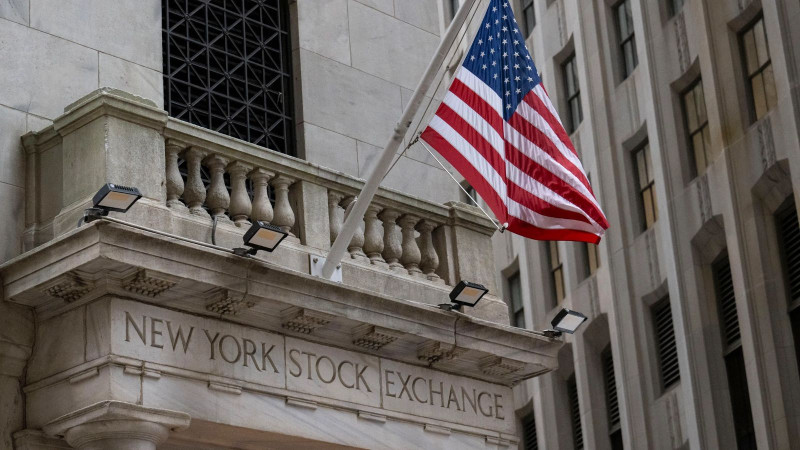
NYSE Plans 24/7 Tokenized Stock and ETF Trading on Blockchain

The New York Stock Exchange is imagining a world without a closing bell.
NYSE, through its parent company Intercontinental Exchange, is building a blockchain-powered platform that would allow stocks and ETFs to trade 24/7 in tokenized form. If regulators sign off, it would be one of the clearest signals yet that traditional finance is no longer just experimenting with crypto infrastructure, it is actively rebuilding around it.
The pitch is straightforward but far-reaching. Take real stocks and ETFs, represent them as blockchain tokens, and let them trade continuously. No market open. No market close. No waiting a day for settlement to finish in the background.
For an institution that has defined how markets work for more than 200 years, this is a radical shift.
This Is Not a Side Project
This is not NYSE dipping a toe into crypto.
ICE is designing a separate trading platform that merges NYSE’s core matching technology with blockchain-based settlement, custody, and clearing. Orders still look familiar, bids and asks meet in an order book, but what happens after execution is where things change.
Instead of the standard T+1 settlement cycle, ownership could move almost instantly onchain. Stablecoins are expected to handle funding, allowing trades to clear at any hour without relying on traditional banking rails. Investors may also be able to place dollar-based orders instead of buying whole shares, making fractional ownership the default rather than an add-on.
Structurally, it starts to resemble how crypto markets already operate, just wrapped around regulated assets.
Why Tokenized Stocks Are a Big Deal
Tokenized stocks are not new, but they have mostly lived at the edges of the financial system.
What changes here is credibility. When the NYSE moves toward tokenization, blockchain stops looking like an alternative system and starts looking like core infrastructure.
Tokenization allows equities and ETFs to trade globally, settle instantly, and operate without the friction built into traditional market plumbing. It removes time zone barriers. It compresses settlement risk. It turns stocks into programmable financial objects.
For investors who already trade crypto around the clock, the idea that equities shut down every afternoon feels increasingly outdated.
Crypto Trained the Market to Expect 24/7
This move did not come out of nowhere.
Crypto markets have normalized nonstop trading. Platforms like Robinhood and Coinbase are already pushing toward tokenized equities and extended hours. Asset managers are testing onchain settlement in private markets and fund structures.
Meanwhile, traditional clearing and settlement remain slow, expensive, and operationally complex. Blockchain promises efficiency, but only if institutions are willing to rethink the system rather than patch it.
NYSE’s entry into this space suggests legacy exchanges see the risk clearly. If liquidity, trading volume, and investor attention move onchain elsewhere, exchanges that stay static risk being left behind.
Regulation Decides Everything
For now, all of this lives in proposal form.
Tokenized stocks are still securities. That means U.S. securities laws apply, even if the assets settle on a blockchain. Continuous trading raises hard questions around surveillance, volatility controls, investor protections, and systemic risk. Stablecoins add another regulatory layer.
How regulators respond to an NYSE-backed tokenized market will likely shape how far and how fast tokenization spreads across public markets.
What Happens If This Actually Works
If this platform launches and gains traction, it could reshape how markets function.
Stocks that trade nonstop would change liquidity patterns and price discovery. Global participation would increase. Settlement could become faster, cheaper, and more transparent. Post-trade infrastructure might finally catch up with the digital age.
There are tradeoffs. Continuous markets can amplify volatility. Liquidity could fragment across venues. Retail investors may face more noise and fewer natural breaks.
Still, the direction feels unmistakable.
Crypto infrastructure is no longer sitting outside the financial system. It is being welded into it.
The NYSE is not turning stocks into memecoins. But it is signaling that the future of equities looks more onchain, more global, and far less dependent on a bell ringing at 4 p.m. Eastern.
The wall between crypto markets and traditional markets is thinning fast, and one of the oldest institutions in finance just acknowledged it.