#real world assets
Ripple, SettleMint Partner to Boost Custody and Tokenization in Asia Pacific

Ripple has partnered with SettleMint, a global leader in digital asset lifecycle management, to offer financial institutions in the Asia Pacific region a unified solution for custody and tokenized asset management across different asset lifecycles.

The partnership combines Ripple’s institutional grade digital asset custody infrastructure with SettleMint’s Digital Asset Lifecycle Platform (DALP), giving institutions a more compliant way to custody and manage their assets through a single solution rather than multiple vendors.
“Financial institutions across Asia Pacific are putting digital assets to work. They are asking how to do more without stitching together separate solutions for custody, issuance and governance,” said Fiona Murray, Managing Director, Asia Pacific at Ripple. “This partnership gives them the foundation to roll out digital assets and future proof them from there: Ripple Custody to hold and govern those assets, and SettleMint to manage their entire lifecycle.”
Although the platform will initially be available to financial institutions in Asia, it will subsequently expand to other markets as institutional demand for the platform increases.
About Ripple’s Custody and SettleMint’s DALP
Ripple’s custody infrastructure provides financial institutions, such as banks, asset managers and fintechs, with a secure way to manage their digital assets, including stablecoins and real world assets, without compromising security or control.
To strengthen the security and flexibility of this infrastructure, Ripple uses multi party computation (MPC) and hardware security modules (HSMs) for private key management, with options for self custody or cloud and on premises deployments.
The Digital Asset Lifecycle Platform, or DALP, is an institutional grade, composable digital asset platform designed by SettleMint to help financial institutions manage the lifecycle of tokenized assets.
By integrating with Ripple’s Custody infrastructure, DALP provides a unified way for institutions to manage the entire asset lifecycle, including the seamless handling of issuance, settlement and asset servicing from a single platform
Exodus Partners With Ondo To Launch Tokenized Stocks

Exodus Movement Inc. (NYSE American: EXOD), a publicly traded financial technology company and developer of the Exodus wallet, has partnered with Ondo Finance to launch Exodus Markets, a platform for trading tokenized assets.

With Exodus Markets, users can now buy and sell more than 200 tokenized stocks, exchange-traded funds (ETFs), and real-world assets directly in the Exodus wallet app on the Solana blockchain.
"Tokenized stocks are one of the most important developments in modern finance," said JP Richardson, CEO and co-founder of Exodus.
"For the first time, our customers can trade and hold tokenized equities with the same direct control and global access they expect from crypto. Exodus is becoming the front door to every asset you hold, without compromising on trust and control."
The launch of Exodus Markets aligns with Exodus’s goal of transforming from a custodial wallet into a full financial platform that allows users to trade, earn rewards, send, spend, and manage money.
As part of its efforts to become a comprehensive financial app, Exodus launched Exodus Pay, a self-custodial payment feature within the Exodus app that enables users to transact with digital assets, including stablecoins, for everyday purchases. The company also launched XO Cash, a stablecoin pegged to the U.S. dollar.
The Tokenization Space
The tokenization space, particularly real-world assets (RWAs), has experienced significant growth over the past 1 to 2 years. Excluding stablecoins, the tokenization sector grew from roughly $5 billion to $6 billion at the start of 2025 to $27 billion to $31 billion or more by mid 2026, representing an increase of more than 400% over a period of 15 to 18 months.
Several institutions are also entering this growing sector, with Bitget most recently launching Reality, its real-world asset (RWA) platform. Kraken has also launched xChange, an on-chain trading engine designed for trading tokenized equities. MetaMask, Trust Wallet, Blockchain.com, and Robinhood have also made strategic moves to enter the sector, partnering with RWA firms and rolling out tokenized assets and stocks.
Given the level of growth and adoption the real-world asset and tokenization sector has seen so far, several projections have been made regarding its future potential. The Boston Consulting Group and Ripple have projected that the sector could be worth more than $15 trillion by 2030.
Bitget Launches Reality for Tokenized Stocks and ETFs

Bitget, a global cryptocurrency exchange, has launched Reality, a real-world asset (RWA) platform that gives users access to tokenized traditional financial assets.
With Reality, Bitget aims to bring tokenized U.S. stocks and exchange-traded funds into its trading ecosystem, enabling access to financial instruments that have traditionally been difficult to access due to geographic restrictions, market hours, and settlement barriers.

The launch aligns with Bitget’s Universal Exchange (UEX) roadmap, which aims to transform Bitget from a crypto exchange into a global trading platform that allows users to trade cryptocurrencies, tokenized stocks, exchange-traded funds, commodities, forex, and other real-world assets through a single account using cryptocurrencies.
“Reality is built around Bitget’s 10% vision: by 2030, nearly 10% of financial assets could exist in tokenized form,” said Gracy Chen, Bitget CEO. “Stablecoins, faster blockchain settlement, and growing interest from major exchanges are pushing RWAs from experiment to market infrastructure. Reality is Bitget’s step toward making that future accessible to global users.”
How Reality Will Work
Reality will be natively integrated into Bitget and serve as the exchange’s specialized arm for tokenizing traditional financial instruments. It will also serve as the primary layer for standardizing traditional market value in the crypto economy.
The Reality platform will issue rTokens to users, which are on-chain representations of publicly traded equities and exchange-traded funds (ETFs). Each rToken will be backed 1:1 by real shares held with a FINRA-registered, SIPC-protected U.S. broker-dealer.
To ensure the highest level of transparency, the Reality platform will be regularly audited by third-party auditors. These audits will provide a live proof-of-asset dashboard and CPA-level audit reports to ensure verifiable asset integrity at all times.
Reality will initially focus on providing tokenized exposure to selected U.S. stocks and ETFs, with the team introducing additional tokenized assets as the platform expands. However, access to the platform, including user eligibility, product availability, and trading features, will depend on applicable geographical laws and regional restrictions.
Bitget’s entry into the RWA tokenization industry comes as several institutions, including Payward, Bitwise, and Nasdaq, are tapping into the growing sector. The RWA tokenization market is currently valued at around $34 billion, with the Boston Consulting Group projecting it to reach $16 trillion by 2030.

JPMorgan Files Tokenized Treasury Fund on Ethereum

JPMorgan Chase filed paperwork Tuesday with the U.S. Securities and Exchange Commission to launch a new tokenized money market fund on Ethereum, marking the bank's second push into blockchain-based investment products and the latest signal that Wall Street is serious about putting traditional finance on-chain.
The proposed fund, called the JPMorgan OnChain Liquidity-Token Money Market Fund and carrying ticker JLTXX, would issue digital tokens on the Ethereum blockchain representing shares backed by short-term U.S. Treasuries, cash, and overnight repurchase agreements. The fund's underlying blockchain infrastructure would be operated by Kinexys Digital Assets, the bank's blockchain unit that was formerly known as Onyx.
Built for the GENIUS Act
What makes this filing a bit different from typical money-market launches is who it's designed for. JPMorgan has structured JLTXX specifically to satisfy reserve asset requirements under the GENIUS Act, the U.S. legislation aimed at bringing stablecoin issuers under a regulatory framework. In short, the fund is positioned as a yield-bearing reserve vehicle for stablecoin firms looking for compliant, on-chain Treasury exposure.
That's a strategically significant market. Stablecoin supply has surged past $303 billion as of May 2026, with a large chunk of that liquidity sitting idle in exchange wallets generating nothing. When a bank the size of JPMorgan launches a regulated, on-chain money market product, this changes the game for institutional stablecoin issuers.
BlackRock Moved First, Then JPMorgan Followed Days Later
Just days before JPMorgan's Tuesday filing, BlackRock, the world's largest asset manager overseeing roughly $14 trillion, submitted its own pair of SEC filings tied to tokenized Treasury products. One of those filings outlined the BlackRock Daily Reinvestment Stablecoin Reserve Vehicle, designed to hold cash and short-term Treasuries and issue what the firm is calling OnChain Shares. Another filing proposed adding an Ethereum-based tokenized share class to its existing $7 billion Select Treasury-Based Liquidity Fund, with BNY Mellon maintaining official ownership records on-chain using ERC-20 token standards.
BlackRock CEO Larry Fink has been vocal about this for a while. He's argued publicly that blockchain-based settlement can compress transaction cycles, enable round-the-clock trading, and add transparency to capital markets. The firm is now acting on this, and at scale. BlackRock's existing BUIDL fund already manages more than $2.5 billion across eight blockchain networks including Ethereum, Solana, and Avalanche, and is increasingly being used as collateral across crypto markets.
A Market That Has Tripled in a Year
The broader tokenized real-world asset sector has crossed $30 billion in total value, more than tripling over the past twelve months. Tokenized U.S. Treasuries alone represent $14 billion of that, with Ethereum holding over $8 billion of the total. These aren't little numbers anymore.
Goldman Sachs and BNY Mellon have also announced tokenization initiatives in recent months. Just last week, JPMorgan's Kinexys platform joined Mastercard, Ripple, and Ondo Finance in completing the first cross-border, cross-bank redemption of a tokenized U.S. Treasury fund, settling the transaction on the XRP Ledger in under five seconds. This is another huge step... it's one thing to file an SEC registration, quite another to actually run a live settlement across borders in the time it takes to read this sentence.
The Race Is On
For context on how quickly this space is evolving, a Boston Consulting Group and Ripple joint projection estimates the tokenized asset market could reach $18.9 trillion by 2033. Whether or not that number proves accurate, the direction is pretty clear. Major banks are not waiting for the market to come to them.
JPMorgan seeded its first tokenized fund, the OnChain Net Yield Fund (MONY), with $100 million of its own capital after launching it through its $4 trillion asset management unit. JLTXX represents the bank's next step, this time aimed squarely at the emerging stablecoin compliance market rather than traditional qualified investors.
The filings from JPMorgan and BlackRock within days of each other are not a coincidence. Regulatory clarity, combined with the sheer scale of idle stablecoin liquidity looking for a compliant home, has created an opening. Wall Street is moving quickly to fill it, and the tokenization race is looking less like a crypto experiment and more like the next phase of institutional finance.
Bitwise Takes Control of Superstate’s USCC Crypto Fund

Global crypto asset manager Bitwise will be taking full control of Superstate’s Crypto Carry Fund (USCC), a tokenized private fund that provides qualified purchasers with exposure to crypto-based strategies.
The announcement, made via a Bitwise press release, will see the asset manager transition into the role of investment manager of the fund, with the fund renamed the Bitwise Crypto Carry Fund. Although Bitwise will assume management of the fund, Superstate will continue to operate the fund’s on-chain infrastructure, ensuring no disruption during the transition process.

"Capital markets are moving on-chain. It's happening fast, and tokenized investment strategies are a core part of this platform shift," said Hunter Horsley, Bitwise CEO.
"Traditional and crypto native institutions are increasingly using tokenized funds to benefit from their 24/7 trading, utility in decentralized finance, transparency, and efficiency. We're thrilled to join Superstate's best-in-class infrastructure with Bitwise's track record in crypto asset management to continue to expand access to the full range of opportunities for investors in crypto."
This partnership between Bitwise and Superstate will see Bitwise deepening its presence in the tokenized fund market, with Superstate taking a step back from tokenized fund management to focus on FundOS, its platform used to manage on-chain tokenized funds.
The transition is expected to be completed by June 1, 2026, with the fund’s ticker USCC remaining unchanged, as well as its smart contract and token address.
USCC and the Tokenized Funds Market
USCC is Superstate’s tokenized private fund that provides qualified investors exposure to crypto basis and cash and carry trading strategies, allowing them to earn yield from the persistent premium of crypto futures prices over spot prices.
The fund currently has assets under management exceeding $267 million, with over $100 million of the fund’s assets being deployed across notable decentralized finance platforms, including Aave and Kamino. Investors include hedge funds, venture capital firms, high-net-worth crypto users, and blockchain protocols.
The tokenized funds market has also grown remarkably, with the global tokenized and real-world assets market reaching $33.5 billion. The market is projected to reach $18.9 trillion by 2031 and has attracted several notable traditional finance companies, including BlackRock, Franklin Templeton, and JPMorgan.
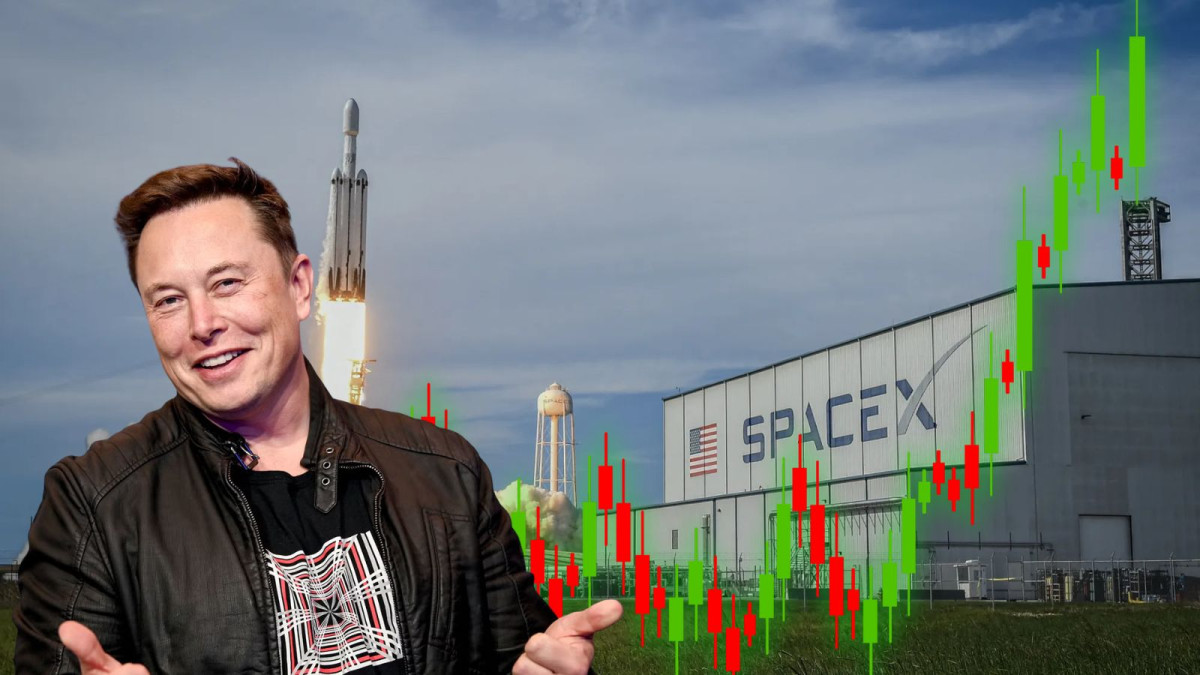
Bitget To Offer Exposure To SpaceX IPO

Crypto exchange Bitget has launched a new product called IPO Prime, and its debut offering could, quite literally, be a moon shot. It's preSPAX, a tokenized instrument giving retail investors synthetic exposure to SpaceX ahead of what could be the largest initial public offering in stock market history.
SpaceX filed confidentially with the U.S. Securities and Exchange Commission on April 1, targeting a June 2026 listing at a valuation of roughly $1.75 trillion. Yes, you read that right. If that figure holds at the close of the first trading day, SpaceX would rank as the sixth most valuable publicly traded company on earth, behind only Nvidia, Apple, Alphabet, Microsoft and Amazon. The deal is being internally codenamed "Project Apex" and has drawn 21 banks competing for underwriting roles, according to Reuters.
What preSPAX Actually Is
Worth pausing on the structure here, because the word "exposure" does a lot of heavy lifting in the marketing and isn't quite what you would expect in traditional terms. preSPAX, issued through Republic, which is a tokenized private markets platform valued at over $1 billion, is a synthetic instrument. It tracks a reference index tied to SpaceX's economic performance after a qualifying event, such as an IPO or acquisition. Holders receive no equity, no voting rights, and no direct ownership stake in SpaceX. The company itself has not endorsed or authorized the product in any way.
The subscription window opens April 18 and closes April 21, with token distribution and OTC trading scheduled to begin on the same day it closes. Bitget has set aside 94,000 tokens priced at $650 each, implying a total subscription value of around $61.1 million and an implied SpaceX valuation of $1.5 trillion for the purposes of the sale.
Bitget CEO Gracy Chen described the launch by saying that, "Pre-IPO exposure used to be limited to small circles, but tokenization has changed that," she said in a statement. "preSPAX is our first offering and we will be bringing more such opportunities to our users this year." The exchange has already signaled plans to add OpenAI and xAI tokens to the platform by Q3 2026.
SpaceX Is A Financial Rocket Ship
For those keeping track, SpaceX's valuation has moved at a velocity that mirrors its own rockets. The company was worth roughly $46 billion in 2020. By early 2025 that figure had ballooned to $800 billion. Then came February 2026, and with it, SpaceX's all-stock acquisition of Elon Musk's AI venture xAI, a deal that reset the combined entity's valuation at $1.25 trillion overnight. Six weeks later, the IPO target sits at $1.75 trillion.
The core revenue driver is Starlink. By the end of 2025, the satellite internet constellation had accumulated 9.2 million active subscribers across 125 countries, doubling its user base in under 15 months and generating north of $10 billion in annual revenue. Analysts at Bloomberg and Quilty Space project that figure could climb to somewhere between $15.9 billion and $24 billion in 2026. Morgan Stanley analyst Adam Jonas, who has tracked space equities for over a decade, has been vocal: Starlink alone, he argues, would justify a $500 billion valuation as a standalone business.
Layer in the launch monopoly, Starship's development trajectory, and the xAI integration, and the $1.75 trillion figure becomes at least a coherent argument, if not an easy one to accept on traditional metrics. At that valuation, SpaceX trades at roughly 90x 2025 revenue of $15.5 billion. For context, Nvidia, the AI darling of the current cycle, trades at around 30x forward revenue. Federal contract data compiled by FedScout shows SpaceX has racked up more than $24.4 billion in government awards since 2008, spanning NASA, the Air Force and Space Force.
Crypto And Wall Street
The push to bridge crypto infrastructure and traditional capital markets has been accelerating across the industry. Coinbase launched stock trading at the end of 2025 and repositioned its wallet as an "everything app." Kraken rolled out 11,000 US-listed stocks and ETFs with commission-free trading in April 2025. Bitpanda added around 10,000 stocks and ETFs to its platform in January. Republic, the partner behind preSPAX, previously launched rSPAX Mirror Tokens on Solana for as little as $50 per unit.
The competitive landscape for pre-IPO SpaceX exposure is getting crowded fast. On the crypto side, Solana-based PreStocks and Orderbook offer comparable products. On the traditional side, Forge Global, EquityZen and Nasdaq Private Market all provide secondary market access to SpaceX shares, though exclusively to accredited investors. That last detail is where the regulatory picture gets a bit fuzzy.
Risks Probably Worth Reading Twice
The structure behind preSPAX runs three layers deep: Bitget, then Republic, then the reference index tied to SpaceX performance. Settlement depends on the lockup period of the underlying debt asset expiring after a SpaceX IPO, at which point the issuer converts value into tokens or USDT based on SpaceX's market price at the time.
The product's structure fits relatively cleanly under the SEC's Howey Test definition of a security: an investment in a common enterprise with profit expectations derived from the efforts of others. Traditional platforms like Forge Global restrict SpaceX pre-IPO access to accredited investors. Bitget's product, by contrast, is technically available to its reported 125 million users, many of whom will not meet that threshold. The SEC intensified its scrutiny of tokenized securities structures throughout 2025, and similar hybrid instruments have been flagged as operating in a gray area that can move quickly toward enforcement territory.
There is also the small matter of whether SpaceX actually lists on schedule. The company's confidential filing gives it runway to address SEC comments privately before going public with its prospectus, which must be released at least 15 days before the roadshow begins. Prediction markets currently have 88% odds on SpaceX closing its first trading day above a $1.3 trillion market cap, which says a lot about where sentiment sits right now. Whether preSPAX holders ultimately benefit depends entirely on how that listing plays out, and when.
For the broader market, a successful SpaceX debut at $1.75 trillion would be a seismic event. It would arrive as the sixth most valuable public company on earth, trigger automatic S&P 500 inclusion discussions within months, and likely dominate institutional allocation budgets at a moment when OpenAI and Anthropic are both queuing up their own landmark listings. The IPO wave is building. And Bitget, for one, is not waiting for it to break.
Cardano's $80M Orion Fund Signals Major Growth Shift

Cardano is done waiting around. With a formal governance vote now cleared, the network’s community has approved the first phase of the Orion Fund, an $80 million venture-style initiative that marks one of the most ambitious bets the Cardano ecosystem has made to date. And it is refreshing.
The approval, which passed required thresholds from both delegated representatives (DReps) and the Constitutional Committee, kicks off a $15 million first deployment. That initial tranche draws from 50 million ADA out of the network’s treasury and will be managed by Draper Dragon, the blockchain-focused arm of Tim Draper’s venture network, with Draper University serving as an acceleration partner from its Silicon Valley campus.
But this isn’t a grant program. That’s the key difference worth paying attention to. Unlike Cardano’s Project Catalyst, the Orion Fund takes equity and token positions in ecosystem startups. In short, the protocol is acting more like a venture capital fund than a charitable grant foundation.
Structure Designed to Give Back
One of the more structurally clever elements of the Orion Fund is how it routes value back to the protocol. A special-purpose vehicle called Arouet Holdings, described as an ownerless entity, sits at the center of this. Returns generated through the fund flow back to limited partners, including the Cardano treasury, sll of this happens even before Draper Dragon takes profits. That feedback loop is deliberate: successful investments are designed to replenish and grow the treasury over time, not just benefit the fund’s managers.
The Cardano Foundation serves as constitutional administrator and provides technical support, but crucially, holds no management authority or investment decision-making power. That separation between governance and capital allocation is by design, and it preserves independence while keeping the Foundation accountable to the broader community.
Draper Dragon brings an extensive track record to the table. The broader Draper network has backed more than 400 companies over the years, including early investments in Coinbase, Tesla, Skype, and Baidu. Draper Dragon’s own crypto-native portfolio includes Ledger, Gemini, EtherFi, Centrifuge, and Coinflow. That's a mix that suggests Draper's comfort navigating both infrastructure and consumer-facing Web3 products.
Phases, Accountability, and the Longer View
The fund is designed to deploy capital in stages over six years. Each subsequent phase requires a separate community governance vote, meaning no single decision locks in the full $80 million commitment. Of the total target, roughly $75 million is expected to come from the Cardano treasury, with external limited partners contributing the remaining approximately $5 million.
For accountability, the fund plans to publish a real-time public dashboard tracking key performance indicators, alongside quarterly community roundtables. Those mechanisms matter. One criticism frequently leveled at blockchain treasury programs is that capital disappears without clear reporting structures. Orion’s design at least acknowledges that concern.
The on-chain governance vote for the first 50 million ADA tranche closes April 15, 2026, and progress can be tracked publicly on Cardanoscan.
A Very Positive Shift
The Orion Fund approval marks a turning point for Cardano. With Draper Dragon’s involvement, the ecosystem is no longer just building infrastructure, just focusing on research... it is actively deploying capital, attracting global partners, and positioning itself for scalable growth. This move signals a real maturity, aligning decentralized governance with real venture execution, and reinforces a much stronger, more forward-looking approach.
Cardano is finally evolving from infrastructure-heavy development, and just building stuff for nerds, into a full-stack ecosystem with capital deployment, institutional alignment, and real-world use case expansion driving the next phase of growth for the global user.
Other Layer 1 networks and their communities will likely be watching closely. If Cardano can demonstrate that a decentralized treasury can function effectively as a venture capital engine, it would set a meaningful precedent across the broader crypto industry.
Aave V4 Is Live, How It Is Transforming DeFi Lending

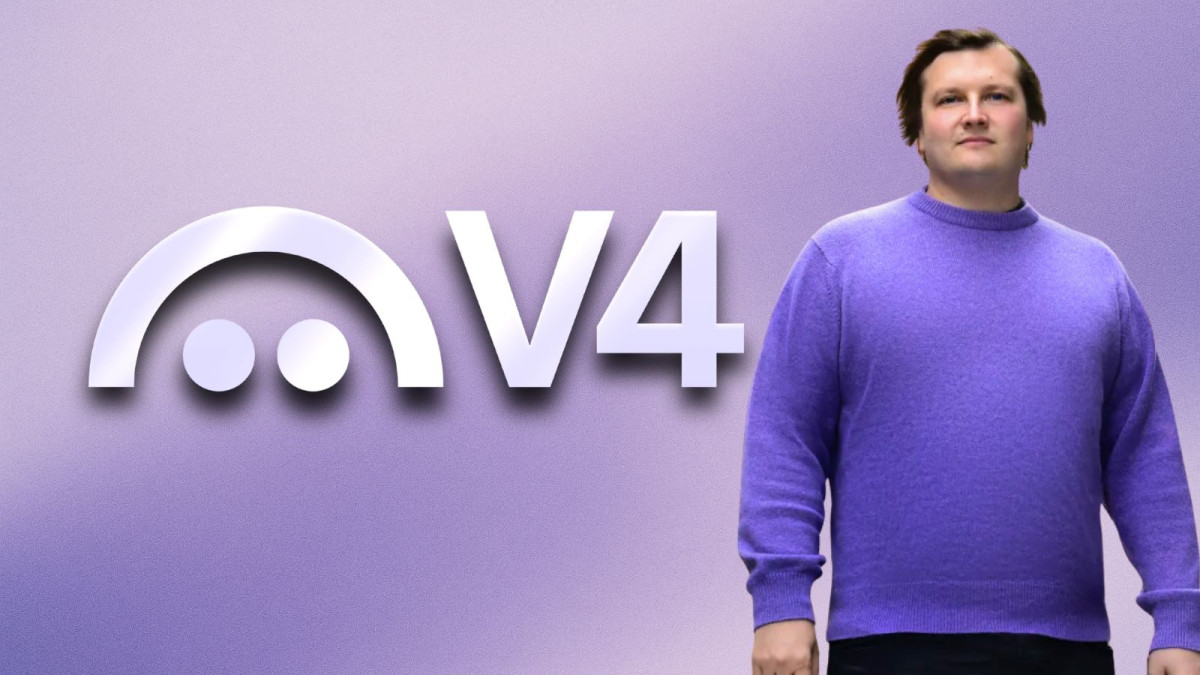
After more than two years in development, Aave has officially deployed its fourth protocol iteration on the Ethereum mainnet, introducing what the team is calling a fundamental redesign of the way decentralized lending works. The upgrade is built around a hub-and-spoke architecture that Aave Labs CEO Stani Kulechov says positions the protocol as the most resilient lending market in the world.
Speaking at DeFi Day during ECC in Cannes, Kulechov sat down with The ROLLUP to walk through what the upgrade means and where Aave goes from here. The conversation covered everything from the protocol's new risk tooling to its partnership with Chainlink, and for a protocol that has survived the FTX collapse, multiple bear markets, and various DeFi exploits without accruing bad debt, Kulechov's confidence did not feel misplaced.
A New Plumbing System for DeFi Liquidity
The core change in V4 is a shift away from isolated liquidity pools, the model that defined both V2 and V3. In the previous design, each market on Ethereum held its own separate pool of assets. Capital in one market could not serve borrowers in another, which made it notoriously difficult to list new assets or bootstrap fresh lending markets without starting from scratch.
V4 replaces that structure with a central Liquidity Hub that aggregates capital across the protocol. Specialized spoke markets connect to the hub and draw from its shared pool, each with its own risk parameters, collateral rules, and liquidation settings. Kulechov used the tranching model from traditional finance as a reference point, explaining it to The ROLLUP as three tiers: a plus spoke for riskier, tail-end opportunities; a core hub for risk-adjusted mainstream markets; and a prime hub for the conservative end of the curve.
The practical implication is that a builder wanting to list a newer, less-proven token can now plug into the plus spoke without needing to bootstrap liquidity from zero. If that market matures, it can work its way toward the core hub. "One of the biggest challenges for DeFi builders has been how to bootstrap their product and liquidity," Kulechov told The ROLLUP. "This is the perfect way where if you build something exciting, it can be connected into existing Aave liquidity."
That said, Kulechov was clear the gates are not wide open yet. Spoke creation remains DAO-governed during the controlled launch phase, with the protocol prioritizing security over growth in the early going.
Risk Management Gets a Real Overhaul
Two specific features stand out on the risk side. The first is risk premiums, which allow the protocol to price risk differently depending on the collateral type a borrower is using. Under V3, every borrower taking out a loan against a given stablecoin paid roughly the same rate. V4 changes that, layering in a variable premium so that riskier collateral positions carry a higher borrow cost.
The second is dynamic risk configuration, which lets the protocol update parameters for new positions without touching existing ones. Kulechov walked The ROLLUP through why this matters: "Configurations can be applied to new positions without affecting old positions," he said, describing it as fundamentally new tooling that simply did not exist in prior Aave architecture.
The security buildout behind V4 reportedly spanned more than a year, with roughly eight months dedicated specifically to hardening the protocol's infrastructure. Formal verification firm Certora worked alongside the Aave Labs engineering team from the earliest architectural stages, embedding smart contract protections into the design rather than treating them as a pre-launch formality. V4 launched with conservative supply and borrow caps across all three hubs, a posture Aave says is entirely intentional while the protocol proves itself in production.
Chainlink SVR Adds a Revenue Stream on the Liquidation Side
Running alongside the V4 launch is Aave's expanding integration with Chainlink's Smart Value Recapture product, known as SVR. The mechanism routes oracle price updates through a private channel ahead of the public mempool, allowing an auction to occur for the right to backrun liquidations. Value that would otherwise flow entirely to block builders and MEV searchers instead gets shared between Aave and Chainlink.
Kulechov explained the appeal of the integration to The ROLLUP in fairly direct terms: "It helps all the users and it also helps the Aave treasury," he said. "It's a balance of being able to get Aave, as a community, to capture some of that revenue that liquidations occur with, directly into the Aave treasury."
As a launch partner, Aave currently receives 65% of recaptured MEV with Chainlink taking 35%, a rate locked in for the first six months of the live integration. The Aave DAO voted unanimously to expand SVR coverage on Ethereum from roughly 3% of protocol TVL to approximately 27%, following a pilot period during which no bad debt accrued. The integration has since been extended to Arbitrum. Chainlink's own testing suggests SVR can recapture around 40% of non-toxic liquidation MEV, which at Aave's scale represents a meaningful addition to treasury revenues.
What Existing Users Actually Need to Do
For users currently sitting in V3 positions, Kulechov's message on The ROLLUP was simple: there is no urgency to move. V1, V2, and V3 deployments will continue operating as long as the underlying blockchains remain available. "Our V3 is a perfectly working system," he said. "There is no rush. We want it to be as organic as possible."
V4 does offer new collateral compositions, new hub options, and potentially improved rates depending on the position, but migration is purely optional for now. Aave Pro, the new interface designed specifically for V4, surfaces all hubs and spokes in a unified account view and shows real-time risk premiums and health factors. It is freely accessible despite the name.
When asked on The ROLLUP which category of protocols would benefit most if the tokenization thesis plays out and trillions of dollars of assets come onchain, his answer was concise: "Where Aave is sitting is in the middle of DeFi, stablecoins, and RWAs. And I think those three components make the future of finance." Whether V4 proves durable enough to support that kind of scale is the question the next few months will start to answer. But given Aave's long track record of delivering a quality product, we think that their success is a safe bet.
Solana At Six: From Meme Street to Wall Street

Six years in, Solana still can't quite shake the casino label. And honestly, it probably never will, at least not completely. The chain that gave the world the $TRUMP memecoin, the $LIBRA debacle, and a near-endless stream of cartoon animal tokens processed somewhere close to 30% of its average monthly DEX volume in 2025 through memecoin activity alone, according to Blockworks data. But now, with over 200 tokenized U.S. stocks already live on-chain through Ondo Finance, and Visa, PayPal, and WisdomTree all building on the network, Solana's identity crisis may be ending, not by ditching memecoins, but by absorbing institutional finance alongside them.
In January 2026, Ondo Finance pushed more than 200 tokenized U.S. stocks and ETFs onto Solana. Not synthetic proxies, not wrapped derivatives, but actual securities, backed 1:1 by shares held with U.S.-registered broker-dealers, accessible on-chain 24 hours a day, five days a week for minting and redemption, and transferable around the clock
A month later, WisdomTree followed with its full suite of regulated tokenized funds. Visa confirmed U.S. banks were settling transactions with it over Solana in USDC. Worldpay said it would let merchants settle in USDG on the same network. PayPal positioned PYUSD on Solana for faster, cheaper commerce flows.
The memecoin chain is becoming something else. Or rather...and this is the more accurate framing, it's becoming something more.
A Sixth Birthday, a Changed Ecosystem
Solana launched in March 2020, built on a proof-of-history consensus mechanism that promised transaction throughput orders of magnitude faster than Ethereum at the time. Its early years were defined by the NFT boom, DeFi summer spillover, and a catastrophic near-death experience when the FTX collapse in late 2022 wiped out a major backer and sent SOL's price into the floor.
The recovery was messy and improbable, fueled partly by a genuine developer community and partly by retail investors who found Solana's low fees and fast finality well-suited to trading junk tokens at high velocity.
By 2024 and into 2025, the memecoin supercycle reached its apex on Solana. The pump.fun launchpad became the chain's most-used application by fee revenue for stretches of time. Hundreds of tokens named after pets, politicians, and pop culture references launched and died there every week.
So when institutions started showing up with serious capital and serious products, the natural question was: why here?
Ondo's Gamble
Ondo Finance's expansion to Solana appears to be a structural argument about where capital markets are going.
The company, which became the largest real-world asset issuer on Solana by asset count with the January launch, brought its Global Markets platform to the network after testing it on Ethereum and BNB Chain. The catalog covers technology and growth stocks, blue-chip equities, broad-market and sector ETFs, and commodity-linked products.
Under Ondo's structure, token holders get economic exposure to publicly traded securities, including dividends, but do not hold direct shareholder rights in the underlying companies. The actual stocks and any cash in transit sit with U.S.-registered broker-dealers. The blockchain handles the movement layer: how tokens transfer, how positions clear, how compliance rules travel with the asset rather than being enforced at the application level.
The execution numbers that preceded the launch are worth noting. Before going live, Ondo ran tests showing $500,000 in tokenized Google shares trading on-chain with just 0.03% slippage and pricing that matched traditional exchange-traded equivalents. Total transaction costs for large trades came in under $102, a figure that compares favorably to conventional brokerage costs at similar volumes.
Ian De Bode, president of Ondo Finance, put it directly when the Solana expansion went live: liquidity depth and asset selection from existing versions of tokenized stocks had remained limited, and Ondo's model was designed to address that gap by bringing liquidity inherited from traditional exchange venues into an on-chain catalog.
Tokenized equities existed before Ondo's Solana launch, but they were thinly traded, narrowly available, and difficult to discover for the average crypto-native user. Ondo's integration with Jupiter, Solana's primary DEX aggregator, changed the distribution equation. Suddenly, the same wallets and interfaces people were using to buy memecoins could also pull up tokenized Apple or tokenized SPY.
The Institutional Path Becomes Clearer
WisdomTree's move a week after Ondo's launch was in some ways even more revealing about how institutional finance is thinking about Solana.
The New York-based asset manager extended its full suite of regulated tokenized funds to Solana through its WisdomTree Connect institutional platform and its WisdomTree Prime retail app.
That means money market, equity, fixed-income, alternatives, and asset allocation products are now natively mintable on the network.
Maredith Hannon, WisdomTree's head of business development for digital assets, framed the move as a direct response to Solana's technical characteristics: high transaction speeds and the ability to meet growing crypto-native demand while maintaining the regulatory standards institutions expect. Nick Ducoff of the Solana Foundation noted that RWAs on the network had already surpassed $1 billion before WisdomTree's arrival, and that the asset manager's expansion reflected both demand for tokenized RWAs and Solana's demonstrated ability to support that demand at scale.
What WisdomTree's entry signals, beyond the product itself, is that the 'sterile environment' theory of institutional adoption was wrong. Traditional finance did not wait for Solana to become culturally palatable before moving in. The infrastructure made sense regardless of what else was happening on the network, and the institutional clients accessing these funds through WisdomTree Connect are unlikely to lose sleep over what else is trading at the same time in the same ecosystem.
Payments, Stablecoins, and the Scale Argument
The tokenized securities story makes more sense when you look at what the payments data was already showing heading into early 2026.
In February 2026, Solana processed more than $650 billion in stablecoin transactions, more than double its previous monthly record, according to figures cited in the network's payments report. Stablecoin supply on Solana exceeded $15 billion. These are the type of money-like flows at a scale that makes the 'financial rail' framing not just plausible but arguably already accurate.
Visa is settling with U.S. banks in USDC over Solana. Worldpay is building merchant settlement in USDG on the same network. PayPal has positioned PYUSD on Solana specifically for commerce use cases, much faster and cheaper than alternative rails. Citi and PwC have been exploring the tokenization of bills of exchange for trade finance using Solana infrastructure.
None of these companies needed Solana's memecoin reputation to disappear before they could act. They needed speed, cost efficiency, and liquidity, things the network already provides at scale.
The Numbers Behind the Narrative
A few data points help ground what's actually happening against the broader tokenization landscape.
Ethereum still leads the on-chain RWA market by a significant margin, holding around $15.6 billion in tokenized asset value excluding stablecoins, according to RWA.xyz data. Solana sat at roughly $1.84 billion, with BNB Chain between the two at approximately $2.95 billion.
But the relevant number may not be total asset value so much as distribution. RWA.xyz shows about 91.6% of Solana's tokenized asset value, approximately $1.68 billion of the $1.84 billion, in distributed, portable on-chain form. Monthly RWA transfer volume on the network exceeded $2 billion. For context, the entire tokenized stocks category across all chains carries a market cap of around $1.08 billion, with monthly transfer volume of roughly $2.3 billion. Ondo alone holds about $644 million of that, representing roughly 60% platform market share.
Those figures suggest the assets that are on Solana are actually moving and not sitting idle in wallets. This is a huge distintion when evaluating whether tokenization on the network is functional infrastructure or performative positioning.
Part of what makes the institutional push on Solana legible is that the regulatory environment shifted in a meaningful way in early 2026.
On March 5, the FDIC, Federal Reserve, and OCC jointly stated that eligible tokenized securities should receive the same capital treatment as non-tokenized equivalents. For years, one of the institutional barriers to holding tokenized assets was the regulatory uncertainty around capital requirements. Banks considering tokenized securities as part of their balance sheet couldn't get a clear read on whether doing so would attract punitive capital charges relative to holding the conventional version of the same instrument.
The SEC's decision to grant special relief allowing intraday trading in tokenized shares of WisdomTree's money market fund points in the same direction.
The $2 Trillion Horizon
The projections for tokenized assets are substantial, and they come from sources that aren't in the habit of WAGMI, moon-shot hype.
McKinsey's base case puts tokenized asset value at roughly $2 trillion by 2030, with a range running from $1 trillion to $4 trillion depending on adoption pace. BCG has estimated that tokenized fund AUM alone could exceed $600 billion by the same date. Citi's stablecoin outlook, published in early 2025, projected $1.9 trillion in base-case stablecoin issuance by 2030 and a bull case of $4 trillion, with potential transaction activity hitting between $100 trillion and $200 trillion.
These projections share a common assumption: blockchains transition from being primarily an asset class (something to invest in) to being market infrastructure (something to run finance through). If that transition happens at anything like the projected scale, the networks with the most liquid, most accessible, and most developer-friendly infrastructure stand to capture a disproportionate share of the flow.
Solana's combination of throughput, low fees, and a large existing retail user base that's already comfortable navigating on-chain interfaces makes it a serious contender for that infrastructure role. The 3.2 million daily active users that Solana was citing around the time of the Ondo launch aren't a demographic institutions typically associate with capital markets access. And that may be the whole point.
What This Means for Solana
On one end, you have high-velocity, high-risk memecoin trading, the casino slot machine that gave the network its reputation. On the other end, you have regulated, compliance-embedded tokenized securities and institutional payment rails. And it seem that the two ends don't appear to be in direct conflict with each other. They use the same settlement layer, pay the same validators, and contribute to the same liquidity depth.
Whether that coexistence holds as institutional volume grows is an open question. There are scenarios where the reputational bleed from high-profile memecoin controversies creates friction for institutional deployment. There are also scenarios where the retail liquidity generated by the casino side of the network ends up being exactly the kind of distribution depth that makes tokenized equities viable in a way they haven't been elsewhere.
For now, the market appears to be betting on the latter. The capital allocation decisions of Ondo, WisdomTree, Visa, Worldpay, PayPal, and Citi, all happening in just a span of a couple months, represent a pretty explicit vote of confidence in the coexistence model.
Solana turned six this month. It's survived an exchange collapse that should have killed it, rebuilt a developer ecosystem that most people wrote off, and navigated a memecoin supercycle that burnished and tarnished its reputation in roughly equal measure.
The tokenized stocks development isn't a pivot or rebrand...it's more of an expansion. The network didn't stop being what it was to become something new, it added a whole other layer on top of an already messy, active, genuinely liquid base. That's not the way institutional infrastructure is supposed to develop, according to the conventional playbook.
But the conventional playbook was written before $650 billion in monthly stablecoin volume was possible on a chain that also hosts a token called $BONK.
BlackRock Enters DeFi, Putting Fund On Uniswap

The world’s largest asset manager is officially getting into DeFi. It has been revealed that BlackRock will be bringing its Treasury-backed digital token BUIDL onto Uniswap, the biggest decentralized exchange in crypto. At the same time, it has accumulated UNI, Uniswap’s governance token. That combination, infrastructure plus equity exposure, is what has the market paying attention.
For years, Wall Street talked about tokenization in theory. Now BlackRock is testing it inside a live DeFi venue.
What Happened
BlackRock’s USD Institutional Digital Liquidity Fund, known as BUIDL, will now be tradable through UniswapX. BUIDL is essentially a tokenized vehicle holding U.S. Treasurys and short term cash instruments. Think conservative yield product, but wrapped in blockchain rails.
This is not retail access. Not even close. Only approved institutional participants can interact with the fund in this format. Liquidity providers are also curated. The architecture blends DeFi execution with compliance guardrails.
In other words, this is decentralized plumbing with centralized controls layered on top.
At the same time, BlackRock bought an undisclosed amount of UNI. No dramatic governance takeover narrative here, at least not yet. But the signal matters. Buying the token is a way of buying into the protocol’s long term relevance.
Markets reacted quickly. UNI rallied sharply on the announcement. Traders interpreted it as validation, not just of Uniswap, but of DeFi’s staying power.
Why This Is Bigger Than a Listing
Uniswap is not just another exchange. It is core infrastructure in crypto. Billions of dollars in liquidity, years of smart contract iteration, deep composability across chains.
For a firm like BlackRock to integrate directly with that stack is a psychological shift.
Institutional capital has historically avoided permissionless systems. Concerns around compliance, custody, counterparty risk, and regulatory clarity kept most major players in controlled environments. Even crypto ETFs are wrapped in familiar structures.
This move edges closer to open rails.
It suggests that large asset managers are beginning to see DeFi less as a speculative playground and more as settlement infrastructure. Faster clearing. Fewer intermediaries. Continuous liquidity. Programmable ownership.
Still, it is not ideological decentralization. The participation model is selective. Access is gated. This is not BlackRock embracing cypherpunk philosophy. It is BlackRock experimenting with efficiency.
The Tokenization Angle
Tokenized real world assets have been one of the most persistent narratives in crypto over the past two years. Treasurys on chain, money market funds on chain, even private credit on chain.
The pitch is straightforward. Blockchain rails can make traditional assets easier to transfer, easier to collateralize, and potentially easier to integrate into global liquidity pools.
Until now, much of that activity lived in isolated ecosystems. What BlackRock is doing connects tokenized Treasurys to a decentralized exchange environment.
If this model scales, it could blur the line between crypto native liquidity and traditional yield products. Imagine on chain funds becoming composable building blocks in lending markets, derivatives platforms, structured products.
That is where things get interesting.
Risk and Reality
There are obvious constraints. Regulatory oversight remains intense. DeFi protocols still face scrutiny in multiple jurisdictions. Smart contract risk never disappears. And institutional risk committees do not move quickly.
This is likely a controlled experiment, not an overnight transformation of Wall Street.
But it does establish precedent.
Once one major asset manager connects to DeFi infrastructure, competitors pay attention. Asset management is not an industry that tolerates strategic disadvantage for long.
What It Means for UNI
UNI’s price spike reflects more than short term speculation. It reflects a repricing of perceived legitimacy. The price surged more than 30%, but has since retraced some.
Governance tokens often struggle to justify valuation beyond fee switches and voting rights. Institutional alignment changes that conversation. If large financial entities begin to treat protocols as infrastructure partners, governance tokens start to resemble strategic assets.
That does not guarantee sustained upside. Markets are fickle. But the narrative shift is tangible.
The Bottom Line
Crypto has long argued that decentralized protocols would eventually underpin parts of global finance. Critics said institutions would build private chains instead. Closed systems. Walled gardens.
BlackRock’s move suggests a hybrid path.
Traditional finance may not adopt pure decentralization. But it may selectively integrate public blockchain infrastructure where it improves efficiency.
That middle ground, regulated access layered onto open protocols, could define the next stage of market structure.
For DeFi, this is validation. For Wall Street, it is experimentation. For traders, it is another reminder that crypto infrastructure is no longer operating in isolation.
Robinhood Chain Launches Ethereum L2 Testnet

Robinhood is going deeper into crypto infrastructure.
The company has launched the public testnet for Robinhood Chain, its own Ethereum layer 2 network built on Arbitrum’s rollup technology. Until now, Robinhood has mostly acted as a gateway, letting users trade crypto and, in some regions, tokenized equities. This move changes that. It is now building the underlying blockchain where those assets could live.
It is a meaningful shift. Running a brokerage app is one thing. Operating blockchain infrastructure is another.
What Robinhood Chain Actually Is
Robinhood Chain is a permissionless Ethereum layer 2. It uses Arbitrum’s technology, which means it inherits Ethereum’s security while offering lower transaction costs and higher throughput through rollups.
“With Arbitrum’s developer-friendly technology, Robinhood Chain is well-positioned to help the industry deliver the next chapter of tokenization and permissionless financial services,” said Steven Goldfeder, Co-Founder and CEO of Offchain Labs. “Working alongside the Robinhood team, we are excited to help build the next stage of finance.”
For developers, it is EVM compatible. Smart contracts built for Ethereum can be deployed here with standard tooling. Wallets, developer libraries, and infrastructure services should feel familiar.
On paper, nothing radical. The differentiation is not in the virtual machine. It is in the intended use case.
The Core Bet: Tokenized Stocks
Robinhood is clearly focused on tokenized real world assets, especially public equities and ETFs.
The company has already offered tokenized stock exposure in Europe. Now it is building infrastructure that could support broader issuance and trading of these assets directly onchain.
A big part of the pitch is continuous trading. Crypto markets operate 24 7. Traditional stock exchanges do not. If equities are represented as tokens on a blockchain, they can, in theory, trade at any time and settle much faster than traditional systems.
That sounds straightforward. In practice, it depends heavily on regulatory clarity. Tokenized securities raise questions around custody, investor protections, and jurisdictional restrictions. Robinhood has acknowledged this and appears to be designing the chain with compliance in mind.
Compliance Is Not an Afterthought
Unlike many general purpose layer 2 networks, Robinhood Chain is being built with regulated financial products as the primary target.
That means infrastructure that can handle minting and burning of tokenized securities in a controlled way. It likely also means features that support jurisdiction based restrictions and other compliance requirements at the protocol or system level.
Robinhood has not framed this as a purely decentralized experiment. It is positioning the network as financial infrastructure, with guardrails.
That will appeal to some institutions. It may frustrate parts of the crypto community. Both reactions are predictable.
Infrastructure Partners in Place
Robinhood is not building this alone.
Chainlink is involved to provide oracle services, which are essential if you are dealing with tokenized stocks that need accurate real world price feeds. Alchemy is supporting developer infrastructure. Other analytics and compliance firms are integrated from the outset.
This is not a bare bones testnet thrown into the wild. It is being launched with a fairly complete infrastructure stack.
The company is also rolling out developer documentation and encouraging builders to start experimenting immediately.
The Exchange Layer 2 Trend
Robinhood joins a growing list of exchanges and fintech firms launching their own Ethereum layer 2 networks.
Coinbase operates Base. Kraken is developing its own network. Other trading platforms are exploring similar strategies.
The rationale is not complicated. If tokenized assets and onchain trading grow, exchanges would prefer that activity to happen on networks they influence, rather than on third party chains. Controlling infrastructure can mean more flexibility in product design, fee structures, and integration with existing platforms.
For Robinhood, which already serves millions of retail users, owning a layer 2 could tighten the loop between its app, its wallet, and onchain markets.
Testnet Today, Mainnet Later
Right now, Robinhood Chain is in public testnet. Developers can deploy contracts, test integrations, and experiment with wallet flows, including direct testing with Robinhood Wallet. No production assets are live yet.
To drive activity, Robinhood is backing developer engagement with hackathons and incentives, including a seven figure prize pool aimed at financial applications built on the network.
A mainnet launch is expected later this year, though exact timing has not been pinned down publicly. Technical stability and regulatory comfort will likely dictate the pace.
The Bottom Line
Robinhood Chain is a signal that tokenized finance is not just a side project for major platforms anymore.
If tokenized equities become widely accepted, infrastructure will matter as much as distribution. Robinhood already has distribution through its app. Now it is trying to build the rails underneath.
There are open questions. Will regulators in the US allow meaningful onchain trading of tokenized securities? Will liquidity concentrate on exchange backed layer 2s or on more neutral networks? Will users care which chain their tokenized stock sits on?
For now, Robinhood has made its position clear. It wants to be more than a broker. It wants to operate the blockchain layer where digital versions of traditional assets trade and settle.
The testnet is the first real step in that direction.
MetaMask Adds Tokenized Stocks, ETFs via Ondo

Metamask, the popular self-custody wallet announced it now supports tokenized U.S. stocks, ETFs, and commodities through an integration with Ondo Global Markets. For eligible users outside the United States, this means exposure to names like Apple, Tesla, Nvidia, major index ETFs, and even gold and silver, all from inside the MetaMask wallet.
It is one of the clearest signals yet that tokenized real-world assets are moving from theory into everyday crypto products.
What’s Actually Being Offered
The new offering includes more than 200 tokenized securities at launch. These tokens track the price of publicly traded U.S. stocks, ETFs, and commodity funds. Users can buy them with stablecoins, hold them in their wallet, and transfer them onchain just like any other ERC-20 token.
These are not shares in the legal sense. Holding a tokenized stock does not give voting rights or direct ownership of the underlying equity. Instead, the tokens provide economic exposure to the price movements of the asset, backed by traditional market infrastructure on the other side.
For many crypto users, that distinction may matter less than the experience itself. The ability to gain U.S. market exposure without opening a brokerage account or leaving a self-custodial wallet is the real draw.
How It Works Inside MetaMask
The integration runs through MetaMask Swaps, meaning users do not need to leave the wallet or interact with unfamiliar interfaces. Trades are executed onchain, while pricing and asset backing are handled through Ondo’s infrastructure.
Minting and redemption of the tokens generally follow U.S. market hours, reflecting how the underlying assets trade in traditional markets. Transfers between wallets, however, can happen at any time. That hybrid setup blends old market rules with blockchain flexibility, even if it is not fully 24/7 trading yet.
Fractional exposure is also built in, allowing users to buy small amounts of high-priced stocks or ETFs without committing large sums of capital.
Who Can Use It
Access is limited to eligible users in supported jurisdictions outside the U.S. and several other regions. Regulatory restrictions around securities remain a major factor, and MetaMask has been clear that availability depends on local rules.
For now, the product is primarily aimed at international users who want U.S. market exposure without navigating the friction of legacy brokerage systems.
The Bigger Industry Context
This move highlights how quickly real-world assets are becoming part of the crypto stack.
For years, tokenized stocks were discussed as a future use case. Today, they are appearing inside one of the most widely used wallets in the industry. That changes the conversation. Instead of asking whether tokenization will happen, the focus shifts to how fast it scales and how regulators respond.
It also reframes MetaMask’s role. The wallet is no longer just a gateway to DeFi and NFTs. It is starting to look more like a universal financial interface, one that sits between crypto markets and traditional assets.
For users, the appeal is simplicity. One wallet, one interface, exposure to crypto, equities, ETFs, and commodities. No bank logins, no brokerage apps, no asset silos.
MetaMask’s integration with Ondo fits into a broader push across the industry. Tokenization is being explored by crypto-native firms, fintech platforms, and even large financial institutions. The idea is straightforward. Traditional markets are slow, fragmented, and geographically constrained. Blockchains promise faster settlement, global access, and programmable assets.
Tokenized real-world assets already represent tens of billions of dollars in value, and many expect that number to grow sharply if regulatory clarity improves.
Still, challenges remain. Regulatory uncertainty is the biggest one. Liquidity and pricing ultimately depend on traditional markets. And for some investors, the lack of shareholder rights will always be a drawback.
The Bottom Line
Ondo has said it plans to expand its catalog to thousands of assets over time. If that happens, wallets like MetaMask could become primary access points for global capital markets, especially in regions underserved by traditional finance.
For now, the launch marks a clear trend. Crypto wallets are no longer just about holding crypto. They are becoming portals into the broader financial system, one token at a time.