#Chainlink
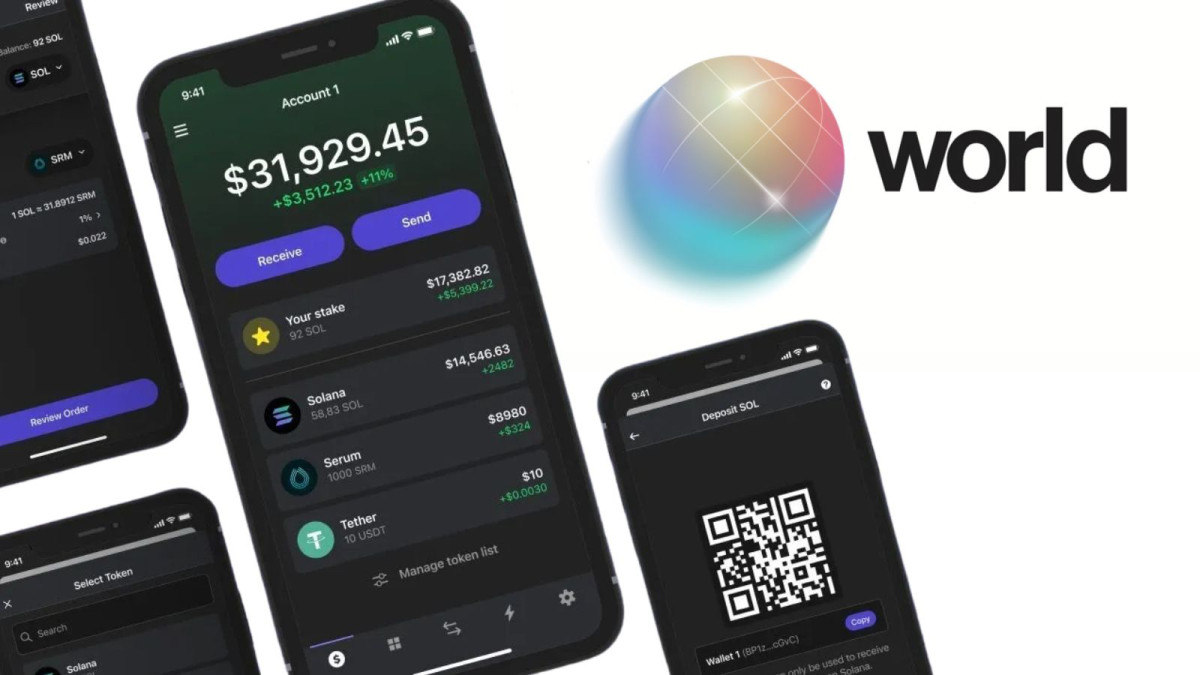
World Prediction Market Launches in Phantom Wallet

World, a fully on-chain, Solana native prediction market powered by Chainlink that aims to compete with Kalshi and Polymarket, has launched on Phantom Wallet.

Image credit: x.com
According to the team, the World prediction market will allow users to predict outcomes on crypto price movements and the ongoing 2026 FIFA Men's World Cup. Additional markets across sports, geopolitics, and macroeconomics will be added in the coming weeks.
"Prediction markets are one of the most powerful applications you can build on a high-performance blockchain," said Pedro Miranda, Head of Consumer at the Solana Foundation. "World is designed to show what Solana makes possible: real-time markets, on-chain settlement, and a user experience that meets people where they are."
Unlike most prediction markets that require users to interact with centralized infrastructure, World is designed to operate entirely on-chain. Every market, every position, and every settlement happens on-chain; as such, users do not have to move their funds to any custodial or centralized entity, as they can interact directly with Solana liquidity.
The platform uses $CASH as its settlement stablecoin. Since it’s launched directly within the Phantom Wallet, World will be available to more than 20 million Phantom Wallet users. It is also important to note that this World project is entirely different from Sam Altman's World. This World is a prediction market project, while Sam Altman's World is an identity project.
World's launch comes at a time when prediction markets are gaining significant traction, especially since the start of the 2026 FIFA Men's World Cup. Since early June, prediction market platforms, including Kalshi and Polymarket, have seen inflows of more than $3.8 billion.
Despite regulatory challenges in some jurisdictions, prediction market companies continue to grow and expand. Kalshi and Polymarket have both recently secured substantial funding from investors. Kalshi recently raised funding at a $22 billion valuation, while Polymarket raised $600 million at a $15 billion valuation and is reportedly in talks to raise an additional $400 million.
AWS Integrates Chainlink to Power Blockchain Data

Amazon Web Services (AWS), the cloud computing division of Amazon, has integrated the data standards and services of the decentralized oracle network Chainlink into its platform, enabling connectivity between traditional cloud infrastructure and blockchain networks.
The integration, according to AWS, aims to address the blockchain oracle problem. Although blockchain networks operate as decentralized ledgers, they are not inherently designed to connect with external data sources, application programming interfaces (APIs), and other blockchains. This limitation presents a significant challenge for developers building digital asset solutions and tokenization products that depend on real-world data for operational efficiency.

By integrating Chainlink data standards into its marketplace, AWS addresses this connectivity problem, making it possible for blockchain networks to connect to its cloud infrastructure while maintaining the security, compliance, and reliability standards required by financial institutions.
The integration brings three Chainlink oracle services into the AWS Marketplace. These include Chainlink Data Feeds, which provide access to decentralized price and market data for asset valuation, assessment, and risk management; Chainlink Data Streams, which deliver fast and secure data that enables on-chain systems to respond to market movements in real time and manage risk dynamically; and Chainlink Proof of Reserve, which provides secure and verifiable on-chain reserve attestations for stablecoins and other tokenized assets.
Through this integration, enterprises will be able to build tokenization solutions that leverage AWS cloud capabilities alongside blockchain functionality without needing to independently solve the blockchain oracle problem. Developers will also be able to connect external data sources to blockchain applications through secure oracle networks while using AWS compute resources.
Platforms Integrate with Decentralized Oracle Networks
Decentralized oracle networks, which are blockchain-based middleware systems that securely bridge real-world data to blockchain networks using several independent nodes, have increasingly been integrated into platforms in recent times.
Just this month, Polymarket integrated Pyth Network into its prediction market platform. Through this integration, Polymarket enabled traders to place predictions on real-life commodities such as gold and silver, as well as U.S. stocks, including NVIDIA and Apple.
Allor Network, also this month, integrated the decentralized oracle network Band Protocol into its platform, allowing for the secure delivery of real-world data for its Web3 applications.
Chainlink decentralized oracles have also been integrated into traditional finance platforms, including SWIFT and SIX Group, the organization behind Switzerland’s principal stock exchange, the SIX Swiss Exchange, with plans underway to integrate them into the Australian Stock Exchange platform.
Swift and Chainlink Drive Blockchain in Banking

Swift and Chainlink just finished another interoperability trial focused on tokenized bond transactions, and it pulled in some serious European banking names: BNP Paribas Securities Services, Intesa Sanpaolo, and Société Générale FORGE all took part, testing how digital assets can move across both blockchain networks and traditional systems without anyone having to rebuild their existing infrastructure. The setup uses Swift's messaging standards alongside Chainlink's Cross-Chain-Interopability-Protocol (CCIP) so institutions can interact with blockchain networks through rails they already know and trust.

This builds on earlier work with over a dozen global institutions including Citi, BNY Mellon, and UBS Asset Management, who were already testing cross chain settlement on existing payment rails. The throughline across all of it is pretty straightforward: banks aren't going to adopt anything that forces them to gut their current systems, so if you can make tokenized asset settlement feel like a natural extension of what they already do, you've actually got a shot at making this work at scale.

Back in 2023, Swift ran experiments with Chainlink alongside Citi, BNY Mellon, BNP Paribas, Euroclear, Clearstream, and a bunch of others. They moved tokenized assets between wallets on the same chain, across public and private chains, and between different public chains entirely. CCIP validated the Swift requests, posted the transactions on chain, tracked execution, and sent confirmations back so banks saw one clean workflow on their end.
Then in 2024, under the Monetary Authority of Singapore's Project Guardian, Swift teamed up with UBS Asset Management and Chainlink to actually settle tokenized fund subscriptions and redemptions. Swift handled the fiat cash side, CCIP handled the on-chain asset side which shows digital asset transactions plugging into the payment systems that over 11,500 institutions across 200 countries already use, rather than needing some separate parallel settlement network nobody has actually built yet.
Legacy systems need to be able to talk to blockchains and right now you've got different CBDCs, tokenized deposits, and all kinds of assets sitting on different ledgers that can't be exchanged easily. By making CCIP the standard cross chain messaging layer, Swift gives banks a way to touch multiple chains without having to rebuild their whole stack every single time a new network shows up. There's identity work layered in too with GLEIF and Chainlink working on verifiable institutional IDs, and you can't have regulated cross border settlement without knowing who's on the other end.
Chainlink has already pulled in hundreds of millions in revenue, and it's coming from a mix of sources. A big chunk is large enterprises paying off-chain for platform access, integrations, usage, and maintenance. On top of that, there are on-chain fees from subscription and per call models, plus revenue sharing arrangements.
Chainlink's CCIP has been processing around $18 billion in monthly cross chain volume back in early 2026, which was up roughly 62 percent from the year before. JPMorgan and UBS both have live blockchain settlement pilots running on it.
March saw some solid activity with Coinbase activated a $5 billion cbBTC bridge to the Monad network, which basically brought their wrapped Bitcoin liquidity into Monad's DeFi ecosystem. Apps like Curvance and Neverland have already adopted related markets because of this. Coinbase also hooked up Chainlink's DataLink to bring premium exchange data on-chain for the first time, and that's powering billions in trading volume now. They were already using Chainlink for Proof of Reserve and as their exclusive bridging solution for wrapped assets, so this felt like the natural next move.
Institutions don’t have to directly use $LINK and can pay however works for them, whether that's fiat, stablecoins, gas tokens, or other digital assets which gets programmatically converted into LINK and deposited into the Chainlink Reserve. Node operators and service providers get paid out in LINK, and staking adds another layer of security on top of that. So, there is some design to keep creating demand for the token as usage grows, rather than just treating it as an afterthought.
Swift is the control panel for global banking, Chainlink CCIP is the router that speaks every blockchain's language, and banks keep doing what they do and the translation layer handles everything else.
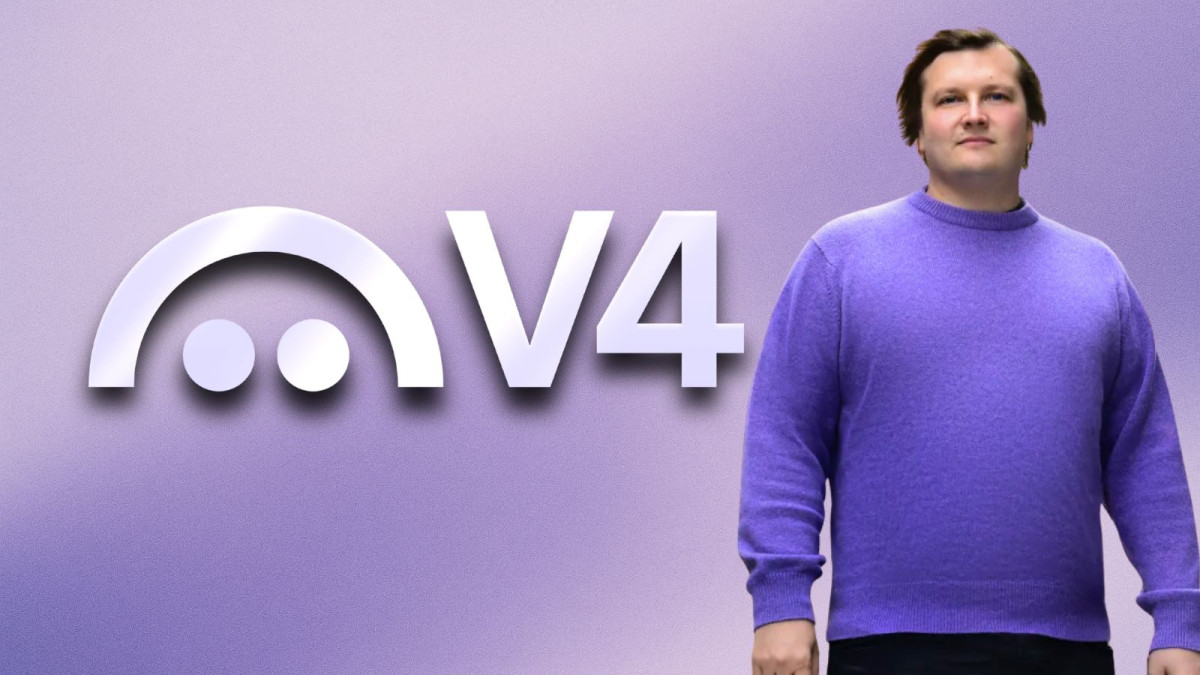
Aave V4 Is Live, How It Is Transforming DeFi Lending

After more than two years in development, Aave has officially deployed its fourth protocol iteration on the Ethereum mainnet, introducing what the team is calling a fundamental redesign of the way decentralized lending works. The upgrade is built around a hub-and-spoke architecture that Aave Labs CEO Stani Kulechov says positions the protocol as the most resilient lending market in the world.
Speaking at DeFi Day during ECC in Cannes, Kulechov sat down with The ROLLUP to walk through what the upgrade means and where Aave goes from here. The conversation covered everything from the protocol's new risk tooling to its partnership with Chainlink, and for a protocol that has survived the FTX collapse, multiple bear markets, and various DeFi exploits without accruing bad debt, Kulechov's confidence did not feel misplaced.
A New Plumbing System for DeFi Liquidity
The core change in V4 is a shift away from isolated liquidity pools, the model that defined both V2 and V3. In the previous design, each market on Ethereum held its own separate pool of assets. Capital in one market could not serve borrowers in another, which made it notoriously difficult to list new assets or bootstrap fresh lending markets without starting from scratch.
V4 replaces that structure with a central Liquidity Hub that aggregates capital across the protocol. Specialized spoke markets connect to the hub and draw from its shared pool, each with its own risk parameters, collateral rules, and liquidation settings. Kulechov used the tranching model from traditional finance as a reference point, explaining it to The ROLLUP as three tiers: a plus spoke for riskier, tail-end opportunities; a core hub for risk-adjusted mainstream markets; and a prime hub for the conservative end of the curve.
The practical implication is that a builder wanting to list a newer, less-proven token can now plug into the plus spoke without needing to bootstrap liquidity from zero. If that market matures, it can work its way toward the core hub. "One of the biggest challenges for DeFi builders has been how to bootstrap their product and liquidity," Kulechov told The ROLLUP. "This is the perfect way where if you build something exciting, it can be connected into existing Aave liquidity."
That said, Kulechov was clear the gates are not wide open yet. Spoke creation remains DAO-governed during the controlled launch phase, with the protocol prioritizing security over growth in the early going.
Risk Management Gets a Real Overhaul
Two specific features stand out on the risk side. The first is risk premiums, which allow the protocol to price risk differently depending on the collateral type a borrower is using. Under V3, every borrower taking out a loan against a given stablecoin paid roughly the same rate. V4 changes that, layering in a variable premium so that riskier collateral positions carry a higher borrow cost.
The second is dynamic risk configuration, which lets the protocol update parameters for new positions without touching existing ones. Kulechov walked The ROLLUP through why this matters: "Configurations can be applied to new positions without affecting old positions," he said, describing it as fundamentally new tooling that simply did not exist in prior Aave architecture.
The security buildout behind V4 reportedly spanned more than a year, with roughly eight months dedicated specifically to hardening the protocol's infrastructure. Formal verification firm Certora worked alongside the Aave Labs engineering team from the earliest architectural stages, embedding smart contract protections into the design rather than treating them as a pre-launch formality. V4 launched with conservative supply and borrow caps across all three hubs, a posture Aave says is entirely intentional while the protocol proves itself in production.
Chainlink SVR Adds a Revenue Stream on the Liquidation Side
Running alongside the V4 launch is Aave's expanding integration with Chainlink's Smart Value Recapture product, known as SVR. The mechanism routes oracle price updates through a private channel ahead of the public mempool, allowing an auction to occur for the right to backrun liquidations. Value that would otherwise flow entirely to block builders and MEV searchers instead gets shared between Aave and Chainlink.
Kulechov explained the appeal of the integration to The ROLLUP in fairly direct terms: "It helps all the users and it also helps the Aave treasury," he said. "It's a balance of being able to get Aave, as a community, to capture some of that revenue that liquidations occur with, directly into the Aave treasury."
As a launch partner, Aave currently receives 65% of recaptured MEV with Chainlink taking 35%, a rate locked in for the first six months of the live integration. The Aave DAO voted unanimously to expand SVR coverage on Ethereum from roughly 3% of protocol TVL to approximately 27%, following a pilot period during which no bad debt accrued. The integration has since been extended to Arbitrum. Chainlink's own testing suggests SVR can recapture around 40% of non-toxic liquidation MEV, which at Aave's scale represents a meaningful addition to treasury revenues.
What Existing Users Actually Need to Do
For users currently sitting in V3 positions, Kulechov's message on The ROLLUP was simple: there is no urgency to move. V1, V2, and V3 deployments will continue operating as long as the underlying blockchains remain available. "Our V3 is a perfectly working system," he said. "There is no rush. We want it to be as organic as possible."
V4 does offer new collateral compositions, new hub options, and potentially improved rates depending on the position, but migration is purely optional for now. Aave Pro, the new interface designed specifically for V4, surfaces all hubs and spokes in a unified account view and shows real-time risk premiums and health factors. It is freely accessible despite the name.
When asked on The ROLLUP which category of protocols would benefit most if the tokenization thesis plays out and trillions of dollars of assets come onchain, his answer was concise: "Where Aave is sitting is in the middle of DeFi, stablecoins, and RWAs. And I think those three components make the future of finance." Whether V4 proves durable enough to support that kind of scale is the question the next few months will start to answer. But given Aave's long track record of delivering a quality product, we think that their success is a safe bet.
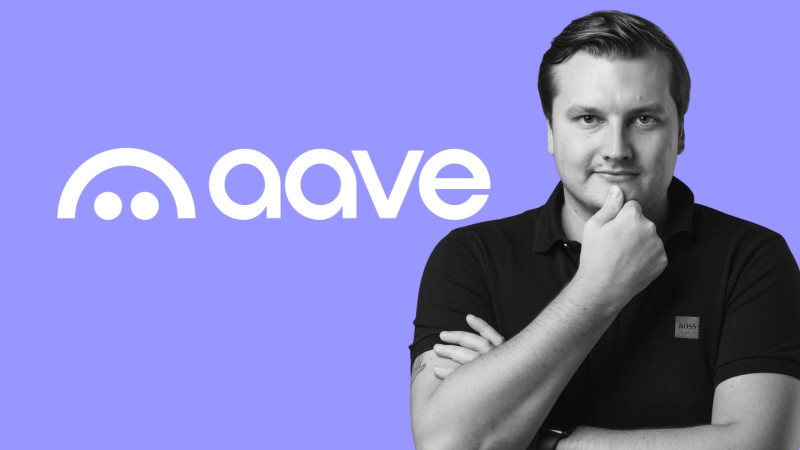
Aave Launches on OKX X Layer, Expands DeFi Access
Aave, the leading decentralized lending protocol, has launched on X Layer, an Ethereum-based layer-2 blockchain network developed by cryptocurrency exchange OKX.
The launch, which took place on Monday, March 30, saw Aave v3 integrated onto X Layer. The integration is intended to expand decentralized finance (DeFi) accessibility while also supporting the growth of the X Layer ecosystem, positioning OKX further as a DeFi hub.
Launched in 2024 by OKX, X Layer is a layer-2 blockchain built on top of Ethereum. It is designed to enable faster, lower-cost, and more scalable transactions compared to the Ethereum mainnet.

Rather than processing all transactions directly on Ethereum, which can be slower and more expensive, X Layer processes transactions off-chain before settling them on Ethereum.
According to OKX, the network can handle transactions at an average cost of approximately $0.0005, with processing times of around 0.4 seconds. It also uses zero-knowledge (ZK) technology to verify transactions while preserving data privacy.
The integration of Aave with X Layer is expected to enable DeFi users to conduct activities within the OKX ecosystem, including lending and borrowing crypto assets and earning yields, without relying on cross-chain bridges or additional DeFi infrastructure.
Although X Layer currently has relatively low total value locked (TVL), at around $25 million, more than 100 DeFi platforms have integrated with the network, including Aave, Uniswap, and Chainlink for oracle services.
The integration of Aave into OKX’s X Layer is seen as a step toward bridging centralized exchanges (CEXs) and decentralized finance, potentially expanding access to DeFi services for OKX users. According to reports, X Layer has also seen a 20% increase in user activity following Aave’s integration.
Aave v4 Launch
The integration of Aave into X Layer comes amid the launch of Aave v4, which went live on Ethereum on March 30.
Aave v4 introduces a “hub-and-spoke” architecture in which liquidity is organized into hubs connected to multiple markets. The design aims to improve capital efficiency and interoperability, and it expands the protocol’s capabilities to support additional lending types, including fixed-rate lending and real-world asset (RWA) collateral.
Aave is currently the largest decentralized lending protocol, with cumulative lending volume exceeding $1 trillion, total value locked (TVL) of approximately $23.9 billion, and 24-hour trading volume of around $179 million.
CME Expands Crypto Futures With Cardano, Chainlink, and Stellar
CME Pushes Deeper Into Altcoins With Cardano, Chainlink, and Stellar Futures
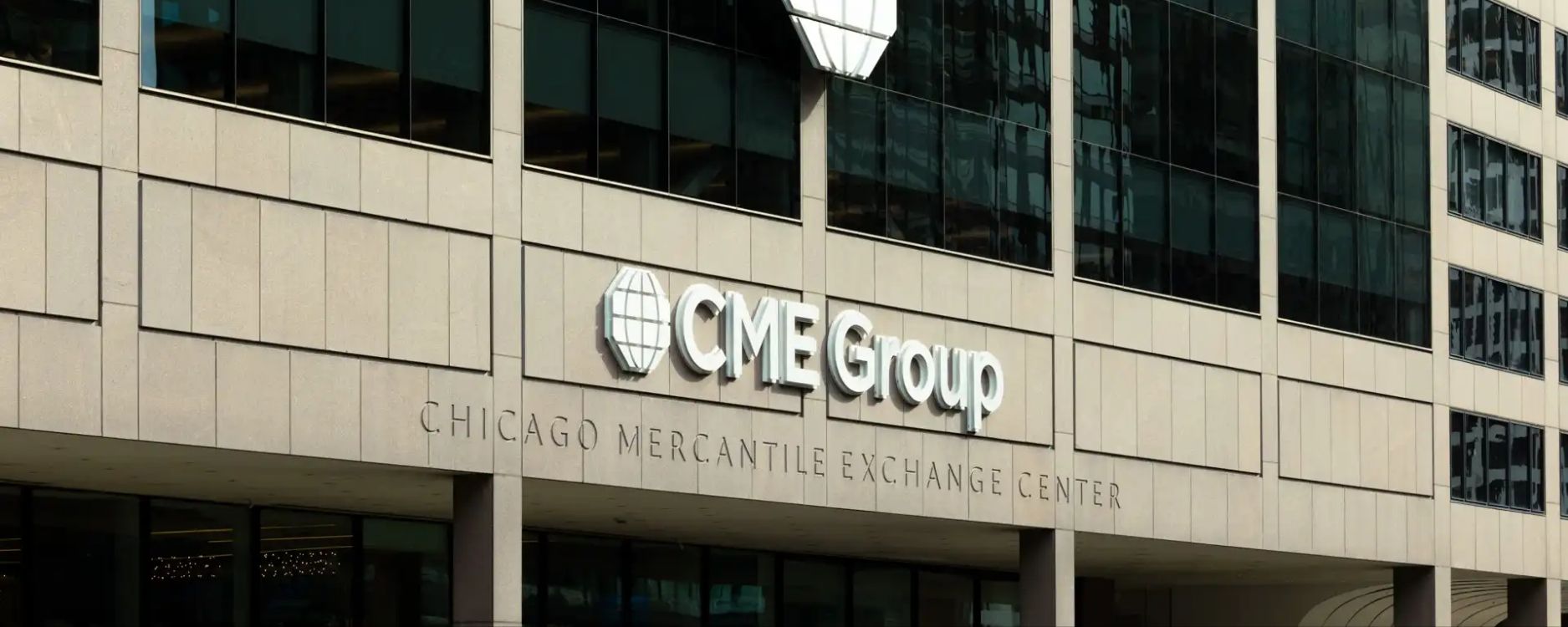
CME Group is continuing its steady march into crypto markets, this time by adding futures tied to Cardano, Chainlink, and Stellar. The move expands the exchange’s growing lineup of regulated digital asset derivatives and signals that institutional interest is no longer confined to Bitcoin and Ether alone.
The new contracts, which are expected to go live in early February pending regulatory signoff, will include both standard and smaller-sized versions. That approach mirrors CME’s recent strategy across crypto products, offering flexibility for large institutions while also lowering the barrier to entry for smaller trading firms and active investors.
For CME, this is less about chasing headlines and more about meeting demand. As crypto markets mature, firms want tools that look and feel familiar. Regulated futures, clear contract specifications, and centralized clearing still matter a great deal to traditional players, especially when volatility remains a defining feature of the asset class.
Why These Tokens Matter
The choice of Cardano, Chainlink, and Stellar is telling. Each represents a different corner of the crypto ecosystem.
Cardano has positioned itself as a research-driven blockchain focused on scalability and governance. Chainlink underpins a huge portion of decentralized finance by supplying real-world data to smart contracts. Stellar has long emphasized cross-border payments and financial inclusion. Together, they reflect how institutional interest in crypto has broadened beyond simple price exposure to Bitcoin.
CME’s contracts will allow traders to hedge or speculate on these networks without touching the underlying tokens. For many institutions, that distinction is critical. Futures provide exposure while avoiding custody, on-chain risks, and operational complexity.
Part of a Larger Derivatives Push
This latest expansion fits neatly into a much bigger picture. Over the past few years, CME has methodically built out its crypto derivatives suite, starting with Bitcoin, then adding Ether, and gradually branching into other high-profile tokens.
The exchange has also leaned heavily into micro contracts, which have proven popular across asset classes. Smaller contract sizes give traders more precision and flexibility, especially in volatile markets where position sizing matters.
Behind the scenes, crypto derivatives volumes at CME have continued to grow, even during quieter periods in the spot market. That suggests the audience for these products is becoming more structural and less driven by short-term hype.
What It Means for the Market
For institutional investors, the arrival of ADA, LINK, and XLM futures adds another layer of legitimacy to altcoin markets. Regulated futures improve price discovery, enable more sophisticated hedging strategies, and make it easier for funds to justify exposure internally.
Retail and professional traders may also benefit indirectly. As liquidity deepens on regulated venues, pricing tends to become more efficient across the broader market. That can reduce fragmentation between offshore platforms and U.S.-regulated exchanges.
There is also a signaling effect. When CME adds a product, it often becomes a reference point for the rest of the industry. Listing a token does not guarantee long-term success, but it does suggest sustained interest and sufficient market depth.
Looking Ahead
CME’s decision to bring Cardano, Chainlink, and Stellar into its derivatives lineup reinforces a clear trend. Crypto markets are no longer just about Bitcoin dominance. Institutions want diversified exposure, and they want it through familiar, regulated instruments.
As more altcoins find their way into traditional market infrastructure, the line between crypto-native and traditional finance continues to blur. For CME, that is likely the point.