#Elon Musk
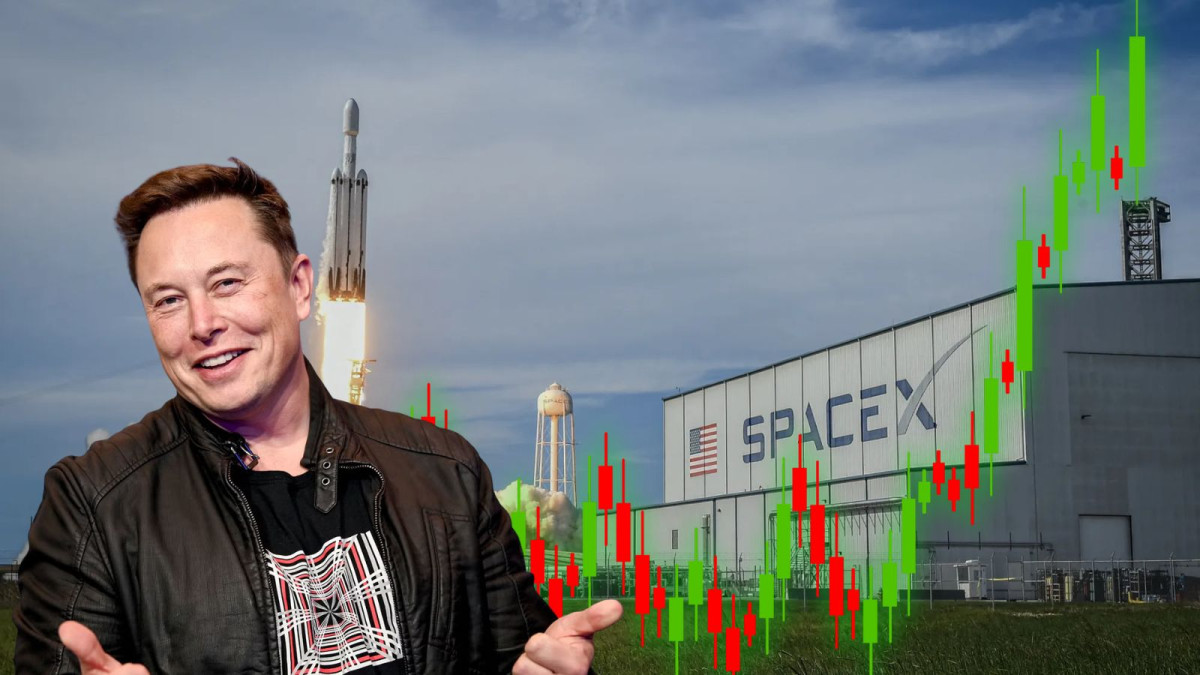
SpaceX Files for the Largest IPO in Stock Market History

SpaceX filed its long-awaited IPO registration with the Securities and Exchange Commission on Wednesday, officially kicking off what many are already calling the most consequential stock market debut in decades. Elon Musk's rocket and satellite giant is targeting a valuation north of $1.75 trillion and plans to raise up to $75 billion, figures that would shatter every previous IPO record by a massive margin.
To add some perspective, Saudi Aramco held the prior record when it raised roughly $29 billion in 2019. SpaceX is aiming for more than double that. The company plans to list on the Nasdaq under the ticker symbol SPCX, with shares expected to price on June 11 and trading set to begin June 12.
A Company That's Changed Dramatically
The SpaceX going public today is not the same company investors were tracking two years ago. In February 2026, SpaceX completed an all-stock merger with xAI, the artificial intelligence firm Musk founded in 2023. That deal valued SpaceX at $1 trillion and xAI at $250 billion, creating a combined entity worth $1.25 trillion at closing. The jump to a $1.75 trillion IPO target reflects market expectations around continued Starlink revenue growth and the AI premium investors are attaching to the xAI component.
The company also recently announced a collaboration with Tesla on an advanced chip manufacturing facility, signaling that the boundaries between Musk's various ventures are blurring in ways that make traditional valuation frameworks feel inadequate. Wedbush analyst Dan Ives went as far as suggesting that a SpaceX and Tesla merger could follow after the IPO completes, pointing to Tesla's $2 billion xAI investment that converted to SpaceX shares after the acquisition.
Starlink Is the Engine. AI Is the Story.
Starlink, the satellite internet service that now counts more than 9 million users globally, accounted for the majority of SpaceX's $18.67 billion in revenue last year and remains the core commercial engine of the business. The IPO filing identifies connectivity through Starlink as a $1.6 trillion addressable market opportunity. But that figure is almost a footnote compared to the AI ambitions outlined in the prospectus.
The company's total addressable market is pegged at $28.5 trillion across all its business lines. A striking $26.5 trillion of that is tied to AI, including $22.7 trillion in enterprise AI applications and $2.4 trillion in AI infrastructure. Whether those numbers are realistic or optimistic is a debate that will play out over the coming decades, but for IPO purposes, they give underwriters a lot of room to work with.
There is a catch buried in the otherwise impressive revenue story. Despite generating $18.67 billion in revenue last year, SpaceX reported a loss of roughly $4.9 billion as capital expenditures nearly doubled to $20.7 billion in 2025. That compares to a profit of around $791 million in 2024. The xAI unit continues to lose money as well, and the filing is pretty blunt about the execution risks that come with building space-based AI data centers and pushing Starship toward operational status.
As a retail access angle, Musk has reportedly expressed a desire to reserve up to 30% of IPO shares for individual investors, a move that would be unusual at this scale but would fit his populist branding. The company has also conducted a 5-for-1 stock split, bringing the per-share price down to roughly $105 from over $526, making the listing more accessible to everyday buyers on platforms like Robinhood and Fidelity.
What Comes Next
Goldman Sachs is leading the underwriting, with Morgan Stanley, Bank of America, Citi, and JPMorgan among the other major banks involved. The roadshow kicks off June 4, and if everything goes to plan, SpaceX will begin trading the following week. The IPO is internally known as Project Apex, managed by a syndicate of at least 21 banks.
For the wider market, the SpaceX debut is expected to be the first of a potential trio of landmark tech IPOs, with OpenAI and Anthropic also eyeing public listings. For crypto and digital asset markets, this IPO is worth watching too. A company of this scale going public at a $1.75 trillion valuation, with explicit AI ambitions and a Musk-controlled governance structure, is the kind of macro event that tends to shift risk sentiment across asset classes. We'll see if SPCX delivers on the hype or falters under the weight of its own valuation...but it will be interesting to watch, either way.
Bitget To Offer Exposure To SpaceX IPO
Crypto exchange Bitget has launched a new product called IPO Prime, and its debut offering could, quite literally, be a moon shot. It's preSPAX, a tokenized instrument giving retail investors synthetic exposure to SpaceX ahead of what could be the largest initial public offering in stock market history.
SpaceX filed confidentially with the U.S. Securities and Exchange Commission on April 1, targeting a June 2026 listing at a valuation of roughly $1.75 trillion. Yes, you read that right. If that figure holds at the close of the first trading day, SpaceX would rank as the sixth most valuable publicly traded company on earth, behind only Nvidia, Apple, Alphabet, Microsoft and Amazon. The deal is being internally codenamed "Project Apex" and has drawn 21 banks competing for underwriting roles, according to Reuters.
What preSPAX Actually Is
Worth pausing on the structure here, because the word "exposure" does a lot of heavy lifting in the marketing and isn't quite what you would expect in traditional terms. preSPAX, issued through Republic, which is a tokenized private markets platform valued at over $1 billion, is a synthetic instrument. It tracks a reference index tied to SpaceX's economic performance after a qualifying event, such as an IPO or acquisition. Holders receive no equity, no voting rights, and no direct ownership stake in SpaceX. The company itself has not endorsed or authorized the product in any way.
The subscription window opens April 18 and closes April 21, with token distribution and OTC trading scheduled to begin on the same day it closes. Bitget has set aside 94,000 tokens priced at $650 each, implying a total subscription value of around $61.1 million and an implied SpaceX valuation of $1.5 trillion for the purposes of the sale.
Bitget CEO Gracy Chen described the launch by saying that, "Pre-IPO exposure used to be limited to small circles, but tokenization has changed that," she said in a statement. "preSPAX is our first offering and we will be bringing more such opportunities to our users this year." The exchange has already signaled plans to add OpenAI and xAI tokens to the platform by Q3 2026.
SpaceX Is A Financial Rocket Ship
For those keeping track, SpaceX's valuation has moved at a velocity that mirrors its own rockets. The company was worth roughly $46 billion in 2020. By early 2025 that figure had ballooned to $800 billion. Then came February 2026, and with it, SpaceX's all-stock acquisition of Elon Musk's AI venture xAI, a deal that reset the combined entity's valuation at $1.25 trillion overnight. Six weeks later, the IPO target sits at $1.75 trillion.
The core revenue driver is Starlink. By the end of 2025, the satellite internet constellation had accumulated 9.2 million active subscribers across 125 countries, doubling its user base in under 15 months and generating north of $10 billion in annual revenue. Analysts at Bloomberg and Quilty Space project that figure could climb to somewhere between $15.9 billion and $24 billion in 2026. Morgan Stanley analyst Adam Jonas, who has tracked space equities for over a decade, has been vocal: Starlink alone, he argues, would justify a $500 billion valuation as a standalone business.
Layer in the launch monopoly, Starship's development trajectory, and the xAI integration, and the $1.75 trillion figure becomes at least a coherent argument, if not an easy one to accept on traditional metrics. At that valuation, SpaceX trades at roughly 90x 2025 revenue of $15.5 billion. For context, Nvidia, the AI darling of the current cycle, trades at around 30x forward revenue. Federal contract data compiled by FedScout shows SpaceX has racked up more than $24.4 billion in government awards since 2008, spanning NASA, the Air Force and Space Force.
Crypto And Wall Street
The push to bridge crypto infrastructure and traditional capital markets has been accelerating across the industry. Coinbase launched stock trading at the end of 2025 and repositioned its wallet as an "everything app." Kraken rolled out 11,000 US-listed stocks and ETFs with commission-free trading in April 2025. Bitpanda added around 10,000 stocks and ETFs to its platform in January. Republic, the partner behind preSPAX, previously launched rSPAX Mirror Tokens on Solana for as little as $50 per unit.
The competitive landscape for pre-IPO SpaceX exposure is getting crowded fast. On the crypto side, Solana-based PreStocks and Orderbook offer comparable products. On the traditional side, Forge Global, EquityZen and Nasdaq Private Market all provide secondary market access to SpaceX shares, though exclusively to accredited investors. That last detail is where the regulatory picture gets a bit fuzzy.
Risks Probably Worth Reading Twice
The structure behind preSPAX runs three layers deep: Bitget, then Republic, then the reference index tied to SpaceX performance. Settlement depends on the lockup period of the underlying debt asset expiring after a SpaceX IPO, at which point the issuer converts value into tokens or USDT based on SpaceX's market price at the time.
The product's structure fits relatively cleanly under the SEC's Howey Test definition of a security: an investment in a common enterprise with profit expectations derived from the efforts of others. Traditional platforms like Forge Global restrict SpaceX pre-IPO access to accredited investors. Bitget's product, by contrast, is technically available to its reported 125 million users, many of whom will not meet that threshold. The SEC intensified its scrutiny of tokenized securities structures throughout 2025, and similar hybrid instruments have been flagged as operating in a gray area that can move quickly toward enforcement territory.
There is also the small matter of whether SpaceX actually lists on schedule. The company's confidential filing gives it runway to address SEC comments privately before going public with its prospectus, which must be released at least 15 days before the roadshow begins. Prediction markets currently have 88% odds on SpaceX closing its first trading day above a $1.3 trillion market cap, which says a lot about where sentiment sits right now. Whether preSPAX holders ultimately benefit depends entirely on how that listing plays out, and when.
For the broader market, a successful SpaceX debut at $1.75 trillion would be a seismic event. It would arrive as the sixth most valuable public company on earth, trigger automatic S&P 500 inclusion discussions within months, and likely dominate institutional allocation budgets at a moment when OpenAI and Anthropic are both queuing up their own landmark listings. The IPO wave is building. And Bitget, for one, is not waiting for it to break.
Tesla Reports Q3 Earnings as Bitcoin Gains Add Up to $80 Million
Tesla Reports Q3 Earnings as Bitcoin Gains Add Up to $80 Million
Tesla delivered another strong quarter in Q3 2025, demonstrating its ability to navigate challenging market conditions while benefiting from a well-timed position in digital assets. The company’s Bitcoin holdings added a significant boost to its bottom line, reinforcing Tesla’s reputation as one of the most innovative and forward-thinking firms in both technology and finance.
A Profitable Quarter Backed by Digital Asset Appreciation
Tesla reported an estimated 60 to 80 million dollars in profit from its Bitcoin position during the third quarter, according to financial filings and market analysis. The company’s digital asset value rose from roughly 1.23 billion dollars at the end of June to about 1.31 billion dollars by the end of September. This growth reflects Bitcoin’s continued strength throughout the quarter, supported by rising institutional demand and renewed global interest in digital assets.
Tesla continues to hold over 11,500 Bitcoin, one of the largest corporate positions in the world. The company did not sell any of its holdings during the quarter, instead maintaining its strategy of long-term retention. This patient, conviction-driven approach to Bitcoin has allowed Tesla to benefit from market cycles while positioning itself as a forward-looking leader in corporate digital asset management.
Strategic Synergy Between Automotive Innovation and Digital Finance
Tesla’s success in integrating a Bitcoin treasury strategy with its broader business vision is increasingly seen as a competitive advantage. While automotive margins remain under industry pressure, the company’s exposure to appreciating digital assets provides an additional layer of financial strength and diversification.
By holding Bitcoin on its balance sheet, Tesla demonstrates a unique hybrid model that bridges advanced manufacturing, artificial intelligence, and blockchain finance. It is not merely an automaker but a global technology enterprise that thrives at the intersection of energy, mobility, and digital transformation.
This financial synergy also supports Tesla’s long-term mission. As the world transitions toward both clean energy and decentralized finance, Tesla remains one of the few global brands positioned at the center of both revolutions. Its balance sheet reflects that forward vision, showing a company prepared for both economic cycles and technological evolution.
A Signal of Confidence in Bitcoin’s Role in the Global Economy
Tesla’s continued commitment to Bitcoin signals more than financial gain; it represents growing corporate confidence in cryptocurrency as a legitimate store of value. With financial regulators introducing clearer frameworks and institutions increasingly entering the digital asset space, Tesla’s early adoption looks increasingly prescient.
The company’s willingness to maintain its Bitcoin holdings through market volatility underscores its belief in long-term growth. This conviction sets Tesla apart from peers who view crypto purely as a speculative asset. Instead, Tesla treats Bitcoin as a strategic reserve, similar to how traditional corporations manage foreign currency or commodity exposure.
Looking Ahead
If Bitcoin continues its current trajectory, Tesla could realize even greater gains in upcoming quarters. The company’s diversified position offers flexibility to respond to both automotive market trends and macroeconomic shifts in digital finance.
Tesla’s ability to merge industrial innovation with modern financial strategy positions it as a global leader in both sectors. While other firms are only beginning to explore blockchain and digital assets, Tesla has already embedded them into its operational and financial framework.
The Bottom Line
Tesla’s Q3 results reflect more than just strong execution in manufacturing and technology. They highlight a company that understands how to use modern financial tools to enhance shareholder value and resilience. Bitcoin has become a complementary pillar of Tesla’s broader strategy, offering both tangible profit and long-term strategic positioning.
As Bitcoin continues to gain global traction and institutional legitimacy, Tesla’s early and ongoing participation in this space places it in a unique category. It is not simply leading the electric vehicle revolution; it is shaping the future of corporate finance.
In combining innovation on the road with innovation on the balance sheet, Tesla continues to prove that its strength lies not only in what it builds but also in how it thinks.