#Consensus 2026
Crypto’s Moment: The Shift Has Happened

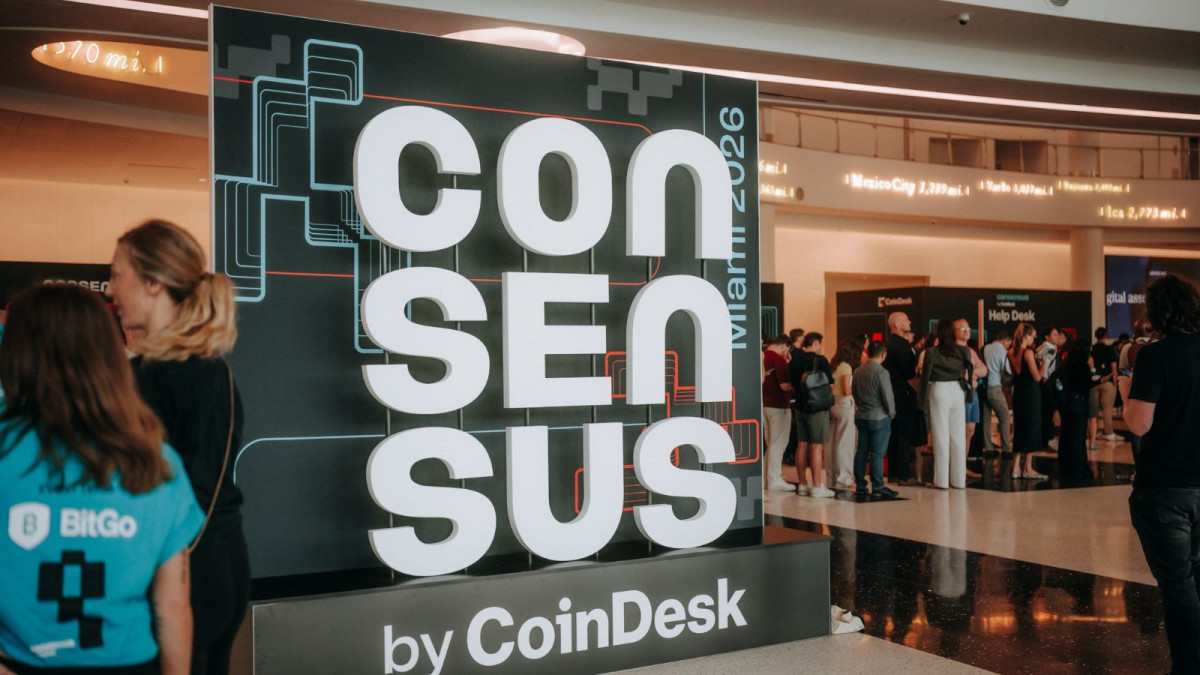
I've been attending crypto conferences for years now, each one has its own unique appeal. And there was a time, not too long ago actually, when showing up at these conferences meant navigating a room packed with hoodies, anonymous Twitter handles, and a uneasy sense that the whole thing might collapse before lunch. Consensus 2026 in Miami was something else entirely. Suits. Bankers. Senators. The kind of people who, five years ago, may have sent a junior staffer to take notes and report back with a politely skeptical summary...maybe. If that Senator or Banker was on the cutting edge of what was happening in the space.
But, what was clearly apparent after attending Consensus 2026, this past May 5th through 7th at the Miami Beach Convention Center, among the more than 15,000 attendees across 150-plus sessions and thousands of private meetings... institutional representation is here. And in force. A group collectively managing an estimated $10 trillion in assets. JPMorgan, Morgan Stanley, BlackRock, Charles Schwab, Mastercard, and Goldman Sachs all had a seat at the table. This is not your old crypto conference anymore, at least not in the way that they all used to be.
From Speculation to Infrastructure
One of the clearest signals of how much the narrative has changed came from Binance’s chief marketing officer, Rachel Conlan, who put it plainly on stage: “We were in the Prohibition era. Now we are in the infrastructure phase.” That framing amplified across the entire conference. Executives from Revolut, Circle, Ripple, and a dozen other firms echoed the same sentiment in different ways: crypto has stopped trying to prove it deserves to exist and started figuring out how to scale.
A panel on crypto ETFs captured the mood well. “The market is the market,” said Dave LaValle, president of CoinDesk Indices, “it’s not crypto and traditional anymore.” Following the successful launch of U.S. spot Bitcoin ETFs earlier this year, institutional access to digital assets has become genuinely standardized. In parts of Asia where spot crypto remains restricted, ETFs are now the primary on-ramp. The direction of travel is undeniable.
Conversations at the conference focused less on whether crypto belongs in traditional finance and more on portfolio allocation, diversification, and long-term positioning. That is a different conversation, and the people having it are different too. Despite the current downtrend in crypto, the increased regulatory clarity under this current U.S. administration has long-term optimism among some very serious players.
That optimism on regulatory clarity was arguably the dominant subtext running through almost every major session. Ripple CEO Brad Garlinghouse offered one of the conference’s more quoted predictions, projecting the crypto market cap at $3 trillion by 2031 while arguing the industry should stop fighting internally and get behind the proposed CLARITY Act, imperfections and all. Panelists at events across the three days reinforced that point: regulatory certainty, more than any technological breakthrough, is what drives institutional inflows.

Stablescoins, AI, RWAs, and the Next Wave
Stablecoins were everywhere at Consensus, and not as a theoretical construct. Several speakers pointed to stablecoins as the clearest real-world use case currently accelerating mainstream blockchain adoption.
Beyond stablecoins, two other themes kept surfacing in sessions and hallway conversations: real-world asset tokenization and the convergence of AI with blockchain.
On the tokenization side, high-level sessions at Consensus outlined legal and technical blueprints for moving trillions in assets, from treasury bills to real estate, onto the blockchain for around-the-clock trading. Asset managers at the conference described it as one of the more credible near-term use cases for the technology, particularly given the growing appetite from traditional finance firms looking for yield and efficiency.
The AI angle was harder to pin down but harder to ignore. Animoca Brands chairman Yat Siu suggested AI agents will eventually replace dating apps when it comes to partner selection, which got attention mostly for the absurdity of the framing. The more grounded version of the discussion, played out at Agentic University, a new dedicated technical track at the conference, centered on autonomous AI agents executing on-chain transactions and managing liquidity without human intervention. Whether that future arrives in two years or ten is still unclear. But it is definitely coming and that is certain.

The Take Away
Consensus 2026 felt less like a surprise and more like a confirmation.
The energy was different in the best possible way: less defensive, less tribal, more genuinely curious about how to build something that lasts. The memecoin flashing box-truck billboards were all gone. The arguments that used to dominate, whether crypto was legitimate, whether regulators were the enemy, whether TradFi would ever come around, had given way to more interesting questions about how to actually make all of this work for more people.
As producers of Rare Evo, we noticed the early signs of this shift a couple of years back. The conversations happening quietly at smaller events and at the hundreds of meetings we have with all kinds of people in this ecosystem, among the builders and policy people who were starting to find common ground rather than trading talking points, told us that the industry was maturing in real time. So we made the decision to lean into it.
This year’s Rare Evo is being built deliberately around that convergence. More policy and regulation on the main stage, not just as some compliance checkbox but as a genuine strategic conversation. More sessions dedicated to TradFi and DeFi figuring out how to complement each other rather than compete. More focus on the practical question of how bringing these two worlds together actually benefits ordinary people, not just the institutions and protocols jockeying for position.
The old framing, crypto versus traditional finance, was always a little lazy. The more honest version of the story is that both systems have real strengths and real blind spots, and that the people who get hurt most by their failure to communicate are the ones who need the better financial tools in the first place. That is the conversation we want to have at Rare Evo this year, and if Consensus 2026 is any indication, the timing has never been better.
The genie is out of the bottle. Now let’s make it work for all of us.