#rare evo
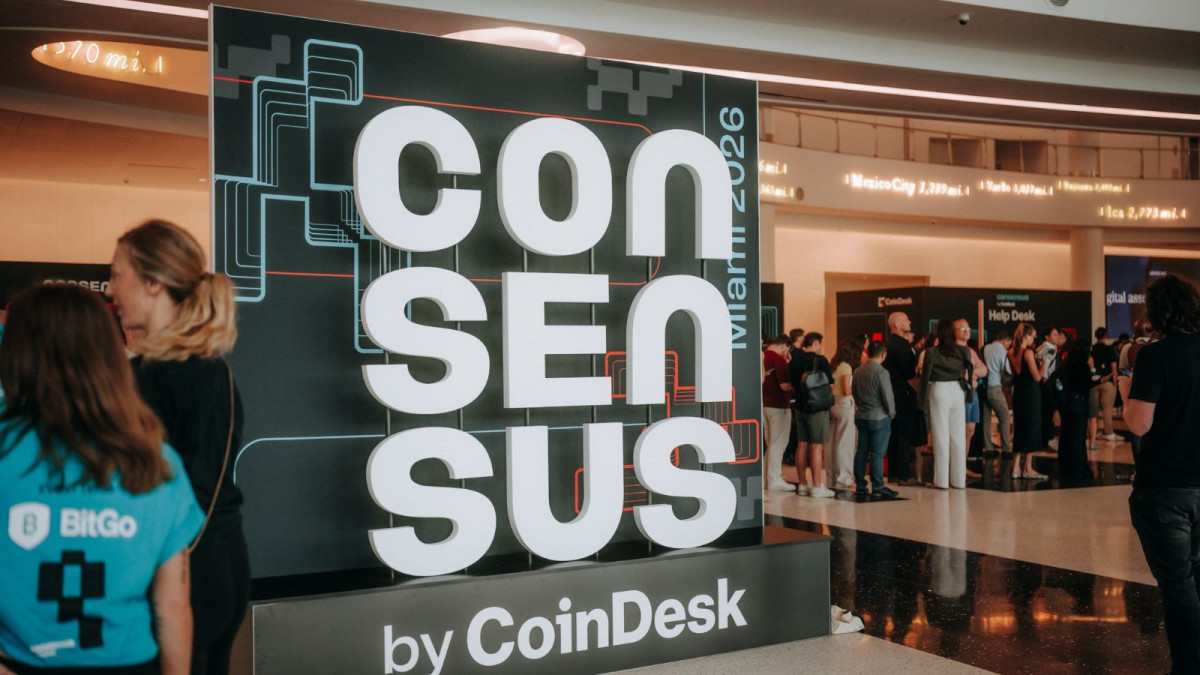
Crypto’s Moment: The Shift Has Happened


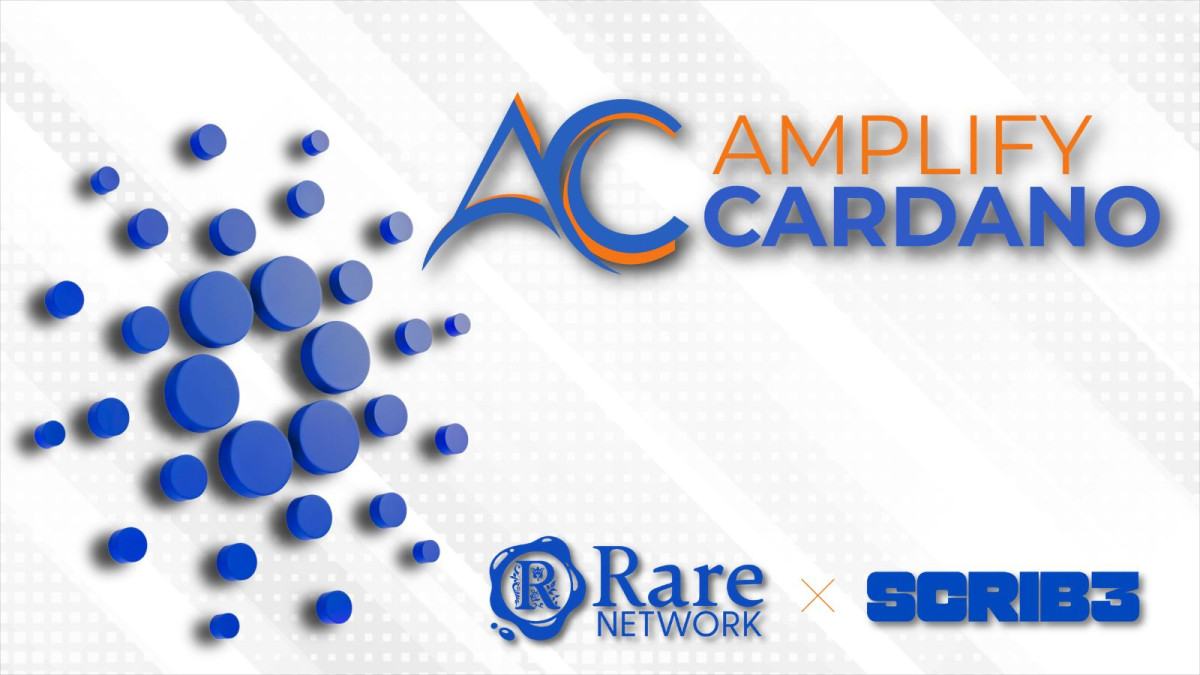
Can Cardano Get the Marketing Machine It Deserves?

Rare Network and SCRIB3 are teaming up to launch Amplify Cardano, a $2 million community-driven marketing and events program that could fundamentally shift how the world's most technically rigorous blockchain tells its story.
If you've spent any real time in the Cardano ecosystem, you already know the frustration. The technology is genuinely impressive. The community is deep, global, and unusually committed. The governance transition Cardano pulled off last year was historic. And yet, ask someone outside of crypto to name a breakout project built on Cardano and you'll mostly get silence.
That's the gap Amplify Cardano is trying to close, and the two organizations behind it have the credentials to actually do it.

Two Prongs, One Clear Goal
The proposal, expected to be formally put on chain in the coming days, is currently seeking $2 million in treasury funding and built around a two-part structure. The first prong is a Community Accelerator Fund of $1 million, designed to give 3-5 high-potential ecosystem projects the full-stack marketing support they need to compete with the Jupiters and Jitos of the Solana world. We're talking brand development, paid media, PR, website builds, social media management, the whole thing. And not at inflated agency rates, either. Projects accepted into the program will receive services at 30-50% below standard market pricing, which is a genuinely meaningful discount in an industry where a monthly social media retainer alone can run $25,000.
SCRIB3, the crypto-native creative and communications agency co-leading this effort, isn't a newcomer to this space. Founded in late 2022, the firm has quietly built one of the more impressive rosters in web3 marketing, working across DeFi protocols, Layer 1s, and infrastructure projects. Its team includes a former aerospace engineer turned crypto growth strategist who has worked with over 40 protocols, alongside partners with backgrounds in strategy at Uber and private equity. SCRIB3 has also been embedded in Cardano governance for some time now, including sending team members to the Constitutional Convention in Buenos Aires in late 2024 and serving on the Growth and Marketing Committee. They know the community. They know the gaps.

Grassroots at Scale: Rare Network's Events Machine
The second prong is where things get especially interesting for the long-suffering Cardano community member who has watched the ecosystem struggle to show up, across the globe... where it absolutely should have a presence. Rare Network will manage a $1 million Community-Led Events and Marketing Fund, built to support 100-plus projects and individual contributors over 18 months with grants ranging from $500 to $15,000 per request.
That might sound modest at the individual level, but the aggregate effect is the point. The vision is coverage and frequency. Cardano should have something happening somewhere, all the time. A local meetup in Lagos. A DeFi workshop in Buenos Aires. Comprehensive content creation. A hackathon at local universities. A networking social at Consensus. Social Media Campaigns. All of it coordinated, funded, and reported back to the community through Rare Network's management layer.
Rare Network's track record here is hard to argue with. The company has been running Rare Evo, a premier blockchain conferece, every year for five years now. Initially spinning out of a pure Cardano Community event, Rare Evo has become a destination for multiple chains, spanning the entire industry. From TradFi to DeFi, Institutions and Policy-makers, and NFTs and Gaming. The Las Vegas event covers every aspect of the indsutry and draws thousands of attendees, pulls over a million related video views across its productions, and has featured Charles Hoskinson, Frederik Gregaard, and Nikhil Joshi from Cardano's founding leadership on stage. Beyond that annual flagship, the team has produced more than 60 side events and meetups at major industry gatherings including Consensus, TOKEN2049, ETHDenver, Paris Blockchain Week, and the Cardano Summit. Their Rare Social events average over 2,000 registered attendees each.
Perhaps most tellingly, Rare Network was named a formal event partner in Cardano's Unified Global Events Marketing Strategy alongside the Cardano Foundation and EMURGO, a governance proposal that passed with nearly 80% DRep support.

Fixing What Grants Programs Get Wrong
The proposal is also refreshingly honest about why previous approaches have fallen short. Most Layer 1 ecosystems try to solve the marketing problem through grants programs, but those programs fail at a high rate. They hand projects money and then leave them to figure out the rest, which means navigating agency RFPs, building marketing plans from scratch, and hoping things click, usually on a deadline. Most teams, especially lean early-stage ones, simply aren't equipped to execute that way.
The Amplify Cardano model is different. Instead of funding and stepping back, SCRIB3 does the work directly for the Accelerator projects alongside the Accelerator projects, with KPIs and statements of work approved by Cardano's Growth and Marketing Committee and Product Committee. The program isn't just writing checks; it's delivering results against a defined standard with oversight built in from the start.
On the community side, Rare Network has already piloted the model. The Amplify Cardano program launched in early 2026 through Project Catalyst Fund 14 and funded five events and two marketing campaigns before the Catalyst program was paused. That pause, actually, underscores exactly why a dedicated fund managed by experienced operators makes sense. Community organizers shouldn't be held hostage to governance cycles when they want to throw an event next month.
The Numbers Make Sense
At $2 million total, the ask represents less than 0.02% of ADA's market cap, and is meaningfully below what comparable ecosystems invest in equivalent programming. The Cardano community's own Q4 2025 GMC survey ranked marketing support for builders second and community events third among their top priorities for treasury spending. This proposal answers both in a single package, with experienced operators who have already demonstrated they can deliver.
Cardano has spent a decade building something genuinely worth talking about. Now it has a real plan for making sure the rest of the world hears about it.


How US Crypto Regulation Changed in 2025 and What Comes Next

For years, crypto regulation in the United States felt stuck in a loop. Regulators argued over definitions. Courts weighed in after the fact. Companies tried to guess how existing rules might be applied to new technology. Progress was slow, uneven, and often reactive.
In 2025, something changed.
Instead of debating what crypto is, lawmakers and regulators began focusing on how crypto markets actually function. The shift was not loud or dramatic, but it was meaningful. And it made 2025 one of the most consequential years for U.S. crypto regulation so far.
From Debate to Infrastructure
The defining feature of crypto regulation in 2025 was its practicality.
Regulators spent the year tackling questions that are not especially flashy but matter enormously for market growth. Who is allowed to issue a digital dollar. What backs a stablecoin in real terms. How quickly exchange traded products can be approved. What custody looks like when ownership is defined by control of a private key.
These are not philosophical debates. They are infrastructure decisions. And infrastructure is what determines whether a market stays niche or becomes part of the financial system.
That shift did not mean regulators became more permissive. It meant they became more operational.
A Fragmented System, With Clearer Edges
The U.S. regulatory structure remains fragmented. Congress sets the legal framework, but oversight is split across agencies.
- The Securities and Exchange Commission oversees securities markets.
- The Commodity Futures Trading Commission regulates commodities and derivatives.
- The Internal Revenue Service governs tax treatment.
- Banking regulators supervise insured institutions and their subsidiaries.
That structure did not change in 2025. A single digital asset can still fall under multiple regimes depending on how it is traded, marketed, custodied, or used.
What did change is that the parts of crypto that intersect most directly with traditional finance began to get clearer boundaries and processes.
Stablecoins Became a Federal Issue
The most significant development of the year was the passage of the GENIUS Act, which established the first federal framework for payment stablecoins in the United States.
Before this law, stablecoins largely operated under state level money transmission rules or informal regulatory expectations. Issuers relied on disclosures and attestations. Banks stayed cautious, unsure how supervisors might view their involvement.
The new framework set expectations around who can issue payment stablecoins, how reserves must be held, and how redemption works under supervision. In practical terms, it began to treat stablecoins less like an experiment and more like financial infrastructure.
That matters because stablecoins sit at the center of crypto trading, payments, and settlement. Clear federal rules make it easier for banks and regulated firms to engage without risking regulatory surprises.
Investment Products Got More Predictable
Crypto investment products also moved forward.
The SEC approved generic listing standards for certain commodity based trust products. That change reduced the need for one off negotiations for every new exchange traded product and made approval timelines more predictable.
Predictability may not generate headlines, but it changes behavior. It lowers legal costs, shortens timelines, and makes firms more willing to launch products beyond the most obvious ones. It also makes advisers and institutions more comfortable allocating capital through standardized structures.
Tax treatment improved as well. The IRS introduced a staking safe harbor for certain trust structures, allowing proof of stake assets to generate yield without automatically breaking tax classification. That adjustment brought tax rules closer to how these networks actually operate.
Custody Finally Moved Into Focus
Custody has long been one of crypto’s most difficult issues.
Traditional finance is built around regulated custodians, clear chains of control, and established customer protection rules. Crypto does not fit neatly into that model, since control is defined by private keys rather than physical possession or centralized records.
In late 2025, regulators began addressing this gap more directly. The SEC provided guidance on how broker dealers should approach custody of crypto asset securities. Banking regulators outlined how institutions could apply to issue stablecoins through supervised subsidiaries.
These steps did not eliminate complexity, but they replaced ambiguity with process. In regulated markets, that distinction is crucial.
What Was Left Unfinished
Not everything was resolved.
The largest unresolved issue remains market structure, particularly the line between SEC and CFTC jurisdiction. The Digital Asset Market Clarity Act advanced in Congress but did not become law in 2025. That uncertainty continues to influence how companies list tokens and design compliance programs.
Still, the fact that market structure legislation remained active suggests the debate has moved from whether crypto should be regulated to how best to finish the framework.
Why 2025 Mattered
Most of the regulatory changes in 2025 were not about enforcement actions or penalties. They were about building rules that allow institutions to participate without improvisation.
Stablecoins gained a federal framework. Investment products became more standardized. Custody moved closer to supervision rather than theory.
Taken together, these steps made crypto look less like a legal edge case and more like emerging financial infrastructure.
Looking Ahead
If 2025 was about laying groundwork, 2026 will be about implementation.
The next phase will involve rulemaking, supervision, and real world deployment. Stablecoin issuers will apply for licenses. Banks will test new payment rails. Product sponsors will launch under clearer standards.
The momentum from 2025 created something the U.S. crypto market has lacked for years: a sense that the rules, while still evolving, are becoming legible.
That may not satisfy everyone. But for a market that thrives on scale, clarity is often more valuable than certainty.
Where the Conversation Continues
For anyone trying to understand where crypto regulation and policy are actually headed, these conversations are no longer abstract. They are happening in real time, often face to face.
That is part of what makes Rare Evo stand out.
Rare Evo takes place July 28-31, 2026, in Las Vegas at The ARIA Resort & Casino, and has become one of the premier industry event where regulators, policymakers, and blockchain builders share the same room. It is not just a conference about price action or product launches. It is a place to hear directly from the people shaping policy, alongside the teams building the technology those policies will govern.
Panels and discussions at Rare Evo tend to focus on how regulation works in practice, what regulators are actually thinking, and how the industry can engage constructively rather than reactively. For anyone serious about long term adoption, it is one of the more valuable rooms to be in.
You can learn more about the event and purchase tickets at https://rareevo.io/buy-tickets
Alongside that conversation is the role of Rare PAC.
Rare PAC focuses on supporting policymakers who understand digital assets and who are willing to engage seriously with the work of building clear, workable rules in the United States. It is not about opposing regulation. It is about avoiding regulation by confusion or enforcement after the fact.
As 2026 approaches, the progress made in 2025 will only matter if it is protected and extended. That requires continued participation, education, and engagement from people who care about the future of crypto in the US.
For those interested in learning more or getting involved, information is available at https://rarepac.io
If 2025 was the year crypto regulation became practical, the next phase will depend on whether that momentum is carried forward. Conversations like the ones at Rare Evo, and efforts like Rare PAC, are part of how that happens.

Bitcoin Turns 17: How a 9-Page Whitepaper Changed the World Forever
17 Years of Bitcoin: How a 9-Page Idea Sparked a Global Movement for Freedom and Fairness
Seventeen years ago today, on October 31, 2008, an anonymous figure named Satoshi Nakamoto shared a humble nine-page PDF with the world. It was titled “Bitcoin: A Peer-to-Peer Electronic Cash System.” Few could have imagined that this quiet moment, on the edge of a global financial crisis, would ignite one of the most transformative movements in modern history.
Bitcoin wasn’t just about money. It was about trust. It was about reclaiming ownership of value, identity, and information in a world where those things had been monopolized by banks, corporations, and governments.
Seventeen years later, Bitcoin has evolved from a cryptography experiment into a global symbol of freedom, transparency, and innovation.
A Global Shift Toward Financial Freedom
Billions of people around the world live without access to a stable banking system. For many, Bitcoin isn’t speculation, it’s survival.
In places like Venezuela, Nigeria, and Argentina, where inflation has destroyed national currencies, Bitcoin became a lifeline. It allowed families to store value, move money across borders, and rebuild livelihoods in ways their local economies could not.
Bitcoin broke the monopoly of geography.
It gave people a way to own something that no one could take away, not a bank, not a government, not inflation.
This is more than finance; it is economic dignity.
Technology That Restored Trust
At its core, Bitcoin solved one of the oldest problems in digital systems: how do you create trust between strangers without a middleman?
The answer was the blockchain, a transparent, tamper-proof ledger that anyone could verify, but no one could corrupt.
That simple principle has since inspired entire industries. From tracking clean energy credits to verifying supply chains and fighting corruption, blockchain technology is now being used to bring transparency to a world built on opacity.
Bitcoin didn’t just create digital money.
It created a framework for accountability, one that is open, auditable, and global.
Empowering People, Not Institutions
Bitcoin redefined what it means to “own” something in the digital age.
In a world dominated by centralized platforms, your data, identity, and assets are often rented, not owned. But on the blockchain, ownership becomes real.
You hold your private keys.
You control your value.
You decide your future.
This shift, from reliance to sovereignty, is reshaping how people view money, art, and even governance. Bitcoin inspired the rise of decentralized finance (DeFi) and digital ownership (NFTs), opening up creative and economic possibilities that were once unimaginable.
It’s not just about technology. It’s about reclaiming human agency in the digital era.
Real-World Impact and Innovation
The ripple effects of Bitcoin’s creation are now seen everywhere:
-
El Salvador became the first country to adopt Bitcoin as legal tender, pushing financial access to millions without banks.
-
Philanthropic organizations use Bitcoin to deliver aid directly, bypassing broken financial systems in crisis zones.
-
Green energy miners are turning wasted energy into digital value, accelerating investment in renewable infrastructure.
-
Artists, developers, and entrepreneurs across Africa, Latin America, and Asia are building new ecosystems of innovation without waiting for permission.
Bitcoin didn’t just inspire new money; it inspired a new mindset, one where people build their own systems when the old ones fail them.
The Human Side of a Digital Revolution
Critics call Bitcoin volatile or inefficient. But beyond the price charts, something profound is happening.
Bitcoin has become a language of hope, a way for people to say: We deserve better. We can design fairer systems. We can trust code over corruption.
It’s no longer just for the technologists or traders. It’s for the farmer in Kenya receiving micro-payments, the artist in Brazil minting her first NFT, and the family in Turkey saving in satoshis instead of a collapsing currency.
Bitcoin reminds the world that freedom isn’t given; it’s coded, mined, and earned.
A Legacy Still Unfolding
Seventeen years later, Bitcoin continues to evolve. It’s inspiring new technologies, from Layer 2 payment networks like Lightning to tokenized real-world assets, and shaping discussions about digital identity, privacy, and decentralized governance.
But its greatest legacy isn’t in market caps or codebases; it’s in the shift of mindset it triggered.
Bitcoin asked humanity to question the systems we’ve inherited:
Why should money lose value?
Why should trust be owned by institutions?
Why can’t we design systems that belong to everyone?
Those questions continue to echo, shaping a generation of builders, thinkers, and dreamers working toward a more open, transparent, and equitable world.
A Better Future, Block by Block
The Bitcoin whitepaper was only nine pages long. But its impact is measured not in words, it’s measured in lives empowered, voices amplified, and systems transformed.
Seventeen years on, Bitcoin remains more than a network.
It’s a symbol of what’s possible when technology serves humanity.
As we celebrate this milestone, one thing is clear:
The revolution didn’t start in a government hall or a bank boardroom.
It started with an email.
And it continues every time someone, somewhere, takes ownership of their future, one block at a time.
Stay Connected
You can stay up to date on all News, Events, and Marketing of Rare Network, including Rare Evo: America’s Premier Blockchain Conference, happening July 28th-31st, 2026 at The ARIA Resort & Casino, by following our socials on X, LinkedIn, and YouTube.

Midnight Launches Scavenger Mine: Phase Two of Glacier Drop Begins October 29
The Scavenger Mine: Midnight’s Next Big Leap in the Glacier Drop
Phase Two begins October 29, unlocking a new era of participation for the Midnight community
The Midnight Network is entering an exciting new chapter with the launch of The Scavenger Mine, the second phase of its ambitious Glacier Drop initiative. This phase, beginning October 29, invites the global community to actively participate in earning NIGHT tokens while helping build the foundation of Midnight’s privacy-first ecosystem.
The Glacier Drop: Setting the Stage
The Glacier Drop was created as a fair and inclusive way to distribute NIGHT, Midnight’s native token. Instead of relying on early access or venture funding, Midnight has focused on rewarding community members across multiple blockchain ecosystems: Cardano, Bitcoin, Ethereum, Solana, Avalanche, and others.
Phase One of the Glacier Drop successfully introduced NIGHT to the world, with thousands of participants claiming tokens based on their wallet holdings and community engagement. This initial phase not only spread awareness of Midnight’s vision but also demonstrated the team’s commitment to equitable token distribution and transparency.
With the first phase complete, Midnight is now turning up the excitement with a more interactive experience that brings everyone into the fold, whether you claimed in Phase One or not.
Introducing the Scavenger Mine
The Scavenger Mine is the next evolution of the Glacier Drop. It transforms the process from a simple token claim into a gamified, hands-on experience. Participants can join from anywhere, complete unique on-chain tasks, and earn NIGHT tokens through engagement, discovery, and contribution.
This phase is not about mining with expensive hardware or competing with massive operations. It is designed for accessibility and creativity. Midnight wants to empower anyone, from crypto veterans to newcomers, to take part in building its ecosystem.
Each day, new opportunities will open to explore, learn, and earn. The Scavenger Mine takes the remaining unclaimed NIGHT from the first phase and redistributes it over 30 days, rewarding active participation and community involvement.
How It Works
-
Get Ready: The Scavenger Mine begins October 29. Head to midnight.gd to check for updates and instructions.
-
Join the Hunt: Once the phase starts, participants can complete daily challenges, puzzles, and tasks related to Midnight’s ecosystem.
-
Earn NIGHT: Rewards are distributed daily across participants who complete the activities, the network reserve, and the ecosystem treasury.
-
Thaw Schedule: Just like Phase One, claimed NIGHT tokens unlock gradually over time, aligning rewards with long-term commitment to the network.
This model ensures fairness, keeps the community engaged, and creates a sustainable way to grow the Midnight ecosystem organically.
Why the Scavenger Mine Matters
The Scavenger Mine is more than a distribution event. It represents the core of Midnight’s philosophy: empowering participation, protecting privacy, and building technology that serves people, not gatekeepers.
-
Inclusivity: Anyone can join. You don’t need to be an early holder or have advanced technical skills.
-
Engagement: Midnight is rewarding curiosity, creativity, and collaboration, not just capital.
-
Network Growth: Each task helps test, strengthen, and expand the network, making participants a real part of its evolution.
-
Fairness: The Scavenger Mine redistributes unclaimed NIGHT in a transparent, community-driven way.
Midnight is proving that blockchain innovation can be both accessible and meaningful. It is not about speculation; it is about participation and purpose.
What to Expect
Once the Scavenger Mine launches, you can expect:
-
Daily opportunities to claim NIGHT through new tasks and challenges.
-
Community interaction across social platforms as participants share progress, insights, and tips.
-
Network engagement as Midnight continues to test features and integrations leading up to its mainnet milestones.
-
Continued updates from the Midnight team about upcoming ecosystem expansions and partnerships.
The event will run for approximately 30 days, making late October through November a pivotal period for the Midnight community.
Looking Ahead
Midnight is redefining how blockchain participation feels. Instead of passive airdrops or token giveaways, the project is introducing meaningful, interactive engagement that aligns with its privacy-first mission.
The Scavenger Mine is a celebration of what makes Web3 exciting: collaboration, discovery, and innovation driven by community energy.
If you missed the first phase of the Glacier Drop, this is your moment to get involved. Prepare your wallets, follow official updates, and join thousands of others ready to dig into the Scavenger Mine.
Final Thoughts
The launch of the Scavenger Mine marks a turning point for the Midnight Network. It blends gamified participation with real utility, ensuring that those who help build the ecosystem share in its growth.
With the event beginning October 29, Midnight is proving that blockchain development can be both secure and inclusive, a movement that rewards exploration and empowers every participant to be part of something bigger.
The glacier has started to move, and now it is time to dig deeper. The Scavenger Mine is waiting.
Stay Connected
You can stay up to date on all News, Events, and Marketing of Rare Network, including Rare Evo: America’s Premier Blockchain Conference, happening July 28th-31st, 2026 at The ARIA Resort & Casino, by following our socials on X, LinkedIn, and YouTube.
IOHK: Pioneering Blockchain Infrastructure for a Transparent Future
In the realm of blockchain infrastructure research and engineering, few names resonate as powerfully as IOHK.
Founded in 2015 by Charles Hoskinson and Jeremy Wood, IOHK stands as a testament to the transformative power of blockchain technology, committed to the highest academic rigor and evidence-based software development principles.
This article will delve into the heart of IOHK and discuss its mission, impact, and vision for the future.
The Genesis of IOHK
Input Output Hong Kong, or IOHK, was conceived to leverage peer-to-peer innovations to provide financial services to the 3 billion people who lack them.
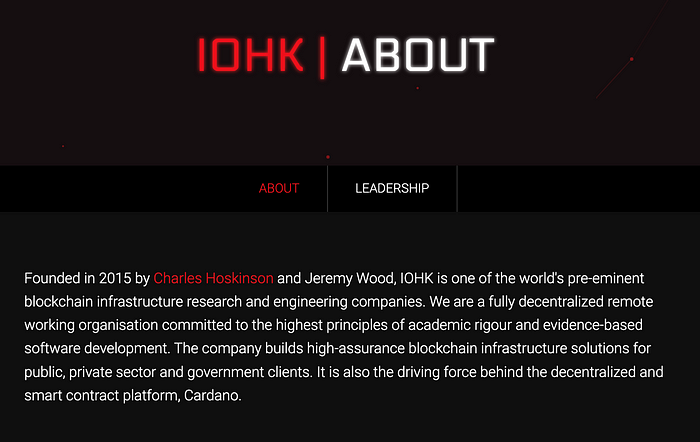
The company operates as a fully decentralized remote working organization, with a global team of over 400 people across more than 50 countries.
This diverse team brings together different skill sets, cultural perspectives, and life stages, enriching the company’s culture and enhancing its global impact.
The Driving Force Behind Cardano
IOHK is not just a research and engineering company but also the driving force behind Cardano, a decentralized cryptocurrency and smart contract platform.
Cardano is a testament to IOHK’s commitment to building high-assurance blockchain infrastructure solutions for the public, private sector, and government clients.
The Principle of Cascading Disruption
At the core of IOHK’s philosophy is the concept of “cascading disruption.”
This idea posits that most structures that form the world’s financial, governance, and social systems are inherently unstable. As such, minor perturbations can cause a ripple effect that fundamentally reconfigures the entire system.
IOHK is committed to identifying and developing technology to force these perturbations, pushing towards a more fair and transparent order. It’s a bold and ambitious mission that IOHK is uniquely positioned to undertake.
This mission is not just about disrupting existing systems but about building new ones that are more equitable, transparent, and efficient. It’s about leveraging the power of blockchain technology to create a world where a select few do not control the flow of ideas and value but is accessible to all.
Looking Ahead: The Future of IOHK
IOHK’s mission becomes even more critical as we look to the future.
The need for transparent, secure, and equitable systems becomes more urgent as the world becomes increasingly digital.
IOHK, with its commitment to academic rigor, evidence-based software development, and cascading disruption, is poised to lead the charge in this new digital frontier.
Learn More and Stay Tuned
IOHK is more than just a company; it’s a movement.

It’s a collective of individuals worldwide committed to using technology to create a more fair and transparent world. Whether you’re a blockchain enthusiast, a tech-savvy individual, or just someone interested in the future of our digital world, IOHK is a company worth watching.
Remember, the future is not something that happens to us.
It’s something we create.
With companies like IOHK leading the charge, we can create a technologically advanced, equitable, and transparent future.
So, let’s seize that opportunity, be part of the change and create the future.
Let’s not waste that chance.
Connect With IOHK
IOHK is a premier blockchain infrastructure research and engineering company, and the driving force behind the Cardano ecosystem. With a commitment to academic rigor, evidence-based software development, and cascading disruption, IOHK is shaping the future of digital systems towards a more connected, transparent, and fair configuration.
IOHK is also an exhibitor at Rare Evo, the premier blockchain and cryptocurrency conference bringing Web3 to the Rockies. Merging business and pleasure in a luxurious environment, IOHK’s participation in Rare Evo underscores the company’s commitment to being an active player in the blockchain ecosystem and beyond.
To stay updated with the latest news and developments, you can follow IOHK on various social media platforms. Connect with them on Twitter for real-time updates, join the professional network on LinkedIn, or subscribe to their YouTube channel for informative videos. You can also like their Facebook page, follow their Instagram for behind-the-scenes content, check out their code on GitHub, or join the conversation on Reddit and Telegram.
About The Rare Network
The Rare Network is a dynamic and growing organization that bridges the gap between traditional industry and emerging blockchain technology.
Our flagship event, Rare Evo, is the premier blockchain conference that brings together multi-chain projects, industry leaders, investors, and enthusiasts.
Rare Evo isn’t just a convention. It’s an immersive experience set in Denver, Colorado. We’ve got everything from educational sessions and networking opportunities to interactive experiences and live entertainment.
Hosted at the stunning Gaylord Rockies Resort, our luxurious and family-friendly venue ensures there’s something for everyone.
Don’t miss out on this game-changing event!
Buy your tickets, book your hotel room, and join the Web3 revolution.
Remember to stay connected with us on Twitter, YouTube, and Discord for the latest updates.
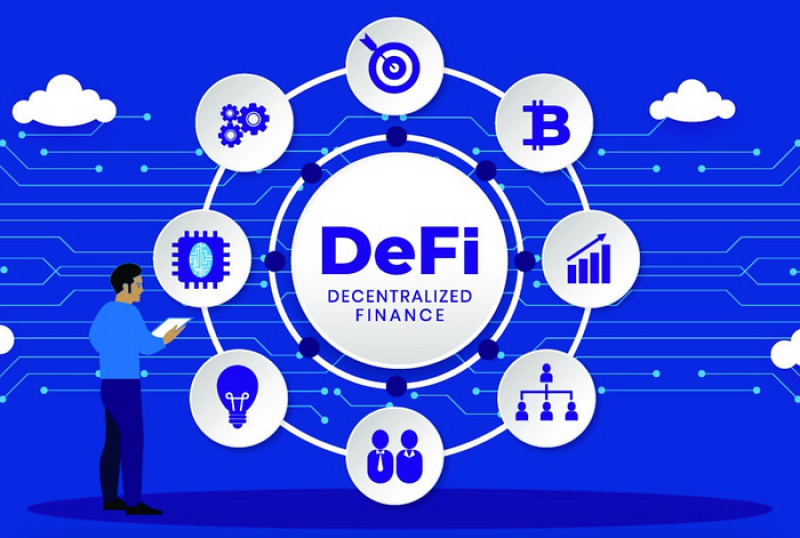
Decoding DeFi: A Comprehensive Beginner’s Guide to Digital Finance
Decentralized finance (DeFi) is revolutionizing the financial industry by eliminating intermediaries and providing innovative financial products and services.
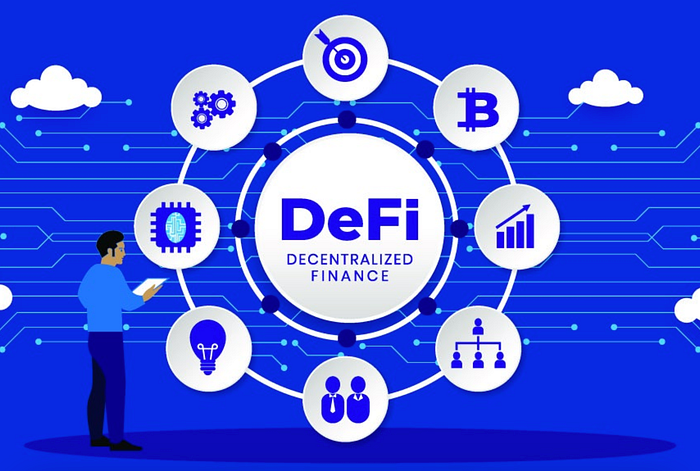
This article offers an in-depth look at DeFi: its components, use cases, and associated risks.
With examples, cited sources, and analogies for complex concepts given along the way, I hope this provides an engaging, educational, and informative introduction to DeFi.
What is Decentralized Finance (DeFi)?
DeFi refers to financial services built on blockchain technology that operate without a central authority.

DeFi platforms leverage smart contracts, which are self-executing contracts with the terms of the agreement directly coded onto the blockchain, to facilitate various financial transactions.
One well-known example of a DeFi platform is Compound Finance, a lending protocol that enables users to earn interest on their cryptocurrency holdings or borrow against them.
DeFi Components
DeFi comprises several components, each playing a crucial role in the ecosystem.
We’ll explore these components in detail below:
Decentralized Exchanges (DEXs)
Decentralized exchanges facilitate the trading of digital assets without requiring users to relinquish control of their funds to a centralized entity.

Uniswap, an Ethereum-based DEX, is one prominent example. DEXs like Uniswap use automated market makers (AMMs) and liquidity pools to enable trading without an order book, making the process more efficient and trustless.
Think of DEXs like a farmers’ market, where people can directly buy and sell goods from one another without a centralized authority overseeing the transactions.
Aggregators and Wallets
Aggregators act as decentralized asset management platforms, moving users’ crypto assets between various yield-farming platforms to generate the highest returns. An example of an aggregator is Yearn Finance, which optimizes yield farming strategies for its users.
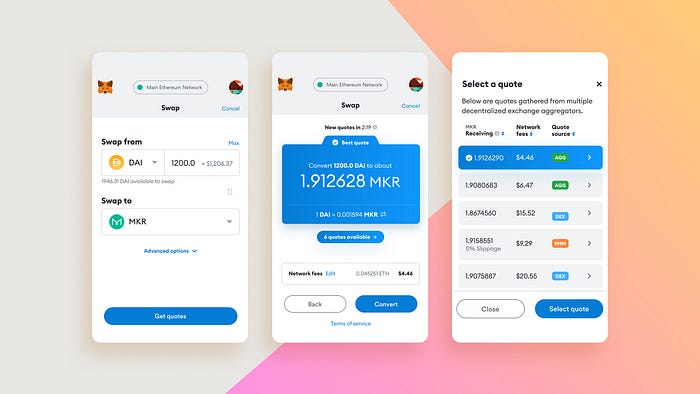
Wallets, on the other hand, are like digital bank accounts for storing and transacting digital assets.
Self-hosted wallets, such as MetaMask, allow users to retain control of their private keys and interact with various DeFi platforms.
Decentralized Marketplaces
Decentralized marketplaces allow users to transact with one another without an intermediary.
Ethereum is the leading blockchain for decentralized marketplaces, but other blockchains, like Binance Smart Chain, also support such platforms.
A popular use case for decentralized marketplaces is trading non-fungible tokens (NFTs), as seen on platforms like OpenSea.
Oracles and Prediction Markets
Oracles provide off-chain data to blockchains through third-party providers, enabling DeFi platforms to access real-world information.
Prediction markets, such as Augur, leverage oracles to facilitate bets on the outcomes of various events.
Layer-1 Solutions
Layer-1 refers to the underlying blockchain on which DeFi applications are built.
Ethereum is the predominant layer-1 solution, but other blockchains like Solana, Polkadot, and Cosmos are gaining traction.
DeFi Use Cases
DeFi offers a plethora of use cases, including lending and borrowing, margin and leverage trading, liquidity pools, and yield farming.
Platforms like Aave and MakerDAO have gained popularity for their lending and borrowing solutions, while Balancer and Curve Finance are known for their innovative liquidity pool designs.
Payments and Stablecoins
Stablecoins play a vital role in DeFi by providing a stable unit of account for transactions and contracts.
Pegged to fiat currencies like the US dollar, stablecoins offer reduced volatility compared to other cryptocurrencies, making them ideal for commerce and trading. Tether (USDT) and USD Coin (USDC) are two popular examples of stablecoins.
Margin and Leverage Trading
DeFi platforms like dYdX and Synthetix offer margin and leverage trading, allowing users to borrow cryptocurrencies using their existing holdings as collateral.
These platforms use smart contracts to incorporate leverage, potentially increasing returns for users while also raising their risk exposure.
DeFi-native Activities: Liquidity Pools and Yield Farming
Liquidity pools are essential for many DEXs, providing trading liquidity for buyers and sellers.
Users can deposit funds into a liquidity pool, earning fees from traders who interact with the pool. In exchange, they receive pool tokens, which can be redeemed for their deposited funds.
Yield farming, also known as liquidity mining, involves participating in liquidity pools to earn passive income through interest or additional tokens.
DeFi platforms like SushiSwap and PancakeSwap have popularized yield farming, attracting users seeking to maximize their returns on investment.
DeFi Risks
Despite its potential, DeFi is not without risks.
This nascent market still faces challenges related to scalability, regulatory uncertainty, and adoption. Slow transactions and high fees on some platforms may hamper user adoption, while regulatory ambiguity may pose challenges for DeFi’s integration into mainstream finance.
Investing in DeFi protocols can be risky, especially for smaller market cap tokens. Before investing, consider factors such as a protocol’s operational history, total value locked (TVL), and risk mitigation strategies.
Keep in mind that no DeFi protocol is entirely risk-free.
Making Money with DeFi
To earn passive income through DeFi, users can deposit their cryptocurrencies onto platforms that offer annual percentage yields (APYs).
Staking, or locking tokens in a smart contract in exchange for more tokens, is one such method. Yield farming, as previously discussed, is another popular way to earn income through DeFi.
To get started, users typically need to purchase cryptocurrencies, such as Ethereum or stablecoins, using fiat currency on an exchange or other on-ramp service before submitting them to the contract(s) of their choice.
DeFi is the Future
DeFi is a groundbreaking financial movement offering innovative solutions to traditional financial services.
With components like DEXs, aggregators, specialized wallets, and layer-1 solutions, DeFi platforms enable users to lend, borrow, trade, stake, and participate in liquidity pools and yield farming.
However, DeFi is not without risks, and users should carefully assess their investments and remain mindful of potential regulatory changes.
By staying informed and cautious, users can harness the power of DeFi to achieve financial autonomy and potentially earn passive income.
About The Rare Network
The Rare Network is a dynamic and growing organization that bridges the gap between traditional industry and emerging blockchain technology.
Our flagship event, Rare Evo, is the premier blockchain conference that brings together multi-chain projects, industry leaders, investors, and enthusiasts.
Rare Evo isn’t just a convention. It’s an immersive experience set in Denver, Colorado. We’ve got everything from educational sessions and networking opportunities to interactive experiences and live entertainment.
Hosted at the stunning Gaylord Rockies Resort, our luxurious and family-friendly venue ensures there’s something for everyone.
Don’t miss out on this game-changing event!
Buy your tickets, book your hotel room, and join the Web3 revolution.
Remember to stay connected with us on Twitter, YouTube, and Discord for the latest updates.

Rare Network: Building Beyond Live Events
Rare Network: Building Beyond Live Events
When people hear the name Rare Network, the first thought is often, "Oh, those are the guys behind the Rare Evo convention and live events." It’s true—Rare Network has become well known for its successful live events, including the Rare Evo convention and Rare Socials. However, what many don't realize is that there's much more happening behind the scenes at Rare Network than just organizing and executing events.
While we frequently talk to people about Rare Evo, our media ventures, and our live event plans, we rarely dive into the long-term vision for Rare Network. We're not just focused on improving each event, clawing our way to better experiences year after year. Instead, we’re also building a robust ecosystem for the future.
Let’s start with our tech stack, a topic anyone who’s been frustrated by high event fees can relate to.
Tackling the Live Event Monopoly
Do you hate Ticketmaster’s fees? Most of us do. Ticketmaster, with its $18 billion monopoly on live event ticketing, often burdens consumers with outrageous fees. Ever bought a $15 ticket to a sports event, only to get slapped with an additional $12 in fees? Or perhaps your favorite concert cost $50, but suddenly, it's $62 due to processing charges.
The situation isn't much better for conventions. The high costs for convention tickets can often be traced back to Cvent, a $4 billion company that monopolizes the backend of live events—everything from booth mapping to agenda management, hotel block arrangements, and affiliate programs. This Software-as-a-Service (SaaS) model takes a large slice of ticket revenue for its services.
Recognizing these pain points, we decided to build our own backend systems at Rare Network. Over the past two years, we’ve developed both a Web2 and Web3 tech stack that runs without the excessive fees that plague the industry. We’ve already tested it in live scenarios, where flawless performance is critical.
At the 2024 Rare Evo event, over 2,200 attendees checked in using a mix of Web2 and NFT tickets. Whether they were exhibitors, speakers, sponsors, or general attendees, the process was seamless, and the attendees didn’t miss Ticketmaster at all.
Expanding Into a Multi-Chain Future
But this is just the beginning. By 2025, we aim to take our ticketing system multi-chain, allowing attendees to buy tickets using various blockchains. We’re also committed to ensuring that even those unfamiliar with blockchain technology can easily purchase tickets using traditional methods, like credit cards.
This multi-chain approach will yield valuable insights into user preferences, showing us which chains people prefer for purchasing and minting tickets. Over time, this data will offer a more accurate reflection of consumer behavior than metrics like wallet counts or transaction volumes, which can sometimes be manipulated by bots. Live event check-ins, however, are human-driven and harder to spoof.
Creating a Seamless Event Experience
Once you’ve checked in at Rare Evo, the real experience begins. Our website—and soon, our mobile decentralized app (dApp)—offers easy access to essential event information like the agenda, speaker lists, and event tracks. Our interactive event and booth map allows attendees to explore sponsors or exhibitors through a zoom feature, all without the high costs of using Cvent’s software. Attendees barely notice the difference, but we’re providing a much more cost-effective solution.
Of course, we still have plenty of improvements to make. We're constantly iterating and refining the agenda and booth mapping experience. We recently rolled out a decentralized affiliate program and are working on affiliate bounties. Additionally, we’re exploring new ways to facilitate communication between attendees and exhibitors to foster greater interaction at our events.
A Glimpse Into the Future
If you’ve stuck with us this far, here's a bit of alpha for you. You’ve probably noticed those Web2 reward points on our website. If our lawyers wrap things up smoothly, there’s a chance that these points could convert into a token in the future. Stay tuned for updates!
As we continue to build Rare Network, we’re excited to share more through Rare Network Media and Rare Network State. So, when you think about Rare Network in the future, remember—we’re far more than just live events.
Written by Rand McHenry
Vote For Rare Network in Fund 11!
Vote For Rare Network in Fund 11!
.jpg)
As we gear up for Project Catalyst Fund 11, we, at Rare Network, are thrilled to share some exciting proposals that are poised to elevate the Cardano ecosystem to new heights. Rare Network, hosts of Rare Evo, are dedicated to fostering growth and innovation within the Cardano community. Let's delve into the proposals that promise to bring significant benefits to our beloved ecosystem.
Cardano Sponsored Side Events at Major Blockchain Conferences:
We propose hosting Cardano sponsored side events at renowned blockchain conferences such as ETHDenver, Paris Blockchain Week, and Token 2049 Dubai. These events will serve as invaluable platforms for showcasing Cardano projects and onboarding new users into the ecosystem. As part of our commitment to community engagement, two members of the Cardano community will join the Rare Network team on each trip, with travel, lodging, conference tickets, and per diem covered by proposal funds. Additionally, we plan to produce professional vlog-style media content highlighting the contributions of Cardano projects and community members, amplifying Cardano's presence on a global scale.
https://cardano.ideascale.com/c/idea/112923
https://cardano.ideascale.com/c/idea/111496
https://cardano.ideascale.com/c/idea/111495
Catalyst Branded Secondary Stage at Rare Evo 2024:
We aim to establish a Catalyst branded secondary stage at Rare Evo 2024, held at Caesars Palace LV. This initiative will provide smaller startups with speaking opportunities and offer free community booths to Cardano project teams, thanks to Catalyst funding assistance. By fostering collaboration and visibility for emerging projects, this stage will be instrumental in driving innovation within the Cardano ecosystem.
https://cardano.ideascale.com/c/idea/112959
Co-Proposal with Project Catalyst for Working Groups:
In collaboration with the Project Catalyst team and Sustainable ADA, we propose hosting 10 Catalyst working groups to enhance Fund 12. These working groups will engage the community both in-person and virtually, fostering collaboration and ideation to improve the Catalyst ecosystem.
https://cardano.ideascale.com/c/idea/113181
As we embark on this journey to shape the future of Cardano, your support is invaluable. We encourage you to explore Rare Network's proposals in the Catalyst Voting app by searching for "Wes Parkinson". Together, let's seize the opportunity to drive growth, innovation, and collaboration within the Cardano ecosystem.
For more information and updates, be sure to follow Rare Network on social media and check out our NFT tickets for Rare Evo, offering exclusive Vegas experiences and a chance to win from a $50k prize pool raffle.
Thank you for your unwavering support as we pave the way for a brighter future with Cardano!

ETH Denver: Happy Hour Announcement
.jpg)
Get ready for an evening that combines the thrill of blockchain innovation with the joy of competitive mini-golf! Rare Evo is thrilled to announce the 'Putt & Party Happy Hour,' an exclusive event taking place during ETH Denver. Here’s everything you need to know:
Event Details:
- Date: Friday, March 1st
- Time: 5:00 pm - 8:00 pm
- Location: Putt Shack Denver, 2813 Blake St, Denver, CO 80205
- Close Proximity: Just minutes away from the ETH Denver Convention in the vibrant RiNo Art District.
What to Expect?
- Complimentary Drink Tickets: Raise a toast to blockchain innovations with free drink tickets on us!
- Delicious Food: Satiate your taste buds with delectable bites, courtesy of our event sponsors.
- Unlimited Mini Golf: Dive into a tech-infused mini-golf experience at Putt Shack Denver. Bid adieu to traditional scoring systems; our balls track your gameplay, offering a dynamic scoring experience across 9 holes.
Why Attend?
- Networking: Mingle with a diverse crowd of blockchain enthusiasts, developers, and innovators.
- Exclusive Experience: Be a part of an exclusive gathering, proudly hosted by leading blockchain entities: Alchemix, Premia, Certora, Silo Finance, and Rare Evo.
- Fun-filled Evening: Beyond networking and blockchain talks, brace yourself for an evening filled with laughter, camaraderie, and friendly competition.
Limited Registration:
While entry to the event is free, space is limited to 400 attendees. Ensure you register early to secure your spot! Stay tuned for the registration link, which will be announced closer to the event date.
Event Sponsors:
We're immensely grateful for all of the sponsors who've made this event possible:
- Alchemix: Dive deeper into their innovative solutions at Alchemix
- Certora: Explore their cutting-edge offerings by visiting Certora
- Premia: Discover more about their services and solutions at Premia
- Silo Finance: Navigate to Silo Finance for insights into their groundbreaking finance solutions.
- Rare Evo: For a glimpse into our vision and offerings, visit Rare Evo.
In Conclusion:
Mark your calendars and gear up for an unforgettable evening at the intersection of technology, innovation, and fun! Join us for the 'Putt & Party Happy Hour' as we celebrate the dynamic world of blockchain, foster connections, and indulge in some friendly competition.
See you there! Grab your tickets to Rare Evo 2024!
General Admission - $200
VIP - $600
Hurry before prices increase!
VIP tickets purchased before January 15th will be airdropped our Rare Perks NFT!
Purchase Tickets Here

A new world is emerging where you’re not just a player in a game, but an active participant in its economy, a stakeholder in its community, and an actual owner of your in-game assets.
A new world is emerging where you’re not just a player in a game, but an active participant in its economy, a stakeholder in its community, and an actual owner of your in-game assets.
While games have historically been relegated to local areas (consoles or memory devices) and now exist almost entirely online, Web3 gaming takes it to a whole ‘nother level: decentralized blockchains.
This is the promise of a revolutionary interactive entertainment approach that leverages blockchain technology’s power to redefine the gaming experience.
Curious?
Let’s dig a little deeper.
The Genesis of a New Industry
Web3 gaming, also known as blockchain gaming, is a new frontier in the gaming industry that utilizes distributed ledger technology (blockchains) to offer greater transparency, security, democratization, and user control over in-game assets.
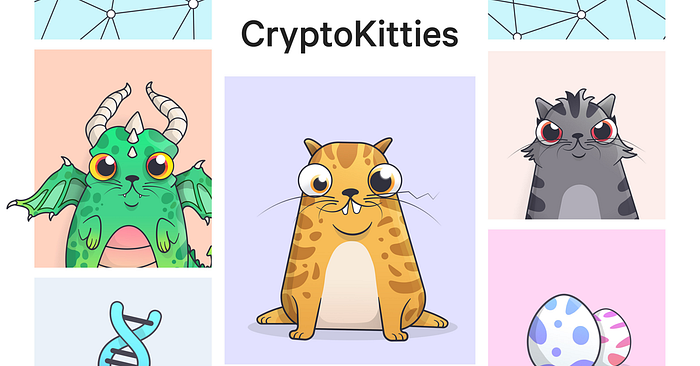
Unlike traditional games, where the developer holds all the rights to in-game assets on centralized servers, Web3 games are based on decentralized networks like Ethereum or Solana, which guarantee verifiable ownership and give greater control to the players.
Web3 gaming was born out of the intersection of gaming and blockchain technology, with CryptoKitties being one of the first games to use blockchain technology back in 2017.
Since then, the landscape has evolved significantly, with games like Axie Infinity, The Sandbox, and Decentraland leading the charge.
The Mechanics of Web3 Gaming
Using blockchain technology enables gamers to have decentralized ownership of in-game assets and currencies.
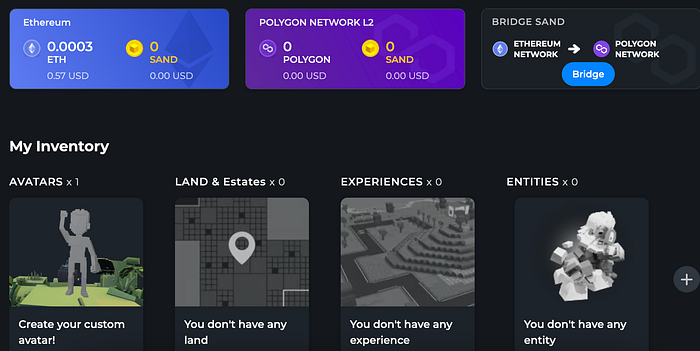
This freedom and extraordinary technological flexibility also allow players to earn, trade, and use these assets outside the actual game. Depending in the blockchain used, cryptocurrency payments and smart contracts are often used for secure and transparent transactions.
Smart contracts, which are programmed to execute specific actions automatically when certain conditions are met, play a crucial role in Web3 gaming. They manage the ownership, transfer, and trading of in-game assets without needing to go through an intermediary.
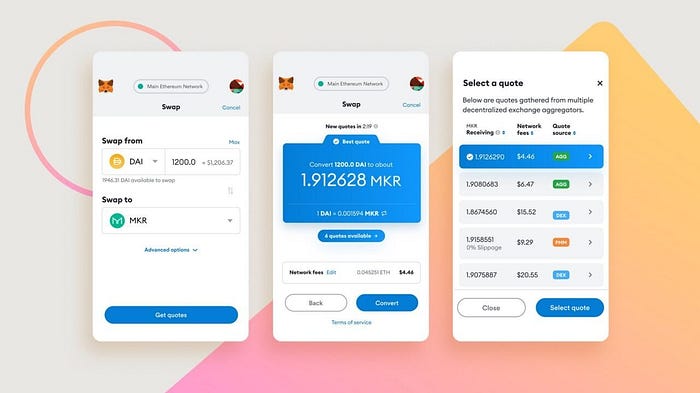
Web3 gaming platforms utilize cryptocurrency wallets such as MetaMask, Coinbase Wallet, or Trust Wallet to house players’ in-game collectibles and assets. Crypto wallets are an essential part of Web3 gaming architecture and a necessary tool for interaction with blockchain-based services.
How Web3 Differs From Traditional Gaming
Web3 gaming offers several unique features that set it apart from traditional gaming.
First, Web3 games provide high transparency since peer hosting ensures the players have all information without a centralized third party limiting or hiding access.
The most important benefit of blockchain-based gaming is that it gives players greater ownership and control over their in-game assets, such as virtual land, currencies, and characters. Because of how blockchain technology operates, players can truly own and trade their digital assets — which can have significant real-world value — and exercise greater control over their gaming experience and what they may create from it.
Web3 gaming also ensures greater interoperability between different games and platforms. Players can use their assets in various contexts and settings and quickly transfer or trade them between other games.
Future and Present Challenges
Despite its enormous potential, the Web3 gaming space is still nascent and faces significant challenges.
User adoption and mainstream acceptance are still hurdles to overcome, and Web3 can be incredibly complex to newcomers and needs more user-friendly interfaces for non-crypto-savvy players.
Moreover, Web3 games are still vulnerable to hacks and cyberattacks, which can lead to the loss or theft of game items. Gamers should take precautions to protect their private keys and use secure crypto wallets to store their digital assets.
However, the future of Web3 gaming is exciting and promising.
As the technology and infrastructure for Web3 gaming continue to develop, we should expect to see more innovative and immersive games (especially around virtual/augmented reality), increased adoption of cryptocurrency payments, and more opportunities for players and developers to participate in the decentralized gaming ecosystem.
Not Going Away Anytime Soon
More than just a trend, Web3 gaming is a paradigm shift in the gaming industry that’s set to redefine how we interact with digital worlds.
It’s a journey into a new era of gaming where players are not just consumers but active participants and stakeholders.

While it’s still in its early stages, Web3 gaming already shows potential to disrupt the traditional gaming industry. It’s not just about playing games anymore; it’s about experiencing them on a whole new level.
Having actual ownership, earning real value, and being part of a community that’s not just about playing but also about creating, sharing, and governing.
As we look to the future, it’s clear that Web3 gaming is not just a fad.
It’s a transformative movement that’s here to stay. It’s a new way of gaming that’s more immersive, rewarding, and empowering. It’s a game-changer in every sense of the word.
So, whether you’re a gamer, a developer, or just someone interested in the future of technology, it’s time to pay attention to Web3 gaming and take it seriously.
Start exploring this new frontier, understanding its potential, and imagining the possibilities it could bring.
Because gaming in Web3 is not just about changing how we play games: it’s about changing how we think about what games can be.
About The Rare Network
The Rare Network is a dynamic and growing organization that bridges the gap between traditional industry and emerging blockchain technology.
Our flagship event, Rare Evo, is the premier blockchain conference that brings together multi-chain projects, industry leaders, investors, and enthusiasts.
Rare Evo isn’t just a convention. It’s an immersive experience set in Denver, Colorado. We’ve got everything from educational sessions and networking opportunities to interactive experiences and live entertainment.
Hosted at the stunning Gaylord Rockies Resort, our luxurious and family-friendly venue ensures there’s something for everyone.
Don’t miss out on this game-changing event!
Buy your tickets, book your hotel room, and join the Web3 revolution.
Remember to stay connected with us on Twitter, YouTube, and Discord for the latest updates.

VyFinance: Revolutionizing DeFi on Cardano
Imagine a world where decentralized finance (DeFi) is not just a buzzword but a reality accessible to everyone.

A world where you can stake tokens and NFTs, engage with liquidity pools, and swap between multiple Cardano (ADA) assets, all from your favorite wallet.
This is not a distant dream but a reality currently being shaped by VyFinance (VyFi), an organization making waves in the ADA community.
A New Dawn in DeFi
VyFinance is redefining the DeFi landscape.
Specifically, VyFi is a Cardano Native Token (CNT) building a comprehensive DeFi protocol. As a Cardano Native Token, VyFinance leverages the unique features of the Cardano blockchain, including its security, scalability, and sustainability.
This allows VyFinance to offer a DeFi platform that is robust, reliable, and environmentally friendly. VyFi is more than just a DeFi protocol; it’s a welcome innovation, bringing passive staking strategies to Cardano and making DeFi approachable to all.
With its Neural Net Yield Aggregation leading the way and the ability to stake to a hedge fund on the horizon, VyFinance is poised to transform how we interact with DeFi.
But what sets VyFinance apart is its commitment to making DeFi accessible to everyone, regardless of their crypto experience. It’s not just about creating a robust DeFi platform; it’s about creating a platform everyone can use, understand, and benefit from.
The VyFinance Ecosystem
At the heart of VyFinance is its ecosystem, a platform designed to be easy to use and accessible to everyone.
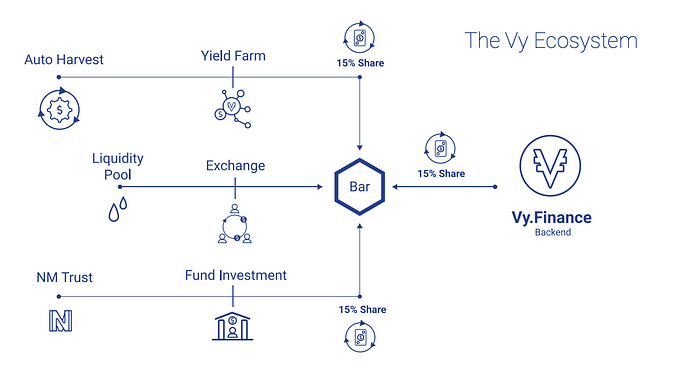
This ecosystem includes token and NFT staking, automated yield farming, a decentralized exchange (DEx), a learning management system (LMS), and governance. Each component of the ecosystem is designed to work seamlessly with the others, creating a holistic DeFi experience.
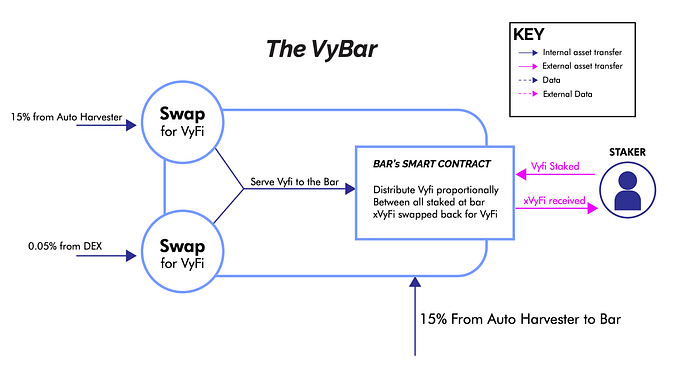
The VyFinance ecosystem also includes the VyBar, a unique feature allowing users to earn rewards across the ecosystem.
The fees generated create upward pressure on the VYFI token, enhancing its value. The VyBar is not just a reward system; it’s a testament to VyFinance’s commitment to creating a mutually beneficial ecosystem for all its users.
The Power of Education
VyFinance understands the importance of education in crypto.
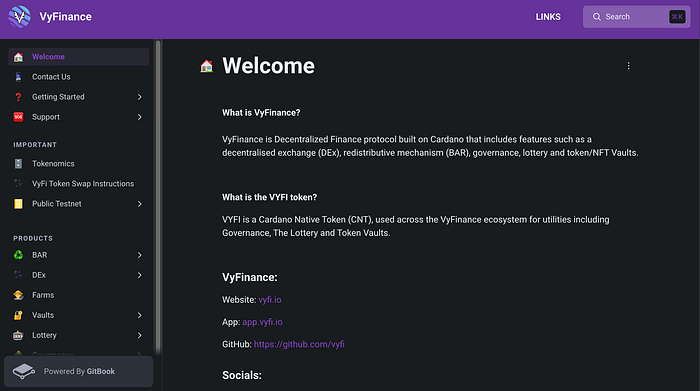
That’s why it has a Learning Management System (LMS) that helps users engage with crypto safely and securely. The LMS provides valuable insights and information, assisting users in navigating the often complex world of crypto.
But VyFinance’s commitment to education goes beyond just providing information. It’s about empowering users, giving them the knowledge and tools they need to make informed decisions and take control of their financial future.
The Future of VyFinance
VyFinance is not resting on its laurels. The protocol has an ambitious roadmap that includes the development of a Neural Net Auto Harvester, a feature that promises to be a game-changer in the DeFi space.
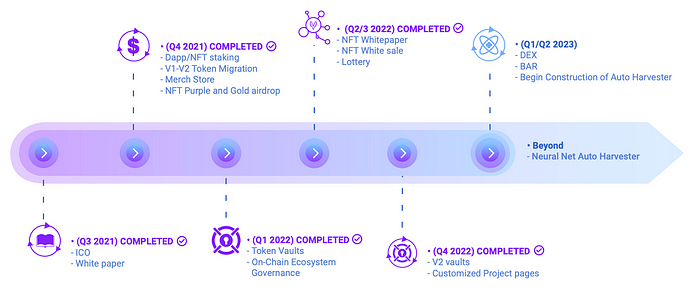
This innovative feature, along with VyFinance’s ongoing commitment to accessibility and education, promises to make VyFinance a leader in the DeFi revolution.
Connect with VyFinance
To learn more about VyFinance and stay updated with their latest developments, consider connecting with them on their social media platforms. You can follow VyFinance on Twitter, join their Discord server, connect with them on Telegram, and subscribe to their YouTube channel.
The world of DeFi is evolving, and VyFinance is at the forefront of this revolution. Don’t miss out on the opportunity to be part of this exciting journey.
Join VyFinance today and experience the future of DeFi!
About The Rare Network
The Rare Network is a dynamic and growing organization that bridges the gap between traditional industry and emerging blockchain technology.
Our flagship event, Rare Evo, is the premier blockchain conference that brings together multi-chain projects, industry leaders, investors, and enthusiasts.
Rare Evo isn’t just a convention. It’s an immersive experience set in Denver, Colorado. We’ve got everything from educational sessions and networking opportunities to interactive experiences and live entertainment.
Hosted at the stunning Gaylord Rockies Resort, our luxurious and family-friendly venue ensures there’s something for everyone.
Don’t miss out on this game-changing event!
Buy your tickets, book your hotel room, and join the Web3 revolution.
Remember to stay connected with us on Twitter, YouTube, and Discord for the latest updates.