#Onchain Markets

Aster Opens Public Layer-1 Testnet Ahead Of Mainnet

Aster has taken its biggest step yet toward becoming a standalone blockchain.
The decentralized trading platform announced that its Layer-1 testnet is now live and open to all users, moving the project out of private testing and into a broader public phase. The launch puts Aster on track for a planned mainnet debut later this quarter and signals a clear shift in strategy, from operating across multiple chains to running its own purpose-built network.
For a project that started as a perpetual futures DEX, the move reflects how competitive onchain trading has become. Speed, execution quality, and control over infrastructure are now as important as liquidity.
From Perp Dex To Full Blockchain
Aster originally gained traction by offering perpetual futures trading across major networks like Ethereum, BNB Chain, Arbitrum, and Solana. Its pitch was simple but effective: capital-efficient trading, deep liquidity aggregation, and tools designed to limit front-running and MEV.
That model worked, but it also came with constraints. Relying on shared blockspace means competing with unrelated activity, dealing with variable fees, and making tradeoffs on latency. As onchain derivatives volumes surged over the past year, those limitations became harder to ignore.
The Layer-1 effort is Aster’s answer. Instead of adapting to general-purpose blockchains, the team is building a network optimized from the ground up for trading.
What Makes Aster Chain Different
Aster Chain is designed specifically for high-frequency, high-volume trading. The focus is on fast finality, high throughput, and predictable execution, features that traders typically associate with centralized venues.
Privacy is another core element. The chain integrates zero-knowledge proofs to allow trades to be verified onchain without broadcasting sensitive order details. That matters in derivatives markets, where exposed positions can attract front-running and liquidation pressure.
Rather than positioning itself as a broad smart contract platform, Aster is leaning into specialization. The goal is to make the chain feel like trading infrastructure first, DeFi playground second.
Testnet Goes Public
Until recently, access to the Aster testnet was limited. An early cohort of about 1,000 users, selected from hundreds of thousands of applicants, was invited to test core features like perpetual trading, spot markets, and order execution. Those users received test tokens through a faucet and were encouraged to stress the system and report bugs.
Opening the testnet to everyone marks a shift from controlled experimentation to real-world simulation. More users mean more edge cases, more feedback, and a better sense of how the chain performs under load.
For Aster, it is also a signaling moment. Public testnets are where projects start to be judged less on vision and more on execution.
The Road Ahead
The testnet launch feeds directly into Aster’s broader 2026 roadmap. The next major milestone is the Layer-1 mainnet launch, currently targeted for the first quarter of the year.
Beyond that, the team plans to roll out developer tooling, staking and governance features tied to the ASTER token, and deeper integrations for fiat on-ramps and off-ramps. There are also plans for advanced order types, expanded real-world asset markets, and additional privacy features aimed at professional traders.
If it works, Aster could end up occupying a middle ground that many projects talk about but few achieve: the speed and sophistication of centralized exchanges, delivered through decentralized infrastructure.
Competitive Pressure And Open Questions
Aster is not alone in betting on custom blockchains for trading. Several derivatives platforms are exploring similar paths, all chasing the same prize: better execution without sacrificing self-custody.
The challenge will be adoption. Traders are pragmatic, and loyalty is thin. Aster’s Layer-1 will need to prove not just that it works, but that it works better, consistently, and at scale.
There are also the usual caveats. Testnet tokens have no value, timelines can slip, and regulatory uncertainty still hangs over derivatives trading in many regions.
Still, the public testnet launch is a meaningful milestone. It shows that Aster is serious about owning its infrastructure and confident enough to put it in front of the wider market.
For now, the real test begins.
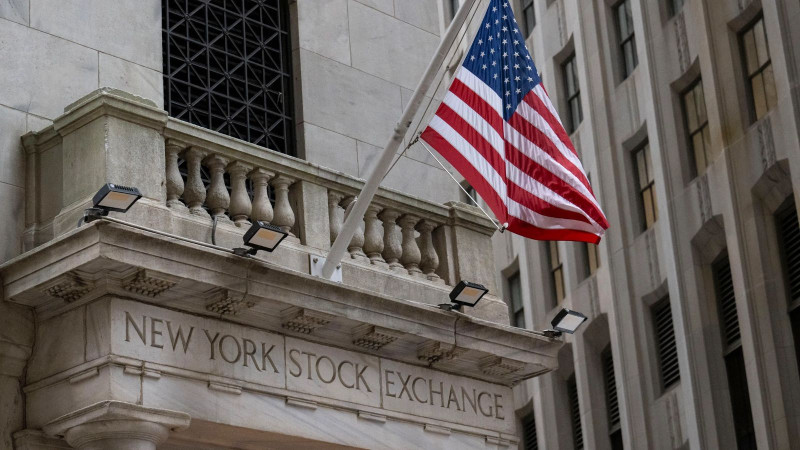
NYSE Plans 24/7 Tokenized Stock and ETF Trading on Blockchain

The New York Stock Exchange is imagining a world without a closing bell.
NYSE, through its parent company Intercontinental Exchange, is building a blockchain-powered platform that would allow stocks and ETFs to trade 24/7 in tokenized form. If regulators sign off, it would be one of the clearest signals yet that traditional finance is no longer just experimenting with crypto infrastructure, it is actively rebuilding around it.
The pitch is straightforward but far-reaching. Take real stocks and ETFs, represent them as blockchain tokens, and let them trade continuously. No market open. No market close. No waiting a day for settlement to finish in the background.
For an institution that has defined how markets work for more than 200 years, this is a radical shift.
This Is Not a Side Project
This is not NYSE dipping a toe into crypto.
ICE is designing a separate trading platform that merges NYSE’s core matching technology with blockchain-based settlement, custody, and clearing. Orders still look familiar, bids and asks meet in an order book, but what happens after execution is where things change.
Instead of the standard T+1 settlement cycle, ownership could move almost instantly onchain. Stablecoins are expected to handle funding, allowing trades to clear at any hour without relying on traditional banking rails. Investors may also be able to place dollar-based orders instead of buying whole shares, making fractional ownership the default rather than an add-on.
Structurally, it starts to resemble how crypto markets already operate, just wrapped around regulated assets.
Why Tokenized Stocks Are a Big Deal
Tokenized stocks are not new, but they have mostly lived at the edges of the financial system.
What changes here is credibility. When the NYSE moves toward tokenization, blockchain stops looking like an alternative system and starts looking like core infrastructure.
Tokenization allows equities and ETFs to trade globally, settle instantly, and operate without the friction built into traditional market plumbing. It removes time zone barriers. It compresses settlement risk. It turns stocks into programmable financial objects.
For investors who already trade crypto around the clock, the idea that equities shut down every afternoon feels increasingly outdated.
Crypto Trained the Market to Expect 24/7
This move did not come out of nowhere.
Crypto markets have normalized nonstop trading. Platforms like Robinhood and Coinbase are already pushing toward tokenized equities and extended hours. Asset managers are testing onchain settlement in private markets and fund structures.
Meanwhile, traditional clearing and settlement remain slow, expensive, and operationally complex. Blockchain promises efficiency, but only if institutions are willing to rethink the system rather than patch it.
NYSE’s entry into this space suggests legacy exchanges see the risk clearly. If liquidity, trading volume, and investor attention move onchain elsewhere, exchanges that stay static risk being left behind.
Regulation Decides Everything
For now, all of this lives in proposal form.
Tokenized stocks are still securities. That means U.S. securities laws apply, even if the assets settle on a blockchain. Continuous trading raises hard questions around surveillance, volatility controls, investor protections, and systemic risk. Stablecoins add another regulatory layer.
How regulators respond to an NYSE-backed tokenized market will likely shape how far and how fast tokenization spreads across public markets.
What Happens If This Actually Works
If this platform launches and gains traction, it could reshape how markets function.
Stocks that trade nonstop would change liquidity patterns and price discovery. Global participation would increase. Settlement could become faster, cheaper, and more transparent. Post-trade infrastructure might finally catch up with the digital age.
There are tradeoffs. Continuous markets can amplify volatility. Liquidity could fragment across venues. Retail investors may face more noise and fewer natural breaks.
Still, the direction feels unmistakable.
Crypto infrastructure is no longer sitting outside the financial system. It is being welded into it.
The NYSE is not turning stocks into memecoins. But it is signaling that the future of equities looks more onchain, more global, and far less dependent on a bell ringing at 4 p.m. Eastern.
The wall between crypto markets and traditional markets is thinning fast, and one of the oldest institutions in finance just acknowledged it.