#ICO
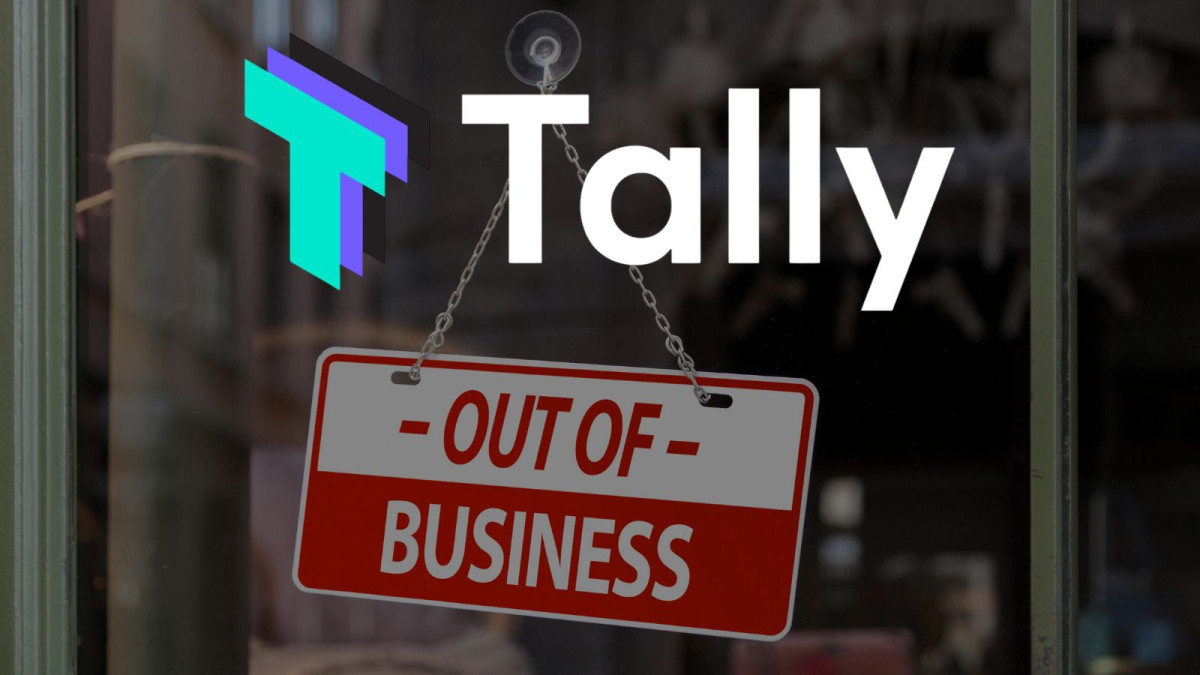
Tally Shuts Down DAO Platform, Cites Sustainability Issues

Tally, a decentralized autonomous organization (DAO) governance platform built on Ethereum, is shutting down after five years of operation in the crypto industry.
The decision, according to co-founder and CEO Dennison Bertram, was driven by a lack of sustainability in the decentralized governance tooling industry. Despite its success as a DAO governance platform, Bertram said Tally had not yet realized its original vision.
“We have spent years championing the DAO vision. But at some point, you have to accept the world as it is, not as you hoped it would be. The reality is that we can no longer build a viable business around this,” he said.
Bertram also said Tally will not move forward with its ICO plans, adding that the team was not confident it could fulfill any promises it would make to token holders if it sold them tokens.
Prior to the announcement, Tally had built a notable presence in the crypto space, including:
- Serving over one million users, with tens of millions of tokenholder addresses participating in governance through its platform.
- Processing more than $1 billion in crypto payments and, at one point, helping secure over $80 billion through systems it supported.
- Supporting hundreds of organizations on its governance platform, including Uniswap DAO, Arbitrum, zkSync, Wormhole, and EigenLayer.
Reflecting on these successes, as well as Tally’s ability to avoid major security incidents and navigate regulatory uncertainty under the previous SEC chair, Tally CEO Dennison Bertram said he was “incredibly proud” of what the team had accomplished.
Although the team will wind down operations by the end of the month, it is working with major partners to ensure its enterprise clients continue to be served and will keep its interface live until the transition is complete.
The Crypto Community Reacted
The announcement of Tally’s shutdown was met with disappointment across the crypto community, with some describing it as the “end of an era” and others recounting their experiences using the platform during the early days of Arbitrum and Uniswap governance.
“I still remember writing governance proposals for Uniswap on Tally back in 2021. Those were fun times. It’s disappointing that DAOs didn’t meet expectations. While stablecoins have achieved the strongest product-market fit in crypto, I still believe DAOs will ultimately get there, though perhaps not for another three to 10 years,” said Getty Hill, CEO of DeFi trading platform Oku Trade.
“Human labor coordination is one of the hardest problems. DAOs will need to evolve, and their applications must improve. The 2020–2021 era of DAO governance was a lot of fun,” he added.

Coinbase Launches Regulated Token Sale Platform to Revive Public Offerings
Coinbase Launches Token-Sale Platform with Guardrails to Avoid ICO Chaos
Coinbase has rolled out a new token-sale platform designed to provide retail investors with access to early-stage crypto projects under a regulated framework. The initiative aims to revive public token offerings in a safer, more transparent manner while restoring trust in token sales.
According to the company’s announcement the platform will host roughly one token sale per month. The first offering featured Monad, a high-performance blockchain startup.
Participants will use USD Coin (USDC) to purchase tokens. Token allocations are determined via an algorithm rather than a first-come, first-serve mechanism. Project teams and affiliated insiders will be prohibited from selling their tokens for six months after the public sale in order to reduce speculative flipping.
Key Features of the New Platform
Algorithmic Allocation
Unlike many of the chaotic ICOs of the past the platform will compile purchase requests during a one-week submission window. After that the algorithm will determine allocations with the goal of broad and equitable participation. Small investors will be given a fair chance rather than being crowded out by big players.
Payments must be made using USDC and participants must complete identity verification and compliance checks in good standing with Coinbase.
Token Issuer Restrictions
Project teams, founders and affiliated parties will be barred from selling any tokens—whether private or publicly traded—for at least six months following the public sale on Coinbase. This lock-up provision is intended to align incentives between founders and public investors and avoid immediate dump scenarios.
Disclosure and Pricing Transparency
Issuers will be required to submit detailed disclosures covering tokenomics, vesting schedules and distribution mechanics. These documents will be publicly available providing prospective buyers clarity on what they’re purchasing and how the project is structured. The platform also plans to further develop features like limit orders, automatic reinvestment options and issuer-specific eligibility criteria.
Strategic Context and Rationale
Learning from the 2017-2018 ICO Boom
During the 2017 ICO surge thousands of projects raised capital via token sales with minimal oversight. Many lacked product roadmaps, operated without regulatory compliance and ended in large losses or scams. This new Coinbase platform seeks to avoid that history by embedding regulatory controls and design features to reduce speculative excess.
The algorithmic allocations, lock-up periods and rigorous issuer criteria reflect this change.
Retail Access Meets Institutional Standards
Previously early-stage token participation was largely reserved for venture capital and accredited investors. Coinbase’s platform opens this market to retail investors under a regulated process tied to its existing infrastructure and compliance regime. In addition Coinbase has made strategic acquisitions including token issuance platform Liquifi and capital-formation platform Echo which strengthen its ability to manage token launches, compliance and cap-table operations.
Diversification of Business Model
For Coinbase the token-sale platform represents a growth avenue beyond trading fees. By hosting early-stage token launches and integrating token issuers earlier in their lifecycle the exchange can deepen user engagement, expand its product suite and capture new revenue models as the crypto capital-formation market evolves.
Potential Benefits and Market Implications
-
Increased participation and democratization: Retail users gain more equitable access to early token launches.
-
Improved token quality and credibility: Issuers undergo vetting and lock-ups promoting longer-term alignment.
-
Competitive pressure on other exchanges: Coinbase may set a new standard for token launches under regulatory guardrails.
-
Boost to on-chain fundraising: The platform could catalyze a revival of public token offerings with better structure and oversight.
-
Enhanced secondary market liquidity: With tokens launching via Coinbase’s funnel, listings and liquidity may improve for projects post-sale.
Risks, Challenges and Watch-Points
-
Volume vs quality trade-off: If offerings are too restrictive it may limit deal flow or cause frustration among issuers seeking speed and capital.
-
Regulatory land-mines: Token sales remain subject to securities laws classification and regulatory enforcement. Any misstep on issuer vetting or investor protections could prompt scrutiny.
-
Scalability of governance and infrastructure: As the platform hosts more sales maintaining the rigor of disclosures, lock-up enforcement and user fairness will be operationally demanding.
-
Market sentiment and speculation: Even with guardrails speculative behavior could still dominate new token launches, possibly recreating volatile market dynamics.
-
Issuer reputation risk: Early failures or token launches that under-perform could damage the platform’s credibility and the broader token-sale model.
What to Watch Next
-
The performance and user-feedback of the first offering from Monad and how secondary trading unfolds.
-
Timeline for subsequent sales and how frequently the platform opens slots.
-
Additional features announced such as limit orders, reinvestment tools and issuer custom-allocations.
-
Regulatory responses—whether U.S. agencies view the platform model as compliant or require additional oversight.
-
Impact on the broader token-launch ecosystem—whether rivals adopt similar models or the industry shifts toward more regulated public sales.
Final Thoughts
Coinbase’s token-sale platform represents a meaningful step toward the institutionalization of crypto capital-formation. By introducing algorithmic allocations, issuer lock-ups and strong disclosure standards the exchange is attempting to reboot public token launches in a way that avoids the chaos of the ICO boom.
For retail investors it offers a structured opportunity to access early-stage crypto projects. For issuers it provides regulated access to a large investor base under Coinbase’s brand and infrastructure.
Ultimately the success of this initiative will depend on execution, project quality and market reception. If Coinbase can maintain disciplined rollout while delivering compelling token offerings this could set a new paradigm for how tokens are issued, sold and listed in the next phase of crypto.
The next few token sale cycles will tell whether this is merely a novelty or a foundational shift in how crypto projects raise capital and engage with the public.
Stay Connected
You can stay up to date on all News, Events, and Marketing of Rare Network, including Rare Evo: America’s Premier Blockchain Conference, happening July 28th-31st, 2026 at The ARIA Resort & Casino, by following our socials on X, LinkedIn, and YouTube.