#market structure

Kalshi Wins Approval for US Bitcoin Perpetual Futures

For years, perpetual futures have been crypto's most traded instrument and almost none of that volume has touched U.S.-regulated infrastructure. Until now. The Commodity Futures Trading Commission (CFTC) formally approved KalshiEX to list BTCPERP, a no-expiry Bitcoin perpetual futures contract tied to spot BTC prices. On the same day, the agency's Market Participants Division issued a staff-level interpretation clearing Coinbase Financial Markets to route U.S. customers to certain derivatives on Deribit, its offshore affiliate. Two very different regulatory moves, made on the same morning, pointed at the same underlying problem: American traders have been effectively locked out of the largest segment of global crypto markets.
CFTC Chairman Mike Selig framed the Kalshi order as delivery on a specific commitment to onshore crypto perpetuals, describing the move as a path for one of the most liquid segments of the crypto asset markets to exist inside the U.S. regulatory framework. Coinbase CEO Brian Armstrong put a number to the problem his company says it is solving: until now, U.S. users have been locked out of roughly 80% of global crypto markets, which includes perpetual futures and options. Coinbase cited Deribit's more than $185 billion in July 2025 trading volume and approximately $60 billion in open interest at the time of acquisition to illustrate the scale of what domestic traders could not legally access through regulated channels.
What the CFTC Actually Approved
BTCPERP is a cash-settled contract referencing the U.S. dollar spot price of one Bitcoin, as tracked by the CF Benchmarks Bitcoin Real Time Index. It trades in units of one ten-thousandth of a BTC, runs 24 hours a day, seven days a week, and has no fixed expiry date. Traditional futures converge toward their underlying asset at expiration because physical delivery or final cash settlement pulls the contract to spot. A perpetual has no such date, so the convergence mechanism operates continuously through periodic funding payments between long and short holders. If the contract trades above spot, longs pay shorts. If it trades below, shorts pay longs. The economic pressure keeps the perpetual price tracking Bitcoin in real time.
The CFTC's approval leans heavily on Bitcoin's specific market structure as its justification. The order notes Bitcoin's deep, active, and continuous spot trading across broadly distributed venues, with pricing observable around the clock. That depth is what makes the funding rate mechanism credible: arbitrageurs can act while the perpetual is live, since the underlying spot market never closes. The agency was explicit that this reasoning applies to Bitcoin and to similarly structured digital commodities with comparable market depth. Other assets will need to go through a separate review. Bitnomial had previously received certification for a product labeled a perpetual futures contract, but that contract carried a 25-year term limit and is considered a different structure. BTCPERP is the first true no-expiry perpetual to receive a Commission-level order.
Two Paths, Very Different Weight
The distinction between the Kalshi approval and the Coinbase staff letter matters more than it might look at first glance. Kalshi's BTCPERP is a Commission-issued order under Section 5c(c)(4) of the Commodity Exchange Act and Regulation 40.3. That is formal product approval, with binding legal weight and a clear compliance framework. Coinbase's route is different in kind. The Market Participants Division issued an interpretation and a no-action position in response to Coinbase Financial Markets. Staff confirmed that certain Deribit digital commodity derivatives may be categorized as foreign futures under Regulation 30.1, and said it would not recommend enforcement action under specified conditions tied to how customer digital assets and stablecoins are handled as margin through Coinbase affiliates.
Staff letters are conditional by design. The CFTC was clear: these positions represent the Market Participants Division only, are not binding on the Commission, and can be modified, suspended, or terminated. The Coinbase path is useful for reaching scale quickly because it connects U.S. clients directly to Deribit's existing liquidity pool, which is among the largest in global crypto derivatives. But it carries a thinner precedential footprint. Coinbase said institutional onboarding to Deribit options has already begun, with perpetual futures access and broader retail availability described as coming later, without a hard timeline. Retail access is expected to carry additional eligibility criteria and risk disclosure requirements.
The Liquidity Question Nobody Can Answer Yet
Regulatory clearance is the easy part. Getting traders to use a U.S. regulated perpetual when Binance, Bybit, and OKX offer the same exposure with deeper order books and, in most cases, higher leverage, is the actual test. Offshore exchanges process billions of dollars in Bitcoin perp volume on a slow day. The CFTC has been working toward this moment for over a year, issuing a formal request for comment in April 2025 on perpetual derivatives, their benefits, risks, market integrity implications, and customer protection questions. The approvals are, in that sense, the policy answer to the RFI. The market answer comes when Kalshi's BTCPERP goes live and traders decide whether regulated access at U.S. leverage limits is a compelling enough trade-off.
The CFTC's case-by-case stance on future perpetual approvals means the template is now set, but the runway is not yet cleared. Ethereum perps, Solana perps, and other digital assets with sufficient spot market depth could follow, but each application needs to clear the same review process independently. Kalshi separately indicated it plans to launch perpetual contracts on more than a dozen currencies pending additional regulatory reviews. CME's parallel push toward 24/7 crypto futures and options trading adds another dimension to the picture: traditional derivatives infrastructure is adapting to match crypto's always-on market structure, while crypto-native exchanges now have a formal path to operate inside U.S. regulatory boundaries. Whether the liquidity follows is a question of product quality, margin efficiency, and distribution reach, and none of that gets answered in an approval order.
The next signals are practical: Kalshi's launch terms and funding rate performance, Coinbase's timeline for rolling out perpetual futures through CFM, how retail access gets structured, and whether formal rulemaking eventually hardens the current agency posture into something more durable. For now, U.S.-regulated Bitcoin perps exist. Whether they can actually compete is the harder question, and the market will answer it faster than any regulator. It usually does.
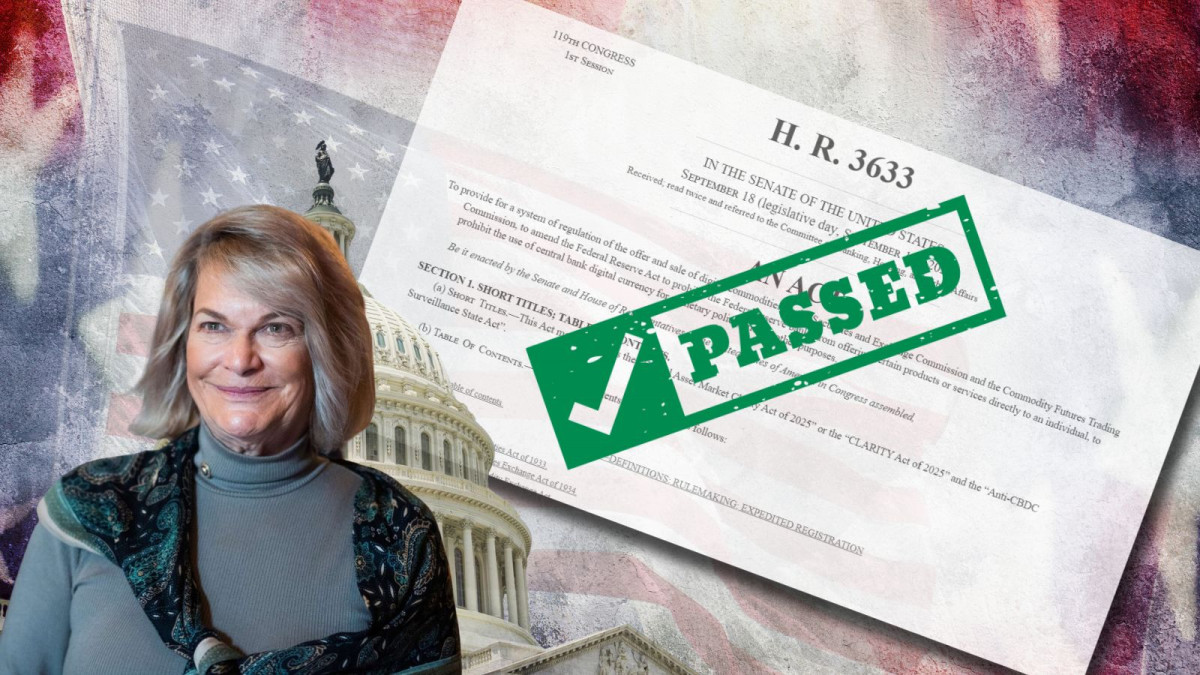
Clarity Act Advances, Massive Optimism for Digital Assets

After months of gridlock and four hours of pointed debate, the Senate Banking Committee voted 15-9 to advance the Clarity Act, sending one of the most consequential pieces of financial legislation in recent memory toward a full Senate floor vote. Two Democrats joined all Republicans on the panel in support, a small but symbolically meaningful show of bipartisan backing that industry advocates say could prove decisive when the bill eventually needs 60 votes to pass the full chamber.
For the digital asset industry, the vote felt like a long time coming. The bill, formally titled the Digital Asset Market Clarity Act of 2025, has been kicking around Capitol Hill for well over a year. The fact that it cleared committee at all, given the partisan atmosphere that dominated much of Thursday's hearing, was seen by many in the space as a genuine win.
Rules of the Road, Finally
At its core, the Clarity Act tries to solve a problem that has dogged the crypto industry since its earliest days: nobody could quite agree on who was in charge. The SEC and the CFTC have spent years in an uneasy standoff over which agency has jurisdiction over which digital assets, leaving companies in legal limbo and pushing some development offshore. The bill would draw a cleaner line, classifying digital assets as either securities or commodities and assigning oversight accordingly.
The market responded before the committee even finished voting. Coinbase surged more than 8% on the session, as investors bet that regulatory clarity could finally unlock the broader institutional participation that has been sitting on the sidelines. Galaxy Digital climbed over 6%. Strategy, the largest corporate bitcoin holder, was up 7%. Bitcoin itself ground higher, hitting session highs near $81,500.
"For too long, regulatory uncertainty has sent talent, investment, and innovation overseas, strengthening foreign competitors while leaving American builders without the certainty they need to compete," said Blockchain Association CEO Summer Mersinger, who called the committee vote a "defining moment." Ripple CEO Brad Garlinghouse was blunter: "If the largest economy in the world is going to lead on crypto, and it must, this is the moment."
Still Some Runway Ahead
Thursday's vote was a milestone, but it is not the finish line. The bill still needs to be reconciled with a separate version approved by the Senate Agriculture Committee, and the full Senate will require 60 votes to pass it, meaning a significant number of Democrats will have to come on board. The House passed its own version of the legislation last year, so the two chambers will also need to hammer out a unified text before anything heads to President Trump's desk.
The largest outstanding issue is an ethics provision intended to limit government officials, including the president, from profiting off crypto. Democrats have made clear they will not move forward without some version of it, while White House crypto adviser Patrick Witt has said the administration will not tolerate language targeting a specific officeholder. Both sides appeared at least open to finding common ground, with Cody Carbone of the Digital Chamber telling reporters that a deal on the ethics provision is likely a prerequisite for getting the bill to a floor vote at all. The window, several lawmakers noted, is probably August.
A Framework Built to Last
What makes the Clarity Act different from the patchwork of guidance and enforcement actions that have defined crypto policy for the past decade is its ambition. It does not try to pigeonhole digital assets into frameworks designed for equities or futures contracts decades ago. It builds something new, with defined registration pathways for digital commodity exchanges, brokers, and dealers, as well as clear definitions covering blockchain applications, protocols, and smart contracts.
Ji Hun Kim, CEO of the Crypto Council for Innovation, put it plainly after the vote: "Clear durable rules will help drive greater institutional and retail adoption, support innovation, create more high quality jobs in the U.S., protect Americans, and ensure that our country leads when it comes to digital assets policy and innovation."
The GENIUS Act, which passed the full Senate 68-30 last year, showed that comprehensive crypto legislation can attract broad support once the details are sorted. The Clarity Act is a harder lift, covering more ground and touching more competing interests. But Thursday's committee vote suggests the political will is there, and the industry is watching closely.
"Durable, lasting digital asset policy must be built on a bipartisan foundation," Mersinger added. By that measure, the Clarity Act is not finished yet. But for the first time in a long while, it looks like it might actually get there.
Why This Matters for the Future of Digital Assets
Let's be clear about all of this: Thursday was a great day for anyone who believes that digital assets have a meaningful role to play in the future of finance. I am certainly one of those. Not because the Clarity Act is perfect, and not because it's done, but because it signals something important that has been missing for years: the U.S. government is starting to treat this industry like it's here to stay.
The case for optimism goes beyond this single vote. The GENIUS Act passing 68-30 last year proved that stablecoin legislation could attract real bipartisan support. Institutional investment in Bitcoin ETFs has steadily matured. Major financial players who once dismissed crypto as a fringe asset are now building infrastructure around it. The underlying technology, particularly in DeFi and tokenization, keeps advancing regardless of what Washington does. What regulation does is create the conditions for all of that to compound. It clears the path for pension funds, endowments, and large asset managers who have been sitting on the sidelines waiting for legal certainty before committing serious capital.
That said, the Senate still has to close the deal, and that is not a given. The remaining sticking points on the ethics provision and law enforcement concerns are real, not just noise. Lawmakers like Senator Kirsten Gillibrand have been consistent that they will not deliver Democratic votes without meaningful conflict-of-interest guardrails, and that is a fair position. The 60-vote threshold means the bill needs to be genuinely bipartisan, not just technically so.
On timing, the realistic window is narrower than it might appear. Industry insiders, including Cody Carbone of the Digital Chamber, have pointed to August as a likely deadline if the bill is to move this year. Congress typically slows through the fall ahead of elections, and the legislative calendar fills up fast. That gives negotiators roughly ten to twelve weeks to reconcile the two committee versions, finalize the ethics language, and lock down the 60 votes needed for a floor vote. It is achievable, but it requires both parties to decide they want a deal more than they want a talking point.
If it does pass, the long-term impact will be substantial. Clear rules attract capital. Capital attracts builders. Builders create products that bring in users. That cycle, running inside a legitimate regulatory framework and anchored in the world's largest economy, is how digital assets stop being a niche and become infrastructure. You know...that "mass adoption" that people have been talking about for years? Well, this could be it. It might not look like how we all imagined, but what ever really does? Thursday was one huge step in that direction. The Senate now needs to finish what it started and we need to come together to make sure they all know that they need to do just that. Let's get it done.

SEC Greenlights Unlimited Crypto ETF Options on NYSE

NYSE Arca filed a rule change with the Securities and Exchange Commission to strip out the 25,000-contract position and exercise limits that had been capping options tied to 11 spot Bitcoin and Ether exchange-traded funds. NYSE American submitted an identical proposal the same day. The SEC did not bother with its usual 30-day review window. The changes went live immediately.
That kind of regulatory speed is not something markets see often, and it tells you something about where things stand right now.
The products covered read like a who’s who of the crypto ETF space: BlackRock’s iShares Bitcoin Trust (IBIT), Fidelity’s Wise Origin Bitcoin Fund (FBTC), ARK 21Shares Bitcoin ETF (ARKB), Grayscale Bitcoin Trust, Grayscale Bitcoin Mini Trust ETF, Bitwise Bitcoin ETF, Grayscale Ethereum Trust, Grayscale Ethereum Mini Trust, Bitwise Ethereum ETF, iShares Ethereum Trust, and Fidelity’s Ethereum Fund. Together they represent hundreds of billions in assets under management and the bulk of institutional Bitcoin and Ether exposure in the U.S. market.
What Does This Mean?
The 25,000-contract cap was put in place when crypto ETF options first launched, partly as a precaution against volatility, partly as a way for regulators to ease into unfamiliar territory. It made sense at the time. It does not make much sense anymore.
Under the new framework, position limits for these products will be set under the same standard rules that govern other equity options, a formula tied to each fund’s trading volume and shares outstanding. For something as liquid as IBIT, that could mean position limits north of 250,000 contracts. The practical effect is that institutions can now build and hedge far larger positions without running into hard ceilings.
The other big change is FLEX options. These are customizable contracts where traders can set their own strike prices, expiration dates, and exercise styles rather than being locked into standardized terms. FLEX options have long been available for commodity ETFs like the SPDR Gold Trust (GLD) and iShares Silver Trust (SLV). Bringing that same capability to crypto ETFs is not a minor footnote. It opens the door to the kind of structured product engineering that institutional desks have been waiting to apply to digital assets.
For a hedge fund running a long Bitcoin position through an ETF, the ability to hedge efficiently via options is not optional. It is a basic operational requirement. The old 25,000-contract cap was not just a theoretical constraint, it was the kind of friction that makes compliance officers nervous and portfolio managers frustrated.
Removing it changes the calculus. Risk systems that already handle equity options can now be applied to crypto ETF products using the same logic. Legal teams work within a rulebook they already understand. That reduction in operational overhead is not trivial for large-scale participants.
FLEX options matter for a slightly different reason. They are what you need to build structured products, overlay programs, and basis trades at scale. Banks and asset managers have been doing this with gold and silver ETFs for years.
Moving In One Driection
NYSE Arca and NYSE American are not doing anything in isolation here. MEMX filed comparable changes in February. Cboe did the same in March. With Monday’s filings, every major U.S. options exchange has now completed the same transition. That kind of synchronized movement across competing venues is a signal, not a coincidence.
Separately, Nasdaq ISE has a proposal still under SEC review that would push the position limit for IBIT options specifically to one million contracts. If that goes through, it would put IBIT options in the same tier as the largest traditional equity products in the market.
None of the core investor protections have been removed. Large position holders still face reporting requirements. Exchanges continue to monitor for manipulation. Broker-dealer capital requirements for carrying options positions remain in place. The architecture of oversight has not changed, only the room to operate within it.
The Big Picture
It was not long ago that getting a spot Bitcoin ETF approved in the United States felt like it might never happen. Then in January 2024, it did. Since then, the market has moved faster than most people expected. Options launched. Volume grew. Institutional flows came in. And now the plumbing is being upgraded to handle what those institutions actually need.
The crypto ETF options market is not just a retail product anymore, if it ever really was. The rule changes this week confirm what the trading data has been suggesting for a while: serious money is here, and the infrastructure is catching up to meet it.
What comes next is worth watching. With FLEX trading unlocked and position limits tied to real liquidity metrics rather than arbitrary caps, the product design possibilities open up considerably. Yield-generating strategies, principal-protected notes, volatility overlays, all of it becomes more viable when the options market can actually absorb the size.
Senate Strikes Stablecoin Yield Deal, Clearing Path for the CLARITY Act
Something shifted in Washington on Friday, and the people who have been watching the CLARITY Act back and forth for months could feel it. Two key lawmakers, Republican Thom Tillis of North Carolina and Democrat Angela Alsobrooks of Maryland, reached an agreement in principle on one of the most stubbornly contested provisions in the bill: stablecoin yield. It is the kind of deal that, when the details finally shake out, may well be remembered as the moment the United States stopped kicking the crypto regulatory can down the road.
The news broke late Friday and was first reported by Politico. Senator Alsobrooks confirmed it plainly. "Sen. Tillis and I do have an agreement in principle," she said. "We've come a long way. And I think what it will do is to allow us to protect innovation, but also gives us the opportunity to prevent widespread deposit flight." The White House's crypto executive director, Patrick Witt, called it a "major milestone" and added that more work remains, but that progress toward passing the CLARITY Act was now real and tangible.
Senator Cynthia Lummis, the Wyoming Republican who chairs the Senate Banking Committee's crypto subcommittee and has been one of the most tireless advocates for this legislation, marked the occasion in her own way. She posted a photo on X of a "yield" sign. No caption needed.
The Stablecoin Yield Standoff, Explained
For months, the stablecoin yield question was the immovable object blocking the CLARITY Act from getting its Senate Banking Committee hearing.
The GENIUS Act, signed into law by President Trump in July 2025, prohibits stablecoin issuers from paying interest directly to holders. The intent was to prevent stablecoins from functioning as de facto bank deposit accounts, which would put them in direct competition with traditional savings products and, as the American Bankers Association argued loudly, threaten deposit flows into community banks. The concern: if Coinbase or another platform could offer users 4% on their dollar-pegged tokens simply for holding them, why would anyone keep money in a checking account?
The problem is that the GENIUS Act only covered issuers. It left a gap for third-party platforms that might offer rewards to customers who hold stablecoins on their systems. The ABA saw this as a loophole and spent months in Washington lobbying to close it. Crypto companies, for their part, said those rewards programs were fundamentally different from deposit interest and should be allowed.
Section 404 of the Senate Banking Committee's draft tried to thread this needle. It prohibits digital asset service providers from paying interest or yield "solely in connection with the holding of a payment stablecoin," while explicitly allowing "activity-based" rewards tied to transactions, payments, platform use, loyalty programs, liquidity provision, and other behaviors. The distinction is real: a reward for moving money through a system is not the same thing as interest paid for parking money in one.
Senator Mike Rounds, a South Dakota Republican on the Banking Committee, captured the nuance at an ABA summit earlier this month: rewards cannot be simply about how much money sits in an account, but they might reasonably be tied to how active that account is. "We're trying to reflect that in the discussions," he said.
Lummis had suggested the final compromise would disallow anything that "sounds like banking product terminology" and bar rewards tied to the size of a user's balance. Coinbase CEO Brian Armstrong, whose withdrawal of support in January helped torpedo a scheduled markup hearing, has been described by Lummis as "really pretty good about being willing to give on this issue."
From 99% to Done
The past week has been a rapid acceleration. As recently as Thursday, sources familiar with the situation described the stablecoin yield issue as being on the verge of resolution. A closed Senate Republican meeting on Wednesday, attended by White House crypto council director Patrick Witt, produced what Lummis told reporters afterward were significant breakthroughs, with "major light bulbs" switched on among the participants.
FinTech Weekly, which has closely tracked the legislative calendar, reported that stablecoin yield negotiations were "99% of the way to resolution" coming out of that meeting. The digital asset provisions of the bill more broadly were described as being in a "good place." The remaining friction, sources said, was not technical but political, specifically around whether community bank deregulation provisions might be attached to the CLARITY Act as part of a broader legislative trade.
Then came Friday's agreement. "We've come a long way," Alsobrooks told Politico, with a formality that understated just how much ground has been covered since January, when the scheduled markup hearing collapsed under the weight of over 100 proposed amendments and an industry revolt over the yield language.
What Comes Next and Why the Timeline Matters
An agreement on yield does not mean the CLARITY Act is done. Several other issues need resolution, decentralized finance remains a live debate, and the bill still needs to clear the Senate Banking Committee before it can go to a full Senate vote. After that, it must be reconciled with the version that passed the Senate Agriculture Committee in January. And before the President can sign it, that combined Senate text has to be reconciled with the House-passed version from July 2025.
But the clock is ticking here. Senate Majority Leader John Thune controls the floor calendar, and it is crowded. Unrelated fights, including the Republican voter-ID bill and ongoing debate over the situation in Iran, are competing for limited floor time. Haun Ventures CEO Katie Haun, in a CNBC interview Friday, put it directly: "The big question on the Clarity Act is, is Congress going to get a bill to the floor on time to vote?"
Lummis has said she expects a Banking Committee hearing in the latter half of April, after the Easter recess. Advocates have been hoping for a May resolution. Prediction markets are currently pricing the odds of the CLARITY Act being signed in 2026 at around 72%, according to FinTech Weekly. Treasury Secretary Scott Bessent has described passage as a spring 2026 target. Ripple CEO Brad Garlinghouse has put the odds at 80 to 90%.
JPMorgan analysts have described CLARITY Act passage by midyear as a positive catalyst for digital assets, pointing to regulatory clarity, institutional scaling, and tokenization growth as the key drivers. The crypto industry committed nearly $150 million to the Fairshake political action committee in the current cycle and announced a $193 million war chest around the Agriculture Committee markup in January. The companies behind that spending are waiting.
What This All Means
The stakes of the CLARITY Act extend well beyond Senate procedure. Markets are waiting. Institutions that have been slowly building out crypto infrastructure, custody solutions, tokenized asset offerings, trading desks, need to know what the rules are before they can fully commit capital and resources. The SEC's interpretation helps, but as Atkins himself acknowledged, it is not a substitute for law.
The CLARITY Act, if signed, would give the CFTC clear jurisdiction over most digital asset spot markets, create a path to register exchanges and brokers, establish consumer protections with real enforcement teeth, and provide the kind of statutory framework that companies can build businesses around. It would, in the language of its Senate Banking Committee sponsors, establish the United States as the crypto capital of the world, not just by rhetoric but by law.
If the bill fails this year, the status quo continues. Crypto companies operate under regulatory uncertainty. The SEC retains broad discretion to treat digital assets as securities. Institutional adoption continues but without a clear statutory framework. And the crypto lobby, which has made clear it will treat failure as a political liability, turns its $193 million war chest into something that looks a lot more like electoral pressure.
Friday's agreement does not guarantee passage. It does something important though. It removes the single biggest substantive obstacle to moving forward. The stablecoin yield question, which derailed a January markup hearing and has consumed months of negotiations, now has a resolution in principle. The path ahead still has obstacles, but for the first time in a while, it looks like an actual path.
Senators Tillis and Alsobrooks just handed the crypto industry something it has been asking for since the last bull market: a credible signal that Washington is finally going to do its job. The deal is in principle, the details are not yet public, and there is still legislative work ahead. But after years of false starts, shelved bills, collapsed markup hearings, and agency standoffs, this is the moment the trajectory changed.
Senators Race to Save the CLARITY Act With Stablecoin Yield Compromise
The room at the Marriott Marquis in Washington was full of community bankers on Tuesday, and Senator Angela Alsobrooks walked straight into the lion's den. Speaking at the American Bankers Association's annual Washington Summit, the Maryland Democrat delivered a message neither side particularly wanted to hear: everyone involved in the Digital Asset Market Clarity Act is going to have to walk away a little bit unhappy.
It was a remarkably candid thing to say in front of 1,400 people who have spent the better part of three months trying to kill the very provision that's been holding up the bill. But Alsobrooks, along with Republican Senator Thom Tillis of North Carolina, is now the central figure in a late-stage push to get the Clarity Act off the Senate Banking Committee floor and into an actual markup hearing before the legislative window closes for good.
The two senators confirmed Tuesday they're actively working on compromise language around stablecoin yield which keeps coming up as the main issue that has stalled what was supposed to be a landmark piece of crypto regulation.
A Bill In Limbo
The Digital Asset Market Clarity Act, or CLARITY Act, was supposed to have its Senate Banking Committee markup in January. That session got pulled at the last minute. The reason was stablecoin yield, specifically, amendments co-sponsored by Alsobrooks and Tillis that would restrict crypto firms from offering interest-like returns to customers who simply hold dollar-pegged digital tokens like USDC or USDT.
Banks had been lobbying hard against any provision that allowed that kind of reward. Their argument, which they've pushed loudly and repeatedly, is that stablecoins offering yield would function like bank accounts without the regulatory obligations of bank accounts. Executives at JPMorgan and Bank of America have cited Treasury Department modeling that suggested banks could lose up to $6.6 trillion in deposits if stablecoin yield programs went mainstream. Their argument is that it would starve the lending market and ultimately destabilize smaller regional banks that are particularly dependent on deposit funding.
The crypto industry dismisses most of that as fearmongering. Coinbase CEO Brian Armstrong called out the banking lobby publicly for what he characterized as anticompetitive blocking tactics and has pulled his support for the bill. In January at Davos, JPMorgan's Jamie Dimon reportedly told Armstrong he was, in quite colorful terms, wrong. The anecdote leaked out and became something of a symbol for just how personal this fight had gotten.
"We absolutely have to have these protections to prevent the deposit flight, but we're going to probably have to make some compromises." — Senator Angela Alsobrooks, D-Md.
The White House Steps In, Then Gets Rejected
By late February, the White House had grown impatient. Administration officials spent weeks brokering what they hoped would be an acceptable middle ground: allow stablecoin yield in limited contexts, particularly for activity tied to payments and transactions, while banning rewards on idle balances that look more like savings accounts. Crypto firms signed off on the framework. The banks did not.
On March 3rd, President Trump went public with his frustration. In a Truth Social post, he wrote that banks should not be trying to undercut the GENIUS Act or hold the CLARITY Act hostage, a shot across the bow that was notable both for its directness and for the fact that it did essentially nothing to move the American Bankers Association. Two days later, the ABA formally rejected the White House compromise anyway.
The March 1st deadline the White House had set for a resolution passed without published compromise text. Prediction markets, which had briefly priced Clarity Act passage at around 80% odds, fell back toward 55% as the stalemate hardened.
What the ABA rejection didn't do, however, is kill the legislation outright. Congress has passed bills over banking lobby opposition before. The question, as analysts and lobbyists have been pointing out all week, is whether there are enough Senate votes to do it again — and whether the calendar allows the time to find out.
Can We Get A Compromise?
The emerging deal that Alsobrooks and Tillis are proposing is a slimmed-down version of what the White House tried. Under the framework being discussed, yield on stablecoin holdings that closely resemble bank deposits would remain prohibited. But rewards tied to specific activities, like using stablecoins for payments or transactions on a given platform, could remain eligible for some form of customer incentive.
Both senators and many crypto advocates actually agree on the premise that pure holding rewards that look and function like savings account interest are a problem. The dispute is over where exactly to draw the line and how to define the categories well enough that neither side can game them after the fact.
Cody Carbone, the CEO of the Digital Chamber, said this week that Tillis has been very receptive to discussions about stablecoin yield and that he's optimistic the industry can get to yes on the bill. Summer Mersinger, the CEO of the Blockchain Association, noted that the White House weighing in on the negotiations and pushing banks to engage in good faith adds important momentum as talks continue.
The banks have maintained, publicly at least, that those assurances aren't enough. Their representatives at the ABA summit this week underlined again what they see as the risks of any yield loophole to their business model. The question of whether a markup hearing happens in late March or gets delayed again, depends entirely on whether Alsobrooks and Tillis can produce language the committee will actually vote on.
Timing Is An Issue
Behind every conversation about the Clarity Act this week is an unspoken anxiety about time. The Senate calendar is tight. Midterm elections are in November, and lawmakers will start dispersing from meaningful legislating sometime around May or June as campaign season accelerates. Unfortunately it seems, Congress prefers to stop working as they try to convince voters to keep them in their jobs. I know, makes perfect sense. If a markup isn't held and a floor vote isn't scheduled by sometime in April, realistically the bill is looking at the next Congress which could be a completely different party in power. And complicating things even more. Despite which party ends up winning the midterms, this could mean another 12 to 18 months of regulatory uncertainty for an industry that has been waiting years for a clear legal framework.
That timeline matters not just for the crypto industry's domestic ambitions, but for its competitive positioning globally. Under the European Union's MiCA framework, stablecoin yield products that are restricted or banned in the U.S. are already legal in European jurisdictions. Coinbase and others have been explicit about the risk that continued regulatory ambiguity in the U.S. will push capital, talent, and product development offshore. Trump made a version of the same argument in his Truth Social post last week, warning that failure would drive the industry to China.
There's also a strategic Bitcoin Reserve angle sitting quietly in the background. According to people familiar with the situation, the Trump administration has determined it needs congressional action to operationalize the planned Strategic Bitcoin Reserve that the president signed an executive order for over a year ago. That creates at least some White House motivation to see the broader Clarity Act process succeed.
What Happens Next
The Senate Banking Committee is targeting a late-March markup. Whether that happens depends on whether the Alsobrooks-Tillis compromise language satisfies enough members to call the vote. If it does, the bill would then need to be merged with a version that already passed the Senate Agriculture Committee on a party-line vote in late 2025. The combined text would require significant Democratic support to clear a full Senate vote, always a tall ask in the current politcal environment and the fact that seven Democratic senators have separately raised concerns about potential conflicts of interest involving senior government officials, including the president himself, who have financial ties to the crypto industry.
Even if the Senate acts, the bill still needs the House, where an earlier version of the CLARITY Act passed committee last year but has yet to reach the floor. The path to a signed law before November is narrow but not impossible. It requires the Senate Banking Committee to move in the next few weeks, the combined bill to hold together politically, and a Senate floor schedule that is packed with little wiggle room.
For the moment, all of it hinges on two senators and a room full of bankers in Washington D.C., trying to decide how much compromise is actually compromise and if they can all agree to leave a bit unhappy about the results for the greater good. Typically the best compromises do make both sides a bit unhappy. In Washington, that usually means the deal is closer than it looks. It also usually means it's harder than it sounds.
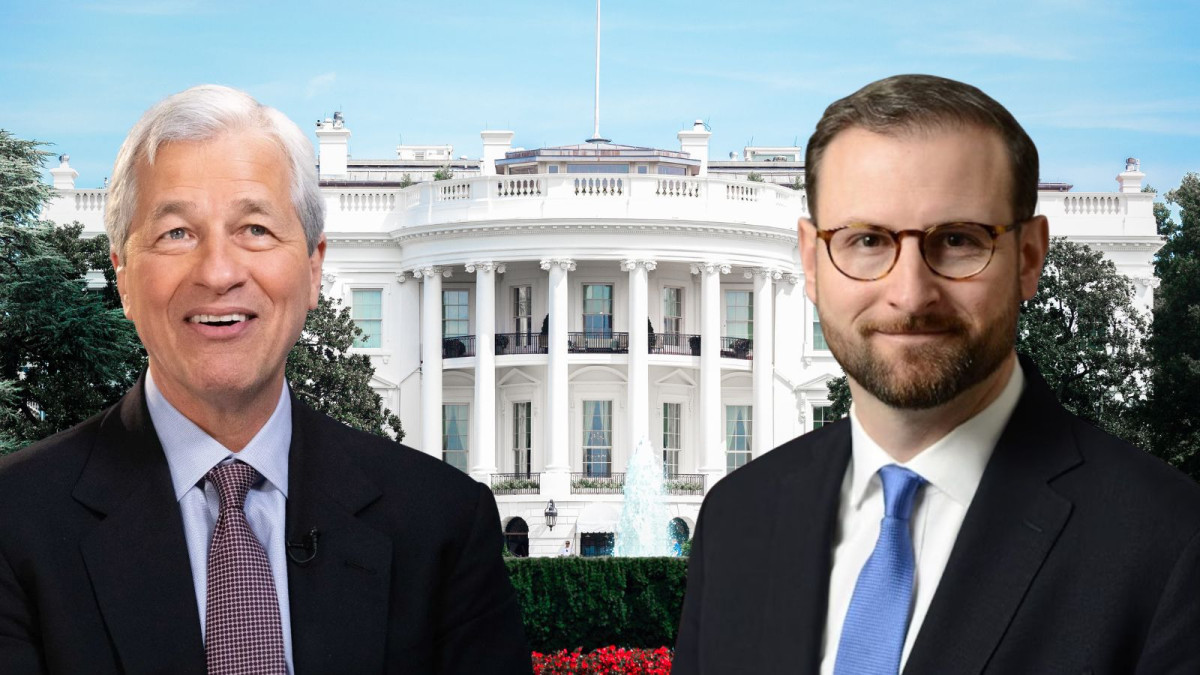
White House Calls Out Dimon on Stablecoin Yields

Washington's stablecoin standoff just got a whole lot more personal.
Patrick Witt, the executive director of the President's Council of Advisors for Digital Assets, publicly fired back at JPMorgan Chase CEO Jamie Dimon on Tuesday, calling his arguments about stablecoin yields misleading and, in Witt's own word, a "deceit."
The exchange marks one of the sharpest moments yet in a months-long tug-of-war between Wall Street and the White House over the future of digital asset regulation in America.
Dimon Draws a Line in the Sand
It started Monday, when Dimon went on CNBC and didn't mince words. His position was simple, if uncompromising: any platform holding customer balances and paying interest on them is functionally a bank, and should be regulated like one.
"If you do that, the public will pay. It will get bad," Dimon warned, arguing that a two-tiered system where crypto firms operate with fewer restrictions than banks is unsustainable.
Dimon suggested a narrow compromise: platforms could offer rewards tied to transactions. But he drew a clear line at interest-like payments on idle balances, saying, "If you're going to be holding balances and paying interest, that's a bank."
The list of obligations Dimon believes should apply is long, FDIC insurance, capital and liquidity requirements, anti-money laundering controls, transparency standards, community lending mandates, and board governance requirements. "If they want to be a bank, so be it," he said.
For Dimon, it's fundamentally about fairness. JPMorgan uses blockchain in its own operations, and the CEO was careful to frame his argument not as anti-crypto but as pro-competition on equal terms. "We're in favor of competition. But it's got to be fair and balanced," he said.
The White House Fires Back
Witt wasn't going to let that stand. In a post on X late Tuesday, he went directly at Dimon's framing, calling it deliberately misleading.
"The deceit here is that it is not the paying of yield on a balance per se that necessitates bank-like regulations, but rather the lending out or rehypothecation of the dollars that make up the underlying balance," Witt wrote. "The GENIUS Act explicitly forbids stablecoin issuers from doing the latter."
The argument gets at something technically important. What makes a bank risky, and therefore subject to heavy regulation, isn't that it pays interest. It's that banks take deposits and lend them back out, creating credit and the systemic risk that comes with it. If too many people want their money back at once, that's a bank run. Stablecoin issuers operating under the GENIUS Act must maintain reserves at a 1:1 ratio. There is no fractional reserve lending, no rehypothecation, no credit creation.
In Witt's view, stablecoin balances aren't deposits, and treating them as such misrepresents what's actually happening. He closed with a pointed equation: "Stablecoins ≠ Deposits."
President Donald Trump didn't stay quiet either. On Tuesday, he took to Truth Social with a message that made his position unmistakably clear.
"The U.S. needs to get Market Structure done, ASAP. Americans should earn more money on their money. The Banks are hitting record profits, and we are not going to allow them to undermine our powerful Crypto Agenda that will end up going to China, and other Countries if we don't get the Clarity Act taken care of," Trump wrote.
Senator Cynthia Lummis quickly reposted Trump's message, adding her own call to action: "America can't afford to wait. Congress must move quickly to pass the Clarity Act."
The same day Trump posted, a Coinbase delegation led by CEO Brian Armstrong visited the White House for talks. The timing was not subtle.
The Real Stakes: The CLARITY Act
To understand why this debate matters so much right now, you need to understand the legislation being held hostage by it.
The GENIUS Act, signed into law in July 2025, established the first federal framework for payment stablecoins. The CLARITY Act is its sequel: a broader market structure bill that would assign clear regulatory jurisdiction to the SEC and CFTC over the crypto industry, and is widely seen as the piece of legislation needed to unlock large-scale institutional participation in digital assets.
The bill cleared the House comfortably but has been mired in Senate gridlock since January, when the Senate Banking Committee indefinitely postponed a planned markup vote. The trigger was Coinbase withdrawing support over a proposed amendment that would have restricted stablecoin rewards for users.
That withdrawal, announced by CEO Brian Armstrong in a post on X the night before the scheduled committee vote, split the crypto industry. a16z crypto's Chris Dixon publicly disagreed, posting "Now is the time to move the Clarity Act forward." Kraken's co-CEO Arjun Sethi also pushed back, writing that "walking away now would not preserve the status quo in practice" and warning it "would lock in uncertainty and leave American companies operating under ambiguity while the rest of the world moves forward."
The stakes for Coinbase are concrete. Stablecoins contribute nearly 20% of Coinbase's revenue, roughly $355 million in the third quarter of 2025 alone, and most of USDC's growth is occurring on Coinbase's platform. Coinbase currently offers 3.5% yield on USDC, a figure most traditional bank accounts can't come close to matching.
Banks Are Scared, and They Have the Numbers to Show It
The banking lobby's concern isn't hypothetical. Banking trade groups, led by the Bank Policy Institute, have warned that unrestricted stablecoin yield could trigger deposit outflows of up to $6.6 trillion, citing U.S. Treasury Department analysis. Bank of America CEO Brian Moynihan put a similar figure forward, reportedly suggesting as much as $6 trillion in deposits, representing roughly 30-35% of all U.S. commercial bank deposits, could be at risk.
Stablecoins registered $33 trillion in transaction volume in 2025, up 72% year-over-year. Bernstein projects total stablecoin supply will reach approximately $420 billion by the end of 2026, with longer-run forecasts from Citi putting the market at up to $4 trillion by 2030. Those aren't niche numbers anymore. At that scale, deposit competition becomes a serious macroeconomic question.
The American Bankers Association and 52 state bankers' associations explicitly urged Congress to extend the GENIUS Act's yield prohibitions to partners and affiliates of stablecoin issuers, warning of deposit disintermediation.
The Bottom Line
What's playing out right now is a genuine philosophical disagreement about what money is and how it should be regulated, wrapped inside a very consequential legislative fight, a prize fight with Banks in one corner and Crypto in the other.
Dimon's argument is not frivolous. Banks are regulated as heavily as they are because of what they do with deposited money, and a world where consumers move trillions into yield-bearing crypto instruments held at lightly regulated platforms carries real risks. The history of financial crises is largely a history of regulatory arbitrage gone wrong.
But Witt's counter is also not frivolous. The GENIUS Act was designed specifically to prevent stablecoin issuers from doing the things that make banks dangerous. A fully reserved, non-lending stablecoin issuer is structurally different from a fractional reserve bank, and applying the same regulatory framework to both risks conflating two fundamentally different business models.
What's harder to square is that the banking lobby's intervention in the CLARITY Act seems, to many in the crypto world, less about prudential regulation and more about protecting market share. President Trump has not been subtle about that read, accusing banks of holding the CLARITY Act hostage to protect incumbent interests against crypto competition.
With the legislative window narrowing, Armstrong back at the White House, and Trump openly calling out the banking lobby by name, this standoff has reached the kind of inflection point where someone is going to have to blink. The question is whether either side is willing to do it before time runs out entirely.

CFTC Names 35 Crypto, Finance Leaders to Advisory Panel

-
Hayden Adams, CEO, Uniswap Labs
-
Brian Armstrong, CEO, Coinbase
-
Shayne Coplan, CEO, Polymarket
-
Brad Garlinghouse, CEO, Ripple
-
Luke Hoersten, CEO, Bitnomial
-
Tarek Mansour, CEO, Kalshi
-
Kris Marszalek, CEO, Crypto.com
-
Nathan McCauley, CEO, Anchorage Digital
-
Peter Mintzberg, CEO, Grayscale
-
Sergey Nazarov, CEO, Chainlink Labs
-
Arjun Sethi, Co CEO, Kraken
-
Peter Smith, CEO, Blockchain.com
-
Tyler Winklevoss, CEO, Gemini
-
Anatoly Yakovenko, CEO, Solana Labs
-
Andrej Bolkovic, CEO, Options Clearing Corporation
-
Thomas Chippas, CEO, Rothera Markets
-
Professor Harry Crane, Representative
-
Chris Dixon, General Partner, a16z Crypto
-
Craig Donohue, CEO, Cboe Global Markets
-
Terry Duffy, Chair and CEO, CME Group
-
Tom Farley, CEO, Bullish
-
Adena Friedman, Chair and CEO, Nasdaq
-
Christian Genetski, President, FanDuel
-
Frank LaSalla, President and CEO, Depository Trust and Clearing Corporation
-
Walt Lukken, CEO, FIA
-
Scott D. O’Malia, CEO, ISDA
-
Alana Palmedo, Managing Partner, Paradigm
-
Vivek Raman, CEO, Etherealize
-
Professor Carla Reyes, Representative
-
Jason Robins, CEO, DraftKings
-
David Schwimmer, CEO, LSEG
-
Vance Spencer, Co founder, Framework Ventures
-
Jeff Sprecher, CEO, Intercontinental Exchange
-
Vlad Tenev, CEO, Robinhood
-
Don Wilson, CEO, DRW

White House Meets Crypto and Banking Leaders as Market Structure Bill Stalls

The White House is preparing to bring crypto executives and banking leaders into the same room again, a sign that Washington’s long running fight over how to regulate digital assets has reached another pressure point.
According to reporting citing Reuters, senior figures from the crypto industry and the banking sector are expected to meet with White House officials in early February to discuss a market structure bill that has recently hit a wall in Congress. The meeting comes at a moment when lawmakers have already locked in a stablecoin framework, but cannot seem to agree on the bigger question of who regulates crypto markets and how.
Market structure may sound abstract, but it is the foundation of everything else. It determines which agency has authority, how tokens are classified, how exchanges register, and whether new products are built in the United States or somewhere else.
The fact that the White House is stepping in suggests the administration believes the debate has moved beyond talking points and into the phase where compromises need to be made, especially between banks and crypto firms that see the future very differently.
Why this meeting matters now
When the White House convenes both sides of a financial policy fight, it usually means the normal legislative process is struggling. That is exactly what is happening with crypto market structure.
Congress made real progress last year by passing a federal stablecoin law. That victory raised expectations across the industry that broader rules for exchanges, tokens, and decentralized finance would be next. Instead, lawmakers have found themselves bogged down in disagreements that are harder to paper over.
At a high level, everyone says they want clarity. In practice, clarity means deciding winners and losers.
Banks want to make sure crypto products do not look or behave like deposits without being regulated like deposits. Crypto firms want rules that let them list assets, offer yield, and build new protocols without constant fear of enforcement actions. Regulators want authority that actually matches how the market works.
Those goals collide most directly in market structure legislation, which is why it has become the most contentious piece of crypto policy in Washington.
Where the bill stands today
The House has moved, the Senate is stuck
The House of Representatives has already passed a sweeping market structure bill that lays out a framework for classifying digital assets and dividing oversight between the SEC and the CFTC. The basic idea is simple. Tokens that function like securities fall under the SEC. Tokens that operate more like commodities fall under the CFTC, including spot market oversight.
That approach has strong support in the crypto industry because it offers a path to compliance that does not rely on years of litigation.
The Senate, however, is a different story. Jurisdiction is split between the Banking Committee and the Agriculture Committee, which oversees the CFTC. Each committee has released its own drafts, and neither side has a clear path to unifying them.
Markups have been delayed. Amendments are piling up. And the clock is ticking as lawmakers turn their attention to other priorities.
Stablecoin rewards have become the flashpoint
One of the biggest reasons the bill is stalled is stablecoin yield.
Even though stablecoins already have their own law, they still sit at the center of the market structure debate because they touch the banking system directly. The most controversial issue is whether stablecoins should be allowed to offer rewards simply for being held.
From the banking perspective, yield bearing stablecoins look uncomfortably close to deposits. Banks argue that if a token offers a return and can be redeemed at par, it competes with insured deposits without being subject to the same rules.
From the crypto side, rewards are seen as a feature, not a loophole. Many firms argue that stablecoins backed by cash and short term Treasurys are fundamentally different from bank liabilities, and that banning rewards would freeze innovation and entrench incumbents.
Some Senate drafts have tried to split the difference by restricting passive yield while allowing activity based incentives. That compromise has not satisfied everyone, which is why the issue keeps resurfacing.
This is also where a White House meeting could make a difference. Any bill that passes will need language banks can accept and crypto firms can actually use.
DeFi is the second unresolved battle
Decentralized finance is the other major fault line.
Lawmakers and regulators agree that DeFi cannot exist entirely outside the law. They disagree on how to draw the boundary. Some Senate proposals push Treasury to define compliance obligations for DeFi platforms, including disclosures and recordkeeping requirements.
The challenge is obvious. If the rules treat software like a traditional intermediary, developers will leave or go dark. If the rules are too permissive, lawmakers worry about money laundering, sanctions evasion, and consumer harm.
So far, no draft has solved this cleanly. The result is cautious, sometimes vague language that satisfies no one and invites future fights.
The SEC versus CFTC question is still unresolved
At its core, market structure is about classification.
Is a token a security, a commodity, something else, or some hybrid category that does not fit neatly into existing law? That answer determines which regulator takes the lead and how companies design their products.
Some Senate drafts introduce concepts like network tokens or ancillary assets to bridge the gap between traditional securities and decentralized systems. These ideas are meant to reduce uncertainty, but they also raise new questions about enforcement and interpretation.
For exchanges, custodians, and issuers, this is not academic. Classification determines what can be listed, how staking works, and whether certain products are viable in the US at all.
The Bottom Line
I am generally positive on the White House holding this meeting. At a minimum, it acknowledges what everyone in the industry already knows, which is that market structure is stuck and normal committee process is not getting it unstuck.
Getting banks and crypto firms in the same room matters, even if no one walks out with a breakthrough headline. These conversations tend to shape the edges of legislation more than the core, but in a bill this complex, the edges are often where everything breaks.
That said, expectations should stay grounded. A single meeting is not going to magically resolve the stablecoin yield debate, redraw the DeFi compliance perimeter, or settle the SEC versus CFTC turf war. Those fights are structural and political, and they will take time.
If anything meaningful comes out of this, it will likely show up quietly in revised draft language weeks from now, not in a press release the next day.
Still, the fact that the White House is leaning in is a good sign. It suggests there is real pressure to get something done, and an understanding that half measures or endless delay are no longer acceptable. For an industry that has spent years asking Washington to engage seriously, that alone is progress, even if the final outcome remains very much in flux.

Ripple and LMAX Push Institutional Stablecoin Adoption
Ripple and LMAX Push Institutional Stablecoin Adoption

Ripple’s reported deal with LMAX Group is not really about another exchange listing or a short-term liquidity boost. It is about where stablecoins are finally starting to show up inside institutional finance, and what that shift says about the next phase of crypto market structure.
The headline is simple enough. Ripple and LMAX have struck a $150 million agreement that brings Ripple’s dollar-backed stablecoin, RLUSD, deeper into LMAX’s institutional trading venues. The more interesting part is what comes next: RLUSD is expected to be usable as collateral, margin, and settlement capital by professional trading firms.
That may not sound dramatic at first glance, but inside institutional markets, it is a big deal.
From parking asset to working capital
For years, stablecoins have mostly played a supporting role. They were the thing traders sat in between positions or used to move money between exchanges when banks were closed. Retail users cared about convenience and price stability. Institutions cared about something else entirely: whether a stablecoin could actually replace cash in live trading workflows.
Using a stablecoin as collateral changes the conversation. Suddenly, that token is not just sitting idle. It is supporting leveraged positions, absorbing margin requirements, and moving around trading venues without waiting for bank wires or settlement windows.
LMAX is a meaningful place for that shift to happen. The firm has built its reputation on institutional-grade execution in FX and digital assets, serving banks, brokers, hedge funds, and proprietary trading firms. If RLUSD is accepted inside that ecosystem as usable collateral, it moves closer to being treated as functional cash, not just crypto-native liquidity.
Why LMAX matters more than a typical exchange
This is not a retail exchange partnership. LMAX’s client base is made up of firms that already manage risk, margin, and balance sheets for a living. These are the players who care about haircut schedules, collateral eligibility, operational reliability, and compliance comfort.
If those firms are willing to post RLUSD as collateral, it suggests confidence not only in the token’s peg, but also in the issuer behind it. That trust is harder to earn than a listing, and far more valuable once it exists.
It also reflects a broader institutional reality. Firms want capital that moves around the clock, across venues, and across asset classes. Cash tied to banking hours and regional settlement systems increasingly feels like a constraint.
Ripple’s stablecoin strategy is becoming clearer
RLUSD is not a side project for Ripple. The company has been positioning it as an enterprise-grade stablecoin, backed by segregated reserves and supported by regular attestations. It runs on both XRP Ledger and Ethereum, and Ripple has been explicit about pushing it into real financial workflows rather than letting it exist as a passive asset.
That push has shown up in a few places already. RLUSD has been integrated into Ripple’s payments stack. It has been listed on institutional venues. And now, with LMAX, it is moving into collateral use cases.
Seen together, these steps suggest Ripple is trying to build something closer to an institutional cash layer than a retail stablecoin brand.
The collateral flywheel institutions care about
For professional trading firms, collateral is where the real leverage sits. If a stablecoin can be posted as margin, it becomes part of the firm’s core capital stack. That unlocks capital efficiency, especially for firms operating across time zones and asset classes.
Once a stablecoin clears that bar, it can expand into settlement, netting, and treasury operations. It can move between venues over the weekend. It can reduce idle balances. It can simplify how firms manage liquidity across crypto and traditional markets.
This is also why Ripple’s broader institutional moves matter. The company has been building out infrastructure that connects stablecoins, custody, prime brokerage, and payments. The LMAX deal fits neatly into that picture.
A crowded market with a narrow institutional lane
RLUSD is entering a stablecoin market dominated by incumbents with massive scale. But market cap is not the only metric that matters in institutional finance. Acceptance as collateral, integration into regulated venues, and operational trust often matter more than raw supply.
Institutions do not ask which stablecoin is biggest. They ask which one their venue will accept, which one clears risk checks, and which one will still work under stress.
Ripple is clearly aiming at that narrow lane, where trust, compliance, and plumbing matter more than retail mindshare.
What still needs to be proven
There are still open questions. The exact scope of RLUSD’s collateral eligibility at LMAX matters. Haircuts, product coverage, and custody integration will determine how widely it is actually used.
There is also the question of scale. True institutional adoption shows up in volume, not announcements. It shows up during volatile markets, when liquidity and redemptions are tested.
And as always, jurisdiction matters. Stablecoin availability and usage depend on regulatory boundaries that vary by region and client type.
Why this matters now
The broader takeaway is that stablecoins are quietly moving from the edges of crypto markets toward the center of institutional finance. Not through hype cycles, but through plumbing.
If RLUSD becomes a routine piece of collateral inside venues like LMAX, it will be less about Ripple winning a headline and more about stablecoins winning a role they have been chasing for years.
In that sense, this deal is less about a token and more about a shift. Stablecoins are no longer just crypto’s cash. They are starting to look like finance’s.
Stay Connected
You can stay up to date on all News, Events, and Marketing of Rare Network, including Rare Evo: America’s Premier Blockchain Conference, happening July 28th-31st, 2026 at The ARIA Resort & Casino, by following our socials on X, LinkedIn, and YouTube.

Coinbase Breaks With Senate on Crypto Bill as Stablecoin Rules Spark Pushback
Coinbase Draws a Line in the Sand on Market Structure Bill

Coinbase is stepping back from Washington’s biggest crypto push yet.
Just days before a crucial vote in the Senate Banking Committee, the largest US crypto exchange says it will not support the Senate’s sweeping crypto market structure bill in its current form. The message from Coinbase CEO, Brian Armstrong, is blunt. Regulatory clarity matters, but not at any cost.
The move highlights a growing divide between lawmakers eager to lock in federal rules and an industry increasingly wary of legislation that could reshape its business in unintended ways.
A Bill Meant to End the Gray Area
The Senate bill, months in the making, is designed to finally spell out how digital assets are regulated in the United States. At its core, the proposal tries to answer long-standing questions about which crypto assets fall under securities law, which should be treated as commodities, and how oversight should be split between regulators.
For years, crypto companies have complained that the lack of clear rules has pushed innovation offshore and left firms vulnerable to enforcement actions after the fact. On paper, this bill is supposed to fix that.
But as the text has taken shape, it has also picked up provisions that some in the industry see as deal-breakers.
Stablecoin Rewards Become the Flashpoint
For Coinbase, the biggest problem sits with stablecoins.
The draft legislation includes language that could sharply limit or effectively eliminate rewards paid to users who hold stablecoins on platforms like Coinbase. These rewards are not technically interest paid by issuers, but incentives offered by exchanges and intermediaries. Still, critics argue they look and feel a lot like bank deposits, without bank-style regulation.
Traditional banking groups have pushed hard for tighter rules here. Their concern is straightforward. If consumers can earn yield on dollar-pegged crypto tokens outside the banking system, deposits could drain from insured banks, particularly smaller ones.
Coinbase sees it differently. Stablecoin rewards have become a meaningful part of how crypto platforms compete and how users engage with dollar-based crypto products. Cutting them off, the company argues, would harm consumers and hand an advantage back to traditional finance.
In private and public conversations, Coinbase executives have made it clear that they are unwilling to back a bill that undercuts what they view as a legitimate and already regulated product.
"After reviewing the Senate Banking draft text over the last 48 hours, Coinbase unfortunately can’t support the bill as written,” Armstrong said. "This version would be materially worse than the current status quo, we'd rather have no bill than a bad bill."
Why This Matters Beyond Coinbase
Coinbase’s stance carries weight. It is one of the most politically active crypto companies in Washington and often serves as a bellwether for broader industry sentiment.
If Coinbase is out, others may quietly follow.
That raises the risk that lawmakers end up with a bill that lacks meaningful industry buy-in, or worse, one that passes but leaves key players unhappy enough to challenge or work around it.
Some firms are already exploring alternatives, including banking charters or trust licenses, as a hedge against restrictive federal rules. Others may simply slow US expansion and look overseas.
A Narrow Path Forward in the Senate
The timing is not ideal.
The Senate Banking Committee is expected to vote on the bill imminently, but support remains fragile. Lawmakers are divided not just on stablecoins, but also on how to handle decentralized finance, custody rules, and even ethics provisions tied to political exposure to crypto.
Add in election-year politics, and the window for compromise looks tight.
If the bill stalls or fails in committee, there is a real chance it gets pushed into the next Congress. That would mean at least another year, and likely more, of regulatory uncertainty.
No Law vs a Bad Law
Behind the scenes, a familiar argument is playing out.
Some in Washington believe that imperfect legislation is better than none at all. The industry, scarred by years of enforcement-first regulation, is no longer convinced.
Coinbase’s decision reflects a growing view among crypto companies that a flawed law could do more long-term damage than continued ambiguity. Once rules are written into statute, they are far harder to undo.
For now, the standoff continues.
Whether lawmakers soften the bill to keep major players on board or push ahead regardless may determine not just the fate of this legislation, but the shape of US crypto regulation for years to come.
Stay Connected
You can stay up to date on all News, Events, and Marketing of Rare Network, including Rare Evo: America’s Premier Blockchain Conference, happening July 28th-31st, 2026 at The ARIA Resort & Casino, by following our socials on X, LinkedIn, and YouTube.

Polymarket To Bring Prediction Market Data to The Wall Street Journal In Dow Jones Deal

Dow Jones is bringing prediction market data into the center of mainstream financial news, and the move says a lot about how institutions now think about expectations.
Through a new partnership, Polymarket’s real-time probabilities will begin appearing across Dow Jones properties, including The Wall Street Journal, Barron’s, and MarketWatch. These are not experimental sidebars or crypto-only sections. They are some of the most influential platforms in global finance. Placing prediction market data alongside prices, earnings estimates, and economic indicators reflects a belief that expectations themselves are now core financial information.
This is not about betting for entertainment. It is about who defines what the market thinks, and how fast that belief can be measured.
From curiosity to core signal
Prediction markets spent years on the margins, popular with political traders and information obsessives who wanted a cleaner read on future outcomes. What changed was not the concept, but the credibility and distribution.
Dow Jones is not treating Polymarket as a novelty widget. The company plans to integrate its data directly into consumer-facing products, including prominent digital placements and market-focused pages. One early example is an earnings calendar built around market-implied expectations rather than analyst consensus or corporate guidance alone.
Markets move on belief before they move on fact. Earnings surprises, regulatory decisions, court rulings, and central bank signals all trade on anticipation. Prediction markets make that anticipation visible in a single number that updates continuously.
For readers, the value is immediate. Instead of asking what already happened, the data answers a more urgent question: what does the market think is about to happen right now?
Why institutions are choosing markets over polls
For decades, polling was the default way media organizations measured expectations. Ask a group what they think will happen, average the answers, and publish the result. That model worked when belief changed slowly and news cycles moved in days rather than minutes.
That is no longer the case.
Prediction markets like Polymarket offer a live, self-correcting signal that polling cannot match. Participants are not just stating opinions, they are committing capital. When new information appears, prices adjust immediately. There is no waiting for another survey, no methodological lag, and no static snapshot that begins aging the moment it is published.
For Dow Jones, this matters because speed and credibility are now inseparable. Polls depend on sampling assumptions, response honesty, and weighting choices that are easy to question after the fact. Prediction markets push that weighting into the market itself. Influence emerges through price, not editorial judgment.
Markets also surface uncertainty more honestly. A poll can show a stable percentage while masking deep disagreement. A prediction market exposes that tension directly through volatility and rapid probability swings. For financial coverage built around anticipation rather than confirmation, that visibility is valuable.
In that sense, Polymarket data is not replacing journalism. It is replacing an aging expectations tool.
Built for modern financial media
Financial news has steadily moved toward modular data. Futures boxes, rate probability tables, volatility gauges, and dashboards now sit alongside traditional reporting. Prediction market probabilities fit naturally into that structure.
They are compact, intuitive, and fast. A 64 percent probability communicates instantly, without requiring paragraphs of caveats. For audiences already trained to think in odds and ranges, the format feels native.
Dow Jones executives have described prediction market data as a way to show collective belief in real time. The wording is careful for a reason. These numbers are not forecasts handed down as truth. They are signals of sentiment, continuously updated, sometimes wrong, often revealing.
Part of a broader shift, not a one-off
The Dow Jones partnership is not happening in isolation. CNBC recently announced a multi-year deal with Kalshi to integrate prediction data across its television and digital platforms. Intercontinental Exchange, the parent company of the New York Stock Exchange, has made a strategic investment in Polymarket and positioned its data as a product for institutional clients.
The pattern is clear. Prediction markets are trying to move from destination platforms to infrastructure. Less about attracting users to trade, more about embedding probabilities wherever decisions are made.
For publishers, that creates a new class of data product. For prediction platforms, distribution is the growth strategy.
How prediction data reshapes coverage
The most important change will be editorial, not technical.
Sudden shifts in probability can become story drivers. Why did expectations flip overnight? What information entered the market? Who acted first? The probability move becomes the signal, and the reporting explains it.
Earnings coverage is an obvious fit, but so are regulatory deadlines, major lawsuits, macro announcements, and elections. Anywhere the market is waiting, prediction data creates a visible tension line that journalism can follow.
Used well, these markets do not replace analysis. They sharpen it.
The risks are still there
Prediction markets are not neutral truth engines.
Thin liquidity can create false confidence. Small groups of traders can push prices, especially in niche markets. Numbers that look authoritative can mislead if they are presented without context.
There are also real issues around contract definitions and resolution. Ambiguity can turn into public disputes, and those disputes matter more when probabilities are embedded in major media brands.
Regulatory uncertainty remains part of the backdrop as well. As prediction data reaches broader retail audiences through mainstream publishers, scrutiny is likely to increase.
For Dow Jones, the challenge is framing. These probabilities must be treated like market data, not predictions carved in stone.
Why this matters long term
This partnership points to a larger shift in how financial information is consumed.
Markets increasingly trade on narratives, second-order beliefs, and collective anticipation. Prediction markets make those forces legible. Media companies want tools that help readers understand not just what happened, but what everyone thinks is about to happen.
For Polymarket, the strategy is clear. Becoming embedded in the workflows of investors, analysts, and journalists is more powerful than being another destination site.
For financial media, this is a bet that probabilities will become as standard as price charts.
And for readers, it suggests the future of market news will focus less on confident forecasts and more on watching belief itself move, in real time.
Stay Connected
You can stay up to date on all News, Events, and Marketing of Rare Network, including Rare Evo: America’s Premier Blockchain Conference, happening July 28th-31st, 2026 at The ARIA Resort & Casino, by following our socials on X, LinkedIn, and YouTube.
What the CLARITY Act Means for Crypto and Why It Matters So Much

If you have spent any real time building, trading, or working in crypto in the U.S., you already know the pattern. The rules are never fully clear. Guidance usually comes after the fact. And “compliance” often feels less like a checklist and more like a guessing game.
That is the environment the Digital Asset Market Clarity Act, better known as the CLARITY Act, is trying to change.
On January 15, 2026, the Senate Banking Committee is scheduled to hold a critical markup session on the bill. That might sound like inside-baseball legislative procedure, but it is not. A markup is where lawmakers decide what a bill really is. Language gets tightened. Loopholes get closed or widened. Entire sections can disappear.
For crypto, this is one of those moments where the future shape of U.S. regulation is actually being decided.
The problem CLARITY is trying to solve
Right now, crypto regulation in the U.S. is reactive.
The laws that exist were written long before blockchains, tokens, or decentralized networks. Regulators have mostly tried to force crypto into frameworks that were never designed for it, often relying on enforcement actions to define the rules retroactively.
CLARITY is an attempt to stop doing that.
The bill starts from a simple premise: not everything in crypto is the same, so it should not all be regulated the same way.
Launching a token to fund a network is not the same as trading that token years later. Writing open-source code is not the same as holding customer funds. Running a wallet is not the same as running an exchange.
Those distinctions sound obvious inside the industry. CLARITY tries to make them explicit in law.
Tokens are not frozen in time
One of the most important ideas in the bill is that a token’s legal treatment should not be locked forever to how it was first sold.
Under the current system, if a token was ever distributed in a way that looks like fundraising, it can carry securities risk indefinitely. Even if the network decentralizes. Even if the original team steps away. Even if the token functions more like a commodity than an investment.
CLARITY tries to separate:
-
The initial transaction, which may look like an investment contract
-
The token itself, once it is broadly distributed and actively used
That distinction matters because it opens the door to secondary markets operating without constant legal uncertainty, while still keeping guardrails around early fundraising.
What “mature blockchain” actually means
To make that transition possible, CLARITY introduces the concept of a mature blockchain system.
Stripped of legal language, the question is pretty straightforward: does anyone actually control this thing?
If a small group can still unilaterally change the rules, supply, or governance, regulators get more leverage. If control is meaningfully distributed and no one actor is calling the shots, the regulatory burden can ease.
The bill creates a certification process around this idea, with a defined window for regulators to challenge a claim of maturity.
This is one of the most debated sections of the bill. It is also one of the most important. The standard has to be real, but it also has to be achievable. Senate changes here could dramatically affect how useful the bill ends up being.
How token launches could work going forward
CLARITY does not remove oversight from token launches. Instead, it tries to make that oversight fit reality.
The bill allows certain token offerings to proceed under an exemption, but only with meaningful disclosures. Projects would need to explain things like:
-
How token supply and issuance work
-
What rights, if any, token holders have
-
How governance actually functions in practice
-
What the project plans to build and what risks exist
The shift here is away from clever legal gymnastics and toward plain-English transparency. For founders, that could mean fewer surprises and a clearer sense of what is expected.
Why exchanges are watching this so closely
For U.S. crypto exchanges, CLARITY is largely about secondary markets.
Today, listing a token can feel risky even if that same asset trades freely outside the U.S. The legal line between primary fundraising and secondary trading has never been cleanly drawn.
CLARITY tries to draw that line. If it holds, exchanges would finally have a framework designed specifically for spot crypto markets, instead of trying to fit into rules written for something else.
A bigger role for the CFTC
Another major shift is regulatory jurisdiction.
CLARITY gives the CFTC clear authority over spot markets for digital commodities, not just derivatives. It also creates new registration paths for exchanges, brokers, and dealers that are tailored to how crypto markets actually function.
Importantly, the bill pushes for speed. It directs the CFTC to create an expedited registration process, acknowledging that waiting years for clarity is not realistic in fast-moving markets.
DeFi, software, and where things get tricky
DeFi is where the bill walks a tightrope.
CLARITY says that people should not be treated as regulated intermediaries just for building or maintaining software, running nodes, providing wallets, or supporting non custodial infrastructure. It also makes clear that participating in certain liquidity pools, by itself, should not automatically trigger exchange-level regulation.
At the same time, fraud and manipulation laws still apply.
Supporters see this as long overdue recognition that infrastructure is not the same as custody or brokerage. Critics worry about edge cases, especially where front ends, admin controls, or governance tokens blur the lines.
This is an area where Senate edits could have outsized impact.
Federal rules versus state rules
The bill also leans toward stronger federal oversight and narrower state-by-state requirements in certain areas.
For companies, that means fewer conflicting regimes and lower compliance friction. For critics, it raises concerns about losing fast-moving state enforcement in an industry that still sees its share of bad actors.
That tension is not going away, and it will likely surface again during markup.
Self custody, explicitly protected
One of the clearest statements in CLARITY is its protection of self custody.
The bill explicitly affirms the right to hold your own crypto and transact peer to peer for lawful purposes. In an environment where indirect restrictions have been a constant fear, putting this into statute is not symbolic. It is structural.
Developers get some breathing room
CLARITY also addresses a long-running concern among builders.
The bill says that non-controlling developers and infrastructure providers should not be treated as money transmitters simply for writing code or publishing software, as long as they do not control user funds or transactions.
For many developers, this removes a quiet but persistent legal cloud that has hung over the industry.
Why January 15 is such a big deal
The January 15 markup is where all of this either becomes real or starts to unravel.
This is where lawmakers decide how strict the maturity standards are, how wide the DeFi exclusions go, how much authority regulators actually get, and whether the bill delivers usable clarity or just new gray areas.
If CLARITY moves forward in a recognizable form, it becomes the most serious attempt yet to give crypto a durable U.S. market structure. If it does not, the industry likely stays where it is now, building first and hoping the rules catch up later.
How you can get involved?
This is also the moment where voices outside Washington still matter.
Lawmakers are actively weighing feedback. Staffers are reading messages. Offices are tracking where their constituents stand. Silence gets interpreted as indifference, and indifference makes it easier for complex bills to stall or be watered down.
If you believe crypto should have clear rules instead of enforcement-by-surprise, this is the time to say so.
That means contacting your representatives. Find out who your representative is and where they stand on crypto policy. Tell them that market structure clarity matters. Explain why builders, users, and businesses need predictable rules to stay in the U.S. Explain why self custody, open infrastructure, and lawful innovation should be protected, not pushed offshore.
It also means supporting organizations that are trying to organize that voice.
One such organization is Rare PAC, a political action committee advocating for regulatory clarity, innovation, and economic opportunity powered by decentralized technologies. Rare PAC works to ensure that the United States remains a global leader in those decentralized technologies and supports candidates who are committed to building A Crypto Forward America.
Bills like CLARITY do not pass or fail in a vacuum. They pass because people show up, speak up, and make it clear that getting this right matters.
January 15 is not the end of the process, but it is one of the moments that will shape everything that comes after.