#Token Launch
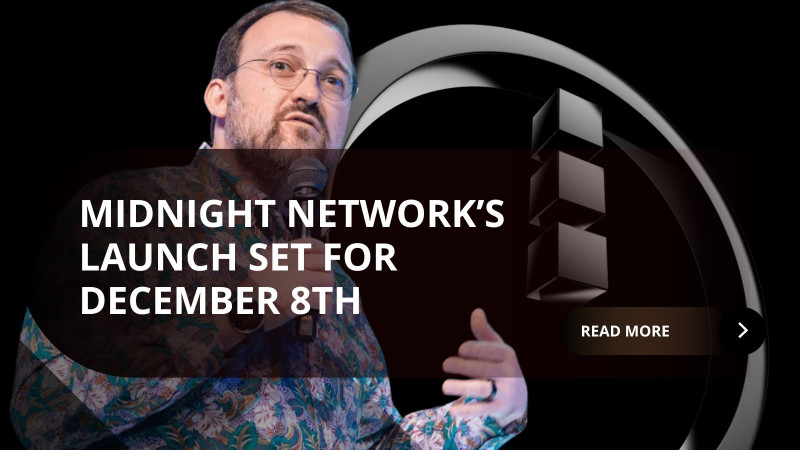
Midnight Sets December 8, 2025 Launch for NIGHT Token and Privacy Network
Midnight Announces NIGHT Token Launch Set for December 8, 2025
A New Era of Programmable Privacy Begins
The Midnight Network is officially preparing for one of the most anticipated launches in the blockchain space. During the Midnight Summit in London, Charles Hoskinson announced the official roadmap and launch date for Midnight’s NIGHT token and its multi phase rollout. The network will go live on December 8, 2025, marking the transition from years of development into a fully functioning, privacy focused blockchain ecosystem.
This launch introduces a fourth generation blockchain designed from the ground up for real world adoption, programmable privacy, regulatory friendly architecture and multi chain interoperability. Midnight is positioning itself as a new standard for privacy, identity protection and on chain compliance, and the four phase roadmap outlines how the network will reach full decentralization.
Until this point, most privacy oriented chains have focused on anonymity or narrow use cases. Midnight aims to redefine the category entirely by blending enterprise compliance with zero knowledge cryptography, creating a system where privacy and regulation are not mutually exclusive but fully compatible.
With the launch date locked in and the phases clearly defined, the coming months will be a critical period for awareness, onboarding, builders and partnerships.
What Is Midnight?
Midnight is a privacy focused blockchain platform developed by Shielded Technologies in partnership with the Midnight Foundation. It is built around the concept of rational privacy, which means users, developers and enterprises can choose what is private, what is shared and what is selectively disclosed. Midnight’s design recognizes that privacy and compliance both matter, and both can coexist through advanced cryptography and modern security frameworks.
Key Architectural Features
-
Zero knowledge proofs and selective disclosure contracts give users control over their data, while still enabling compliance when necessary.
-
A dual token model: NIGHT serves as the governance and utility token, while DUST powers shielded transactions and enables predictable operating costs.
-
Multi chain interoperability allows Midnight to plug into existing blockchain ecosystems rather than compete against them.
-
Developer friendly tooling, including the Compact language, lowers barriers to building private decentralized applications for mainstream adoption.
Midnight’s goal is to become the trusted privacy layer for Web3, supporting individuals, enterprises, institutions and global scale applications.
December 8 Launch and the Four Phase Roadmap
The December 8 milestone is not just a single event. It is the beginning of Midnight’s structured rollout through four major phases, each designed to activate different elements of the ecosystem.
Phase 1: Hilo
Launch Date: December 8, 2025
Hilo marks the official launch of the NIGHT token. Exchange listings, liquidity provision and open trading will begin on this date. Midnight is expected to launch across major exchanges, with widespread listings anticipated on platforms such as Binance, Coinbase and others.
Phase 2: Kukolu
Launch Window: Q1 2026
Kukolu activates privacy enabled decentralized applications on the network. This phase represents the launch of the fully federated mainnet and allows builders to deploy the first wave of privacy centric DApps and enterprise tools.
Phase 3: Mohalu
Launch Window: Q2 2026
Mohalu begins the process of decentralizing the network. Stake pool operators and nodes come online, and the DUST Capacity Exchange is activated. The phase starts fully federated and transitions toward community driven block production. Rare Network has already been running a Midnight node in preparation and is offering ADA staking rewards now, with NIGHT rewards expected to go live upon Mohalu’s rollout.
Phase 4: Hua
Launch Window: Q3 2026
Hua completes Midnight’s decentralization pathway. Stake pool operators become responsible for all block production. The bridging infrastructure goes live and full interoperability with other blockchains is enabled. This is the stage where Midnight matures into a fully decentralized, multi chain privacy network.
This four phase structure reflects Midnight’s commitment to stability, security and participation rather than rushing to mainnet. Each phase activates critical components in sequence to ensure the ecosystem can scale successfully.
Why Midnight Matters
Privacy Built for Real Adoption
Most privacy blockchains struggle because they favor anonymity over usability. Midnight’s programmable privacy model solves this by giving developers and enterprises control over what must remain private and what must be disclosed. This is essential for global adoption in regulated industries.
Major Institutional and Enterprise Partnerships
Midnight has already announced partnerships with well known organizations including Google, Webisoft, Fireblocks and others. These collaborations validate the network’s approach to privacy and hint at significant enterprise adoption on the horizon.
Interoperability and Ecosystem Flexibility
By integrating with existing chains and avoiding isolation, Midnight aligns itself with the growing multi chain reality of Web3. Developers from other ecosystems can build on Midnight and bring privacy to their applications without abandoning their existing infrastructure.
Strong Tokenomics and Predictability
The NIGHT and DUST model aligns incentives across users, developers and enterprises. NIGHT holders earn DUST, and DUST fuels the network’s privacy transactions. This gives projects predictable costs, which is especially valuable for long term enterprise adoption.
Final Thoughts
December 8, 2025 represents far more than a token launch. It marks the start of a major new chapter in blockchain privacy and infrastructure. Midnight has laid out a thoughtful roadmap, established key partnerships, prepared institutional tooling and positioned itself to deliver what many blockchains promise but rarely achieve.
Privacy, compliance, scale and adoption are difficult to combine, yet Midnight aims to deliver them all.
For developers, this is a rare opportunity to build on a technically advanced network that supports identity protection, private DeFi, secure data sharing and tokenized real world assets.
For users and token holders, the countdown to December 8 is more than hype. It is the beginning of a new standard for privacy in Web3 and a powerful new direction for the entire blockchain industry.
If Midnight executes on this roadmap, it may very well set the template for how privacy and regulation coexist in the next era of digital infrastructure.
Stay Connected
You can stay up to date on all News, Events, and Marketing of Rare Network, including Rare Evo: America’s Premier Blockchain Conference, happening July 28th-31st, 2026 at The ARIA Resort & Casino, by following our socials on X, LinkedIn, and YouTube.
Coinbase Launches Regulated Token Sale Platform to Revive Public Offerings
Coinbase Launches Token-Sale Platform with Guardrails to Avoid ICO Chaos
Coinbase has rolled out a new token-sale platform designed to provide retail investors with access to early-stage crypto projects under a regulated framework. The initiative aims to revive public token offerings in a safer, more transparent manner while restoring trust in token sales.
According to the company’s announcement the platform will host roughly one token sale per month. The first offering featured Monad, a high-performance blockchain startup.
Participants will use USD Coin (USDC) to purchase tokens. Token allocations are determined via an algorithm rather than a first-come, first-serve mechanism. Project teams and affiliated insiders will be prohibited from selling their tokens for six months after the public sale in order to reduce speculative flipping.
Key Features of the New Platform
Algorithmic Allocation
Unlike many of the chaotic ICOs of the past the platform will compile purchase requests during a one-week submission window. After that the algorithm will determine allocations with the goal of broad and equitable participation. Small investors will be given a fair chance rather than being crowded out by big players.
Payments must be made using USDC and participants must complete identity verification and compliance checks in good standing with Coinbase.
Token Issuer Restrictions
Project teams, founders and affiliated parties will be barred from selling any tokens—whether private or publicly traded—for at least six months following the public sale on Coinbase. This lock-up provision is intended to align incentives between founders and public investors and avoid immediate dump scenarios.
Disclosure and Pricing Transparency
Issuers will be required to submit detailed disclosures covering tokenomics, vesting schedules and distribution mechanics. These documents will be publicly available providing prospective buyers clarity on what they’re purchasing and how the project is structured. The platform also plans to further develop features like limit orders, automatic reinvestment options and issuer-specific eligibility criteria.
Strategic Context and Rationale
Learning from the 2017-2018 ICO Boom
During the 2017 ICO surge thousands of projects raised capital via token sales with minimal oversight. Many lacked product roadmaps, operated without regulatory compliance and ended in large losses or scams. This new Coinbase platform seeks to avoid that history by embedding regulatory controls and design features to reduce speculative excess.
The algorithmic allocations, lock-up periods and rigorous issuer criteria reflect this change.
Retail Access Meets Institutional Standards
Previously early-stage token participation was largely reserved for venture capital and accredited investors. Coinbase’s platform opens this market to retail investors under a regulated process tied to its existing infrastructure and compliance regime. In addition Coinbase has made strategic acquisitions including token issuance platform Liquifi and capital-formation platform Echo which strengthen its ability to manage token launches, compliance and cap-table operations.
Diversification of Business Model
For Coinbase the token-sale platform represents a growth avenue beyond trading fees. By hosting early-stage token launches and integrating token issuers earlier in their lifecycle the exchange can deepen user engagement, expand its product suite and capture new revenue models as the crypto capital-formation market evolves.
Potential Benefits and Market Implications
-
Increased participation and democratization: Retail users gain more equitable access to early token launches.
-
Improved token quality and credibility: Issuers undergo vetting and lock-ups promoting longer-term alignment.
-
Competitive pressure on other exchanges: Coinbase may set a new standard for token launches under regulatory guardrails.
-
Boost to on-chain fundraising: The platform could catalyze a revival of public token offerings with better structure and oversight.
-
Enhanced secondary market liquidity: With tokens launching via Coinbase’s funnel, listings and liquidity may improve for projects post-sale.
Risks, Challenges and Watch-Points
-
Volume vs quality trade-off: If offerings are too restrictive it may limit deal flow or cause frustration among issuers seeking speed and capital.
-
Regulatory land-mines: Token sales remain subject to securities laws classification and regulatory enforcement. Any misstep on issuer vetting or investor protections could prompt scrutiny.
-
Scalability of governance and infrastructure: As the platform hosts more sales maintaining the rigor of disclosures, lock-up enforcement and user fairness will be operationally demanding.
-
Market sentiment and speculation: Even with guardrails speculative behavior could still dominate new token launches, possibly recreating volatile market dynamics.
-
Issuer reputation risk: Early failures or token launches that under-perform could damage the platform’s credibility and the broader token-sale model.
What to Watch Next
-
The performance and user-feedback of the first offering from Monad and how secondary trading unfolds.
-
Timeline for subsequent sales and how frequently the platform opens slots.
-
Additional features announced such as limit orders, reinvestment tools and issuer custom-allocations.
-
Regulatory responses—whether U.S. agencies view the platform model as compliant or require additional oversight.
-
Impact on the broader token-launch ecosystem—whether rivals adopt similar models or the industry shifts toward more regulated public sales.
Final Thoughts
Coinbase’s token-sale platform represents a meaningful step toward the institutionalization of crypto capital-formation. By introducing algorithmic allocations, issuer lock-ups and strong disclosure standards the exchange is attempting to reboot public token launches in a way that avoids the chaos of the ICO boom.
For retail investors it offers a structured opportunity to access early-stage crypto projects. For issuers it provides regulated access to a large investor base under Coinbase’s brand and infrastructure.
Ultimately the success of this initiative will depend on execution, project quality and market reception. If Coinbase can maintain disciplined rollout while delivering compelling token offerings this could set a new paradigm for how tokens are issued, sold and listed in the next phase of crypto.
The next few token sale cycles will tell whether this is merely a novelty or a foundational shift in how crypto projects raise capital and engage with the public.
Stay Connected
You can stay up to date on all News, Events, and Marketing of Rare Network, including Rare Evo: America’s Premier Blockchain Conference, happening July 28th-31st, 2026 at The ARIA Resort & Casino, by following our socials on X, LinkedIn, and YouTube.
Polymarket Confirms Major Native Token Launch and Airdrop Plans
Polymarket Confirms Major Native Token Launch and Airdrop Plans
Prediction market platform Polymarket has officially revealed plans to launch a native token, tentatively referenced by the ticker “POLY,” and to conduct an airdrop targeting its active user base. This is the latest in a string of strategic moves that signal Polymarket is entering a new phase of growth and community-driven value creation.
In a recent communication, Chief Marketing Officer of Polymarket confirmed the intention to distribute POLY tokens as part of the platform’s next chapter. Although precise details such as the snapshot date or token economics have not yet been published, the announcement has already sparked significant interest and speculation across the crypto ecosystem.
What We Know So Far
Token Introduction
Polymarket founder Shayne Coplan sparked the token discussion earlier when he posted the string “$BTC $ETH $BNB $SOL $POLY” on X, placing POLY alongside well-established crypto assets. This implied a serious ambition for the token to operate at scale. Bitcoinist.com+1
Airdrop Framework
Although the project has not yet revealed final criteria, airdrop hunters and active users are already positioning themselves. Some analyst commentary suggests that metrics under consideration could include trading volume, market participation, profits, liquidity provision and platform loyalty. CoinMarketCap+1
Institutional Momentum
Polymarket recently secured a strategic investment of up to $2 billion from the Intercontinental Exchange (ICE), parent company of the New York Stock Exchange. This backing strengthens the token narrative and supports institutional credibility for the upcoming POLY rollout. Traders Union
Why This Development Matters
1. Platform Maturation
Polymarket moving to a native token model signals evolution from a purely transactional prediction-market platform into a deeper ecosystem with governance and economic incentives. A token could introduce staking, rewards, user governance and richer incentive structures.
2. Airdrop Culture Reset
The planned POLY airdrop has the potential to be one of the largest in crypto history given Polymarket’s scale and liquidity. That shifts the playing field for early-stage users and raises the bar for how platforms reward participation and loyalty. CoinSpot
3. Prediction Markets in the Spotlight
By aligning token issuance with prediction markets, Polymarket elevates an under-explored segment of crypto. With institutional investments and tokenization in view, prediction markets may gain broader utility and recognition in finance.
Key Metrics and Signals to Watch
-
Snapshot Date Announcement: When Polymarket defines the cut-off for eligibility.
-
Token Distribution Rules: Details on allocation size, tiering, user eligibility, lock-up periods.
-
Trading and Liquidity Dynamics: How volumes behave in the lead-up and post-launch.
-
Institutional Engagement: How ICE and other backers integrate token use cases or platform expansion.
-
Regulatory Alignment: How Polymarket addresses compliance, Sybil-resistance and user fairness.
Final Thoughts
Polymarket’s confirmation of a native token and airdrop marks a pivotal moment not just for its own roadmap but for the broader Web3 ecosystem. The shift reflects growing sophistication in how platforms incentivize users, reward engagement and build sustainable networks.
For participants, this development offers a chance to engage early and potentially earn meaningful value. For observers and institutions, it signals that prediction markets are stepping into the mainstream. And for the industry at large, it reinforces that tokenization remains a powerful lever for growth—and that well-executed airdrops can serve as catalysts rather than gimmicks.
Polymarket’s next steps—snapshot criteria, token economics and launch timing—will be closely watched. If executed thoughtfully, POLY could become a model for how crypto projects reward users, scale platforms and bridge to institutional finance.