#Exchanges
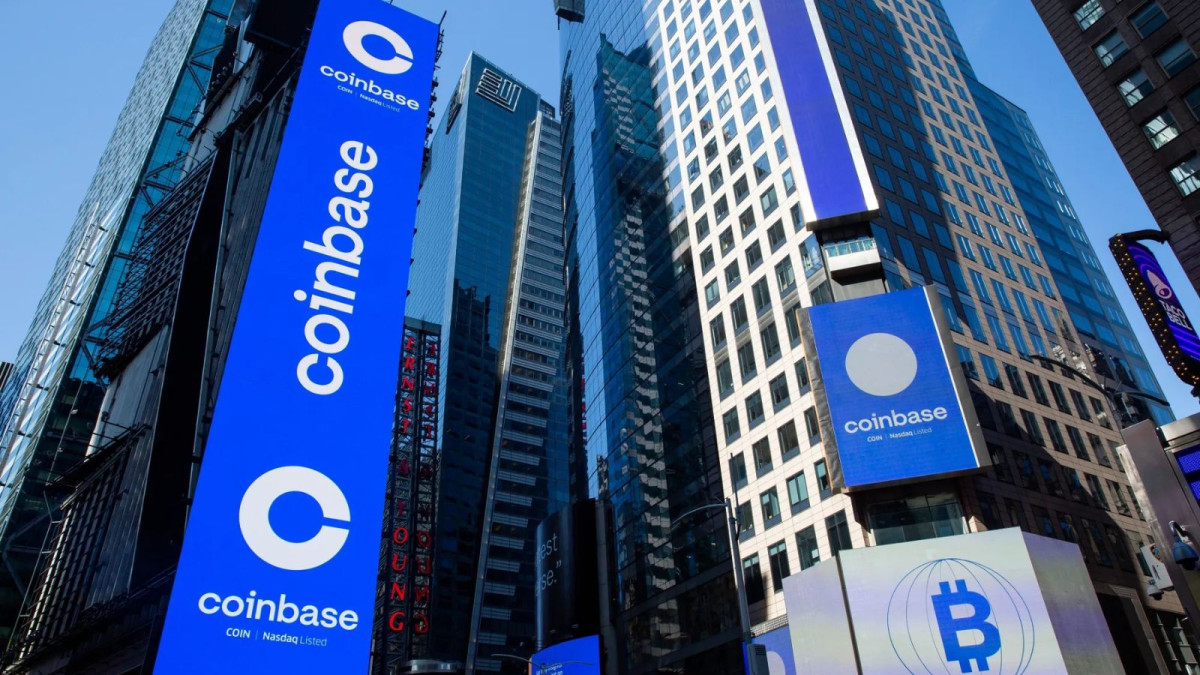
Coinbase Enters Australia’s Derivatives Market With AFSL Win

Cryptocurrency exchange Coinbase has secured the Australian Financial Services License (AFSL) from the Australian Securities and Investments Commission (ASIC), Australia’s main financial regulator, expanding its services beyond cryptocurrencies.
With the AFSL license secured, Coinbase Australia Pty Ltd, the exchange’s Australian entity, will be the first cryptocurrency exchange in Australia to offer non-crypto retail derivatives.

According to John O'Loghlen, the regional managing director for APAC and Australia country director at Coinbase, the expansion will begin with Coinbase offering crypto and equity perpetuals to its Australian users, followed by future expansion into futures, options, and stock trading, all of which will be made available through the Coinbase Wallet app.
With this planned expansion, Coinbase will be competing directly with traditional finance companies already offering these non-crypto derivatives, including IG Markets, CMC Markets, and Pepperstone, which serve hundreds of thousands of users. Nevertheless, according to O'Loghlen, Coinbase will be leveraging the speed and execution advantages of crypto.
Review of Coinbase Activity in Australia
Since its entry into the Australian crypto market in 2016, Coinbase has performed fairly well, particularly given that Australia is known for high cryptocurrency adoption, with about 33 percent of Australians reportedly having been exposed to cryptocurrencies.
In 2022, Coinbase expanded from offering basic crypto services to establishing a local Australian entity, Coinbase Australia Pty Ltd, which was registered with the Australian Transaction Reports and Analysis Center, AUSTRAC, Australia’s anti-money laundering and counter terrorism financing regulator and financial intelligence agency.
Through its Australian entity, headed by John O’Loghlen, Coinbase began offering PayID support for fast Australian dollar transfers, advanced trading features, and round-the-clock local customer support for its Australian users.
Coinbase’s journey in the Australian crypto sector has also been relatively smooth from a regulatory perspective, as it has not faced any major legal or regulatory challenges from Australian regulators, despite the country’s strict crypto enforcement actions and penalties imposed on compliance violators.
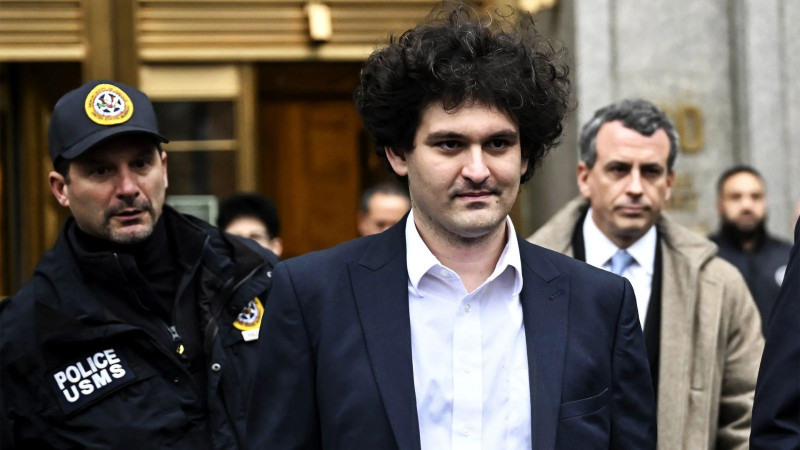
SBF Seeks New Trial in FTX Fraud Case

More than two years after FTX collapsed and reshaped the crypto industry, Sam Bankman-Fried is still fighting.
The former FTX CEO, now serving a 25 year federal prison sentence, has formally moved for a new trial in Manhattan federal court. The filing argues that key evidence was excluded, important testimony never reached the jury, and that the original proceedings did not present the full picture of what was happening inside the exchange before its implosion.
It is a long shot. But it keeps one of crypto’s biggest scandals squarely in the headlines.
A Quick Reset: How We Got Here
FTX was once valued at $32 billion and marketed itself as the responsible face of crypto trading. Bankman-Fried cultivated relationships in Washington, testified before Congress, and presented himself as a regulator-friendly industry leader.
That narrative unraveled in November 2022.
After a liquidity crunch exposed a multibillion-dollar hole in FTX’s balance sheet, the exchange halted withdrawals and filed for bankruptcy. Prosecutors later alleged that customer deposits were secretly routed to Alameda Research, Bankman-Fried’s trading firm, where the funds were used for speculative bets, venture investments, loans to executives, and political donations.
The case moved quickly. By late 2023, a jury found Bankman-Fried guilty on seven counts including wire fraud, securities fraud, and conspiracy. Several former executives, including Caroline Ellison and Nishad Singh, testified for the government. In 2024, Judge Lewis Kaplan sentenced him to 25 years in prison.
It was one of the most significant criminal convictions in crypto’s short history.
The Argument for a New Trial
Bankman-Fried’s latest filing hinges on a legal mechanism that allows courts to grant a new trial if newly discovered evidence could materially affect the verdict, or if there were serious procedural errors.
His motion makes a few central claims.
First, that certain testimony from former FTX and Alameda insiders was either excluded or not fully presented to the jury. According to the filing, that testimony could challenge the government’s portrayal of FTX as hopelessly insolvent and operating as a straightforward fraud.
Second, the defense argues that FTX’s collapse was more akin to a bank run than an inevitable implosion. In this telling, the exchange had assets and would have recovered if not for the sudden withdrawal panic that followed public reporting about its balance sheet. That argument goes directly to intent, which was central to the prosecution’s case.
Third, the motion questions the credibility of cooperating witnesses. Bankman-Fried claims some testimony evolved under government pressure and suggests that early statements made by insiders painted a more ambiguous picture of events than what jurors ultimately heard.
The filing also calls for Judge Kaplan to step aside from reviewing the request, alleging bias in evidentiary rulings during trial.
None of this is easy to prove. Courts rarely grant new trials once a conviction has been secured and upheld through sentencing. The legal threshold is high, particularly in complex financial cases where juries have already weighed extensive testimony.
The Broader Legal Strategy
The new trial motion is separate from Bankman-Fried’s ongoing appeal. That appeal focuses on whether the trial court made reversible legal errors, including limiting certain lines of defense.
Appeals courts typically give trial judges considerable leeway in managing evidence and courtroom procedure. Overturning a conviction requires demonstrating more than disagreement. It requires showing that errors materially affected the outcome.
For now, the new filing appears to be part of a layered strategy. Preserve every argument. Challenge every ruling. Keep procedural options open.
The Bottom Line
FTX’s collapse triggered one of the most severe credibility crises crypto has faced. Billions in customer assets were trapped. Venture capital firms wrote down massive stakes. Regulators in the U.S. and abroad accelerated enforcement and oversight efforts.
Even as the industry shifts toward ETF approvals, institutional adoption, and regulatory frameworks, the FTX saga remains a reference point. It is cited in congressional hearings, enforcement actions, and investor debates about custodial risk.
Bankman-Fried’s continued legal maneuvers keep the story alive, even if the odds of a successful retrial remain slim.
For many in crypto, the question is less about whether he gets a second trial and more about what the case ultimately represents. Was FTX an isolated failure of governance and internal controls, or proof that parts of the industry scaled too quickly without guardrails?
The courts will decide the narrow legal questions. The market, as always, is deciding the broader narrative in real time.
For now, one of crypto’s most infamous founders is still arguing that the story jurors heard was incomplete. Whether a judge agrees is another matter entirely.

Coinbase Launches Regulated Token Sale Platform to Revive Public Offerings
Coinbase Launches Token-Sale Platform with Guardrails to Avoid ICO Chaos
Coinbase has rolled out a new token-sale platform designed to provide retail investors with access to early-stage crypto projects under a regulated framework. The initiative aims to revive public token offerings in a safer, more transparent manner while restoring trust in token sales.
According to the company’s announcement the platform will host roughly one token sale per month. The first offering featured Monad, a high-performance blockchain startup.
Participants will use USD Coin (USDC) to purchase tokens. Token allocations are determined via an algorithm rather than a first-come, first-serve mechanism. Project teams and affiliated insiders will be prohibited from selling their tokens for six months after the public sale in order to reduce speculative flipping.
Key Features of the New Platform
Algorithmic Allocation
Unlike many of the chaotic ICOs of the past the platform will compile purchase requests during a one-week submission window. After that the algorithm will determine allocations with the goal of broad and equitable participation. Small investors will be given a fair chance rather than being crowded out by big players.
Payments must be made using USDC and participants must complete identity verification and compliance checks in good standing with Coinbase.
Token Issuer Restrictions
Project teams, founders and affiliated parties will be barred from selling any tokens—whether private or publicly traded—for at least six months following the public sale on Coinbase. This lock-up provision is intended to align incentives between founders and public investors and avoid immediate dump scenarios.
Disclosure and Pricing Transparency
Issuers will be required to submit detailed disclosures covering tokenomics, vesting schedules and distribution mechanics. These documents will be publicly available providing prospective buyers clarity on what they’re purchasing and how the project is structured. The platform also plans to further develop features like limit orders, automatic reinvestment options and issuer-specific eligibility criteria.
Strategic Context and Rationale
Learning from the 2017-2018 ICO Boom
During the 2017 ICO surge thousands of projects raised capital via token sales with minimal oversight. Many lacked product roadmaps, operated without regulatory compliance and ended in large losses or scams. This new Coinbase platform seeks to avoid that history by embedding regulatory controls and design features to reduce speculative excess.
The algorithmic allocations, lock-up periods and rigorous issuer criteria reflect this change.
Retail Access Meets Institutional Standards
Previously early-stage token participation was largely reserved for venture capital and accredited investors. Coinbase’s platform opens this market to retail investors under a regulated process tied to its existing infrastructure and compliance regime. In addition Coinbase has made strategic acquisitions including token issuance platform Liquifi and capital-formation platform Echo which strengthen its ability to manage token launches, compliance and cap-table operations.
Diversification of Business Model
For Coinbase the token-sale platform represents a growth avenue beyond trading fees. By hosting early-stage token launches and integrating token issuers earlier in their lifecycle the exchange can deepen user engagement, expand its product suite and capture new revenue models as the crypto capital-formation market evolves.
Potential Benefits and Market Implications
-
Increased participation and democratization: Retail users gain more equitable access to early token launches.
-
Improved token quality and credibility: Issuers undergo vetting and lock-ups promoting longer-term alignment.
-
Competitive pressure on other exchanges: Coinbase may set a new standard for token launches under regulatory guardrails.
-
Boost to on-chain fundraising: The platform could catalyze a revival of public token offerings with better structure and oversight.
-
Enhanced secondary market liquidity: With tokens launching via Coinbase’s funnel, listings and liquidity may improve for projects post-sale.
Risks, Challenges and Watch-Points
-
Volume vs quality trade-off: If offerings are too restrictive it may limit deal flow or cause frustration among issuers seeking speed and capital.
-
Regulatory land-mines: Token sales remain subject to securities laws classification and regulatory enforcement. Any misstep on issuer vetting or investor protections could prompt scrutiny.
-
Scalability of governance and infrastructure: As the platform hosts more sales maintaining the rigor of disclosures, lock-up enforcement and user fairness will be operationally demanding.
-
Market sentiment and speculation: Even with guardrails speculative behavior could still dominate new token launches, possibly recreating volatile market dynamics.
-
Issuer reputation risk: Early failures or token launches that under-perform could damage the platform’s credibility and the broader token-sale model.
What to Watch Next
-
The performance and user-feedback of the first offering from Monad and how secondary trading unfolds.
-
Timeline for subsequent sales and how frequently the platform opens slots.
-
Additional features announced such as limit orders, reinvestment tools and issuer custom-allocations.
-
Regulatory responses—whether U.S. agencies view the platform model as compliant or require additional oversight.
-
Impact on the broader token-launch ecosystem—whether rivals adopt similar models or the industry shifts toward more regulated public sales.
Final Thoughts
Coinbase’s token-sale platform represents a meaningful step toward the institutionalization of crypto capital-formation. By introducing algorithmic allocations, issuer lock-ups and strong disclosure standards the exchange is attempting to reboot public token launches in a way that avoids the chaos of the ICO boom.
For retail investors it offers a structured opportunity to access early-stage crypto projects. For issuers it provides regulated access to a large investor base under Coinbase’s brand and infrastructure.
Ultimately the success of this initiative will depend on execution, project quality and market reception. If Coinbase can maintain disciplined rollout while delivering compelling token offerings this could set a new paradigm for how tokens are issued, sold and listed in the next phase of crypto.
The next few token sale cycles will tell whether this is merely a novelty or a foundational shift in how crypto projects raise capital and engage with the public.
Stay Connected
You can stay up to date on all News, Events, and Marketing of Rare Network, including Rare Evo: America’s Premier Blockchain Conference, happening July 28th-31st, 2026 at The ARIA Resort & Casino, by following our socials on X, LinkedIn, and YouTube.