#Compliance
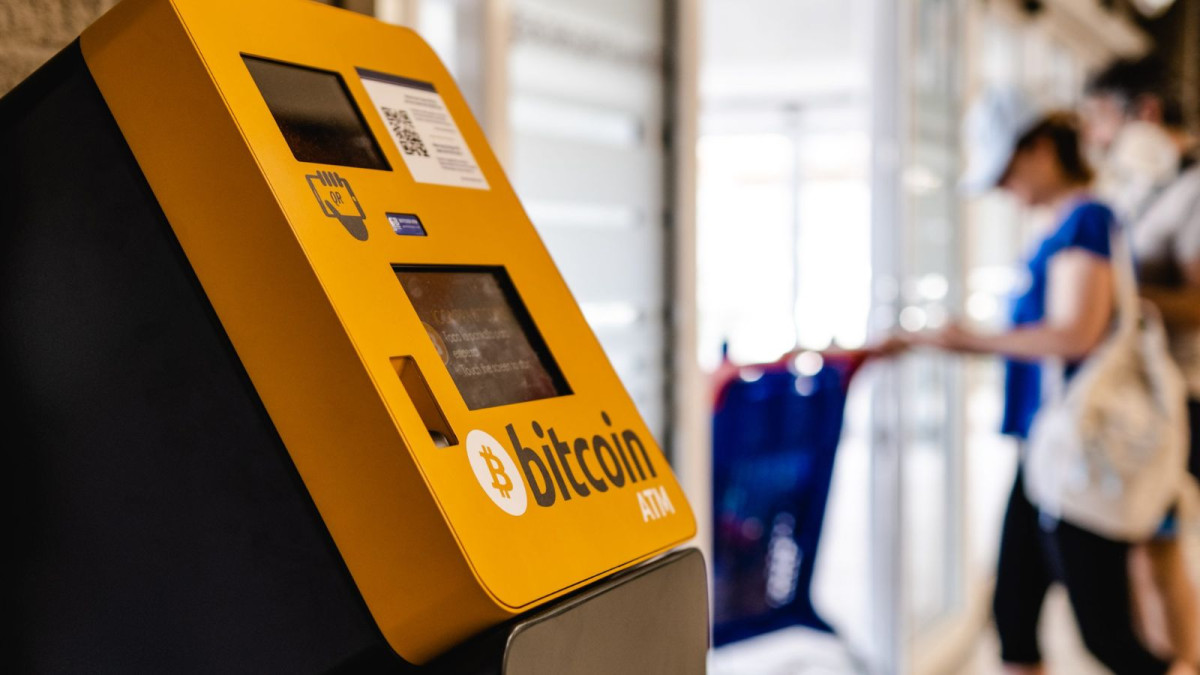
Tennessee Bans Crypto ATMs Statewide

Tennessee has placed a statewide ban on crypto ATMs, becoming the second state in the United States, after Indiana, to have outright banned crypto ATMs.
The ban on crypto ATMs in the state comes after Bill Lee, Tennessee’s governor, signed House Bill 2505 into law, following its unanimous approval by both the Tennessee House of Representatives and the Senate.
House Bill 2505, which has now been passed into the state’s legal code, prohibits the installation or operation of virtual currency kiosks, otherwise known as Bitcoin ATMs, in the state. Any violation of the law will be treated as a criminal offense classified as a Class A misdemeanor, with offenders facing up to one year in prison and a fine of $2,500.

Image credit: capitol.tn.gov
The law also treats business owners who allow these crypto ATMs to be hosted on their property as accomplices, making them liable under the same offense. Although the bill was signed into Tennessee’s legal code last Thursday, it will take effect on July 1.
Indiana First to Ban Crypto ATMs
Tennessee’s ban on crypto ATMs comes shortly after Indiana, which on March 9 signed House Enrolled Act 1116 (HEA 1116 into law, banning crypto ATMs in the state and becoming the first U.S. state to do so. The move was prompted by the high levels of fraud and widespread scams associated with crypto kiosks.According to FBI data, about $333 million was stolen through crypto kiosks in 2025 alone.
Prior to the ban, Indiana had nearly 900 crypto ATMs in operation. However, all of these machines were effectively deactivated immediately after Indiana Governor Mike Braun signed House Enrolled Act 1116 into law.
Tennessee Takes a Strong Stance on Prediction Markets
Tennessee has, for some time now, taken strong action against prediction market platforms, targeting operators such as Kalshi and Polymarket. In January of this year, the Tennessee Sports Wagering Council (SWC) issued cease and desist orders against major platforms including Polymarket, Kalshi, and Crypto.com, demanding that they stop offering sports event contracts in the state.
Kalshi, however, sued the state in the U.S. District Court for the Middle District of Tennessee and won a preliminary injunction. The ruling allowed Kalshi to continue operating in the state while the case proceeds.
Binance Australia Fined $10M Over Client Misclassification

The Federal Court of Australia has ordered Oztures Trading Pty Ltd, the company behind Binance Australia Derivatives, to pay 10 million Australian dollars (about $6.9 million USD). The penalty follows the company’s admission that it misclassified 85% of its Australian clients.
According to the Australian Securities and Investments Commission (ASIC), around 524 retail investors were incorrectly classified as wholesale clients. Of these, 460 were categorized as sophisticated investors and 33 as wealthy traders between July 2022 and April 2023.
ASIC said the misclassification exposed these retail investors to high-risk crypto derivatives they should not have accessed. The regulator reported that the affected investors suffered losses exceeding $6 million and paid roughly $2.6 million in trading fees.
In a statement of agreed facts, Binance also admitted to several other compliance failures, including not fully disclosing information to retail clients, failing to maintain a compliant dispute resolution system, and not making a target market determination as an operational crypto entity.

Image credit: ASIC
Binance, through its Australian entity Oztures, was also found to have failed to comply with the country’s regulator’s requirements regarding employee training.
“Binance’s senior compliance staff provided inadequate oversight or review of client applications and supporting documentation, further weakening the onboarding and classification processes,” ASIC wrote on its official website.
Binance Previous Settlement With the Australian Regulator
The $6.9 million penalty imposed by the country’s regulator on Binance comes three years after the company paid $9 million in compensation to affected clients.
Although the misclassification issue, which began in 2023, was self-identified, Binance had its operating license withdrawn by Australian authorities, in addition to the compensation it paid.
Countries Intensify Crackdown on Compliance Violators
The crackdown on Binance’s Australian operations by the country’s financial regulator is one of several regulatory actions targeting crypto firms in recent weeks. Just a few weeks earlier, South Korean regulators fined Bithumb $25 million for anti-money laundering (AML) and compliance violations.
Regulators in multiple jurisdictions have taken action against crypto-related companies.
In Canada, the Financial Transactions and Reports Analysis Centre of Canada (FINTRAC), the country’s financial intelligence unit and anti–money laundering regulator, has revoked the registrations of 47 crypto-linked money services businesses this year, accounting for the majority of its 50 total revocations.
The agency has indicated it will continue enforcement actions against non-compliant entities. Prediction market companies have also faced increased regulatory scrutiny, including restrictions and bans, amid concerns over compliance and regulatory violations.

South Korea Fines Bithumb $24M for AML Violations

The Financial Intelligence Unit (FIU), a crime monitoring and prevention body under South Korea’s Financial Services Commission, fined cryptocurrency exchange Bithumb 36 billion won (about $24.5 million) for anti-money laundering (AML) violations.
The fine follows an on-site inspection of the exchange conducted by the regulator in March and April last year, which found that Bithumb had violated the Specific Financial Information Act 6.65 million times. The act requires exchanges to restrict transactions with unregistered virtual asset service providers, block suspicious transactions, and verify their customers.
Bithumb was also found to have violated the Act on Reporting and Use of Financial Information by facilitating 45,772 cryptocurrency transactions with 18 unregistered overseas virtual asset service providers and cryptocurrency firms. Despite repeated warnings from the regulator, Bithumb failed to take corrective action.
"We have continuously requested Bithumb to stop trading with undeclared overseas virtual asset service providers, but it failed to fulfill its legal compliance obligations and demonstrated a markedly insufficient willingness to comply with the law, such as failing to implement effective blocking measures over an extended period," the FIU explained.
In addition to the $24 million fine imposed by the regulator, Bithumb has been ordered to halt all external crypto transfers for new customers from March 27 to Sept. 26. The ban, however, does not affect existing customers trading on the exchange.
Despite facing the largest fine ever imposed on a South Korean exchange, Bithumb said it would address the issues highlighted. "We will resolve the issues identified in this inspection and do our best to create a safe trading environment and protect users," the company said.
South Korea Cracks Down on Compliance Violators
South Korea has been cracking down on compliance violators, particularly cryptocurrency exchanges that breach Anti-Money Laundering (AML) and Know Your Customer (KYC) regulations. In November 2025, the country fined its largest cryptocurrency exchange, Upbit, 35.2 billion won (approximately $25 million) and imposed a three-month partial suspension after the exchange failed to comply with AML and KYC rules.
On December 31, 2025, the FIU fined Korbit 2.73 billion won ($1.9 million) and issued a stern institutional warning to the exchange’s executives following a compliance audit that revealed weaknesses in its anti-money laundering (AML) and know-your-customer (KYC) procedures.
The FIU is currently conducting an on-site review of Coinone, which is expected to conclude later this year. Although there are unconfirmed reports that the agency has already flagged violations, no official report or penalties have been issued.
Dubai Regulator Orders the Halt of KuCoin’s Unlicensed Operations

Dubai’s digital asset regulator has instructed KuCoin and all entities associated with the exchange to cease their crypto operations in the Emirates, stating that the platform operated an illegal, unlicensed virtual asset service.
In a recent news alert, the Virtual Assets Regulatory Authority (VARA), Dubai’s digital assets regulator, warned residents about the unlicensed crypto operations of KuCoin and its affiliated entities: Phoenixfin Pte Ltd, MEK Global Limited, Peken Global Limited, and KuCoin EU GmbH.

Image credit: VARA
According to VARA, KuCoin and its entities lacked the necessary regulatory approvals to operate in the region and that they misled the public about their licensing status.
"In accordance with Dubai Law No. (4) of 2022 and Cabinet Resolution No. 111/2022, all virtual asset service providers must be licensed to operate legally in this jurisdiction. KuCoin does not meet these legal requirements and is not authorised to provide any virtual asset services in or from Dubai," the regulator said.
Since KuCoin lacked the regulatory approval required to operate in the United Arab Emirates, the regulator clarified that any promotion, advertising, or solicitation related to the exchange and its virtual asset products was illegal.
Thus, KuCoin has been instructed to cease and desist from all unlicensed virtual asset activities in the region. The regulator also urged Dubai residents and investors to consult its public register of licensed and approved VASPs before engaging with any platform.
Kucoin’s Rough Edge With Regulatory Compliance
KuCoin has had its own battles with regulatory compliance in recent years. In February 2024, Austria’s Financial Market Authority temporarily restricted the exchange from onboarding new customers to its platform.
According to the regulator, KuCoin lacked key compliance personnel responsible for anti-money laundering (AML), counter-terrorist financing (CTF), and sanctions monitoring. The exchange was therefore found to be non-compliant with regulatory obligations under the EU crypto framework. As a result, KuCoin had to temporarily halt its operations until full compliance was achieved.
In 2025, Canada’s Financial Transactions and Reports Analysis Centre (FINTRAC) imposed a $19.6 million fine on KuCoin, accusing the exchange of serious anti-money laundering (AML) violations and failing to register as a money services business. The fine came three years after the exchange was permanently banned in Ontario.
KuCoin also had to exit the U.S. market in 2025 after being accused of operating an unlicensed money-transmitting business and other anti-money-laundering violations. It paid a $300 million fine and agreed to remain out of the U.S. market for at least two years.
Coinbase Shareholder Sues Executives Over Compliance Issues

A Coinbase shareholder has filed a derivative lawsuit against several top executives and board members of the crypto exchange, alleging compliance and disclosure failures by the company’s leadership.
On Tuesday, Kevin Meehan, one of Coinbase’s shareholders, filed a complaint in a U.S. district court in New Jersey. The court filing cited several of Coinbase’s top directors, including CEO Brian Armstrong, co-founder Fred Ehrsam, Chief Legal Officer Paul Grewal, and Chief Financial Officer Alesia Haas, among other executives.

Image credit: PACER
According to the filing, the plaintiff accused the defendants of making false and misleading statements between April 2021, when the exchange became a publicly traded company, and June 2023. The complainant alleged that a compliance failure by the exchange's leadership exposed the company to several stringent regulatory actions.
On behalf of Coinbase, the complainant, Kevin, is seeking damages, requesting that the court implement corporate governance reforms, and requesting recovery of any profits the exchange's leadership may have obtained during the period when the exchange faced these compliance cases.
However, since this is a shareholder derivative lawsuit, any financial recovery from Coinbase's directors will go to Coinbase rather than directly to the shareholders.
Coinbase Battle With Compliance
Over the past few years, Coinbase has faced several legal and compliance challenges, paying millions of dollars in damages and penalties.
In January 2023, the New York State Department of Financial Services sued the exchange for major failures in its Anti-Money Laundering (AML) program. The regulator accused Coinbase of having weak Know-Your-Customer (KYC) checks and failing to properly review suspicious transactions.
As part of the settlement, Coinbase agreed to pay $100 million: $50 million in penalties and $50 million to improve its compliance checks and systems.
In June 2023, Coinbase was hit with a $5 million penalty by the New Jersey Bureau of Securities. The regulator accused the exchange of allowing the trading of unregistered securities on its platform, prompting several other states to impose restrictions on its staking services at the time.
Coinbase has also faced legal challenges from the U.S. Securities and Exchange Commission (SEC). In 2023, the SEC filed a lawsuit against the company, alleging it operated an unregistered exchange. Following the announcement, Coinbase’s stock dropped sharply, falling from over $60 to under $50 within minutes of the news breaking.

Coinbase Launches Regulated Token Sale Platform to Revive Public Offerings
Coinbase Launches Token-Sale Platform with Guardrails to Avoid ICO Chaos
Coinbase has rolled out a new token-sale platform designed to provide retail investors with access to early-stage crypto projects under a regulated framework. The initiative aims to revive public token offerings in a safer, more transparent manner while restoring trust in token sales.
According to the company’s announcement the platform will host roughly one token sale per month. The first offering featured Monad, a high-performance blockchain startup.
Participants will use USD Coin (USDC) to purchase tokens. Token allocations are determined via an algorithm rather than a first-come, first-serve mechanism. Project teams and affiliated insiders will be prohibited from selling their tokens for six months after the public sale in order to reduce speculative flipping.
Key Features of the New Platform
Algorithmic Allocation
Unlike many of the chaotic ICOs of the past the platform will compile purchase requests during a one-week submission window. After that the algorithm will determine allocations with the goal of broad and equitable participation. Small investors will be given a fair chance rather than being crowded out by big players.
Payments must be made using USDC and participants must complete identity verification and compliance checks in good standing with Coinbase.
Token Issuer Restrictions
Project teams, founders and affiliated parties will be barred from selling any tokens—whether private or publicly traded—for at least six months following the public sale on Coinbase. This lock-up provision is intended to align incentives between founders and public investors and avoid immediate dump scenarios.
Disclosure and Pricing Transparency
Issuers will be required to submit detailed disclosures covering tokenomics, vesting schedules and distribution mechanics. These documents will be publicly available providing prospective buyers clarity on what they’re purchasing and how the project is structured. The platform also plans to further develop features like limit orders, automatic reinvestment options and issuer-specific eligibility criteria.
Strategic Context and Rationale
Learning from the 2017-2018 ICO Boom
During the 2017 ICO surge thousands of projects raised capital via token sales with minimal oversight. Many lacked product roadmaps, operated without regulatory compliance and ended in large losses or scams. This new Coinbase platform seeks to avoid that history by embedding regulatory controls and design features to reduce speculative excess.
The algorithmic allocations, lock-up periods and rigorous issuer criteria reflect this change.
Retail Access Meets Institutional Standards
Previously early-stage token participation was largely reserved for venture capital and accredited investors. Coinbase’s platform opens this market to retail investors under a regulated process tied to its existing infrastructure and compliance regime. In addition Coinbase has made strategic acquisitions including token issuance platform Liquifi and capital-formation platform Echo which strengthen its ability to manage token launches, compliance and cap-table operations.
Diversification of Business Model
For Coinbase the token-sale platform represents a growth avenue beyond trading fees. By hosting early-stage token launches and integrating token issuers earlier in their lifecycle the exchange can deepen user engagement, expand its product suite and capture new revenue models as the crypto capital-formation market evolves.
Potential Benefits and Market Implications
-
Increased participation and democratization: Retail users gain more equitable access to early token launches.
-
Improved token quality and credibility: Issuers undergo vetting and lock-ups promoting longer-term alignment.
-
Competitive pressure on other exchanges: Coinbase may set a new standard for token launches under regulatory guardrails.
-
Boost to on-chain fundraising: The platform could catalyze a revival of public token offerings with better structure and oversight.
-
Enhanced secondary market liquidity: With tokens launching via Coinbase’s funnel, listings and liquidity may improve for projects post-sale.
Risks, Challenges and Watch-Points
-
Volume vs quality trade-off: If offerings are too restrictive it may limit deal flow or cause frustration among issuers seeking speed and capital.
-
Regulatory land-mines: Token sales remain subject to securities laws classification and regulatory enforcement. Any misstep on issuer vetting or investor protections could prompt scrutiny.
-
Scalability of governance and infrastructure: As the platform hosts more sales maintaining the rigor of disclosures, lock-up enforcement and user fairness will be operationally demanding.
-
Market sentiment and speculation: Even with guardrails speculative behavior could still dominate new token launches, possibly recreating volatile market dynamics.
-
Issuer reputation risk: Early failures or token launches that under-perform could damage the platform’s credibility and the broader token-sale model.
What to Watch Next
-
The performance and user-feedback of the first offering from Monad and how secondary trading unfolds.
-
Timeline for subsequent sales and how frequently the platform opens slots.
-
Additional features announced such as limit orders, reinvestment tools and issuer custom-allocations.
-
Regulatory responses—whether U.S. agencies view the platform model as compliant or require additional oversight.
-
Impact on the broader token-launch ecosystem—whether rivals adopt similar models or the industry shifts toward more regulated public sales.
Final Thoughts
Coinbase’s token-sale platform represents a meaningful step toward the institutionalization of crypto capital-formation. By introducing algorithmic allocations, issuer lock-ups and strong disclosure standards the exchange is attempting to reboot public token launches in a way that avoids the chaos of the ICO boom.
For retail investors it offers a structured opportunity to access early-stage crypto projects. For issuers it provides regulated access to a large investor base under Coinbase’s brand and infrastructure.
Ultimately the success of this initiative will depend on execution, project quality and market reception. If Coinbase can maintain disciplined rollout while delivering compelling token offerings this could set a new paradigm for how tokens are issued, sold and listed in the next phase of crypto.
The next few token sale cycles will tell whether this is merely a novelty or a foundational shift in how crypto projects raise capital and engage with the public.
Stay Connected
You can stay up to date on all News, Events, and Marketing of Rare Network, including Rare Evo: America’s Premier Blockchain Conference, happening July 28th-31st, 2026 at The ARIA Resort & Casino, by following our socials on X, LinkedIn, and YouTube.
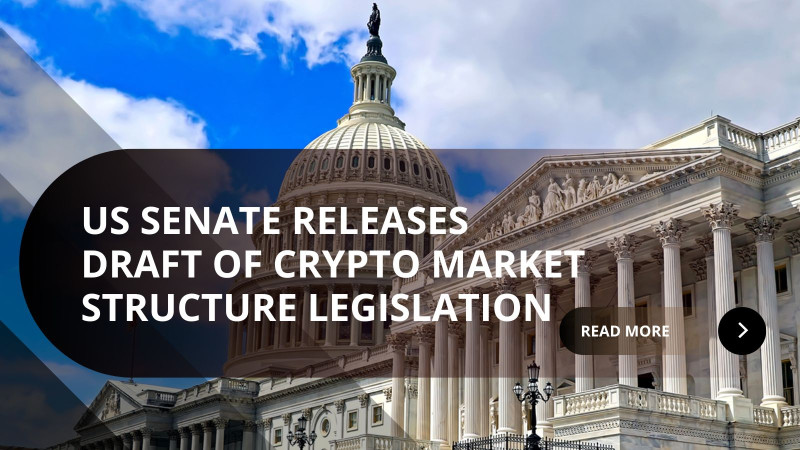
U.S. Senate and State AGs Unveil Landmark Crypto Market Structure Legislation
U.S. Senate and State AGs Unveil Landmark Crypto Market Structure Legislation
After months of build-up the U.S. Senate along with state attorneys general have released a landmark draft of crypto market-structure legislation intended to create a comprehensive regulatory framework for the digital asset industry. The bill seeks to establish clearer rules for exchanges, custodians, stablecoins, and token issuers, signalling a major step in integrating crypto markets into the broader financial-regulatory system.
Key provisions of the legislation
Exchange registration and custody oversight
One of the bill’s cornerstone features is the requirement that platforms offering token trading register as exchanges or alternative trading systems under federal law. Custodial service providers will face enhanced capital, segregation, and reporting standards similar to traditional securities and futures firms. This aims to reduce counterparty risk and improve investor protections.
Stablecoin regulation and redemption guarantees
Stablecoins are addressed explicitly in the legislation. Issuers must maintain redemption rights at par value, hold reserves in approved categories, and submit to regular audits. This creates a regulated pathway for stablecoins to operate under federal oversight rather than piecemeal state rules.
Token classification and issuance protocols
The bill also introduces a clearer set of rules distinguishing when a token is treated as a security versus when it remains a commodity or other asset. Token issuers will face registration or exemption requirements depending on utility, liquidity and decentralization factors. This aims to reduce legal ambiguity for projects and improve market integrity.
Inter-agency coordination and enforcement
The legislation mandates cooperation among the U.S. Securities and Exchange Commission (SEC), Commodity Futures Trading Commission (CFTC) and state regulators. A new federal-state crypto oversight council is proposed to harmonize enforcement, share data and coordinate cross-border investigations.
Investor protection and disclosures
Exchanges and token issuers will be required to disclose meaningful risk information, liquidity metrics and relationship with affiliated entities. Retail investors would gain clearer visibility into where their assets are held, how trades are processed and what rights they possess in the case of insolvency or cyber-attack.
Why this matters for crypto markets
Path to legitimacy
For years the crypto industry has operated across fragmented regulatory regimes with varying standards. This legislation offers the possibility of a unified federal framework that could increase trust, lower friction and bring institutional capital to the space.
Institutional onboarding
Clearer rules for custody, trading and stablecoin issuance reduce operational risk for large players. Institutional funds, fiduciaries and corporates may be more willing to enter crypto markets if they can rely on regulated entities rather than offshore or lightly supervised platforms.
Token projects and innovation
While increased regulation introduces burden the bill simultaneously provides clarity. Projects now have clearer paths to token issuance, less fear of regulatory surprise and improved access to U.S. markets. The transparency could foster broader crypto ecosystem growth, especially for high-quality protocols.
Risks and criticisms
-
Regulatory burden & cost Many smaller projects argue that compliance costs may favour large incumbents and stifle innovation in early-stage ecosystems.
-
Securities law crossover If tokens are treated as securities many projects may face retroactive registration or litigation risk. The timing and grandfathering provisions will matter.
-
Implementation complexity Coordinating federal and state regulators, aligning rules across 50 states and dealing with cross-border issues will be operationally intense.
-
Risk of over-regulation Some stakeholders worry the legislation may push innovation offshore or drive it underground if U.S. rules become too restrictive compared to global peers.
What to watch next
-
Senate floor votes and committee mark-ups The timeline for passing the legislation will influence market sentiment and business planning.
-
Rule-making phases Exchanges, custodians and token issuers will monitor how the SEC, CFTC and new oversight council implement the rules.
-
Stablecoin ecosystem response Will major stablecoin issuers adjust to the new reserve and audit standards and maintain parity?
-
Token classification outcomes How many tokens will be reclassified as securities and how quickly issuers will respond?
-
Global regulatory spill-over Other jurisdictions may adopt similar frameworks or respond to U.S. leadership in crypto regulation.
Final thoughts
The release of this crypto market-structure legislation marks a milestone in the maturation of the digital asset industry. By creating clearer rules for exchanges, custodians and issuers the U.S. is signalling that crypto is not outside the financial system—it is increasingly part of it.
For markets this means the potential for deeper liquidity, institutional participation and broader adoption—but also higher expectations around compliance, governance and transparency. The next phase of crypto may well depend less on token hype and more on regulated infrastructure, institutional trust and sustainable business models.
As this framework moves through Congress regulators and the industry alike will be watching closely. The outcome will shape not just the next bull market, but how crypto fits into global finance for years to come.
Stay Connected
You can stay up to date on all News, Events, and Marketing of Rare Network, including Rare Evo: America’s Premier Blockchain Conference, happening July 28th-31st, 2026 at The ARIA Resort & Casino, by following our socials on X, LinkedIn, and YouTube.

Romania Blacklists Polymarket for Unlicensed Crypto Betting
Romania Blacklists Polymarket in Crackdown on Unlicensed Crypto Betting
Romania’s National Office for Gambling (ONJN) has placed Polymarket, a popular blockchain-based prediction market, on its national blacklist for operating without a local gambling license. The move marks one of the first times a European regulator has explicitly targeted a decentralized crypto-betting platform.
What Happened
According to reports confirmed by Yahoo Finance and Gambling Insider, the ONJN issued an updated list of banned gambling and betting sites, adding Polymarket to the roster. The regulator said it would “not allow the transformation of blockchain into a screen for illegal betting.”
The blacklist directs internet service providers in Romania to block access to the listed sites. Operators without a license are considered unregulated gambling entities, regardless of whether they use crypto or fiat currencies.
Polymarket users in Romania have since reported difficulty accessing the platform, which runs on the Ethereum and Polygon networks and allows people to bet on outcomes of political events, sports, and social trends using stablecoins.
Why Polymarket Was Targeted
Under Romanian law, all gambling or betting platforms that serve local users must register with and obtain authorization from the ONJN. This includes online platforms that use cryptocurrencies.
Polymarket, which positions itself as a “decentralized prediction market,” does not hold a gambling license in Romania. The ONJN therefore treated it as an unlicensed operator, grouping it with dozens of other offshore betting sites that have been banned from local access in recent months.
Romania’s approach reflects a wider regulatory push across Europe to enforce licensing requirements even for decentralized or crypto-based services. Authorities argue that while blockchain can improve transparency, it cannot be used to bypass national gambling regulations.
A Growing Global Trend
Polymarket is no stranger to regulatory scrutiny. In 2022, the company paid a civil penalty to the U.S. Commodity Futures Trading Commission (CFTC) for operating unregistered event-based markets. Since then, it has implemented geo-blocking to limit access from certain jurisdictions.
Romania’s action follows similar moves by other countries tightening oversight of crypto-gambling platforms. Regulators in the United Kingdom, Italy, and the Netherlands have all increased enforcement against unlicensed or offshore betting operators, many of which use cryptocurrencies for wagers and payouts.
These measures form part of a global effort to bring crypto-related gambling into existing regulatory frameworks, focusing on consumer protection, anti-money-laundering compliance, and tax reporting.
What It Means for Users
For Romanian residents, access to Polymarket is now restricted. Users attempting to visit the site are redirected or blocked by local ISPs. Engaging with unlicensed gambling services can also expose users to penalties under national law.
Globally, the move underscores a clear message from regulators: using blockchain does not exempt a platform from traditional licensing requirements. While crypto-based betting platforms promote transparency and open participation, they remain subject to the same laws as conventional gambling operators.
Polymarket’s Position
Polymarket has not publicly commented on the Romanian blacklist, but the platform’s documentation already lists Romania among its “restricted jurisdictions.” The company has previously stated that it aims to operate responsibly within local regulations and continues to expand in markets where prediction markets are permitted.
Industry observers note that Polymarket’s technology itself is not illegal; the challenge lies in regulatory definitions. Many jurisdictions classify markets that allow users to profit from event outcomes as a form of gambling, regardless of how the bets are structured or settled on-chain.
A Broader Message
Romania’s decision is part of a larger balancing act between innovation and oversight. Regulators are increasingly recognizing the potential of blockchain technology, but they are also drawing firm lines around activities that resemble gambling or financial speculation.
For crypto-prediction markets, the key challenge ahead will be finding ways to remain open and decentralized while still complying with regional laws.
The ONJN’s statement summed up the sentiment clearly: blockchain cannot be used as a shield for unlicensed betting.
The Bottom Line
The blacklisting of Polymarket in Romania highlights a new phase in the global conversation about crypto regulation. As blockchain applications expand into areas like prediction markets and decentralized finance, governments are working to ensure these innovations operate under existing legal structures.
For Polymarket, the ban may limit its reach in one European market, but it also reinforces the growing need for dialogue between blockchain innovators and traditional regulators. Transparency and accountability, it seems, will remain central to the next chapter of crypto’s evolution.
Stay Connected
You can stay up to date on all News, Events, and Marketing of Rare Network, including Rare Evo: America’s Premier Blockchain Conference, happening July 28th-31st, 2026 at The ARIA Resort & Casino, by following our socials on X, LinkedIn, and YouTube.