#USDCx
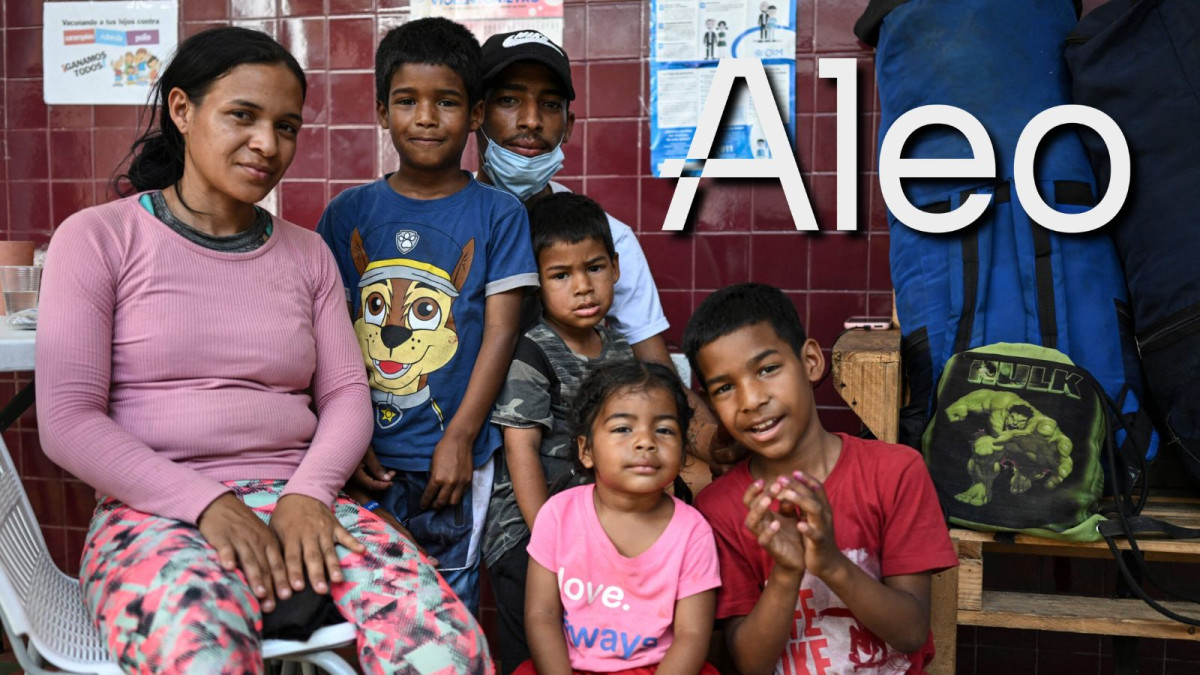
Aleo Pilots Zero-Knowledge Crypto Aid in Colombia

Aleo is revolutionizing zero-knowledge technology use-cases well beyond the whitepaper and it could help benefit millions. The privacy-focused Layer-1 blockchain announced this week that it has launched a pilot program in Colombia designed to deliver stablecoin aid to displaced communities without ever exposing their personal data. It is, by most measures, one of the more ambitious real-world tests of privacy-preserving blockchain technology to date.
The project was developed alongside Mercy Corps, market-making firm GSR and its affiliated Foundation GSR, and implementation partner Humanity Link. Together, they have built a system that runs on Aleo's programmable blockchain and distributes funds using USDCx, a privacy-enabled version of USDC developed in collaboration with Circle. The stablecoin launched on mainnet in January 2026, following a testnet rollout in late 2025.
Why Colombia, and Why Now
Colombia is not a random choice. Mercy Corps has delivered humanitarian assistance to more than 514,000 people in the country since 2019, focusing on Venezuelan refugees, Colombian returnees, and host communities stretched thin by years of conflict and economic strain. Over 30 percent of Colombia's population lacks sufficient income to cover basic needs like food and housing. In that context, the friction involved in traditional aid pipelines, identity registration, exposure of personal data, and the risk of retaliation that can follow, is not just inefficient. It can be dangerous.
That is the problem Aleo's system is designed to solve. Using zero-knowledge proofs, the network can verify whether someone is eligible to receive aid without revealing who they are. Beneficiaries register through WhatsApp and collect funds using a QR code. There is no crypto wallet setup, no public transaction history, and no permanent record of their identity tied to a blockchain ledger. For populations already navigating difficult circumstances, that distinction matters.
The Role of USDCx
Central to the Colombia pilot is USDCx, which Circle and Aleo positioned from the start as a stablecoin built for real-world institutional use. Unlike privacy coins such as Zcash or Monero, which offer anonymity but carry significant volatility and regulatory risk, USDCx is pegged to the US dollar and includes what Circle calls a configurable compliance layer. That means every transaction carries a compliance record accessible to Circle in response to legitimate law enforcement requests, while remaining opaque to outside observers.
Aleo co-founder Howard Wu described the broader design logic plainly: transparent blockchains force users to leak financial data every time they transact. USDCx is meant to offer a middle path, the settlement speed and global reach of blockchain infrastructure, with the confidentiality that institutions and vulnerable populations alike tend to require.
Pilots Expanding Beyond Colombia
The Colombia rollout is not moving along by itself. A separate pilot is already underway with the Danish Refugee Council, and a second deployment is expected shortly through GOAL Global, an international humanitarian response agency. Both expand the geographic and organizational footprint of what Aleo and its partners are positioning as a scalable, privacy-first model for humanitarian cash transfers.
This is a big moment for the aid sector. Blockchain-based cash transfer programs have been discussed for years, but uptake has remained slow, partly because public ledgers create their own transparency problems. Donor organizations and beneficiaries both have legitimate reasons to want transaction data shielded. Aleo's argument is that zero-knowledge infrastructure finally makes that possible without sacrificing auditability or regulatory compliance.
ZK Tech Moves Off the Whitepaper
Aleo is a Layer-1 blockchain built with privacy as a native feature rather than a bolt-on. Its architecture separates off-chain computation, where zero-knowledge proofs are generated, from on-chain verification, where validators confirm correctness without seeing the underlying data. The network's native programming language, Leo, is designed to abstract away the cryptographic complexity for developers building privacy-preserving applications.
The project raised a $200 million Series B in 2022 at a $1.45 billion valuation, backed by SoftBank's Vision Fund 2, Andreessen Horowitz, and others. It launched its mainnet in September 2024. The Colombia pilot represents something of a maturation moment: a transition from infrastructure buildout toward use cases that can be pointed to in the real world.
Whether this particular deployment scales is an open question. But the architecture being tested here, private stablecoin transfers routed through a zero-knowledge network, accessed via smartphone messaging apps, targeted at populations with no existing crypto infrastructure, is an unusual combination. If it holds up in Colombia, the implications stretch well beyond the country's borders and could successfully benefit under-represented communities across the globe.

Cardano Is No Longer an Island: Why The LayerZero Integration Matters

If you’ve been following Cardano for more than five minutes, you know the running joke. Great tech, very principled, peer-reviewed everything... but also kind of just sitting by itself at lunch while Ethereum and Solana were out making friends. For years, ADA holders had to explain why their chain was “building” while everyone else was “doing.” That conversation is getting a lot easier now.
On February of 2026, Charles Hoskinson announced that LayerZero is being integrated into the Cardano ecosystem, sharing the groundbreaking partnership for the first time.
So what does this actually mean? Let’s break it down without putting you to sleep.
Cardano runs on something called the eUTXO model. Think of it like Bitcoin’s architecture but with smart contracts bolted on. It’s secure, it’s predictable... but it does not play nicely with account-based chains like Ethereum. Interoperability has always been kind of a mess, and Cardano has largely sat on the sidelines of the cross-chain party.
LayerZero approaches this challenge differently. It uses a messaging layer to send verified messages between chains, rather than relying on complex token-wrapping structures that are often targeted by hackers. That’s a big deal. No more sketchy wrapped tokens, no more liquidity scattered across isolated pools, and no more depending on some centralized bridge that could get exploited at 3am on a Tuesday.
That design reportedly opens access to around $80 billion in omnichain assets already connected through LayerZero standards. Eighty. Billion. Dollars. Let that number sink in. Got the gravity of it? Let's move on.
LayerZero’s Omnichain Fungible Token standard sits at the core of the integration. The framework lets assets exist natively across several blockchains. It removes that need for wrapped tokens and avoids splitting liquidity across separate pools, a problem that I mentioned earlier But it's important enough to state twice. That structure gives more than 700 existing tokens a path onto Cardano and Cardano on to them.
Cardano can now communicate with Ethereum, Solana, and over 160 other networks. For developers, that’s a completely different building environment than what existed just a few months ago.
This LayerZero integration didn’t just come out of nowhere, it’s part of a coordinated push by what’s being called the Pentad. The Pentad includes the Input Output Group (IOG), Cardano Foundation, EMURGO, Intersect, and the Midnight Foundation. Five organizations, one shared mandate: to finally stop arguing about roadmaps and start shipping. A move that was seen by many in the ecosystem as a breath of fresh air. Well, everyone except the trolls on X that seem to relish in FUD in hopes that Elon may send them a big enough check to move out of their mom's basement. I won't mention the names, but I am sure you know who they are.
And the Pentad has shipped, despite the current market trend. Oracle integration via Pyth Network improves price data reliability, analytics availability through Dune Analytics increases transparency and data access, and cross-chain messaging via LayerZero lays groundwork for interoperability. That’s not a wishlist anymore, those are done.
Then there’s USDCx. It addresses a separate infrastructure need by bringing a tier-one stablecoin rail tied to Circle, giving Cardano a recognizable settlement asset for payments, DeFi activity, and real-world asset flows. Hoskinson described it as better than regular USDC because it adds privacy and is immutable and irreversible, you can move straight from a wallet to Coinbase or Binance with instant convertibility. He said Cardano went from signing a deal with Circle to having USDCx live on the network in 84 days, calling it the number one stablecoin on Cardano already. 84 days. That’s actually fast for anyone, let alone a blockchain project.
Is this all enough? Honestly. It depends who you ask. Hoskinson argued the effort has moved Cardano from being “an island” to being connected to the broader crypto market, but added that the ecosystem still needs strategic capital deployment to help applications survive and compete. Infrastructure is the foundation, not the house. Developers still need to build, users still need to show up, and liquidity still needs to actually flow... not just theoretically exist.
But for a chain that’s spent years being told it’s “all potential, no product,” this is a meaningful shift. A very welcome moment for those here who believe in Cardano's potential. The rails are finally there. What gets built on them is the next chapter. And that next chapter could get very interesting.

Cardano Announces USDCx Integration to Kick-Start DeFi Liquidity

Cardano has spent years building its technology stack, refining its proof of stake model, and emphasizing academic rigor. But for all that work, one problem has stubbornly remained. Liquidity.
That gap is now front and center as Cardano moves toward integrating USDCx, a Circle-backed stablecoin product designed to extend USDC liquidity across multiple blockchains. The hope is straightforward. Bring real dollar liquidity onto Cardano, and decentralized finance on the network finally has a chance to scale.
The announcement, confirmed by Cardano founder Charles Hoskinson, signals a shift in priorities. Less focus on theory, more focus on the things the matter.
Why Stablecoins Matter More Than Almost Anything
In modern crypto markets, stablecoins are the grease that keeps everything moving. They anchor trading pairs, support lending markets, and give institutions a familiar unit of account. Without them, DeFi ecosystems struggle to attract capital, market makers stay away, and activity remains thin.
Cardano’s DeFi ecosystem has felt those constraints for years. While Ethereum, Solana, and newer Layer 2 networks handle billions in stablecoin flows daily, Cardano’s on-chain dollar liquidity remains modest. That imbalance shows up in lower trading volumes, wider spreads, and limited options for builders trying to launch serious financial products.
USDCx is meant to change that dynamic.
What USDCx Actually Is
USDCx is not just another wrapped stablecoin. It is part of Circle’s broader effort to make USDC available across multiple chains without relying on fragile bridges. Instead of locking tokens on one chain and issuing synthetic versions on another, USDCx uses Circle’s own reserve and minting infrastructure to represent USDC liquidity elsewhere.
In practice, that means Cardano applications could eventually tap into the same deep pool of USDC liquidity that already exists across major networks. Even a small slice of that capital could materially alter Cardano’s DeFi landscape.
Importantly, USDCx does not need to be fully native on day one to matter. Access, settlement reliability, and institutional trust are what count.
A Strategic Pivot for Cardano
The push toward USDCx fits into a broader realization within the Cardano ecosystem. Strong consensus design alone does not create a financial network. Liquidity, tooling, and incentives do.
Recent proposals and discussions around ecosystem funding reflect that shift. There is growing acknowledgment that Cardano needs to invest directly in stablecoin access, custody integrations, oracle services, and market infrastructure if it wants to compete for capital.
Hoskinson himself has framed the move as necessary rather than optional. In today’s crypto market, liquidity begets liquidity. Without a credible dollar backbone, everything else struggles to gain traction. The move follows the recent ecosystem proposal to bring these tier-one stables coins, custody providers, bridges, and oracles needed for a healthy ecosystem.
Technical integration is still underway, and Cardano is not yet listed as a fully supported chain in Circle’s production documentation. Even once live, adoption will depend on whether major Cardano-native applications choose to build around USDCx and whether liquidity providers see enough opportunity to deploy capital.
There is also a cautionary lesson from other networks. Stablecoin availability alone does not magically create a thriving DeFi ecosystem. Several chains have added major stablecoins in the past only to see limited follow-through from users and developers.
Liquidity needs reasons to stay.
Why This Matters Beyond Cardano
USDCx is part of a bigger trend in crypto. Stablecoin issuers are moving away from simple token issuance and toward infrastructure that supports interoperability, compliance, and institutional use.
Some versions of USDCx are being designed with privacy features that allow transaction details to remain hidden while still meeting regulatory requirements. That combination is increasingly attractive to institutions that want blockchain efficiency without full transparency.
If Cardano can position itself as a secure, compliant, and liquid environment for decentralized finance, USDCx could become a meaningful piece of that strategy.
The Bottom Line
Cardano’s bet on USDCx is not about hype or short-term price action. It is about fixing a structural weakness that has limited the network’s financial relevance.
If Cardano, through the USDCx integration, captured even 0.10% of that notional liquidity, it would imply an additional $70 million in dollar value, which is roughly double the network’s current stablecoin base.
Should that share reach 0.25%, the figure would rise to approximately $180 million. Such a shift could materially tighten spreads for ADA/stablecoin trading pairs and make lending markets more viable for institutional participants.
If the integration succeeds and if developers and liquidity providers follow, Cardano could finally begin to close the gap with more capital-rich ecosystems.
For now, the message is clear. Cardano is done pretending liquidity does not matter.