#Digital dollar
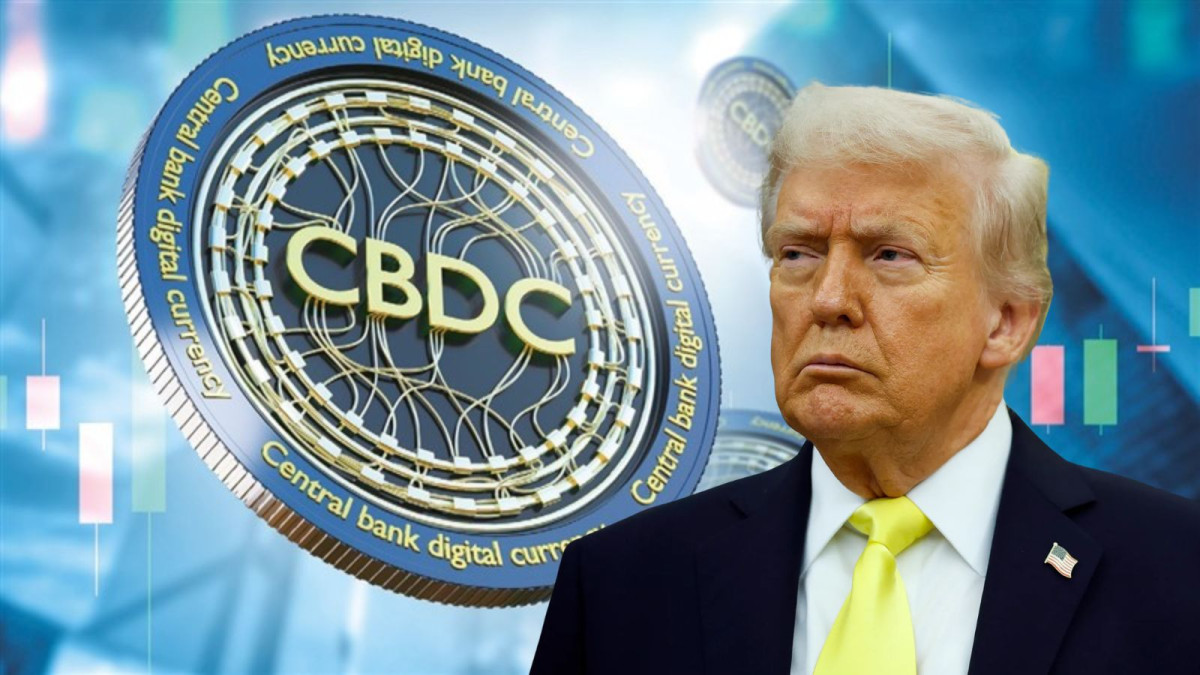
Housing Bill Containing CBDC Ban Becomes Law Without Trump's Signature

A major housing bill, the 21st Century ROAD to Housing Act, which contains a provision prohibiting the Federal Reserve from creating a central bank digital currency (CBDC), has become law without the president's signature.
The 21st Century ROAD to Housing Act, which was sent to the White House, was not signed by President Trump despite receiving overwhelming bipartisan support in both the House of Representatives and the Senate. The bill passed the House by a vote of 358 to 32 and the Senate by a vote of 85 to 5.
Despite the wide margin of support in Congress, President Trump declined to sign the bill, saying he did so in protest of lawmakers' failure to pass separate election legislation.
"I will not sign the Housing Bill, which has been fully approved by Congress and sent to the White House, in PROTEST over the fact that the United States Senate is not capable of passing THE SAVE AMERICA ACT," Trump wrote on Truth Social.
Trump had repeatedly urged Congress to pass the SAVE America Act, which would require proof of citizenship to vote in federal elections and impose voter identification requirements. However, the bill failed to secure the 60 votes needed to advance in the Senate.
Under the U.S. Constitution, a bill becomes law without the president's signature if the president neither signs nor vetoes it within 10 days, excluding Sundays, while Congress remains in session. Because the 21st Century ROAD to Housing Act was sent to the White House in late June and the 10-day period expired while Congress was still in session, it became law without the president's signature.
How the Bill Affects Crypto
While the core of the bill was housing affordability, it included a provision that prevents the Board of Governors of the Federal Reserve System and the regional Federal Reserve Banks from issuing or creating a central bank digital currency (CBDC), either directly or indirectly through an intermediary.
The law also makes clear that nothing in the legislation should prevent an "open, permissionless, and private United States dollar-denominated currency" designed to preserve privacy protections similar to those of physical cash.
Although the ban on a CBDC is not permanent and will remain in effect through December 31, 2030, the bill's passage is noteworthy because it marks the first time the U.S. Congress has passed a law explicitly barring the Federal Reserve from issuing a central bank digital currency.
Wells Fargo Files WFUSD Trademark

Wells Fargo has filed a trademark application for "WFUSD" with the U.S. Patent and Trademark Office, covering a broad slate of cryptocurrency services.
The 'USD" within the filling leads to huge speculation about stablecoins as it follows the same naming convention used by Tether's USDT and Circle's USDC, the two more notable stablecoins account for the vast majority of the roughly $200 billion stablecoin market. Whether Wells Fargo is building toward a consumer-facing stablecoin product, an institutional settlement layer, or something else entirely, is not clear, and all just speculation.
The trademark was filed just months after President Trump signed the GENIUS Act into law in July 2025, the first comprehensive federal framework for payment stablecoins in U.S. history. The law opened a clear path for bank subsidiaries to issue dollar-pegged digital tokens under regulatory oversight, and Wells Fargo's trademark application reads like a bank that intends to walk through that door.
A Long History, A New Gear
Wells Fargo is not a newcomer to blockchain experimentation. Back in 2019, the bank unveiled Wells Fargo Digital Cash, a dollar-linked stablecoin built on R3's Corda blockchain designed to handle internal book transfers and cross-border settlements within its global network. The pilot worked. The bank successfully ran test transactions between its U.S. and Canadian accounts. But it stayed internal, never touching retail customers or external counterparties.
That earlier project had a narrow scope to try to reduce friction in the bank's own back-office transfers. The WFUSD trademark filing feels different. The scope covers cryptocurrency exchange services, digital asset transfers, payment processing, tokenization, blockchain transaction verification, and digital wallet services. That is not a description of an internal settlement tool. It is a description of a full-spectrum digital asset platform.
Wells Fargo's own research analysts had been tracking the stablecoin market closely well before the trademark filing surfaced. In a note published in May 2025, analysts led by Andrew Bauch wrote that stablecoin momentum had reached what they called "must-monitor levels," pointing to a 16% jump in total stablecoin market capitalization that year and a 43% rise over the prior twelve months. The report flagged payments companies including Mastercard, Visa, and PayPal as stocks with the most strategic exposure to the stablecoin wave. Whether those analysts knew about internal trademark discussions is unclear, but the research and the filing tell a consistent story about where the bank's thinking may have landed.
Wells Fargo is not acting alone. In May 2025, the Wall Street Journal reported that JPMorgan Chase, Bank of America, Citigroup, and Wells Fargo were in early discussions about building a jointly operated U.S. dollar stablecoin, with payment infrastructure providers including Zelle and The Clearing House also at the table. Sources familiar with the matter described the conversations as exploratory, but the ambition was clear: create a bank-backed digital dollar that would compete with the success of crypot-native products.
JPMorgan has the most developed track record in this space, having operated JPM Coin since 2019 as an internal settlement instrument for institutional clients. The bank has reportedly settled more than $200 billion in transactions through the system.
The GENIUS Act, which passed the Senate with a bipartisan vote of 68 to 30 and the House 308 to 122 before Trump signed it on July 18, 2025, created the regulatory framework that banks had been waiting for. Under the law, bank subsidiaries can issue payment stablecoins under the supervision of their primary federal banking regulator.
Issuers must maintain one-to-one reserves in highly liquid assets like Treasury bills, submit to regular audits, and comply with anti-money laundering and Bank Secrecy Act requirements. The law also gave stablecoin holders priority claims over other creditors in any insolvency proceeding, a significant consumer protection provision.
For a bank like Wells Fargo, that framework essentially legalizes and licenses what its trademark filing envisions. The FDIC has already approved a proposed rulemaking to implement the GENIUS Act's application procedures for supervised institutions seeking to issue stablecoins, moving the machinery toward full implementation by January 2027 as the law prescribes.
Competition or Collaboration with Crypto?
While the big four banks have been circling the stablecoin market, crypto-native firms have been circling the banking sector. Circle, the issuer of USDC, has been in discussions about obtaining a bank charter. Coinbase, BitGo, and Paxos are all reportedly pursuing various forms of banking licensure that would let them compete more directly with traditional institutions for deposits and payment volumes. And, most notably, Kraken just recentlly received a Federal Reserve master account, gaining direct access to the Federal Reserve's payment infrastructure.
That competitive dynamic is partly what has given the joint stablecoin exploration among the major banks its urgency. A dollar-denominated stablecoin backed by federally chartered banks would carry a different kind of institutional weight than products issued by crypto firms, regardless of how well those firms have managed their reserves.
Still, the incumbents face real headwinds. The GENIUS Act, while giving banks a clear path to issue stablecoins, also permits nonbank firms like fintechs and crypto companies to issue them under OCC oversight. Grant Thornton's national blockchain and digital assets practice leader, Markus Veith, noted after the law passed that banks could face serious competition from nonbank entities that don't carry the same regulatory burden or capital requirements. Stablecoins from USDT and USDC already saw their combined market share dip from 89% to under 84% over the past year as newer entrants gained traction.
What WFUSD Could Become
The trademark itself, of course, is not a product. Banks and large corporations file trademarks for concepts that never reach the market all the time, and a filing covering cryptocurrency services does not obligate Wells Fargo to ship a stablecoin by any particular date. The application does, however, reserve the commercial rights to the WFUSD brand across a spectrum of digital asset services, which is a form of strategic positioning that serious companies do when they intend to eventually use what they are protecting.
If Wells Fargo does build out WFUSD into a live product, the most likely initial form would be an institutional-grade settlement and payment layer, mirroring what Wells Fargo Digital Cash did internally but opening it to corporate clients and potentially other financial institutions. Cross-border payments represent the most obvious near-term use case. The market for global cross-border transactions was roughly $44 trillion in 2023 according to McKinsey estimates cited by the bank's own research team, and stablecoins offer demonstrably faster settlement, lower funding costs, and programmability through smart contracts compared to the correspondent banking infrastructure that currently handles most of that volume.
A consumer-facing version would require more work and more time. Wells Fargo analysts themselves noted in their May research note that everyday consumer adoption of stablecoins is likely still a decade away. But the infrastructure being built now, the trademarks being registered, the regulatory licenses being sought, the interoperability frameworks being designed, will determine who is positioned to serve that market when it arrives.
What Comes Next?
For Wells Fargo specifically, WFUSD represents the most concrete public signal of the bank's digital asset intentions to date.
Whether the bank ultimately issues WFUSD as a standalone product, folds it into a larger bank consortium stablecoin, or uses the trademark as a branding vehicle for a custody and trading platform remains to be seen. The competitive pressure from both crypto-native firms building toward bank charters and fellow Wall Street institutions building their own digital dollar products means the bank can't afford to stay in patent-pending limbo for too long.
The name was chosen carefully. When the fourth-largest bank in the United States puts its initials on a dollar-pegged ticker and files it with the federal government, it is placing a bet on where finance is going. The question now is how fast it gets there.

Tether’s USAT Takes on USDC in Battle for the U.S. Stablecoin Market

After years on the sidelines of the U.S. regulatory system, Tether is stepping directly into it.
On January 27, the issuer behind the world’s largest stablecoin unveiled USAT, a new dollar-backed token designed specifically for the American market. Unlike USDT, which has long operated globally with limited U.S. regulatory footing, USAT is built from the ground up to comply with federal rules, and it is being issued through Anchorage Digital Bank, the only federally chartered crypto bank in the country.
The launch marks a turning point for Tether, a company that has historically thrived outside the U.S. regulatory perimeter, and signals how dramatically the stablecoin landscape has shifted over the past two years.
A Stablecoin Built for Washington, Not Around It
USAT is a one-to-one dollar-pegged stablecoin, but the similarities to USDT largely stop there.
The token is structured under the GENIUS Act, the U.S. stablecoin law passed in 2025 that finally gave issuers a clear federal framework to operate within. Under the law, stablecoins must be fully reserved, issued through regulated entities, and subject to ongoing oversight and reporting requirements.
Anchorage Digital Bank is the official issuer of USAT, placing the token squarely inside the U.S. banking system. Anchorage operates under a federal charter and is overseen by the Office of the Comptroller of the Currency, which gives USAT a regulatory status that few crypto-native assets have ever enjoyed.
For institutions that have spent years waiting on regulatory clarity before touching stablecoins, that distinction matters.
Why Tether Is Doing This Now
For most of its history, USDT dominated stablecoin markets outside the United States, while rivals like USDC carved out regulated footholds domestically. As U.S. policy remained uncertain, Tether focused overseas. That calculus changed once Washington created a formal stablecoin regime.
USAT gives Tether a compliant entry point into the U.S. financial system without forcing changes to USDT itself. Instead of retrofitting an existing global product, the company opted to launch something new, with a different issuer, different governance, and a different regulatory posture.
In effect, Tether now runs two stablecoin tracks. One optimized for global liquidity and another designed for American institutions.
The Role of Anchorage and Cantor Fitzgerald
Anchorage’s involvement goes beyond branding.
As issuer, the bank is responsible for compliance, custody, and operational controls. That includes AML and KYC processes, reserve management, and ongoing reporting obligations. These are not optional features under the GENIUS Act. They are baseline requirements.
USAT’s reserves are held in U.S. dollar-denominated assets and overseen by Cantor Fitzgerald, which serves as custodian and preferred primary dealer. Cantor’s role adds another layer of institutional familiarity, particularly for traditional financial firms that already interact with the firm in Treasury and fixed-income markets.
Taken together, the structure is clearly aimed at banks, asset managers, and corporate treasury teams rather than purely crypto-native users.
New Leadership, Different Message
Tether has also made a notable leadership choice for USAT.
The company appointed Bo Hines as CEO of the USAT unit. Hines previously served as executive director of the White House’s Crypto Council, giving him direct experience navigating U.S. policy discussions at the highest level. He was directly involved with GENIUS Act legislation.
That background reflects the broader message Tether is sending with USAT. This is not a product built to push regulatory boundaries. It is designed to operate comfortably inside them.
Early Distribution and Market Access
At launch, the token will be available on several major trading platforms and payment gateways, including Kraken, OKX, Bybit, Crypto.com, and MoonPay. Noticeably absent from that list is Coinbase. The US's largest exchange has a long partnership history with Circle and USDC, by far Tether's largest competitor. It will be interesting to see if they list the new stablecoin in the future. The early distribution provides liquidity from day one, though the longer-term focus appears to be institutional usage rather than retail trading volume.
The token is expected to be used for payments, settlement, and treasury operations, particularly by firms that want exposure to stablecoins without regulatory ambiguity.
What This Means for the Stablecoin Market
USAT adds another serious competitor to the regulated stablecoin field, which until now has been dominated by a small number of issuers.
For Circle and other U.S.-focused stablecoin providers, Tether’s entry raises the stakes. Tether brings unmatched scale, deep liquidity, and years of operational experience. At the same time, it is entering a market where regulatory compliance is no longer a differentiator but a requirement. Competition is always welcome, and Tether is providing that.
The Bottom Line
Tether’s USAT is more than just another stablecoin.
It represents a strategic shift by one of crypto’s most influential companies toward direct engagement with U.S. regulators, banks, and institutions. By launching a federally regulated product rather than modifying USDT, Tether has effectively separated its global operations from its American ambitions.
Whether USAT gains the same dominance in the U.S. that USDT enjoys globally remains to be seen. But one thing is clear. The era of stablecoins operating in regulatory gray zones is ending, and Tether intends to be part of what comes next. This is an amazing time to be involved in the blockchain and stablecoin space. The tides are turning and I think we will see exciting times ahead for adoption.
Tether Hits Major Milestones: User Reach and Supply Soar
Tether has reached an important phase of growth. The company behind the USD-pegged stablecoin USDT now counts an estimated hundreds of millions of users and is reporting a circulating supply of well over $150 billion. One report places the user base near 500 million, while others cite more than 400 million users. Meanwhile, USDT’s supply has surged past $170 billion and as high as $175 billion.
These numbers reflect more than just scale. They show that USDT continues to serve as a foundational layer in the crypto economy, especially in emerging markets and cross-border transactions.
Why These Numbers Matter
• Liquidity and market depth
The rising supply means more liquidity is available for crypto exchanges, decentralized finance (DeFi) platforms, and remittance flows. With USDT circulating on major blockchains and reaching new highs, it supports more on-chain activity and trading.
• Global reach and user adoption
Tether’s user growth, especially in Asia, Latin America and the Middle East, is a key factor in its dominance. It has become the default dollar-proxy in many markets where access to stable value and borderless transfers matter.
• Corporate strength and valuation ambitions
Tether is not just growing supply and users, it is also expanding its business ambitions. The company is reportedly exploring a major private fundraising round worth $15–20 billion that could value it at up to $500 billion. This reflects investor confidence in Tether’s scale and the future potential of its infrastructure.
Tether’s Strategy: Where It Is Heading
-
User growth and market penetration: Expanding wallet and payment reach globally, especially in regions where the dollar is less accessible.
-
Supply expansion: Minting more USDT to increase distribution and support higher transaction volumes.
-
Diversification and infrastructure play: With a valuation target in the hundreds of billions, Tether is positioning itself beyond being just a stablecoin issuer.
-
Reserve and investment management: Tether has disclosed large holdings in U.S. Treasuries and even bitcoin as part of its reserve strategy, showing how it manages growth and liquidity.
Risks and Key Considerations
-
Regulatory scrutiny: As the largest stablecoin issuer, Tether attracts close attention regarding reserves and global financial flows.
-
Concentration risk: With such large scale, operational or systemic shocks could have outsized effects on the broader crypto ecosystem.
-
Competition: Rivals such as Circle (issuer of USDC) and potential central bank digital currencies present competitive threats.
-
Utility vs. speculation: While USDT is widely used in trading, remittances, and liquidity, its broader role as financial infrastructure is still being built out.
What It Means for the Crypto Industry
Tether’s growth shows that stablecoins are no longer niche tools but are becoming core infrastructure in digital finance. When a stablecoin reaches hundreds of millions of users and supply in the hundreds of billions, it becomes a systemic piece of financial plumbing.
The implications include:
-
Easier capital flows between fiat and crypto.
-
Stablecoins powering trade, remittance and treasury functions in real time.
-
Greater regulatory integration as stablecoins link with traditional finance.
-
More applications being built around stablecoin liquidity.
Conclusion
Tether has grown into a giant. With a user base approaching half a billion and USDT supply nearing $182 billion, it is firmly cemented as a pillar of the digital asset ecosystem. At the same time, its ambitions to be valued at $500 billion and to expand into broader financial services show that Tether is aiming to become more than a crypto company.
Whether it achieves this depends on regulation, execution, and adoption, but the direction is clear: stablecoins are now an essential part of global finance.