#blockchain finance
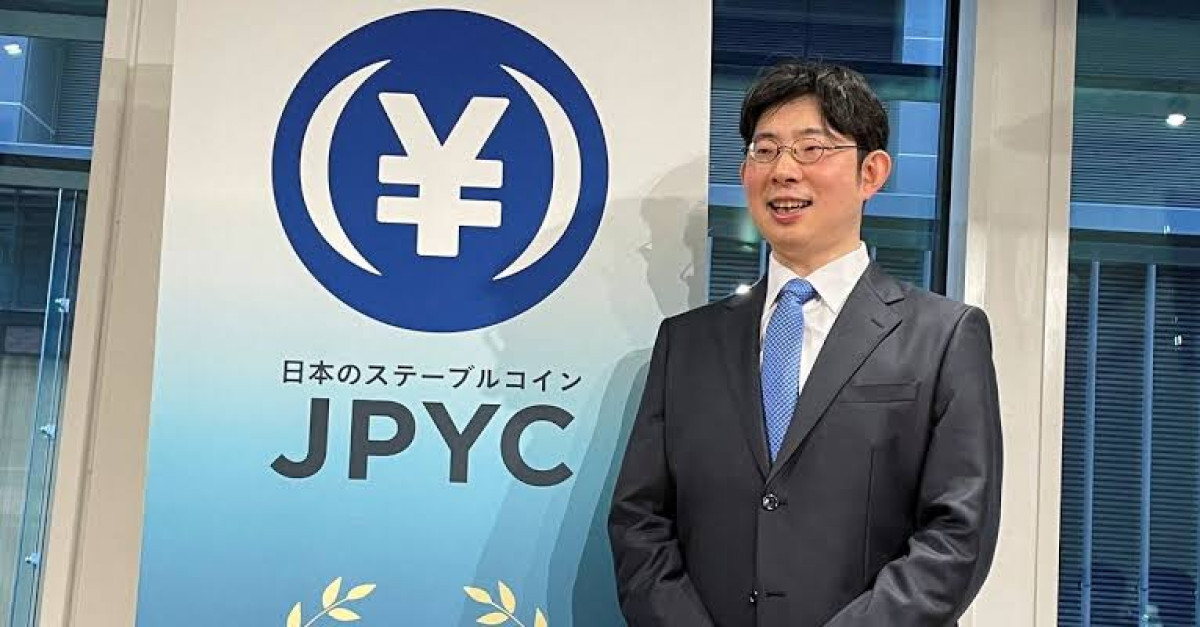
Stablecoin Firm JPYC Inc. Raises $38 Million in Extended Series B Round

Japan-based firm JPYC Inc., the issuer of the Japanese yen-backed stablecoin JPYC, has raised a total of 6 billion yen (about $38 million) in an extended Series B funding round.

The Series B round, which began in February this year and raised $38 million over time, involved venture partners and investors including Asteria, Metaplanet, Yokohama Capital, bitFlyer Holdings, and Hokkaido Bank, among others.
For the extended round, AZ-COM Maruwa Holdings Co., Ltd. became the newest investor in JPYC Inc., with some publications reporting that it led the round after investing an additional 1 billion yen (about $6 million), securing a 2.9% ownership stake in the company.
“The synergy between our ‘JPYC’ currency and the robust logistics network of the AZ-COM Group will form the core foundation of this ‘on-chain finance that integrates commercial, logistics, and financial flows,’” Noritaka Okabe said in a JPYC press release.
Regarding the funds raised, JPYC Inc. said in a recent press release that it aims to expand its presence across both the financial and Web3 ecosystems, accelerating the adoption of the JPYC stablecoin. The company also said, as stated in a previous press release, that the funds will be used to support the development of JPYC’s infrastructure, investments, and partnerships.
About JPYC
JPYC is Japan's first yen-backed stablecoin that maintains a 1:1 peg with the Japanese yen.
Under Japan’s Payment Services Act, JPYC is classified as an electronic payment instrument rather than a cryptocurrency, giving it full redeemability and stronger consumer protection under the strict regulatory oversight of Japan’s Financial Services Agency (FSA).
Since its launch in October last year, JPYC has surpassed 10 billion Yen in onchain circulation volume. The stablecoin is also currently supported by several blockchains, including Ethereum, Avalanche, Polygon, and Kaia. Additionally, transactions using the stablecoin are free of charge.
Boundary Labs to Launch Verifiable Stablecoin USBD

Stablecoin startup Boundary Labs is preparing to launch USBD, a “verifiable” institutional-grade stablecoin, following its most recent successful fundraising round.
The $2 million preseed funding round, which began last year, was led by Galaxy Ventures, with other investors, including First Block Capital and BlackWood, also participating in the round.

Following its recent fundraising success, the Boundary Labs team aims to create a stablecoin whose reserves are completely verifiable on-chain, including the stablecoin’s net asset value and protocol performance. This marks a sharp contrast with other stablecoins that depend on trust-based off-chain reporting and attestations.
“The Boundary protocol provides daily reporting on system state, including overcollateralization levels and real-time NAV calculations. USBD is engineered with explicit over-collateralization and delta neutral hedging to protect against market direction risk and volatility,” said Matthew Mezger, co-founder and CEO of Boundary Labs, about the USBD stablecoin.
Because trust is important for enhancing institutional adoption of USBD, especially for treasury management, collateral, and fiduciary use cases, Mezger said the team is building the entire USBD infrastructure with advanced smart contract code that moves the industry from monthly off-chain attestations to daily on-chain verification. By doing so, Boundary aims to transition from common trust-based stablecoin systems to a trustless one.
“This shift provides the structural resilience and auditability required for safe, permissionless staking and institutional fiduciary use cases, effectively transforming stablecoins into robust financial infrastructure,” Mezger said.
Boundary Lab’s Yield-Generation Strategies
Unlike other yield-generating stablecoins, USBD will not be a yield-bearing stablecoin. Nevertheless, Boundary Labs will create sUSBD, a separate staked token that will enable institutional clients to earn yield from the protocol’s decentralized finance strategies.
The revenue generated by the protocol will be used to build treasury reserves, fund operations, and will also be distributed to sUSBD stakers through an on-chain allocation system. The reward system will be fully on-chain and available for users to track and audit.
To onboard early institutional clients, Boundary Labs is planning to launch a private placement campaign with the goal of reaching $100 million in total value locked (TVL). Both USBD and sUSBD will be launched on Ethereum.
Tokenized Stocks Hit $1B Market Cap Milestone

Tokenized stocks have crossed the $1 billion market cap marking a major turning point for RWAs on-chain. Public equities drove the surge, with platforms like Ondo Global Markets and xStocks leading the charge, while tokenized private equities on Solana continue to gain early traction and expand rapidly.

The rise of tokenized stocks brings several benefits to investors as they enable 24/7 global trading without the traditional T+2 settlement delays, allowing markets to operate continuously rather than shutting down after regular hours. Fractional ownership lowers the barrier for smaller investors to gain exposure to stocks and private investments. Assets can be used directly as collateral in DeFi protocols, creating new opportunities for yield generation and liquidity with instant settlement that reduces counterparty risk and improves capital efficiency.
Ondo Finance and xStocks together account for over 90% of the tokenized stock market cap. Ondo leads at $741.1M (heavily on Ethereum at $440.1M and BNB Chain at $283.2M), followed by xStocks at $315.2M (dominant on Solana with $258.4M and reach through CEXs like Kraken and Bybit). The rest includes Superstate, Robinhood on Arbitrum, Dinari, and PreStocks’ $17.8M in tokenized private equities. Launched in June 2025, xStocks has already facilitated over $3.5 billion in on-chain transaction volume and $25 billion in total trading volume, tokenizing major assets like SPYx, QQQx, NVDAx, and TSLAx.

Another interesting segment is tokenized pre-IPO stocks that bring exposure to private companies like Anthropic directly onto Solana via platforms such as PreStocks. These tokens are created through Special Purpose Vehicles (SPVs) that hold shares or exposure acquired on secondary markets. PreStocks then issues 1:1 backed SPL tokens on Solana that track the company's implied valuation which lets holders get price exposure with 24/7 trading on DEXes like Jupiter. The tokenized pre-IPO sector has grown roughly 200% year-to-date, with Anthropic leading the surge.

However, Ethereum is still the clear leader when it comes to bringing stocks on-chain, as it’s become the primary home for major financial moves as the value of funds moving onto Ethereum has grown 20x since the start of 2024, thanks to massive names like BlackRock and Fidelity launching their own products there. This dominance extends across other major real-world asset categories as well, with the network maintaining a strong position in tokenized commodities, funds, and stablecoins.

Nasdaq has secured SEC approval to trade tokenized Russell 1000 stocks and major index ETFs on the same order book as their traditional counterparts, while the NYSE is building a 24/7 on-chain venue with instant settlement and stablecoin funding in partnership with Securitize and the DTCC’s tokenization infrastructure. Firms like Franklin Templeton, JPMorgan, and Apollo are rolling out tokenized money market funds, credit strategies, and other securities across networks that reache beyond Ethereum and Solana to include chains like Polygon, Avalanche, Base, Aptos, and Stellar, reflecting a multi-chain strategy to plug directly into different DeFi ecosystems.
Ondo Global Markets, now one of the main issuers of tokenized U.S. stocks and ETFs, blocks U.S. users and anyone trading from inside the country, and pushes those restrictions through partners like MetaMask, Binance Wallet, and centralized exchanges that list its products. Kraken’s xStocks do the same, limiting access to non U.S. clients in a set list of jurisdictions and explicitly excluding residents of the United States, Canada, the U.K., and Australia. On Solana, the pre-IPO names led by PreStocks let people trade tokens linked to companies like Anthropic, but they sit in a gray zone because they’re SPV based claims with no audited, public proof of backing, wide gaps between implied token prices and private round valuations, thin liquidity, and no clear path for U.S. retail to participate. So while Binance, OKX, Kraken, and others rush to put tokenized stocks in front of millions of users, most of the real volume is still offshore, and U.S. investors are mostly stuck watching from the sidelines until policy catches up.
Bank Backed Stablecoin Now Available on MetaMask

Société Générale-FORGE (SG FORGE), the digital asset subsidiary of Société Générale, one of France’s largest multinational banks, has partnered with Consensys to bring its Markets in Crypto Assets Regulation (MICA)-compliant USD CoinVertible (USDCV) stablecoin into MetaMask.
The partnership, announced in a recent press release, will see USD CoinVertible (USDCV), one of the few regulated stablecoins issued by a major traditional bank, among the few shortlisted stablecoins available on MetaMask.

To appeal to all kinds of users, including retail and institutional users, the USDCV stablecoin is fully regulated and compliant, with full reserves and one to one backing to the US dollar. It is backed by cash and cash equivalents, with BNY Mellon serving as its reserve custodian.
Apart from helping bridge the gap between traditional finance and decentralized finance, the integration also creates a robust, secure, and transparent environment for users, including retail and institutional users looking to conduct blockchain transactions and decentralized finance interactions.
With support from global payments infrastructure company Transak, users will be able to perform on ramp and off ramp activities with the USDCV stablecoin within the MetaMask app, while also being able to trade crypto assets with it.
Speaking on the integration, Jean Marc Stenger, CEO of Société Générale FORGE, said the integration is aimed at accelerating the emergence of an interoperable financial system that combines the advantages of blockchain technology with the security and compliance of an European Union regulated stablecoin supported by one of Europe’s largest banks.
SG-FORGE Ramps Up its Crypto Efforts
Société Générale, through its digital asset subsidiary SG FORGE, has continued to bridge the gap between traditional finance and decentralized finance, integrating its EUR CoinVertible (EURCV) and USD CoinVertible (USDCV) stablecoins across different traditional finance and crypto ecosystems.
In January of this year, SG FORGE, in partnership with payments giant SWIFT, ran an interoperability test on SWIFT’s payment system, using its EURCV stablecoin as a means of exchange and for tokenized bond settlement, an experiment that was marked as successful.
In November last year, SG FORGE integrated its EURCV and USDCV stablecoins into the system of Deutsche Börse Group, one of the world’s leading financial market infrastructure providers. This integration enabled token based cash solutions, settlement, and a broader use of stablecoins at institutional grade, closing the gap between core crypto users and traditional capital markets.
SG FORGE stablecoin assets have been integrated across other blockchain infrastructures, including decentralized finance lending platform Morpho and decentralized exchange Uniswap. The EURCV and USDCV stablecoin assets have also been deployed on some layer-1 chains, notably Ethereum, Solana, XRP Ledger, and Stellar, supporting a wide variety of blockchain use cases.
Tether Hires KPMG for First Full USDT Reserve Audit

Tether, the world’s largest stablecoin issuer, has hired KPMG, one of the Big Four accounting firms, to conduct its first full audit of its USDT reserves. It has also engaged PwC to support the preparation of its internal systems.
The move comes days after Tether announced plans to work with one of the Big Four firms on an inaugural audit of its stablecoin reserves. Although it did not initially name the firm, the Financial Times reported that KPMG had been selected, citing sources familiar with the matter.
Prior to now, Tether had, for several years, engaged BDO Italia, an Italian affiliate of the global accounting firm BDO, to conduct periodic attestations of its reserves. These attestations involved BDO Italia taking a point-in-time snapshot of Tether's USDT reserves.
These snapshots helped confirm that, at a specific date, Tether's reported assets, including cash, U.S. Treasuries, gold, Bitcoin, and secured loans, met or exceeded the circulating supply of USDT. They were conducted quarterly and also included details on Tether's profit, reserve composition, and excess reserves.
While these attestations provided a degree of transparency and accountability, they were not full, comprehensive audits, as they relied on agreed-upon procedures and did not include elements typically associated with a full audit, such as in-depth testing of internal controls, continuous transaction verification, and formal risk assessments.
Tether’s Expansion Goals
Apart from ensuring transparency, the audit of its reserves aligns with Tether’s U.S. expansion goals under the GENIUS framework for stablecoins.
Signed into law by President Trump on July 18, 2025, the Guiding and Establishing National Innovation for U.S. Stablecoins (GENIUS) Act establishes a federal regulatory framework for dollar-backed payment stablecoins.
The framework outlines requirements that must be met by stablecoin issuers operating in the United States, including:
- Full reserve backing with high-quality liquid assets, such as cash and short-term U.S. Treasuries.
- Comprehensive audits and robust internal controls for larger issuers.
- Strict anti-money laundering (AML), redemption, and consumer protection requirements.
- Monthly public disclosures of reserve composition.
Tether, in partnership with crypto bank Anchorage Digital, launched USAT, a dollar-pegged stablecoin designed to comply with the GENIUS Act, as part of efforts to expand its presence in the U.S. market under the GENIUS framework.
The launch provides Tether with immediate regulatory cover, potentially making the asset more attractive to U.S. institutions that have previously avoided offshore-issued stablecoins such as USDT. Because USAT is issued by Anchorage Digital, a U.S.-based company, it has been positioned as a “made in America” product—marking a significant step in Tether’s broader U.S. expansion strategy.
Since comprehensive reserve audits are among the requirements for stablecoin issuers seeking to operate in the U.S., the KPMG audit helps position Tether as compliant with U.S. standards.
Franklin Templeton and Ondo Bring 24/7 Stocks Onchain
Franklin Templeton, one of the largest asset managers on the planet, has formally partnered with Ondo Finance to bring tokenized versions of its exchange-traded funds to blockchain networks, allowing investors to hold and trade exposure to traditional financial products directly through crypto wallets, at any hour of the day or night. The announcement, made Wednesday, marks a meaningful escalation in the firm's already aggressive push into digital asset infrastructure.
Under the arrangement, Ondo will purchase shares of five Franklin Templeton ETFs, including FFOG, FLQL, FDGL, FLHY, and INCE, then issue blockchain-based tokens through a special purpose vehicle. Those tokens pass along the economic exposure, so holders receive the return stream of the underlying fund but do not technically own the underlying shares directly. Liquidity will be supported by Ondo's network of market makers, including during windows when traditional exchanges are closed.
The platform powering this is Ondo Global Markets, which launched in September 2025 and has already reported more than $620 million in total value locked and north of $12 billion in cumulative trading volume across roughly 60,000 users. That kind of traction, relatively early in its life, helps explain why Franklin Templeton was willing to put its name on this deal.
Sandy Kaul, Franklin Templeton's head of innovation, framed the initial ETF lineup in straightforward terms: the chosen funds offer a broad mix of exposures and a useful test case to see what actually resonates with a new audience. The products will initially be available in Europe, Asia-Pacific, the Middle East, and Latin America. U.S. availability, the firm said, hinges on further regulatory clarity around how third parties can distribute registered funds on-chain.
Making Moves
For those tracking Franklin Templeton's blockchain strategy, this is less a sudden pivot and more the next logical chapter. The firm launched its Benji Technology Platform back in 2021 and with it the first U.S.-registered money market fund to run on a public blockchain, the Franklin OnChain U.S. Government Money Fund. That fund has since grown to $557 million in assets as of February 2026, not a trivial number for a product built on infrastructure that most institutional investors were still treating with skepticism just a few years ago.
Kaul also made waves at the Ondo Summit in New York in February, where she argued that the next evolution of asset management would be what she called "wallet-native": a world where stocks, bonds, private funds, and more are all held and managed through tokenized digital wallets rather than fragmented across brokerage accounts, banks, and paper records. The Franklin Templeton-Ondo partnership is a direct expression of that vision, and it is now live.
The Race Is On
Franklin Templeton is not operating in a vacuum. BlackRock's BUIDL fund has surpassed $2 billion in assets under management. JPMorgan rolled out its My OnChain Net Yield Fund on Ethereum late last year, crossing $100 million in short order. WisdomTree and Fidelity have both signaled similar intentions. And just this week, the New York Stock Exchange announced a partnership with Securitize to enable tokenized securities trading on its platform. The momentum is real and it is accelerating.
For Ondo, landing Franklin Templeton as a partner is a significant credibility stamp. The firm's ONDO token carries a market cap above $1.2 billion, and the broader real-world asset tokenization market has grown to over $15 billion in total assets according to RWA data, up sharply over the past year. The question now is whether tokenized fund structures can attract meaningful adoption beyond the crypto-native crowd that already lives in wallets.
What This All Means
None of this is without complication. Tokenized ETFs do not immunize investors from market volatility. Bitcoin hit an all-time high near $126,000 in October 2025 and was trading around $70,500 by late March 2026. Easy access to assets at any hour cuts both ways. Regulatory uncertainty in the U.S. remains a genuine constraint, with questions around compliance, investor identification, and how registered funds interact with decentralized infrastructure still unsettled.
Franklin Templeton has also partnered with Binance to allow tokenized fund shares to serve as collateral for institutional trades, which introduces new connections between regulated finance and crypto exchange infrastructure. That might be efficient under normal conditions, but critics will rightly note that interconnected systems have a history of amplifying stress in bad times. The 2022 crypto collapse left lessons that the industry has not fully metabolized.
Still, when a firm managing $1.7 trillion commits to blockchain as a primary distribution channel rather than a side experiment, competitors pay attention. The walls between traditional finance and crypto markets are getting thinner fast, and the Franklin Templeton-Ondo deal may end up being one of the more consequential ones to watch as this story unfolds.
Solana At Six: From Meme Street to Wall Street

Six years in, Solana still can't quite shake the casino label. And honestly, it probably never will, at least not completely. The chain that gave the world the $TRUMP memecoin, the $LIBRA debacle, and a near-endless stream of cartoon animal tokens processed somewhere close to 30% of its average monthly DEX volume in 2025 through memecoin activity alone, according to Blockworks data. But now, with over 200 tokenized U.S. stocks already live on-chain through Ondo Finance, and Visa, PayPal, and WisdomTree all building on the network, Solana's identity crisis may be ending, not by ditching memecoins, but by absorbing institutional finance alongside them.
In January 2026, Ondo Finance pushed more than 200 tokenized U.S. stocks and ETFs onto Solana. Not synthetic proxies, not wrapped derivatives, but actual securities, backed 1:1 by shares held with U.S.-registered broker-dealers, accessible on-chain 24 hours a day, five days a week for minting and redemption, and transferable around the clock
A month later, WisdomTree followed with its full suite of regulated tokenized funds. Visa confirmed U.S. banks were settling transactions with it over Solana in USDC. Worldpay said it would let merchants settle in USDG on the same network. PayPal positioned PYUSD on Solana for faster, cheaper commerce flows.
The memecoin chain is becoming something else. Or rather...and this is the more accurate framing, it's becoming something more.
A Sixth Birthday, a Changed Ecosystem
Solana launched in March 2020, built on a proof-of-history consensus mechanism that promised transaction throughput orders of magnitude faster than Ethereum at the time. Its early years were defined by the NFT boom, DeFi summer spillover, and a catastrophic near-death experience when the FTX collapse in late 2022 wiped out a major backer and sent SOL's price into the floor.
The recovery was messy and improbable, fueled partly by a genuine developer community and partly by retail investors who found Solana's low fees and fast finality well-suited to trading junk tokens at high velocity.
By 2024 and into 2025, the memecoin supercycle reached its apex on Solana. The pump.fun launchpad became the chain's most-used application by fee revenue for stretches of time. Hundreds of tokens named after pets, politicians, and pop culture references launched and died there every week.
So when institutions started showing up with serious capital and serious products, the natural question was: why here?
Ondo's Gamble
Ondo Finance's expansion to Solana appears to be a structural argument about where capital markets are going.
The company, which became the largest real-world asset issuer on Solana by asset count with the January launch, brought its Global Markets platform to the network after testing it on Ethereum and BNB Chain. The catalog covers technology and growth stocks, blue-chip equities, broad-market and sector ETFs, and commodity-linked products.
Under Ondo's structure, token holders get economic exposure to publicly traded securities, including dividends, but do not hold direct shareholder rights in the underlying companies. The actual stocks and any cash in transit sit with U.S.-registered broker-dealers. The blockchain handles the movement layer: how tokens transfer, how positions clear, how compliance rules travel with the asset rather than being enforced at the application level.
The execution numbers that preceded the launch are worth noting. Before going live, Ondo ran tests showing $500,000 in tokenized Google shares trading on-chain with just 0.03% slippage and pricing that matched traditional exchange-traded equivalents. Total transaction costs for large trades came in under $102, a figure that compares favorably to conventional brokerage costs at similar volumes.
Ian De Bode, president of Ondo Finance, put it directly when the Solana expansion went live: liquidity depth and asset selection from existing versions of tokenized stocks had remained limited, and Ondo's model was designed to address that gap by bringing liquidity inherited from traditional exchange venues into an on-chain catalog.
Tokenized equities existed before Ondo's Solana launch, but they were thinly traded, narrowly available, and difficult to discover for the average crypto-native user. Ondo's integration with Jupiter, Solana's primary DEX aggregator, changed the distribution equation. Suddenly, the same wallets and interfaces people were using to buy memecoins could also pull up tokenized Apple or tokenized SPY.
The Institutional Path Becomes Clearer
WisdomTree's move a week after Ondo's launch was in some ways even more revealing about how institutional finance is thinking about Solana.
The New York-based asset manager extended its full suite of regulated tokenized funds to Solana through its WisdomTree Connect institutional platform and its WisdomTree Prime retail app.
That means money market, equity, fixed-income, alternatives, and asset allocation products are now natively mintable on the network.
Maredith Hannon, WisdomTree's head of business development for digital assets, framed the move as a direct response to Solana's technical characteristics: high transaction speeds and the ability to meet growing crypto-native demand while maintaining the regulatory standards institutions expect. Nick Ducoff of the Solana Foundation noted that RWAs on the network had already surpassed $1 billion before WisdomTree's arrival, and that the asset manager's expansion reflected both demand for tokenized RWAs and Solana's demonstrated ability to support that demand at scale.
What WisdomTree's entry signals, beyond the product itself, is that the 'sterile environment' theory of institutional adoption was wrong. Traditional finance did not wait for Solana to become culturally palatable before moving in. The infrastructure made sense regardless of what else was happening on the network, and the institutional clients accessing these funds through WisdomTree Connect are unlikely to lose sleep over what else is trading at the same time in the same ecosystem.
Payments, Stablecoins, and the Scale Argument
The tokenized securities story makes more sense when you look at what the payments data was already showing heading into early 2026.
In February 2026, Solana processed more than $650 billion in stablecoin transactions, more than double its previous monthly record, according to figures cited in the network's payments report. Stablecoin supply on Solana exceeded $15 billion. These are the type of money-like flows at a scale that makes the 'financial rail' framing not just plausible but arguably already accurate.
Visa is settling with U.S. banks in USDC over Solana. Worldpay is building merchant settlement in USDG on the same network. PayPal has positioned PYUSD on Solana specifically for commerce use cases, much faster and cheaper than alternative rails. Citi and PwC have been exploring the tokenization of bills of exchange for trade finance using Solana infrastructure.
None of these companies needed Solana's memecoin reputation to disappear before they could act. They needed speed, cost efficiency, and liquidity, things the network already provides at scale.
The Numbers Behind the Narrative
A few data points help ground what's actually happening against the broader tokenization landscape.
Ethereum still leads the on-chain RWA market by a significant margin, holding around $15.6 billion in tokenized asset value excluding stablecoins, according to RWA.xyz data. Solana sat at roughly $1.84 billion, with BNB Chain between the two at approximately $2.95 billion.
But the relevant number may not be total asset value so much as distribution. RWA.xyz shows about 91.6% of Solana's tokenized asset value, approximately $1.68 billion of the $1.84 billion, in distributed, portable on-chain form. Monthly RWA transfer volume on the network exceeded $2 billion. For context, the entire tokenized stocks category across all chains carries a market cap of around $1.08 billion, with monthly transfer volume of roughly $2.3 billion. Ondo alone holds about $644 million of that, representing roughly 60% platform market share.
Those figures suggest the assets that are on Solana are actually moving and not sitting idle in wallets. This is a huge distintion when evaluating whether tokenization on the network is functional infrastructure or performative positioning.
Part of what makes the institutional push on Solana legible is that the regulatory environment shifted in a meaningful way in early 2026.
On March 5, the FDIC, Federal Reserve, and OCC jointly stated that eligible tokenized securities should receive the same capital treatment as non-tokenized equivalents. For years, one of the institutional barriers to holding tokenized assets was the regulatory uncertainty around capital requirements. Banks considering tokenized securities as part of their balance sheet couldn't get a clear read on whether doing so would attract punitive capital charges relative to holding the conventional version of the same instrument.
The SEC's decision to grant special relief allowing intraday trading in tokenized shares of WisdomTree's money market fund points in the same direction.
The $2 Trillion Horizon
The projections for tokenized assets are substantial, and they come from sources that aren't in the habit of WAGMI, moon-shot hype.
McKinsey's base case puts tokenized asset value at roughly $2 trillion by 2030, with a range running from $1 trillion to $4 trillion depending on adoption pace. BCG has estimated that tokenized fund AUM alone could exceed $600 billion by the same date. Citi's stablecoin outlook, published in early 2025, projected $1.9 trillion in base-case stablecoin issuance by 2030 and a bull case of $4 trillion, with potential transaction activity hitting between $100 trillion and $200 trillion.
These projections share a common assumption: blockchains transition from being primarily an asset class (something to invest in) to being market infrastructure (something to run finance through). If that transition happens at anything like the projected scale, the networks with the most liquid, most accessible, and most developer-friendly infrastructure stand to capture a disproportionate share of the flow.
Solana's combination of throughput, low fees, and a large existing retail user base that's already comfortable navigating on-chain interfaces makes it a serious contender for that infrastructure role. The 3.2 million daily active users that Solana was citing around the time of the Ondo launch aren't a demographic institutions typically associate with capital markets access. And that may be the whole point.
What This Means for Solana
On one end, you have high-velocity, high-risk memecoin trading, the casino slot machine that gave the network its reputation. On the other end, you have regulated, compliance-embedded tokenized securities and institutional payment rails. And it seem that the two ends don't appear to be in direct conflict with each other. They use the same settlement layer, pay the same validators, and contribute to the same liquidity depth.
Whether that coexistence holds as institutional volume grows is an open question. There are scenarios where the reputational bleed from high-profile memecoin controversies creates friction for institutional deployment. There are also scenarios where the retail liquidity generated by the casino side of the network ends up being exactly the kind of distribution depth that makes tokenized equities viable in a way they haven't been elsewhere.
For now, the market appears to be betting on the latter. The capital allocation decisions of Ondo, WisdomTree, Visa, Worldpay, PayPal, and Citi, all happening in just a span of a couple months, represent a pretty explicit vote of confidence in the coexistence model.
Solana turned six this month. It's survived an exchange collapse that should have killed it, rebuilt a developer ecosystem that most people wrote off, and navigated a memecoin supercycle that burnished and tarnished its reputation in roughly equal measure.
The tokenized stocks development isn't a pivot or rebrand...it's more of an expansion. The network didn't stop being what it was to become something new, it added a whole other layer on top of an already messy, active, genuinely liquid base. That's not the way institutional infrastructure is supposed to develop, according to the conventional playbook.
But the conventional playbook was written before $650 billion in monthly stablecoin volume was possible on a chain that also hosts a token called $BONK.
MetaMask Adds Tokenized Stocks, ETFs via Ondo

Metamask, the popular self-custody wallet announced it now supports tokenized U.S. stocks, ETFs, and commodities through an integration with Ondo Global Markets. For eligible users outside the United States, this means exposure to names like Apple, Tesla, Nvidia, major index ETFs, and even gold and silver, all from inside the MetaMask wallet.
It is one of the clearest signals yet that tokenized real-world assets are moving from theory into everyday crypto products.
What’s Actually Being Offered
The new offering includes more than 200 tokenized securities at launch. These tokens track the price of publicly traded U.S. stocks, ETFs, and commodity funds. Users can buy them with stablecoins, hold them in their wallet, and transfer them onchain just like any other ERC-20 token.
These are not shares in the legal sense. Holding a tokenized stock does not give voting rights or direct ownership of the underlying equity. Instead, the tokens provide economic exposure to the price movements of the asset, backed by traditional market infrastructure on the other side.
For many crypto users, that distinction may matter less than the experience itself. The ability to gain U.S. market exposure without opening a brokerage account or leaving a self-custodial wallet is the real draw.
How It Works Inside MetaMask
The integration runs through MetaMask Swaps, meaning users do not need to leave the wallet or interact with unfamiliar interfaces. Trades are executed onchain, while pricing and asset backing are handled through Ondo’s infrastructure.
Minting and redemption of the tokens generally follow U.S. market hours, reflecting how the underlying assets trade in traditional markets. Transfers between wallets, however, can happen at any time. That hybrid setup blends old market rules with blockchain flexibility, even if it is not fully 24/7 trading yet.
Fractional exposure is also built in, allowing users to buy small amounts of high-priced stocks or ETFs without committing large sums of capital.
Who Can Use It
Access is limited to eligible users in supported jurisdictions outside the U.S. and several other regions. Regulatory restrictions around securities remain a major factor, and MetaMask has been clear that availability depends on local rules.
For now, the product is primarily aimed at international users who want U.S. market exposure without navigating the friction of legacy brokerage systems.
The Bigger Industry Context
This move highlights how quickly real-world assets are becoming part of the crypto stack.
For years, tokenized stocks were discussed as a future use case. Today, they are appearing inside one of the most widely used wallets in the industry. That changes the conversation. Instead of asking whether tokenization will happen, the focus shifts to how fast it scales and how regulators respond.
It also reframes MetaMask’s role. The wallet is no longer just a gateway to DeFi and NFTs. It is starting to look more like a universal financial interface, one that sits between crypto markets and traditional assets.
For users, the appeal is simplicity. One wallet, one interface, exposure to crypto, equities, ETFs, and commodities. No bank logins, no brokerage apps, no asset silos.
MetaMask’s integration with Ondo fits into a broader push across the industry. Tokenization is being explored by crypto-native firms, fintech platforms, and even large financial institutions. The idea is straightforward. Traditional markets are slow, fragmented, and geographically constrained. Blockchains promise faster settlement, global access, and programmable assets.
Tokenized real-world assets already represent tens of billions of dollars in value, and many expect that number to grow sharply if regulatory clarity improves.
Still, challenges remain. Regulatory uncertainty is the biggest one. Liquidity and pricing ultimately depend on traditional markets. And for some investors, the lack of shareholder rights will always be a drawback.
The Bottom Line
Ondo has said it plans to expand its catalog to thousands of assets over time. If that happens, wallets like MetaMask could become primary access points for global capital markets, especially in regions underserved by traditional finance.
For now, the launch marks a clear trend. Crypto wallets are no longer just about holding crypto. They are becoming portals into the broader financial system, one token at a time.

Cardano Announces USDCx Integration to Kick-Start DeFi Liquidity

Cardano has spent years building its technology stack, refining its proof of stake model, and emphasizing academic rigor. But for all that work, one problem has stubbornly remained. Liquidity.
That gap is now front and center as Cardano moves toward integrating USDCx, a Circle-backed stablecoin product designed to extend USDC liquidity across multiple blockchains. The hope is straightforward. Bring real dollar liquidity onto Cardano, and decentralized finance on the network finally has a chance to scale.
The announcement, confirmed by Cardano founder Charles Hoskinson, signals a shift in priorities. Less focus on theory, more focus on the things the matter.
Why Stablecoins Matter More Than Almost Anything
In modern crypto markets, stablecoins are the grease that keeps everything moving. They anchor trading pairs, support lending markets, and give institutions a familiar unit of account. Without them, DeFi ecosystems struggle to attract capital, market makers stay away, and activity remains thin.
Cardano’s DeFi ecosystem has felt those constraints for years. While Ethereum, Solana, and newer Layer 2 networks handle billions in stablecoin flows daily, Cardano’s on-chain dollar liquidity remains modest. That imbalance shows up in lower trading volumes, wider spreads, and limited options for builders trying to launch serious financial products.
USDCx is meant to change that dynamic.
What USDCx Actually Is
USDCx is not just another wrapped stablecoin. It is part of Circle’s broader effort to make USDC available across multiple chains without relying on fragile bridges. Instead of locking tokens on one chain and issuing synthetic versions on another, USDCx uses Circle’s own reserve and minting infrastructure to represent USDC liquidity elsewhere.
In practice, that means Cardano applications could eventually tap into the same deep pool of USDC liquidity that already exists across major networks. Even a small slice of that capital could materially alter Cardano’s DeFi landscape.
Importantly, USDCx does not need to be fully native on day one to matter. Access, settlement reliability, and institutional trust are what count.
A Strategic Pivot for Cardano
The push toward USDCx fits into a broader realization within the Cardano ecosystem. Strong consensus design alone does not create a financial network. Liquidity, tooling, and incentives do.
Recent proposals and discussions around ecosystem funding reflect that shift. There is growing acknowledgment that Cardano needs to invest directly in stablecoin access, custody integrations, oracle services, and market infrastructure if it wants to compete for capital.
Hoskinson himself has framed the move as necessary rather than optional. In today’s crypto market, liquidity begets liquidity. Without a credible dollar backbone, everything else struggles to gain traction. The move follows the recent ecosystem proposal to bring these tier-one stables coins, custody providers, bridges, and oracles needed for a healthy ecosystem.
Technical integration is still underway, and Cardano is not yet listed as a fully supported chain in Circle’s production documentation. Even once live, adoption will depend on whether major Cardano-native applications choose to build around USDCx and whether liquidity providers see enough opportunity to deploy capital.
There is also a cautionary lesson from other networks. Stablecoin availability alone does not magically create a thriving DeFi ecosystem. Several chains have added major stablecoins in the past only to see limited follow-through from users and developers.
Liquidity needs reasons to stay.
Why This Matters Beyond Cardano
USDCx is part of a bigger trend in crypto. Stablecoin issuers are moving away from simple token issuance and toward infrastructure that supports interoperability, compliance, and institutional use.
Some versions of USDCx are being designed with privacy features that allow transaction details to remain hidden while still meeting regulatory requirements. That combination is increasingly attractive to institutions that want blockchain efficiency without full transparency.
If Cardano can position itself as a secure, compliant, and liquid environment for decentralized finance, USDCx could become a meaningful piece of that strategy.
The Bottom Line
Cardano’s bet on USDCx is not about hype or short-term price action. It is about fixing a structural weakness that has limited the network’s financial relevance.
If Cardano, through the USDCx integration, captured even 0.10% of that notional liquidity, it would imply an additional $70 million in dollar value, which is roughly double the network’s current stablecoin base.
Should that share reach 0.25%, the figure would rise to approximately $180 million. Such a shift could materially tighten spreads for ADA/stablecoin trading pairs and make lending markets more viable for institutional participants.
If the integration succeeds and if developers and liquidity providers follow, Cardano could finally begin to close the gap with more capital-rich ecosystems.
For now, the message is clear. Cardano is done pretending liquidity does not matter.

Tether’s USAT Takes on USDC in Battle for the U.S. Stablecoin Market

After years on the sidelines of the U.S. regulatory system, Tether is stepping directly into it.
On January 27, the issuer behind the world’s largest stablecoin unveiled USAT, a new dollar-backed token designed specifically for the American market. Unlike USDT, which has long operated globally with limited U.S. regulatory footing, USAT is built from the ground up to comply with federal rules, and it is being issued through Anchorage Digital Bank, the only federally chartered crypto bank in the country.
The launch marks a turning point for Tether, a company that has historically thrived outside the U.S. regulatory perimeter, and signals how dramatically the stablecoin landscape has shifted over the past two years.
A Stablecoin Built for Washington, Not Around It
USAT is a one-to-one dollar-pegged stablecoin, but the similarities to USDT largely stop there.
The token is structured under the GENIUS Act, the U.S. stablecoin law passed in 2025 that finally gave issuers a clear federal framework to operate within. Under the law, stablecoins must be fully reserved, issued through regulated entities, and subject to ongoing oversight and reporting requirements.
Anchorage Digital Bank is the official issuer of USAT, placing the token squarely inside the U.S. banking system. Anchorage operates under a federal charter and is overseen by the Office of the Comptroller of the Currency, which gives USAT a regulatory status that few crypto-native assets have ever enjoyed.
For institutions that have spent years waiting on regulatory clarity before touching stablecoins, that distinction matters.
Why Tether Is Doing This Now
For most of its history, USDT dominated stablecoin markets outside the United States, while rivals like USDC carved out regulated footholds domestically. As U.S. policy remained uncertain, Tether focused overseas. That calculus changed once Washington created a formal stablecoin regime.
USAT gives Tether a compliant entry point into the U.S. financial system without forcing changes to USDT itself. Instead of retrofitting an existing global product, the company opted to launch something new, with a different issuer, different governance, and a different regulatory posture.
In effect, Tether now runs two stablecoin tracks. One optimized for global liquidity and another designed for American institutions.
The Role of Anchorage and Cantor Fitzgerald
Anchorage’s involvement goes beyond branding.
As issuer, the bank is responsible for compliance, custody, and operational controls. That includes AML and KYC processes, reserve management, and ongoing reporting obligations. These are not optional features under the GENIUS Act. They are baseline requirements.
USAT’s reserves are held in U.S. dollar-denominated assets and overseen by Cantor Fitzgerald, which serves as custodian and preferred primary dealer. Cantor’s role adds another layer of institutional familiarity, particularly for traditional financial firms that already interact with the firm in Treasury and fixed-income markets.
Taken together, the structure is clearly aimed at banks, asset managers, and corporate treasury teams rather than purely crypto-native users.
New Leadership, Different Message
Tether has also made a notable leadership choice for USAT.
The company appointed Bo Hines as CEO of the USAT unit. Hines previously served as executive director of the White House’s Crypto Council, giving him direct experience navigating U.S. policy discussions at the highest level. He was directly involved with GENIUS Act legislation.
That background reflects the broader message Tether is sending with USAT. This is not a product built to push regulatory boundaries. It is designed to operate comfortably inside them.
Early Distribution and Market Access
At launch, the token will be available on several major trading platforms and payment gateways, including Kraken, OKX, Bybit, Crypto.com, and MoonPay. Noticeably absent from that list is Coinbase. The US's largest exchange has a long partnership history with Circle and USDC, by far Tether's largest competitor. It will be interesting to see if they list the new stablecoin in the future. The early distribution provides liquidity from day one, though the longer-term focus appears to be institutional usage rather than retail trading volume.
The token is expected to be used for payments, settlement, and treasury operations, particularly by firms that want exposure to stablecoins without regulatory ambiguity.
What This Means for the Stablecoin Market
USAT adds another serious competitor to the regulated stablecoin field, which until now has been dominated by a small number of issuers.
For Circle and other U.S.-focused stablecoin providers, Tether’s entry raises the stakes. Tether brings unmatched scale, deep liquidity, and years of operational experience. At the same time, it is entering a market where regulatory compliance is no longer a differentiator but a requirement. Competition is always welcome, and Tether is providing that.
The Bottom Line
Tether’s USAT is more than just another stablecoin.
It represents a strategic shift by one of crypto’s most influential companies toward direct engagement with U.S. regulators, banks, and institutions. By launching a federally regulated product rather than modifying USDT, Tether has effectively separated its global operations from its American ambitions.
Whether USAT gains the same dominance in the U.S. that USDT enjoys globally remains to be seen. But one thing is clear. The era of stablecoins operating in regulatory gray zones is ending, and Tether intends to be part of what comes next. This is an amazing time to be involved in the blockchain and stablecoin space. The tides are turning and I think we will see exciting times ahead for adoption.
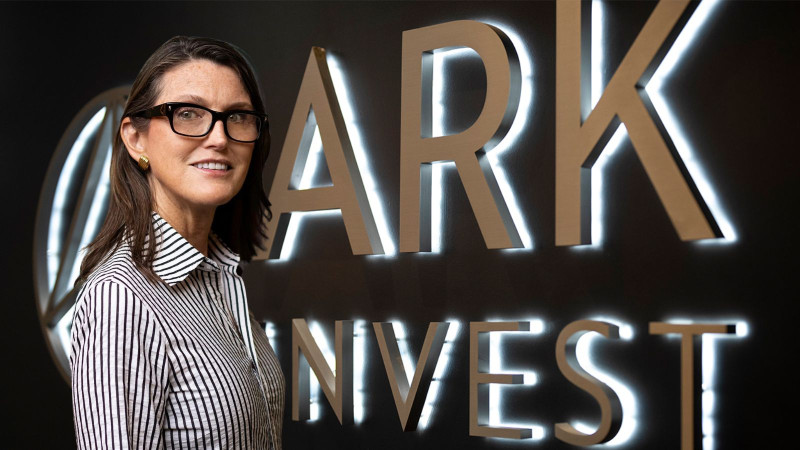
ARK Invest Sees a Path to an $11 Trillion Tokenized Market

Tokenization has always sounded bigger than it looked.
For years, crypto insiders talked about putting stocks, bonds, and real-world assets on blockchains as if it were inevitable. In reality, adoption was slow, liquidity was thin, and most experiments never made it past pilot stage. That gap between narrative and execution is starting to close, and ARK Invest appears to think the timing finally matters.
The innovation-focused asset manager has taken a stake in Securitize, a company building the infrastructure to issue and manage tokenized securities. On its own, the investment is modest. In context, it is a clear signal that tokenization is moving out of theory and into serious institutional planning.
From a $30 Billion Market to Something Much Bigger
Today, the tokenized real-world asset market sits at roughly $30 billion, depending on how narrowly you define it. That includes tokenized Treasurys, money market funds, private credit, and a small but growing set of other financial instruments.
ARK’s long-term outlook is far more ambitious. The firm has pointed to projections that tokenization could scale into an $11 trillion market by 2030. That kind of growth does not come from retail speculation or crypto-native assets alone. It requires deep integration with traditional finance.
"In our view, broad based adoption of tokenization is likely to follow the development of regulatory clarity and institutional-grade infrastructure," Ark Invest said in its "Big Ideas 2026" report published Wednesday.
Institutional Momentum Is Picking Up Fast
What is changing most quickly is not the technology, but the pace of institutional involvement.
In just the past few weeks, some of the largest names in global markets have moved from discussion to execution. Earlier this week, the New York Stock Exchange said it is building a blockchain-based trading venue designed to support around-the-clock trading of tokenized stocks and exchange-traded funds. The platform is expected to launch later this year, pending regulatory approval, and would mark one of the most direct integrations of tokenized assets into a major U.S. exchange.
That announcement followed a similar move from F/m Investments, the firm behind the $6.3 billion U.S. Treasury 3-Month Bill ETF. The company said it has asked U.S. regulators for permission to record existing ETF shares on a blockchain. Founded in 2018, F/m manages roughly $18 billion in assets, and its approach signals that tokenization is no longer limited to newly issued products. Existing, actively traded funds are now being considered for on-chain recordkeeping.
Custody and settlement providers are moving in parallel. Last week, State Street said it is rolling out a digital asset platform aimed at supporting money market funds, ETFs, and cash products, including tokenized deposits and stablecoins. Around the same time, London Stock Exchange Group launched its Digital Settlement House, a system designed to enable near-instant settlement across both blockchain-based rails and traditional payment infrastructure.
Taken together, these moves suggest institutions are no longer testing whether tokenization works. They are deciding where it fits.
ARK has noted that tokenized markets today are still dominated by sovereign debt, particularly U.S. Treasurys. That is where the clearest efficiency gains exist and where regulatory risk is lowest. Over the next five years, however, the firm expects bank deposits and global public equities to make up a much larger share of tokenized value as institutions move beyond pilot programs and into scaled deployment.
If that shift plays out, tokenization stops being a niche product category and starts to look like a new operating layer for global markets.

New York Stock Exchange Wants To Go On-Chain
Why This Time Feels Different
Tokenization has gone through hype cycles before, usually tied to broader crypto booms. What stands out now is who is building and who is participating.
Large asset managers are no longer experimenting on the margins. They are issuing real products, allocating real capital, and treating blockchain settlement as a potential efficiency gain rather than a novelty. Tokenized Treasurys and money market funds are leading adoption because they solve real operational problems like settlement speed and collateral mobility.
That is how new financial infrastructure typically gains traction. Slowly, quietly, and through the most boring assets first.
ARK’s involvement fits neatly into that pattern.
The Challenges Have Not Disappeared
None of this means tokenization is inevitable or frictionless.
Liquidity in secondary markets remains limited. Regulatory clarity still varies widely across jurisdictions. Custody, interoperability, and standardization are ongoing challenges. Many tokenized assets trade less frequently than their traditional equivalents, at least for now.
But those challenges look more like growing pains than dead ends. The market is early, not stalled.
Infrastructure Before Impact
If tokenization does reach anything close to $11 trillion by the end of the decade, it will not arrive with fanfare. Most investors will not notice when the shift happens. Trades will just settle faster. Access will widen. Capital will move more freely across systems that used to be siloed.
ARK’s move suggests the firm is less interested in predicting when that happens and more interested in owning the infrastructure that makes it possible.
BlackRock’s BUIDL Hits $2B in Assets and $100M in On-Chain Dividends

For something this significant, the reaction from crypto markets has been oddly quiet.
BlackRock’s tokenized money market fund, BUIDL, has now crossed $2 billion in assets and paid out more than $100 million in dividends to token holders. In any other cycle, those numbers would have dominated headlines. Instead, it feels like background noise, almost too traditional to be exciting, and maybe that is exactly the point.
Because BUIDL is not trying to reinvent finance. It is doing something much simpler, and arguably more important. It is putting real, regulated yield on chain, at institutional scale, and proving that the infrastructure actually works.
A Tokenized Fund That Acts Like a Money Market Fund
At its core, BUIDL is straightforward. The fund holds short term US Treasuries, cash, and repo agreements. The same assets that back traditional money market funds. No leverage, no exotic structures, no crypto native yield tricks.
What makes it different is how ownership is represented.
Instead of shares living inside legacy fund systems, BUIDL issues tokens that represent claims on the fund. Those tokens exist on public blockchains. Dividends are distributed on chain. Transfers settle without waiting for banking hours or back office reconciliation.
For crypto natives, this might not sound revolutionary. For institutions used to T plus settlement and restricted access windows, it is a real upgrade.
From Experiment to Infrastructure in Under Two Years
When BlackRock launched BUIDL in early 2024, many in crypto saw it as a symbolic move. A toe in the water. Something to signal interest without real commitment.
That framing no longer holds.
The fund scaled quickly, crossing $1 billion in assets within its first year, then continuing to grow past $2 billion by the end of 2025. Along the way, it paid out more than $100 million in dividends sourced from traditional fixed income returns, not token emissions or incentives.
That last part matters. This is not yield propped up by growth assumptions. It is yield coming from government debt, flowing directly to wallets.
Why This Matters to Crypto, Specifically
Crypto has spent years talking about real world assets and on chain yield. BUIDL is one of the first examples where those ideas are operating at scale without collapsing under their own complexity.
The fund gives on chain capital something it has often lacked: a low risk, regulated place to sit. For DAOs, market makers, funds, and protocols managing large treasuries, that is a meaningful development.
Instead of choosing between idle stablecoins or higher risk DeFi strategies, capital can now earn government backed yield while staying on chain. That is a structural shift, not a narrative one.
Multi Chain, Because Liquidity Does Not Live in One Place
Another reason BUIDL has gained traction is its multi chain approach.
The fund launched on Ethereum but has since expanded to several other networks, including Solana, Avalanche, Polygon, Optimism, Arbitrum, and Aptos. This is less about chasing ecosystems and more about recognizing reality.
Liquidity in crypto is fragmented. Institutions operate across multiple chains depending on speed, cost, and integration needs. By meeting them where they are, BUIDL avoids forcing a single technical choice and makes adoption easier.
It also reinforces an important idea: tokenized assets do not need to be chain maximalist to succeed.
The $100 Million Dividend Signal
The dividend milestone deserves more attention than it is getting.
More than $100 million has been paid out to token holders since launch. Not promised. Not projected. Paid.
In a space where yield numbers are often theoretical or short lived, that consistency stands out. It shows that on chain finance does not need to rely on speculation to be useful. Sometimes it just needs boring assets, clean execution, and trust in the issuer.
BlackRock’s involvement removes a layer of counterparty doubt that has historically limited institutional participation in DeFi adjacent products.
A Quiet Shift in Power Dynamics
There is an uncomfortable implication here for parts of crypto.
One of the largest asset managers in the world is now offering a product that competes with stablecoins, treasury backed tokens, and some low risk DeFi yield strategies. And it is doing so with regulatory clarity, scale, and brand trust.
That does not mean those products disappear. But it does raise the bar.
If tokenization is going to define the next phase of crypto infrastructure, it will not only be driven by startups and protocols. It will also be shaped by institutions that understand capital, compliance, and distribution.
Why This Moment Matters
BUIDL passing $2 billion in assets and $100 million in dividends is not a hype event. It is an adoption event.
It shows that tokenization can move beyond proofs of concept. It shows that on chain assets can generate real world yield without sacrificing regulatory guardrails. And it shows that crypto infrastructure is increasingly being used not just for speculation, but for cash management.
That may not pump tokens overnight. But it is the kind of progress that sticks.
And once institutions get comfortable earning yield on chain, the rest of the ecosystem tends to reorganize around that reality.
Stay Connected
You can stay up to date on all News, Events, and Marketing of Rare Network, including Rare Evo: America’s Premier Blockchain Conference, happening July 28th-31st, 2026 at The ARIA Resort & Casino, by following our socials on X, LinkedIn, and YouTube.