#White House

CFTC Fines Former White House Teleprompter Operator Over Insider Trading

The U.S. Commodity Futures Trading Commission (CFTC) has fined Gabriel Perez, a former White House teleprompter operator, $172,000 over bets on President Trump’s speeches.
In a press release, the CFTC said Perez traded presidential market contracts during his time as a White House teleprompter operator. These contracts are event contracts that reflect words or phrases that the president may use during his speeches.
Due to his position at the White House, Perez had direct access to presidential speeches before they were delivered, allowing him to make more than $107,000 in profits between December 2025 and February 2026.
According to the CFTC, Perez’s actions constituted a breach of his duty of trust and confidence, leading the agency to impose a civil monetary penalty of $65,000 and order him to disgorge the $107,539.02 in profits he made from the unlawful trading.
A three year trading ban was also imposed on him, with the agency stating that Perez agreed to a cease and desist order resolving the violations of the Commodity Exchange Act.
Earlier White House Suspension
Gabriel Perez was a longtime White House teleprompter operator who had worked with President Trump as far back as 2016, during Trump’s first presidential campaign.
However, in March of this year, Kalshi’s surveillance systems flagged unusual trading patterns that did not involve the typical buying and selling behavior of most traders.
Upon investigation, Kalshi discovered that the account was owned by a federal White House teleprompter operator, prompting the prediction market to lock the account, which had generated more than $90,000 in profits, and refer the matter to the CFTC along with the evidence it had uncovered.
Following the allegations, Perez was placed on unpaid administrative leaaave by the White House. According to White House Press Secretary Karoline Leavitt, the allegations were “deeply unfortunate and frankly a disgrace.”
By late July, the White House released a statement saying that Gabriel Perez was no longer working for the federal government.
White House Calls Out Dimon on Stablecoin Yields

Washington's stablecoin standoff just got a whole lot more personal.
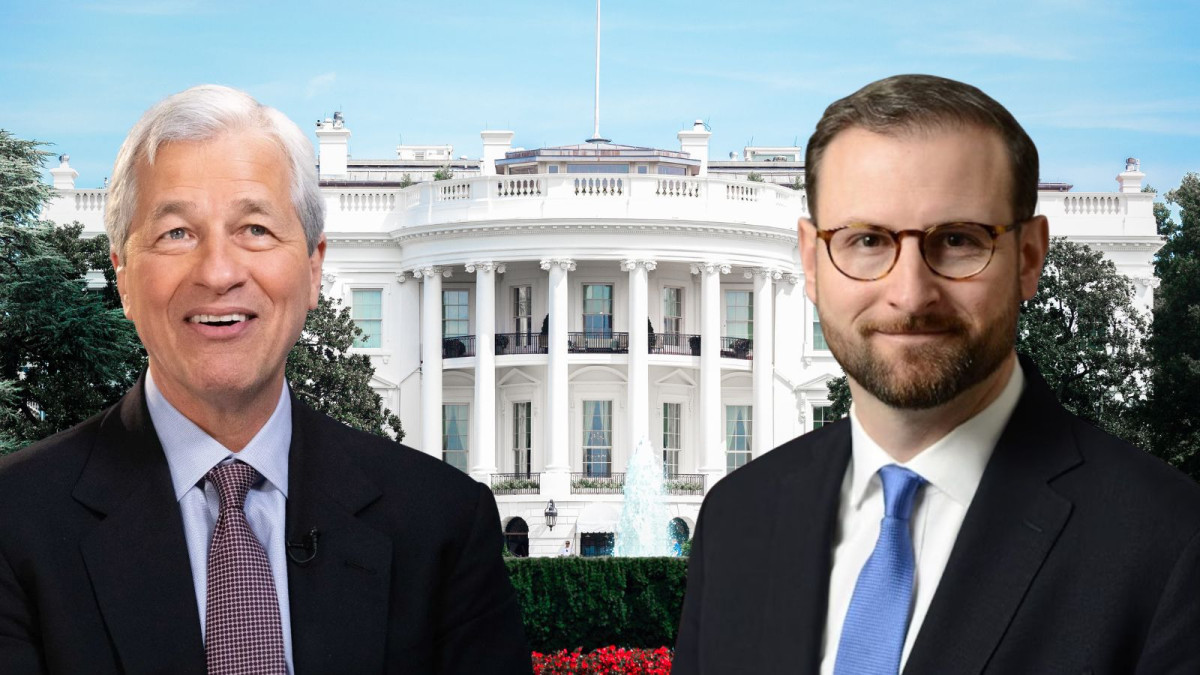
Patrick Witt, the executive director of the President's Council of Advisors for Digital Assets, publicly fired back at JPMorgan Chase CEO Jamie Dimon on Tuesday, calling his arguments about stablecoin yields misleading and, in Witt's own word, a "deceit."
The exchange marks one of the sharpest moments yet in a months-long tug-of-war between Wall Street and the White House over the future of digital asset regulation in America.
Dimon Draws a Line in the Sand
It started Monday, when Dimon went on CNBC and didn't mince words. His position was simple, if uncompromising: any platform holding customer balances and paying interest on them is functionally a bank, and should be regulated like one.
"If you do that, the public will pay. It will get bad," Dimon warned, arguing that a two-tiered system where crypto firms operate with fewer restrictions than banks is unsustainable.
Dimon suggested a narrow compromise: platforms could offer rewards tied to transactions. But he drew a clear line at interest-like payments on idle balances, saying, "If you're going to be holding balances and paying interest, that's a bank."
The list of obligations Dimon believes should apply is long, FDIC insurance, capital and liquidity requirements, anti-money laundering controls, transparency standards, community lending mandates, and board governance requirements. "If they want to be a bank, so be it," he said.
For Dimon, it's fundamentally about fairness. JPMorgan uses blockchain in its own operations, and the CEO was careful to frame his argument not as anti-crypto but as pro-competition on equal terms. "We're in favor of competition. But it's got to be fair and balanced," he said.
The White House Fires Back
Witt wasn't going to let that stand. In a post on X late Tuesday, he went directly at Dimon's framing, calling it deliberately misleading.
"The deceit here is that it is not the paying of yield on a balance per se that necessitates bank-like regulations, but rather the lending out or rehypothecation of the dollars that make up the underlying balance," Witt wrote. "The GENIUS Act explicitly forbids stablecoin issuers from doing the latter."
The argument gets at something technically important. What makes a bank risky, and therefore subject to heavy regulation, isn't that it pays interest. It's that banks take deposits and lend them back out, creating credit and the systemic risk that comes with it. If too many people want their money back at once, that's a bank run. Stablecoin issuers operating under the GENIUS Act must maintain reserves at a 1:1 ratio. There is no fractional reserve lending, no rehypothecation, no credit creation.
In Witt's view, stablecoin balances aren't deposits, and treating them as such misrepresents what's actually happening. He closed with a pointed equation: "Stablecoins ≠ Deposits."
President Donald Trump didn't stay quiet either. On Tuesday, he took to Truth Social with a message that made his position unmistakably clear.
"The U.S. needs to get Market Structure done, ASAP. Americans should earn more money on their money. The Banks are hitting record profits, and we are not going to allow them to undermine our powerful Crypto Agenda that will end up going to China, and other Countries if we don't get the Clarity Act taken care of," Trump wrote.
Senator Cynthia Lummis quickly reposted Trump's message, adding her own call to action: "America can't afford to wait. Congress must move quickly to pass the Clarity Act."
The same day Trump posted, a Coinbase delegation led by CEO Brian Armstrong visited the White House for talks. The timing was not subtle.
The Real Stakes: The CLARITY Act
To understand why this debate matters so much right now, you need to understand the legislation being held hostage by it.
The GENIUS Act, signed into law in July 2025, established the first federal framework for payment stablecoins. The CLARITY Act is its sequel: a broader market structure bill that would assign clear regulatory jurisdiction to the SEC and CFTC over the crypto industry, and is widely seen as the piece of legislation needed to unlock large-scale institutional participation in digital assets.
The bill cleared the House comfortably but has been mired in Senate gridlock since January, when the Senate Banking Committee indefinitely postponed a planned markup vote. The trigger was Coinbase withdrawing support over a proposed amendment that would have restricted stablecoin rewards for users.
That withdrawal, announced by CEO Brian Armstrong in a post on X the night before the scheduled committee vote, split the crypto industry. a16z crypto's Chris Dixon publicly disagreed, posting "Now is the time to move the Clarity Act forward." Kraken's co-CEO Arjun Sethi also pushed back, writing that "walking away now would not preserve the status quo in practice" and warning it "would lock in uncertainty and leave American companies operating under ambiguity while the rest of the world moves forward."
The stakes for Coinbase are concrete. Stablecoins contribute nearly 20% of Coinbase's revenue, roughly $355 million in the third quarter of 2025 alone, and most of USDC's growth is occurring on Coinbase's platform. Coinbase currently offers 3.5% yield on USDC, a figure most traditional bank accounts can't come close to matching.
Banks Are Scared, and They Have the Numbers to Show It
The banking lobby's concern isn't hypothetical. Banking trade groups, led by the Bank Policy Institute, have warned that unrestricted stablecoin yield could trigger deposit outflows of up to $6.6 trillion, citing U.S. Treasury Department analysis. Bank of America CEO Brian Moynihan put a similar figure forward, reportedly suggesting as much as $6 trillion in deposits, representing roughly 30-35% of all U.S. commercial bank deposits, could be at risk.
Stablecoins registered $33 trillion in transaction volume in 2025, up 72% year-over-year. Bernstein projects total stablecoin supply will reach approximately $420 billion by the end of 2026, with longer-run forecasts from Citi putting the market at up to $4 trillion by 2030. Those aren't niche numbers anymore. At that scale, deposit competition becomes a serious macroeconomic question.
The American Bankers Association and 52 state bankers' associations explicitly urged Congress to extend the GENIUS Act's yield prohibitions to partners and affiliates of stablecoin issuers, warning of deposit disintermediation.
The Bottom Line
What's playing out right now is a genuine philosophical disagreement about what money is and how it should be regulated, wrapped inside a very consequential legislative fight, a prize fight with Banks in one corner and Crypto in the other.
Dimon's argument is not frivolous. Banks are regulated as heavily as they are because of what they do with deposited money, and a world where consumers move trillions into yield-bearing crypto instruments held at lightly regulated platforms carries real risks. The history of financial crises is largely a history of regulatory arbitrage gone wrong.
But Witt's counter is also not frivolous. The GENIUS Act was designed specifically to prevent stablecoin issuers from doing the things that make banks dangerous. A fully reserved, non-lending stablecoin issuer is structurally different from a fractional reserve bank, and applying the same regulatory framework to both risks conflating two fundamentally different business models.
What's harder to square is that the banking lobby's intervention in the CLARITY Act seems, to many in the crypto world, less about prudential regulation and more about protecting market share. President Trump has not been subtle about that read, accusing banks of holding the CLARITY Act hostage to protect incumbent interests against crypto competition.
With the legislative window narrowing, Armstrong back at the White House, and Trump openly calling out the banking lobby by name, this standoff has reached the kind of inflection point where someone is going to have to blink. The question is whether either side is willing to do it before time runs out entirely.
White House Meets Crypto and Banking Leaders as Market Structure Bill Stalls

The White House is preparing to bring crypto executives and banking leaders into the same room again, a sign that Washington’s long running fight over how to regulate digital assets has reached another pressure point.
According to reporting citing Reuters, senior figures from the crypto industry and the banking sector are expected to meet with White House officials in early February to discuss a market structure bill that has recently hit a wall in Congress. The meeting comes at a moment when lawmakers have already locked in a stablecoin framework, but cannot seem to agree on the bigger question of who regulates crypto markets and how.
Market structure may sound abstract, but it is the foundation of everything else. It determines which agency has authority, how tokens are classified, how exchanges register, and whether new products are built in the United States or somewhere else.
The fact that the White House is stepping in suggests the administration believes the debate has moved beyond talking points and into the phase where compromises need to be made, especially between banks and crypto firms that see the future very differently.
Why this meeting matters now
When the White House convenes both sides of a financial policy fight, it usually means the normal legislative process is struggling. That is exactly what is happening with crypto market structure.
Congress made real progress last year by passing a federal stablecoin law. That victory raised expectations across the industry that broader rules for exchanges, tokens, and decentralized finance would be next. Instead, lawmakers have found themselves bogged down in disagreements that are harder to paper over.
At a high level, everyone says they want clarity. In practice, clarity means deciding winners and losers.
Banks want to make sure crypto products do not look or behave like deposits without being regulated like deposits. Crypto firms want rules that let them list assets, offer yield, and build new protocols without constant fear of enforcement actions. Regulators want authority that actually matches how the market works.
Those goals collide most directly in market structure legislation, which is why it has become the most contentious piece of crypto policy in Washington.
Where the bill stands today
The House has moved, the Senate is stuck
The House of Representatives has already passed a sweeping market structure bill that lays out a framework for classifying digital assets and dividing oversight between the SEC and the CFTC. The basic idea is simple. Tokens that function like securities fall under the SEC. Tokens that operate more like commodities fall under the CFTC, including spot market oversight.
That approach has strong support in the crypto industry because it offers a path to compliance that does not rely on years of litigation.
The Senate, however, is a different story. Jurisdiction is split between the Banking Committee and the Agriculture Committee, which oversees the CFTC. Each committee has released its own drafts, and neither side has a clear path to unifying them.
Markups have been delayed. Amendments are piling up. And the clock is ticking as lawmakers turn their attention to other priorities.
Stablecoin rewards have become the flashpoint
One of the biggest reasons the bill is stalled is stablecoin yield.
Even though stablecoins already have their own law, they still sit at the center of the market structure debate because they touch the banking system directly. The most controversial issue is whether stablecoins should be allowed to offer rewards simply for being held.
From the banking perspective, yield bearing stablecoins look uncomfortably close to deposits. Banks argue that if a token offers a return and can be redeemed at par, it competes with insured deposits without being subject to the same rules.
From the crypto side, rewards are seen as a feature, not a loophole. Many firms argue that stablecoins backed by cash and short term Treasurys are fundamentally different from bank liabilities, and that banning rewards would freeze innovation and entrench incumbents.
Some Senate drafts have tried to split the difference by restricting passive yield while allowing activity based incentives. That compromise has not satisfied everyone, which is why the issue keeps resurfacing.
This is also where a White House meeting could make a difference. Any bill that passes will need language banks can accept and crypto firms can actually use.
DeFi is the second unresolved battle
Decentralized finance is the other major fault line.
Lawmakers and regulators agree that DeFi cannot exist entirely outside the law. They disagree on how to draw the boundary. Some Senate proposals push Treasury to define compliance obligations for DeFi platforms, including disclosures and recordkeeping requirements.
The challenge is obvious. If the rules treat software like a traditional intermediary, developers will leave or go dark. If the rules are too permissive, lawmakers worry about money laundering, sanctions evasion, and consumer harm.
So far, no draft has solved this cleanly. The result is cautious, sometimes vague language that satisfies no one and invites future fights.
The SEC versus CFTC question is still unresolved
At its core, market structure is about classification.
Is a token a security, a commodity, something else, or some hybrid category that does not fit neatly into existing law? That answer determines which regulator takes the lead and how companies design their products.
Some Senate drafts introduce concepts like network tokens or ancillary assets to bridge the gap between traditional securities and decentralized systems. These ideas are meant to reduce uncertainty, but they also raise new questions about enforcement and interpretation.
For exchanges, custodians, and issuers, this is not academic. Classification determines what can be listed, how staking works, and whether certain products are viable in the US at all.
The Bottom Line
I am generally positive on the White House holding this meeting. At a minimum, it acknowledges what everyone in the industry already knows, which is that market structure is stuck and normal committee process is not getting it unstuck.
Getting banks and crypto firms in the same room matters, even if no one walks out with a breakthrough headline. These conversations tend to shape the edges of legislation more than the core, but in a bill this complex, the edges are often where everything breaks.
That said, expectations should stay grounded. A single meeting is not going to magically resolve the stablecoin yield debate, redraw the DeFi compliance perimeter, or settle the SEC versus CFTC turf war. Those fights are structural and political, and they will take time.
If anything meaningful comes out of this, it will likely show up quietly in revised draft language weeks from now, not in a press release the next day.
Still, the fact that the White House is leaning in is a good sign. It suggests there is real pressure to get something done, and an understanding that half measures or endless delay are no longer acceptable. For an industry that has spent years asking Washington to engage seriously, that alone is progress, even if the final outcome remains very much in flux.