#Crypto Wallets

New EU Rule Puts Crypto Wallet Makers on a 24-Hour Reporting Clock

The European Union has passed a new rule that mandates manufacturers of hardware and software products to report security incidents and exploits within 24 hours of their occurrence.
The rule, which is part of the Cyber Resilience Act (CRA), requires manufacturers, including crypto wallet manufacturers across Europe, to actively provide reports on exploited vulnerabilities and the impact these exploits may have on their products.
Following the submission of an early warning by a manufacturer within 24 hours of a security incident, the manufacturer is also required to submit a full notification to the Computer Security Incident Response Team of the EU Member State where the manufacturer has its main establishment through the Cyber Resilience Act Single Reporting Platform.
Once these initial reports are submitted, the manufacturer must submit a final report no later than 14 days after a corrective or mitigating measure has been made available or implemented. For severe incidents, the report must be submitted within a month.
The new rule became effective on September 11, and according to a press release from the European Union, the ruling is aimed at strengthening the EU’s approach to cybersecurity while also protecting consumers and businesses from cyber threats.
Penalties for Non-compliance
Under Article 64, EU member states can impose penalties ranging from €5 million or 1% of the company’s worldwide annual turnover to as high as €15 million or 2.5% of the company’s annual turnover, depending on whichever option the regulators of that country decide to apply.
Beyond the fines and penalties, EU market surveillance authorities can take corrective or restrictive measures, including requiring products to be brought into compliance, withdrawn from the market, or even recalled.
Solana-Based Hey Wallet Announces Shutdown

Hey Wallet, the non-custodial Solana-based social wallet, has announced it will be shutting down all of its products after nearly five years of operation.
Hey Wallet, which was launched in 2021 during a Solana hackathon, was founded to make sending cryptocurrencies as simple as using social media by allowing people to transfer SOL directly via Twitter/X handles.
Thus, instead of having to copy long wallet addresses, Hey Wallet leverages users' X handles or social usernames. Since it was linked to users' social accounts, Hey Wallet enabled transactions to occur seamlessly in-app through users' social accounts, while allowing users to retain control of their private keys.

Although the team did not explicitly state the reason for the closure, Hey Wallet's shutdown comes at a time when several crypto companies, including crypto wallets, have shut down or strategically pivoted into other sectors such as AI.
On September 1 of this year, the non-custodial wallet Cosmostation ceased its operations after previously announcing that users should export their private keys and assets before the shutdown, a similar move made by Cyberwallet last month.
Other crypto wallets, such as Magic Eden Wallet, have had to repivot and change their operational focus, shifting from being a multi-chain wallet to a Solana-focused wallet.
Coinbase and MetaMask have also made similar changes to their wallet operations. For Coinbase, the Base App was rebranded back to Coinbase Wallet, with a focus on multi-chain trading, while MetaMask split from its parent company, Consensys, and continued operating as an independent consumer-focused wallet company.

Monad Proposes Wallet Upgrade to Protect Against Quantum Attacks and Lost Keys

Monad, the high-performance EVM-compatible Layer-1 blockchain, has published a proposal aimed at giving users greater flexibility and changing how blockchain wallets manage authentication.
The proposal, titled “Flexible and Upgradeable Account Authentication,” was published by Kushal Babel and Jan Camenisch, two senior researchers at Category Labs, the engineering team behind Monad.

At its core, the proposal has one goal: to separate a wallet’s permanent address from the credentials that control it, thereby giving users the flexibility to add, replace, or retire keys without having to change the wallet’s address or move assets.
By publishing the proposal, Monad aims to address a key problem with current blockchain wallets. Since most wallet addresses are permanently derived from a single secp256k1 public key, losing the corresponding private key can make the wallet account unrecoverable.
As a solution to this problem, Monad is proposing an AuthConfig model, where every wallet account holds a mutable AuthConfig. This allows an account to hold multiple authenticators and a separate reconfiguration policy, enabling users to access their wallet accounts even if a private key is lost. At launch, the supported schemes will include secp256k1, P-256, Ed25519, WebAuthn/passkeys, ML-DSA (post-quantum), and a ZK-OAuth verifier.
Although there is currently no quantum computer capable of breaking the cryptographic schemes used by crypto wallets, several reports have projected that this could become possible in the future.
In addition to Monad, other companies, including Ledger and Coinbase, have also taken steps to develop quantum-resistant wallets. Coinbase has established an independent Quantum Advisory Council while also developing a post-quantum security roadmap.
Ledger has also added ML-KEM and ML-DSA, two NIST-standardized post-quantum cryptographic algorithms, to its Ledger SDK as part of its efforts to develop quantum-resistant wallet technology.
SafePal Security Incident Exposes Personal Data of Nearly 40,000 Customers

Crypto wallet SafePal has suffered a security breach that exposed the personal information of approximately 39,798 customers.
In a post on X, the crypto wallet said the affected customers were users who placed orders between March 2, 2025, and April 11, 2026. According to SafePal, the exposed information included names, email addresses, shipping addresses, phone numbers, and purchase details.
However, sensitive information such as seed phrases, private keys, wallet passwords, other wallet credentials, bank account information, payment card numbers, and government issued identification numbers were not exposed.

Detailing the incident in a blog post, SafePal said the breach was caused by an authorization flaw in the order tracking function of one of its plug-ins associated with customer order information. The flaw made it possible for unauthorized parties to access customers' information. After detecting the flaw, SafePal said it promptly fixed the issue and introduced additional security measures.
SafePal has warned affected customers to remain vigilant, as their exposed personal information could potentially be used in sophisticated phishing campaigns. According to the company, these campaigns may take several forms, including fraudulent phone calls, emails, text messages, letters, refund offers, firmware update requests, and fake customer support communications, all intended to obtain customers' wallet credentials or additional personal information.
Response Efforts So Far
As part of its remediation efforts, SafePal said it had fixed the flaw and implemented additional security measures. It also engaged an independent third party security firm to verify that the flaw had been fixed and conduct a broader security assessment of its systems.
It said it had also opened a dedicated support channel to respond to affected customers. The crypto wallet company also claimed it had taken down more than 30 websites and phishing links reportedly linked to the scam.
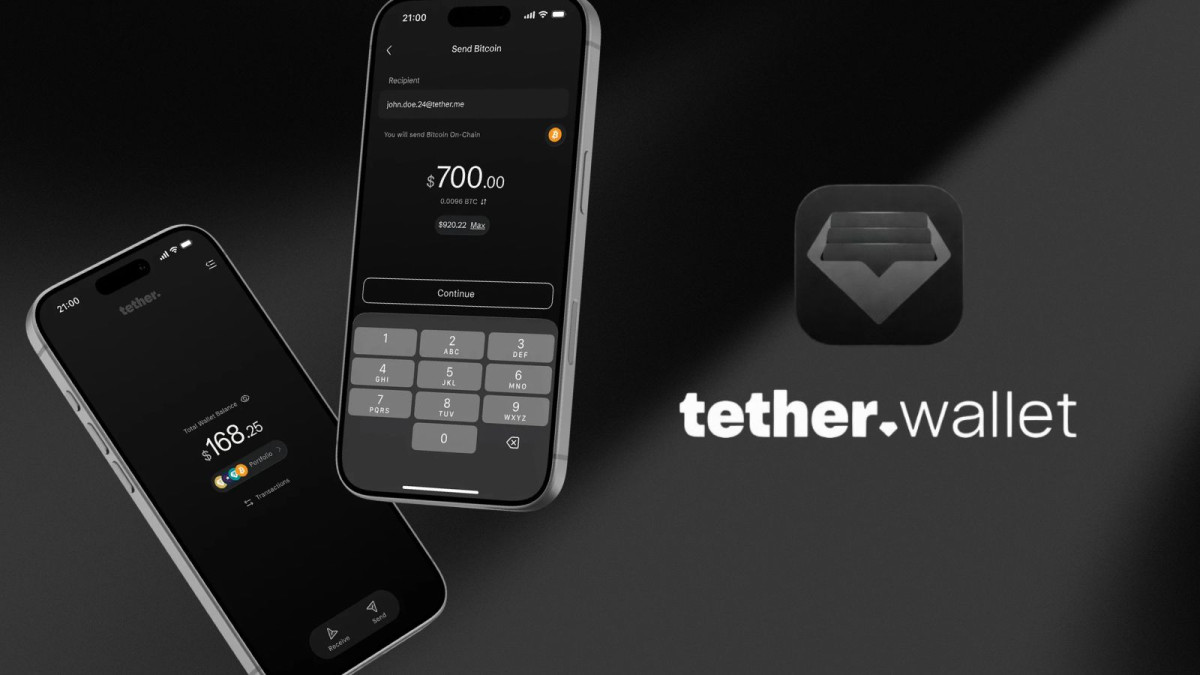
Tether Launches Self-Custodial Wallet for USDT, Bitcoin, and Gold Tokens

The world's largest stablecoin issuer is getting into the wallet game. Tether has officially launched tether.wallet, a self-custodial application that puts its payments infrastructure directly into the hands of end users for the first time.
For more than a decade, Tether's USDT stablecoin quietly powers hundreds of billions in daily trading volume, settlement, and cross-border payments across dozens of blockchains. But, most users never interact with Tether directly. That is about to change
The new app, simply called tether.wallet, supports four assets at launch: USDT, the company's U.S.-market stablecoin USAT, its gold-backed token XAUT, and Bitcoin, available both on-chain and through the Lightning Network. USDT and XAUT run on Ethereum, Polygon, Plasma, and Arbitrum at launch, while USAT is limited to Ethereum for now, with more networks reportedly in the pipeline.
No More Long Wallet Addresses
One of the more practical features is the use of human-readable identifiers, think something like [email protected], instead of the standard hexadecimal wallet strings that have caused users to accidentally send funds to the wrong address for years. Transactions also settle without requiring users to hold separate gas tokens; fees are paid directly in the asset being transferred. For anyone who has fumbled through a failed transaction because they did not have enough ETH to cover gas, that is a genuinely meaningful improvement.
Private keys remain fully under user control. All transactions are signed locally on the device, and Tether says it never holds user funds or keys at any point. It is a fully self-custodial model, which distinguishes it from the exchange-hosted wallets that have drawn scrutiny after a string of high-profile custodial failures in recent years.
570 Million Users, and Counting
Tether says its technology already reaches more than 570 million people across over 160 countries as of March 2026, with tens of millions of new wallets being added each quarter. The company is pitching tether.wallet as the next logical step in that growth, designed for mainstream users who have never touched a crypto wallet before, not just the crypto-native crowd who already know what a seed phrase is.
CEO Paolo Ardoino has been making the rounds with this one. He described the product as "the People's Wallet," framing it as a natural evolution of Tether's role from building the foundation of the digital asset economy to making it directly usable by anyone. His pitch goes further than stablecoins, though. Ardoino has long argued that AI agents will need native, self-custodial wallets for machine-to-machine payments, and the Wallet Development Kit (WDK) that underpins tether.wallet is designed with that kind of future in mind.
tether.wallet is built on Tether's open-source Wallet Development Kit, which the company has been quietly developing for a while now. The WDK had its first significant public deployment in January 2026, when video platform Rumble launched a non-custodial wallet built on the same infrastructure, enabling creator tipping in Bitcoin and USDT across Rumble's 80 million users. That earlier rollout effectively served as a real-world stress test before today's broader consumer launch.
The open source nature means third-party developers, businesses, and potentially AI systems can all build self-custodial wallet products on the same foundation. Tether is positioning this less as a single app and more as the beginning of a distribution layer.
Tether's Big Year...So Far
Tether has had a busy year on multiple fronts. In January, the company launched USAT, a GENIUS Act-compliant U.S.-regulated stablecoin issued through Anchorage Digital Bank, a direct challenge to Circle's USDC in the institutional and regulated segment of the market. In March, Tether engaged KPMG for what it described as the first-ever full financial audit of its $185 billion USDT reserves, a significant departure from the periodic attestations the company has historically relied on. PwC was also brought in to assist with internal systems preparation.
By moving into consumer-facing wallet infrastructure, Tether is entering territory already occupied by MetaMask, Phantom, Trust Wallet, and others. Those players have years of user experience, broad network support, and established reputations. Whether Tether's brand recognition among non-crypto users, combined with the built-in familiarity of USDT, translates into meaningful adoption is the real question. The stablecoin market itself crossed $315 billion in March 2026, an all-time high, and analysts expect this number to grow dramatically over the next few years.

Dmail Network Shuts Down After 5 Years

Decentralized email platform Dmail Network has announced that it will cease all services and shut down on May 25 after five years of operation.
The team, in a press release, cited several factors leading to the decision, including high infrastructure costs, unsustainable monetization, and limited token utility. It urged users to export their data from the system before the shutdown date.

Image credit: Dmail
What Happened?
The costs of running its decentralized infrastructure, including bandwidth, storage, and computing, had become extremely high. According to the team, these expenses have long consumed a large portion of its budget, making it impossible to continue operating a sustainable business.
Conditions worsened as core team members began leaving. The remaining members, the team said, could no longer maintain such a high cost decentralized infrastructure.
Despite reportedly having over 49 million users and, according to DappRadar, 4.9 million unique active wallets monthly in 2025, these figures did not help the team establish a sustainable business model. The company experimented with several monetization approaches, including its Mail to Earn model, its sub-hub model, and premium offerings, but said users were not willing to pay for them. DMAIL, the protocol’s native cryptocurrency, also had very limited utility.
With the closure date set, the team has launched a mail export tool and account cancellation feature that will allow users to securely transfer their email content to other platforms such as Gmail. After exporting, users can cancel their accounts and associated data, including emails, NFT domains, and social addresses, the team noted. Users were urged to complete the export process before the May 15 deadline.
Following the announcement, the DMAIL token declined sharply, falling by more than 70 percent to all time lows. At the time of publication, the DMAIL token, according to CoinGecko, was trading at around $0.00014, representing a decline of about 99.99 percent from its peak price of $0.97 in 2024.
A Wave of Web3 Shutdown
Dmail’s shutdown is one of several closures among crypto companies seen in recent times. Leap Wallet, a non-custodial wallet infrastructure built on Cosmos, has announced that it will shut down and exit the crypto market by May 28 next month. This announcement comes shortly after the crypto custody company Entropy and the NFT marketplace Magic Eden wound down and shut down in January and March of this year.
Crypto exchanges and trading platforms have also been affected by this wave of shutdowns. In March, the crypto platform Bit.com announced that it would shut down its derivatives exchange operations, citing declining user activity. DeFi aggregator platform Slingshot also shut down in February, citing low usage. These are just some of the more than 20 crypto companies that have wound dow their operations this year.
Trust Wallet Adds Address Poisoning Protection Feature

Trust Wallet has introduced a new address-poisoning protection feature that prevents crypto users from falling for address-poisoning attacks.
According to the company, this new feature automatically checks the destination address against a database of known scam and lookalike addresses to prevent malicious transactions. Because the feature runs automatically, users will receive real-time warnings if a risk is detected.
For now, the feature will be supported on 32 Ethereum Virtual Machine (EVM) chains, including Ethereum, BNB Smart Chain, Polygon, Optimism, Arbitrum, Avalanche, and Base.
The Menace of Address Poisoning
Address poisoning is a phishing-style attack in which scammers trick users into sending cryptocurrency to the wrong wallet address, usually one that closely resembles a legitimate address.
Here’s how address poisoning works:
- A scammer generates a look-alike wallet address, typically one that shares the same first and last characters as a legitimate address.
- The attacker then sends a tiny, or “dust,” amount of crypto to an unsuspecting user.
- The fake address subsequently appears in the victim’s transaction history.
- Because crypto transactions are irreversible, the user may mistakenly send funds to the poisoned address, losing them permanently.
While address poisoning may not look as sophisticated or complex as other forms of crypto attacks, it has had a long history of success for scammers.
In May 2024, a user accidentally sent 1,155 Wrapped Bitcoin (WBTC) worth approximately $68 million to a fake address. The attacker created a fake address that looked like the legitimate address, and due to lack of proper scrutiny, the user fell for it.
While in May 2025, a trader lost $2.6 million after falling for two address poisoning scams, and later that year, another trader lost $50 million in USDT after sending them to a poisoned wallet address.
Address Poisoning is Just a Numbers Game
Knowing that most crypto users rarely fall for address poisoning scams (roughly 1 success per 10,000 attempts), attackers often rely on scale to succeed.
Between July 2022 and June 2024, over 270 million address poisoning attempts were recorded across the Ethereum and BNB Chain, with 6,633 of these attempts successful, leading to a loss of over $83 million.
In another address poisoning campaign, scammers used 82,031 fake addresses on 2,774 victims. The result? Over $69 million was lost.
And just last year, there were about 32,290 recorded address poisoning attacks in September, which affected over 6,000 victims.
Coinbase Launches Agentic Wallets on Base

Coinbase is not introducing AI agents to crypto. Those have been here for years.
What Coinbase is doing now is different. It is trying to formalize and secure that reality.
With the release of what it calls Agentic Wallets, Coinbase is offering wallet infrastructure built specifically for autonomous AI agents. Not dashboards with AI features. Not analytics copilots. Actual wallets engineered so software agents can hold and move funds in a way that is safer, cleaner, and more production ready than the duct taped setups many teams rely on today.
Agentic Infrastructure
Erik Reppel, who leads engineering on the Coinbase Developer Platform, has been fairly direct about the problem they are solving.
Today, when developers say an agent “has a wallet,” that often means a private key is sitting somewhere it probably should not be. Maybe in a config file. Maybe in memory. Maybe loosely protected. If that agent gets manipulated, exploited, or simply misbehaves, the blast radius can be severe.
Reppel’s argument is that key isolation needs to be non negotiable. With Agentic Wallets, private keys are stored in secure execution environments, separated from the agent’s reasoning layer. The agent never directly touches raw key material. Instead, it interacts through controlled sessions with predefined permissions and limits.
He has described this architecture as orders of magnitude safer than letting an AI system operate with exposed keys.
That framing is important. Coinbase is not claiming to invent autonomous agents. It is trying to make them viable in production environments where security and compliance actually matter.
Built on Base and Wired Through x402
Two technical components sit at the core of this release: Base and x402.
Agentic Wallets are designed to run natively on Base, Coinbase’s Ethereum layer 2 network. Base offers lower fees and faster settlement compared to mainnet Ethereum, which makes it more practical for continuous automated activity. Bots and agents do not sleep. They monitor, adjust, and transact around the clock. Running that on a cheaper, faster chain is not a luxury, it is a necessity.
Then there is x402, Coinbase’s machine-to-machine payments protocol.
If that name sounds obscure, the idea is straightforward. x402 is built to allow services to pay other services directly onchain. It has already processed tens of millions of transactions in scenarios where APIs, compute layers, or other digital services require automated payment.
In the context of Agentic Wallets, x402 becomes the settlement layer for autonomous systems. An agent can pay for API access, purchase data feeds, cover inference costs, or settle fees with other services without a human approving every transaction. It is programmable, onchain, and designed for machines transacting with machines.
Put differently, Base provides the execution environment. x402 provides the payment rails. Agentic Wallets sit on top as the secure container that ties everything together.
Agents Already Trade. This Makes It Cleaner.
It is worth saying clearly: AI driven trading is not new.
Quant desks, DeFi vaults, MEV bots, and arbitrage engines have been programmatically making trades for years. In many cases those systems are highly sophisticated. But the wallet layer underneath them has often been an afterthought. Keys get managed in inconsistent ways. Access control is custom built. Security depends heavily on the engineering discipline of each individual team.
What Coinbase is offering is a standardized wallet layer designed for autonomous operation from day one.
With Agentic Wallets, developers can:
- - Set configurable spend caps per transaction or per session
- - Limit what contracts or addresses an agent can interact with
- - Isolate keys from the model or decision engine
- - Monitor transactions through built in compliance tooling
That does not suddenly give agents new superpowers. They were already capable of executing trades, reallocating liquidity, and managing positions. What this does is reduce the fragility in how those systems are wired into capital.
For teams building serious onchain automation, that difference matters.
Guardrails Are the Product
The safety architecture is arguably the most important part of this launch.
Prompt injection attacks, model manipulation, and logic exploits are not theoretical. If an agent is given broad financial authority and can be tricked into executing malicious instructions, the damage can be immediate and irreversible.
Coinbase’s model is to narrow the surface area.
Private keys live in secure enclaves. Agents operate through session credentials rather than raw key access. Developers can define how much value an agent can move and under what conditions. Transaction monitoring tools screen for high risk interactions before they are finalized.
None of this eliminates risk. Autonomous systems interacting with open financial networks will always carry some degree of unpredictability. But compared to the common practice of handing a bot a hot wallet and hoping for the best, this is a structural upgrade.
The Bottom Line
Zooming out, this fits into Coinbase’s broader strategy.
The company has been expanding its developer platform, pushing Base as a default settlement layer, and experimenting with tools that make onchain activity easier to embed into applications. Agentic Wallets extend that logic into the AI domain.
If AI systems continue to mediate financial activity, whether that is portfolio management, payments, or automated strategy execution, they will need infrastructure. Wallets are the choke point. Whoever controls that layer controls a meaningful slice of the stack.
Coinbase clearly wants to be that provider.
There are still regulatory and philosophical questions hanging over all of this. When an autonomous agent executes a trade or interacts with a protocol, who ultimately bears responsibility? The developer? The operator? The infrastructure provider? Those debates are just beginning.
But in practical terms, agents are already here. They are already trading. They are already moving markets.
Autonomous systems are currently participating in crypto. The wallet layer just needs to catch up.
Agentic Wallets are an attempt to do exactly that.

MetaMask Adds Tokenized Stocks, ETFs via Ondo

Metamask, the popular self-custody wallet announced it now supports tokenized U.S. stocks, ETFs, and commodities through an integration with Ondo Global Markets. For eligible users outside the United States, this means exposure to names like Apple, Tesla, Nvidia, major index ETFs, and even gold and silver, all from inside the MetaMask wallet.
It is one of the clearest signals yet that tokenized real-world assets are moving from theory into everyday crypto products.
What’s Actually Being Offered
The new offering includes more than 200 tokenized securities at launch. These tokens track the price of publicly traded U.S. stocks, ETFs, and commodity funds. Users can buy them with stablecoins, hold them in their wallet, and transfer them onchain just like any other ERC-20 token.
These are not shares in the legal sense. Holding a tokenized stock does not give voting rights or direct ownership of the underlying equity. Instead, the tokens provide economic exposure to the price movements of the asset, backed by traditional market infrastructure on the other side.
For many crypto users, that distinction may matter less than the experience itself. The ability to gain U.S. market exposure without opening a brokerage account or leaving a self-custodial wallet is the real draw.
How It Works Inside MetaMask
The integration runs through MetaMask Swaps, meaning users do not need to leave the wallet or interact with unfamiliar interfaces. Trades are executed onchain, while pricing and asset backing are handled through Ondo’s infrastructure.
Minting and redemption of the tokens generally follow U.S. market hours, reflecting how the underlying assets trade in traditional markets. Transfers between wallets, however, can happen at any time. That hybrid setup blends old market rules with blockchain flexibility, even if it is not fully 24/7 trading yet.
Fractional exposure is also built in, allowing users to buy small amounts of high-priced stocks or ETFs without committing large sums of capital.
Who Can Use It
Access is limited to eligible users in supported jurisdictions outside the U.S. and several other regions. Regulatory restrictions around securities remain a major factor, and MetaMask has been clear that availability depends on local rules.
For now, the product is primarily aimed at international users who want U.S. market exposure without navigating the friction of legacy brokerage systems.
The Bigger Industry Context
This move highlights how quickly real-world assets are becoming part of the crypto stack.
For years, tokenized stocks were discussed as a future use case. Today, they are appearing inside one of the most widely used wallets in the industry. That changes the conversation. Instead of asking whether tokenization will happen, the focus shifts to how fast it scales and how regulators respond.
It also reframes MetaMask’s role. The wallet is no longer just a gateway to DeFi and NFTs. It is starting to look more like a universal financial interface, one that sits between crypto markets and traditional assets.
For users, the appeal is simplicity. One wallet, one interface, exposure to crypto, equities, ETFs, and commodities. No bank logins, no brokerage apps, no asset silos.
MetaMask’s integration with Ondo fits into a broader push across the industry. Tokenization is being explored by crypto-native firms, fintech platforms, and even large financial institutions. The idea is straightforward. Traditional markets are slow, fragmented, and geographically constrained. Blockchains promise faster settlement, global access, and programmable assets.
Tokenized real-world assets already represent tens of billions of dollars in value, and many expect that number to grow sharply if regulatory clarity improves.
Still, challenges remain. Regulatory uncertainty is the biggest one. Liquidity and pricing ultimately depend on traditional markets. And for some investors, the lack of shareholder rights will always be a drawback.
The Bottom Line
Ondo has said it plans to expand its catalog to thousands of assets over time. If that happens, wallets like MetaMask could become primary access points for global capital markets, especially in regions underserved by traditional finance.
For now, the launch marks a clear trend. Crypto wallets are no longer just about holding crypto. They are becoming portals into the broader financial system, one token at a time.
Rumble Launches Crypto Wallet for Bitcoin and USDT Creator Tips

Rumble has been talking for years about building an alternative to YouTube. With the launch of its new crypto wallet, it is now making a serious attempt to rethink how creators actually get paid.
The company has rolled out Rumble Wallet, a built-in, non-custodial wallet that lets viewers tip creators directly in Bitcoin, USDT, and Tether Gold. The wallet is integrated into the Rumble platform itself, meaning users do not have to leave the site or rely on third-party payment tools to support creators.
On paper, it looks like a tipping feature. In reality, it is closer to a payments strategy.
What Rumble actually launched
Rumble Wallet allows users to hold crypto and send it directly to creators inside the platform. The wallet is non-custodial, which means users control their own funds rather than handing custody to Rumble.
At launch, the wallet supports three assets. Bitcoin provides the recognizable flagship. USDT offers price stability for users and creators who do not want volatility. Tether Gold adds a more niche option, but one that fits Rumble’s broader narrative around alternatives to traditional finance.
MoonPay is handling the fiat on and off ramps, which matters more than it might sound. Without that bridge, crypto tipping stays limited to users who already hold tokens. With it, Rumble can realistically target a much wider audience.
Many platforms have tried tipping. Few have tried wallets.
A tipping button is a feature layered on top of an existing system. A wallet becomes part of the system itself. Once users hold value inside the platform, the possibilities expand quickly.
A native wallet opens the door to subscriptions, paywalled content, creator payouts, merch payments, and cross-border transfers that do not depend on banks or card networks. It also shifts leverage. Instead of creators relying on ad revenue or platform-controlled payouts, they can receive funds directly from their audience.
Rumble appears to be aiming for exactly that. Control the wallet, and you control the flow of value across the platform.
Tether is central to the move
Tether’s role here goes well beyond providing a stablecoin.
The wallet is built using Tether’s wallet infrastructure tooling, positioning Rumble as an early, high-profile example of how Tether wants its technology used. This fits neatly with Tether’s broader strategy of moving downstream, not just issuing tokens but embedding them directly into consumer products.
There is also a financial alignment. Tether has already invested heavily in Rumble, and this wallet turns that relationship into something tangible. Rumble gets infrastructure and liquidity. Tether gets distribution inside a large, consumer-facing platform.
From Tether’s perspective, a wallet embedded into a video platform is far more powerful than another exchange listing.
Why creators might actually care
Creators have spent years complaining about monetization. Ad revenue is unpredictable. Platform rules change. Payouts can be delayed, reversed, or cut off entirely.
Crypto does not magically solve those problems, but it offers a different model. Direct payments. Faster settlement. Global reach. Fewer intermediaries.
Stablecoins like USDT are especially practical here. They reduce volatility while keeping payments digital and borderless. For international creators or audiences outside major banking systems, that matters.
If Rumble can make tipping and payments feel normal, not like a crypto experiment, it gives creators a reason to treat the platform as more than a backup distribution channel.
What's next?
Adoption will matter more than announcements. If tipping remains niche, the wallet is a branding move. If it becomes common behavior, it changes how Rumble makes money.
The first signal will be usage. Are creators actually receiving tips at scale, or is this limited to a small crypto-native subset?
The second is expansion. A wallet built only for tips leaves value on the table. Subscriptions, gated content, and commerce feel like natural next steps.
The third is competition. If Rumble proves crypto payments can work at scale inside a video platform, larger players will take notice.
The bigger picture
Rumble Wallet is not just a crypto feature. It is an attempt to rebuild creator monetization around direct payments rather than ads and intermediaries.
If it works, it offers a glimpse of how social platforms could operate when payments are native, programmable, and global by default. If it fails, it will still serve as one of the clearest real-world tests of crypto’s promise in the creator economy so far.
Either way, it shows that the next phase of crypto adoption may not come from trading apps, but from where people already spend their time online.