#Crypto Exchange

Tether-Backed Exchange Orionx Shuts Down After $7M Custody Shortfall

Tether-backed Chilean cryptocurrency exchange Orionx has announced its shutdown after a forensic audit confirmed the outflow of more than $7 million from the exchange to wallets not under the company’s control.
Announcing the closure, Orionx said in an official statement that it had filed a complaint with Chile’s Public Prosecutor’s Office against the exchange’s former executives and co-founders, Roberto Zibert and Joaquín Díaz, accusing them of disloyal administration.

In the complaint, the exchange accused its former executives of moving customers’ crypto assets, including Bitcoin, Ether, XRP, and Polygon, between 2018 and 2021. Orionx said the transactions were concealed from the exchange and that the assets were transferred to wallets that did not belong to the company.
Although a breakdown of Deloitte’s $7 million shortfall has yet to be published, several Chilean news outlets, including La Tercera and BioBioChile, reported that the shortfall included $3.93 million worth of Bitcoin, $2.29 million worth of Ether, and approximately $201 worth of Polygon.
Closure Plans
As part of its shutdown plans, Orionx has temporarily suspended withdrawals from the exchange. While the asset closure and restitution plans have already been reported to the relevant authority, the exchange said it would do everything in its power to return as many assets as possible to its clients.
Prior to its closure announcement, Chile’s Financial Market Commission (CMF) rejected Orionx SpA’s application in June to register with the Registry of Financial Service Providers and obtain authorization under the Fintech Law.
Orionx was one of seven companies whose applications were rejected by the CMF due to observations that the companies failed to remedy during the evaluation process, as well as failures to submit the necessary documentation.

SBI Holdings Acquires Majority Stake in Coinhako

SBI Holdings, one of Japan's largest financial conglomerates, has completed the acquisition of a majority stake in Singapore-based crypto platform Coinhako, following approval from the Monetary Authority of Singapore (MAS).

Image credit: x.com
According to an SBI press statement, the acquisition of Coinhako represents a significant step in advancing its global digital asset strategy. Through the acquisition, SBI Holdings aims to leverage Coinhako's customer base, expertise, and regional network alongside its own financial services, technology, and global network.
"Our group aims to create a global corridor for digital assets by connecting exchanges around the world, enabling investors worldwide to make optimal investments without being hindered by national borders or currency barriers," said Yoshitaka Kitao, Chairman and President of SBI Holdings, Inc.
"Singapore, where regulations related to digital assets are ahead of the curve, is a crucial region in this regard, and we are very pleased that Coinhako, with its solid customer base and business know-how, has joined the SBI Group."
SBI Holdings' acquisition of a majority stake in Coinhako comes shortly after the company partnered with the Solana Foundation to launch Japan's first on-chain financial market, which it said is intended to seamlessly connect Japan with Southeast Asia.
About Coinhako
Launched in 2014, Coinhako is a Singapore-based cryptocurrency exchange often described as one of the longest-standing in the Asia-Pacific region. Its founders, Yusho Liu and Gerry Eng, built it with a simple goal: to make it easy for Asians, especially Singaporeans, to buy Bitcoin and other cryptocurrencies with local fiat currencies.
Since its launch, Coinhako has grown into one of the largest cryptocurrency exchanges in Singapore, serving nearly 400,000 users and processing more than $10 billion in crypto transactions over the past two years. Its assets under custody are reported to total around $1 billion to $1.1 billion, while its workforce has grown from a small team to several dozen employees.
Bitbank Warns Users Against Polymarket Amid Japan Gambling Laws

Bitbank, one of Japan’s major cryptocurrency exchanges, has warned its users against using their Bitbank accounts for Polymarket and other prediction market activities.

According to a press release from the exchange, the warning comes in compliance with Japan’s strict laws against prediction market activities, which it broadly categorizes as gambling.
“We would like to inform you of a cautionary note regarding the connection to and use of prediction market services, including Polymarket,” Bitbank wrote in a blog post.
“While these prediction market services may be operated by overseas companies, accessing them from within Japan and using them for the purpose of financial gain may constitute gambling or similar activities.”
As part of its enforcement measures, Bitbank said it may suspend accounts found to be involved in deposits or withdrawals related to prediction market services. If an account is suspended, the affected user will lose access to the account, including cryptocurrency deposits and withdrawals, buying and selling of crypto assets, and withdrawals in Japanese yen.
Bitbank’s move to restrict accounts involved in prediction markets reflects the country’s strong stance against gambling overall. The country’s penal code criminalizes all forms of wagering or gambling activities, with prison sentences of up to five years for offenders.
Thus, while the country or any of its financial regulators have not outright banned prediction markets, crypto entities like Bitbank, for compliance purposes, are proactively distancing themselves from prediction markets.
Bitbank’s restriction on prediction market activities comes shortly after the United States Commodity Futures Trading Commission released a framework that will guide the use of prediction market platforms. According to the framework, betting contracts related to terrorism, assassinations, and war are banned. Although sports event contracts can still be offered, they will be subject to thorough scrutiny to prevent manipulation.
Despite the regulatory bans and challenges facing the prediction market sector, prediction market companies continue to thrive and scale. Recently, Kalshi announced it had raised $1 billion at a valuation of $22 billion, while Polymarket said it was in talks with investors to raise $400 million at a valuation of $15 billion.

Kraken Becomes Official Crypto Exchange Supporter of FIFA 2026

Kraken has been named the official cryptocurrency exchange supporter of the FIFA 2026 World Cup, which is scheduled to begin on June 11.
In a blog post announcing the partnership, Kraken said the collaboration will allow it to leverage its digital technology to enhance the fan experience for the global audience expected to tune in to this year’s World Cup tournament, which will be hosted across three countries: Canada, Mexico, and the United States. The tournament is expected to reach more than 6 billion people worldwide.

“Innovation has always played a central role in how FIFA evolves and enhances the fan experience. As we prepare to welcome the world to the biggest FIFA World Cup in history, we are delighted to partner with Kraken, an organization that shares our commitment to innovation and technology,” said Romy Gai, FIFA Chief Business Officer.
“Together, we look forward to exploring new ways to connect supporters with the tournament, creating memorable experiences that bring fans closer to the game and the moments that make the FIFA World Cup so special.”
With Kraken becoming the official cryptocurrency exchange supporter of this year’s World Cup, the company said it will deliver a series of fan-focused product experiences across North America and Europe. Kraken said the initiatives are designed to introduce new audiences to digital assets while strengthening the connection between football engagement and financial participation.
About Kraken
Kraken is one of the world’s oldest global cryptocurrency exchanges. Launched in 2011, the exchange operates as a full-service digital asset platform offering spot trading, margin trading, futures, staking, over-the-counter services, tokenized equities, and stocks. Its mission is to accelerate the global adoption of crypto by enabling broader access to financial services and promoting financial inclusion.
Since its launch, Kraken has grown to serve millions of users worldwide. Its services are currently available in more than 190 countries and serve over 13 million users globally. To provide non-U.S. users with access to U.S.-listed stocks and IPO opportunities, Kraken launched xChange, a platform that offers tokenized representations of real U.S. stocks and exchange-traded funds to eligible non-U.S. users.
Robinhood Expands Into Canada With WonderFi Purchase

Robinhood Markets, Inc. has completed the acquisition of WonderFi, a formerly publicly traded Canadian fintech company focused on cryptocurrency and digital assets.
The acquisition, valued at $180 million, now allows Robinhood to fully enter the Canadian crypto market, with WonderFi subsidiaries Bitbuy, a crypto trading platform, and Coinsquare, a regulated crypto exchange, becoming part of the Robinhood brand.
“WonderFi has extensive experience operating regulated crypto platforms that serve beginner and advanced crypto users alike, making it an ideal partner to accelerate Robinhood’s mission in Canada,” said Johann Kerbrat, SVP and General Manager of Robinhood Crypto & International.
“We’re pleased to have closed our acquisition and look forward to delivering innovative, user-centric investing products to Canadian customers,” he added.
With this acquisition, WonderFi employees will join more than 240 Robinhood employees based in Canada, collectively serving more than 1 million Robinhood customers internationally and 300,000 existing WonderFi customers.
About Robinhood
Robinhood Markets, Inc. is a Nasdaq-listed American financial technology company with a presence in the United Kingdom, the European Union (EU), and now Canada.
Established in February 2018, Robinhood operates a dual trading platform across mobile and web that is designed to make access to different asset classes easier, particularly for newer investors. Its mission is simple: to democratize finance for all.
Since its launch, Robinhood has achieved several milestones, including pioneering commission-free trading in the United States, a move that prompted many brokerage firms to eliminate commission fees. Over the years, Robinhood has also completed a number of acquisitions, including X1, a financial technology company; TradePMR; Bitstamp, a cryptocurrency exchange; and Pluto Capital.
Like Robinhood, several other companies have completed acquisitions this year to expand into new areas of finance and cryptocurrency. Bullish, a cryptocurrency exchange, recently acquired Equiniti for approximately $4.2 billion as part of its effort to enter the tokenized securities sector. Other companies, including Mastercard, Polygon Labs, and OKX, have also pursued strategic acquisitions to expand their market presence.
Bitget Launches Reality for Tokenized Stocks and ETFs

Bitget, a global cryptocurrency exchange, has launched Reality, a real-world asset (RWA) platform that gives users access to tokenized traditional financial assets.
With Reality, Bitget aims to bring tokenized U.S. stocks and exchange-traded funds into its trading ecosystem, enabling access to financial instruments that have traditionally been difficult to access due to geographic restrictions, market hours, and settlement barriers.

The launch aligns with Bitget’s Universal Exchange (UEX) roadmap, which aims to transform Bitget from a crypto exchange into a global trading platform that allows users to trade cryptocurrencies, tokenized stocks, exchange-traded funds, commodities, forex, and other real-world assets through a single account using cryptocurrencies.
“Reality is built around Bitget’s 10% vision: by 2030, nearly 10% of financial assets could exist in tokenized form,” said Gracy Chen, Bitget CEO. “Stablecoins, faster blockchain settlement, and growing interest from major exchanges are pushing RWAs from experiment to market infrastructure. Reality is Bitget’s step toward making that future accessible to global users.”
How Reality Will Work
Reality will be natively integrated into Bitget and serve as the exchange’s specialized arm for tokenizing traditional financial instruments. It will also serve as the primary layer for standardizing traditional market value in the crypto economy.
The Reality platform will issue rTokens to users, which are on-chain representations of publicly traded equities and exchange-traded funds (ETFs). Each rToken will be backed 1:1 by real shares held with a FINRA-registered, SIPC-protected U.S. broker-dealer.
To ensure the highest level of transparency, the Reality platform will be regularly audited by third-party auditors. These audits will provide a live proof-of-asset dashboard and CPA-level audit reports to ensure verifiable asset integrity at all times.
Reality will initially focus on providing tokenized exposure to selected U.S. stocks and ETFs, with the team introducing additional tokenized assets as the platform expands. However, access to the platform, including user eligibility, product availability, and trading features, will depend on applicable geographical laws and regional restrictions.
Bitget’s entry into the RWA tokenization industry comes as several institutions, including Payward, Bitwise, and Nasdaq, are tapping into the growing sector. The RWA tokenization market is currently valued at around $34 billion, with the Boston Consulting Group projecting it to reach $16 trillion by 2030.
Poland Passes MiCA Bill Amid Zondacrypto Collapse

Lawmakers in the lower house of the Polish parliament, the Sejm, have passed a bill implementing the European Union Markets in Crypto Assets Regulation (MiCA), amid a probe into the collapse of Zondacrypto, the country’s largest cryptocurrency exchange.
The passage of the bill marks a third attempt after the president vetoed earlier versions proposed by lawmakers. Following the latest parliamentary approval, the bill now awaits the president’s decision before it can become law.
The Polish government has until July 1, 2026, the end of the transitional period, to implement the MiCA framework. If the deadline is missed, virtual asset service providers risk having their licenses expire. Without valid authorization, crypto firms in Poland would no longer be permitted to provide crypto asset services to clients in Poland or across the European Union.
As a result, affected companies may be forced to shut down their operations in Poland or relocate to another EU member state in order to obtain a crypto asset service provider license, which is generally more costly and time-consuming. This requirement applies primarily to domestic crypto entities, while foreign crypto companies operating in Poland are expected to remain unaffected by this policy.
Zondacrypto Collapse
The passage of the bill adopting MiCA comes as Polish prosecutors have launched an investigation into the collapse of Zondacrypto, the country’s largest cryptocurrency exchange.
Zondacrypto has halted withdrawals for thousands of users since December 2025, leaving many unable to access their funds. According to Polish authorities, about 30,000 users have been affected, with estimated losses exceeding 350 million zlotys ($95.93 million).
Amid Zondacrypto’s financial struggles and its admission that it lost access to a cold wallet holding about 4,500 BTC, allegedly linked to its former CEO, who has been missing since 2022, Polish Prime Minister Donald Tusk has alleged that the exchange’s collapse is linked to fraud and its existing ties with Russian mafia groups.
According to Tusk, Zondacrypto’s success comes from “Russian money linked to the so-called Bratva Mafia group and Russian intelligence agencies.” Describing its roots as sinister, Tusk accused Zondacrypto of sponsoring right-wing opposition politicians. By advancing the bill supporting MiCA, Tusk aims to reduce the ease with which cryptocurrencies are used to finance sabotage activities in the country.
KuCoin Settles CFTC Case With $500K Penalty

Peken Global Limited, the parent company of cryptocurrency exchange KuCoin, has agreed to pay $500,000 in a settlement in a case brought by the Commodity Futures Trading Commission (CFTC), which alleged that the company operated an unregistered trading platform for U.S. users.
In a Monday press release, the CFTC announced that the U.S. District Court for the Southern District of New York had entered a consent order with Peken Global Limited to resolve the case with the U.S. commodities regulator. As part of the agreement, Peken is permanently restrained from future violations.
According to the CFTC, the settlement was reached as a result of Peken’s cooperation during the investigation and related proceedings. The agency also stated that neither it nor the court would be seeking or imposing disgorgement of profits from Peken.
The CFTC Case With Kucoin
The CFTC case involving crypto exchange KuCoin officially began on March 26, 2024, when the U.S. commodity regulator filed a civil lawsuit against KuCoin and its related entities, including Peken Global Limited, Mek Global Limited, PhoenixFin PTE Ltd., and Flashdot Limited.
The CFTC accused KuCoin and its affiliates of violating several U.S. financial laws, including operating an unregistered trading platform, offering high-risk and unregistered crypto products, failing to properly verify users, and violating U.S. anti-money laundering (AML) and know-your-customer (KYC) requirements.
KuCoin agreed to settle the charges, paying penalties totaling nearly $300 million and committing to exit the U.S. market for at least three years.
This is not the first time KuCoin has faced regulatory challenges in the United States. In 2023, the New York Attorney General accused the exchange of operating in the state without proper registration, resulting in a $22 million settlement and an order to cease operations in New York.
KuCoin has also faced regulatory actions outside the U.S.
In 2022, the Ontario Securities Commission in Canada identified it as an unregistered crypto exchange, resulting in a $2 million penalty. In 2025, Canada’s Financial Transactions and Reports Analysis Centre (FINTRAC) imposed a $19.5 million fine on the exchange for allegedly violating anti-money laundering laws. More recently, Austria’s Financial Market Authority (FMA) restricted the exchange from registering new users until it complied with local AML regulations.
Gemini Stock Rises After Hours on Q4 Results as Investors Back Pivot

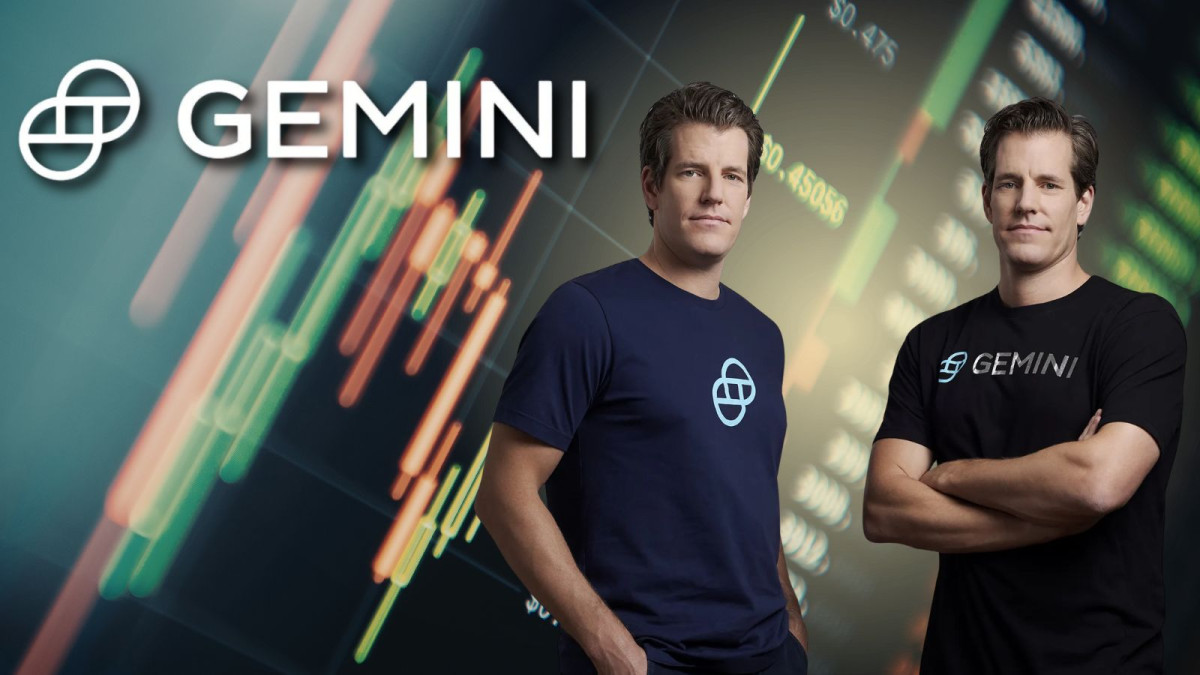
Gemini Space Station (NASDAQ: GEMI) got a real boost from Wall Street on Thursday evening. Shares jumped roughly 7% in after-hours trading, climbing to $6.45 after the company reported its fourth-quarter results and laid out a vision for where it is headed next. For a stock that has been taking a real beating the last few months, this feels like it could be a turning point, or at least the beginning of one.
The company went public on the Nasdaq in September 2025, raising around $425 million and generating a lot of excitement. The stock has since pulled back significantly, but Thursday's earnings report finally gave investors something that they can feel good about again.
Gemini Is Moving Beyond Being Just A Crypto Exchange
The headline from the results was not actually about trading at all. For the first time ever, revenue from Gemini's services and interest-based products surpassed what it made from trading fees. Services revenue rose 33% compared to the prior quarter, hitting $26.5 million. That might sound like dry accounting detail, but it matters a lot. It means Gemini is no longer entirely dependent on whether people are actively buying and selling crypto on any given day. That is a big deal for a business trying to grow steadily rather than just riding the waves of a notoriously volatile market.
A lot of that services growth came from Gemini's credit card, which functions like a rewards card but pays cashback in cryptocurrency instead of airline miles or cash. That product processed over $1.2 billion in transactions throughout 2025. Total revenue for the full year came in at $179.6 million, up 26% from the year before, and services revenue more than doubled over the same period. The company is building something that looks less like a pure-play crypto exchange and more like a broader financial platform, one that works even when the crypto market is quiet.
Beyond the credit card, the move that has really captured investors' imaginations is Gemini's push into prediction markets.
Gemini launched its prediction markets product, called Gemini Predictions, in December 2025 after its affiliate Gemini Titan received official approval from the U.S. Commodity Futures Trading Commission. This approval was five years in the making; the company first applied for the license back in March 2020. Receiving it placed Gemini in a very small club of fully regulated prediction market operators in the United States.
The early traction is genuinely encouraging. More than 15,000 users have already traded contracts covering categories from crypto prices to politics to sports. In the shareholder letter published Thursday, Tyler and Cameron Winklevoss made a bold pitch for why they believe this could be one of the most significant financial products in a generation. They argue that prediction markets forecast the future more accurately and more quickly than traditional experts, pollsters, or media organizations, and that Gemini is positioned at the center of that shift. It is an ambitious claim, but the regulatory foundation they have built gives them a real head start over most competitors.
When the CFTC approval was announced back in December, GEMI shares surged nearly 32% in a single session. The market clearly sees the prediction markets business as a meaningful growth engine, and Thursday's results confirmed that the product is gaining real users not just the new, shiny thing with a fancy launch.
Focusing On What Works
One of the things investors responded well to on Thursday was evidence that management is making tough decisions to streamline the business. In February, Gemini announced it would be cutting roughly 25% of its global workforce and closing its exchange operations in the United Kingdom, the European Union, and Australia. It is closing those regional operations and partnering with eToro, another regulated trading platform, to help affected customers transfer their assets.
The Winklevoss brothers described the move plainly: those international markets were hard to compete in, and trying to win them was stretching the company too thin. By pulling back to focus on the U.S., where Gemini has the strongest regulatory footing and the largest user base, management believes it can move faster and reach profitability sooner. The restructuring costs around $11 million, most of it in the first quarter of 2026, but the expected savings over time are significantly larger.
The company's full-year 2025 revenue of $179.6 million came in at the top end of its own preliminary estimates, a small but positive sign that the business is not deteriorating further. Operating expenses were higher than many investors would have liked, but the direction of travel looks more controlled heading into 2026 with the restructuring largely complete.
What's Next?
Gemini is not without its challenges. The company is dealing with several class action lawsuits filed by shareholders who believe the IPO documents did not fully reflect the scale of the restructuring that was coming. A management conference call is scheduled for Friday morning, and investors will want straight answers on the legal strategy, a timeline for replacing several senior executives who departed in February, and more detail on how fast the prediction markets business is actually growing.
Still, the picture Thursday evening was meaningfully better than it has been for most of the past six months. The company is generating real growth in non-trading revenue, it has a licensed and operational prediction markets platform at a time when that category is attracting serious investor and user interest, and management is finally showing a willingness to make hard cuts rather than try to compete on every front at once.
Prediction markets as a category have grown explosively over the past couple of years. Platforms like Kalshi and Polymarket have demonstrated real user demand, and regulators under the current administration have signaled a permissive approach to the space. Gemini's CFTC license gives it a compliance advantage that most rivals cannot replicate quickly, and its existing crypto user base is a ready-made pool of customers who already understand event-based trading.
Whether Gemini can fully execute on the vision Tyler and Cameron Winklevoss have laid out is still an open question. But for the first time in a while, Thursday's report gave investors something to point to beyond the headline loss number, and the after-hours market seemed to appreciate that. The stock sits more than 75% below its IPO price, so there is a lot of ground to recover. A rerating like that does not happen overnight. What Thursday showed, at least, is that the foundation for one might finally be taking shape.
Kraken Launches xChange for Tokenized Stock Trading

Crypto exchange Kraken has launched xChange, a new on-chain trading engine designed to facilitate trading of its tokenized stocks, xStocks, across Ethereum and Solana.
According to Kraken, xChange supports on-chain trading of more than 70 tokenized equities with 1:1 price backing to their underlying shares. To ensure transparency, the platform allows these tokenized equities to track their prices in the public stock market.
As a result, tokenized equities on the xChange platform will track their corresponding prices in the public stock market without the involvement of third-party intermediaries.
How xChange Is Transforming the Tokenized Equity Market
The tokenized equity market has grown remarkably. According to a January report from DL Research, it expanded approximately 2,800% year over year, rising from about $32 million in January 2024 to $963 million in January 2025.
In fact, Token Terminal reported that the tokenized stock and equity market reached an all-time high valuation of $1.2 billion in December 2025.

As tokenized equities continue to gain traction, with monthly trading volumes reaching $800 million, Kraken launched xChange to build on this momentum.
By providing a unified execution layer that connects liquidity across Ethereum and Solana, xChange enables users to execute large trades quickly with minimal slippage.
xChange offers atomic on-chain settlement, allowing users to execute trades indivisibly. There are no intermediate states during a trade; orders are either executed in full at the quoted price or not executed at all.
xChange also operates 24 hours a day, five days a week across the Ethereum and Solana blockchains. The benefit? Traders can continue trading tokenized equities beyond traditional market hours.
What xStocks Are
Launched in June 2025, xStocks are tokenized representations of real U.S. stocks and exchange-traded funds (ETFs). Although they were launched by Kraken, they are issued by Backed Finance.
Although they are not available to users in the United States and the United Kingdom, they are available in more than 140 countries, and their performance so far has been impressive.

Since launch, they have recorded $3.5 billion in on-chain transaction volume and $25 billion in total trading volume across exchanges, with approximately $225 million in tokenized assets held across 80,000 blockchain wallets.
Kraken Acquires Backed Finance to Expand Tokenized Equities Ahead of IPO
Kraken Moves Deeper Into Tokenized Equities With Backed Finance Acquisition
Kraken is making a major push into the tokenization market with its agreement to acquire Backed Finance, the company behind the xStocks product line.
This move gives Kraken full control over a growing category of tokenized equities and positions the exchange for rapid expansion as it prepares for a public listing.
A Strategic Acquisition With Clear Intent
Backed Finance specializes in issuing tokens tied to real world assets, mainly public company stocks and ETFs. These assets are backed by real shares held in custody, allowing users to hold digital representations of traditional securities inside a blockchain environment.
By bringing Backed Finance in house, Kraken gains control over the entire tokenization stack. Issuance, collateral, custody, compliance, and product architecture will all operate under one roof. This eliminates reliance on an external provider and strengthens Kraken’s ability to innovate and scale. The exchange has been building aggressively in Europe and other global markets, and the acquisition aligns with its larger ambition to make tokenized securities a core part of its ecosystem.
Why Kraken Is Doubling Down on Tokenization
Tokenized assets have gained momentum as traders and institutions look for a more flexible way to access traditional financial instruments. The benefit is simple. Stocks can be traded on chain, around the clock, with global reach and fewer barriers.
Kraken’s recent capital raise brought its valuation to roughly twenty billion dollars. The company has been preparing for a public offering targeted for 2026, and expanding into real world asset tokenization helps diversify its revenue streams before going public. Backed Finance already holds meaningful market share in the tokenized equity space, which gives Kraken a strong foundation to build on.
The acquisition formalizes a partnership Kraken has spent the past year expanding. Backed has powered xStocks since launch, supporting products that have now generated more than $5 billion in cumulative trading volume on Kraken.
The Broader Market Context
Interest in real world asset tokenization has surged through 2025, but the sector still faces challenges. Liquidity varies widely across tokenized securities. Some assets trade actively, while others see thin volume. This raises questions about whether tokenization alone can deliver deeper markets.
Regulatory frameworks are also evolving. Tokenized shares do not always offer the same rights as traditional equities, such as voting or regular dividend distribution. As more platforms introduce tokenized stocks, market fragmentation becomes a risk, since liquidity can spread across multiple chains and issuers.
These challenges do not diminish the potential, but they highlight the need for stronger standards, clearer rules, and well capitalized issuers.
What This Means for the Future
Kraken’s acquisition signals that tokenized equities are becoming a long term strategic priority rather than a side experiment. If successful, Kraken could set the standard for a hybrid financial model where traditional assets move seamlessly across blockchain infrastructure.
BlackRock executives Larry Fink and Rob Goldstein recently said tokenization could reshape financial markets as profoundly as the early internet reshaped information.
Kraken's users may gain access to more global equities, greater flexibility, fractional ownership, and always available markets. Institutions may find a more programmable way to issue and settle securities. The industry may see a blueprint for bridging regulated markets with decentralized technology.
The path will not be simple. Liquidity, compliance, and investor protections will remain central areas of focus. However, Kraken’s move shows that major players believe the future of equities includes both traditional exchanges and blockchain based markets working together.
Stay Connected
You can stay up to date on all News, Events, and Marketing of Rare Network, including Rare Evo: America’s Premier Blockchain Conference, happening July 28th-31st, 2026 at The ARIA Resort & Casino, by following our socials on X, LinkedIn, and YouTube.
Coinbase Adds BNB to Roadmap Amid Listing Fee Backlash
Coinbase has officially placed BNB (Binance Chain’s native token) onto its asset roadmap, signaling that a future listing is under consideration. At the same time, the exchange is caught in a growing industry dispute over whether centralized exchanges charge hidden listing fees—despite public claims of fee-free listings.
What Coinbase’s BNB Addition Means
Coinbase’s new roadmap entry for BNB suggests the exchange is shifting closer to the Binance ecosystem, expanding cross-chain asset access. The move aligns with Coinbase’s recent “Blue Carpet” listing framework, which aims for more transparent, merit-based asset onboarding.
BNB’s inclusion may also bring fresh trading volume, liquidity, and user demand to Coinbase, especially as institutional and retail interest in chain interoperability continues to rise.
The Listing Fee Controversy
Despite Coinbase’s assertion that token listings are free, several industry figures have challenged that statement. Andre Cronje of Sonic Labs claims his projects were quoted tens to hundreds of millions in “listing or financing demands” from Coinbase. In contrast, Binance has been accused less frequently, with some claiming it imposes zero fees for listings.
These conflicting perspectives have ignited a broader debate: are “free listings” just marketing, or is there a real cost — whether in tokens, “marketing support,” or required deposits — behind the scenes?
Coinbase’s Transparency Push
To address concerns, Coinbase recently published a public listing roadmap that clarifies which assets are under review, which criteria apply, and how decisions are made. This framework aims to reduce speculation, discourage insider leaks, and bring more fairness to the listing process.
Still, critics argue the roadmap’s existence does not guarantee uniform treatment. Smaller or newer projects may struggle to meet the high compliance and technical bar, regardless of the stated transparency.
Why This Matters
-
Cross-chain growth: Listing BNB could accelerate bridging, utility, and user migration across Binance and Ethereum ecosystems.
-
Market dynamics: BNB’s arrival at Coinbase may shift liquidity, trading pairs, and user behavior.
-
Industry pressure: The listing fee row places exchanges under scrutiny to improve accountability.
-
Competitive signaling: Coinbase’s roadmap and listing decisions may push competitors to match transparency or reevaluate fee policies.
Bottom Line
Coinbase’s decision to consider BNB for listing is a bold strategic move in the evolving crypto landscape. But more than that, it surfaces tension between public claims and hidden practices in how exchanges decide which assets to support. Transparency, equity, and market access are back in the spotlight — and Coinbase’s actions now will shape how the next wave of token listings is handled.