#financial infrastructure
Swift Launches Blockchain Ledger for Cross-Border Payments Pilot With 17 Banks

Swift has launched a blockchain-based ledger that enables banks to execute cross-border payments 24 hours a day, seven days a week, using tokenized deposits while maintaining final settlement on existing infrastructure.

Image credit: x.com
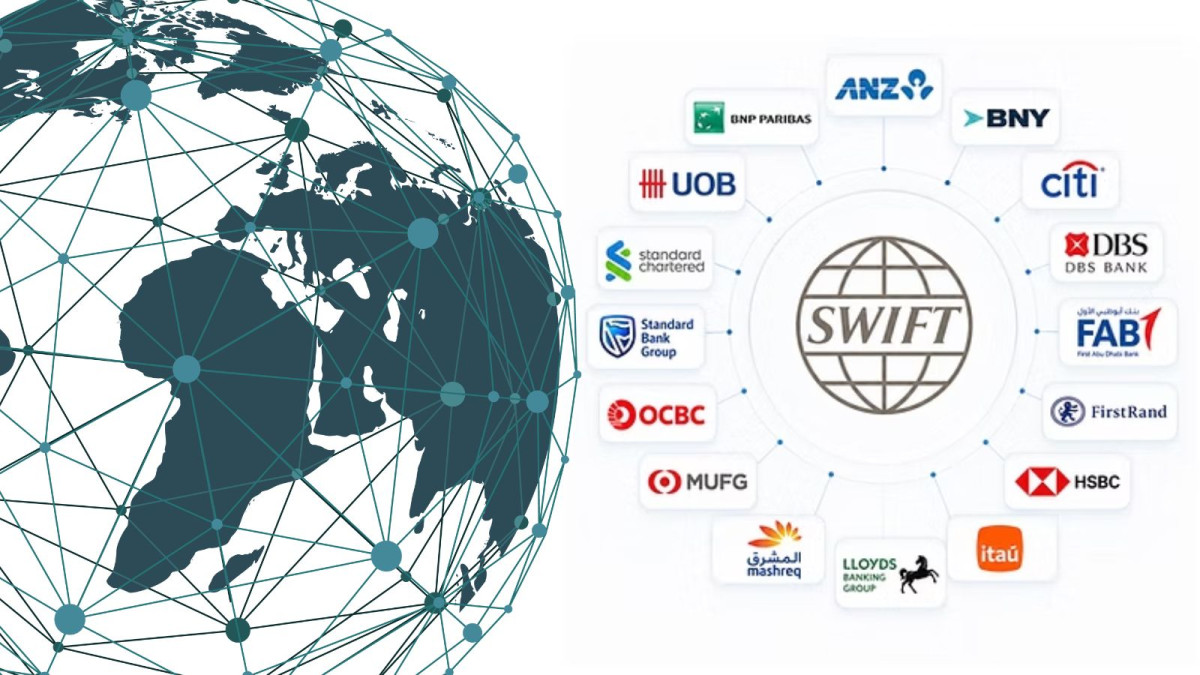
According to Swift, 17 banks from six continents are set to pilot transactions on its blockchain-based ledger. Among the banks participating in the pilot program are Wells Fargo, First Abu Dhabi Bank, Standard Chartered, Bank of New York Mellon, Citibank, HSBC, DBS, and Lloyds Bank, among others.
Swift says the shared ledger will provide participating banks with a secure orchestration layer that allows them to issue tokenized deposits on their respective ledgers, enabling customers' funds to move quickly, including on weekends. Participating banks are also expected to benefit from improved client experience and enhanced global liquidity, without compromising their existing compliance, risk, and operational standards.
"With our new ledger capability, we're extending the trust and stability of established finance into the frontiers of digital money. It allows tokenized value to move across borders with the velocity and flexibility modern commerce expects, while maintaining the same high levels of resiliency, security, and compliance global finance requires," said Thierry Chilosi, Chief Business Officer at Swift.
"The strong support from banks shows the practical value of this approach, one that will help scale benefits globally while creating a foundation for future innovation in areas like programmable money and agentic commerce."
Swift said it took nine months to build the blockchain-based ledger, with the team incorporating feedback from financial institutions throughout the development process. According to the company, 75% of payments on the shared ledger will reach beneficiary banks within 10 minutes, and often within seconds. Swift said it also plans for the network to help meet the G20 target for faster international payments.
About Swift
Swift, short for Society for Worldwide Interbank Financial Telecommunication, is a global entity that enables banks and other institutions to exchange standardized, secure instructions for cross-border payments, securities, trade, and treasury transactions.
Since its inception, Swift has connected more than 11,500 institutions in over 200 countries. Before its most recent blockchain-based ledger pilot, Swift had conducted multiple interoperability pilots, testing tokenized assets, stablecoins, CBDCs, and the integration of traditional financial rails with blockchains.
Kraken Gains Federal Reserve Master Account Access

The cryptocurrency industry crossed an important milestone this week after Kraken Financial secured access to a Federal Reserve master account. The approval allows the crypto company to connect directly to the U.S. central bank’s payment infrastructure, something that has historically been reserved for traditional banks.
For years, crypto firms have operated on the edges of the banking system, often relying on partner banks to move dollars between trading platforms and the broader financial network. Kraken’s approval changes that dynamic in a meaningful way. By gaining direct access to the Fed’s core payment rails, the company can settle transactions without depending on intermediaries.
While the decision does not give Kraken every privilege a commercial bank receives, it still marks one of the clearest signals yet that digital asset firms are beginning to integrate more deeply into the traditional financial system.
A Breakthrough for Crypto and Banking
Kraken’s banking subsidiary, Kraken Financial, reportedly received approval for a Federal Reserve master account that allows the firm to participate directly in the U.S. central bank’s payment infrastructure. That includes systems such as Fedwire, which processes large value payments between financial institutions across the country.
The ability to connect directly to Fedwire is significant. It means Kraken can move dollars through the same infrastructure used by banks, rather than relying on external banking partners to process deposits, withdrawals, or settlements.
For crypto exchanges, this has long been a major operational hurdle. Most platforms depend on third party banks to handle dollar transactions, which introduces additional delays, costs, and risk if banking relationships change.
Direct access removes several of those obstacles.
What a Federal Reserve Master Account Actually Means
A master account is essentially an institution’s primary account with the Federal Reserve. Banks use these accounts to settle payments with one another and to interact with the central bank’s financial infrastructure.
Institutions that hold master accounts can send and receive funds through the Federal Reserve’s payment networks. In practice, this allows them to move money across the financial system with high speed and reliability.
For traditional banks, this setup is standard. For crypto companies, it has historically been out of reach.
That gap has forced exchanges to rely on sponsor banks, which act as intermediaries between the crypto industry and the Federal Reserve’s systems.
Kraken’s approval suggests that the line separating digital asset firms from traditional financial institutions may be starting to blur.
Despite the milestone, Kraken’s access appears to be somewhat restricted compared with a typical bank’s relationship with the Federal Reserve.
Reports suggest the account functions as a limited or “skinny” master account. This type of account provides access to payment rails but does not necessarily include all the privileges commercial banks receive.
For example, Kraken would not be able to earn interest on reserves held at the Fed or access certain emergency lending facilities.
Still, the ability to connect directly to the payment system is what many crypto firms have been seeking. Even with limitations, the operational advantages are substantial.
Why Crypto Firms Have Been Pursuing Fed Access
The push for direct Federal Reserve connectivity has been building for several years.
Crypto companies have often struggled with inconsistent banking relationships. Some exchanges have seen partners abruptly end services during periods of regulatory pressure or market volatility.
These disruptions can cause delays in deposits and withdrawals, which frustrates users and creates liquidity challenges.
By securing a master account, a firm can remove much of that dependency on partner banks.
There are also practical benefits. Direct access can improve settlement speed, reduce transaction costs, and provide greater reliability when moving dollars between crypto markets and traditional finance.
Kraken has been positioning itself for this type of approval for years.
The company established Kraken Financial as a Wyoming chartered special purpose depository institution, a type of bank designed specifically for digital asset businesses. Wyoming created the SPDI framework to give crypto firms a regulated pathway into banking.
Unlike traditional banks, SPDIs are structured to hold customer deposits at full reserve while providing services tailored to digital assets.
Kraken’s banking subsidiary was among the earliest institutions to pursue this model, which helped place it in a stronger position to seek Federal Reserve access.
The company has also expanded its services well beyond basic crypto trading. Kraken now operates across multiple markets including derivatives, institutional trading, custody services, and tokenized assets.
That broader financial footprint likely helped support its case for deeper integration with the traditional financial system.
What This Could Mean For Crypto
Kraken’s approval may open the door for other crypto companies to pursue the same path.
If additional firms gain access to Federal Reserve payment systems, the impact could extend across several areas of the crypto market.
Institutional trading could become more efficient as dollars move faster between exchanges and financial institutions.
Crypto platforms may also become more attractive to large investors who require reliable settlement infrastructure before committing capital.
There could also be broader competitive effects. Exchanges that secure direct payment access may gain operational advantages over those still dependent on partner banks.
In the long term, these developments could accelerate the merging of crypto infrastructure with traditional financial systems.
For much of its history, the crypto industry operated largely outside the traditional banking system.
Exchanges often struggled to maintain stable banking relationships, and many financial institutions were reluctant to engage directly with digital asset businesses.
Kraken’s new level of access suggests that the landscape may be changing.
Direct connectivity to the Federal Reserve’s payment infrastructure represents one of the clearest signs yet that cryptocurrency companies are moving closer to the core of the financial system.
Whether other firms follow Kraken’s path remains to be seen, but the precedent has now been set.
Securitize Plans to Bring Stocks On-Chain as Tokenized Equities Gain Momentum
Securitize is making a move that, not long ago, would have sounded more theoretical than practical. The company plans to launch tokenized versions of stocks on-chain, pushing one of the most traditional parts of finance a little closer to blockchain infrastructure.
This is not about meme stocks or crypto-native experiments. Securitize operates squarely within the existing regulatory system. It has spent years working with asset managers, institutions, and regulators, quietly building the pipes needed to issue and manage digital versions of real-world assets.
That context matters. Putting stocks on-chain is not just a technical upgrade. It is an attempt to modernize how equities are issued, traded, and settled, without breaking the legal framework that keeps markets functioning.
What Putting Stocks On-Chain Really Looks Like
Tokenized stocks are essentially digital representations of real shares, recorded on a blockchain. These are not synthetic products that simply track prices. Each token is designed to correspond to an actual share, with ownership recognized in corporate and legal records.
In practice, that means the blockchain handles transfer and settlement, while traditional systems still govern shareholder rights, compliance, and corporate actions. It is less a replacement of existing markets and more a new layer running alongside them.
The appeal is straightforward. Blockchain settlement is faster. Transfers can happen in minutes rather than days. Tokens can also be divided into smaller pieces, which makes fractional ownership easier and potentially opens the door to a broader set of investors.
It is not revolutionary on its own, but it is meaningfully more efficient.
Why Securitize Is in a Position to Try This
Securitize has been focused on tokenization long before it became a popular narrative. The company already handles issuance, compliance, and transfer agent duties for tokenized funds and other financial products. Billions of dollars in assets have passed through its platform.
Because it operates with regulatory approval, Securitize has been able to work inside the system rather than around it. That makes its push into tokenized stocks feel less speculative and more like a logical next step.
If funds, bonds, and private assets can be tokenized, public equities were always going to be part of the conversation. The question was when, not if.
Why This Matters for Markets
The strongest case for tokenized equities comes down to efficiency.
Settlement in traditional stock markets still takes two days. Blockchain-based settlement happens much faster, which reduces counterparty risk and frees up capital.
There is also the question of access. Tokenized stocks can, in theory, trade around the clock and reach investors beyond traditional market hours and geographies, depending on regulatory constraints.
Fractional ownership is another piece. Smaller units of stock make it easier for investors to gain exposure without committing large amounts of capital.
And once equities live on-chain, they become programmable. Compliance checks, dividend payments, and other corporate actions can be automated in ways that legacy systems struggle to match.
None of this guarantees widespread adoption. But for institutions that spend heavily on operational complexity, the benefits are hard to ignore.
Regulation Still Sets the Pace
None of this works without regulators. Stocks are among the most tightly governed financial instruments in the world, and tokenization does not change that.
Securitize’s approach has been to treat tokenized stocks as securities first. Identity checks remain in place. Transfers are restricted based on jurisdiction and eligibility. Corporate governance follows existing rules.
That conservative stance may slow things down, but it also makes the product usable for institutions that cannot afford regulatory uncertainty.
Around the world, regulators are moving carefully. Some are experimenting with blockchain-based trading and settlement systems. Others are still figuring out how digital records fit into long-standing legal definitions of ownership.
The progress is uneven, but the direction is clear. Tokenization is no longer being dismissed. It is being studied.
Part of a Bigger Shift
Securitize’s move fits into a broader trend across financial markets. Tokenization is spreading from pilot projects to real issuance. Bonds, private credit, and structured products are increasingly being brought on-chain, often with the backing of established financial players.
Stocks are different. They are more visible and more symbolic. Bringing them on-chain would signal that blockchain technology has moved beyond niche use cases and into the core of global markets.
That shift, once it starts, tends to be difficult to unwind.
The Challenges Are Real
There are still open questions.
Liquidity is a big one. Tokenized stocks only matter if there are enough buyers and sellers to create healthy markets. That takes time.
Interoperability is another. Bridging blockchain systems with legacy infrastructure adds complexity and introduces new risks.
And then there is trust. Investors tend to be conservative with assets as central as stocks. New formats have to earn credibility slowly.
None of these challenges are deal breakers, but they help explain why this transition is likely to be gradual rather than dramatic.
A Quiet but Important Step
Securitize putting stocks on-chain is not a revolution. It is something more understated.
It suggests that the future of markets may be less about tearing down existing institutions and more about updating the infrastructure beneath them. Blockchain, in this framing, becomes a tool rather than a statement.
If that vision holds, tokenized stocks may eventually feel unremarkable. They will simply be another way equities move through the system, faster, cleaner, and mostly behind the scenes.
And that is often how real change shows up in finance.
Stay Connected
You can stay up to date on all News, Events, and Marketing of Rare Network, including Rare Evo: America’s Premier Blockchain Conference, happening July 28th-31st, 2026 at The ARIA Resort & Casino, by following our socials on X, LinkedIn, and YouTube.